REVIEW · PORTO
Braga Heritage Walking Tour
Book on Viator →Operated by Trek Portugal · Bookable on Viator
Braga has a way of stacking miracles. This full-day walking tour from Porto threads UNESCO Bom Jesus with Roman-era Braga and the city’s most photogenic religious stops. You get history explained at street level, not in some lecture hall.
I especially like the small group size (max 6), which keeps the pace human and your guide’s attention focused. I also like the practical bonus: you’ll receive photos from the tour, so you can keep your eyes on what matters instead of juggling your camera every five minutes.
One thing to consider: it’s a full 9-hour day, and while the walking isn’t described as extreme, you’ll be on your feet in old-city areas plus stairs at Bom Jesus if you skip the funicular.
In This Review
- Key highlights worth planning around
- Why Braga works so well as a day trip from Porto
- Pace and logistics: 9 hours, small group, and an 8:30 start
- Braga Old Town: Roman roots and why it earned the nickname Portuguese Rome
- Igreja da Lapa: a small stop with a big story about devotion
- The Keep at the highest point: medieval remains without the full-castle climb
- Jardim de Santa Barbara: a calm pocket next to the archbishop’s palace
- Arco da Porta Nova: the iconic arch and the phrase you’ll hear in Braga
- Se de Braga: chapels, high choir, and the treasury-museum
- Bom Jesus do Monte: UNESCO sanctuary, funicular ride, and hilltop views
- Price and value: what $150.20 gets you in real terms
- Who this Braga Heritage Walking Tour suits best
- Things to plan for: weather and your comfort level on hills
- Should you book this Braga Heritage Walking Tour?
- FAQ
- Where is the meeting point and what time does the tour start?
- How long is the Braga Heritage Walking Tour?
- Is pickup and drop-off included?
- How big is the group?
- Is the tour offered in English?
- Which major sites are included on the itinerary?
- Is the lift to Bom Jesus do Monte included?
- Is lunch included in the price?
- What happens if the weather is poor or you need to cancel?
Key highlights worth planning around
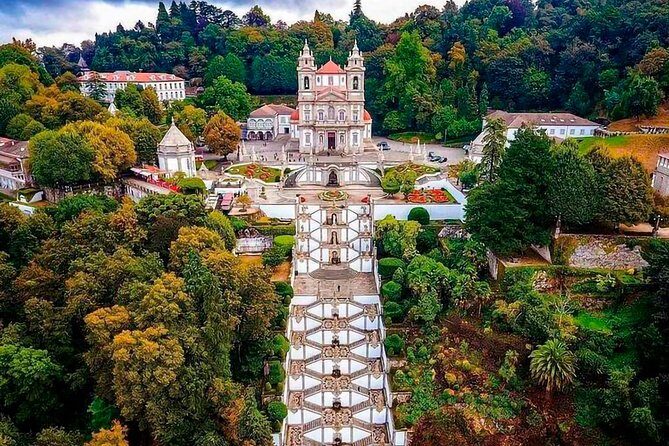
- Bom Jesus do Monte (UNESCO) plus the ride on the funicular/lift that’s still running using a counterbalance of water
- Se de Braga with time for chapels, the high choir, and the treasury-museum
- Small group (up to 6) means you’ll ask questions and actually get answers
- Photo service included, so your guide can point out details while you travel lighter
- Multiple free-entry outdoor stops like Arco da Porta Nova and Jardim de Santa Barbara
- Air-conditioned pickup/drop-off in Porto makes the day trip feel easier
Why Braga works so well as a day trip from Porto
Braga is the kind of place where the past isn’t trapped behind museum glass. In just one day, you can shift from Roman foundations to grand Catholic architecture and hilltop viewpoints over the city.
What makes this plan attractive is the balance. You’re not only staring at buildings from the sidewalk. You get guided time inside key sites (especially Se de Braga) and guided time outdoors where the details matter just as much.
Also, Braga is closely tied to the Minho region and to Bom Jesus. That gives you a clear through-line: you’ll see why this place became a major spiritual destination and how the city grew around it.
You can also read our reviews of more walking tours in Porto

Pace and logistics: 9 hours, small group, and an 8:30 start
This tour runs about 9 hours, starting at 8:30 am. It includes pickup and drop-off in an air-conditioned vehicle, so you’re not piecing together transit while you’re already thinking about churches, hills, and stairs.
The group is kept to a maximum of 6 travelers, which is a big deal for a walking day. It tends to reduce that awkward spacing problem, where everyone streams past the guide and misses the story.
The tour is offered in English, and you’ll get a mobile ticket. If you like having clear structure—where you know where you’re going next—this format fits that mindset.
Braga Old Town: Roman roots and why it earned the nickname Portuguese Rome
Your day begins in Braga itself with about 1 hour to get your bearings. You’ll learn how Braga’s identity was shaped over over 2,000 years, including the city’s connection to the Roman world, often described with the label Portuguese Rome.
The guide sets this up so you can read what you see. Roman legacy isn’t just a “cool fact.” It’s the reason Braga has that layered feeling—old churches, old streets, and older architecture living alongside modern life and business.
You’ll also get pointed toward the city’s famed religious tradition through the wider Bom Jesus connection. That matters because later you’ll be walking in places where faith and tourism overlap, and it helps to know what you’re looking at before you get there.
Igreja da Lapa: a small stop with a big story about devotion
Next is Igreja da Lapa for about 15 minutes, and it’s quick in a good way. This isn’t just a photo moment; it’s a story about how devotions can shape buildings and foot traffic.
A key detail you’ll hear is linked to 1757, when a priest and canon connected to the Cathedral of São Paulo was preaching in Braga. People gathered, an imprint connected to Our Lady of Lapa appeared, and devotion gained enough momentum that authorization followed for the construction of a chapel.
That’s the kind of connection I love on walking tours. You learn why a specific place has its name and why people cared enough to build something lasting. Even with the short time, you’ll leave with context, not just sightseeing.
The Keep at the highest point: medieval remains without the full-castle climb
You’ll also pause at the city’s castle keep, a National Monument since 1910. The best part here is that the stop is about the remnants—so you get the meaning without needing to reconstruct a whole castle in your head.
It’s described as almost the only thing left of Braga’s old castle. The keep is at the highest point of the medieval town, with a coat of arms of D. Fernando above the door. Construction was ordered after invasions in 1369, and the castle was later demolished in 1906, though traces of six towers still survive.
Even if you’re not a history buff, you’ll appreciate how a short visit can add emotional weight to the rest of the day. It gives you a “then” reference point before you move into the “faith architecture” of the cathedral and Bom Jesus.
You can also read our reviews of more historical tours in Porto



Jardim de Santa Barbara: a calm pocket next to the archbishop’s palace
After the hard edges of old stone, you get a breather: Jardim de Santa Barbara for about 20 minutes. This garden sits adjacent to the eastern wing of the 14th-century Archbishop’s Palace, and it’s designed to make good use of that historic backdrop.
What you’ll notice as you walk is how the garden uses real architectural leftovers—medieval arches from a palace arcade—and ties them into a more modern layout. It was laid out in the 1950s in a Romantic style by Jose Cardoso da Silva, and there are also features reused from the palace such as statues, cornices, and coats of arms.
At the center, there’s a fountain and a statue of Saint Barbara. It’s a great spot to reset. If your feet are starting to complain, this is where you can slow down, breathe, and still feel like you’re seeing something culturally relevant.
Arco da Porta Nova: the iconic arch and the phrase you’ll hear in Braga
Then comes Arco da Porta Nova, one of Braga’s most recognizable buildings. It’s scheduled for about 10 minutes, but it’s the kind of stop that can stretch in your mind even if your feet don’t.
The arch is tied to a phrase you’ll hear connected to leaving a door open—essentially, a playful way of saying someone is from Braga. The tour explains how this expression relates to what the arch represents in architectural and urban-planning terms.
Even if you don’t care about slang origins, you’ll get value from pausing at an anchor point like this. It helps you connect the city’s shape to the architecture, and suddenly the old town feels less random and more designed.
Se de Braga: chapels, high choir, and the treasury-museum
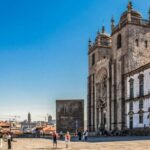
The centerpiece of the day is Se de Braga, where you’ll spend about 2 hours with admission included. This is the Cathedral of Braga, seat of the Archdiocese of Braga and associated with the Primate Archbishop of Portugal and Spain.
This stop matters because it’s where you shift from exterior impressions to inside artistry and church heritage. The tour includes time to visit the Cathedral, plus the chapels, High Choir, and the Treasury-Museum.
You don’t need to be deeply religious to appreciate the payoff. A cathedral like this becomes a condensed record of what a city valued—devotion, power, art, and community—over centuries.
If you enjoy guided time in major interiors, this is where the small-group format pays off. You can ask quick questions, move at a reasonable tempo, and keep up with what you’re seeing.
Bom Jesus do Monte: UNESCO sanctuary, funicular ride, and hilltop views
Toward the end of the tour, you reach Bom Jesus do Monte, the UNESCO World Heritage Site highlight. You’ll spend about 1 hour here, and admission and the lift/funicular are included.
The fun part is that the lift is described as the oldest still in operation. It works through a counterbalance of water, which is a rare mechanical detail worth knowing before you step aboard.
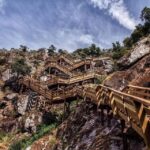
You’ll also have two ways up and around: ride the lift or climb its well-known stairs, depending on how you feel that day. From the top, you’ll get views over Braga before heading back toward your hotel.
This is the moment that usually turns a “good day tour” into a “remember this” day. The scenery plus the guide’s story helps you understand why Bom Jesus became such an important pilgrimage setting.
Price and value: what $150.20 gets you in real terms
At $150.20 per person, this is not a budget-only option—but it also isn’t trying to nickel-and-dime you. The price includes a full day (about 9 hours), pickup and drop-off in an air-conditioned vehicle, and entrances to monuments.
You also get the lift to Bom Jesus do Monte and insurance, fees, and taxes. That’s the kind of bundle that helps you spend less time figuring out payment and more time seeing.
The missing piece is lunch, which isn’t included. Build a little extra budget for that pause, and consider snacks if you know you get hungry on long walking days.
So the value question comes down to this: if you want guided context plus key entries plus the funicular, this price starts to look fair. If you’d rather self-tour slowly and skip paid entries, you may prefer a lighter approach.
Who this Braga Heritage Walking Tour suits best
I think this tour fits best if you want a guided day with clear structure. The small group size helps if you dislike being rushed, and the tour includes enough inside time (especially Se de Braga) to feel like more than just a stroll.
It’s also a good match for people who like their history explained in practical terms. You’ll hear how the city earned its nicknames, how religious devotion changed buildings, and how Roman and medieval layers shaped what you see today.
If you’re traveling solo and want conversation, this format can work well. If you’re traveling with a friend and want a shared plan without the stress, it’s a solid pick too.
Things to plan for: weather and your comfort level on hills
Bom Jesus do Monte sits on a hillside, and the tour offers stairs as an alternative to the lift. That means good shoes matter, and you’ll want to be honest with yourself about how your legs handle steps.
The tour also requires good weather. If conditions aren’t right, you’ll be offered a different date or a full refund, so it’s worth keeping your schedule flexible.
Finally, it’s a full day. Even with smooth pacing, you should treat it like a day trip where you plan to eat once or twice and rest once.
Should you book this Braga Heritage Walking Tour?
Book it if you want a tightly planned day that hits the must-see spiritual and historical anchors: Bom Jesus do Monte (UNESCO), Se de Braga, and the best-known city markers like Arco da Porta Nova. The small group size and the included photo service are practical perks that make the day feel smoother.
Skip it only if you know you want total freedom over guided structure, or if you’re avoiding paid interiors and a hillside church that may involve stairs. For most people doing Porto for the first time, Braga with a guided plan is a smart use of time.
FAQ
Where is the meeting point and what time does the tour start?
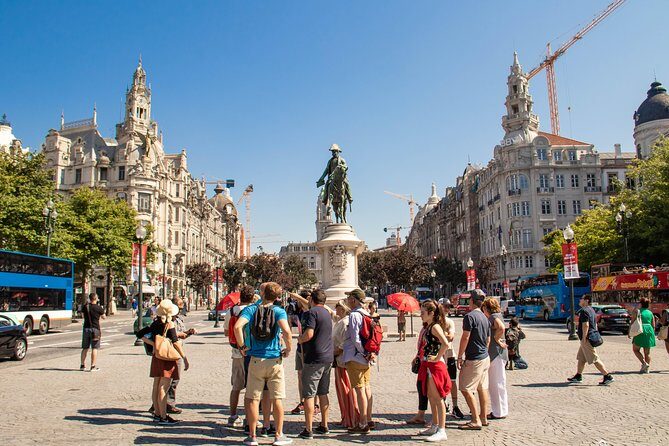
The tour starts at Av. dos Aliados 266, 4000-125 Porto, Portugal, and it begins at 8:30 am.
How long is the Braga Heritage Walking Tour?
The tour is listed as approximately 9 hours.
Is pickup and drop-off included?
Yes. Pickup and drop-off are included in an air-conditioned vehicle.
How big is the group?
The tour has a maximum group size of 6 travelers.
Is the tour offered in English?
Yes, it’s offered in English.
Which major sites are included on the itinerary?
You’ll visit key Braga sites including Bom Jesus Sanctuary, Braga’s cathedral (Se de Braga), Igreja da Lapa, Arco da Porta Nova, and Jardim de Santa Barbara, plus viewpoints tied to the city’s medieval keep.
Is the lift to Bom Jesus do Monte included?
Yes. The lift/funicular to Bom Jesus do Monte is included, and you can also choose to climb the stairs if you want.
Is lunch included in the price?
No. Lunch is not included.
What happens if the weather is poor or you need to cancel?
The tour requires good weather. If it’s canceled due to poor weather, you’ll be offered a different date or a full refund. You can cancel for a full refund up to 24 hours in advance of the experience’s start time.