REVIEW · PORTO
Experience Porto’s Charm: 3-Hour Guided Walking Tour
Book on Viator →Operated by Bluedragon Porto City · Bookable on Viator
Porto makes sense fast on foot. This 3-hour walk strings together the city’s big sights and the stories that explain why Porto looks the way it does. You’ll move from Roman traces and Moorish-tile details to Baroque churches, then finish with Douro views and the Port-cellar vibe of Gaia.
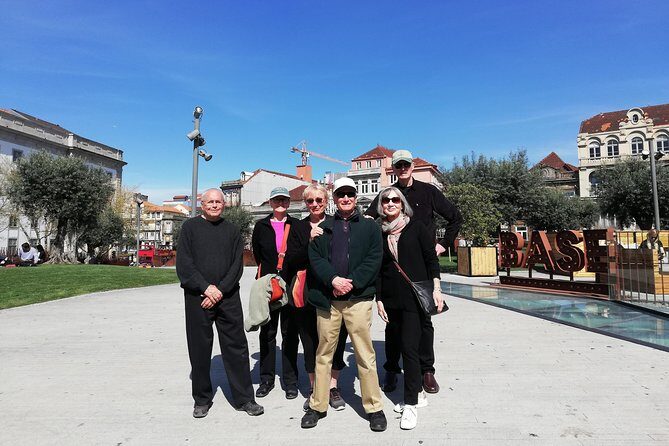
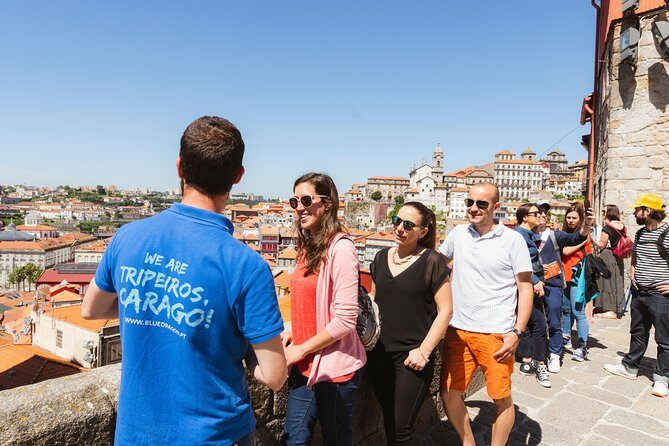
I love the small-group feel (up to 15 people) and how it stays chatty and question-friendly. I also love the live commentary that ties landmarks like Porto Cathedral, São Bento, and Dom Luís I into one clear storyline you can actually use the rest of your trip.
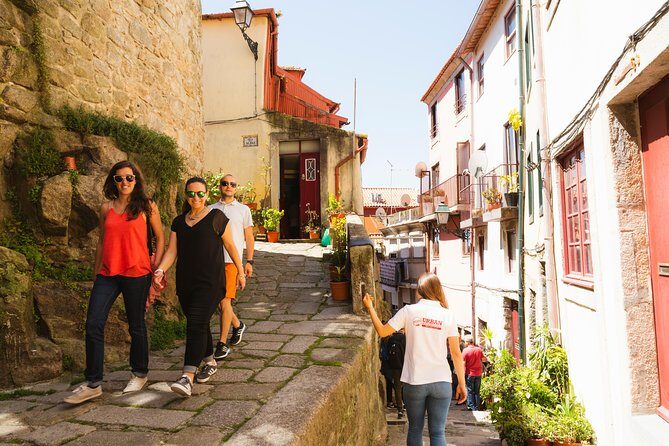
The trade-off is simple: you’re doing a fair bit of walking in Porto’s hills, and the tour runs in rain. If you’re not into wet cobblestones, plan for comfortable shoes and weather-ready clothes.
In This Review
- Key highlights worth your time
- Porto’s Charm in 3 hours: why this walk works
- Starting where Porto begins: Rua de Alexandre Herculano meeting point
- UNESCO historic center: Roman traces, Moorish tiles, and the French blow
- Porto Cathedral and Santa Clara: the moment you look up
- São Bento Station tiles: where the city stops being scenery
- Cafe stop near Majestic: a smart pause without the big-tourist markup
- Clerigos Tower and Mercado do Bolhão: Porto’s postcard meets everyday life
- Lello & Irmão from the outside: the Hogwarts staircase myth
- Aliados Avenue to King Peter IV: the political story behind the stroll
- Dom Luís I bridge: the moment you get the full Porto-and-Gaia picture
- Cais de Gaia and Port cellars: where wine becomes a walking story
- Ribeira Square finish: a natural place to keep exploring
- Price and what you’re really paying for
- Who this tour suits best (and who might want a different plan)
- Should you book Porto’s Charm?
- FAQ
- How long is the Porto’s Charm walking tour?
- What’s the meeting point and where does the tour end?
- Is the tour in English?
- How much walking is involved?
- Are entrance fees included?
- Does the price include food or drinks?
- Does the tour run in rain?
- How big is the group?
- FAQ
- Can I cancel for a refund?
- Is there a mobile ticket?
- Is hotel pickup included?
Key highlights worth your time
- UNESCO historic center in a tight loop: you’ll get the orientation first, then the backstory
- Photo-ready landmarks: Porto Cathedral area, Clerigos Tower, and the Dom Luís I bridge
- São Bento Station tile panels: a “look closely” stop, not just a photo pass-through
- Gaia Douro views and Port culture: rabelo-boat history plus a cellar-lined riverside walk
- End in Ribeira Square: a natural place to keep exploring on your own
Porto’s Charm in 3 hours: why this walk works
This is the kind of tour that helps you stop “wandering” and start navigating. Porto is compact, but the neighborhoods feel like different worlds—upper streets, riverfront, old alleys. A guided loop like this gives you the map in your head, not just the photos on your phone.
The best part is that the tour doesn’t just list attractions. It connects Roman-era roots, later Moorish influence, and the city’s later Portuguese power plays to the buildings you see. By the time you reach Dom Luís I, you’ll understand why Porto builds upward and outward the way it does.
And the pacing fits a first visit. You get enough time at major stops to slow down, look up, and take pictures, without turning the day into a checklist.
You can also read our reviews of more walking tours in Porto



Starting where Porto begins: Rua de Alexandre Herculano meeting point
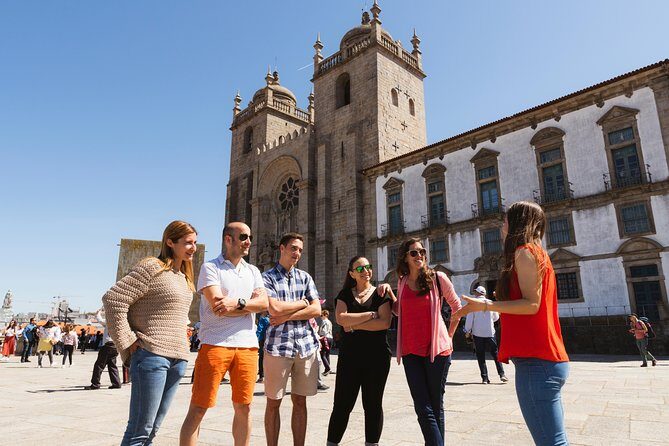
You meet at R. de Alexandre Herculano 251 with Bluedragon City Tours. That matters because it puts you in central Porto, close enough to walk into the historic core quickly rather than burning time on transit.
The tour also runs with a live guide, and it’s offered in English. If you like asking questions and getting context you won’t find on a museum label, this format is a strong match. You also get a general briefing before you start, which helps if you’re trying to plan the rest of your days.
Tip: build in time to arrive and check in about 15 minutes early. Porto streets can be easy to misread at first, and you don’t want to be late while the group is assembling.
UNESCO historic center: Roman traces, Moorish tiles, and the French blow
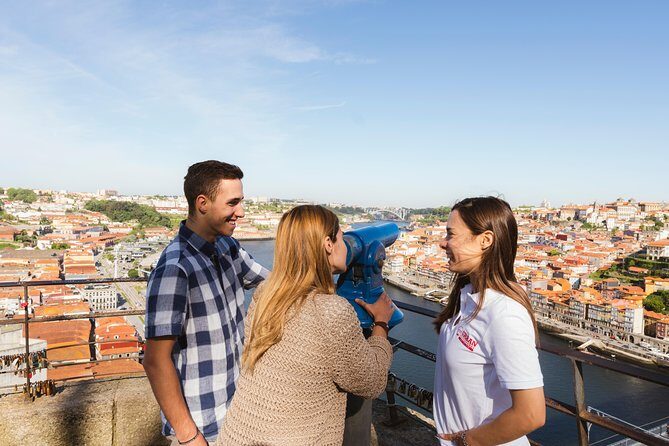
The tour begins by entering the UNESCO World Heritage-listed historic center. That’s not just a prestige label—it’s your shortcut to seeing the “why” behind Porto’s streetscape. The guide frames Porto as something that was repeatedly reshaped by empires and invasions, and you can literally see those layers as you walk.
You’ll hear how Porto started as a Roman outpost, then shifted under Moorish rule. The story also includes the city’s major 19th-century destruction linked to the French, which helps explain why some parts of the urban look feel more “rebuilt” than ancient.
On the walk, you’ll spot older Romanesque-style elements and the way later architecture and decoration were added around them. The tour’s big strength is the mix: you don’t get one theme only (like castles only, or churches only). You get a city portrait.
Porto Cathedral and Santa Clara: the moment you look up
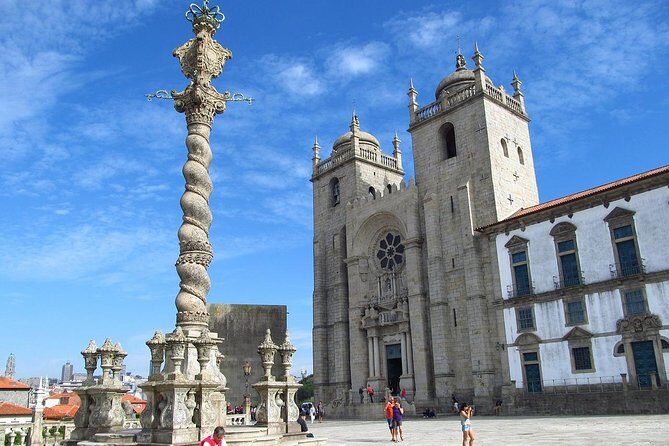
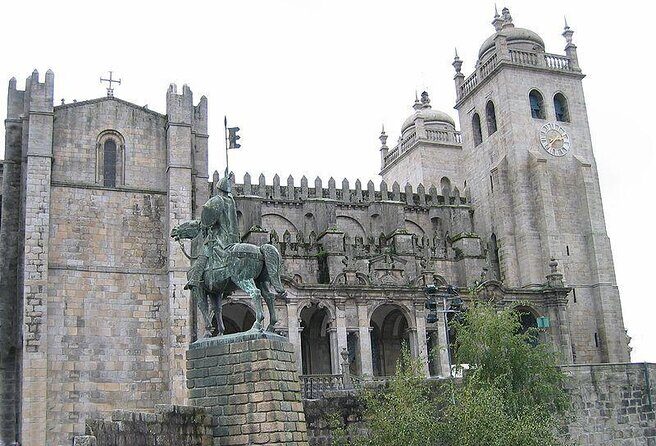
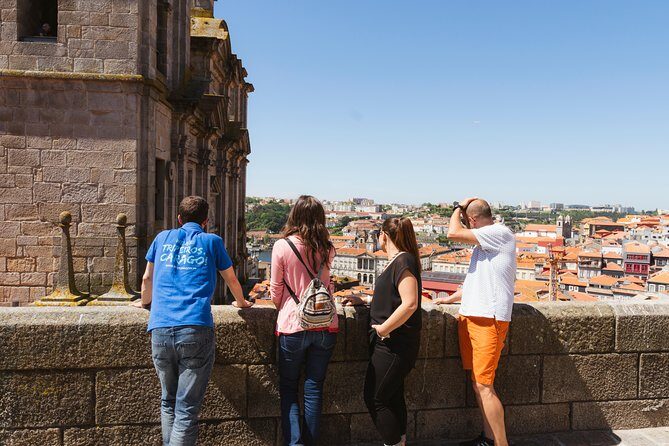
Early on, you’ll get a close look at Porto Cathedral in the historic heart. Even if you don’t go inside (entrance fees aren’t included), the cathedral area is worth it for its age and presence. You’ll also learn what makes this monument feel like the city’s anchor point rather than a standalone stop.
From there, the tour moves into church territory with Santa Clara, where you’ll see classic Baroque architecture. This is one of those Porto moments where the details catch you off guard—stonework, facade style, and the overall “dramatic” look that Baroque is famous for.
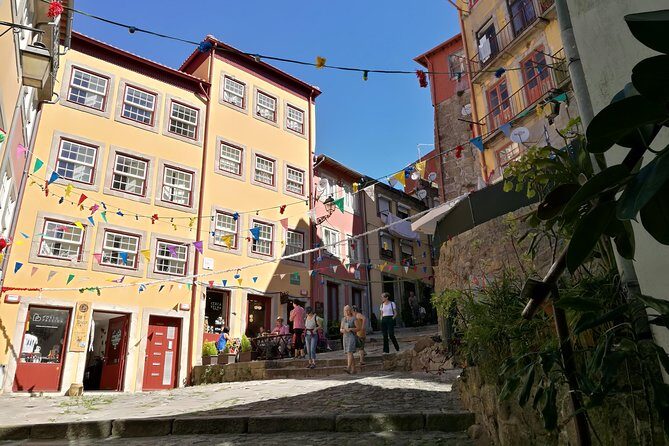
Between stops, the tour points your eyes toward decoration and materials, including Moorish tile patterns on building walls. If you’ve ever walked past azulejo without really noticing, this kind of guided “look for this” moment changes everything.
São Bento Station tiles: where the city stops being scenery
São Bento Railway Station is a break from just “passing sights.” You’ll spend about 10 minutes there, which is enough time to see why it’s famous: the station’s tile panels are detailed, colorful, and packed with scenes that reward slow attention.
It also helps that the station connects the Minho and Douro Valley lines, so the place feels like Porto living at full speed. The architecture is credited to Portuguese architect José Marques da Silva, and the building reflects French architectural traces.
Practical note: the station stop is free to see, and that’s value. You’re getting an iconic “Porto interior” moment without paying an entry fee—just your time and your eyes.
You can also read our reviews of more guided tours in Porto



Cafe stop near Majestic: a smart pause without the big-tourist markup
The tour includes a café stop at Cafe Majestic (and nearby options around that area). Entrance costs for the coffee shop aren’t included, but the stop itself is built into the timing. That’s useful because Porto hills can be tiring, and this gives you a reset.
Why I like this on a walking tour: it’s not a random break. It’s scheduled near a landmark you’ve probably already heard of, but it also keeps the focus on getting you moving again with energy. One guest note that stuck with me from the experience descriptions: ordering a café com leite and a pastry at a nearby café stop can be far cheaper than buying at the Majestic itself.
If you want coffee the local way, ask for what’s simple, not fancy. A quick break plus a guided walk afterward is a great combo.
Clerigos Tower and Mercado do Bolhão: Porto’s postcard meets everyday life
Next up is Torre dos Clerigos, where the tower’s silhouette is the trademark you’ll recognize even if you haven’t memorized the name yet. You’ll learn it was designed by Nicolau Nasoni and that the church and tower are part of the 18th-century Baroque story in Porto.
This stop is especially satisfying if you like standing back and seeing how the city’s vertical layout works. Porto’s streets can feel steep and layered, and Clerigos is one of those “point your head upward” moments.
Then you shift to an everyday neighborhood rhythm at Mercado do Bolhão. The market is organized by product areas—fish, meat, vegetables, fruits, and flowers—so you see how locals shop, not just tourists take pictures.
This is also a free stop to browse, which makes it a practical use of time. You’ll walk out with a better sense of what kinds of food Porto is known for—and what neighborhoods feel like at ground level.
Lello & Irmão from the outside: the Hogwarts staircase myth
The tour includes a stop near Lello & Irmão Bookstore—famous for being considered one of the most beautiful bookstores in the world and for its staircase that’s often linked to the inspiration behind the Hogwarts-style stairs.
Important detail: entrance fees aren’t included, so you may just enjoy what you can see from the street or the exterior area. That said, even an outside stop helps. It puts the building into context—Porto’s love of design, story, and theatrical architecture.
If you do want to go in, budget for it separately. If not, you still get the cultural context that turns it from “a pretty building” into “a Porto character.”
Aliados Avenue to King Peter IV: the political story behind the stroll
After the historic-center segment, you head toward Aliados Avenue and Liberdade Square. This section helps because it connects the older layers of the city to its more civic, public-facing spaces.
You’ll listen to the “local chirp” of the area and learn about the monument to King Peter IV of Portugal, also known as the Liberator. The tour connects him to the wider Portuguese story, including his role as the first ruler of Brazil.
This part works well for first-time visitors because it’s not just architecture trivia. It explains why certain monuments get built where they do—and what kind of identity Porto wanted to broadcast.
Dom Luís I bridge: the moment you get the full Porto-and-Gaia picture
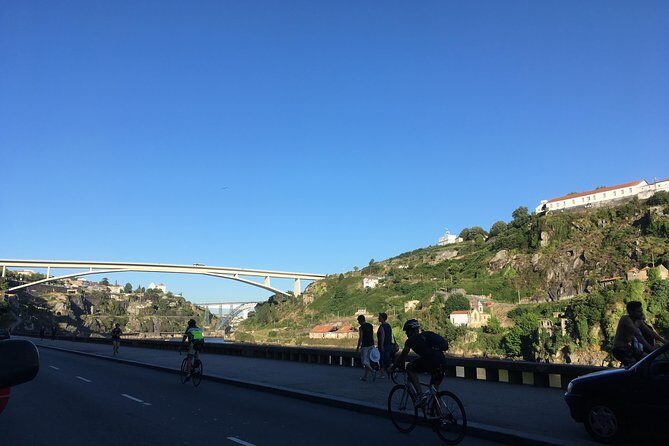
Now comes the big visual pay-off: Ponte de Dom Luís I. The bridge links Porto to Gaia and is a double-decker design built between 1881 and 1888. The engineering story is tied to a protege of Gustave Eiffel, which is why the bridge carries that Eiffel-era metal elegance.
You’ll get time to gaze over the Douro River and learn about rabelo boats—the traditional wooden boats that once transported grapes to the cellars. Even if you don’t see many boats in the moment, the history gives your view a storyline.
I like that this stop acts like a “reset lens.” Before the bridge, you’ve been looking at Porto. After the bridge, you’re looking at how Porto traded its wealth and culture through the riverfront.
Cais de Gaia and Port cellars: where wine becomes a walking story
From the bridge area, the tour moves along Cais de Gaia, the riverside where cellars line up like they’ve been waiting for you. You’ll learn how Port (fortified wine) is made and how the process connects back to the grape transport history you just heard on the bridge.
This is where Porto’s famous wine culture stops feeling abstract. You can actually map the idea: grapes move by boat, they land near the riverfront, and the city’s wealth gets stored and transformed in those cellars.
You’ll also pass markets and shops along the way. That keeps it grounded instead of turning it into a “museum of wine” stop. You get the sense of a working riverside that tourists visit, but locals also navigate.
Ribeira Square finish: a natural place to keep exploring
The walk ends in Ribeira Square, in the Ribeira neighborhood, one of the oldest parts of Porto and also listed by UNESCO. This area is popular, yes—because it’s photogenic and full of places to eat—but it’s also a smart ending point. It’s where you can immediately continue your visit without restarting your plans.
If you want a simple next step: use the tour’s storyline to decide what to explore next. If you felt pulled toward the riverfront, linger in Gaia and keep scanning for cellars and viewpoints. If you liked the city-center layers, circle back toward the cathedral-and-tiles zone for a slower follow-up walk.
Price and what you’re really paying for
At $35.07 per person for about 3 hours, the value is in three places:
First, it’s not just “see X, see Y.” The guide’s live storytelling ties the landmarks into a coherent explanation, which makes the time feel efficient even if you already know a few names.
Second, a lot of the core sights here are either free to view (like São Bento tiles and market browsing) or enjoyed from the outside. Since entrance fees are not included, you’re not paying extra just to stand near monuments.
Third, you get a guided route through the historic center and across to Gaia without having to figure out the “best order” yourself. Porto rewards planning, and a 3-hour orientation usually saves you time later.
The one thing to budget for is optional entry. If you want the inside experience at places where the tour only guarantees an exterior view, plan to pay those entrances separately.
Who this tour suits best (and who might want a different plan)
This tour is a great fit if you want a first-visit orientation with structure. If you like history but also want it to stay practical—connected to what you can see and photograph—this is a strong match.
It’s also a good choice for you if you appreciate guides who manage the walking pace and help you adapt when weather turns. The tour operates in rain, and guides have been described as handling inclement weather with practical indoor stretches and shortcuts.
You might want to think twice if you’re very sensitive to hills or slippery cobblestones. Multiple descriptions point out that the walk includes climbs, even if it’s generally manageable for most people. Bring comfortable shoes and take it slow at the steep bits.
Should you book Porto’s Charm?
If it’s your first time in Porto, I’d book this. It’s one of those tours where you don’t just collect highlights—you understand how they connect, and that makes the rest of your trip easier.
If you’re already comfortable navigating Porto and you only care about a single attraction (like just the bridge or just the tiles), you may prefer a shorter, targeted outing. But for $35-ish, English live guidance plus the UNESCO-center overview and the Douro-and-Gaia payoff is a solid deal.
FAQ
How long is the Porto’s Charm walking tour?
It’s about 3 hours.
What’s the meeting point and where does the tour end?
You meet at R. de Alexandre Herculano 251, 4000-053 Porto, Portugal, and the tour ends back at Bluedragon City Tours at the same address.
Is the tour in English?
Yes, it’s offered in English.
How much walking is involved?
There is a small amount of walking, but you should still expect hills and bring comfortable shoes.
Are entrance fees included?
No. Entrance fees are not included (for example, Porto Cathedral and Clerigos Tower are not included).
Does the price include food or drinks?
No. Food and beverages are not included.
Does the tour run in rain?
Yes, the tour operates in rain, so check the weather and dress accordingly.
How big is the group?
The tour has a maximum of 15 travelers, with a minimum of 2 people to run.
FAQ
Can I cancel for a refund?
Free cancellation is available up to 24 hours in advance for a full refund.
Is there a mobile ticket?
Yes, the tour uses a mobile ticket.
Is hotel pickup included?
No, hotel pickup and drop-off are not included.