REVIEW · PORTO
Porto: 3-Hour Guided City Highlights Walking Tour
Book on GetYourGuide →Operated by Bluedragon City Tours · Bookable on GetYourGuide
Porto clicks into place fast. This 3-hour walking tour mixes the big postcard sights with the side streets that make Porto feel lived-in, and you get the story of how the city formed along the way. I especially love the Aliados Avenue stretch paired with Clérigos area architecture, and I also like the way you descend into Miragaia for narrow lanes and real neighborhood atmosphere. One thing to plan for: it’s still a walking tour with stairs and uneven streets, so it is not ideal if you have mobility limitations.
You’ll walk with a live guide (English, Spanish, German, French, or Dutch options), and that makes the difference between seeing buildings and actually understanding them. The tone is relaxed and local-friend style: you stop for photos, wander into quieter streets, and learn how Porto’s early layout helped shape daily life.
Dress for a city that can be wet. The tour operates in rain, and you’ll want comfortable shoes and a photo ID (passport or ID card) so you’re ready for the pace and the weather.
In This Review
- Key things I’d focus on before you go
- Where the tour starts: Alexandre Herculano and a quick orientation
- Porto Cathedral and the founding story you can actually visualize
- Aliados Avenue: the wide boulevard moment, with photo-ready perspective
- Clerigos Church area: architecture you’ll understand more after the guide talks
- Rua Santa Catarina and Bolhão: shopping streets with real momentum
- São Bento Station tiles: the stop where you look up and start noticing
- Miragaia stair lanes: the Porto you feel in your legs
- Louis I Bridge and the Douro glimpse: making the river feel close
- Pacing, groups, and why the guide matters more than you think
- Price value: why $34 can still feel worth it in Porto
- What to wear and plan for: rain, shoes, and stamina
- Should you book this Porto highlights walk
- FAQ
- How long is the Porto guided highlights walking tour?
- How much does the tour cost, and what’s included?
- Where do we meet for the tour?
- What languages are the live guides available in?
- What major sights are included during the 3-hour walk?
- Does the tour run in rain?
- Is this tour suitable if I have mobility impairments?
Key things I’d focus on before you go
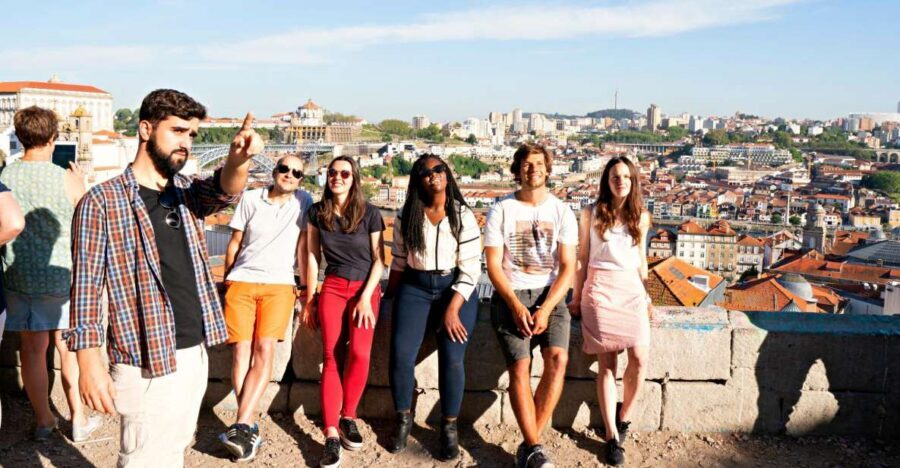
- Aliados Avenue photo stop that gives you a true sense of Porto’s grand civic center
- Miragaia stair streets where the best views and textures come from walking down
- Louis I Bridge Douro glimpse so the river feels close, not abstract
- São Bento Station tiles and other landmark moments that you’ll want to look at twice
- Mercado do Bolhão for a market stop that feels like Porto’s daily heartbeat
- Small-group or private options that can make the explanations more personal
Where the tour starts: Alexandre Herculano and a quick orientation
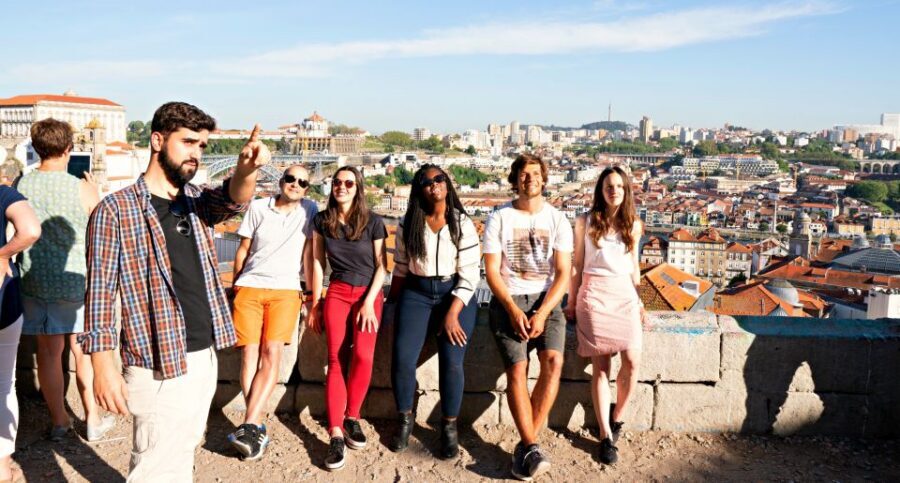
Most people start near Rua de Alexandre Herculano 251, which is a smart place to begin because it keeps you in the historic center right away. Within minutes, you’re out of the “where am I?” stage and into the “okay, I see how this city works” stage.
This tour’s core idea is simple: you get an efficient first-day layout without feeling like you’re sprinting through a checklist. You’re not just walking past landmarks; you’re also learning how streets connect, how neighborhoods step downhill, and why certain viewpoints matter. When you understand that rhythm, Porto stops being a set of separate photos and starts feeling like one place with logic.
The tour is designed for about 3 hours, and that matters because it sets expectations. You won’t cover every square and church in Porto. Instead, you get enough landmarks plus enough back-street wandering to make the rest of your trip easier to plan.
One practical note: it runs in rain. That’s a good sign, because Porto can look great in mist and drizzle, but it means you should bring shoes that won’t turn into slippery hazards halfway through.
You can also read our reviews of more walking tours in Porto


Porto Cathedral and the founding story you can actually visualize
The tour includes a guided visit at Porto Cathedral, around 10 minutes. Even in a short stop, the cathedral area helps you read the city. You can feel how the center grew around religious and civic power, and you start to notice how Porto’s streets pull you upward and downward in layers.
What makes this stop more useful than a quick photo is the focus on Porto’s founding and formation. You’ll hear how the city took shape, and why Porto’s geography and early development led to the compact, walkable feel you experience today. It’s the kind of explanation that gives context to everything else you’ll see later: the towers, the boulevards, the market energy, and the way the river fits into the big picture.
A small but real benefit: this is one of those moments where the “history” becomes visual. When you understand the cathedral’s place in the city’s early layout, later landmarks like Clérigos and the downtown avenues feel less random.
If you’re the type who likes to ask questions, you’ll likely enjoy the way guides handle follow-ups. Guides such as João and Egor are specifically noted for answering questions with extra detail, which is exactly what you want when you’re trying to connect stories to street corners.
Aliados Avenue: the wide boulevard moment, with photo-ready perspective
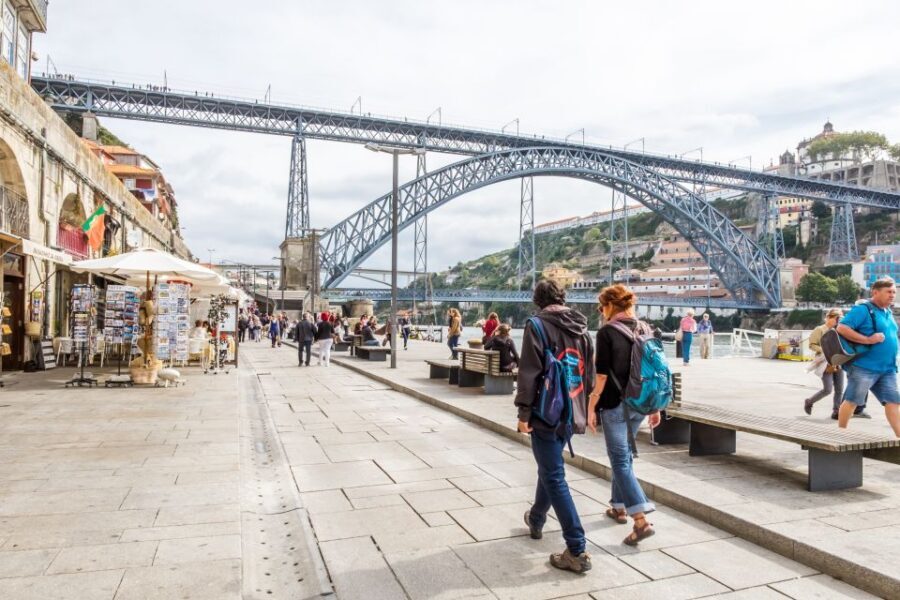
After the cathedral area, you hit Avenida dos Aliados for about 15 minutes, and this is your big “Porto is a real city” stretch. It’s grand, it’s airy compared to the narrow lanes, and it’s an easy place to orient yourself.
I like this stop because it gives you contrast. Porto has lots of tight streets and stair descents, and Aliados shows the formal side of town—civic pride, architecture that signals importance, and a street you can actually picture in your head for the rest of the trip.
It’s also a good checkpoint: once you stand on or near Aliados, you can start imagining where the city’s center sits relative to the older quarters and the river views that come later. If you walk Porto later on your own, you’ll use this mental map again and again.
Clerigos Church area: architecture you’ll understand more after the guide talks
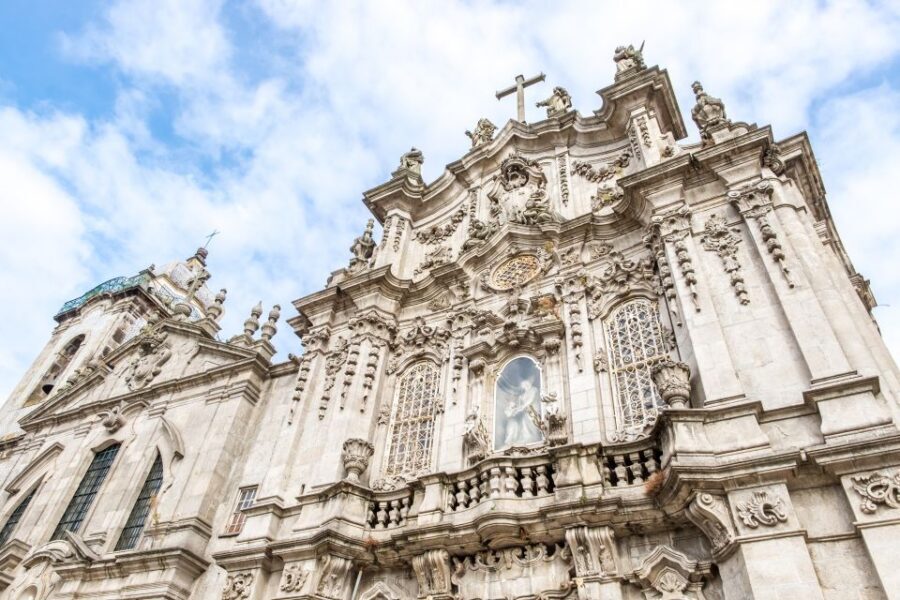
The tour includes a Clérigos stop (around 10 minutes), and this is where the skyline starts doing more work. Clérigos Church and its tower are iconic for a reason, but the guide’s explanations help you notice more than just the shape.
This is one of those areas where design choices tell you about ambition and identity. You’ll get a guided visit rather than a hurried pass, which helps you slow down just enough to pick up details you might miss if you’re only chasing photos.
Guides named Sophia and João come up often for this kind of storytelling: not just facts, but an explanation of why the architecture fits Porto’s personality. Even if you’re not an architecture person, that context makes the tower feel like a clue, not just a landmark.
If the weather is poor, you’ll still get value here. Views may be muted, but close-up details and the “how to read this place” part of the stop remain.
Rua Santa Catarina and Bolhão: shopping streets with real momentum
Next comes Rua Santa Catarina (about 20 minutes) for sightseeing. This street tends to feel like the living middle of Porto: people moving, shops and café life nearby, and a vibe that sits between tourist sights and everyday errands.
From a trip-planning point of view, this stop helps you answer a key question: Where do locals actually spend time? Even if you only pass through quickly, the guide can point out the feel of the area so you can decide later if you want to return for a meal, browsing, or just walking.
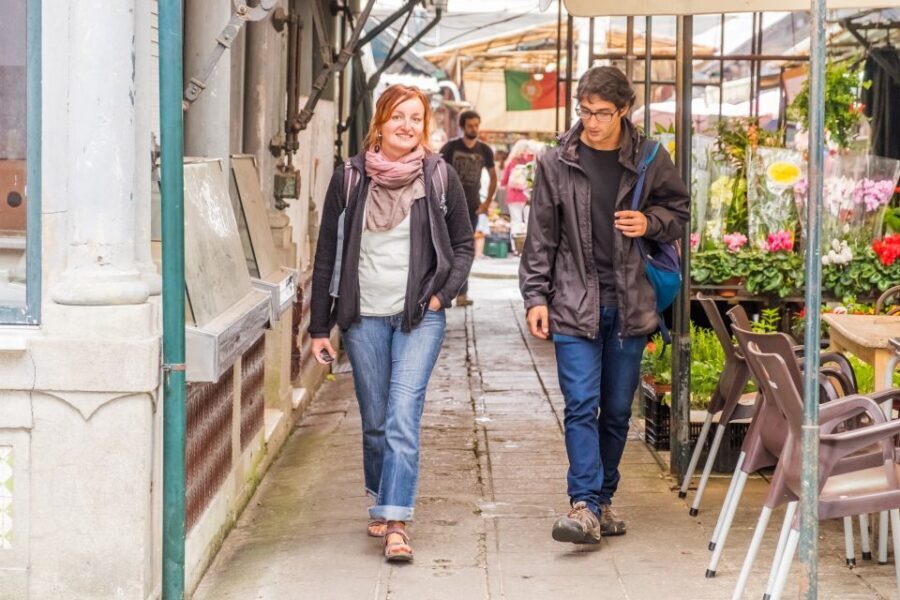
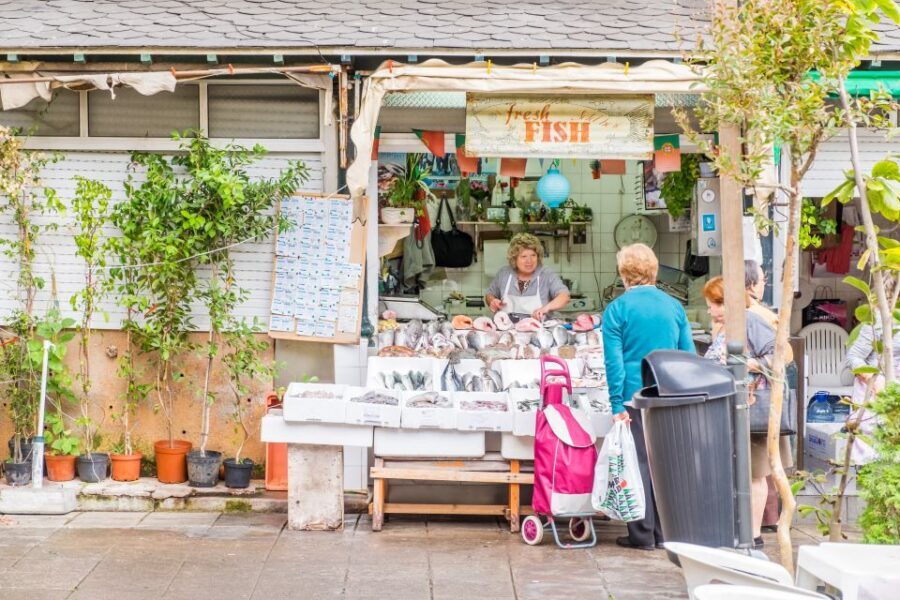
Then there’s Mercado do Bolhão for about 20 minutes with a photo stop. Markets are one of the easiest ways to understand a city’s daily rhythm, and this one gives you a Porto moment that is more than a souvenir hunt.
A market is also a practical compass for food and orientation. You learn what’s around, you notice the energy, and you can use that as a guide for where to eat later without feeling like you’re guessing in the dark.
Some guides add tiny extras depending on the day—one guide experience described an added café break with cookie and espresso. That’s not guaranteed as part of your ticket, but it matches the tour style: short pauses that make the walking feel human.
You can also read our reviews of more guided tours in Porto




São Bento Station tiles: the stop where you look up and start noticing
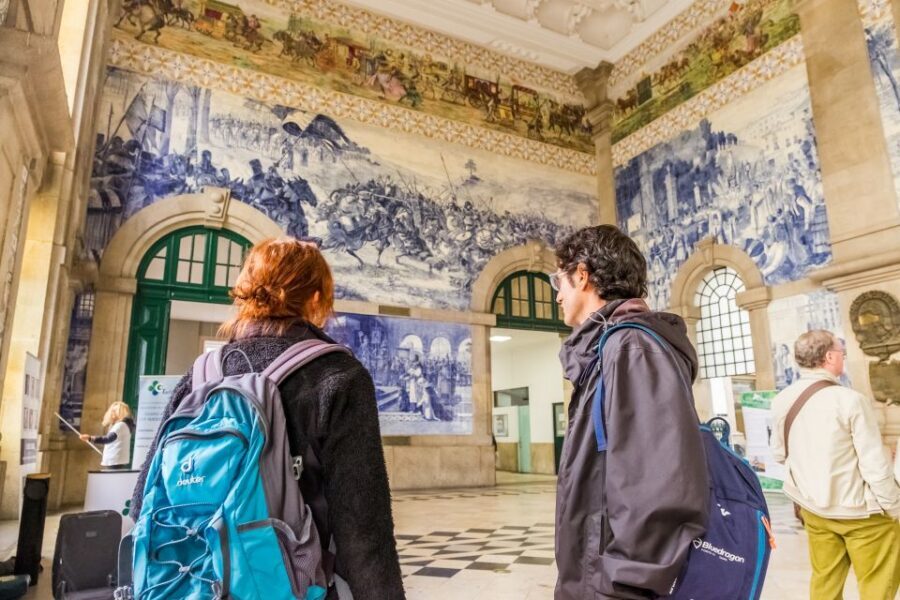
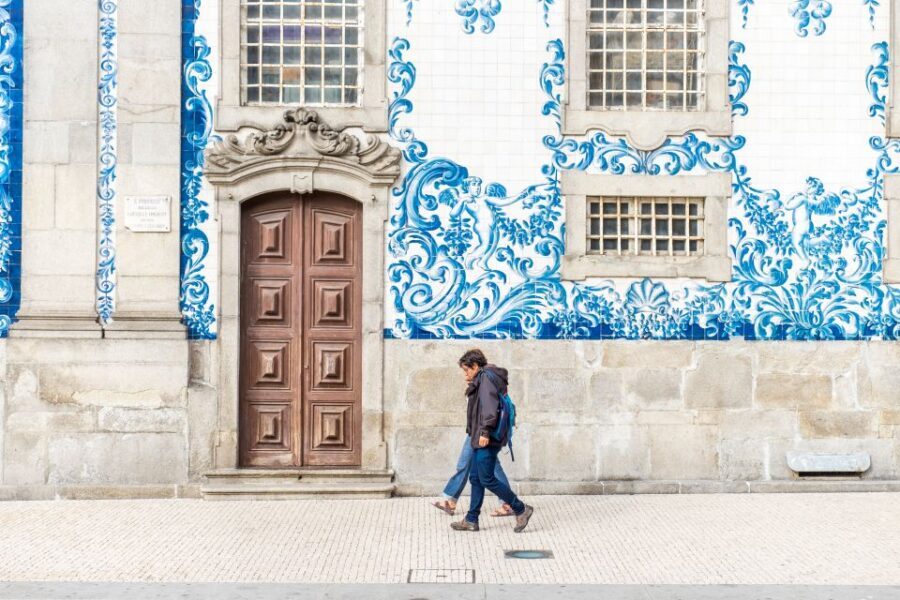
The tour also includes a pass near São Bento Station, known for its tile-covered walls. This is one of those Porto moments where the “main thing” is right in front of you, but you still need time to look.
Even with limited minutes, a guide helps you understand what you’re seeing instead of just admiring art on instinct. The tiles are visual storytelling—scenes that connect to Portugal’s broader culture and the city’s identity—so you’re not just collecting an image. You’re learning how Porto visually remembers its own story.
This is also a nice break from constant walking. Stand still for a minute, let your eyes adjust, and you’ll likely find details you would never catch if you were just moving to the next stop.
Miragaia stair lanes: the Porto you feel in your legs
Now we get to the most Porto part: descending the narrow streets of Miragaia. The highlight of this segment is the way the neighborhood steps down with stairs and tight turns, bringing you into the real geometry of the city.
This is where you feel Porto’s character in a way that a museum or viewpoint never quite matches. You get close to building textures, doorways, little storefronts, and the lived-in scale that only appears when streets get narrow.
Yes, it means more effort. If you’re okay with stairs and uneven pavement, this is a standout. If you’re not, you’ll want to think carefully—especially since the tour is not suitable for mobility impairments.
Still, for the right person, Miragaia is exactly the kind of segment that turns a highlights tour into an experience with memory. It’s not just about seeing Porto; it’s about moving through Porto.
Louis I Bridge and the Douro glimpse: making the river feel close
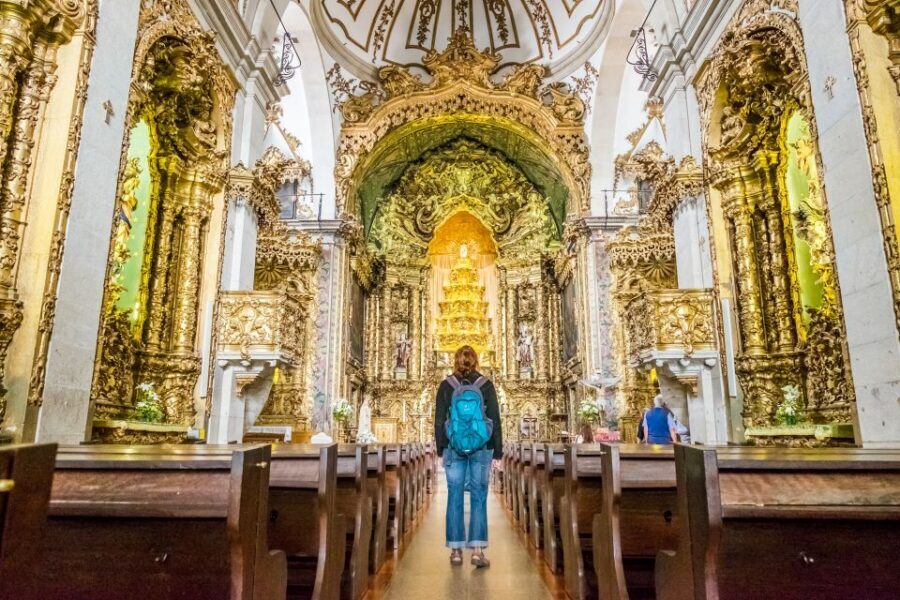
The tour includes a glimpse of the Douro River from Louis I Bridge. This matters because the Douro can feel like a far-off backdrop if you only see it from postcards or cruises. A bridge view does something different: it ties the river to the city’s daily streets.
Even if the view is quick, it gives you a reference point. Later, when you wander near the water or plan a river moment, you’ll know where you are relative to the downtown streets you just walked.
This is another place where the guide’s stories help. Porto’s identity is tied to the river and to how goods and people moved. When you understand that connection, a river view becomes more than a pretty angle.
Pacing, groups, and why the guide matters more than you think
The tour is built around a 3-hour timeframe, and most stops are short: about 10 to 20 minutes each, plus walking time between them. That’s a big advantage for first timers because it prevents the common highlights-tour problem—too much time at the obvious spots, too little time learning how to see the rest.
Group size can shape the experience. The tour is offered in private or small-group formats, which usually helps with questions and keeps the pace comfortable. There’s also a note for larger groups (over 15 people), which tells you this isn’t meant to run like a warehouse tour.
In the real-world guide style you’ll experience, multiple names show up for a reason: people like João, Ricardo, Sofia, and guides such as Fatmir and Ramon are described as making Porto stories feel lively and personal. One common thread is that guides take the walk seriously but keep it fun, with explanations that connect politics, architecture, and everyday life.
For you, that means the walk should feel like a mix of facts and street-level context, not a lecture.
Price value: why $34 can still feel worth it in Porto
At $34 per person for a 3-hour guided walking tour, you’re paying for three things: a live guide, a route that strings together key sights, and time-saving context. You’re also paying for the ability to move through Porto with fewer wrong turns.
If you were trying to self-guide, you could see some of these spots on your own. But you’d likely miss the city-formation context and the little explanations that turn landmarks into clues. Porto’s best moments often sit in the gaps between famous points, and that’s exactly where a good guide shines.
Also, the tour tends to cover both the “I want photos” part and the “I want to understand this city” part. That blend is the value: you end the walk with better direction for the rest of your stay.
What to wear and plan for: rain, shoes, and stamina
The tour runs in rain, so treat weather as part of the plan. Wear a jacket you can stand in for the length of the walk, and bring shoes with grip. Porto’s center has slopes, steps, and uneven surfaces, especially once you reach Miragaia.
And be honest with yourself about stamina. The walk is not described as extreme, but it is still a walking tour with stair segments. If you’re traveling with knee or balance concerns, you might want to look for a less vertical option.
Finally, the tour notes that intoxication can lead to refusal of service, and pets are not allowed. It’s a normal rule-set for a walking experience where safety matters.
Should you book this Porto highlights walk
I think this is a strong booking if you want a first taste of Porto that feels connected. Book it if you like guided context, want an easy way to map the city in a short time, and enjoy the idea of walking down into neighborhood lanes like Miragaia.
I’d skip or rethink it if stairs and mobility issues will be a problem for you, because this walk is not designed around accessibility needs.
If you’re deciding between doing Porto on your own versus with a guide, this tour has a good “value-to-time” balance. For a single afternoon, it gives you major landmarks plus the quieter streets that make the rest of your days in Porto more fun and less confusing.
FAQ
How long is the Porto guided highlights walking tour?
The tour lasts 3 hours, with a route that moves through Porto’s historic center and key landmarks.
How much does the tour cost, and what’s included?
The price is $34 per person. It includes a walking tour and a tour guide. Food and beverages, and any entrance fees are not included.
Where do we meet for the tour?
The meeting point can vary based on the option booked, but the listed starting point is near R. de Alexandre Herculano 251.
What languages are the live guides available in?
The tour offers live guiding in Spanish, English, German, French, and Dutch.
What major sights are included during the 3-hour walk?
You’ll walk along Aliados Avenue, see Porto Cathedral, visit Clérigos, explore streets in the center such as Rua Santa Catarina, stop by Mercado do Bolhão, and you’ll also get a Douro glimpse from Louis I Bridge and descend the narrow lanes and staircases of Miragaia.
Does the tour run in rain?
Yes. The tour operates in the rain, so check the weather and dress accordingly.
Is this tour suitable if I have mobility impairments?
No. The tour is not suitable for people with mobility impairments. Comfortable shoes are recommended for the walking and stair segments.