REVIEW · PORTO
Porto Historic Center: Private Walking Tour & Cathedral
Book on GetYourGuide →Operated by Magda Laires Pinheiro Monteiro · Bookable on GetYourGuide
Porto’s steep streets make history feel real. This private 3-hour tour connects the big hits of Porto with the smaller stories locals actually tell, from Câmara Municipal do Porto to the riverfront at Cais da Ribeira.
I especially liked two things. First, the guide quality—Magda Laires Pinheiro Monteiro is the kind of local who turns architecture into a story you can picture. Second, you get easy entry planning: the tour includes skip-the-line Cathedral access, plus a smooth, guided route through the medieval lanes.
One thing to consider: this is a walking tour in a steep city. It’s a 3-hour hike, and it isn’t suitable for wheelchair users or people with mobility impairments, so comfortable shoes and a steady pace matter.
In This Review
- Key points at a glance
- Getting your bearings at Porto Town Hall
- Twin churches, Praça de Gomes Teixeira, and the Porto you can feel
- Clérigos Church and the 76m tower moment
- São Bento Station tiles: where history shows up in color
- Across D. Luís Bridge: the view that changes how you see Ribeira
- Porto Cathedral (Sé): Romanesque solidity and gilded woodwork
- Churches, convent grounds, and the short walk that feels local
- Ribeira’s medieval lanes to Cais da Ribeira: postcard Porto, earned
- Value check: is $87 per person a good deal?
- Who should book, and who should skip?
- Should you book this Porto Historic Center: Private Walking Tour & Cathedral?
- FAQ
- Where is the meeting point for the tour?
- How long does the tour last?
- Is this a private tour?
- What languages are available for the guide?
- What’s included in the price?
- Are foods and drinks included?
- Does the tour include skip-the-line entry?
- Is this tour suitable for wheelchair users or people with mobility impairments?
- Are there any days when the Cathedral visit cannot happen?
- What is the cancellation policy?
Key points at a glance
- Private guide, local pacing so you can ask questions and actually see what you’re looking at
- Clérigos Church + 76m Clérigos Tower for a landmark that shapes Porto’s skyline
- São Bento azulejos where tile panels tell Porto and Portugal’s story
- Dom Luís Bridge top level with views toward Serra do Pilar, the Fernandine wall, and Rabelo boats
- Porto Cathedral (Sé), the town’s oldest monument, with striking gilded woodwork inside
- Ribeira walk to Cais da Ribeira for that postcard riverfront feel—earned by stairways and alleys
Getting your bearings at Porto Town Hall
You start in a very sensible place: in front of the Porto Town Hall, Câmara Municipal do Porto, beside the statue of writer Almeida Garrett. If you’re the type who likes to understand a city’s layout fast, this opening helps. You get placed geographically and historically in the same breath.
From there, the guide keeps the tour moving like a guided storybook, not a random checklist. You’ll pass by key squares and landmarks early so that later stops make more sense. That’s one reason a private format works so well here: your guide can adjust the rhythm to your questions and interests.
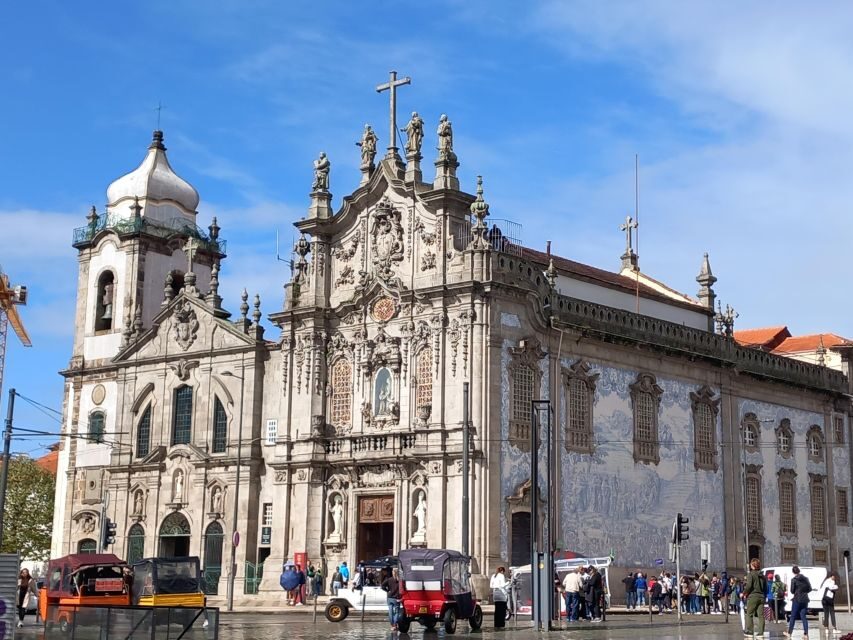
Early on, you’ll hear about Carmo and Carmelitas—the twin churches—and you’ll also get pointed toward nearby landmarks you might otherwise miss at a glance, including the famous Livraria Lello. Even if you don’t step inside Lello, the way it’s woven into the walk gives you a better sense of why Porto’s street corners feel so specific, not interchangeable.
Practical note: you’ll be on your feet for about 3 hours through streets and stairways. Porto rewards you if you slow down and look up, but it punishes you if you wear the wrong shoes.
You can also read our reviews of more walking tours in Porto


Twin churches, Praça de Gomes Teixeira, and the Porto you can feel
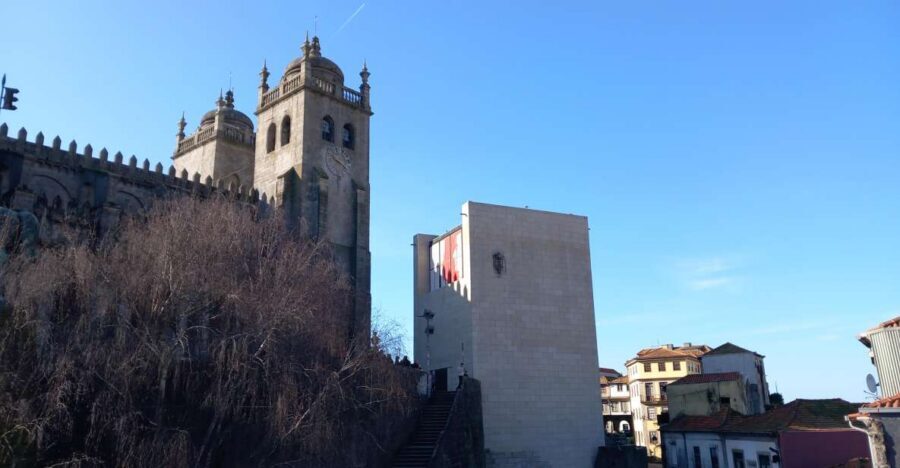
The heart of this tour is that it trains your eye. Instead of rushing, you’re guided to notice what changes block by block—church façades, narrow lanes, and the way squares connect to uphill streets.
A key moment early is the stop around Praça de Gomes Teixeira, where your guide sets context for what you’re about to see. This is the stage where Porto’s mix of Portuguese life and architectural ambition becomes clear: religious buildings, cultural landmarks, and civic identity all overlap.
This part also matters because Porto’s famous sights don’t sit alone. They’re surrounded by “in-between” streets that hold the atmosphere. Your guide threads those streets into the story, including legends along the way. That doesn’t mean you’ll hear a campfire fantasy for sport. It means the city’s character—its humor, pride, and old rivalries—shows up in the details you notice while walking.
And because it’s private, you can ask things that pop into your head. Like: why do these churches look paired? Why do tiles show history? Why does the riverfront feel like its own world? This tour is built to answer those questions while you still have the visual context.
Clérigos Church and the 76m tower moment
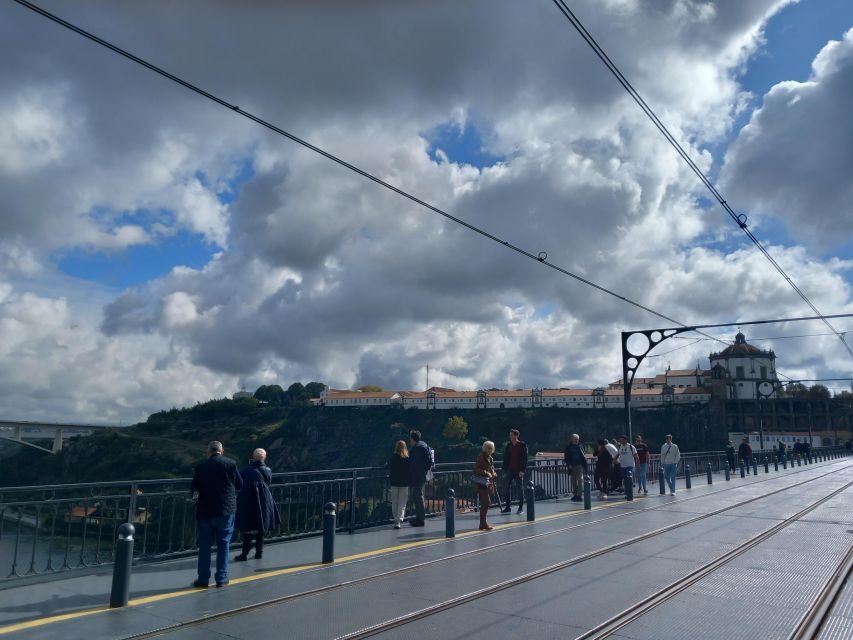
One of the strongest visual anchors of Porto is the Clérigos area, and the tour puts you there at a good time. You’ll visit Clérigos Church and get that classic sense of Porto’s skyline ambitions with the 76m (249ft) Clérigos Tower.
The visit isn’t long, but it’s focused—about 15 minutes—so you don’t feel trapped in a hurry-through. Your guide uses the architecture to explain why landmarks like this matter. In places like Porto, it’s not just about “wow, a tall tower.” It’s about how city identity gets built into stone, and how people used buildings as markers of faith, power, and taste.
This is also a good spot to slow down for photos, because the tower gives you a reference point for the rest of the walk. When you later see different elevations and vantage points—especially over the river—you’ll better understand how Porto’s hills and viewpoints connect.
If you prefer your sightseeing to be readable and paced, this stop is a nice balance: impressive without becoming exhausting.
São Bento Station tiles: where history shows up in color
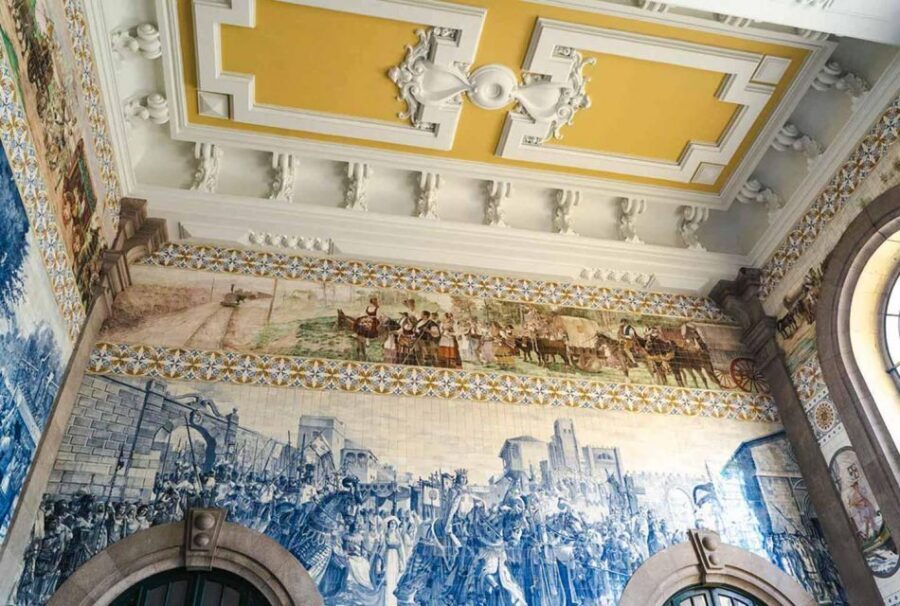
Next you head to São Bento Station, and this is one of the best “free lesson” moments in Porto. You’ll have about 15 minutes here to see the station’s azulejos (painted tile panels). These aren’t just decorative. They’re meant to communicate—Porto’s story and Portugal’s story—through scenes that you can recognize once someone points out what to look for.
It’s a practical stop, too. São Bento is a major transit hub, so your brain already understands it as part of modern life. Then the tiles remind you that Porto’s cultural memory is everywhere, even inside a place you might only pass through.
Here’s what makes this work on a guided private walk: you don’t just “see tiles.” You get a sense of how to read them—so your eyes start catching patterns, themes, and narrative flow. After this, later historic streets feel less like random old stones and more like a connected timeline.
Also worth knowing: the tour is designed to move you through important areas without turning the day into a transportation puzzle. You’re not figuring it out alone while your legs are warming up.
Across D. Luís Bridge: the view that changes how you see Ribeira
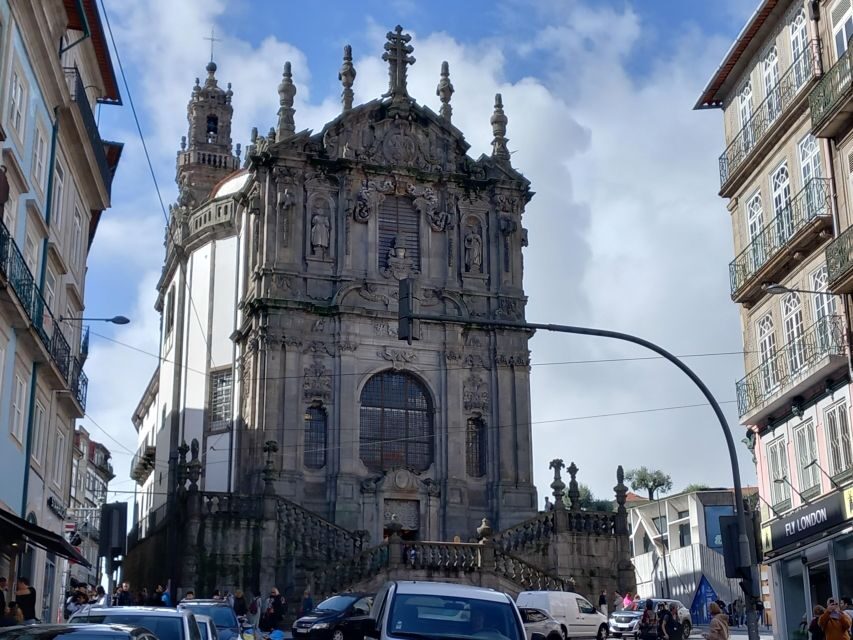
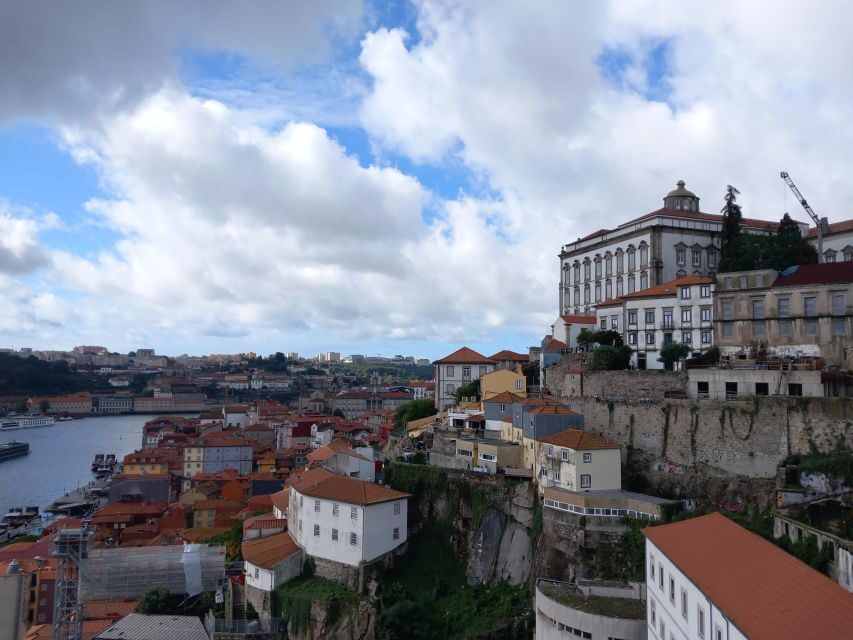
Then comes the big panoramic payoff: a sightseeing walk along the top level of D. Luís Bridge. This section is short but memorable because it’s where Porto stops being “interesting landmarks” and starts being a real place with geography.
From the bridge, you look out over:
- Serra do Pilar monastery
- Fernandine city wall
- the typical Rabelo boats
- and the riverfront area that later becomes the center of your walk
A good guide makes sure you don’t just stare at the water. You learn what you’re seeing and why it matters. The goal isn’t to memorize names like a textbook. It’s to understand the layout so Ribeira feels logical when you reach it.
Because Porto is steep, bridges and viewpoints act like reset buttons for your energy. This is one of the rare moments where you’re not constantly climbing stairways. You get the break, the view, and the mental map.
If you’re the sort of person who plans photos around sunsets, you’ll appreciate how this bridge stop positions you. Even if you’re not chasing golden hour, the riverfront is more than a postcard—after this view, you’ll know where the “postcard” comes from.
You can also read our reviews of more private tours in Porto




Porto Cathedral (Sé): Romanesque solidity and gilded woodwork
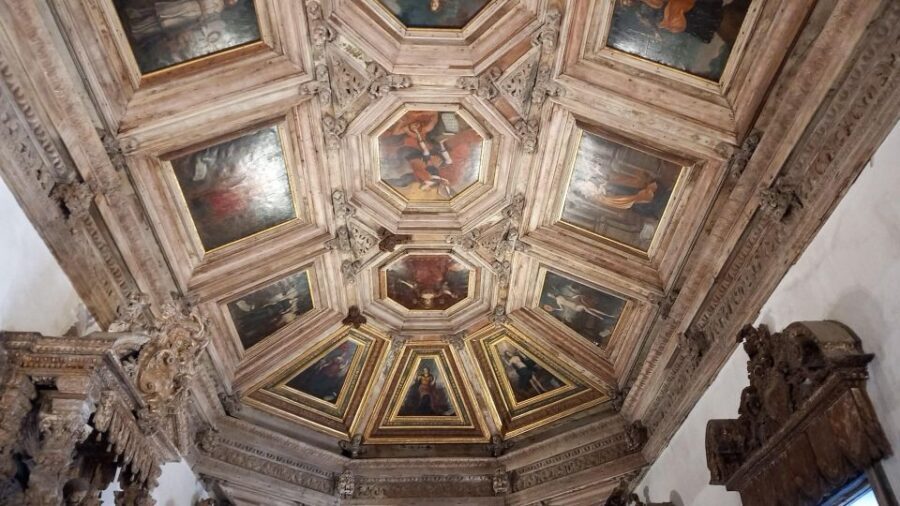
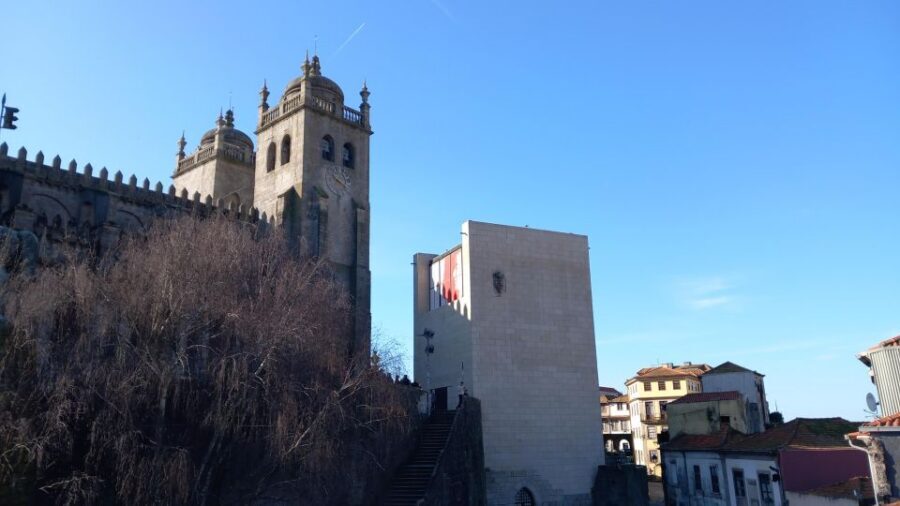
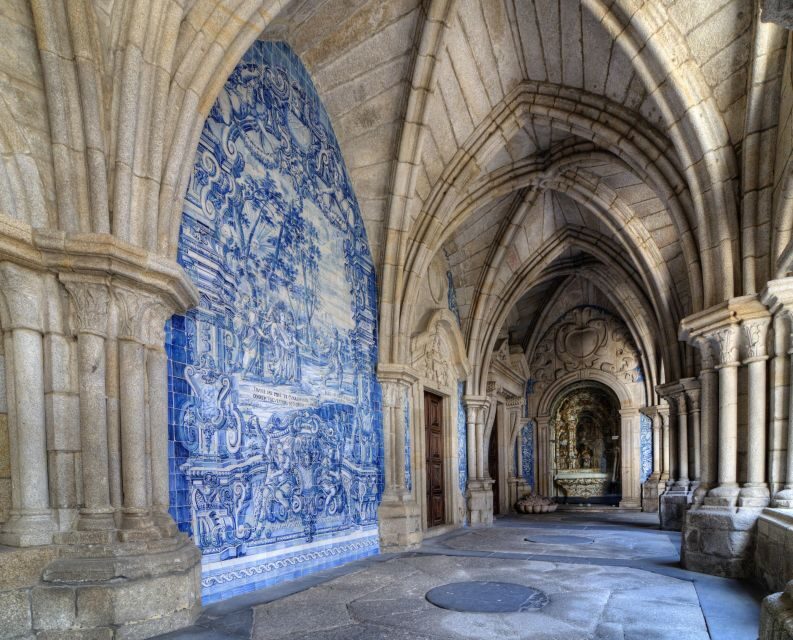
The tour’s indoor anchor is the Porto Cathedral, the Sé. It’s described as the oldest monument in town, and the style matches that reputation: stark Romanesque outside, then a surprising interior experience.
You’ll spend about 40 minutes here. The tour also includes entrance tickets with skip-the-line express security, which helps you spend time looking instead of waiting.
Inside, the highlight is the exquisite gilded woodwork altarpiece. This is the kind of contrast that makes cathedrals so satisfying. You get solidity first—forms that look built to last—then you get ornament that looks like someone refused to keep it plain.
This is also where the guide’s storytelling really pays off. The Cathedral can feel like “just another church” if you wander in without context. With a guide, you’re more likely to notice structural choices, decorative focus, and what the building’s role would have been in Porto’s life.
Practical caution: the Cathedral is closed on Christmas and Easter Days, so this tour can’t run those dates. If your trip lands around those holidays, it’s worth checking alternatives early.
Churches, convent grounds, and the short walk that feels local
From the Cathedral area, you continue on foot toward Igreja de São Lourenço and the Convento dos Grilos. This part is more “walking neighborhood” than big-ticket landmark, and that’s exactly why it works.
Instead of treating Porto as only the top attractions, you get a taste of religious sites tied to daily life and older city rhythms. The walking section helps you transition from the formal weight of the Cathedral to the tighter, more human scale of the medieval streets.
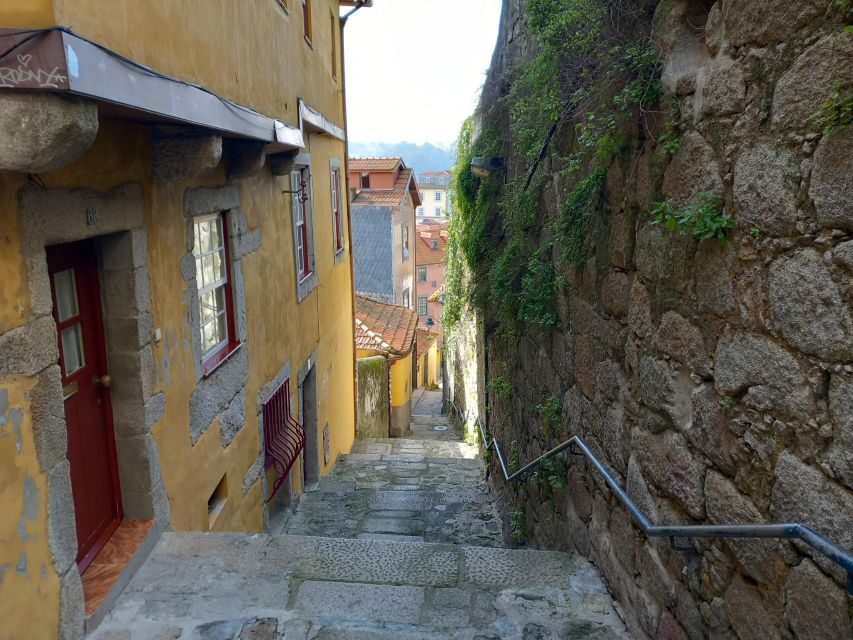
Porto rewards attention here. You start noticing how the city’s slopes shape movement: where stairways funnel pedestrians, how lanes tighten, and why so many corners feel like you’ve stumbled into a scene rather than a street.
If you’re tired already, pace matters. In a private tour, you can slow down without worrying you’re “falling behind.” The goal is to see Porto, not speedrun it.
Ribeira’s medieval lanes to Cais da Ribeira: postcard Porto, earned
Now you reach what many people think of as postcard Porto: the Ribeira district and the riverfront at Cais da Ribeira. The tour takes you down into the medieval feel, with a guided walk through alleys and stairways that make the city’s older layers tangible.
This is where you get the “ambience” that the brochure promises, but in a real way. You’re not just standing at the waterfront taking pictures. You’re walking the approach—so the riverfront becomes the payoff, not the starting point.
The guide also weaves in local legends and details along the way, which is important. Porto’s charm isn’t only architecture. It’s personality. You start picking up how locals talk about places, what stories stick, and which corners feel meaningful.
At the riverfront, you’ll see outstanding buildings from different periods, including stops near:
- Palácio da Bolsa
- S. Francisco Church
- Ferreira Borges Market at Praça do Infante D. Henrique
This sequence is smart. It puts you near the Age of Discoveries link too, including passing by the old Royal Customs House, known as Casa do Infante. The message is clear: Porto’s wealth and Portuguese history aren’t abstract. They lived along this waterfront and in this administrative space.
The effect is that Ribeira stops being just a pretty place and becomes a working stage of Portuguese trade and identity.
Value check: is $87 per person a good deal?
Let’s talk money in real terms. At $87 per person for about 3 hours, you’re paying for a private guide, guided access through major areas, and included entry to a key site: the Porto Cathedral with skip-the-line express security. You also get São Bento Station and the medieval neighborhood as part of the guided flow.
What you’re not paying for (and should plan around): food and drinks aren’t included. That means you’re doing this tour as a cultural primer, not a meal plan.
So is it worth it? For most first-time visitors, yes—especially if you like context. A self-guided walk can get you to these same sights, but the real payoff here is how the guide connects them. You’ll leave with a mental map and specific pointers for how to spend the rest of your time in Porto.
The private format also matters. Porto is steep and the pacing is part of the experience. If your group wants extra time at São Bento or a slower approach into Ribeira, a private guide can typically adjust. In fact, the guide has handled timing surprises before by suggesting practical changes when transport delays show up.
If you’re the type who hates “cookie-cutter tours” and loves learning why things are where they are, this price feels like good value. If you only want quick photo stops and don’t care about stories, you might find it overkill.
Who should book, and who should skip?
Book this tour if:
- it’s your first time in Porto and you want an efficient, guided route through the essentials
- you care about architecture, tiles, and how history shows up in buildings
- you like a guide who offers practical recommendations beyond the route
Consider skipping if:
- you need wheelchair-friendly access or you have mobility limitations
- you’re visiting on Christmas or Easter, when the Cathedral is closed and the tour can’t take place
- you don’t feel comfortable walking a 3-hour route in a steep city
If you’re somewhere in between, be honest about your walking ability. Porto’s hills aren’t subtle. This tour is manageable for a moderate fitness level, but it isn’t designed for gentle strolling.
If you do book it, wear comfortable shoes. And bring a mindset that you’re going to learn as you walk.
Should you book this Porto Historic Center: Private Walking Tour & Cathedral?
I think it’s a strong choice if you want Porto’s highlights stitched together with real context. The combination of Sé Cathedral, São Bento’s azulejos, Clérigos, the bridge views, and the Ribeira descent makes the city feel coherent fast.
The biggest reason to book is the guide-led storytelling. With Magda Laires Pinheiro Monteiro, the walk doesn’t just show you where to go. It helps you understand what you’re seeing and how it connects to Portuguese identity.
If your dates work, your legs can handle the steep streets, and you want a guided route that goes beyond photos, this is one of the best ways to start a Porto trip.
FAQ
Where is the meeting point for the tour?
You meet in front of Câmara Municipal do Porto (Porto’s Town Hall), beside the statue of writer Almeida Garrett.
How long does the tour last?
The tour duration is 3 hours.
Is this a private tour?
Yes. It’s a private group tour.
What languages are available for the guide?
The live guide is available in English, French, and Portuguese.
What’s included in the price?
A local guide, entrance tickets with skip-the-line access to the Cathedral of Porto, and a visit to São Bento Train Station and the medieval neighborhood are included.
Are foods and drinks included?
No. Foods and drinks are not included.
Does the tour include skip-the-line entry?
Yes. The Cathedral of Porto visit includes skip-the-line entrance (with an express security check).
Is this tour suitable for wheelchair users or people with mobility impairments?
No. It is not suitable for people with mobility impairments or wheelchair users.
Are there any days when the Cathedral visit cannot happen?
Yes. The Cathedral of Porto is closed on Christmas and Easter Days, so this tour cannot take place on those days.
What is the cancellation policy?
You can cancel up to 24 hours in advance for a full refund.