REVIEW · PORTO
Porto Guided Tour to the Historical Center on a Tuk Tuk
Book on Viator →Operated by Portuk · Bookable on Viator
Ready for Porto fast?
This tuk tuk tour is a smart way to get your bearings without spending your whole day on foot. In less than two hours, you’ll glide through postcard-scenic streets and hit a mix of big-name sights and quieter corners, with a Port wine glass included along the way.
I especially like how the tuk tuk can handle narrow, cobbled lanes, so the route actually feels like Porto instead of a quick drive-by. And the guide time is packed with real context—churches, stations, squares, and viewpoints—so you understand how the city is laid out.
One drawback to plan for: it’s a small-vehicle ride, so if you’re sensitive to noise or want nonstop commentary, you may find it a bit hard to hear at times while you’re moving or when traffic slows things down.
In This Review
- Key things that make this tuk tuk tour work
- A tuk tuk intro to Porto’s historical streets
- The route is short, but the stops teach you Porto
- National Theatre São João area: a lesson in how Porto rebuilds
- Muralha Fernandina (Porto’s defensive wall): a “how old is this?” moment
- Porto Cathedral and the pelourinho: power in stone
- Paço Episcopal: a façade that mixes eras
- São Bento Railway Station: the tiles that bring history to the floor
- Squares, fountains, and the city’s name changes over time
- Churches with Porto rococo and tile artistry
- Torre dos Clérigos: the bell tower you’ll recognize instantly
- The best “map moment”: Serra do Pilar’s terrace view
- Bridges: the city’s engineering story in two acts
- D. Luís I Bridge: Eiffel disciple energy
- Ponte do Infante (2003): a record-sized elegant arc
- Port wine, timing, and the ticket math
- Who should book this tuk tuk tour (and who might skip it)
- Should you book this Porto tuk tuk tour?
- FAQ
- How long is the tuk tuk historical center tour?
- Is port wine included?
- Is monument admission included?
- What language is the tour offered in?
- What’s the group setup on the tuk tuk vehicles?
- Is this tour private?
- What happens if the weather is bad?
Key things that make this tuk tuk tour work
- Port wine included: a small taste that adds a local touch.
- Tuk tuk access: narrow lanes and tight turns you can’t easily do by bus.
- Photo-friendly pacing: frequent short stops (often 5–10 minutes) so you can grab angles without long lines.
- Big viewpoints: Serra do Pilar’s terrace view helps you connect Porto’s neighborhoods instantly.
- English-guided: offered in English, with a driver/guide who keeps the flow moving.
- Admission not included: you’ll see many highlights from the outside; interior visits cost extra.
A tuk tuk intro to Porto’s historical streets
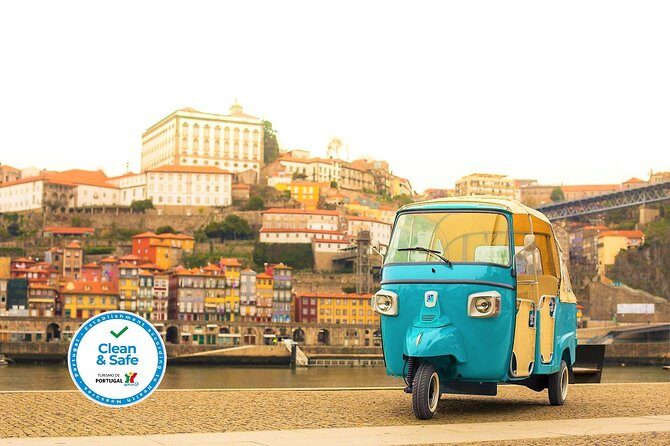
Porto can feel like a puzzle at first. Hills, river views, and tight historic lanes all crisscross together. This tour is built for your first day brain—when you want the lay of the land more than you want a museum marathon.
You meet at R. de Augusto Rosa 180 (4000-528 Porto). From there, you’re on the move quickly. The tuk tuks used here can carry 2, 3, or 4 adults (average height up to 75 kg each). If your group is larger, you’ll ride in multiple tuk tuks, but you still keep the same stop sequence and timing. That matters because you don’t end up separated for half the tour.
Also, it’s offered as a private tour. That’s a real value when you’re traveling as a couple, family, or small group and you don’t want to listen to headphones for other people’s questions. Your guide can tailor small moments—where to stand for a photo, how to walk the next street, and which views are worth pausing for.
You can also read our reviews of more guided tours in Porto


The route is short, but the stops teach you Porto
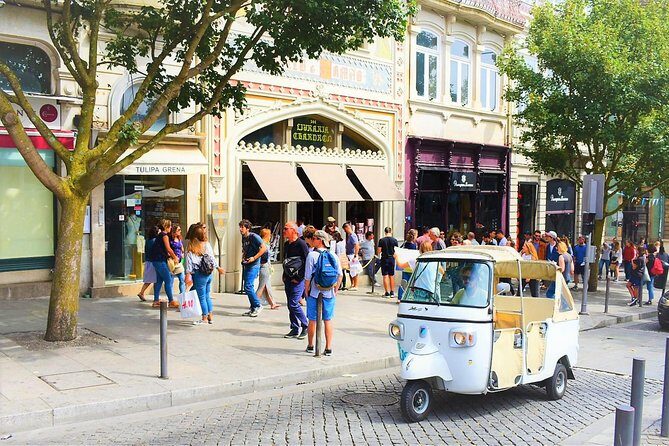
The schedule is tight at about 1 hour 50 minutes, so the magic isn’t in lingering. It’s in the way the stops stack: architecture, civic spaces, and viewpoint geometry. You leave with a mental map that makes your self-guided wandering much easier.
National Theatre São João area: a lesson in how Porto rebuilds
Early on, you’ll pass a landmark theatre building tied to the ruins of the Real Theatre, which burned in 1908. The structure you see was constructed in 1910, and it’s designed by Marques da Silva. Even if you don’t go inside, it’s an important example of Porto’s early 1900s style—plus the connection to theatre culture that helped shape the city.
Why this stop matters: it shows you Porto isn’t frozen in medieval time. It updates, rebuilds, and layers eras. Even from the outside, you’ll notice the façade details and the idea of theatre as a public gathering space.
Quick heads-up: this stop is described as an exterior visit. Monuments entrance is not included, so treat these early sights as look-and-learn stops rather than guaranteed interior time.
Muralha Fernandina (Porto’s defensive wall): a “how old is this?” moment
Next comes one of Porto’s best “wait, that’s right here?” surprises: the Muralha Fernandina do Porto. This wall stretches roughly 3,000 steps and was built between 1368 and 1437. It’s a military-architecture heritage piece, funded through wine-related taxes (Sisa do Vinho, as described).
This is one of those stops that gives you instant perspective. The wall isn’t just a monument—it explains why the city feels like it bends and funnels. When you later walk streets on your own, you’ll recognize the logic behind certain tight streets and uphill routes.
Porto Cathedral and the pelourinho: power in stone
You’ll then reach Porto Cathedral, with construction dating to the 12th/13th centuries in Romanesque style. It was enlarged and renewed across centuries, ending with a twentieth-century reconstitution of the medieval cathedral setting.
Right nearby is the pelourinho terrace monument area (linked to the Cathedral complex). In 1940, buildings around the Cathedral and bishop-related residences were demolished under the Estado Novo policy, and a paved terrace was created. A stone monument was placed later (constructed in 1945), reproducing a drawing from 1797.
Why it’s worth a quick stop: it shows you how public authority and local government were physically displayed—then re-displayed—over time.
You can also read our reviews of more historical tours in Porto





Paço Episcopal: a façade that mixes eras
You’ll also see the Paço Episcopal (episcopal residence), likely with origins in the 13th century, then remodeled in 1737 (attributed to Nicolau Nasoni, based on the description). The building’s façade features a full arch, pilasters, and decorated fronton details, including a coat of arms connection.
This stop is quick (about 5 minutes), but it’s a good example of how Porto’s “cathedral area” isn’t only religious. It’s civic, political, and administrative too.
São Bento Railway Station: the tiles that bring history to the floor
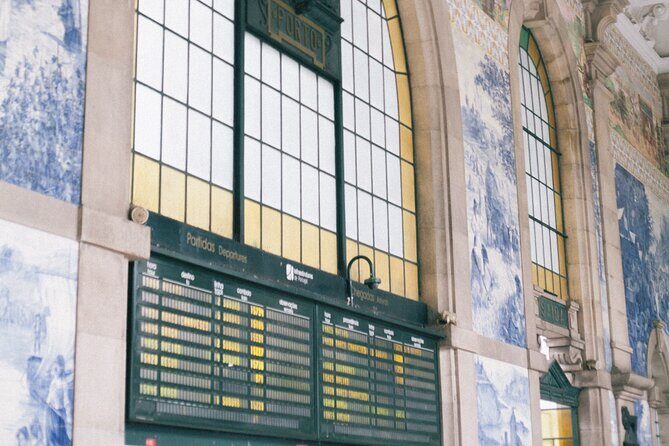
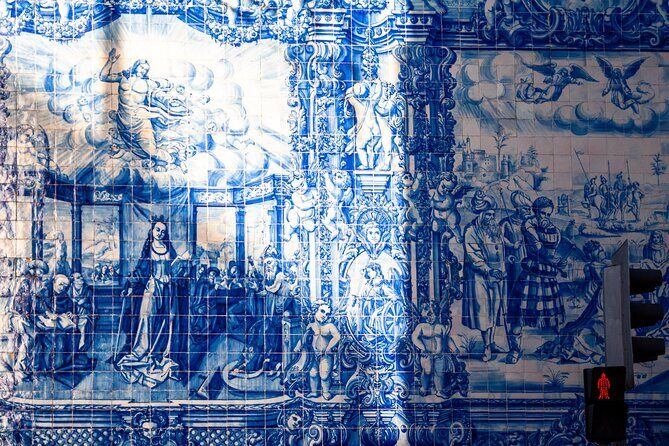
Then comes one of Porto’s most famous interiors—São Bento Railway Station. The station lobby is famous for narrative tiles: about 20,000 painted azulejos by Jorge Colaço.
You’re there for around 10 minutes, and since it’s free entry, you can usually take your time. But with only a short window, don’t try to read everything. Instead, pick a theme: look at battle scenes, daily life, and the way the tile stories cluster in panels.
Practical tip: bring your phone camera settings ready. The tile surfaces are detailed, but indoor light can be uneven. You’ll get better results with quick burst shots.
Squares, fountains, and the city’s name changes over time
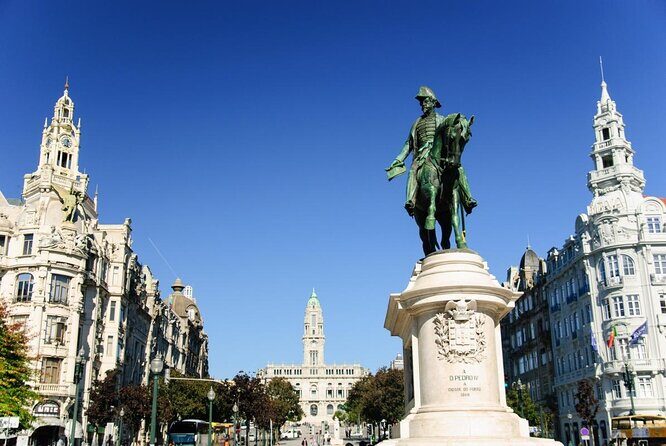
After the station zone, the tour moves through squares with layered identities. You’ll hear about urban changes beginning in 1718, when streets were planned and an ample new square (Praça Nova) was created. Earlier names like Praça dos Ferradores (Square of Blacksmiths) show how the area’s daily trades shaped its identity before palaces and monuments changed the feel.
You’ll also pass a fountain of lions (Fonte dos Leões). It’s a 19th-century fountain cast by the Val d’Osne foundry in France, and it’s described as a copy, largely, of a fountain in Leicester, England.
These are quick stops, but they add variety. You’re not only seeing buildings—you’re seeing how public life played out in open air.
Churches with Porto rococo and tile artistry
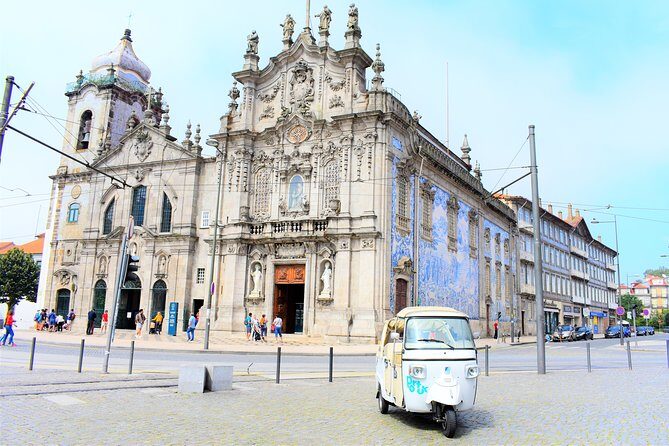
The route includes two church exteriors described with strong Porto rococo and tile details. One is tied to a classical façade dated to the 1850s, with an altarpiece noted as a “Porto rococo” style work. The other is described as a late-18th-century rococo standout, with a lateral façade covered with tiles in 1912 designed by Silvestre Silvestri. The building is designated a national monument.
Even if you don’t go inside, these exteriors are visual proof that Porto’s style isn’t one-note. Pay attention to the façade curves, the interplay of tile colors, and the overall theatricality of the front elevations.
Torre dos Clérigos: the bell tower you’ll recognize instantly
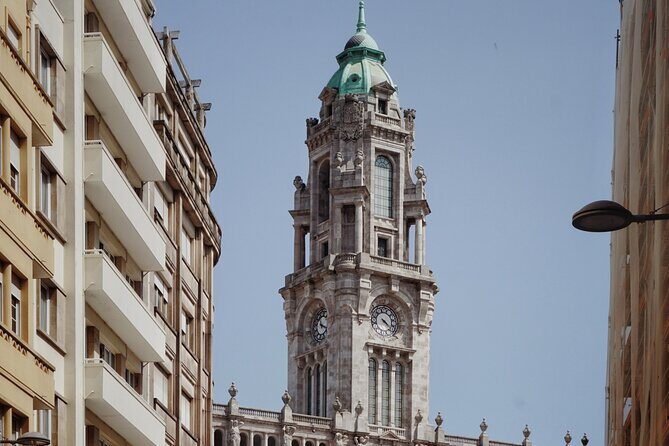
You’ll also see Torre dos Clérigos, part of the Clérigos Church. The tower is a Baroque symbol and one of Porto’s most recognizable silhouettes from many angles in the city.
Your stop here is short, about 5 minutes, and entrance isn’t included. Still, it’s a great moment to connect what you see today with what you’ll spot later on walking routes and bridge views.
The best “map moment”: Serra do Pilar’s terrace view
By the time you reach Mosteiro da Serra do Pilar, your brain will start to click. This is a World Cultural Heritage site, with construction starting 1538 and finishing around 1670. It began for Augustinian Friars connected to the Monastery of Grijó, then was affected by the Civil War of 1832–1834, when the liberal army settled there. Restoration efforts are described as later coming through groups connected to the Lady of the Pilar devotion.
Here’s the standout feature: the church is circular with a dome and surrounding balcony, and the cloister is also circular with 36 Ionic columns, described as the only example of this type in Portugal.
Then you get the part you’ll remember: from the grand terrace, you can see Porto and Gaia riverside areas—including views toward the Arrábida Bridge, plus emphasis on the Cathedral and D. Luís I bridge. On the opposite side, you’ll also see areas including Fontainhas and the São João bridge.
Your time here is about 15 minutes, and that’s just long enough to do two things: take a calm look, then reframe for better photos once you understand the line of the river and how the bridges sit relative to the cathedral area.
If it’s rainy, plan for the view anyway, but protect your gear. One review noted a rainy day in a tuk tuk and recommended a raincoat—good advice. Porto’s weather can change fast, and a wet deck on a viewpoint is not the place to be fiddling with umbrellas.
Bridges: the city’s engineering story in two acts
After Serra do Pilar, the tour shifts toward Porto’s famous engineering landmarks.
D. Luís I Bridge: Eiffel disciple energy
You’ll pass D. Luís I Bridge, planned by Teófilo Seyrig (described as an Eiffel disciple) and inaugurated in 1886. It has two overlapping iron decks. The bridge is 395 meters long and 8 meters wide, with an arch described as the world’s biggest one in forged iron. The upper deck today is used by the Porto Metro, connecting the Cathedral area to Garden of Morro and Avenida da República in Vila Nova de Gaia.
Even from the viewing points, it’s worth letting your mind do one quick comparison: imagine it as transportation infrastructure, then imagine it as a skyline.
Ponte do Infante (2003): a record-sized elegant arc
Next comes the 2003 bridge planned by engineer Adão da Fonseca, replacing the upper deck lane of the D. Luís I Bridge that’s now used by metro line D. This bridge is described as Maillart-type, with a 371-metre long and 20-metre wide deck, and an arch span of about 280 meters, described as a world record in its type and one of the most elegant.
You’ll understand why this matters if you like structures that feel both strong and light. Porto’s river crossing story is not just about moving people—it’s about design and bold choices.
Port wine, timing, and the ticket math
Let’s talk value, because this tour is priced at $42.33 per person (duration about 1h50). That price isn’t only for a ride. You’re paying for:
- Transport by tuk tuk (so you can reach lanes a larger vehicle struggles with)
- A driver/guide
- A Port wine glass included
- A structured route that hits many major and minor highlights without you planning each turn
You’ll notice something important: monument entry tickets aren’t included. That means you’ll often get exterior viewing, short interior moments where it’s free (like São Bento), and a taste of places that you can revisit later on your own.
If you’re the kind of traveler who likes to come back for interiors—especially for churches and big-ticket sites—this tour is a great primer. If you want long indoor time at paid attractions right away, you’ll probably feel like you’re standing at the door more than inside the room.
Who should book this tuk tuk tour (and who might skip it)
This tour is ideal when:
- You have limited time and want quick orientation.
- You’d rather spend your energy walking after you understand the city layout.
- You want a guided pass through scenic streets that larger buses can’t manage well.
It’s also a strong pick for families. One review described a great experience for young kids, with a memorable viewpoint stop that kept everyone happy.
You might consider something else if:
- You want a deep, slow museum-style pace with long interior visits.
- You’re extremely sensitive to audio while riding (some people found it hard to hear during movement).
- Your group size is large enough that seating details matter. Tuk tuks have limited capacity, and reviews include at least one moment where the comfort felt tight for extra people.
Finally, go in with weather in mind. The experience requires good weather, and when conditions aren’t right, you’ll be offered an alternate date or a refund. In wet weather, a raincoat is a practical move.
Should you book this Porto tuk tuk tour?
If this is your first or second day in Porto and you want to get your bearings fast, I’d book it. The mix of historic streets, key landmarks like São Bento, and the big terrace viewpoint at Serra do Pilar gives you enough context to make the rest of your trip feel intentional.
I’d especially book it if you like two things: scenic street-level travel and a guide who helps you connect what you’re seeing to how Porto developed. The included port wine is a small detail, but it makes the ride feel like a Porto experience instead of a checklist.
FAQ
How long is the tuk tuk historical center tour?
It runs for about 1 hour 50 minutes (approx.).
Is port wine included?
Yes. A glass of Port wine is included.
Is monument admission included?
No. Monument entrances are not included.
What language is the tour offered in?
The tour is offered in English.
What’s the group setup on the tuk tuk vehicles?
Each tuk tuk can hold 2, 3, or 4 adults (up to 75 kg each). For larger groups, multiple vehicles are used, but the group keeps the same stops at the same time.
Is this tour private?
Yes. It’s a private tour/activity, and only your group participates.
What happens if the weather is bad?
This experience requires good weather. If it’s canceled due to poor weather, you’ll be offered a different date or a full refund.