REVIEW · PORTO
Porto: Historical Center Walking Tour
Book on GetYourGuide →Operated by Footstepers · Bookable on GetYourGuide
Porto’s old streets make fast sense on foot. This 2.5-hour Historical Center walking tour is built like a practical map, so you see the main bones of the UNESCO site without spending your whole day guessing where to go next. Two things I especially like: you get a clear orientation to the Historical Center layout, and you also get to stand in front of heavyweight sights like the Sé Cathedral area and the Bishops Palace.
One thing to consider: this walk is not for people with mobility impairments. Between stairways (hello Ribeira) and the uphill move toward the Jewish Quarter, the comfort level depends on your willingness to walk.
In This Review
- Key takeaways before you go
- Entering Porto’s UNESCO Historic Center Without the Guesswork
- Starting at Estátua de Vímara Peres: A Simple, Good Launch Point
- Sé Cathedral and the Paço Episcopal: The Faith Story Behind the Stones
- Ribeira, the River Traders, and the Stairways You’ll Actually Remember
- The Jewish Quarter Move Toward Juderia do Olival
- Palacio da Bolsa and the Vitória Area: Porto’s Power on Display
- The Defensive Wall Loop: How the City’s Structure Still Shapes Your Walk
- Clérigos Church, Lello Bookshop, and Cordoaria Monuments
- Avenida dos Aliados and São Bento Station: The City’s Big-Stage Moments
- Pace and Comfort: Why the 2.5 Hours Works
- Price and Value: What $32 Buys You in Porto
- Who This Tour Fits Best (And Who Should Skip)
- A quick booking check before you commit
- Should You Book This Porto Historical Center Walking Tour?
- FAQ
- Where does the tour meet?
- How long is the Porto Historical Center walking tour?
- How much does it cost?
- What languages is the guide available in?
- Is the tour suitable for people with mobility impairments?
- What should I bring?
- Are there rules during the tour?
- Is it possible to cancel for a full refund?
Key takeaways before you go
- Start at Estátua de Vímara Peres near Sé Cathedral, so you begin with the right landmark
- Sé Cathedral + Paço Episcopal give you context for Porto’s religious influence
- Ribeira and its stairways help you understand why this city faces the river so strongly
- Judia do Olival is the payoff for anyone who wants Porto’s Jewish chapter, not just the postcards
- Cordoaria and the monument loop connect multiple famous stops in one logical route
Entering Porto’s UNESCO Historic Center Without the Guesswork
Porto is one of those cities where it’s easy to wander… and also easy to miss the connections. This tour fixes that. The route is designed to help you understand how different parts of the city relate to each other: where power sat, where trade moved, and why the streets wind the way they do.
You start near the Sé Cathedral area, which is a smart move because it anchors the story. From there, the walk becomes a repeating theme: you move through different layers of the city, then you see how those layers still affect what you notice today—street angles, views, the placement of major monuments, and even the feel of neighborhoods like Ribeira.
You can also read our reviews of more tours and experiences in Porto.



Starting at Estátua de Vímara Peres: A Simple, Good Launch Point
The meeting point is right by the Estátua de Vímara Peres, next to Sé Cathedral. That’s helpful because you’re not hunting your guide in a maze of side streets.
You’ll get your bearings immediately. The guide sets expectations for the day’s route and explains how the historical center is laid out, so you’re not just collecting photos. You’re learning a pattern you can reuse later when you wander on your own.
If you like walking tours that give you structure, this one fits. If you hate being on a schedule at all, you might find the frequent short stops feel “guided” (because it is).
Sé Cathedral and the Paço Episcopal: The Faith Story Behind the Stones
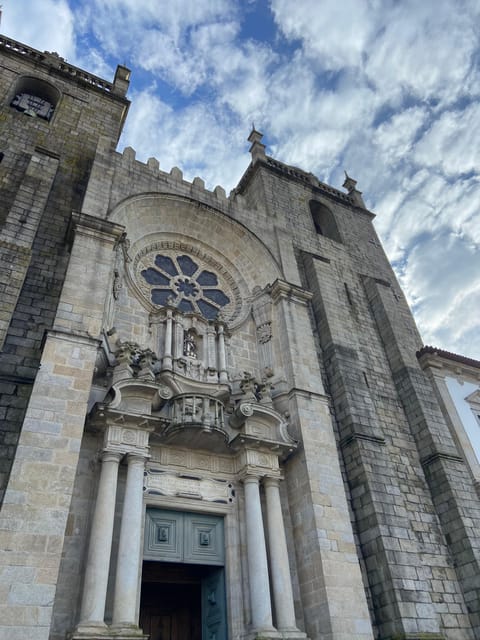
The tour begins with a guided stop at Porto Cathedral (Sé). Expect a short orientation-style visit, not a long sit-down. But the guide’s job is to connect what you’re seeing to why it matters.
This is where you get context about religious influence in Portugal, and specifically the Judeo-Christian framework that shaped how power and culture developed. You’ll also visit the Paço Episcopal area (the Episcopal Palace region), which helps you connect the cathedral to the broader church authority in the city.
Practical note: these areas can feel busier when cruise crowds land. Going early in the day (depending on your departure time) can make the photos and the listening experience easier.
Ribeira, the River Traders, and the Stairways You’ll Actually Remember
Next you head toward Ribeira, Porto’s riverside neighborhood. This part of the walk is about trade and movement—how the city’s relationship with the river shaped daily life.
You’ll also spend time with the “how do you get anywhere here?” reality. Ribeira is famous for its slopes, alleys, and stairways, and the guide helps you interpret the street pattern. Instead of just thinking, wow, this is steep, you’ll understand why the streets and levels developed that way.
If you like cities that make you feel the geography, this is a highlight. You get a sense of the historical logic: where people would gather, where activity clustered, and why the riverfront mattered so much.
The Jewish Quarter Move Toward Juderia do Olival
One of the most interesting segments is the walk up toward the Jewish Quarter of Juderia do Olival. This isn’t just a sightseeing beat. The guide frames it as part of the city’s deeper cultural layers, not a standalone attraction.
You’ll appreciate this more if you’re the type who likes history that shows up in real neighborhoods. The walk up also gives you a breather from the busiest riverfront feel. You trade waterfront bustle for angles, quieter streets, and a viewpoint-friendly pace.
Just be honest with yourself: uphill walking takes energy. Wear good shoes and bring water if your tour time overlaps warmer hours.





Palacio da Bolsa and the Vitória Area: Porto’s Power on Display
As the tour loops around the center, you visit Palácio da Bolsa, and you’ll also cover the Vitória area. These stops connect to how Porto organized commerce and governance—what public buildings looked like when they were meant to impress and control.
Palácio da Bolsa is especially useful to see with a guide because it’s easy to treat major buildings like photo stops. With context, you notice the symbolism and the city planning logic behind where things were placed.
Vitória works as a transition neighborhood too. It helps you feel the shift from the river trade zone into the higher-importance areas where monumental architecture becomes more frequent.
The Defensive Wall Loop: How the City’s Structure Still Shapes Your Walk
A standout feature of this tour is that it follows the XIV century defensive wall path to loop around the historical center. That matters because it turns the walk into more than a “see sights” checklist.
When you follow the logic of a defensive wall route, the city starts to make sense. Views come in where you’d expect them. You notice how neighborhoods sit in relation to one another. And the major monuments feel less random, more intentional.
Along this loop, you get pointed introductions to big-name sights tied to the walk. The guide also points out major monuments such as St. Francis Church, the Palace of Justice, and the Clérigos Tower area, plus stops that help you link the route to iconic postcards.
This is one of those tours where you end with more confidence walking the city afterward. You’ll look at streets and think, I understand the why of this now.
Clérigos Church, Lello Bookshop, and Cordoaria Monuments
The Clérigos Church and the Livraria Lello & Irmão area are the stops most people come to Porto hoping to see. On this walk, they’re not treated like isolated icons. They’re placed in the wider rhythm of the city center loop.
Clérigos is about vertical Porto energy—the kind that makes you look up and keep moving. The guide’s explanation helps you connect the church area to nearby monumental points rather than just standing there for a quick photo.
Then comes Livraria Lello, which is famous enough to have a long line at peak times. This tour gives you a guided block of time, so you’re not losing the whole visit trying to figure out what you’re looking at.
From there you move into the Cordoaria zone, where the tour aims to connect a set of famous city monuments in a way that feels logical. It’s the kind of route that helps you avoid the common mistake of bouncing between far-apart spots and wasting half your day in transit.
Avenida dos Aliados and São Bento Station: The City’s Big-Stage Moments
You finish with two big public-facing landmarks: Avenida dos Aliados and São Bento Station.
Avenida dos Aliados is the grand promenade feeling: the straight lines, the civic vibe, and the sense of Porto as a city that knows how to present itself. It’s also a great place for your brain to reset after the narrower lanes and stairways.
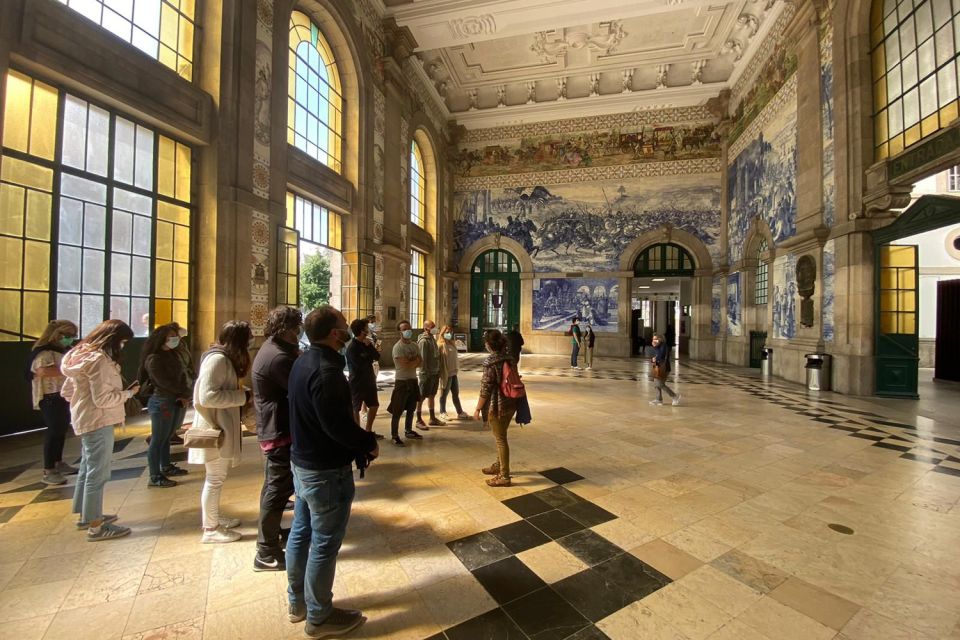
São Bento Station is a different kind of wow—its famous interior tile work and visual storytelling. This stop is guided for about 30 minutes, which is long enough to let the details land without rushing you out.
Pace and Comfort: Why the 2.5 Hours Works
This tour is 2.5 hours, with short guided segments at each key point. That pace is a feature, not a flaw. It’s how you fit a cathedral area, river neighborhood, Jewish Quarter climb, and multiple monumental stops into one walk.
But it’s also why you should manage expectations. You won’t have hours to linger inside every major site. You’ll get context, you’ll see the major highlights, and you’ll likely want to return on your own if a place really grabs you.
If you can walk comfortably on uneven streets and take stairs, you’ll enjoy this. If hills and steps drain you, plan for a slower day elsewhere after.
Price and Value: What $32 Buys You in Porto
At $32 per person, the value is strong because you’re paying for three things at once: a designed route, a local guide, and time you don’t spend figuring out connections.
You’re not just buying access to monuments. You’re buying interpretation—why the city is shaped the way it is, and how one neighborhood relates to the next. That’s especially valuable on a first visit, when your photos otherwise feel like separate stops.
The reviews back up the “guide quality” piece. Multiple people highlight that the guide, often named Lucas, was personable, adaptable, and able to answer questions. One reviewer even noted an excellent recommendation for port wine from smaller producers after the tour—exactly the kind of practical local tip that makes a tour worth it beyond the walking.
Who This Tour Fits Best (And Who Should Skip)
This is best for you if:
- You’re visiting Porto for the first time and want a map you can remember
- You like religious and cultural context, not just quick photo stops
- You’re comfortable walking a few kilometers and handling stairways
You might skip it if:
- You have mobility limitations that make stairs or uphill sections difficult
- You want long, quiet time inside places rather than a guided route through the center
A quick booking check before you commit
If you’re aiming to get your bearings fast, this tour is a smart first-day move. The route hits major highlights—Sé Cathedral, Ribeira, Palácio da Bolsa, Clérigos, Livraria Lello, Avenida dos Aliados, and São Bento Station—while also adding the cultural angle with the Jewish Quarter route.
If your priority is slow museum-style pacing, you’ll likely want something else. If your priority is understanding Porto and getting a repeatable route, you’ll be happy here.
Should You Book This Porto Historical Center Walking Tour?
I’d book it if you want to leave Porto with a real sense of how the city works—where power sat, how trade shaped life, and how neighborhoods like Ribeira and Juderia connect to the bigger story. The price is reasonable for a guided, structured loop that covers a lot of ground in 2.5 hours.
I wouldn’t book it if steps or hills are a dealbreaker for you. For everyone else who wears good shoes, this tour is one of the best ways to get oriented and then enjoy Porto the rest of your trip with more confidence.
FAQ
Where does the tour meet?
The meeting point is next to the Estátua de Vímara Peres near the Sé Cathedral of Porto.
How long is the Porto Historical Center walking tour?
It runs for 2.5 hours.
How much does it cost?
The price is $32 per person.
What languages is the guide available in?
The live guide offers tours in English and Spanish.
Is the tour suitable for people with mobility impairments?
No. It is listed as not suitable for people with mobility impairments.
What should I bring?
Bring comfortable shoes and comfortable clothes.
Are there rules during the tour?
Yes. The experience does not allow intoxication, littering, or nudity.
Is it possible to cancel for a full refund?
Yes. You can cancel up to 24 hours in advance for a full refund.