REVIEW · COIMBRA
Private Jeep Tour Serra da Lousã and Schist Villages
Book on Viator →Operated by Trans Serrano · Bookable on Viator
Serra da Lousã by Jeep is the kind of day that moves fast. This private route strings together several schist villages and a castle stop, so you get both views and guided context without spending the whole day driving yourself. I like the mix of short, well-timed stops and the fact that the guides bring local know-how to what you’re seeing.
Two things I really like: first, the private jeep setup for up to 8 people means the pace stays comfortable and your group doesn’t get lost in a crowd. Second, the guided visits at places like Talasnal, Candal, and Aigra Nova help you understand what matters locally, not just snap photos. Even the guide names come up clearly in real-world experiences, like Viktor, Daniel, and Pedro Claro, and that kind of consistent care shows.
One drawback to consider: the route runs on rougher tracks (think bumpy jeep time), and the total length depends on whether you do a shorter or longer program. If you’re sensitive to jolts or you’re hoping for lots of free time, you’ll want to plan around the scheduled guided stops.
In This Review
- Key highlights you should know before you go
- How this private Jeep tour works from Coimbra
- Serra da Lousã and the schist villages theme
- Stop 1: Castelo de Arouce – Lousa (short visit, ticket included)
- Stop 2: Aldeia do Talasnal (guided Xisto village stop)
- Stop 3: Aldeia do Candal (guided tour, ticket included)
- Stop 4: Cerdeira (guided visit with admission free)
- Stop 5: Aigra Nova (guided visit, ticket free; linked to the eco-museum)
- Stop 6: Aigra Velha (guided visit in the Góis area)
- Stop 7: Lousa, plus the half-day vs full-day choice
- The jeep ride: bumpy tracks, real-adventure energy
- Guides matter here: Viktor, Daniel, and Pedro Claro
- English and private group value for the price
- Timing and pacing: how to avoid feeling rushed
- Who should book this tour (and who should skip it)
- Should you book this private Jeep tour?
- FAQ
- What time does the tour start?
- Where does pickup happen, and how do I find the guide?
- How long is the tour?
- Is this tour private?
- How many people are allowed per group?
- Is the tour offered in English?
- Are admission tickets included?
- Is lunch included?
- What is the cancellation policy?
Key highlights you should know before you go
- Orange-uniform pickup: you park, wait for the guide, and match with the uniform right away
- Castle ticket included: Castelo de Arouce gets you an official visit with admission included
- Aigra Nova and the eco-museum focus: Aigra Nova is tied to the Schist Traditions Eco-Museum
- Several villages in one trip: Talasnal, Candal, Cerdeira, Aigra Nova, and Aigra Velha show up across the route options
- English-guided, private pacing: offered in English with only your group in the jeep
- Lunch depends on the route: lunch isn’t automatically included, but it may appear in some program options
How this private Jeep tour works from Coimbra
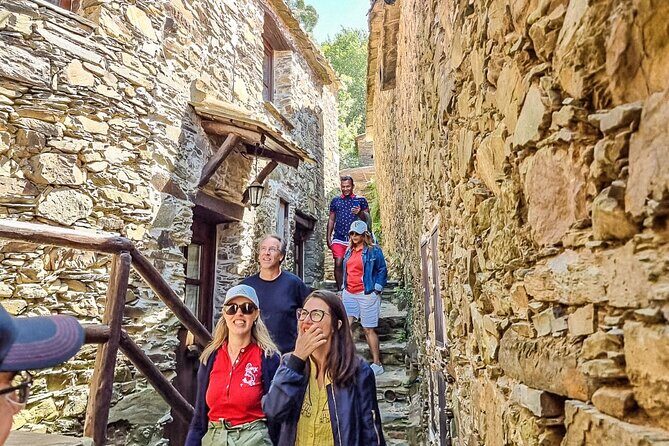
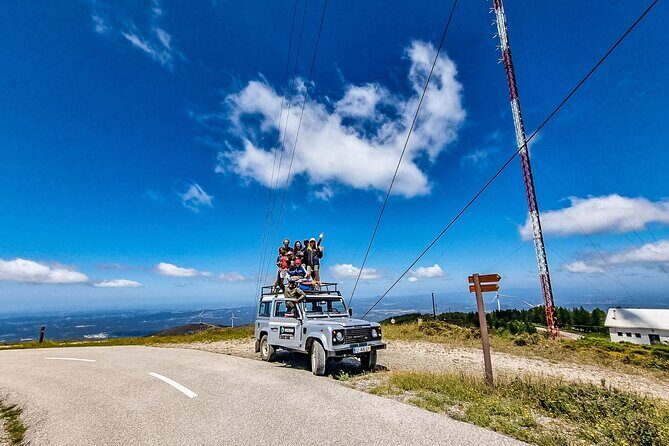
This is a private jeep tour based in the Coimbra area, run by Trans Serrano. The starting point is set for 9:30 am, and the trip ends back where you start. Pickup is simple: you park at the designated spot and wait for the guide to come to you, wearing orange so you can spot them fast.
The group limit is up to 8 people per group, which is a big deal for how the day feels. You don’t have that tense scramble of trying to keep up with strangers while a driver waits. You also get a more natural back-and-forth with your guide, especially if you want clarity on where you are and why that village is worth your time.
The duration is listed as about 3 to 6 hours, and that’s not just a number on a page. It affects how many village stops you’ll get, and how much time you’ll have at the final stretch of the tour around Lousa. The tour operator also notes that the exact village mix can change depending on whether you go for a half-day or full-day style program.
You can also read our reviews of more private tours in Coimbra



Serra da Lousã and the schist villages theme
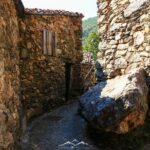
The whole point of the tour is the Serra da Lousã area and the cluster of villages of Xisto (often grouped under “Schist Villages”). The itinerary is designed like a quick circuit: each stop is short, guided, and focused, usually around 20 minutes per village entry.
That matters because these places can be compact. If you have a slow, unplanned day, you can end up spending too much time wandering and not enough time learning. Here, the schedule is built to keep you moving, while still giving you guided orientation in each spot.
Also, you’ll hear local context. Guides on similar routes in this region are known for sharing more than basic facts. In this experience, the information angle shows up through attention to regional traditions, and even details tied to local life in the area, like what you might spot in terms of fauna and flora during the drive and stops.
Stop 1: Castelo de Arouce – Lousa (short visit, ticket included)
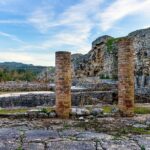
Your first real anchor stop is Castelo de Arouce – Lousa. The visit is scheduled for about 20 minutes, and the admission ticket is included.
Why this stop is worth it: a castle visit gives you a quick historical and geographic reset. Instead of starting with only village interiors and village lanes, you get a higher-stakes landmark right away. It’s also a good way to get your bearings for the rest of the day in the hills and valleys of Serra da Lousã.
How to approach it: keep your expectations realistic. Twenty minutes is not a slow museum day. It’s more like a guided highlight pass—enough time to understand the place and take in the setting, then move on before the group starts to feel rushed.
Potential consideration: if you’re expecting long, standalone castle time, this itinerary is built for breadth, not depth. The value here is stacking experiences, not staying put for hours.
Stop 2: Aldeia do Talasnal (guided Xisto village stop)
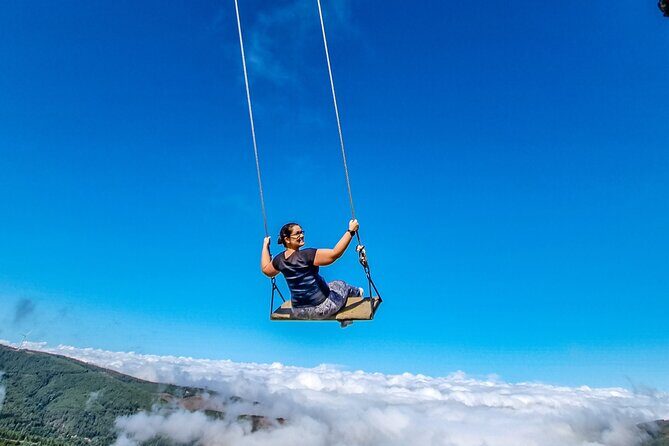
Next comes Aldeia do Talasnal, a guided tour stop in a village of Xisto. It’s also set for about 20 minutes, and admission is included.
Talasnal is one of the stops you’ll see clearly listed, and it works well early or mid-itinerary because it’s paced like a walkthrough. You get enough guided context to notice what makes the village feel distinct, without turning the visit into a long endurance test.
What you’ll likely get from the guide here: explanation tied to regional traditions and how people lived historically in the area. In real-world experiences from this route, guides are praised for being attentive and for giving useful history and cultural context, not just generic commentary while driving.
Potential drawback: if you’re the type who likes to linger, you may feel a little “on the move.” The schedule is tight by design.
Stop 3: Aldeia do Candal (guided tour, ticket included)

Then you move to Aldeia Do Candal, another guided Xisto village stop, again around 20 minutes with admission included.
Candal typically fits the same “quick guided walk” style as Talasnal. This is where you’ll start to see how the villages connect as a system: similar tone and atmosphere across the region, but with different details at each place.
One practical advantage: doing these village visits in a cluster reduces decision fatigue. You’re not trying to pick between villages on your own. The operator is deciding your sequence for you, and that usually means less time wasted arguing with your own itinerary.
Potential consideration: multiple village stops back-to-back can start to blur together if you’re not paying attention to the guide’s differentiators. If that’s you, ask a simple question as you enter each stop: what makes this one different from the last one?





Stop 4: Cerdeira (guided visit with admission free)
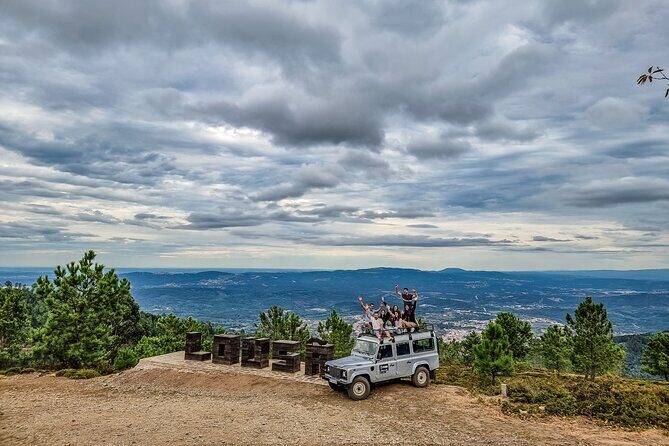
Your itinerary continues with Cerdeira, guided tour time of about 20 minutes. Here, the admission ticket is listed as free.
This is a useful detail for value-minded travelers. Even though each stop is short, the ticket structure across the route suggests the tour operator is mixing paid and free admissions to build a full experience without stacking costs onto the participant.
What to expect in practice: guided time, so you’ll have someone pointing out what to notice. You’ll also get a consistent pacing rhythm from the jeep to the walk, and back again.
Potential consideration: because admission is free, you might get fewer “official stop” moments. But the guided format still gives you a chance to understand what you’re looking at.
Stop 5: Aigra Nova (guided visit, ticket free; linked to the eco-museum)
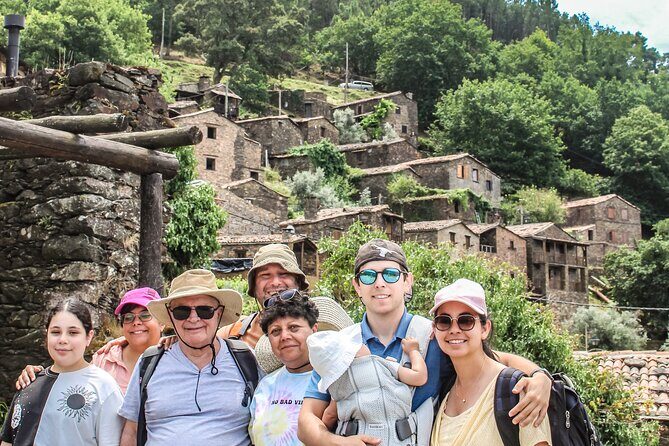
Next is Aigra Nova, another guided Xisto village stop for around 20 minutes, with the admission ticket listed as free.
This stop has an extra layer: Aigra Nova is described as the headquarters of the Schist Traditions Eco-Museum. That makes it the most “learning-forward” stop of the day, especially if you like to understand traditions as living things rather than just photographs.
How to make the most of it: pay attention when the guide shifts from telling you what you see to telling you what the place represents. Eco-museum-linked stops tend to reward curiosity—ask what part of local tradition you should watch for when you wander the village afterward.
Potential drawback: like the other villages, it’s time-boxed. If you’re the type who could spend an hour in a small museum, you may wish this stop had more minutes. Still, the tour is built to keep you moving across multiple sites.
Stop 6: Aigra Velha (guided visit in the Góis area)

After Aigra Nova, the tour includes Aigra Velha, again about 20 minutes, with admission listed as free.
Aigra Velha is connected to Góis (Góis is specifically mentioned). That connection matters because it helps you map where you are geographically. You’re not just doing random village name stops—you’re building a mental model of the Serra da Lousã region and its neighboring areas.
How to approach it: use this stop to consolidate what you learned at Aigra Nova and the earlier villages. Ask your guide, even with a simple question, what traditions or traits people are trying to preserve across these hamlets.
Potential consideration: if you’re tired from the jeep driving, the guided format can still keep you engaged—but it also means you won’t fully switch off. Plan to bring a bit of energy for the final stretch.
Stop 7: Lousa, plus the half-day vs full-day choice
The final major piece is Lousa. This is where the program changes depending on the route length. The operator sets which schist villages you’ll visit for a half-day versus full-day program, but the common rule list includes Gondramaz (Miranda do Corvo), Aigra Nova (the eco-museum HQ), Aigra Velha (Góis), and Candal, Cerdeira or Talasnal (Lousã).
In short: Lousa is your anchor, but the “supporting cast” of villages can shift. This is great if you want flexibility, but it also means you should check your exact itinerary when you book, especially if you have a must-see stop.
About lunch: lunch is listed as not included, but the program notes that it may include lunch. In practice, some program variants have been set up with a regional lunch stop. If lunch matters to your plan, I’d treat it as an add-on that depends on which version you choose.
Practical tip: if lunch isn’t included in your chosen route, the small cafes and restaurants in these villages can be a convenient option. If lunch is included, you’ll be glad you don’t have to hunt for a place while navigating time limits.
The jeep ride: bumpy tracks, real-adventure energy
This tour is on a private jeep, which is part of the appeal. One consistent theme from real experiences with this style of route is the sense of adrenaline and fun from traveling by jeep over rougher ground. You’re not on a smooth highway here. You’re traveling through a hilly region where track quality and turns are part of the story.
That’s exciting if you’re up for it. It’s less ideal if you want a fully relaxed, motion-minimizing ride. If you’re prone to motion sickness, you’ll want to plan accordingly, since the tour is built around getting you to village access points that are easier by jeep than by foot or by normal bus.
Good news: because it’s private and guided, you can often count on the driver and guide to manage the route safely and keep you informed about what’s next. The guides on this route are also praised for being professional and attentive.
Guides matter here: Viktor, Daniel, and Pedro Claro
One reason this tour earns top marks is the human side. Names that show up with strong praise include Viktor, Daniel, and Pedro Claro. The pattern in what people value is consistent: professionalism, friendliness, clear communication, and real knowledge of the region.
I like that the tour doesn’t act like a “drive-by photos only” outing. Guides help you interpret what you’re seeing, including context about history and current life in the area. One important detail: guides often share information not just about buildings or dates, but about traditions and the natural side of the region—things like fauna and flora can come up during the drive or at stops.
That kind of guiding turns the day from sightseeing into understanding.
English and private group value for the price
The price is listed as $263.15 per group (up to 8), with the tour offered in English. That’s a key value lever.
If you’re traveling as a family or small group, private transportation can actually become cost-effective compared to piecing together multiple taxis or renting a car for a half-day. Even if you split among 6 to 8 people, the per-person number usually feels more reasonable than a typical private transfer.
If you’re solo, it’s naturally more expensive per person. But the private nature still can make sense if you want a guide and a direct route through multiple villages without needing a car.
My advice: if you have the flexibility, compare the cost to what you’d spend getting between multiple villages by yourself, plus the time you’d lose figuring it out. This tour trades your effort for someone else’s routing and timing—often a fair exchange.
Timing and pacing: how to avoid feeling rushed
The start time is fixed at 9:30 am, and each listed village stop is about 20 minutes. That means you’ll likely experience a pattern like: short drive, guided stop, quick reset, and then onward.
This works well if you enjoy a structured day. It can feel quick if you want slow wandering time at every stop. The good compromise is to treat each guided stop as your “anchor,” then ask the guide where you might linger briefly on your own if time allows (though the itinerary is time-boxed, so don’t count on extra hours).
Also, pack for comfort on a jeep ride and on short walks. You’ll be getting in and out repeatedly and spending time outdoors during those village visits.
Who should book this tour (and who should skip it)
This tour is a strong fit for you if:
- You want multiple schist villages in one half-day or full-day block
- You like guided context and don’t want to plan a route yourself
- You’re traveling with family or friends and want a private setup for up to 8
Skip it (or choose carefully) if:
- You strongly dislike bumpy jeep rides
- You want lots of free time at each village with no schedule
- Lunch is a must, and you haven’t confirmed whether your specific program version includes it
Should you book this private Jeep tour?
I think you should book if your goal is practical: see several villages of Xisto in the Serra da Lousã region with a guide who can explain what you’re looking at, while riding through the hills in a way that’s hard to recreate on your own.
I wouldn’t book if you want a totally relaxed, slow-paced day with plenty of downtime. This tour is structured for movement, guided stops, and efficient sightseeing.
If you do book, confirm two things when you reserve: which villages are in your exact route for your chosen time length (half-day vs full-day), and whether lunch is part of your selected option. Then you’ll go in with fewer surprises and more satisfaction.
FAQ
What time does the tour start?
It starts at 9:30 am.
Where does pickup happen, and how do I find the guide?
Pickup is offered. You should park at the meeting point and wait for the guide to come to you. The guide wears an orange uniform.
How long is the tour?
The duration is about 3 to 6 hours.
Is this tour private?
Yes. It’s private, and only your group participates.
How many people are allowed per group?
The group size is up to 8 people per group.
Is the tour offered in English?
Yes, it’s offered in English.
Are admission tickets included?
At least one admission ticket is included: Castelo de Arouce has an admission ticket included. Some village stops list admission ticket included, and others list admission ticket free, so what you pay for can vary by stop.
Is lunch included?
Lunch is not listed as included, but the program notes that lunch may be included depending on the route.
What is the cancellation policy?
You can cancel for a full refund up to 24 hours before the experience’s start time. If you cancel less than 24 hours before, you don’t get a refund.