REVIEW · VILA NOVA DE GAIA
Vila Nova de Gaia: Port Wine Tasting with Cheese Pairing
Book on GetYourGuide →Operated by Quevedo · Bookable on GetYourGuide
Cheese makes Port make sense fast. This 1-hour tasting in Vila Nova de Gaia at Quevedo pairs classic Port styles with cheeses, and the guides explain what you’re tasting and why. You also get the feel of a cozy lodge setting, not a rushed conveyor belt.
I like that the lineup shows real variety: you’ll sample three different Port profiles instead of just one flavor path. I also like the pairing method, because each glass comes with a cheese designed to interact with what’s in the wine.
One thing to consider: it’s focused and short. At $30 for three 40ml pours, you won’t leave with a full snack spread or extra bottles, so plan for that if you want a longer food-and-drink evening.
Key Port-and-cheese takeaways
- Three specific Port styles, each matched to a different cheese profile
- Small group (up to 8), which keeps the pacing relaxed
- Family-run Quevedo connection, with vineyards and organic olive groves in the Douro Valley
- A guide-led format where you learn the logic behind the pairings, not just taste
- A practical, no-pressure stop in Vila Nova de Gaia, close to the river vibe
In This Review
- Vila Nova de Gaia: why this is where Port makes sense
- Quevedo’s small-lodge vibe and how the family story fits the tasting
- The exact tasting lineup: 3 Ports, 3 styles of flavor to learn
- Crusted Port plus sheep cheese: where you learn contrast fast
- Tawny 10 years plus paprika cheese: sweetness meets spice
- Colheita 2009 White Port with Azores cheese and jam
- How the guide makes the hour worth your time
- Price and value: is $30 for Port and cheese a fair deal?
- Where this fits on your Porto itinerary (and who it’s best for)
- What to do next with what you learn
- Should you book this Port and cheese tasting at Quevedo?
- FAQ
- How long is the tasting?
- How many Port wines will I taste?
- What cheese is paired with each wine?
- What is the price?
- Is the group small?
- Where do I meet the guide?
- What languages are available?
- Is it wheelchair accessible?
- Is there an option to book without paying immediately?
- Can I cancel for a refund?
Vila Nova de Gaia: why this is where Port makes sense
If you’re basing your Porto trip in Porto proper, Vila Nova de Gaia is where Port life feels real. Gaia is the side of the river where tasting rooms and Port houses do business, and it’s where Port turns from a bottle in your hand into a regional tradition you can actually understand.
This experience works because it doesn’t try to be a whole-day production. In just 1 hour, you get enough structure to tell the difference between styles and to notice what food pairing changes on your palate.
You’ll meet at Quevedo Port Wine and then settle in with a small group. It’s the kind of setup where you can ask questions and still keep your momentum for later in the evening.
Quevedo’s small-lodge vibe and how the family story fits the tasting
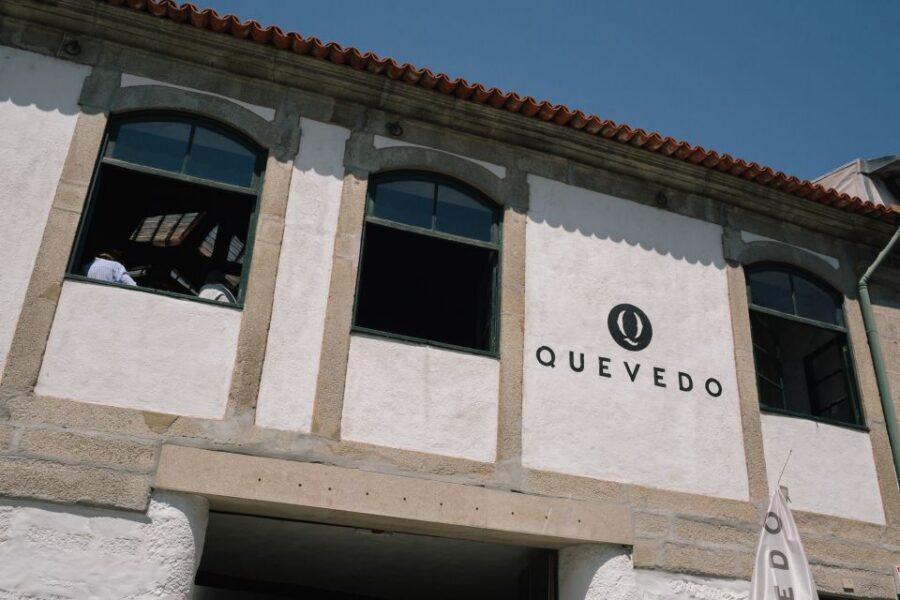
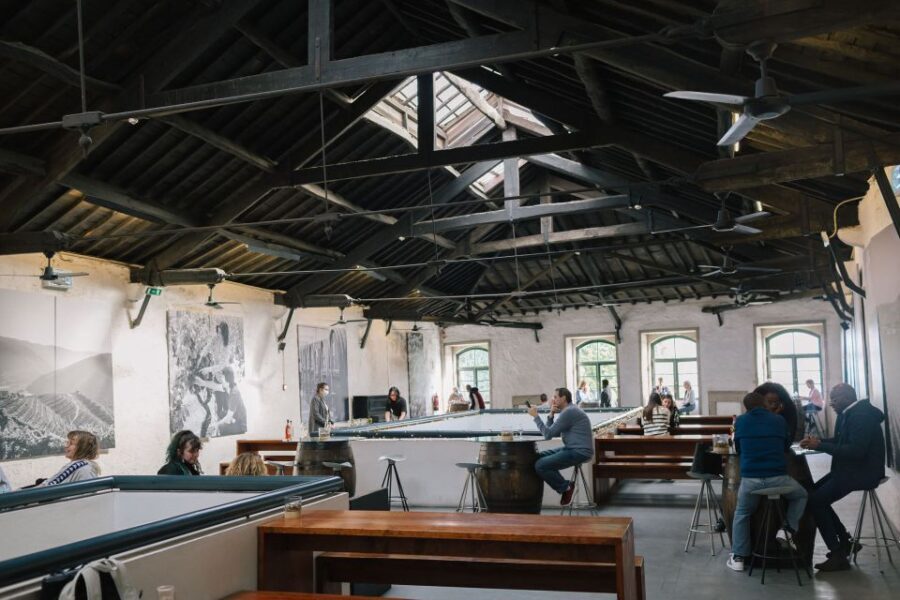
The setting is one of the quiet strengths here. People describe the lodge as welcoming and peaceful, which matters because Port tasting can get overwhelming if you’re in a loud room or standing in a line.
Quevedo is described as a small family-owned business with Port-making heritage across more than five generations. The tour also links that heritage to a specific moment in Portuguese wine history: in 1993, Portugal’s entry into the EU allowed the business to bottle under its own brand. That detail gives context to what you’re tasting—this isn’t presented as a generic Port flight.
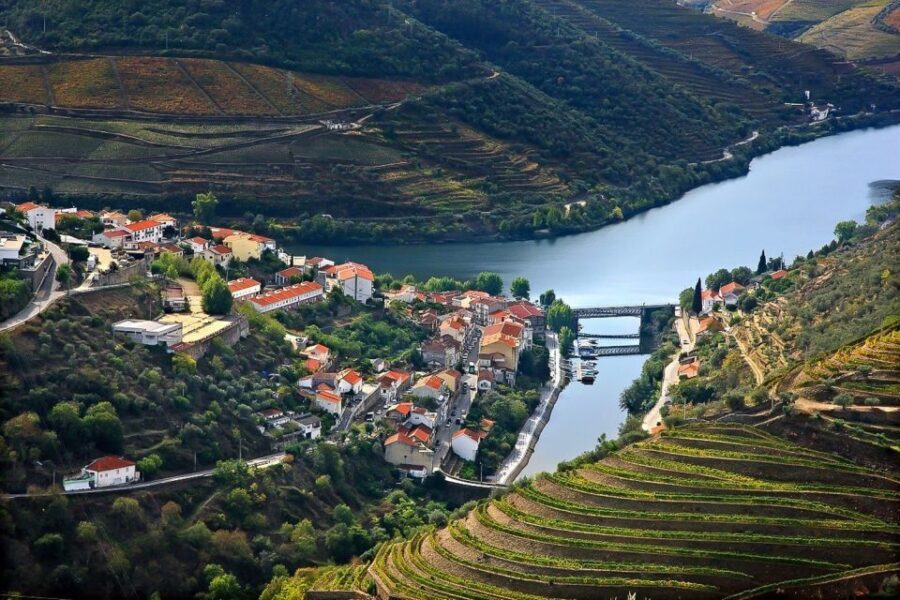
What I like about the way the story connects is that it stays grounded in farming realities. The wines are raised, matured, and bottled in the Douro Valley, and the emphasis is on the idea that quality starts in the vineyard. You’ll hear about 100 hectares of vineyards plus 25 hectares of organic olive groves across five properties in the Douro. For you, that matters because vineyard variation is one of the main reasons Port styles taste different from one producer to another.
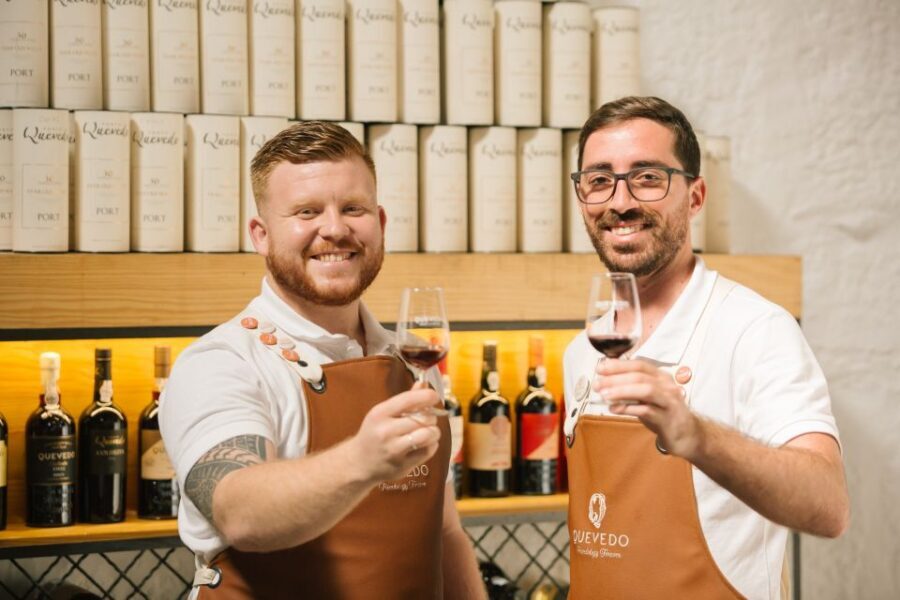
You’ll also notice the tour team uses the guide time to keep things understandable across languages. Reviews mention hosting in Portuguese, English, Spanish, and Russian, and the guides named in experiences such as Miguel, Inês, Fernando, Dima, and Rafael are repeatedly described as friendly and highly communicative. Even if your guide isn’t one of those names, the format is clearly built to keep you in the conversation.
You can also read our reviews of more food & drink experiences in Vila Nova De Gaia
The exact tasting lineup: 3 Ports, 3 styles of flavor to learn
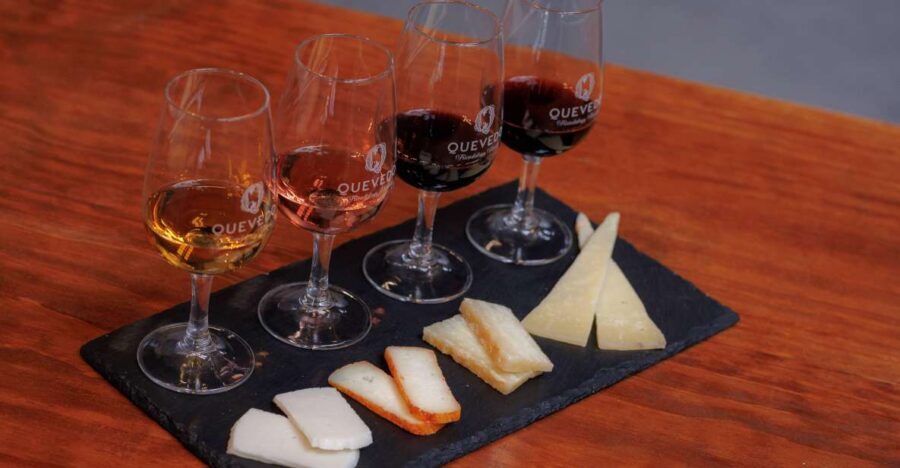
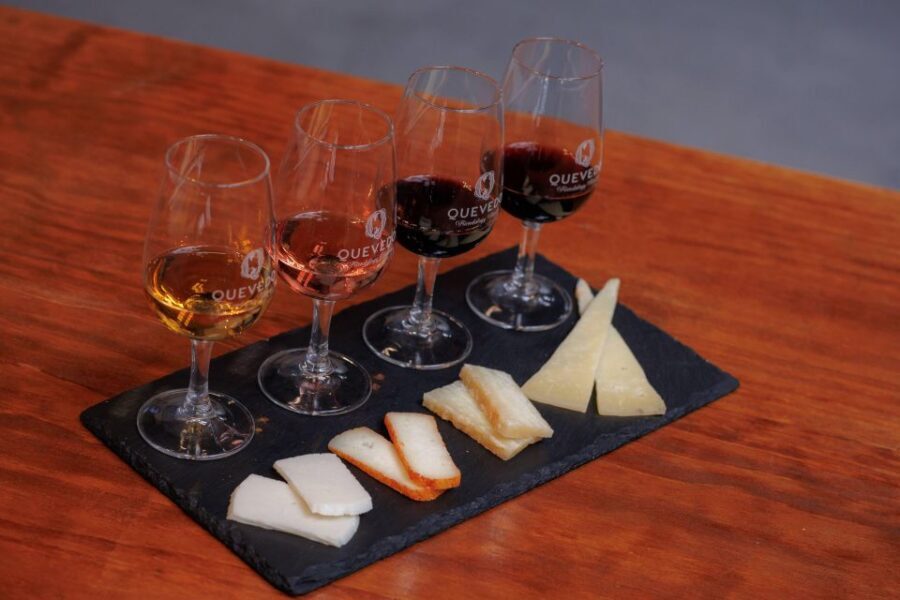
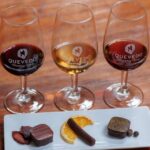
You’re tasting three Port wines, and the tasting portion is consistent: 40ml per pour. That’s a good thing. It keeps the hour balanced and prevents the common problem of people feeling buzzed before they can actually notice differences.
Here’s the lineup, in the order you’ll sample:
- Crusted Port paired with local-aged sheep cheese
- 10-Year-Old Tawny Port paired with aged paprika cheese made from a mix of cow, goat, and sheep
- Colheita 2009 White Port paired with 7-month aged traditional Azores cheese plus local jam
This set is smart for beginners and satisfying for people who think they already know Port. Why? Because you’re getting a range of sweetness, oxidation/age character, and style direction—all while tasting each glass next to a cheese that’s meant to “answer” it.
Also, you’re not left guessing what comes next. The pairing is part of the structure, so the flight becomes a mini lesson plan rather than just three sips.
Crusted Port plus sheep cheese: where you learn contrast fast
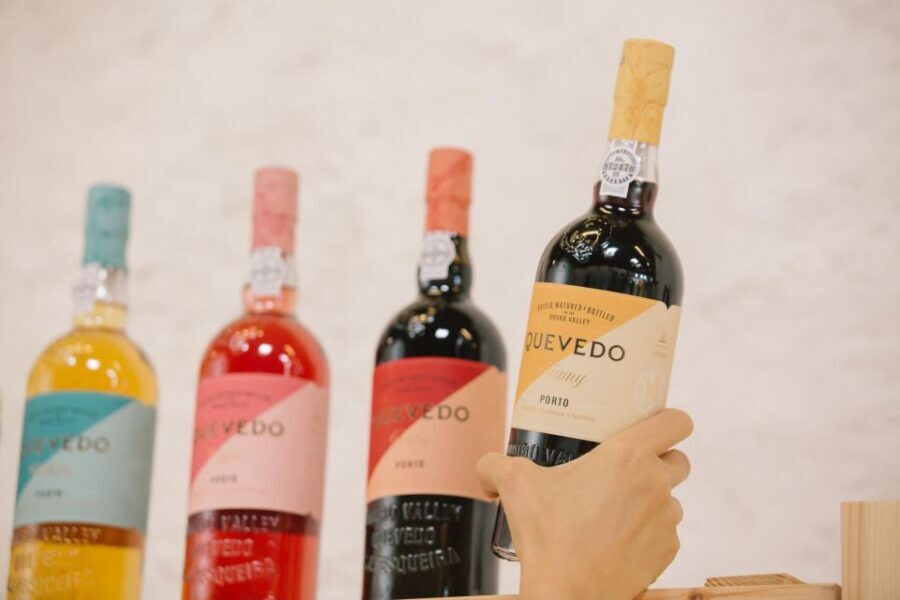
The first pairing is Crusted Port with local-aged sheep cheese. Sheep cheese is often assertive—its flavor can be tangy and pronounced—so it tends to pull attention immediately. For you, that’s useful: it helps you recognize what the wine does in response, rather than waiting until later in the tasting.
Crusted Port tends to feel different from more straightforward categories because of its texture and character as it ages. You don’t need to know technical jargon to benefit here. The guide’s job is to help you focus on what’s on your tongue right now: sweetness level, aroma, and how the cheese changes the feel of the wine.
This first pairing also sets expectations for how the rest will work. If you notice the cheese pushing the wine more “forward,” you’re learning the core idea of pairing: food doesn’t just add flavor, it changes how you perceive the wine.
If you’re sensitive to strong flavors, this might be the one you evaluate most carefully. But it’s also the one that teaches you the fastest.
Tawny 10 years plus paprika cheese: sweetness meets spice
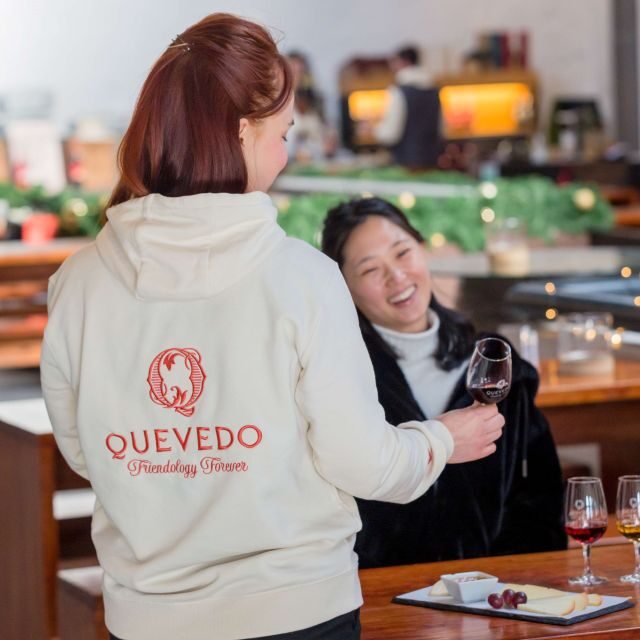
Next up: 10-Year-Old Tawny Port with mixed cow/goat/sheep aged paprika cheese. Paprika cheese adds more than just salt and fat. It brings a smoky, slightly spicy note that can make a sweet wine taste even sweeter—or make it feel more balanced, depending on your taste buds that day.
Tawny is often appreciated for its warm, aged profile. Again, you don’t need to memorize definitions to use this pairing. The guide helps you observe the way aging character and spice notes interact. You’ll learn what to pay attention to when you’re choosing Port later: does it feel smooth and rounded, or does it get sharp? Does the food amplify or soften those edges?
This pairing is also a great test if you’re unsure about Port. Even if Port feels a bit heavy to you sometimes, the cheese’s flavors can create a more “complete” mouth experience, almost like a designed contrast.
And since the cheese includes multiple milk types, you get a more complex texture and finish. That’s part of why the pairing works: it gives the Port a wider “conversation partner” than a single-note cheese.
Colheita 2009 White Port with Azores cheese and jam
The last stop is Colheita 2009 White Port paired with 7-month aged traditional Azores cheese plus local jam. This is a clever ending because it changes the flavor game from the first two pairings.
White Port can feel lighter in the glass than many people expect, and the guide’s explanation helps you catch what makes this style distinct in aroma and finish. Then the cheese adds a different kind of savory depth—aged, not mild—and the jam brings a controlled sweetness note.
For you, the combination is the whole point: it shows how Port can work outside the usual red-wine fantasy pairing. If you like the idea of Port but thought it only belonged with richer, heavier foods, this is the moment that may reshape your expectations.
It’s also a nice “reset” after the sheep cheese and paprika cheese pairings. Your palate gets to shift gears, and that makes the three-Port flight feel more like a journey than a repeat.
You can also read our reviews of more wine tours in Vila Nova De Gaia

How the guide makes the hour worth your time
This tasting is rated highly for a reason: the guides don’t just pour and smile. They explain.
People highlight the way guides break down Port history and production, and they answer questions without making the experience feel like homework. Named hosts such as Marcia, Miguel, Bruna, Inês, Fernando, and Dima are repeatedly described as knowledgeable, engaging, and able to translate details into plain language.
What you’ll likely notice is that the guide time is used in three practical ways:
- Context so the Port isn’t just a taste with no backstory
- Direction so you know what to notice in each pour
- Pairing logic so you can recreate the idea later at home
That last part is quietly valuable. If you ever tried a Port tasting and couldn’t remember what you liked after you left, this style of instruction helps. By the end of the hour, you should be able to say things like: I liked the pairing where sweetness met spice, or I prefer the cheese-driven finish in the White Port pairing.
Price and value: is $30 for Port and cheese a fair deal?
At $30 per person, you’re paying for three 40ml glasses and a cheese pairing with each one. You’re not buying a full tasting dinner, and that’s okay. The value here comes from focus.
Most tastings either:
1) pour a lot but give you little guidance, or
2) give you guidance but keep food light.
This format gives you both: guidance plus a real pairing component. The cheese is not an afterthought, and the lineup is varied enough that your money buys learning, not repetition.
You should also know what’s not included: additional wines and snacks. That means if you’re hungry or you want to buy more bottles during the hour, you’ll need extra planning and spending. But for a single Port stop while you explore Gaia and the river area afterward, this is a clean, cost-controlled way to get quality time.
Where this fits on your Porto itinerary (and who it’s best for)
This is the sort of activity that works best as a mid-trip anchor. You’ll be in Vila Nova de Gaia anyway if you’re doing river sights or wine-area evenings, so you can slot this tasting without needing a long ride or a full-day tour schedule.
It’s a strong match if:
- You want Port basics in a short time
- You like learning how food changes wine
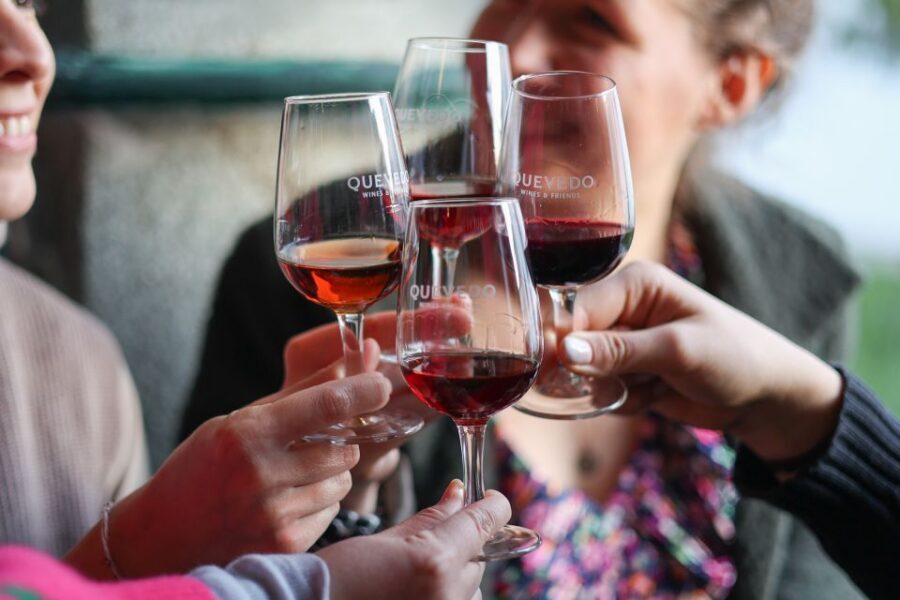
- You’re traveling with friends and want a small group feel (up to 8)
- You prefer a paced tasting over a rushed bar crawl
It might be less ideal if you want a long winery visit or a lot of food. This is tasting-focused, and the venue is designed for discussion and pairing, not for a multi-course meal.
What to do next with what you learn
When you leave, don’t just remember which bottle you liked most. Use what you learned from the pairings.
Try this simple approach:
- If a pairing worked, notice the pairing feature you enjoyed (age character, acidity feel, spice/smoke, or the sweet jam effect).
- When you shop for Port later, look for styles that match the flavor direction you responded to.
- If you’re buying for someone who dislikes overly sweet wines, use the White Port pairing logic as a guide for choosing something more compatible.
Because you tasted three styles with cheese designed to show differences, you should have a clearer sense of what Port can do beyond the stereotype.
Should you book this Port and cheese tasting at Quevedo?
Yes, I think you should book it if you want a short, high-signal Port experience with real pairings. The small group size, the three distinct Port styles, and the fact that each pour comes with a designed cheese match make this feel like more than a basic tasting.
Skip it only if you want a longer winery meal experience or you expect lots of extra food and extra pours for the same price. For a 1-hour, learn-and-taste stop in Vila Nova de Gaia, this is a solid use of time and money.
FAQ
How long is the tasting?
It lasts 1 hour.
How many Port wines will I taste?
You’ll taste three 40ml glasses of Port.
What cheese is paired with each wine?
You’ll get cheese pairing with each glass: local-aged sheep cheese with Crusted Port; aged paprika cheese made from cow/goat/sheep with 10-Year-Old Tawny; and 7-month aged traditional Azores cheese with Colheita 2009 White Port, plus local jam.
What is the price?
The price is $30 per person.
Is the group small?
Yes. It’s limited to up to 8 participants.
Where do I meet the guide?
Go to Quevedo Port Wine and ask a member of the local staff.
What languages are available?
The experience is hosted in Portuguese, English, Spanish, and Russian.
Is it wheelchair accessible?
Yes, it’s listed as wheelchair accessible.
Is there an option to book without paying immediately?
Yes. You can reserve now & pay later.
Can I cancel for a refund?
Yes. Free cancellation is available up to 24 hours in advance for a full refund.