REVIEW · COIMBRA
Schist Villages and Medieval Castles Tour
Book on Viator →Operated by Epicocentro · Bookable on Viator
Four and a half hours moves fast. This private tour turns Coimbra into a medieval-and-rural day trip, with Castelo de Arouce, schist villages from Aldeias do Xisto, and ending at Castelo de Penela. You’ll get short, story-filled stops instead of a long, exhausting day of nonstop driving.
Two things I really like: the trip is guided by a local who can connect the buildings to the people living around them, and the schedule keeps you out of the big-city tourist grind. A guide named Mónica is specifically praised for pacing, attention to older family members, and for adjusting the plan when things change on the ground.
One possible drawback: the day includes walking around villages and castle areas, so if mobility is a concern, plan for uneven village paths and wear supportive shoes. Also, lunch isn’t included, so you’ll want a snack plan.
In This Review
- Key highlights you’ll care about
- Start at Coimbra B3020 and Get Straight to Schist Country
- What You Pay for: The Value Mix (Private Ride + Guide + Free Entries)
- Castelo de Arouce (Lousa): A Castle Stop Built on Legends
- Aldeias do Xisto and Candal: Why Schist Villages Feel Different
- Three More Schist Villages: Variety Without the Mass-Tour Feeling
- Castelo de Penela: The Centenary Castle and the Mondego Connection
- The Private Guide Factor: Why This Feels Personal
- How to Plan Your Food (Since Lunch Isn’t Included)
- What to Bring for a Schist Villages Day
- Should You Book This Schist Villages and Medieval Castles Tour?
- FAQ
- How long is the Schist Villages and Medieval Castles Tour?
- What is the meeting point in Coimbra?
- Is pickup available?
- Is the tour private?
- What language is the tour offered in?
- Is lunch included?
- Are admission tickets included for the stops?
- Does the tour use mobile tickets?
- What is the operating time window?
- What is the cancellation policy?
Key highlights you’ll care about
- Private transportation + inclusive guide: you’re not sharing the day with strangers.
- Castelo de Arouce and Castelo de Penela: two castles in one circuit, both with strong local context.
- Aldeias do Xisto village time: Candal plus additional schist villages, each with its own feel.
- Free admission at the stops: main entries are listed as free, which helps value.
- Route flexibility when conditions change: the guide may shift villages if access is affected.
- A realistic walking pace: the guide is attentive to comfort and needs during village walking.
Start at Coimbra B3020 and Get Straight to Schist Country
This tour starts at Estação Coimbra (B3020) and runs about 4 hours 30 minutes. Pickup is offered, and the return is back to the same meeting point. The operating window listed is 10:00 AM to 3:00 PM, Monday through Sunday, so you’re not stuck with an awkward early or late departure.
What I like about this setup is how it simplifies logistics. Instead of arranging a rental car and figuring out rural drives, you get a private vehicle and an English-speaking guide. Since it’s a private activity, the pace can be shaped to your group, not forced into a mass schedule.
It also helps that this isn’t a full-day museum marathon. Each major stop is timed tightly—think “walk, look, listen, move”—so you leave with impressions you can actually recall later. The tradeoff is that you won’t have hours to wander on your own at each site, so you’ll want to pay attention while the guide is talking.
You can also read our reviews of more tours and experiences in Coimbra.


What You Pay for: The Value Mix (Private Ride + Guide + Free Entries)
The price is $120.14 per person for the full tour. Included are private transportation and an inclusive tourism guide, while lunch isn’t included. The main stops are listed with free admission tickets, including Castelo de Arouce, village visits under Aldeias do Xisto, and Castelo de Penela.
That’s a big part of the value equation. If you’ve ever tried to piece together a rural day on your own, you know cost quickly turns into gas, parking, and time lost hunting for directions. Here, the driving is handled, and the guide’s role—story, context, and on-the-ground guidance—is baked into the price.
Two practical notes for your budget. First, plan for food on your own since lunch isn’t included. Second, since the day is private, it usually makes the most sense for small groups or couples who want a quieter pace. If you’re traveling solo, it can still be worth it if you strongly prefer the guided route rather than DIY.
Castelo de Arouce (Lousa): A Castle Stop Built on Legends
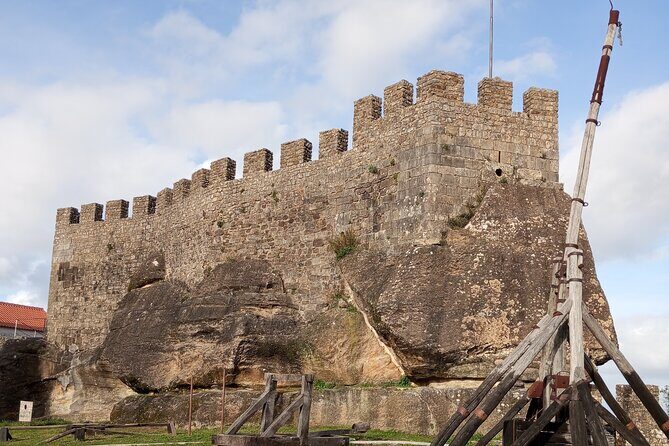
Your first stop is Castelo de Arouce (Lousa). You’ll spend about 30 minutes here, and the admission is listed as free. Even with a short time window, this is the kind of place that feels important because of where it sits and what it used to mean for control and survival in earlier centuries.
What makes this stop work is the way the castle visit is framed: you’re not just seeing stone walls. You’re learning about why the site mattered over time and hearing legends that still stick in local imagination. That legend-and-reality mix is often what turns a brief castle stop into a memorable one, especially when the rest of your day is also story-driven.
The only “but” is time. Thirty minutes is just enough for an overview and a few viewpoints. If you love climbing every stair and taking long photos, this part will feel short. Still, as a first stop, it does a great job setting the theme: medieval Portugal isn’t just architecture—it’s strategy, geography, and local storytelling.
Aldeias do Xisto and Candal: Why Schist Villages Feel Different
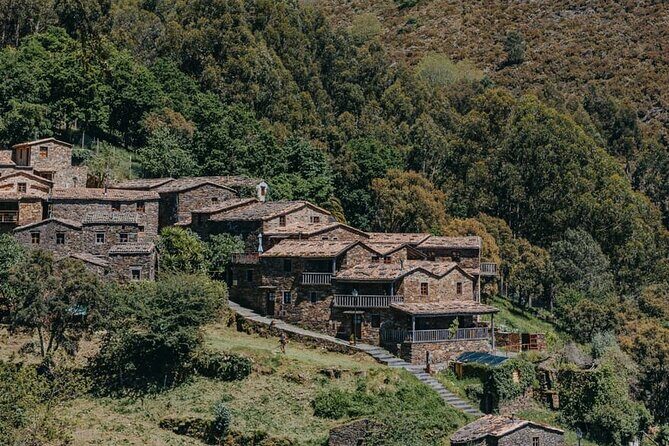
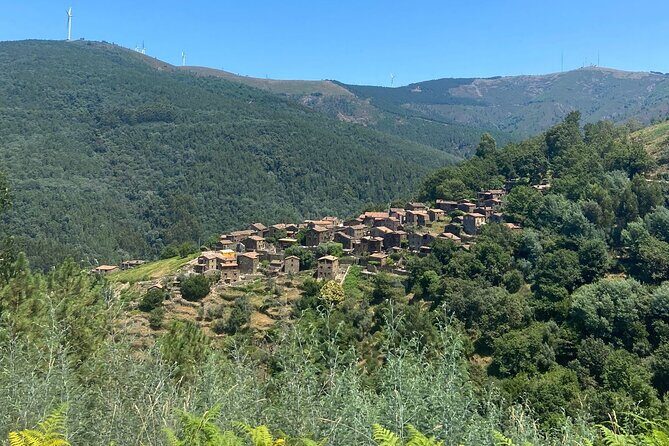
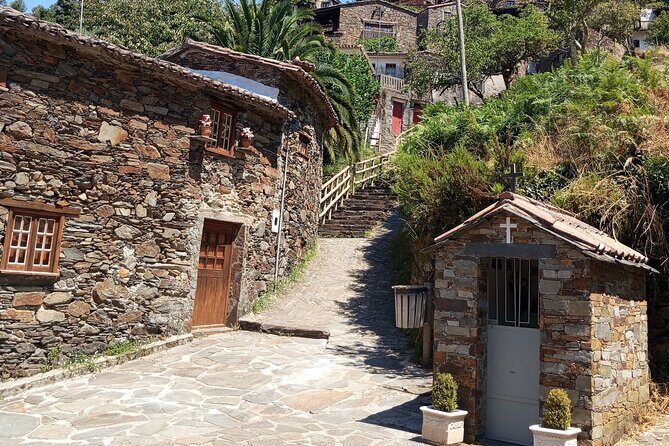
Next you move into Aldeias do Xisto, the schist-village area known for stone-built charm and rural paths. The schedule includes a visit to Candal first, again around 30 minutes, with admission listed as free.
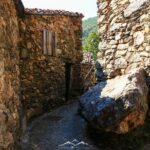
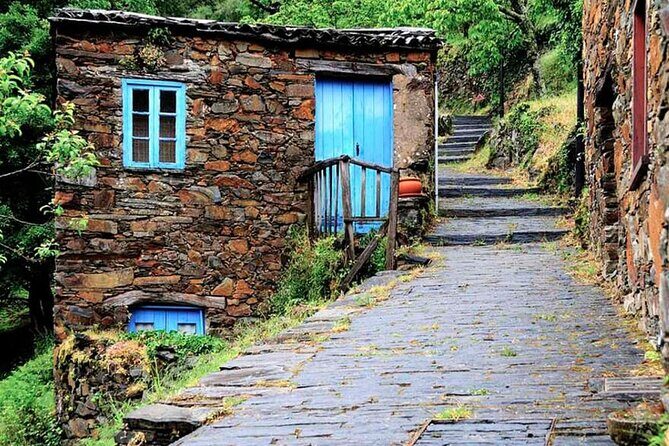
Candal is described as one of the most emblematic and picturesque villages in the area, and that’s exactly the point. These aren’t “one-style” villages. Schist construction ties things together visually, but the details change from place to place—street layout, how buildings sit on slopes, and how everyday life flows through the stone lanes.
This is where you’ll notice the pace shifting. Castles feel like “stop and look.” Villages feel like “walk and listen.” A good guide matters here because you’re learning what makes each place distinct, not just taking in views. In particular, the route is designed so you don’t only see the most famous stop—you get variety inside the same schist country theme.
If you want to take photos, aim to do it during the quieter walk moments, not only right at the start. And since the day includes multiple villages later, you can treat Candal as your anchor point: once you’ve seen it, the next villages start making more sense.
Three More Schist Villages: Variety Without the Mass-Tour Feeling
After Candal, the tour continues with three additional stops in the Aldeias do Xisto region. The total time shown for this middle section is about 1 hour, with admission listed as free.
This part of the day is smart if your goal is to understand the region rather than tick off one photo location. Each village can feel different even when the stone material is similar, because the setting shapes daily life. In a short time window, a guide’s job is to point out what’s changing and what’s staying the same—so you come away with patterns, not just random scenes.
A key detail from how people describe this tour: the guide often keeps things humane. For example, if your group includes someone who needs slower walking or more comfort on paths, the guide is attentive to that. You’ll still be moving, though, so bring shoes that handle uneven village surfaces.
Also, there’s a real-world flexibility factor. In at least one experience of this tour, the guide adjusted the plan due to fires affecting access to some villages. That’s worth knowing because it means the day can shift slightly, while the core idea—schist villages plus castles—stays intact.


Castelo de Penela: The Centenary Castle and the Mondego Connection
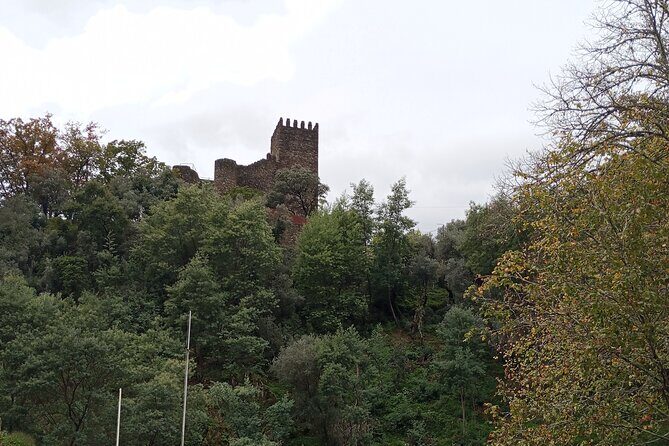
Your last stop is Castelo de Penela, also listed with 30 minutes on the clock and free admission. This castle is described as centenary, and it’s part of a network of castles and walls connected to the Mondego area.
Why this matters: you’re not just ending with a single landmark. You’re finishing with a site that connects back to the larger strategic picture around Coimbra and the Mondego region. The tour framing here is practical—what the castle was for, why it mattered to the subsistence of the city of Coimbra, and how this “network” idea changes the way you view the stones.
This is also a nice bookend to the first castle stop. Castelo de Arouce sets the tone through legends and location-based importance. Castelo de Penela adds an organized historical thread—less myth, more strategic function—without making the day feel like a lecture.
If you’re hoping to catch golden-hour light, this end section is a good time to do it, but you shouldn’t count on perfect timing. The schedule is the schedule, and the guide is focused on making each stop work.
The Private Guide Factor: Why This Feels Personal
This is a private tour/activity, meaning only your group participates. That matters more than people expect in rural Portugal. In villages, small group size lets you slow down when a lane looks interesting, or when a local conversation is unfolding. It also makes it easier for the guide to adjust pace for different comfort levels.
The guide experience is the headline here, and the name Mónica comes up as someone who blends solid context with a real caring approach. People praise her for paying attention to needs, walking paths comfort, and for sharing history in a way that feels connected to the places rather than floating above them.
Another practical strength: the guide doesn’t treat the day as a rigid checklist. When conditions changed due to fires in some villages, the plan shifted to keep the tour memorable. That’s the kind of real travel skill you want on a rural route—because one closed road can ruin a DIY day.
If you’re the type who likes good stories but also wants the day to run smoothly, this private format fits that style. You’re not just watching scenery; you’re getting a guided conversation with the region.
How to Plan Your Food (Since Lunch Isn’t Included)
The tour doesn’t include lunch. That’s pretty normal for shorter, multi-stop guided days, but it does affect your planning.
Here’s what I’d do. Bring a small snack and water so you’re comfortable between village walks and castle visits. If you want a sit-down meal, plan it for before or after the tour, not during it.
Also consider your timing. The tour ends back at the meeting point in Coimbra, and the main activities run during the window listed (10:00 AM to 3:00 PM). That means you’ll likely be either early enough for a late lunch in Coimbra after, or done in time for a snack and exploration on your own.
What to Bring for a Schist Villages Day
This route is part castle, part village walking. You don’t need hiking gear, but you do need the basics that make walking easier.
Bring:
- Comfortable shoes for uneven village streets and castle terrain
- A light layer because rural temps can shift during the day
- Water and a snack since lunch isn’t included
- Your mobile ticket (you’ll have it on your phone)
If your group includes anyone with mobility limitations, the best move is to tell the guide what pace and comfort level you need. The guide experience on this tour is described as attentive, so your preferences can shape how the walking portion feels.
Also, take a moment to think about photos. Schist stone texture looks best when you get angles during actual walking, not only from the first viewpoint.
Should You Book This Schist Villages and Medieval Castles Tour?
Book this tour if you want a quiet, guided rural day that links medieval sites to real village life. It’s especially appealing when you prefer small-group energy over crowds, and when you like your guide to do more than recite dates.
You should also book if you like value built into the day. With private transportation, an inclusive guide, and free admission at the main stops, you’re not paying extra just to enter a succession of viewpoints. Add in the fact that the tour can adjust if access changes, and it becomes a practical choice.
Skip or rethink it if you want long free time in each place. The stops are timed—about 30 minutes for each castle and village anchor point, plus an hour for multiple village visits—so this is structured, not leisurely wandering all day.
If your ideal Coimbra day is one that goes beyond the usual big-sight rhythm and trades it for medieval stone and schist villages, this is a strong match.
FAQ
How long is the Schist Villages and Medieval Castles Tour?
It runs for about 4 hours 30 minutes.
What is the meeting point in Coimbra?
The meeting point is Estação Coimbra B3020, Coimbra, Portugal. The tour ends back at the same meeting point.
Is pickup available?
Yes, pickup is offered. You’ll be contacted with pickup details after booking.
Is the tour private?
Yes. It’s a private tour/activity, and only your group participates.
What language is the tour offered in?
The tour is offered in English.
Is lunch included?
No, lunch is not included.
Are admission tickets included for the stops?
Admission tickets are listed as free for the castle and village stops mentioned.
Does the tour use mobile tickets?
Yes, the tour uses a mobile ticket.
What is the operating time window?
The listed opening hours are Monday through Sunday, 10:00 AM to 3:00 PM.
What is the cancellation policy?
You can cancel for a full refund up to 24 hours before the experience start time. If you cancel less than 24 hours before, the amount paid is not refunded.