REVIEW · PORTO
Porto: Private Tour to the Historic Center in a Classic Car
Book on Viator →Operated by OldTour Porto · Bookable on Viator
Porto in a classic car feels like time travel. This private tour strings together the city’s big visual hits and a few smarter stops, with an English-speaking guide pacing your time and helping you pick the best spots for photos.
I like the mix of signature views and practical guidance. You get sweeping moments at the Luís I Bridge, then you move into interiors and museums that explain why Porto matters, not just what to look at.
One thing to plan for: with about 1h30 to cover a lot of ground, you’ll get focused stop-by-stop visits, not long museum marathons. And because you’re rolling through older streets in a classic car, a bit of bounce is part of the deal.
In This Review
- Key highlights to look for
- Why a classic-car route is a smart way to start Porto
- Meeting the car and getting your bearings in the historic center
- Crossing Luís I Bridge for river views that look like postcards
- Infante D. Henrique Museum: maritime clues in a museum pace
- Palácio da Bolsa and the Arab Room for a commerce-story payoff
- Porto Customs House: where the river meets trade—and a place to pause
- Atlantic fort vibes: São João Baptista and the Cheese Castle
- São João Baptista Fortress (admission ticket not included)
- Castelo do Queijo, the Cheese Castle (free)
- Electric Tram Museum and the city’s daily-life story in motion
- Passeio Alegre Garden for shade, sea breeze, and a calmer pace
- Jardins do Palácio de Cristal for a Romantic-style pause
- Who this private classic-car tour suits best
- Price and value: what $39.79 gets you in Porto time
- Should you book this OldTour Porto classic-car historic center tour?
- FAQ
- How long is the Porto private tour in the classic car?
- How much does the tour cost per person?
- Is this tour private or shared?
- Is pickup included?
- What language is the tour in?
- Do I get a mobile ticket?
- Which stops are free, and which may require tickets?
- Can I get a full refund if I need to cancel?
Key highlights to look for
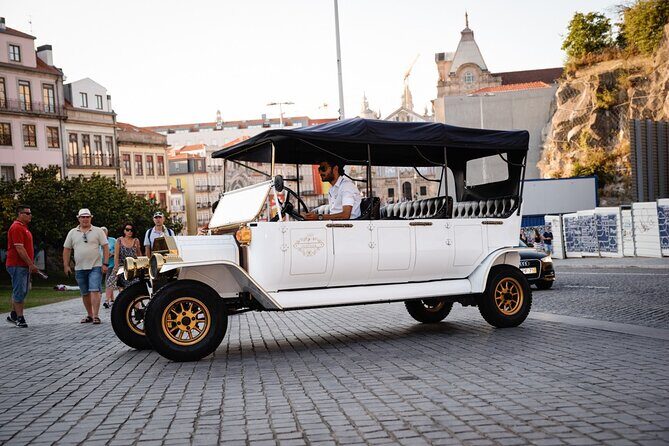
- Photo-friendly pacing with time to stop and look, not just drive past
- Luís I Bridge viewpoints for river-and-city panorama photos
- Palácio da Bolsa and its famous Arab Room details
- Douro riverfront stops like the Customs House gardens and views
- Free scenery breaks at Passeio Alegre Garden, Cheese Castle, and Crystal Palace Gardens
- English guides identified as Oldtour, with drivers who can tailor the moment
Why a classic-car route is a smart way to start Porto
Porto has a talent for hiding its best angles. One minute you’re in a maze of streets; the next you’re staring at the Douro and realizing you’ve been walking past the view without noticing. This tour fixes that fast by using a classic car to link key points across the historic center and along the river.
You’re paying for more than transportation. You’re buying a guide who can connect dots: how Porto’s maritime past shaped the city, why commerce mattered, and how the river and bridges influenced daily life. And since it’s private, you can ask questions and adjust on the fly, like where to spend extra minutes or what to skip next.
It’s also a value play. The price sits at $39.79 per person for a private experience that includes pickup offered and an English-speaking guide. In 1h30, that’s a lot of ground—plus several stops include free outdoor time, so you’re not stacking extra costs just to see the best scenery.
You can also read our reviews of more private tours in Porto


Meeting the car and getting your bearings in the historic center
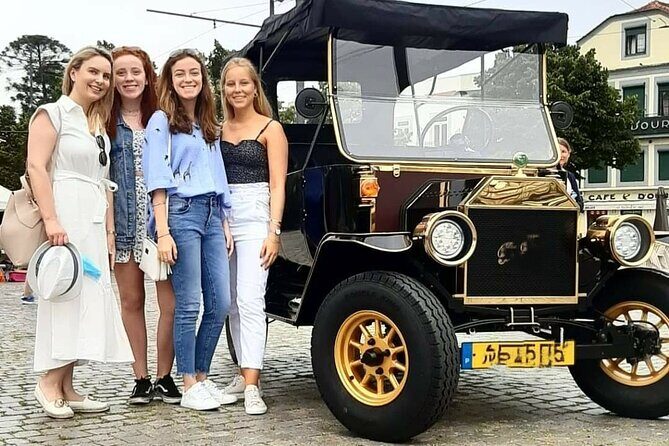
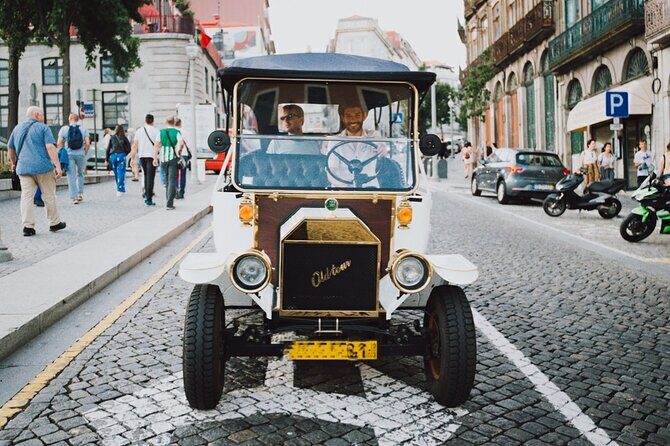
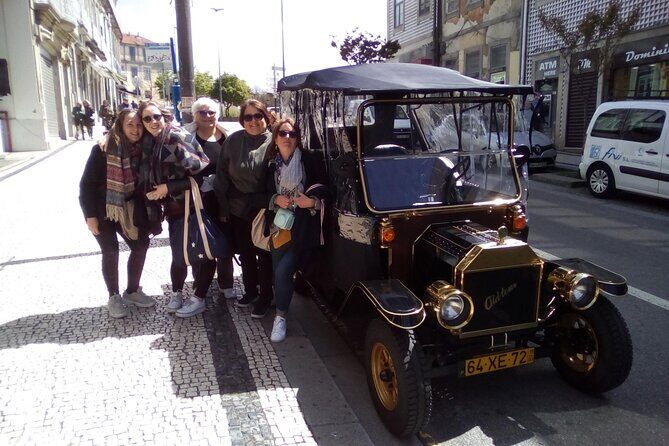
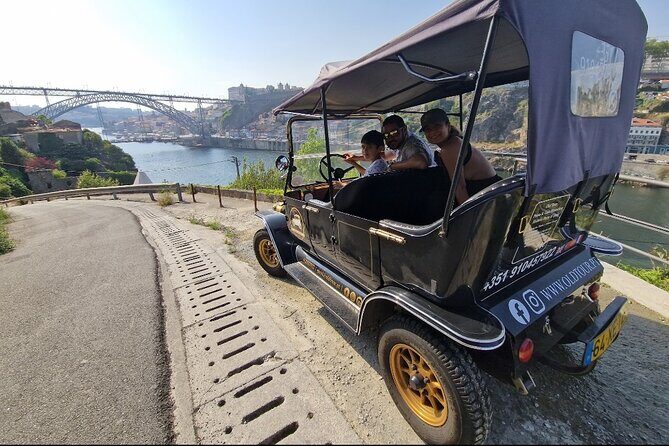
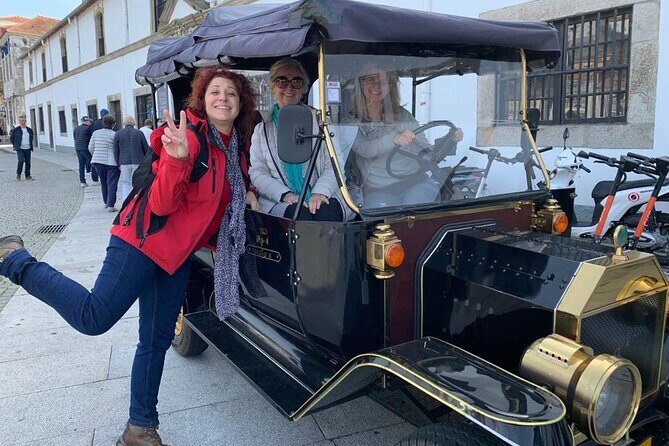
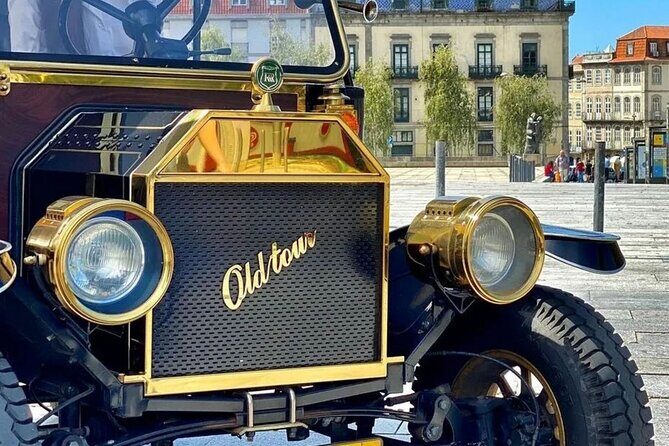
Your tour starts in the historic center area. The meeting point can be anywhere there, and the classic car is easy to spot in black or green. Guides are identified with the name Oldtour, so you’re not hunting around for a mystery van with a vague logo.
This matters because Porto’s center is compact but confusing. If you’re arriving by foot, train, or tram, you’ll usually find a nearby public transit option, and you can use that to position yourself before the ride. Once you’re in the car, you can stop worrying about directions and start focusing on visuals.
Tip: if you want the best photos, you’ll want to be ready to hop out quickly. This tour’s pacing is built around short, purposeful moments.
Crossing Luís I Bridge for river views that look like postcards
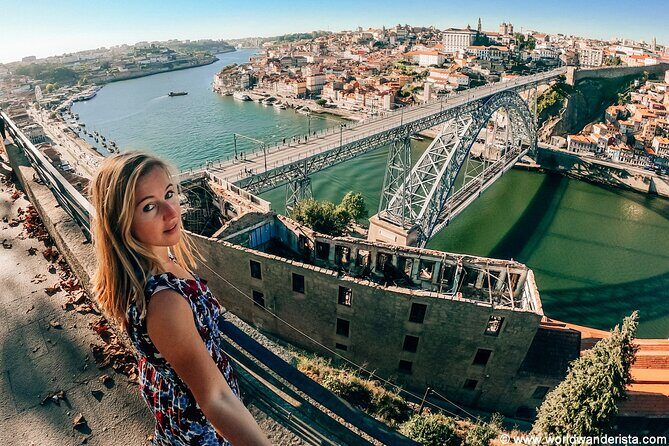
The Luís I Bridge is one of Porto’s most recognizable engineering statements. It connects Porto to Vila Nova de Gaia and shows off a metal structure designed by a disciple of Gustave Eiffel. The views are the point, but the bridge is also a lesson in how design and function became part of the city’s identity.
During the crossing, you’ll notice the riverbanks, the urban texture, and the steady rhythm of boats moving on the Douro. Then, if you’re able to walk on the upper deck, the experience hits a different level. It’s about 60 meters high, and you get sound from the water plus the back-and-forth of maritime activity below.
This is a top photo stop, especially around sunrise or sunset when the colors reflect on quieter water. If you’re traveling earlier in the day, don’t worry. A bright morning still gives crisp lines and strong contrast, which is great for architecture shots.
Infante D. Henrique Museum: maritime clues in a museum pace
Next, you shift from bridge views to a culture-and-knowledge stop at the Infante D. Henrique Museum. The focus is Portugal’s maritime history and the legacy of the Discoveries, so it’s built around themes like navigation, cartography, and exploration.
What you’re really getting here is context. Porto isn’t only pretty. It was shaped by sea routes, ship building, instruments, and the knowledge needed to travel farther than most people ever thought possible. The museum includes models of historical ships, navigational instruments, and maps that show how strongly maritime identity tied into national pride.
I like this stop because it pairs well with everything else you’ll see later in the tour. Commerce buildings make more sense after you understand the sea role. Even if museums aren’t your usual thing, an interactive, educational approach can make the time feel easier, not heavier.
Palácio da Bolsa and the Arab Room for a commerce-story payoff
One of Porto’s best interior moments is Palácio da Bolsa, a 19th-century neoclassical building tied to the Stock Exchange. Even if you don’t care about finance, the story is about how cities trade, grow, and reinvent themselves.
Inside, the big draw is the Arab Room, famous for Moorish influences and intricate decoration. This is the kind of room where you can’t help slowing down. Details reward close looking: patterns, materials, and the way the design turns a business building into something theatrical.
You also get a sense of the city’s economic transition. Porto’s rise wasn’t just built on ships and rivers. It needed institutions that could manage trade, money flows, and the networks behind international exchange.
Practical note: since the tour is short, you’ll want to let your guide know what you care about most—architecture, the story behind the Exchange, or the room details. In a private format, that kind of focus pays off.
You can also read our reviews of more historical tours in Porto


Porto Customs House: where the river meets trade—and a place to pause
After the palace, the route naturally moves toward the riverfront at the Porto Customs House. This neoclassical building sits on the banks of the Douro and dates to the 19th century. It was built as the city’s tax authority, so its name ties directly to its role managing taxes and trade.
The exterior is impressive, but the best part is what surrounds it now. Today, the Customs House houses the Porto Museum, with exhibits that connect the city’s cultural and social history. Even if you don’t have time for a full museum loop, the placement gives you a strong sense of how Porto’s identity links to shipping and commerce.
You’ll also get a chance to slow down outside. The gardens and nearby areas are a pleasant place to rest, with river and bridge views that feel like a reward for moving fast through the center.
If you’re the kind of traveler who likes a breather every couple of stops, this is that moment.
Atlantic fort vibes: São João Baptista and the Cheese Castle
Porto’s coast adds a different mood. Instead of streets and river views, you get sea air and fortifications built for maritime defense.
São João Baptista Fortress (admission ticket not included)
São João Baptista is a 17th-century fort facing the Atlantic Ocean. It’s the kind of structure that explains why coastal cities took defense seriously. You can explore the walls and enjoy spectacular views toward the Douro estuary.
This stop is time-limited—plan for about 10 minutes—and the admission ticket is not included, so budget for it if you want to go inside. Even if you keep it mostly exterior, the setting and the ocean directionality make the visit worthwhile.
Castelo do Queijo, the Cheese Castle (free)
Then comes the Fort of São Francisco do Queijo, nicknamed the Cheese Castle because its shape resembles a Serra cheese. It was built in the 16th century to guard Porto from pirate attacks and maritime invasions.
You’ll walk walls with strong sea views over the mouth of the Douro. The best part for many people is that it works as both a history stop and a relaxed viewpoint stop. The interior spaces can host exhibitions and cultural events, so you might find something going on depending on the day.
This one is free, and it’s built for quick payoff: you get the fort feeling, then you get sea horizon views, without spending extra time in ticketed spaces.
Electric Tram Museum and the city’s daily-life story in motion
Not every Porto tour includes the way people actually moved around town. The Electric Tram Museum fills that gap by focusing on public transport history.
Located in a former electric tram factory, it’s a timeline of how trams shaped urban mobility and daily life in Porto since the 19th century. You can look at trams, along with photographs, documents, and models that trace the evolution of the system.
If you catch it at the right moment, the museum also offers rides on some restored trams. That turns history into a fun, physical memory, which is rare in museums.
If your group is small and curious, this stop tends to land well because it’s easy to enjoy even when the tour is only running around 1h30 total.
Passeio Alegre Garden for shade, sea breeze, and a calmer pace
After forts and museum energy, Passeio Alegre Garden is the reset. It’s one of Porto’s charming parks at the mouth of the Douro River, dating back to the 19th century.
What I like about this stop is the rhythm. You get winding paths, diverse plants, and a shaded feeling under big trees. There are fountains and classical statuary, plus benches placed for lingering. It’s the kind of park where you can sit for a few minutes and let the city noise quiet down.
This stop is free, and it’s short by design—about 5 minutes in this tour format. It still gives you that mental breather you need, especially if you’re packing Porto into a short stay.
Jardins do Palácio de Cristal for a Romantic-style pause
The day ends with a softer, scenic note at the Crystal Palace Gardens. This area has roots in the 19th century, created to complement the Crystal Palace glass-and-iron structure that opened in 1865.
The gardens are designed in a Romantic European style with lakes, hills, and small pavilions. That means you’re not just looking at trees. You’re walking through designed scenery—paths that encourage slow turns and vantage changes.
Edmundo de Melo e Castro, an English landscape architect, shaped the look and feel, and by the late 1800s these gardens became a meeting place for locals and a cultural event spot.
In the tour, this is about 15 minutes and it’s free, so it’s a smart way to close. You’ll finish with views and calm rather than rushing back right after a major interior.
Who this private classic-car tour suits best
This tour is a great fit if you:
- Want a smooth first-day overview of Porto without spending half your trip navigating
- Like photo stops with clear timing rather than endless walking
- Appreciate the story behind landmarks, especially maritime trade and commerce
- Want private flexibility, where guides such as Mariana, João, Ana, Inez, Gama, and Maria (seen on prior departures) can match your pace and questions
It’s also ideal for families who want a mix: bridge views, museum learning, and outdoor breaks. An 11-year-old can usually enjoy it too, since it breaks into short segments with time to look and ask.
If you’re the type who wants to spend hours inside museums, this won’t be enough by itself. Think of it as a strong highlights + context primer that helps you decide what to revisit afterward.
Price and value: what $39.79 gets you in Porto time
At $39.79 per person, you’re paying for a private classic-car ride plus an English guide and multiple stops across major parts of the center and riverfront. The short duration (about 1h30) means you’re buying efficiency. You also get several free outdoor visits, so your money isn’t only going toward ticketed attractions.
The value is highest if you want guidance. A self-guided loop can get you photos, sure, but it’s harder to connect why these places matter. With a guide, you get the why behind the architecture and the maritime trade story, and that often makes Porto feel more meaningful, not just scenic.
Also, this is a popular pickup format, often booked around 11 days in advance. If you’re traveling in high season or on a tight schedule, booking ahead is smart.
Should you book this OldTour Porto classic-car historic center tour?
Book it if you want a fast, well-structured Porto introduction with great photo timing, a private guide, and a blend of maritime and commerce storytelling. The classic-car element isn’t just for fun. It changes the pace, reduces walking stress, and makes short stops actually work.
Skip it or consider a longer alternative if you know you want extended museum time or you dislike any road bumps from an antique-style ride. This is about highlights and interpretation in a tight window, not slow exploration.
If you’re unsure, here’s the easy rule: if you want to get your bearings and then decide what to revisit, this tour is a solid choice.
FAQ
How long is the Porto private tour in the classic car?
It runs for about 1 hour 30 minutes.
How much does the tour cost per person?
The price is $39.79 per person.
Is this tour private or shared?
It is private. Only your group participates.
Is pickup included?
Pickup is offered, and the meeting point is anywhere in the historic center area. You’ll also meet a guide identified by the name Oldtour and a classic car in black or green.
What language is the tour in?
The tour is offered in English.
Do I get a mobile ticket?
Yes, a mobile ticket is provided.
Which stops are free, and which may require tickets?
Passeio Alegre Garden, Castelo do Queijo, and Jardins do Palácio de Cristal are listed as free. The São João Fort stop notes that the admission ticket is not included.
Can I get a full refund if I need to cancel?
Yes. You can cancel up to 24 hours in advance for a full refund.