REVIEW · PORTO
Porto Historic Center: Small Group Walking Tour & Cathedral
Book on GetYourGuide →Operated by Magda Laires Pinheiro Monteiro · Bookable on GetYourGuide
Porto shines in small details, and this walk strings them together fast. I especially love the Cathedral of Porto’s gilded woodwork and how the azulejos at São Bento turn history into something you can actually stand in front of.
You’ll also get a guide who steers the group like a friend, not a script. Magda Laires Pinheiro Monteiro is the kind of guide who answers questions clearly and adjusts to what you want to prioritize.
One watch-out: this is a steep, three-hour walk in a hilly city. If your legs are shaky on stairs, you’ll feel it more than on a flatter sightseeing route.
In This Review
- Key highlights to look for on the route
- Where the tour begins: Câmara Municipal and getting your bearings fast
- Livraria Lello, Clérigos Tower, and the vertical Porto vibe
- São Bento Station: the azulejos history lesson you can actually watch
- D. Luís Bridge top views: postcard Porto, but from your own feet
- Serra do Pilar: why that monastery viewpoint matters
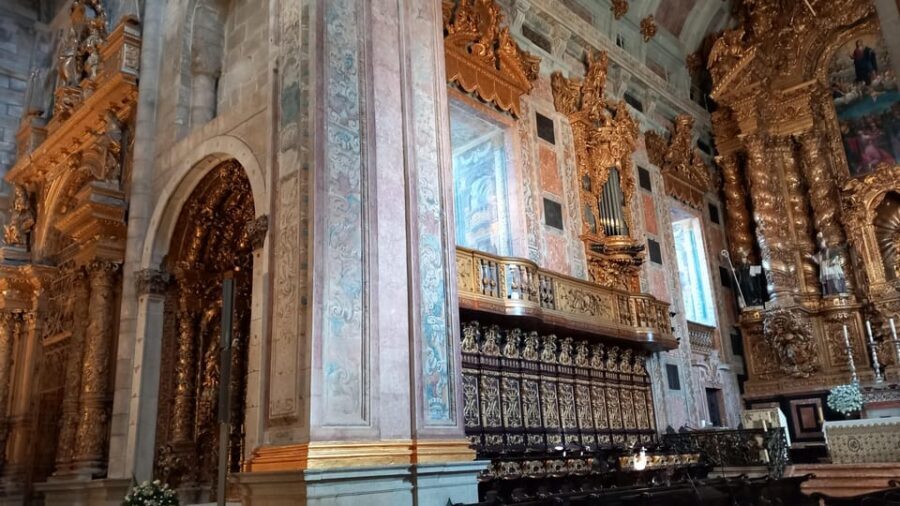
- Porto Cathedral: Romanesque calm and the gilded woodwork payoff
- Down into Ribeira: stairways, medieval alleys, and Cais da Ribeira
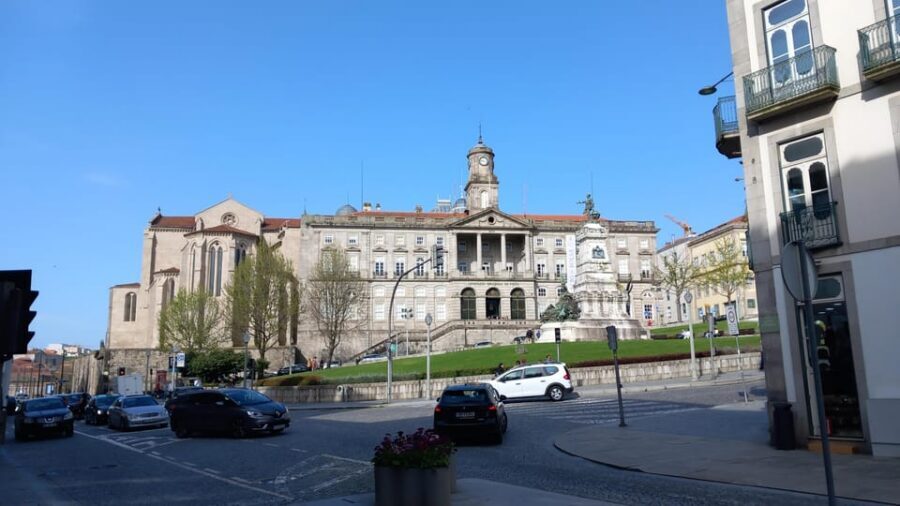
- Casa do Infante, Palácio da Bolsa, and São Francisco’s historic swagger
- Price, value, and how to decide if this 3-hour format fits you
- Who this tour suits best (and who should pick another plan)
- What to bring and how to keep the walk enjoyable
- Should you book this Porto Historic Center walk and Cathedral visit?
- FAQ
- How long is the Porto Historic Center: Small Group Walking Tour & Cathedral?
- Where do I meet the guide?
- Is entrance to the Cathedral of Porto included?
- What are the main sights covered during the tour?
- Does the tour include time at São Bento Station?
- Is this tour accessible for wheelchair users?
- What should I bring?
- Can I cancel and get a full refund?
- Is there an express security check?
Key highlights to look for on the route
- Clérigos Tower and Church: that dramatic landmark feeling, plus context on what you’re seeing as you go.
- São Bento’s azulejo panels: picture history laid out in blue-and-white, from Porto to the country.
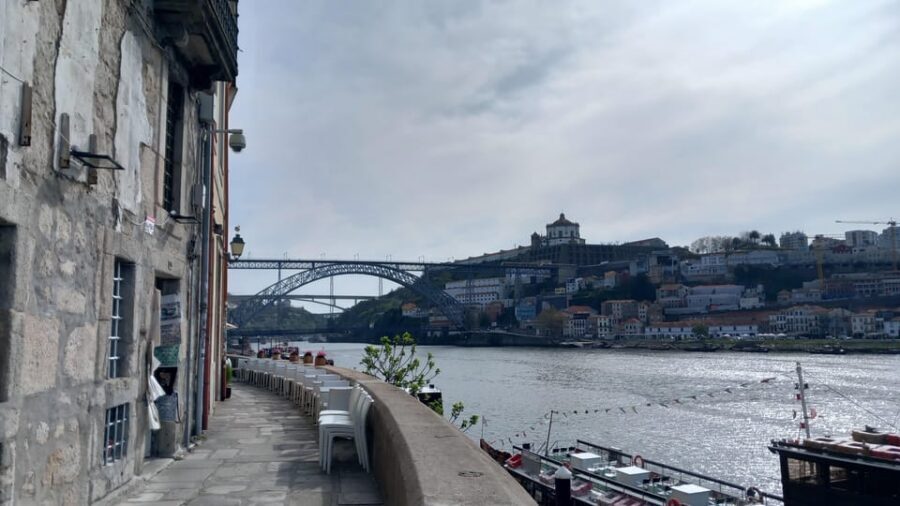
- Top deck of D. Luís Bridge: a working viewpoint over Serra do Pilar monastery, the Fernandine walls, and Rabelo boats.
- Porto Cathedral’s interior: Romanesque-style space with an eye-catching gilded altarpiece.
- Ribeira descent to the river: medieval stairways and alleys that make the postcard feel real.
- Age of Discoveries stops: Casa do Infante and the feel-good drama of Bolsa and São Francisco in the same circuit.
Where the tour begins: Câmara Municipal and getting your bearings fast
The meeting point is in front of Câmara Municipal do Porto (Porto’s Town Hall), right by the statue of writer Almeida Garrett. It’s a handy start because you’re grounded immediately in the city center, not off somewhere with a bus stop and a walk that starts already tired.
From the first minutes, the tour’s main skill is turning a cluster of famous sights into a connected storyline. You’re not just ticking boxes—you’re learning how neighborhoods, churches, and civic buildings all sit in the same geography of trade, faith, and old-world power.
And since this is a small group (up to 10 people), it’s easier to get answers and not lose the guide in a sea of strangers. That matters in Porto, where staircases and turns can make you feel like you’re always late.
You can also read our reviews of more walking tours in Porto


Livraria Lello, Clérigos Tower, and the vertical Porto vibe
A stop at Livraria Lello & Irmão puts a recognizable face on Porto’s book-and-culture scene. Even if you’re not a “museum-shopper,” it gives you a quick sense of how the city became more than merchants and stone.
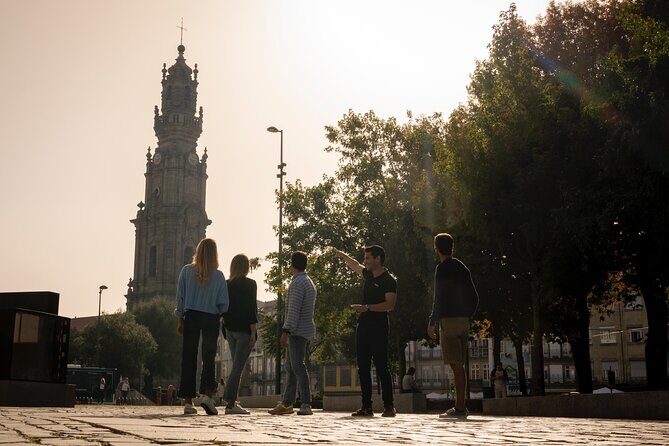
Then the route heads toward Clérigos Tower, rising about 76 meters (249 ft). The value here isn’t just height—it’s orientation. When you can locate the tower in your mind’s map, you start seeing how the city’s hills and viewpoints work together.
Next is Igreja dos Clérigos (Clérigos Church). You’ll visit the church itself, not just admire from outside. That’s where the walking tour earns its pacing: you get landmark drama, then a more human-scale interior moment before moving on to the next big visual.
São Bento Station: the azulejos history lesson you can actually watch
São Bento Train Station is the kind of place where people slow down without realizing it. The reason is simple: Porto’s azulejo panels aren’t decoration. They’re storytelling in ceramic tiles—scenes that connect the city’s identity to the broader history of Portugal.
If you like learning through what you can see, this stop is a win. The tour guides you through the panels so you’re not just reading plaques. You’ll also find it helps to know what to look for: the station becomes less of a transit stop and more of a visual timeline.
Practical note: because this is a train station, your surroundings are active. It’s not a quiet chapel. Still, the tile panels do the heavy lifting, and the guide helps you catch the major themes at a comfortable pace.
D. Luís Bridge top views: postcard Porto, but from your own feet
Next comes one of Porto’s classic “how is the city like this?” moments: a scenic walk across the top level of D. Luís Bridge.
The views are the big payoff. From up there, you can take in the Serra do Pilar monastery, the Fernandine city wall, and the Rabelo boats. The practical value is that everything lines up in your head: the river isn’t just scenery—it’s a transportation corridor that shaped the whole city.
Also, walking the bridge rather than simply crossing it changes your tempo. You’re not sprinting to the other side. You’re looking, reading the city’s layers, and letting the scale sink in.
If you’re the type who gets distracted by scenery, bring that energy. This is one of those segments where you’ll be glad you wore good shoes.
Serra do Pilar: why that monastery viewpoint matters
After the bridge, the route includes Mosteiro da Serra do Pilar for sightseeing.
Why should you care about a monastery you can see from afar? Because viewpoints make history make sense. A place like this sits where you can understand how people once defended and managed river traffic, travel, and the city’s edges.
Even if you’re not religious, you can still appreciate the logic of the location. It’s high, strategic, and meant for both spiritual life and territorial awareness. That mix is very Porto.
You can also read our reviews of more historical tours in Porto






Porto Cathedral: Romanesque calm and the gilded woodwork payoff
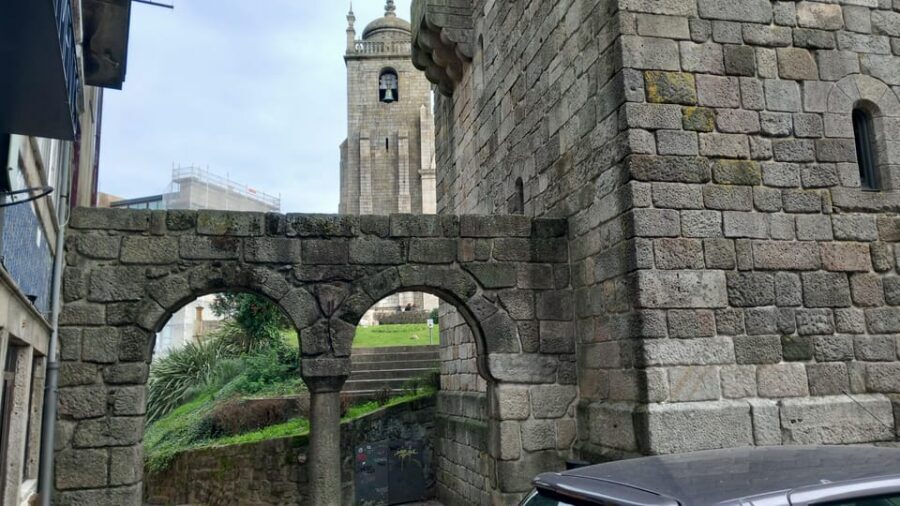
Then you reach the Cathedral of Porto, described as stark Romanesque in style—and it’s a good word. Romanesque buildings tend to feel solid and grounded, and that makes the interior details hit harder.
The standout is the exquisite gilded woodwork altarpiece. This is the moment where you slow down and stop thinking in “next photo, next stop.” You’ll want a good look, and the cathedral visit time gives you that.
There’s also a straightforward logistics perk: skip-the-line entrance tickets are included, with an express security check. In a busy historic center, that saves you stress and keeps the walk from getting chopped up by waiting.
One important calendar note: the cathedral is closed on Christmas and on Easter Days, so the tour can’t run those days.
Down into Ribeira: stairways, medieval alleys, and Cais da Ribeira
Porto’s magic often happens when you stop looking at the biggest attractions and start noticing the in-between routes. That’s why the walk down into the Ribeira District is such a core part of this experience.
You’ll go through a tangle of medieval alleys and stairways until you reach the riverfront at Cais da Ribeira. This is the part that feels like you’re inside the city’s postcard—not at a distance, but from street level.
The best practical advice: don’t try to sprint this section. The whole point is to feel the neighborhood’s pace. If you speed up, you miss the small turns and the way views open and close as you move.
Also, this section is your “Porto personality check.” If you love urban texture—stone, steps, old facades—Ribeira is where you’ll see why the city is so magnetic.
Casa do Infante, Palácio da Bolsa, and São Francisco’s historic swagger
Once you’re near the riverfront vibe, the tour connects Porto’s streets to the Age of Discoveries.
You pass the old Royal Customs House, Casa do Infante, which links the city to early maritime trade and the people behind it. If you’ve ever wondered why Porto looks both religious and commercial at the same time, this stop helps you connect those dots.
Then there’s Palácio da Bolsa, where the tour gives you a guided context rather than leaving you to guess what each room is meant to say. And you’ll also visit Monument Church of St Francis (Igreja de S. Francisco).
Finally, you end up around Infante D. Henrique Square, with the feeling that the tour isn’t random—it’s building a path through Porto’s identity: commerce, power, faith, and the river all braided together.
Price, value, and how to decide if this 3-hour format fits you
At $81 per person for a 3-hour small-group walk, the value comes from two things: access and focus.
You’re not just walking past sights. You get:
- a local guide for the full arc,
- skip-the-line entrance to the Cathedral of Porto,
- and a guided visit through São Bento Station plus the historic neighborhood circuit.
That’s the kind of pricing where you’re paying for time saved and context delivered, not for fancy transport.
Is it expensive? Not for a guided, ticket-included, small-group route that hits both landmark icons and “look closer” details. It’s also efficient: you get a lot of Porto in a short session, which is great if you only have a limited window before dinner.
Who this tour suits best (and who should pick another plan)
This is a solid match for you if:
- you want a guided walk with real explanations,
- you enjoy photo-worthy viewpoints but also like learning what you’re seeing,
- you’re comfortable on uneven streets and stairs.
It’s not suitable for people with mobility impairments or wheelchair users. The tour also specifically notes it involves a moderate fitness level because Porto is steep.
If you’re traveling with knee issues or you don’t do steps well, you might be happier with a gentler option. Otherwise, you’ll end the 3 hours more exhausted than enlightened.
What to bring and how to keep the walk enjoyable
Keep it simple:
- Comfortable shoes are non-negotiable in Porto.
- Comfortable clothes help because you’ll be outside and moving.
- Skip large baggage. The tour doesn’t allow luggage or large bags.
Language is also covered: the live guide speaks Portuguese, French, and English, so you won’t feel left out if you’re not traveling in English-only mode.
Also, meet the guide identified by a green card with her name so you don’t waste time looking around.
Should you book this Porto Historic Center walk and Cathedral visit?
Yes—book it if you want a smart, compact way to understand Porto’s core layers: tile storytelling at São Bento, viewpoint drama on D. Luís Bridge, and an interior moment of real craftsmanship at the Cathedral, followed by the real-feeling riverfront on the way down.
You might skip it if you hate stair-heavy walking or if you’re traveling on Christmas or Easter Day, since the cathedral visit won’t run.
If you do book, wear good shoes, go slow through Ribeira, and ask the guide questions as you walk. That’s where the experience becomes more than sightseeing.
FAQ
How long is the Porto Historic Center: Small Group Walking Tour & Cathedral?
It lasts 3 hours.
Where do I meet the guide?
Meet in front of Câmara Municipal do Porto (Porto’s Town Hall), beside the statue of Almeida Garrett. The guide is identified by a green card with her name.
Is entrance to the Cathedral of Porto included?
Yes. The tour includes skip-the-line entrance tickets for the Cathedral of Porto.
What are the main sights covered during the tour?
You’ll see the Livraria Lello & Irmão, Clérigos Tower and Clérigos Church, São Bento Train Station (for its azulejos), D. Luís Bridge (top level views), Serra do Pilar monastery, the Porto Cathedral, plus the Ribeira District and stops around Casa do Infante, Palácio da Bolsa, and Monument Church of St Francis.
Does the tour include time at São Bento Station?
Yes, you’ll visit São Bento Train Station as part of the experience.
Is this tour accessible for wheelchair users?
No. It is not suitable for people with mobility impairments and does not allow electric wheelchairs.
What should I bring?
Bring comfortable shoes and comfortable clothes.
Can I cancel and get a full refund?
Yes. You can cancel up to 24 hours in advance for a full refund.
Is there an express security check?
Yes. The tour includes skip-the-line through express security check.