REVIEW · PORTO
Private Tour through Tomar, Fátima, and Batalha historical sites
Book on Viator →Operated by Endless Weekend Tours · Bookable on Viator
Templars, saints, and stonework in one day. This private tour strings together three heavyweight stops: Convento de Cristo in Tomar, Fátima’s apparition chapel and basilicas, and the Gothic Mosteiro da Batalha. Two things I love about this format are the private guide (so you can ask questions as you go) and the onboard Wi‑Fi that keeps you connected between cities.
The main drawback to plan for is time and extra costs. It’s a long 8 to 10 hours, and two big attractions have tickets not included (plus optional lunch). Still, the schedule is realistic, with focused time at each site instead of a rushed hit-and-run.
You start early from Praça da Liberdade in Porto at 8:00 am, ride in a luxury vehicle, and then spend the day walking through places tied to the Knights Templar, the Virgin Mary apparitions, and Portuguese Gothic architecture. If you like your history explained in plain language, this is the kind of day that helps it all click.
In This Review
- Key points to know before you go
- A private day tour that connects three Portugal stories
- Porto pickup, luxury vehicle comfort, and the Wi‑Fi bonus
- Tomar’s Convento de Cristo: Templars in a site you can actually walk
- The pilgrimage core in Fátima: Capela das Aparições
- Basilica of Our Lady of the Rosary: 14 side altars and three names
- Basilica of the Holy Trinity: modern stone, and a piece tied to Rome
- Mosteiro da Batalha: Portuguese Gothic that took its time
- Timing, tickets, and optional lunch choices that affect comfort
- Price and value: is $336 per person fair?
- Who should book this private historical day
- Should you book this private tour through Tomar, Fátima, and Batalha?
Key points to know before you go
- Private guide + only your group means the pace can flex to your questions.
- Wi‑Fi on board helps between stops, especially on a full day away from Porto.
- Fátima stops are free entry for the chapel of the apparitions and the main basilica areas.
- Two paid sites (Convento de Cristo and Mosteiro da Batalha) add a small on-site cost.
- Onboard comfort extras like bottled water and refreshments make the ride easier.
- A guide’s personality matters, and named-guide feedback highlights Ricardo’s storytelling style.
A private day tour that connects three Portugal stories
This is one of those days where Portugal stops feeling like a list of cities and starts feeling like a timeline. You leave Porto and head inland and north-to-center, moving from the Middle Ages to early 20th-century faith history, then landing in one of the most impressive Gothic works in the country.
What makes the private setup practical is simple: you’re not just being transported. You’re being interpreted. A certified tourist driver handles the driving, and your guide gives you the context you’d otherwise have to piece together from signage.
I also like that the plan gives you clear, structured time at each place. The day is long, but the stops aren’t vague. You get set windows—like two hours at Convento de Cristo and about one hour at the main Fátima basilica area—so you can walk, pause, and actually take things in.
And yes, it’s still a full-day outing. If you hate long days or you need lots of downtime, consider whether 8 to 10 hours away from Porto sounds fun or just tiring.
You can also read our reviews of more private tours in Porto


Porto pickup, luxury vehicle comfort, and the Wi‑Fi bonus
You meet at Praça da Liberdade 19 in Porto at 8:00 am, and the tour returns you back to that same meeting point. That matters because you don’t spend your day figuring out how to get across three destinations and then back again.
The ride is set up for comfort. You’re in a luxury vehicle with “maximum comfort and extra equipment,” plus Wi‑Fi, bottled water, and refreshments. For a day trip that can run near 10 hours, those little perks add up. It’s not just convenience; it makes it easier to stay calm and hydrated between stops.
Also, you get a mobile ticket. That’s a small thing, but it cuts friction when you’re moving quickly from one site to another.
One more pro point: this is only your group. So if you’re traveling with family, friends, or even just a small crew, you avoid that awkward situation where your questions get swallowed by a larger group.
Tomar’s Convento de Cristo: Templars in a site you can actually walk
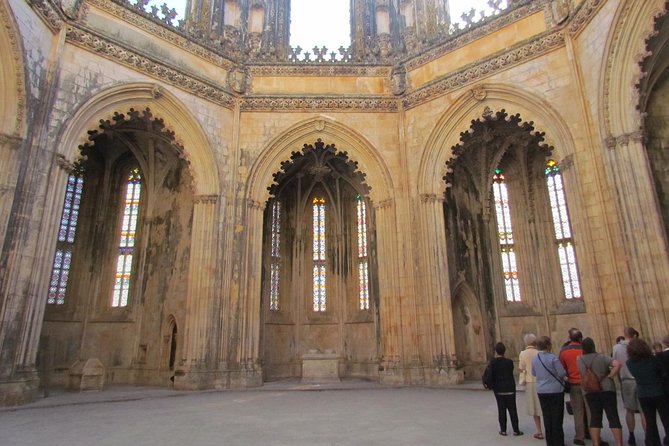
Tomar is where the day gets its Middle Ages backbone. The big stop here is Convento de Cristo—presented as the most important place for Templar history, because the castle and church are preserved in a way that lets you experience the space rather than just view it from a distance.
This is tied to the Knights Templar order, which existed from 1118 to 1308. You’ll also hear how the order was extinguished by the Pope and deprived of its assets in 1308. That sequence is the kind of story that changes how you see the buildings. Instead of thinking, oh, this is old, you start thinking about power, loss, and survival.
Plan on about two hours here, and note that admission is not included. The ticket cost listed is 10€. That means you’ll want either cash/card ready or to plan for purchasing in advance if the operator suggests it.
Practical tip: wear comfortable shoes. You’re walking through historic interiors and around the site, and these places are often uneven or made for old-world feet, not modern flat soles. If you’re the type who likes to read every sign, two hours can vanish quickly. If you focus on the guide’s explanations, it’s just right.
The pilgrimage core in Fátima: Capela das Aparições
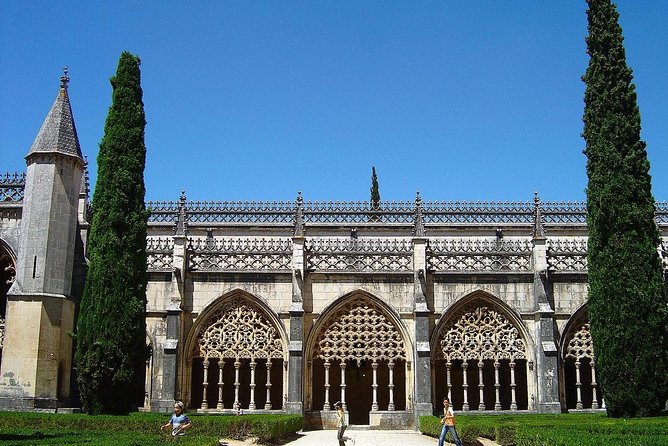
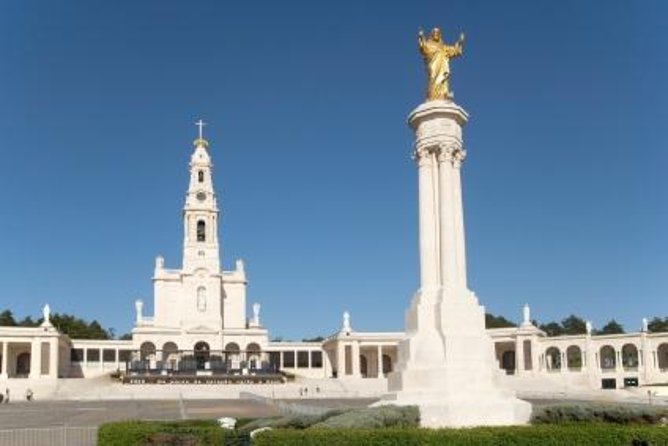
Then the day shifts gears. In Fátima, the emotional center is Capela das Aparições, described as the heart of the shrine.
Here’s what you’ll want to understand going in: it’s not just another chapel stop. It’s tied directly to the narrative of the Virgin Mary appearing to three young shepherds. Out of six apparitions described for this story, five are listed as happening in this exact place: May, June, July, September, and October.
Timing and construction matter here too, and this is where your guide’s explanation can really help. The chapel was built between April 28 and June 15, 1919. It was later blessed, with Mass celebrated there for the first time on October 13, 1921. Then it was dynamited on March 6, 1922 and reopened on January 13, 1923.
All of that information makes the architecture feel alive in your head. You’re looking at a place that was built, damaged, repaired, and used again—so the site becomes part of the story, not just the backdrop.
Expect about 30 minutes, and the big advantage is that admission is free. That gives you a quick, focused stop without feeling like the day becomes an endless ticket-buying checklist.
If you enjoy quiet reflection as part of travel, this is one of the moments where you’ll likely slow down naturally.
Basilica of Our Lady of the Rosary: 14 side altars and three names
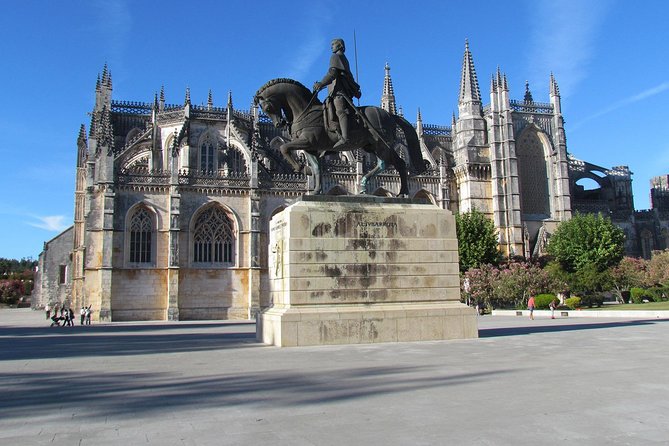
Next is the Basilica de Nossa Senhora do Rosário de Fátima, where the mood turns more expansive and ceremonial.
The description you’ll hear is specific: the temple includes a large nave with presbytery and transept, plus two sacristies. There are 14 side altars, tied to the mystery of the rosary. Even if you’re not deep into religious symbolism, the structure gives you something to follow with your eyes as you move through the main interior.
One altar area is especially important for many visitors: it’s where the tombs of Jacinta, Francisco, and Lucia are. Since their beatification, many people come inside to see them. Whether your interest is faith-based, historical, or architectural, this is a moment that anchors the basilica’s meaning.
Your time here is about one hour, and entry is free. That free admission at the major Fátima basilica stop is a genuine value boost compared with the paid sites elsewhere on the route.
Practical consideration: this is a very “people-forward” stop. You might find lines or slow-moving sections depending on the day and time. A private guide helps here because you can adjust your walking rhythm without feeling stressed about catching up to a group.
You can also read our reviews of more historical tours in Porto



Basilica of the Holy Trinity: modern stone, and a piece tied to Rome
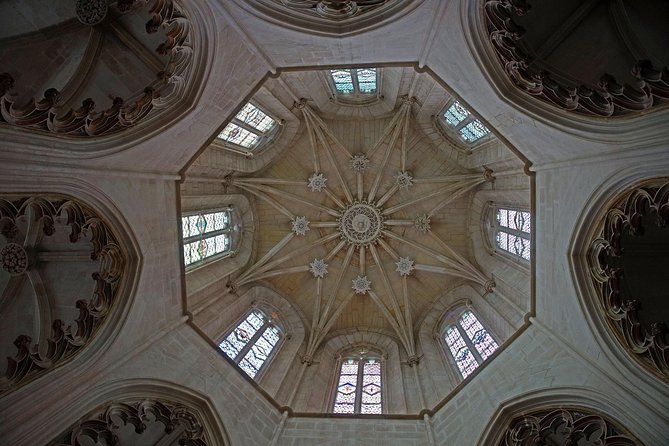
After the main basilica, you continue to the Basilica of the Holy Trinity, which brings the day closer to modern architecture.
The timeline is laid out clearly: the first stone was laid on June 6, 2004, and the basilica was consecrated on October 12, 2007. So you’re not only seeing medieval and early 20th-century history. You’re seeing how this sacred landscape continues to grow.
The altar detail is one of the most interesting specifics in the day. It’s described as made from a unique piece of local stone: branco do mar. And on the front side of the altar there’s a piece of marble from the tomb of the Apostle Peter, the apostle over which the St. Peter’s basilica was built in the Vatican.
That’s the kind of fact that turns a quick stop into something you remember. Even if you don’t spend long here, the symbolism and materials connect Fátima to a wider Catholic world.
Plan on about 30 minutes. Admission is free. It’s not a “skip it” stop. It’s short, but it adds a modern chapter.
Mosteiro da Batalha: Portuguese Gothic that took its time
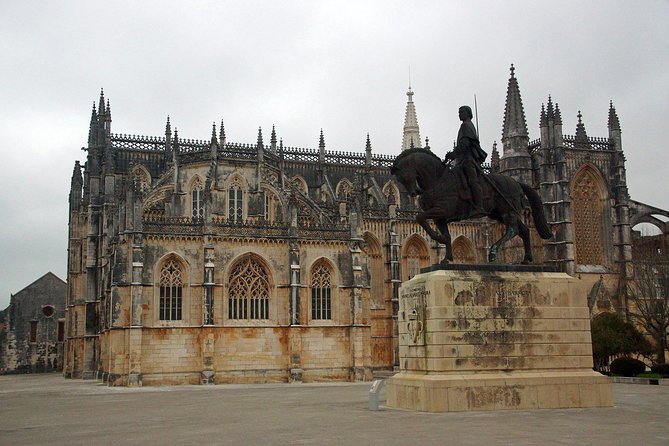
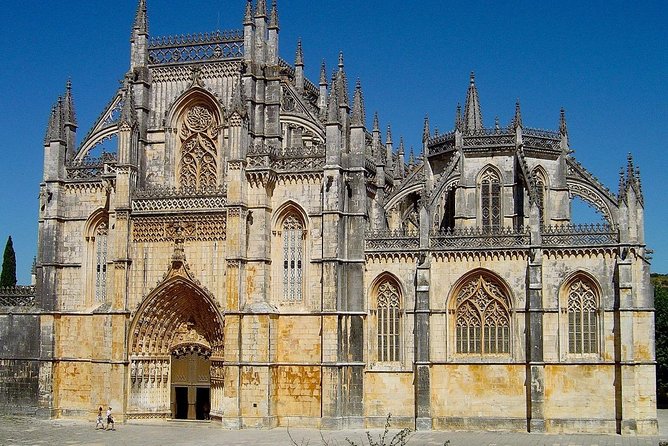
Finally, you head to Mosteiro da Batalha, the monastery highlighted as a masterpiece of Portuguese Gothic.
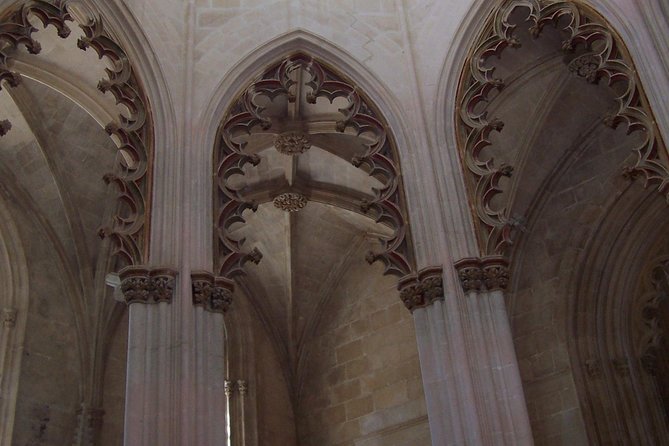
What I like about how this stop is framed is that construction time is part of the story. The monastery is described as combining various influences from its lengthy construction period, spanning multiple reigns. That means you can read the building like a long conversation between styles and political eras, instead of treating it as one uniform design.
Expect about two hours here. Like Convento de Cristo, admission is not included, and the ticket cost listed is 10€.
A practical note: because it’s an architecture-focused site, you’ll get more out of it if you let the guide point out how the influences change as construction stretches across time. If you arrive expecting only “big church vibes,” you might miss the fun part: how the monastery became a record of different moments in Portugal’s royal history.
Also, it’s a good idea to budget your energy. This is the last major stop, and you’ll want to be able to handle walking and stair-level viewing at the end of the day.
Timing, tickets, and optional lunch choices that affect comfort
The schedule is built around several time blocks: two hours at Convento de Cristo, 30 minutes at Capela das Aparições, one hour at the main basilica area, 30 minutes at the Basilica of the Holy Trinity, and two hours at Mosteiro da Batalha.
That adds up to a long day that’s still structured. The key value for you is predictability. You’re less likely to feel like you’re wandering around with no plan.
Now, the money and tickets piece. Two main sites have admission ticket not included:
- Convento de Cristo: 10€
- Mosteiro da Batalha: 10€
Meanwhile, the Fátima core sites in the itinerary are free:
- Capela das Aparições (30 minutes)
- Basilica de Nossa Senhora do Rosário de Fátima (1 hour)
- Basilica of the Holy Trinity (30 minutes)
Lunch is listed as an extra typical lunch option: starter, main course, drink, dessert, coffee, plus wine of the region mentioned at 25,00€. That’s not included, so you’ll be making a choice based on your appetite and how you like your days planned.
If you want to keep costs tight, bring snacks and use the included bottled water and refreshments as your baseline. If you want an easy sit-down break, budget for the lunch option.
Price and value: is $336 per person fair?
The price is $336.00 per person for a private tour, running about 8 to 10 hours, with a luxury vehicle and a certified driver, plus onboard Wi‑Fi, bottled water, and refreshments. You also get personal accident and liability insurance, which you don’t always see spelled out that clearly.
Two admission fees are not included: 20€ total for Convento de Cristo and Mosteiro da Batalha. That means you’re not paying full price for every stop just to get in. Fátima’s major stops in this day are free entry, which is a strong value angle.
So the real question becomes: what are you paying for beyond transportation? You’re paying for:
- the private, personalized flow
- guide-led context at each site
- the comfort package during the ride
For many people, that’s worth it—especially if you care about understanding what you’re seeing and you don’t want to manage tickets and interpretation yourself across three separate cities.
Also, the tour includes group discounts and mobile tickets, which can matter if you’re traveling with others or prefer less paper.
If you’re traveling solo or as a couple, private can still be a good deal compared with stacking separate guide services. If you’re traveling with a large group and can split costs, it can feel even better.
Who should book this private historical day
This tour fits best if you like your travel days to have structure and meaning, not just motion.
You’ll probably enjoy it if:
- you want Templar-era Portugal in one day, without trying to map your own route
- you’re interested in Fátima as a story with specific locations and dates
- you care about architecture, especially Portuguese Gothic at Mosteiro da Batalha
- you want a guide to explain what you’re looking at while you’re actually there
It’s also a good choice for people who don’t want to fight crowds with a DIY plan. The private setup helps you keep your walking rhythm and ask questions when something grabs your attention.
One more real-world point: the Fátima areas are sacred and significant. Even if you’re only there out of curiosity, it pays to dress and behave respectfully. Your guide will set the tone.
And yes, guide quality matters. One named guide, Ricardo, stands out in feedback for being able to connect the sites into a single thread for the day.
Should you book this private tour through Tomar, Fátima, and Batalha?
If you want one full day that covers three major Portuguese stories—Templars, Marian apparitions, and Portuguese Gothic—this private tour is a strong booking choice.
Book it if you value a private guide, want comfortable transportation, and prefer a plan with timed stops and free entry at key Fátima sites. Consider skipping or switching if you hate long days, aren’t interested in both faith and architecture, or you know you’d rather spend your time in Porto instead.
For most visitors, this is a good use of time: you see the important places, you get the context, and you return to Porto without having to coordinate the whole thing yourself.