REVIEW · COIMBRA
Private Tour Fátima, Batalha, Nazaré E Óbidos
Book on Viator →Operated by Fantastic Ride · Bookable on Viator
Four sacred stops in one long day.
This private tour strings together Portugal’s big faith landmarks and medieval highlights, with a comfort-first setup: hotel pickup plus Wi‑Fi on board for the ride. Starting at 9:00am, you’re guided through places that matter to Catholics, plus monuments that tell you how Portugal’s identity formed.
What I like most is how the itinerary keeps your costs under control while still seeing the headliners. Several stops list free-entry admission (like major Fatima sites and Óbidos), and the tour is private, so you’re not stuck with someone else’s pace or priorities. It’s a good fit if you want structure without feeling rushed by a crowd.
The only real caution is that it’s a full day, and time pressure can happen if weather or traffic slows things down. Also, even though many sites are free, the tour package notes tickets are not included, and it’s a smart move to plan on paying for any paid monuments along the route if you want to go inside everywhere.
In This Review
- Key Highlights You’ll Care About
- Private Comfort from Coimbra: Pickup, Timing, and How the Day Flows
- Fatima Begins with the Basilica of the Holy Trinity (Basílica da Santíssima Trindade)
- The Rosary Core: Capela das Aparições and Basilica de Nossa Senhora do Rosário
- Valinhos Sanctuary: Via-Sacra Stops, Hungarian Calvary, and Lucy’s and Francis’s Homes
- Batalha Monastery (Mosteiro de Santa Maria da Vitória): UNESCO Gothic and Stained Glass
- Nazaré Lighthouse and the Local Craft Stop: Where Legends Meet Sea Life
- Óbidos Village Inside the Castle Walls: Two Hours to Wander Smart
- Price and Tickets: Does $274.03 Feel Like Good Value?
- My Practical Tips for a Smooth Day (Especially in Rain)
- Should You Book This Private Fátima, Batalha, Nazaré e Óbidos Tour?
- FAQ
- How long is the tour?
- What time does the tour start, and do you offer pickup?
- Is Wi‑Fi included?
- Are admission tickets included in the price?
- Is this a private tour?
- What language is the tour offered in?
- Do I need a passport?
Key Highlights You’ll Care About

- Hotel pickup and drop-off from your accommodation or nearby points in Coimbra
- Wi‑Fi on board so the ride doesn’t feel like dead time
- Fatima in depth, including the Capela das Aparições and the Rosary Basilica
- UNESCO-class monument in Batalha with medieval stained glass windows
- Óbidos by walking, with two hours to enjoy the castle-town streets
- Several stops are free, but some key sites may still require tickets
Private Comfort from Coimbra: Pickup, Timing, and How the Day Flows
This is built as a real day trip: you start at 9:00am in the Coimbra area, and the provider offers pickup from your hotel (or even the train station, if that’s how you’re traveling). It’s private, so your group stays together the whole time, with your guide managing the order and making the schedule work.
You’ll also get bottled water, and Wi‑Fi on board can be a lifesaver if you’re using maps, translating signs, or just keeping kids or teens occupied. Dress code is smart casual, and walking shoes matter because even “short” stops add up when you’re moving from chapel to basilica to viewpoints.
One practical thing: it’s an 8–9 hour day. That’s enough time to see everything on the plan, but not enough time to linger for hours. I like that the itinerary breaks the day into manageable chunks (Fatima first, then Batalha, then Nazaré, then Óbidos), but you should still expect a steady pace.
You can also read our reviews of more private tours in Coimbra



Fatima Begins with the Basilica of the Holy Trinity (Basílica da Santíssima Trindade)
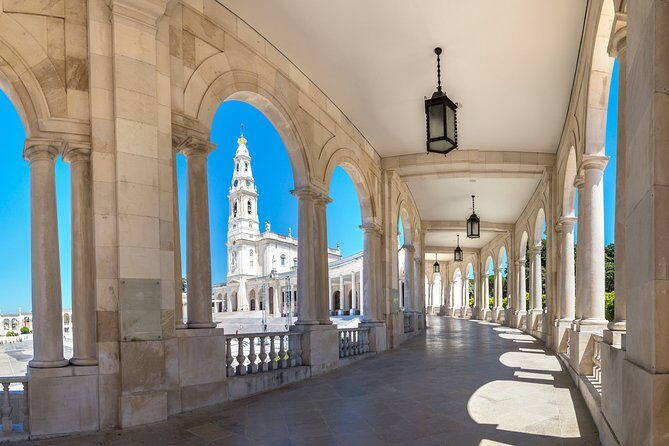
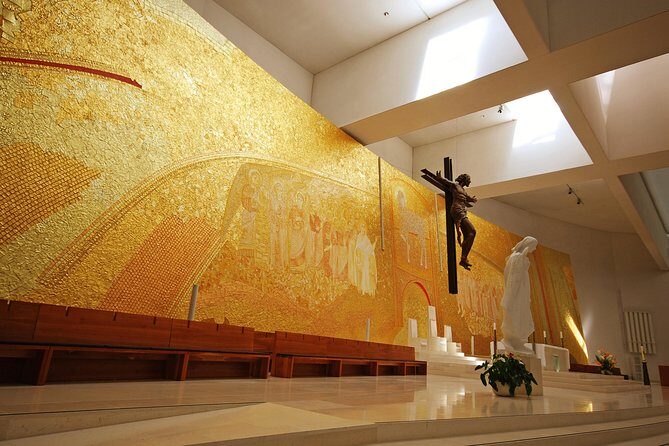
Fatima is where this tour earns its name. You’ll start with the Basilica of the Holy Trinity, and it’s not just another church stop—it’s about scale and symbolism.
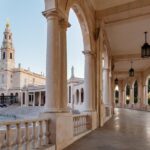
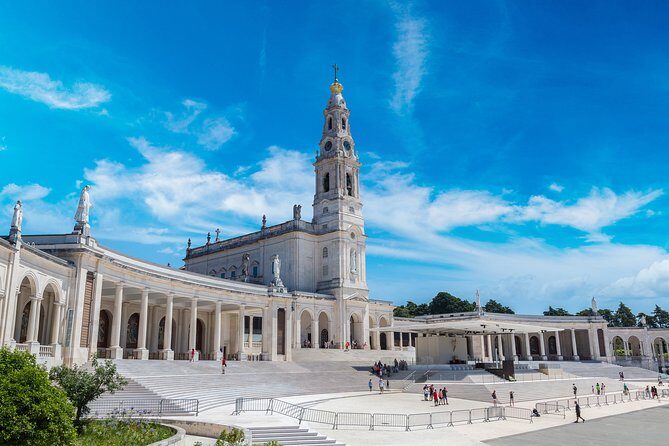
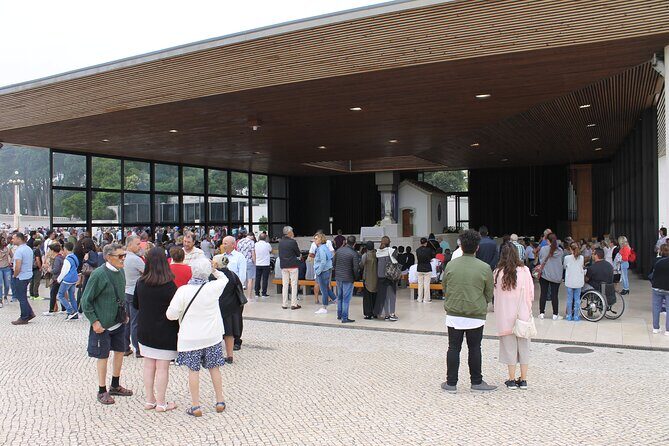
In the Fatima Sanctuary area, you can also visit the Holy Trinity Church across from the basilica. The church is a modern, white building with an exterior color tied to the local stone people describe as white sea. It has 8,633 seats and covers 40,000 m²—and it’s noted as the fourth largest Catholic temple in the world by seating capacity. Even if you’re not the type to clock building stats, that kind of size changes how you experience the space.
The value here is simple: you’re getting context before you go into the more famous Rosary sites. If you’re curious about how Fatima evolved from apparitions into a major pilgrimage complex, this start helps you “read” the sanctuary layout instead of arriving already overwhelmed.
What to watch for: this is a sanctuary area, so plan for quiet moments and respectful behavior. Also, because the day starts early and Fatima involves a lot of walking, bring something light for your layers—morning weather can feel different once you’re outside.
The Rosary Core: Capela das Aparições and Basilica de Nossa Senhora do Rosário
This portion is the emotional center of the day. You’ll spend time at Capela das Aparições, the chapel built by local people in 1919 after requests tied to the apparitions. The first mass there was held in 1921, and despite changes over time for preservation and maintenance, the chapel keeps a rough design that still feels like a simple hermitage.
Inside this stop, the story gets very specific. The image of Our Lady marks the spot of the holm-oak tree—the location of the apparitions. The original tree disappeared little by little as more believers took pieces away, twig by twig, and it was also here that the shepherds came to say the rosary with other believers. That detail matters because it shifts the visit from a general “religious sightseeing” vibe into something more rooted in place.
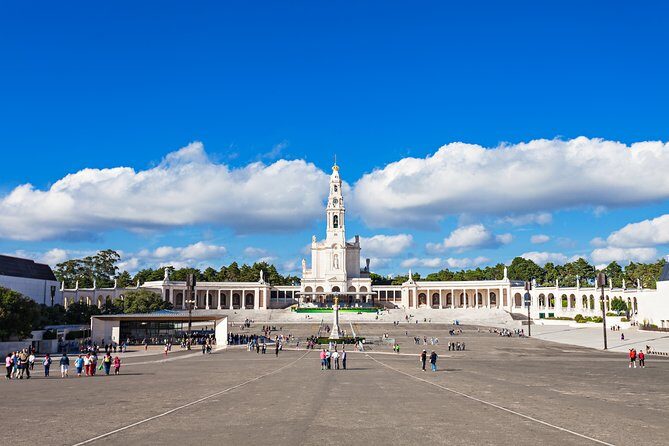
Then you move to the Basilica of Our Lady of the Rosary (Basílica de Nossa Senhora do Rosário), which integrates the Sanctuary of Fatima at Cova da Iria—the place associated with the apparitions. The itinerary time is set at about 30 minutes, and admission is listed as free.
Why this works: the itinerary pairs the chapel that anchors the story (the apparitions site) with the basilica that became the large public focal point. So you’re seeing both the origin and the later “gathering place” outcome in a single loop.
Small drawback: you’ll want more than 30 minutes at each of these spots if you like to sit, reflect, and absorb quietly. If that’s your style, treat the time limit as a starting point—use your energy wisely and ask your guide what to prioritize visually.
Valinhos Sanctuary: Via-Sacra Stops, Hungarian Calvary, and Lucy’s and Francis’s Homes
After Fatima’s main basilicas, the tour shifts toward the pilgrimage route at Valinhos Sanctuary. This is where people follow a path—literally—through the Stations of the Via-Sacra toward the Hungarian Calvary.
In Valinhos, you can also see the Chapel of St. Stephen of Hungary and then visit the House of Lucy and the House of Francis and Jacinta Marto in nearby Aljustrel. The stop is about 30 minutes, and admission tickets are listed as not included.
One of the more interesting local details here is about art and authorship: the sculptures of the Angel of Portugal and the various stations of the Via-Sacra are credited to Maria Amélia Carvalheira da Silva. That means this isn’t just historic architecture—it’s also a crafted visual program meant for pilgrims.
What I’d do if I were you: wear shoes that handle uneven ground gracefully, and keep your phone charged. If you like to read the station-by-station message, having your notes organized makes the short time feel more meaningful.
Batalha Monastery (Mosteiro de Santa Maria da Vitória): UNESCO Gothic and Stained Glass
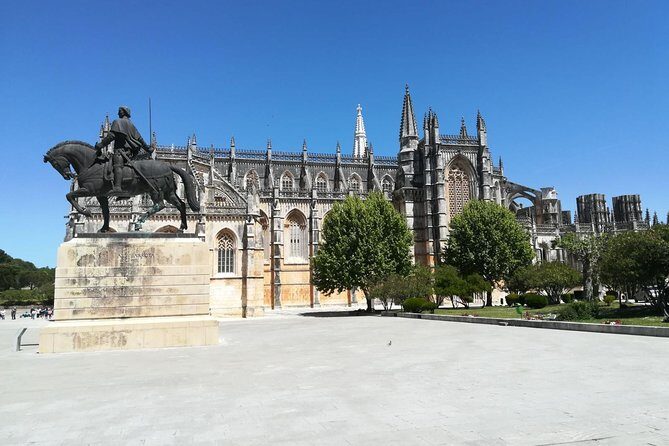
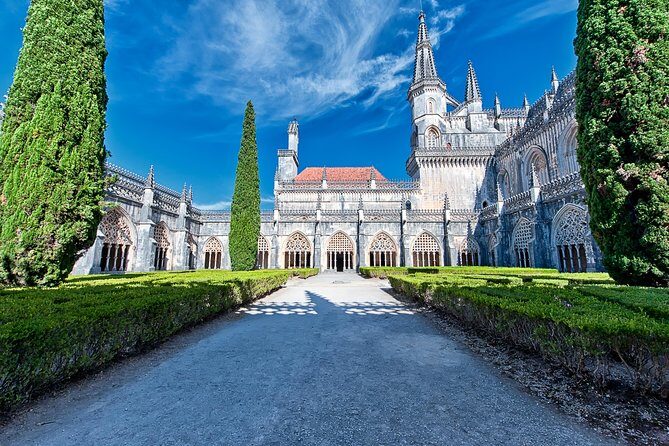
Next comes the medieval heavyweight: the Monastery of Santa Maria da Vitória, also called the Monastery of Batalha. The site is described as one of the most fascinating in the Iberian Peninsula, and the reason becomes clear fast once you connect it to Portugal’s national story.
The monastery is tied to a key moment on August 14, 1385, near where it stands: D. João, Master of Avis and future king of Portugal, overcame Castilian armies in the Battle of Aljubarrota. That victory ended a dynastic crisis stretching back to 1383, after King Ferdinand’s death left Portugal’s succession in turmoil.
D. João dedicated the monastery to the Virgin Mary after invoking her to intercede for his triumph, and it was donated to the Dominican Order. Construction took almost two centuries, resulting in a major Gothic monument. It also earned UNESCO World Heritage status in 1983.
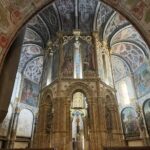
Inside, one of the strongest reasons to choose this stop is Portuguese medieval stained glass. The monastery houses an important nucleus of those windows, admired in the Chapel and the Chapter Hall. The central nave rises to 32.5 meters, supported by eight columns on either side—a detail that’s not just trivia; it changes how the space feels when you look up.
You can also visit parts beyond the church itself, including the monastery’s dormitory, dining room, and kitchen. The itinerary time is about 30 minutes, and tickets are listed as not included.
A practical caution: 30 minutes at Batalha is enough to see the main highlights, but not enough if you’re a serious architecture fan. If stained glass and Gothic structure are your priorities, arrive ready to move quickly and let your guide point you to the best angles first.




Nazaré Lighthouse and the Local Craft Stop: Where Legends Meet Sea Life
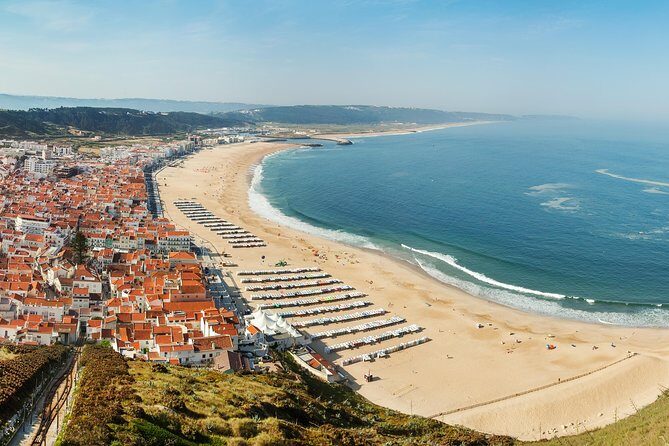
Then you head to the Atlantic side with a Nazaré pairing: the Farol da Nazaré (Lighthouse of Nazaré) and time around Nazaré’s arts and design.
At the lighthouse stop, the description is delightfully specific. The lighthouse is in the Fort of Saint Michael Archangel, and the light structure is a round, bright red lantern mounted on the fort wall, with a service balcony. The light pattern is listed as two seconds on, one second off—the kind of detail you don’t get on generic photo spots.
After that, your time in Nazaré focuses on the town’s craft and cultural connection to the sea. You’ll see fish-sellers and fish laid out to dry (carapaus, or horse mackerel), and local traditions show up in handicrafts like nets, buoys, baskets, and traditional puppets dressed in the costume of seven skirts. Food also reflects the coastal life—fish and shellfish dishes like caldeiradas and açorda come up in the tour’s context.
There’s also a viewpoint angle: the Sítio district is at Nazaré’s highest point and is accessible by funicular. The story linked to this area goes back to the 12th century legend of Dom Fuas Roupinho, who was nearly lost to an abyss while hunting deer; he ordered a chapel as thanks, tied to Ermida de Memória. Later, the Sanctuary of Our Lady of Nazaré was built, with grand festivals in September.
A bonus historical note in the area: the nearby 7th-century Chapel of São Gião, described as one of the rare Visigoth holy places in Portugal.
This stop is listed as about 1 hour with admission ticket free.
How to make the hour feel longer: aim for one main outcome. Either you want photos and atmosphere, or you want crafts and stories—don’t try to do both at full intensity. If you care about the legend and the viewpoint, ask your guide how much time you can realistically spend in Sítio during your visit window.
Óbidos Village Inside the Castle Walls: Two Hours to Wander Smart
Finally, you reach the medieval town that makes many people understand why Portugal’s smaller places win hearts: Óbidos.
Óbidos is described as one of the most picturesque and best-preserved medieval towns in Portugal. It’s close to the capital, perched on high ground near the Atlantic coast, and it once had strategic importance. Long before the Romans, the area was settled, and the town’s later prosperity is tied to the royal family. King Dinis offered Óbidos to his wife, Queen Isabel, in the 13th century. It then became part of Casa das Rainhas—the Queens’ Estate—through different dynasties, which is one reason there are so many churches packed into such a small area.
The town’s medieval identity is easy to feel on foot. You’ll find a well preserved castle within the walls, plus a maze of streets and white houses that make it a pleasure to stroll. The tour also flags things like Manueline porticoes, colorful window boxes, and small squares—plus religious and civil architecture from Óbidos’s golden days.
This stop is timed at about 2 hours, and admission is listed as free.
My practical take: two hours is just right if you walk at a calm pace and don’t spend too much time re-routing because you keep stopping for photos. If rain hits, the cobblestones can slow you down—plan fewer detours and save your energy for the best streets.
Price and Tickets: Does $274.03 Feel Like Good Value?
At $274.03 per person, this is not a cheap outing, but it’s also not trying to be. You’re paying for a private day, pickup and drop-off, and on-board Wi‑Fi, plus bottled water and the insurance and taxes wrapped into the price. The key question is whether your priorities match the way the tour is structured.
Here’s how the money makes sense for many people:
- You’re combining four major regions (Fatima, Batalha, Nazaré, Óbidos) without having to coordinate trains or rental cars.
- Several stops are listed as free admission on the itinerary (major Fatima sites, Nazaré crafts area, Óbidos). That reduces the “surprise costs” feeling.
- You still get paid-time inside the biggest named places, which matters when the day is only 8–9 hours.
What could reduce value for you is if you’re the type who wants long stays at each site. The schedule is designed to fit a lot into a single day, so you trade depth for breadth. Also, even though some stops are free, the tour notes tickets are not included—and that includes places where ticketing isn’t marked free, like Valinhos, Batalha, and the lighthouse.
What I’d bring to avoid headaches:
Food and drinks aren’t included, so pack a snack or plan a meal break only if your guide timing allows. Comfortable walking shoes are a must. And since the tour requires a current valid passport on the day of travel, make sure that’s in your bag before you leave your accommodation.
My Practical Tips for a Smooth Day (Especially in Rain)
This itinerary works best when you treat it like a guided route with smart priorities—not like an open-ended wandering day. The stops at Fatima are emotionally powerful, and you’ll want to be present. The medieval sites and the coastal town are great, but you’ll enjoy them more if you don’t try to “do everything” at maximum speed.
If the weather turns, keep a simple mindset: prioritize earlier stops and accept that later timing might get tighter. On at least one rainy schedule situation, the guide was delayed roughly 10 minutes due to weather and traffic limits to enter the city, and that pushed the timetable so that Óbidos ended up with less time for exploring. In fall, it can get dark around 18:00, so a delayed afternoon can cut into your wander time faster than you expect.
So here’s how to stay in control:
- Bring a light rain layer or umbrella if forecasts look shaky.
- Carry small snacks since food and drinks aren’t included.
- Keep a little flexibility for Óbidos, because that’s often the stop most affected by late-day timing.
And one more tip: the tour is offered in English, and it may be operated by a multi-lingual guide. If you have specific interests—architecture, religious history, coastal legends—tell your guide early so they can aim their explanations where you’ll actually notice them.
Should You Book This Private Fátima, Batalha, Nazaré e Óbidos Tour?
Book it if you want a guided all-in-one day that covers the big-faith sites of Fatima, the UNESCO-grade Gothic drama of Batalha, and two very different coastal-town experiences (Nazaré and Óbidos). The private pickup, Wi‑Fi, and the mix of free and paid stops can be a strong value when you like structure and want to see a lot without transportation stress.
Skip it or choose a different format if you’re the kind of visitor who needs hours at each location to feel satisfied. The day is long, the stops are timed, and the later parts can lose minutes when rain and traffic hit.
If your top goal is Fatima and you’re okay with moving steadily, this is a very sensible booking. You’ll get a lot of meaning per hour, and you’ll finish with two of Portugal’s most photogenic medieval coastal contrasts: Nazaré’s sea culture and Óbidos’s white-walled castle streets.
FAQ
How long is the tour?
It’s about 8 to 9 hours.
What time does the tour start, and do you offer pickup?
The start time is 9:00am, and pickup is offered from accommodations, hotels, the train station, and other agreed meeting points.
Is Wi‑Fi included?
Yes. Wi‑Fi is provided on board.
Are admission tickets included in the price?
Tickets are listed as not included, even though some stops on the itinerary show admission as free. For any stops marked as ticket not included, you’d need to pay separately.
Is this a private tour?
Yes. It’s a private tour, and only your group will participate.
What language is the tour offered in?
It’s offered in English. A multi-lingual guide may operate the tour.
Do I need a passport?
Yes. A current valid passport is required on the day of travel.
If you tell me your travel month (and whether you want more time in Fatima vs. more time strolling Óbidos), I can help you judge whether this timing matches your style.