REVIEW · PORTO
Private e-Bike Tour in Porto – Explore Riverside, Beaches & Parks
Book on Viator →Operated by Biclas & Triclas - Rent a Bike and Tours · Bookable on Viator
Porto by bike is a fast way to see it all. This private e-bike tour links the riverfront, beach zone, and big urban parks with lots of stops that are easy to reach. You don’t just circle the center—you ride out toward Foz, then come back toward the historic core.
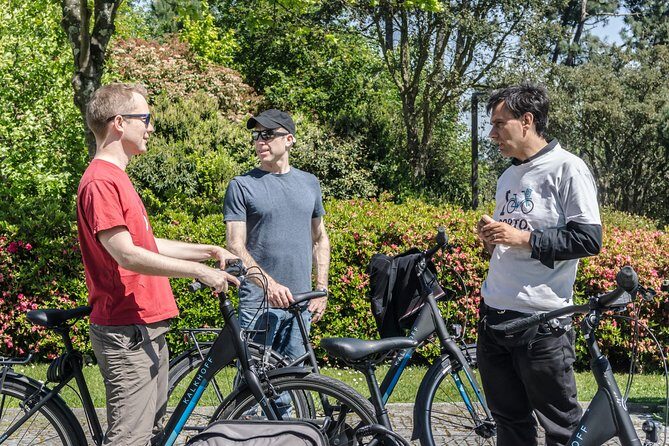
I love the way the tour turns Porto into a rideable route. I also love the licensed guide style: stories tied to specific places, like when guides such as Javier or Eduardo bring the stops to life. Another big plus is that the stops are set up so you can spend your time riding and looking, since admission is listed as free at each major stop.
One thing to consider: some segments share space with pedestrians and city traffic. If you’re a timid bike rider, the coast paths and the end around the bridge area can feel busy, and weather can change how relaxed the pace feels.
In This Review
- Key highlights and why they matter
- Why this Porto e-bike route feels like the city’s best shortcut
- Getting started at Biclas & Triclas and what 3 hours really means
- Miragaia and the Alfândega pier change: first you get the mood, then the story
- Tram history by the Douro: Museu do Carro Eléctrico
- Arrábida Bridge to Cantareira: the river big-picture view
- From Passeio Alegre to São João Baptista Fortress: parks plus fort views
- Felgueiras Lighthouse, Pergola da Foz, and the cheese-hill coast
- Matosinhos Beach: big sands and easy access
- Parque da Cidade and Pasteleira: when Porto slows down on purpose
- Back near the historic center: Jardím do Cálém, Ribeira square, then Dom Luís I
- Bikes, safety, and why your riding confidence matters
- Price and value: $71.20 for a guide, bike, and free stop entries
- Who should book this private e-bike tour, and who should skip it
- Should you book this Porto e-bike tour?
- FAQ
- How long is the private e-bike tour in Porto?
- How much does the tour cost?
- What’s included in the price?
- What’s not included?
- Where does the tour start and end?
- Is hotel pickup included?
- Is this tour private?
- What language is the guide?
- Do you need good weather?
- Are kids allowed?
Key highlights and why they matter
- Small-group pace helps you ride at a comfortable speed instead of sprinting ahead.
- E-bikes with helmets and bottled water remove a lot of friction from a hills-and-traffic city.
- A route that actually reaches Foz and the beaches, not just the tourist center.
- Free-entry stops keep your budget simple and your time focused on sightseeing.
- Guides like Eduardo, Helio, Emanuel, and Javier are praised for clear history and helpful route guidance.
- A private format means the guide can adjust if your group moves a bit differently.
Why this Porto e-bike route feels like the city’s best shortcut
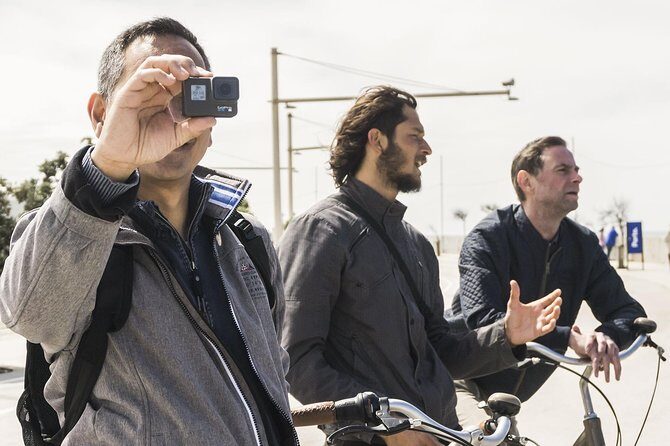
Porto can wear you out. Even when you stay in the center, you end up zigzagging over hills, then walking more just to reach the next view. This tour solves that problem with a practical idea: use an e-bike to cover ground, then slow down for the parts that are worth seeing up close.
You’ll follow a route that mixes postcard-perfect water views with neighborhoods that feel more local. The stops include Miragaia, the Douro waterfront and river structures, the tram museum, and then the Foz beach area. After that, you roll through parks and gardens, and you finish back near the historic core with Dom Luís I Bridge.
The result is a ride that works for first-timers who want a strong orientation fast, and for repeat visitors who want the areas outside the usual walking loop.
You can also read our reviews of more cycling tours in Porto

Getting started at Biclas & Triclas and what 3 hours really means
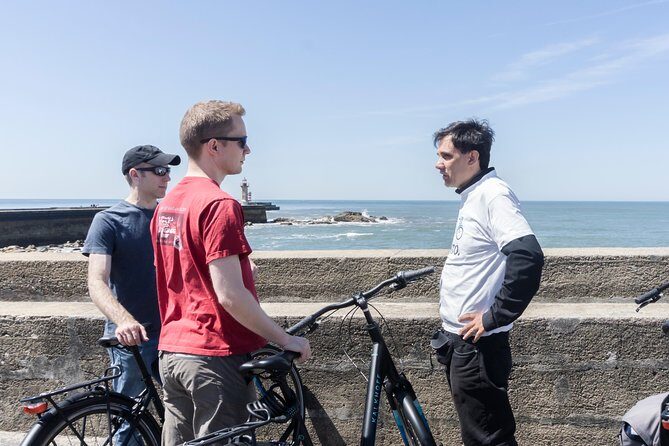
The tour starts and ends at Biclas & Triclas, R. Nova da Alfândega 108 R/C, right near the Alfândega Porto area. You meet up, get set up with the bike and helmet, and then you’re rolling.
The time is about 3 hours, and the pace is built around frequent stops. That matters because you’re not just moving from viewpoint to viewpoint—you’re also getting context for what you’re seeing. People who love this tour often mention that the ride is easy to manage once you’re on the e-bike. One review even points out that the route can feel surprisingly flat in many stretches, which is a big deal in Porto.
Still, think of this as a sightseeing bike tour, not a leisurely cruise where you never negotiate shared space. You’ll be riding in public areas, and you’ll also face the normal Porto reality: pedestrians, scooters, and people crossing when they feel like it. Your guide’s job is to keep your group together and safe.
If you prefer a rigid schedule with zero surprises, there can be a catch. When weather is poor, the tour can adjust tempo to keep things on track—one rider noted a hurried later portion after a rainy start.
Miragaia and the Alfândega pier change: first you get the mood, then the story
Your first stop is Miragaia, a picturesque area known for cobbled streets lined with villas and small restaurants serving typical Portuguese dishes. This is a good early choice because it gives you Porto’s “texture” right away. Before you even hit the bigger landmarks, you understand the city’s style: stone, slopes, and small-scale street life.
Then you move to the Alfândega Porto Congress Centre area. The point here isn’t just a building—you’re seeing a historic shift in how the waterfront worked. The construction is tied to the creation of the big pier platform where customs is based, and it replaced the old Miragaia beach. It’s an example of how Porto’s shoreline has changed over time.
Practical tip: treat these early stops as orientation. Once you’ve seen Miragaia’s vibe and understood how the waterfront got reshaped, the later river and bridge scenes make more sense.
Tram history by the Douro: Museu do Carro Eléctrico
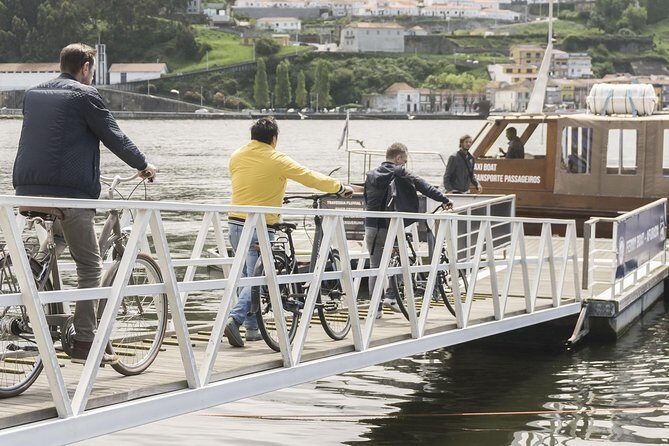
Next is Museu do Carro Eléctrico (Porto Tram Museum). It’s in a former thermoelectric power station next to the Douro in Massarelos, and it opened in 1992. The museum is focused on materials related to Porto’s tram history.
This stop is a smart inclusion because it adds variety. You’re not just looking outward at scenery—you’re learning how Porto moved people around before modern transport habits. If you like city systems and how infrastructure shapes daily life, you’ll probably enjoy this one.
Because the stop time is short and entry is listed as free, you won’t feel like you need to become a tram historian. You’re getting a quick entry point, then back on the e-bike for the next stretch.
Arrábida Bridge to Cantareira: the river big-picture view
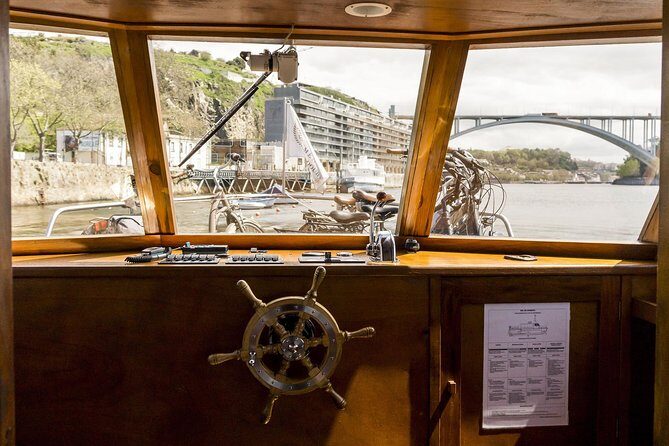
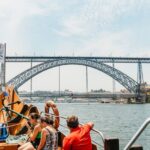
At Ponte da Arrábida, you’ll pause at an arched bridge over the Douro connecting Porto and Vila Nova de Gaia. You’ll also hear the specific construction detail: when it was built in 1963, it had the largest reinforced concrete arch of any bridge worldwide.
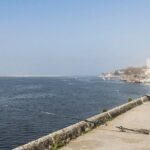
Then you head to Cantareira, an area associated with riverside fishermen and the tradition of small boats sheltering and storage of fishing gear. It’s named from the past when fountains served people carrying water with pitchers. The stop also connects you visually to the opposite side—places like Afurada and Cabedelo—with the long run from the Douro to the mouth.
This is where the tour earns its title. You’re getting river views that you’d usually miss if you stayed glued to the classic downtown viewpoints.
If you’re the kind of traveler who likes photos, this is also where you’ll want to slow down and look. The best shots come after you stand still long enough for the light to hit the water.
You can also read our reviews of more private tours in Porto


From Passeio Alegre to São João Baptista Fortress: parks plus fort views
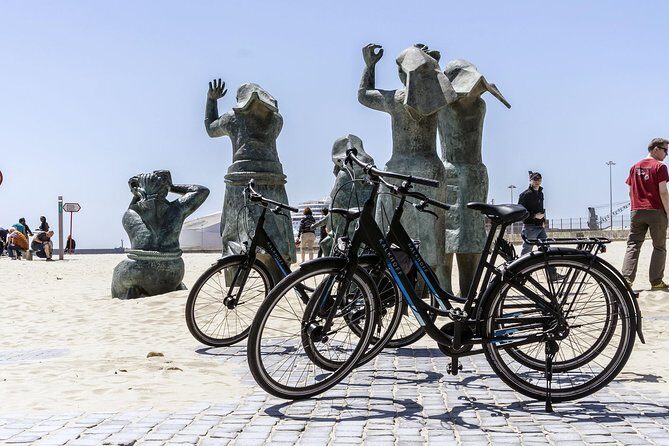
Then the route shifts toward the garden side of Porto with Jardim do Passeio Alegre in Foz do Douro. It’s a public-interest garden and is near monuments and heritage classified in the area. This is an easy stop for your brain: ride, breathe, and take in a calmer pace.
After that comes Fortress São João Baptista (also called São João da Foz Castle). The fortress sits in a dominant position on the Douro river bar and provides river access to the city. It’s a great “why-the-water-matters” pause.
These stops work well because the city gives you variety on purpose. You get the garden softness, then the fortress viewpoint, then the open-air coastline.
Felgueiras Lighthouse, Pergola da Foz, and the cheese-hill coast
The next set of stops leans into classic Foz coastline scenery:
- Farolim de Felgueiras: a Portuguese lighthouse on the right bank of the Douro, at the tip of the pier of the same name in Foz do Douro.
- Pergola da Foz: tied to the Praia da Foz area, covering beaches including Ourigo, Ingleses, and Luz.
- Praia do Castelo do Queijo: a coastal defense site from the 17th century that protected the coast from North African pirates. It’s located on the rocky hill that gives the name Castelo do Queijo, or Cheese Castle.
If you’re visiting in warm weather, you’ll likely appreciate how the coast breaks up the city’s hills and density. If you’re visiting in cooler months, you might like it even more: you get sea air and open sightlines, and you’re not stuck between buildings.
Also, admission at these stops is listed as free, so you’re not paying extra to simply stand and look.
Matosinhos Beach: big sands and easy access
Next is Matosinhos Beach, described as the largest beach with easy access from central Porto. The sands are golden, and waves are suitable for surfing.
This stop is a good reminder that Porto isn’t just river and old streets. It’s also ocean beaches you can reach with a short ride.
Just keep expectations realistic: a beach stop is time for watching and a few photos, not a full-length beach day. The tour is about coverage in a limited window.
Parque da Cidade and Pasteleira: when Porto slows down on purpose
Then you move into green space:
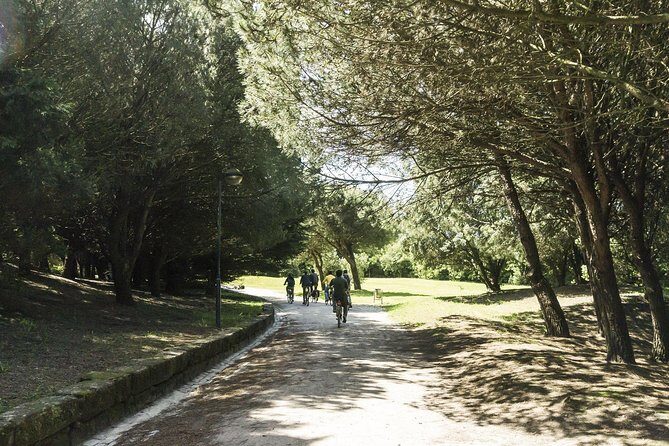
- Parque da Cidade: Porto City Park, designed by landscape architect Sidónio Pardal. It’s the largest urban park in Portugal, covering 83 hectares and about 10 km of paths, with lakes and flora and fauna integrated into the city fabric.
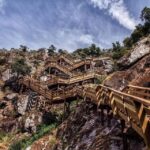
- Parque Urbano da Pasteleira: a public park with extensive forest areas, split by Afonso de Paiva Street, connected by wooden pontoons.
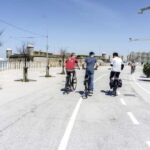
This is the part of the tour that many people enjoy because it feels more relaxed than roads and crowds. One rider described the route as going from waterfront to beach paths, then into a huge park, and finally toward the main bridge.
Practical note: if weather turns wet or windy, the park segments might feel less leisurely. One review said a rainy start meant the guide moved faster later to catch up.
Still, even a shorter park stop gives you a sense of how much green Porto has, and how it’s built into everyday life.
Back near the historic center: Jardím do Cálém, Ribeira square, then Dom Luís I
As you return, the stops become more “Porto core” again.
Jardim do Cálem is a small garden almost at the mouth of the Douro River, with river views and tall black poplars.
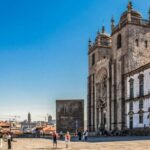
Then you reach Praca da Ribeira, one of the oldest squares in Porto’s historic center, mentioned in royal letters as far back as 1389. You’re also near the quay connected to the river, where the city developed through commerce via the Douro. There’s also a reference point for the tragedy of Ponte das Barcas during an onslaught in 1809, marked today by a bronze bas-relief.
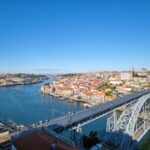
Finally, you arrive at Dom Luís I Bridge (commonly called that), which has been part of the UNESCO World Heritage Site since 1996. The bridge’s real name is Luiz I, and the tour shares that small local naming detail—one of those facts you can only really pick up on a guided ride.
Some people like ending at the bridge because it feels like a big “ta-da” moment. Others say the bridge-area finish can be frustrating because it’s congested and involves a steep hill compared to earlier flatter stretches. This is where good guiding matters most—watch how your guide times the crossing and group spacing.
Bikes, safety, and why your riding confidence matters
This is an e-bike tour, so the biggest hill problem is mostly handled. Multiple riders mention that the bike is easy to ride and that the e-power helps on inclines. Even when parts of the route include hills, you’re usually not fighting the bike like you would on a regular city ride.
Equipment is included: helmets and bottled water, plus the e-bike itself. That setup reduces decision fatigue—you show up, get suited up, and focus on the route and the guide’s storytelling.
That said, Porto is still Porto. One review warns that busy paths, pedestrians, cars, and scooters can make the ride stressful if you’re not an experienced city cyclist. Another rider notes there’s some riding along roads and tram tracks. So while the e-bike helps a lot, your real test is confidence in shared spaces.
What I’d do: if you’re nervous, go slow, keep a safe distance, and let the guide set the pace. Don’t try to show off. This kind of sightseeing is way more fun when you feel in control.
Price and value: $71.20 for a guide, bike, and free stop entries
At $71.20 per person for about 3 hours, you’re paying for more than a bike rental. You’re paying for:
- a licensed local guide (English)
- an e-bike
- helmet + bottled water
- free entry at the listed major stops
- a route that covers Porto’s Douro edge, Foz beaches, and major parks in one go
If you’re trying to replicate this day on your own, the time cost adds up fast. You’d need to plan transport, map out distances across hills, and figure out how to stitch together river views, beaches, and parks without losing half your day to transit. Here, the planning is done.
For solo travelers or couples, this often feels like strong value because the guide gives structure and context. For families, it can work too, but you should pay attention to the rule that children up to 5 must use a child seat, since that requirement is stated.
Who should book this private e-bike tour, and who should skip it
This tour is a great match if:
- you want more than the city-center highlights
- you want a fast overview that still includes multiple distinct areas (river, coast, parks, and Ribeira)
- you like guided context and specific stop stories
- you want help on hills without sacrificing mobility
It might not be ideal if:
- you’re a very cautious cyclist and shared-path riding sounds stressful
- you need a totally car-free, crowd-free route
- you’re visiting during weather that’s likely to be windy or rainy (the tour requires good weather)
If you’re unsure, this is the kind of tour where the private format can help. One rider noted that when it was just their group, the guide tailored the trip. That flexibility can matter if you’re balancing comfort, pace, and photo stops.
Should you book this Porto e-bike tour?
If you’re trying to see Porto with less walking pain and more water-and-park time, I’d book it. It’s structured, guided, and designed to cover real areas of the city, not just a tight center loop. The mix of Douro views, Foz beaches, and large parks gives you a rounded sense of Porto in a short window.
Just be honest about your bike comfort. If you’re fine handling a busy city atmosphere at low speed, you’ll likely love it. If you prefer quiet trails and you get rattled by crowds, you might want a different style of tour.
FAQ
How long is the private e-bike tour in Porto?
The tour runs for about 3 hours.
How much does the tour cost?
The price is $71.20 per person.
What’s included in the price?
You get an e-bike, a helmet, bottled water, a local licensed guide (English), and all taxes and fees. Admission at the listed stops is shown as free.
What’s not included?
Food and drinks are not included unless specified. Souvenir photos are also not included (they’re available to purchase).
Where does the tour start and end?
It starts at Biclas & Triclas – Port Rent a Bike and Tours at R. Nova da Alfândega 108 R/C, 4050-431 Porto, and the tour ends back at the same meeting point.
Is hotel pickup included?
No. Hotel pickup and drop-off are not included.
Is this tour private?
Yes. It’s a private tour/activity, meaning only your group participates.
What language is the guide?
The tour is offered in English.
Do you need good weather?
Yes. The experience requires good weather. If it’s canceled due to poor weather, you’ll be offered a different date or a full refund.
Are kids allowed?
Children up to 5 years old must use a child seat.
If you tell me your travel dates and your comfort level on bikes around crowds, I can help you decide whether this route fits your day (and suggest the best time to ride).