REVIEW · PORTO
Porto: 3-Hour Old Town & Riverside Bike Tour – Guided Experience
Book on Viator →Operated by Bluedragon Porto City · Bookable on Viator
Pedal power fixes Porto fast. This 3-hour bike tour threads the Douro and the UNESCO old town in a way you can feel, not just watch from a street corner. Guides like Sophia and Igor tend to turn the city’s facts into a fun, human story as you ride.
I really like the practical start: you get a bike briefing, seat adjustments, and a helmet so you’re comfortable before you hit traffic. I also love the way the route mixes classic viewpoints with calmer stretches along the water, which makes Porto’s hills feel more manageable.
One thing to think about: this is real-city biking. You’ll be sharing roads with cars and you may hit uneven pavement and cobblestones, so if you’re nervous or new to riding, this might stress you out more than it should.
In This Review
- Quick hits before you pedal
- Starting at Bluedragon City Tours: Your bike briefing that matters
- Ribeira and Miragaia: UNESCO old town on wheels, not sidewalks
- Alfândega Nova do Porto and the Douro bridge story you can see
- The riverside garden stop: where the pace usually softens
- King John IV and the fort era: Porto’s long timeline in one stop
- City Park and the Atlantic edge: why 83 hectares feels huge
- Foz Velha and the beach side: more Porto than you’d guess
- Price and value for $47.16: what you’re really paying for
- Who should book this, and who should skip it
- How to prep: rain, hills, and the small things that prevent big annoyances
- My take: should you book this Porto old town and riverside bike tour?
- FAQ
- How long is the Porto Old Town & Riverside Bike Tour?
- What does the tour cost?
- Is the tour offered in English?
- Where does the tour start and end?
- What’s included in the tour price?
- Are entrance fees included?
- Do I need to already know how to ride a bicycle?
- Are there height or weight limits?
- Does the tour run in bad weather?
- Can I get a refund if I cancel?
- How big is the group?
Quick hits before you pedal
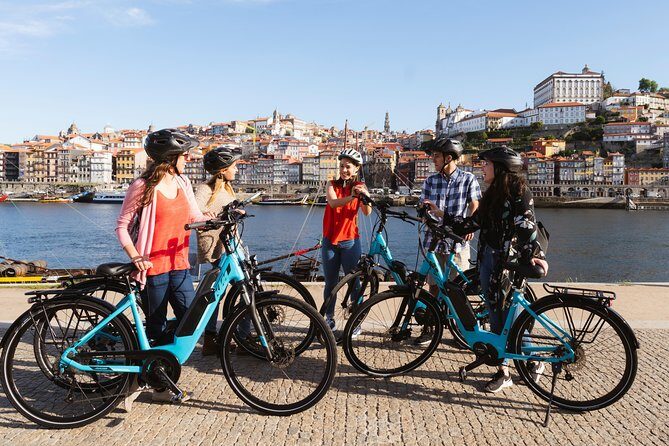
- UNESCO Ribeira from street level: Old, river-hugging Porto—seen at the pace of your own wheels.
- Porto Customs House + a bridge story: The Alfândega Nova do Porto connects to the same company behind the D. Luis I iron bridge.
- Dom Luís I engineering moment: That 1963 “biggest concrete arch in the world at the time” detail actually lands when you’re looking at it.
- Green riverside break: Expect a pause with lush views across the Douro and toward Dom Luís I.
- City Park with the Atlantic nearby: Portugal’s largest urban park (83 hectares) stretching toward the ocean.
- Guide-driven energy: People rave about guides such as Carla, Alejandro, Gustavo, Beatriz, Miguel, and Maria for clarity and keeping everyone feeling safe.
Starting at Bluedragon City Tours: Your bike briefing that matters
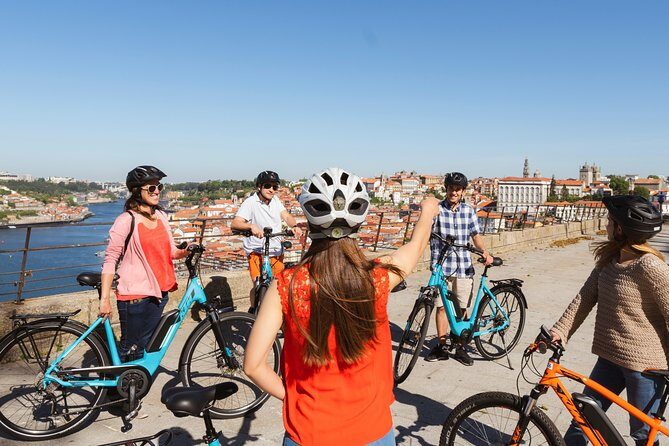
Your tour meets at Bluedragon City Tours, R. de Alexandre Herculano 251, 4000-053 Porto. You’ll start right there and end back at the same place. That sounds basic, but it’s a huge plus in Porto. You don’t burn half your day figuring out where to go next.
Before moving, you get a bike-and-helmet briefing and time to adjust your seat. This matters because Porto’s streets aren’t forgiving. If your saddle height is off, you’ll feel it fast—especially when you’re pedaling through cobblestones or braking for a turn.
Also, bikes and helmets are included, and the tour runs with live commentary. So you’re not just rolling past sights; you’re getting a guide’s running explanation while you’re actually in the neighborhood.
You can also read our reviews of more cycling tours in Porto

Ribeira and Miragaia: UNESCO old town on wheels, not sidewalks
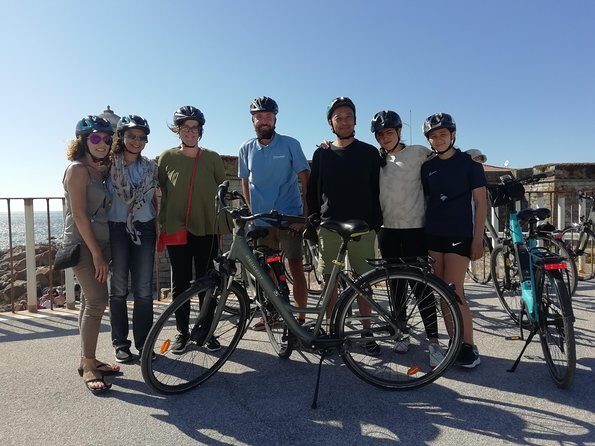
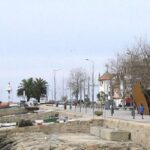
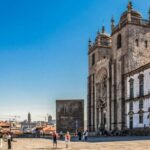
Soon after the start, you ride into the Ribeira area, one of Porto’s oldest and most typical river neighborhoods. You’re on the Douro’s edge, and you’ll understand why Ribeira looks the way it does: it’s old Porto shaped by the river, stacked buildings, and a street network built for a different pace of life.
Here’s what I’d expect you to love about doing Ribeira by bike: you can cover ground quickly without feeling like you’re hiding behind a window. A walking tour can make you zigzag and backtrack. A bike tour lets you keep moving while still stopping for photos and context.
On the way, the route is designed to connect neighborhoods like Ribeira and Miragaia, so you get a sense of how Porto’s layers sit next to each other—riverfront life, hillside streets, and viewpoints that pop up as you go.
The trade-off? Old town streets can feel tight. If you’re the type who needs wide lanes, go slow in your head first, then trust the ride once you’re moving.
Alfândega Nova do Porto and the Douro bridge story you can see
A key stop is the Alfândega Nova do Porto (Porto Customs House). This is where you get the “why should I care?” history without making it heavy. It was built in the second half of the 19th century and completed in 1879 by Seyrig Incorporation—the same company linked to the D. Luis I iron bridge in Ribeira.
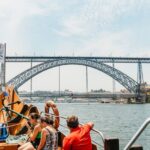
Then you get the bridge angle, too. The Dom Luís I bridge was built as an alternative connection between Porto and Vila Nova de Gaia. You’ll hear its 1963 milestone: at the time, it had the biggest concrete arch in the world. Seeing that span up close makes the number make sense. It’s not just trivia; it’s the shape of the city’s river crossing.
When you’re on a bike here, you also notice something cars don’t always show you: the way the riverfront opens and closes. You ride through views, not around them.
The riverside garden stop: where the pace usually softens
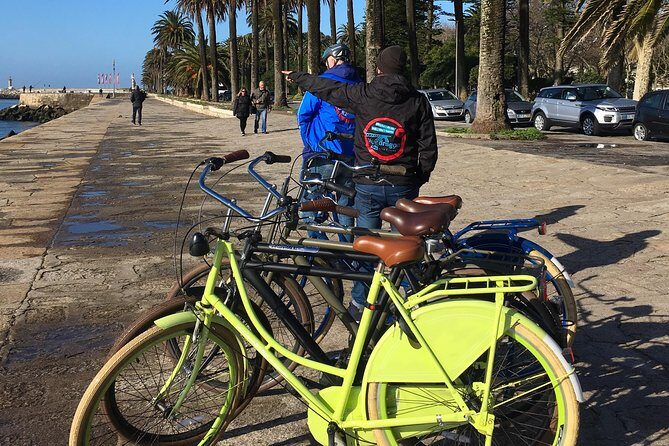
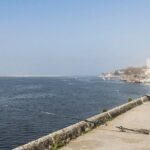
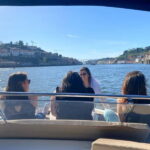
Somewhere along the river stretch, the tour includes a peaceful riverside garden retreat—lush greenery, calm air, and views across the Douro and the Dom Luís I bridge.
This is a smart part of the itinerary. After the busier historic streets, that green pause helps you reset. It’s also the easiest time to take a breather if you’re feeling the hills.
If you like scenery that feels like a local’s walking break—rather than a postcard platform—this stop tends to deliver. You get a better sense of the river corridor as a whole, not just the highlights.
King John IV and the fort era: Porto’s long timeline in one stop
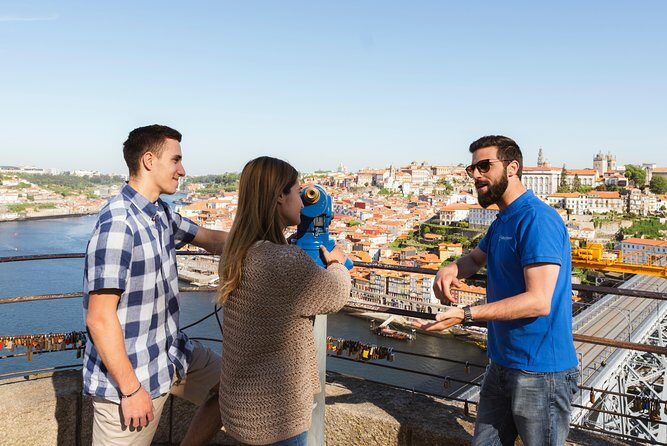
Another stop connects you to Porto’s older layers. The route includes a point where you learn the area’s first settlement dates to the 6th century, and later, a new fort was ordered by King John IV in the 15th century.
This is the kind of moment that changes your mental map. Instead of seeing the city as a single “old town,” you start viewing it as an ongoing project—fortifications, rebuilding, and shifting river needs over centuries.
On a bike, these stories land differently than in a museum. You’re standing in the right place while the timeline clicks into place.
You can also read our reviews of more guided tours in Porto



City Park and the Atlantic edge: why 83 hectares feels huge
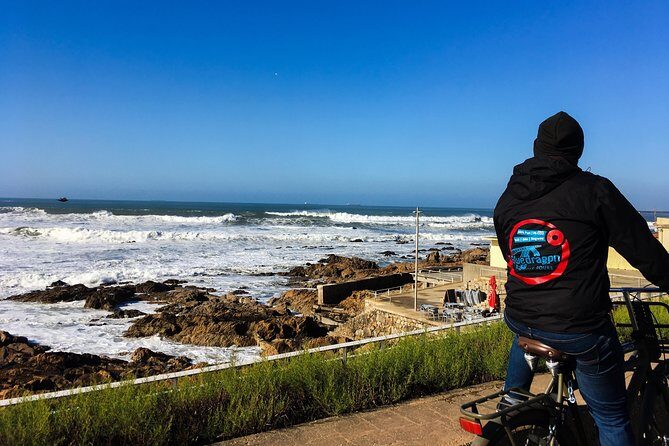
The ride also reaches City Park (Parque da Cidade). This is Portugal’s largest urban park, covering 83 hectares and stretching all the way toward the Atlantic Ocean—which is rare in a city setting.
Even if you don’t spend time walking here like a park day, you still get something valuable: you see how Porto can feel both historic and wide-open. That contrast is part of why the Douro area works so well as a bike route. You get “city” and then “out by the water” without needing a separate trip.
In places like this, biking feels more relaxed. It’s a good spot to settle into rhythm—assuming you stay alert around other cyclists and pedestrians.
Foz Velha and the beach side: more Porto than you’d guess
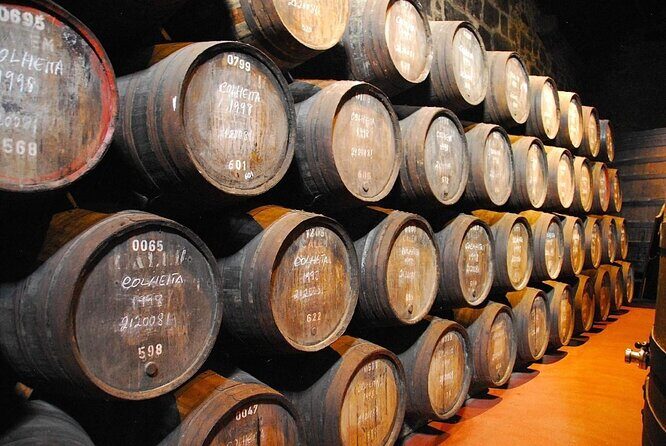
The tour highlights include neighborhoods like Foz Velha, and several experiences described riding out toward the coast and the beach area. In some cases, the route has gone as far as Praia da Luz (so you’re not just circling the center forever).
This part is a big reason to choose a bike tour over a quick sightseeing loop. You get a sense of Porto stretching from riverfront life to Atlantic air. And since hills often come with bridges and viewpoints here, electric-assist bikes (when you get them) can be the difference between a great day and a grumpy one.
My advice: don’t treat this as a “light stroll.” You’re still cycling. But you’ll be cycling with variety—views, sea air, and enough stops to keep your brain awake.
Price and value for $47.16: what you’re really paying for
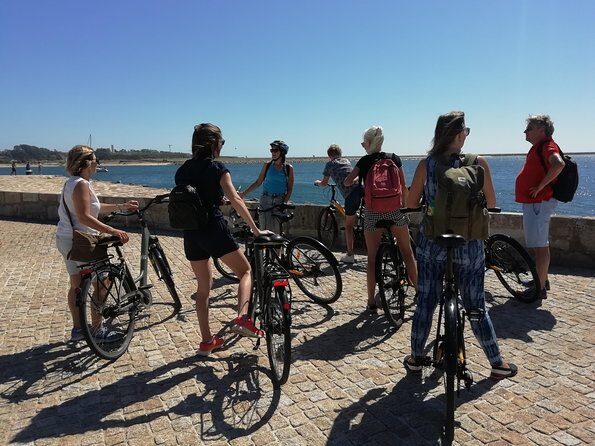
At $47.16 per person for about 3 hours, you’re paying for more than bike rental. You’re paying for:
- a live guide/storyteller who explains what you’re seeing,
- bike + helmet included (so you’re not shopping last-minute),
- and a route that bundles big Porto themes—UNESCO core, river engineering, park-to-ocean space—into one outing.
You could do some of this by yourself, sure. But you’d spend time figuring out the best connections between neighborhoods, and you’d miss the “why” behind the key landmarks (like the customs house details or the bridge engineering milestone).
This also helps timing. Porto is compact, but it still eats time. A 3-hour route is a practical way to get oriented, especially if you’re in town for just a few days.
One more value note: the tour is capped at 15 people, which usually keeps the ride organized and reduces the feeling of being shoved through narrow streets.
Who should book this, and who should skip it
This tour fits best if you:
- have moderate physical fitness and can ride for about 3 hours,
- want a strong first pass at Porto with clear context,
- enjoy learning while moving (not only standing still),
- and feel comfortable riding on real city roads.
It’s less ideal if you:
- are nervous around traffic or aren’t confident on uneven surfaces,
- need bike lanes that don’t exist here,
- or you rely on a device or condition that affects safe riding. (The tour data says it’s not recommended for people with prosthesis, and the company may review capacities.)
There’s also a hard reality check built into the rules: the company can ask you to demonstrate competence, and they may cancel if you can’t properly ride. So if you’re unsure, don’t gamble.
How to prep: rain, hills, and the small things that prevent big annoyances
The tour operates in the rain, so dress for damp weather. Porto weather can change quickly, and wet cobblestones turn “fine” into “spicy,” fast.
Bring:
- a rain layer (not just a thin jacket),
- shoes with grip,
- and a small way to keep your phone dry.
Also, be ready for the fact that bike pacing depends on the group. People have described smooth, efficient rides with attentive guides, but they’ve also mentioned that a slower rider can affect timing. If you’re sensitive to pace, choose a calmer frame of mind and let the scenery do its job.
And yes: Porto hills are real. Electric-assist bikes are frequently mentioned in experiences tied to this tour. Even so, you’ll still feel the city in your legs.
My take: should you book this Porto old town and riverside bike tour?
If you want a guided way to connect Porto’s riverfront, Ribeira UNESCO streets, and the bridge stories—plus green park space and Atlantic views in one go—this is a strong choice. The best part isn’t just the route. It’s how guides like Sophia, Carla, Igor, Alejandro, Gustavo, Beatriz, Miguel, Maria, Johan, Lia, and Lucas tend to keep people comfortable while turning landmarks into something you actually remember.
I’d only hesitate if you’re truly new to biking or very uncomfortable riding around cars and uneven pavement. Porto isn’t built like a cycling brochure. It’s built like Porto—charming, old, and sometimes a little chaotic. If you can handle that, you’ll get a lot of Porto for the money and the time.
FAQ
How long is the Porto Old Town & Riverside Bike Tour?
It runs for about 3 hours.
What does the tour cost?
The price is $47.16 per person.
Is the tour offered in English?
Yes, the tour is offered in English.
Where does the tour start and end?
It starts at Bluedragon City Tours, R. de Alexandre Herculano 251, 4000-053 Porto, and ends back at the same meeting point.
What’s included in the tour price?
Included are a local guide/storyteller, bike and helmet, bike briefing and seat adaptation, the 3-hour bike tour with live commentary, and liability and personal injury insurance.
Are entrance fees included?
No, entrance fees are not included.
Do I need to already know how to ride a bicycle?
Yes. You must be able to properly ride a bicycle and be reasonably competent to ride on the road. The company may ask you to demonstrate that you can ride.
Are there height or weight limits?
Yes. Participants must be at least 1.3 meters tall and weigh no more than 118 kg.
Does the tour run in bad weather?
Yes. The tour operates in the rain, so you should dress accordingly.
Can I get a refund if I cancel?
You can cancel for a full refund up to 24 hours before the experience start time.
How big is the group?
The tour has a maximum of 15 travelers.