REVIEW · PORTO
From Porto: Braga and Guimarães Full-Day Trip
Book on GetYourGuide →Operated by LIVING TOURS · Bookable on GetYourGuide
In This Review
- First, the hooks. Then the payoff.
- Quick reality check on pacing
- Key points worth your attention
- Why this Porto day trip hits harder than you expect
- Getting from Porto to Minho: the ride matters
- Guimarães Castle: the “birthplace of Portugal” stop
- Walking Guimarães: cobblestones, medieval layout, and real local rhythm
- Braga start: lunch time and the “old Christian city” feeling
- Braga Sé Cathedral: Portugal’s oldest cathedral on your route
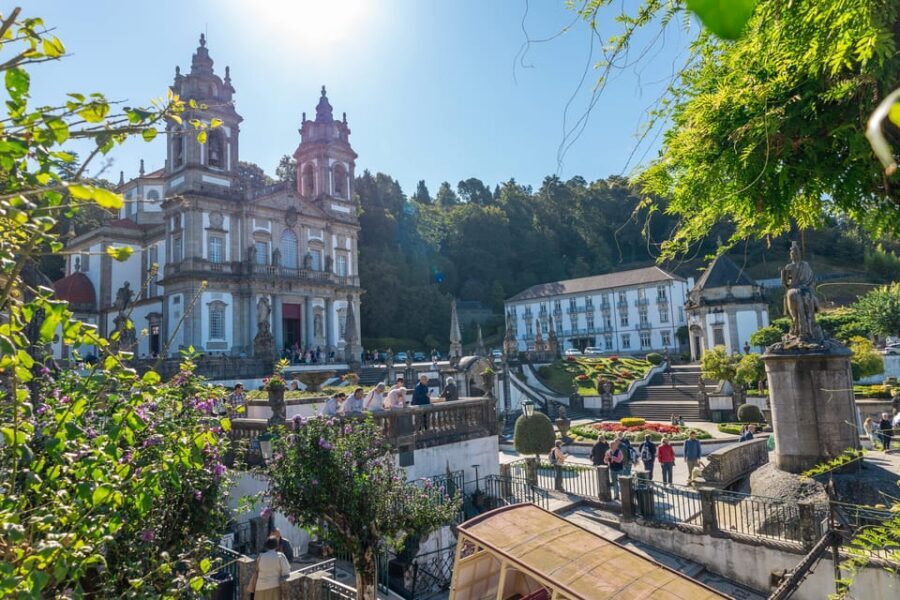
- The big finish: Bom Jesus do Monte’s baroque staircase and views
- The real deal on value and price (and why it’s not just $59)
- How the day feels in your body: walking, timing, and “good shoes” reality
- Living Tours extras: what you get beyond the coach day
- Should you book this Porto-to-Braga-and-Guimarães tour?
- FAQ
- Where is the meeting point for the tour?
- How long is the full-day trip?
- What kind of transportation is included?
- What entrances are included?
- Is lunch included in the price?
- Is the tour suitable for people with mobility impairments?
- What should I bring for the day?
- Are large bags allowed?
- Do they offer vegetarian or gluten-free meal options?
- What languages are the guides?
- Is cancellation free?
First, the hooks. Then the payoff.
This is one long day that packs real Portuguese history into smart, scenic stops. I like that you start in Guimarães, the birthplace of Portugal, and end in Braga’s baroque showpiece at Bom Jesus do Monte, with guided context filling in what you’d easily miss on your own. I also love the small-group feel and the way you’re moved efficiently between towns without losing the chance to wander. The one drawback to plan for: your free time is intentionally limited, so if you prefer slow, lingering visits, you’ll need to choose your moments for photos and cafés.
Quick reality check on pacing
At 9 hours and with multiple walk-and-stand segments, it’s a day trip that rewards good shoes and a flexible mindset. I’d call it a strong option for a first time in northern Portugal, especially if you want both medieval Portugal (Guimarães) and major Christian heritage (Braga) in one go. And yes, rain can happen in Minho—many people still make the most of it, but you should dress for weather.
You can also read our reviews of more tours and experiences in Porto

Key points worth your attention
- Guimarães Castle + historic center: foundation-era Portugal, not just a quick photo stop
- Braga Sé Cathedral: Portugal’s oldest cathedral with Romanesque character and art
- Bom Jesus do Monte: baroque staircase and garden views over Braga and the region
- Guides who run a tight ship: days stay organized even when weather changes
- Small-group comfort (max 27): easier to hear, easier to move, less stress on your feet
Why this Porto day trip hits harder than you expect
Porto gives you the coast and the city-life. This trip gives you the other side of Portugal: the inland story of kings, churches, and local traditions in the Minho region. Minho is known for green hills, winding rivers, vineyards, and villages—and the route itself gives you that sense of “Portugal beyond the postcard.”
What makes the day work is the pairing of themes. In Guimarães, you’re walking through the symbols of Portugal’s beginnings, with a castle that’s more than scenery—it’s a place tied to the birth of the kingdom. Then you shift to Braga, where the focus moves from political origins to spiritual and architectural heritage, culminating at Bom Jesus do Monte.
I also like the structure. You get guided time where it matters, then you get short windows to decompress and wander. It’s not a day where someone talks at you for eight hours. You get to actually look, step into churches, and move through old streets at your own pace.
Getting from Porto to Minho: the ride matters

You meet at Calçada da Vandoma in Porto, close to Sé do Porto, which makes it easy to find if you’re already exploring the old quarter. Then you ride in an air-conditioned minibus. That AC detail matters in Portugal because the weather can flip quickly from cool morning air to warmer midday sun.
The drive is part of the experience. You’re traveling through the Minho region, so even between stops you’re seeing countryside patterns: fields, river turns, and the way towns sit in the valley. This is the kind of route that feels worth it even if you’ve never been to northern Portugal.
One practical note: luggage and large bags aren’t allowed. If you’re coming from a hotel with lots of gear, pack lightly for this day. You’ll thank yourself once you’re walking and shifting locations.
Guimarães Castle: the “birthplace of Portugal” stop
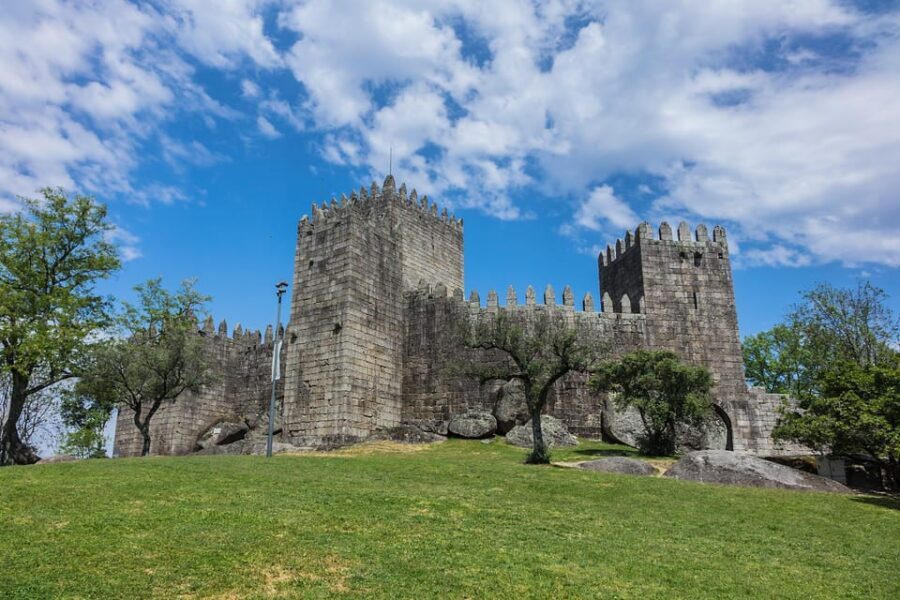
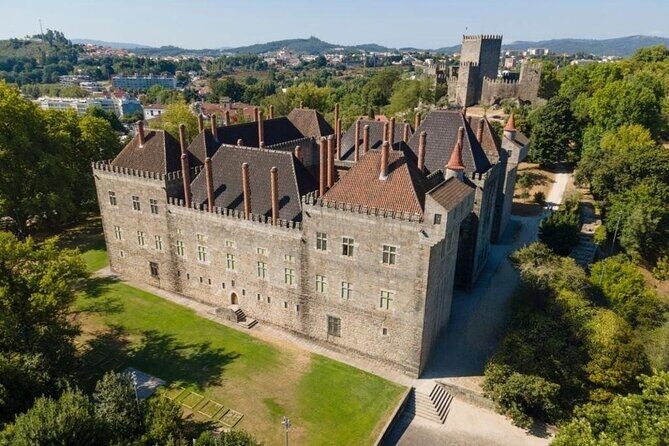
Guimarães is often described as Portugal’s birthplace, and the castle is the reason that idea feels real. When you arrive, you’re visiting a medieval Guimarães Castle that stands as a symbol of Portugal’s foundation. Even if you don’t know the names and dates, the scale of the towers and the defensive feel of the walls give you immediate context.
This isn’t a museum-style “look and leave” moment. You have a chance to visit, then a short free period where you can take your time with viewpoints and photos. That balance is important. The guide’s job is to frame the big story. Your job is to absorb what the place looks like on the ground.
Why I like this stop: you get a sense of how the kingdom might have protected itself and how power played out in stone. It’s one of those sites where history is not just written—it’s shaped into the architecture.
You can also read our reviews of more tours and experiences in Porto



Walking Guimarães: cobblestones, medieval layout, and real local rhythm
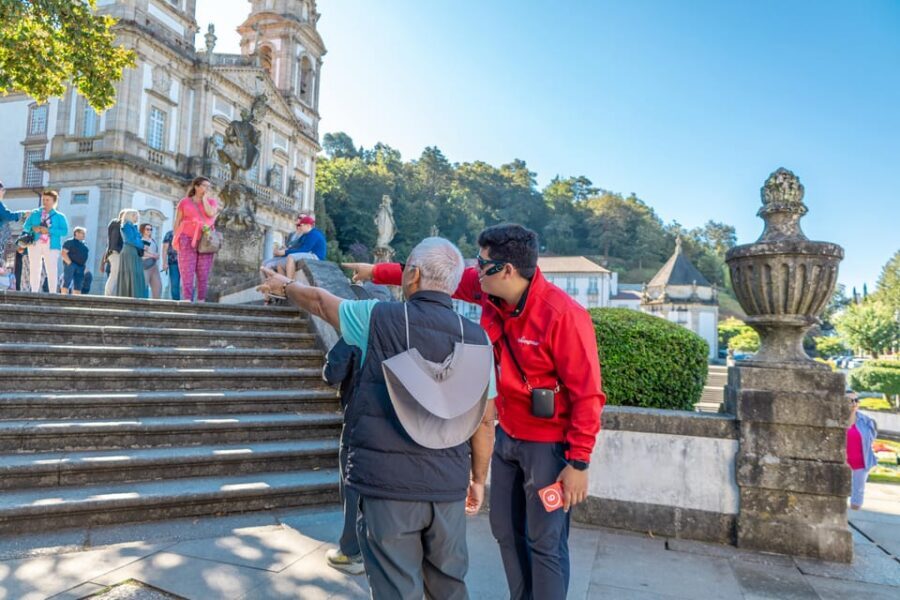
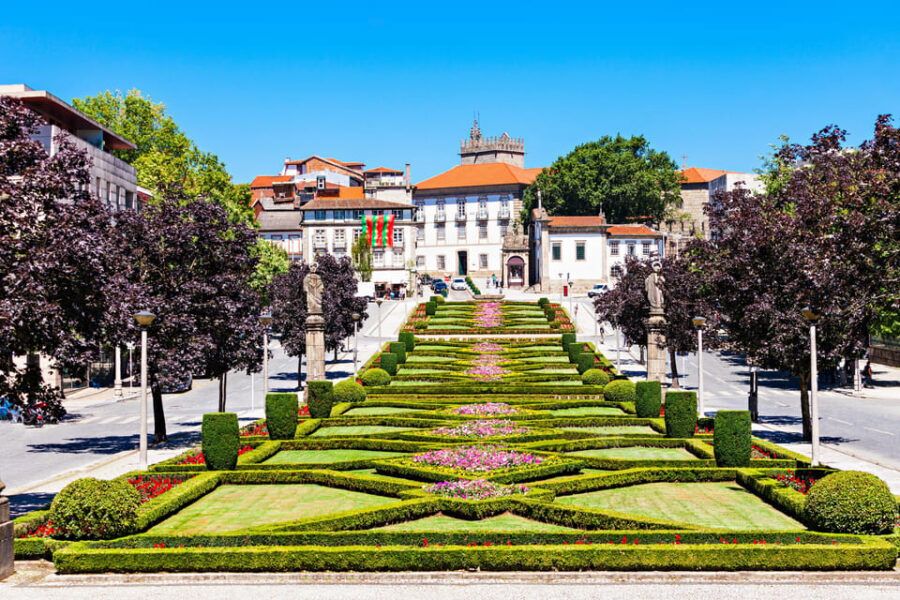
After the castle, the day moves into Guimarães’ historic area with a walking tour. You’ll stroll through the medieval city center with cobbled streets, squares, old houses, and centuries-old churches. It’s the kind of walking where you can feel the city’s timeline just by how the streets fold and where the landmarks sit.
Two things make the walking time useful:
- You’re not wandering aimlessly. The guide points out key places linked to Portugal’s origin story, so you know what you’re looking at.
- You get a walk-plus-free mix. There’s guided time, and then you’re allowed to wander with your own eyes.
A few guide names show up repeatedly in people’s experiences—Tânia, Castro, Pedro, and Jose are among the guides praised for keeping the day organized and explaining what you’re seeing. I can’t guarantee which guide you’ll get, but if you value clear explanations, this tour’s guide track record is a good sign.
Drawback to keep in mind: the walking is part of the package. People who prefer minimal foot time might feel the day is active. Also, one person wished there were adjustments to free time balance, so if you’re the type who wants longer stays in fewer places, you may feel the schedule is tight.
Braga start: lunch time and the “old Christian city” feeling
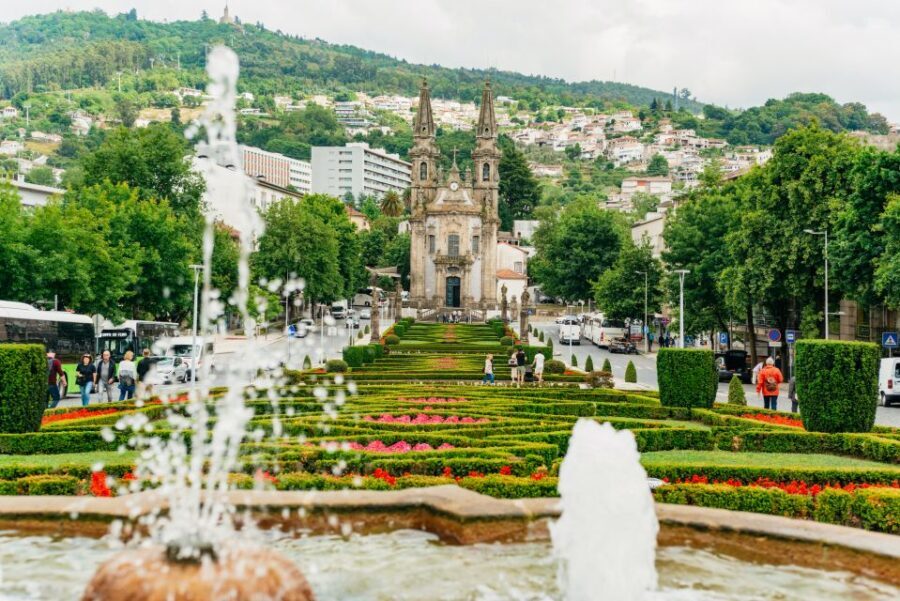
Next up is Braga. This city is known as one of Europe’s oldest Christian areas, and the atmosphere shifts as soon as you enter the historic center. After the ride, you get guided orientation plus a free time window designed for lunch in the center.
Even though lunch isn’t included in the price, the timing is practical. It gives you a chance to eat without rushing between major sights. Braga’s historic streets make it easy to find something local, and choosing a casual spot here is usually better than trying to eat in transit.
What I like about the Braga pacing is that you’re not forced into a single “tour-lunch” style experience. You get to choose. If you’re traveling with dietary needs, vegetarian and gluten-free options are available if you request them before the day starts.
Braga Sé Cathedral: Portugal’s oldest cathedral on your route
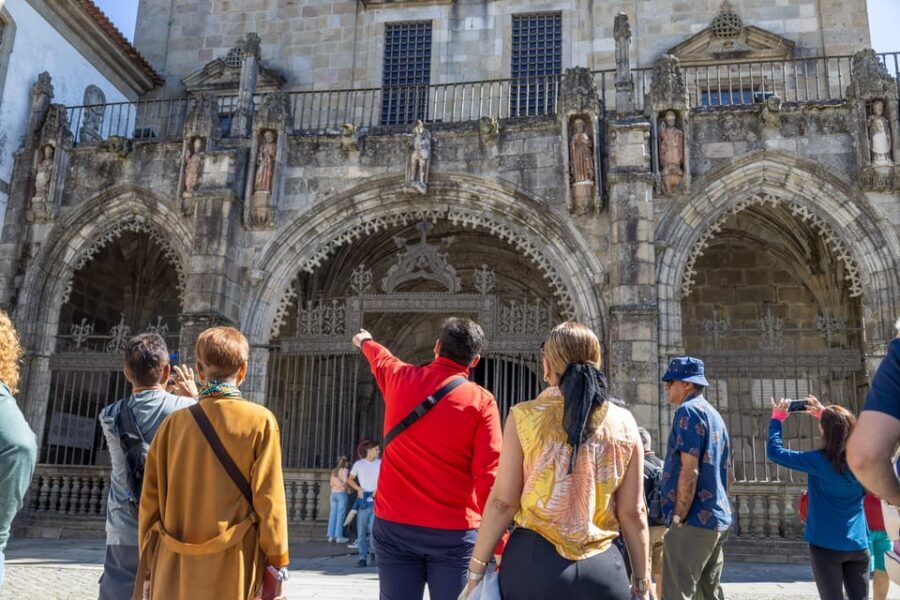
The Braga stop centers on Sé Cathedral of Braga, Portugal’s oldest cathedral. This is a Romanesque powerhouse where you’ll find intricate altars, religious art, and centuries of ecclesiastical history.
The cathedral visit is guided, and that’s a big deal. Romanesque churches can be visually impressive, but the meaning often lands harder when someone explains what you’re looking at—features, artwork, and why the cathedral matters in the church story of Portugal.
This is also a “slow down and look” stop. Even within the time limits, you’ll have enough space to take in details rather than just pass through a doorway and move on.
The big finish: Bom Jesus do Monte’s baroque staircase and views
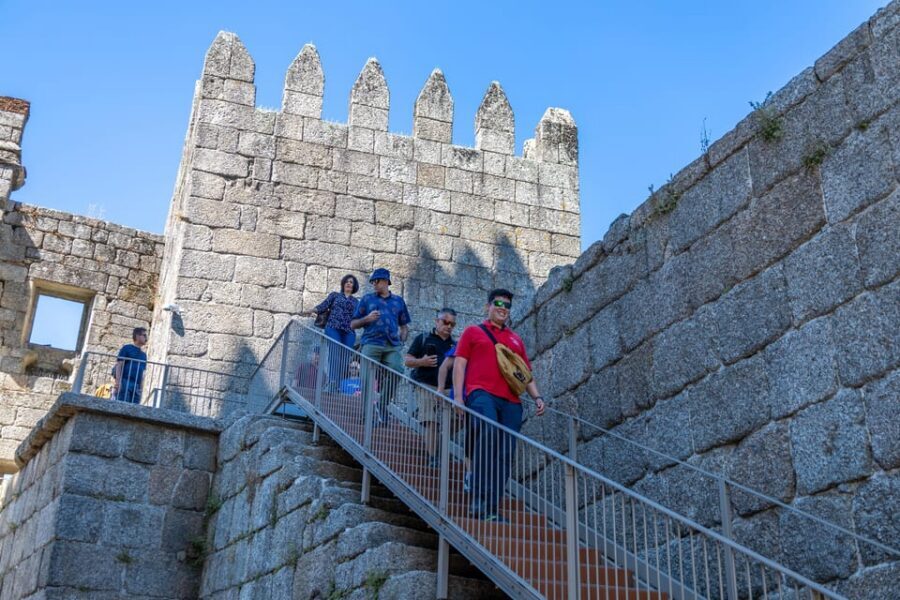
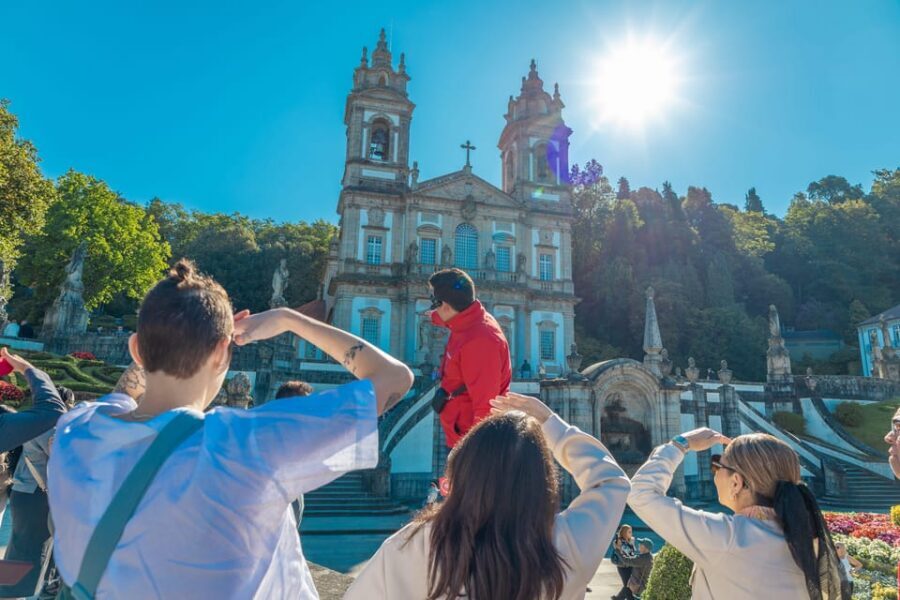
Then you reach the dramatic finale: Bom Jesus do Monte Sanctuary. If you only remember one image from this trip, make it the baroque staircase—fountains, statues, and gardens stacked into a monumental climb.
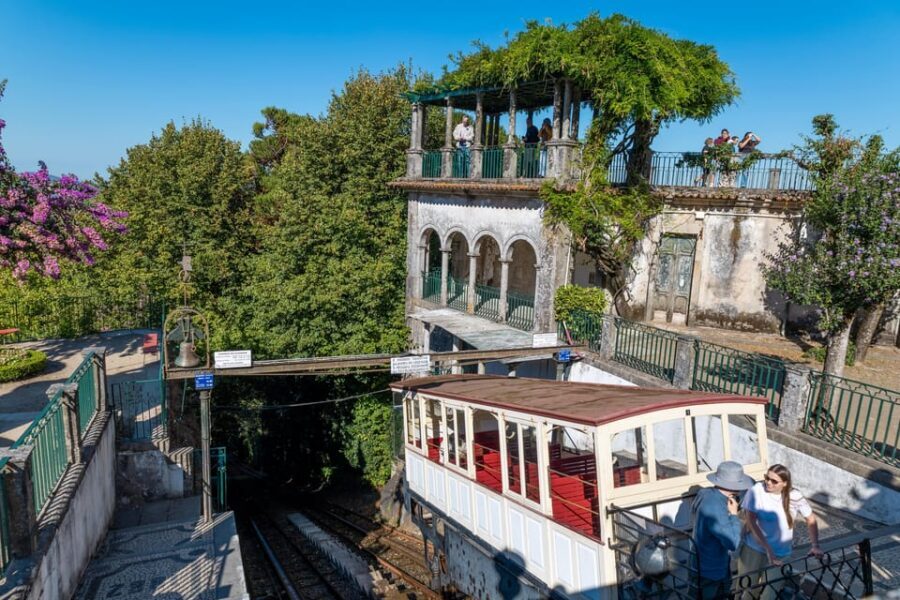
There’s both a guided tour and time to absorb it yourself. You’ll also get panoramic views over Braga and the surrounding Minho countryside. Even if the weather isn’t perfect, the viewpoint is usually the part people talk about later because it shows how the city sits in the region.
One practical comfort point: there are photo moments here that feel worth the effort. The sanctuary is designed for a slow visual experience—step, look back, move upward, then scan the view. It’s a fitting capstone because it shifts your day from “origins and churches” into “Portugal’s sacred art meets dramatic geography.”
The real deal on value and price (and why it’s not just $59)
The price is listed at $59 per person, and for a day that includes transportation, a professional guide, and multiple paid entries, it can be good value if you’d otherwise be paying separately to get to all these sites from Porto.
Here’s the value logic that makes sense for most visitors:
- You’re paying for a full route in one day rather than cobbling together trains and taxis.
- Entrances are included for Bom Jesus do Monte, Braga Sé Cathedral, and Guimarães Castle—the kinds of places you can’t always improvise at the last minute.
- You’re getting guided walking time in both Guimarães and Braga, plus context while traveling through the Minho region.
Lunch is the main thing not included, and that’s normal for a day tour like this. The good news is you have a scheduled lunch break in Braga, so you’re not stuck grabbing a snack in a parking lot.
Also worth noting: some people loved the driver-guide teamwork (for example, Paulo M, Paolo, Carlos, Nuno, and David appear in praised experiences). That matters more than it sounds. When a day runs smoothly, you actually enjoy the sights instead of worrying about meeting points and timing.
How the day feels in your body: walking, timing, and “good shoes” reality
This trip is 9 hours. That number is just a label until you’re doing it. You’ll spend time on buses, then you’ll spend time on your feet in old towns and inside churches.
The tour is not built for wheelchair mobility, and it’s also not built for heavy luggage. If mobility is a concern, this one may not be a fit.
For everyone else, do this:
- Wear comfortable shoes. Really. Cobblestones and historic stairs don’t care about fashion.
- Bring a sun hat if the day is clear. Braga and Bom Jesus can feel bright and warm.
- Expect rain to be possible in winter and shoulder seasons. People have had weather-heavy days and still managed to see everything, but bring a light layer or rain protection if you can.
Timing is the bigger tradeoff than distance. There’s guided time and then free time, but the free moments are short. If you like long conversations in cafés or slow museum-style viewing, you might wish for more breathing room.
Living Tours extras: what you get beyond the coach day
This is run by Living Tours, and it’s nice that they include a Porto walking tour as an extra benefit for those who reserve this activity, available from the day after. That helps you turn the Porto portion of your trip into a more grounded introduction—handy if you’re using Porto as your base.
You’ll also see how they aim for organization. The guides are expected to be professional and the group size max is 27. In plain terms: you’re not stuck in a huge crowd, and you’re usually able to hear key explanations.
Should you book this Porto-to-Braga-and-Guimarães tour?
Book it if you want a single day that covers Portugal’s “starting point” story in Guimarães and the major Christian-and-art stops in Braga and Bom Jesus do Monte, with transportation handled and paid entrances covered.
Skip it (or think twice) if:
- You hate walking and standing for long stretches.
- You want very slow, unstructured time in each town.
- You’re relying on accessibility features, since it’s not suitable for people with mobility impairments.
If you’re in Porto with just one free day and you want maximum meaning per hour, this is one of the better choices for northern Portugal.
FAQ
Where is the meeting point for the tour?
You meet at Calçada da Vandoma, Porto, next to Porto Cathedral (Sé do Porto).
How long is the full-day trip?
The duration is about 9 hours.
What kind of transportation is included?
The tour includes transportation on a comfortable air-conditioned minibus.
What entrances are included?
Entrance fees are included for Bom Jesus Sanctuary, Sé Cathedral of Braga, and Guimarães Castle.
Is lunch included in the price?
No. Lunch is not included, though there is a lunch break in Braga.
Is the tour suitable for people with mobility impairments?
No. The tour is not suitable for people with mobility impairments.
What should I bring for the day?
Bring comfortable shoes and a sun hat.
Are large bags allowed?
No. Luggage or large bags are not allowed.
Do they offer vegetarian or gluten-free meal options?
Yes, vegetarian and gluten-free meal options are available if requested before the day of the booking.
What languages are the guides?
The live guide is available in English, Portuguese, Spanish, and French.
Is cancellation free?
Yes. Free cancellation is offered up to 24 hours in advance for a full refund.