REVIEW · PORTO
Porto:Private Tour of the Historic City in a Classic Ford T
Book on Viator →Operated by OldTour Porto · Bookable on Viator
Porto feels best when you slow down. This private historic-city tour uses a vintage-style Ford T ride to get you around faster than walking, with guide storytelling that turns major landmarks into personal scenes. I especially liked the photo-friendly viewpoints you hit with minimal fuss, and the way the guide connected Porto’s buildings to what was happening there long ago.
I also liked the pacing: about 1 hour is long enough to cover key spots like São João Theatre and the Fernandina Wall area, without turning your afternoon into a marching exercise. The best part is the practicality of it—Porto is hilly, and the car stops help you see more while staying comfortable.
One possible drawback: city traffic rules can affect how far the car can drive into the densest downtown streets. Even if you still see the same landmarks on the route, you might have to view a few sights from a stop rather than right at the door.
In This Review
- Key highlights in plain terms
- A vintage Ford T-style tour that makes Porto easier
- How pickup works in the historic center (and why it matters)
- São João Theatre: neoclassical grandeur with context you can use
- Praça da Batalha: where the city’s life spills out
- Fernandina Wall and Porta da Ribeira: medieval defense with river views
- Serra do Pilar monastery (free stop): the view that makes Porto click
- Luís I Bridge and Jardim do Morro: Eiffel-era engineering and sunset energy
- Maria Pia Bridge: beautiful industrial bones
- Clérigos Tower and churches: when Baroque details come with a story
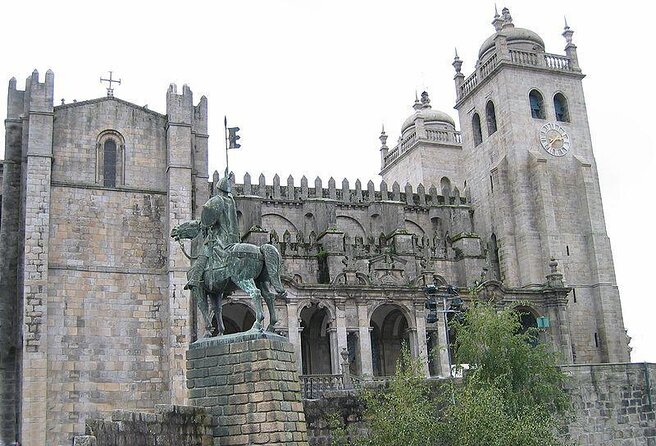
- Porto Cathedral and Miradouro da Vitória: architecture plus the best street-level view
- Price and value: when $47.18 buys more than transport
- The practical reality: vehicle rules can shift how close you get
- Who this tour suits best
- Should you book the OldTour vintage Ford T experience?
- FAQ
- How long is the Porto private historic city tour?
- What is the meeting point and can the tour include pickup?
- What language is the tour offered in?
- Is this a private tour?
- How many people can ride per vehicle?
- Does the price include admission tickets to monuments?
- What stops and areas are included?
- Are tickets handled as mobile tickets?
- Are service animals allowed?
- What’s the cancellation window for a full refund?
Key highlights in plain terms
- Vintage Ford T-style ride: looks great in photos and helps you move without grinding up hills.
- Private for up to 7 people: your group only, so your guide can respond to your pace and interests.
- Two 10-minute miradouros (viewpoints): planned breaks where you actually get a view, not just a stop sign.
- Serra do Pilar monastery stop is free for about 15 minutes.
- Bridge and river perspectives: viewpoints across the Douro from Luís I Bridge area and nearby gardens.
- Main sights plus lesser-known angles: the route is built around views and stories you’d likely miss on your own.
A vintage Ford T-style tour that makes Porto easier
Porto’s charm comes with a little physical tax. Streets climb, stairs appear out of nowhere, and if you’re trying to see a lot in a short visit, walking can start to feel like work.
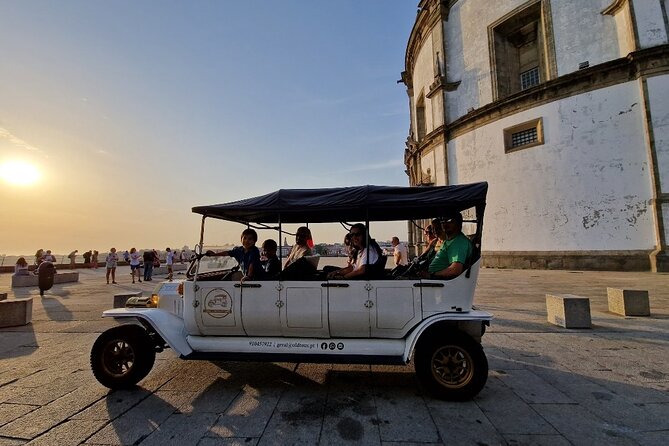
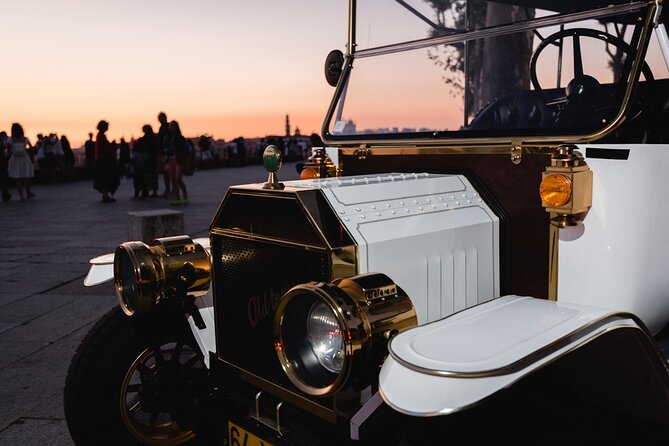
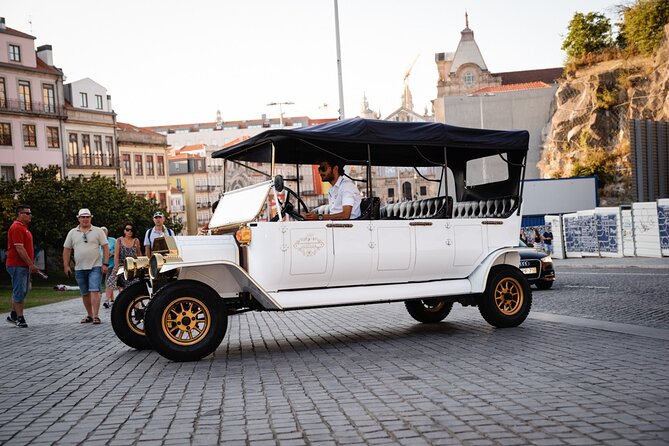
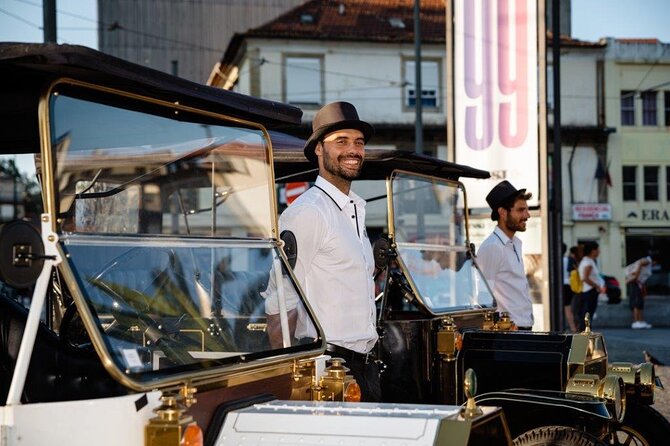
This tour solves that problem with a private ride in a vintage-style car (black, white, or dark green). The company also identifies guides as OldTour, so once you’re in the historic center, spotting the vehicle is usually straightforward. The whole setup is built for a simple goal: get you oriented and show you the places that shape how Porto looks and feels.
You can also read our reviews of more tours and experiences in Porto.



How pickup works in the historic center (and why it matters)
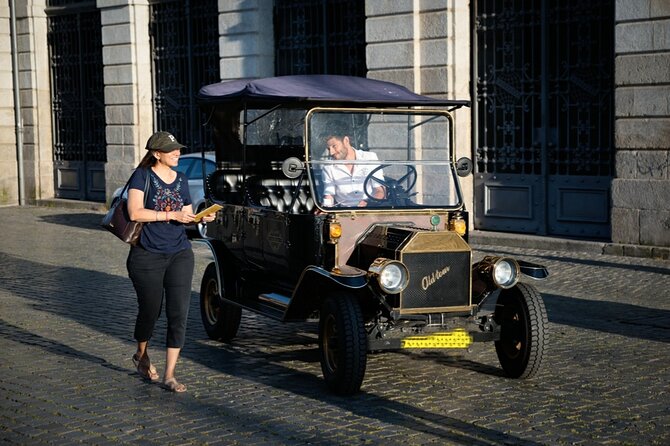
Your pickup can happen anywhere in Porto’s historic center or at one of the mentioned points. That’s a big deal here because starting from the right block saves time you’d otherwise waste crossing neighborhoods you’ll want to explore later.
The tour is also set up as a private experience—your group only—typically up to 7 people per car. In practical terms, that means:
- your guide can slow down for photo stops
- you can ask follow-up questions
- you’re not rushed by strangers’ schedules
If you’re staying near the center, you’ll likely spend less time locating taxis and more time learning the city. And if your timing is tight, it’s worth knowing that guides have helped people get as close as possible to their next stop when schedules slip.
São João Theatre: neoclassical grandeur with context you can use
One of your first culture stops is São João Theatre, a major Porto venue opened in 1898. This is the kind of place you might admire from the outside, but a guide helps you understand why it matters—its neoclassical style, the elaborate interior decoration, and how the theatre became a long-running cultural anchor for the city.
What makes this stop useful is the framing. Porto’s historic center can feel like a collage of styles. São João Theatre gives you a clear reference point for how “official” public culture looked in the late 19th century, and it helps you read other buildings later during your self-guided wander.
Praça da Batalha: where the city’s life spills out
Next up is Praça da Batalha, one of Porto’s most emblematic squares in the historic center. The square ties together a few key elements at once:
- the Teatro Nacional São João presence nearby
- Igreja da Santíssima Trindade
- the square’s identity linked to past festivities and historical battles
Even if you don’t go inside at this exact moment, the square is valuable because it’s an easy orientation point. You’re placed in a lively area with cafés, restaurants, and shops, so you can immediately connect the tour route to where you’ll likely want to eat later.
Fernandina Wall and Porta da Ribeira: medieval defense with river views

This is one of those Porto stops that feels more “real” than postcard history. The Fernandina Wall was built between the 14th and 15th centuries to protect the city. It stretched about 3 kilometers, with towers and gates as part of the defenses under King Ferdinand’s reign.
The most notable viewing spot is Porta da Ribeira, where you can appreciate the wall’s scale and the way it lines up with the river. The guide angle here matters: when you understand what the wall was meant to do—defend Porto—you start seeing today’s streets and viewpoints as the leftover edges of older geography.
Expect great Douro River scenery from this area. It’s also a walk-friendly moment if you want to stretch your legs after the ride, but you’re not forced into a long trek.



Serra do Pilar monastery (free stop): the view that makes Porto click
After the medieval wall context, the tour heads toward Mosteiro da Serra do Pilar in Vila Nova de Gaia, a UNESCO World Heritage site. The standout feature is the circular-plan church, a striking Mannerist architecture example in Portugal.
This stop is scheduled for about 15 minutes, and the data says admission ticket is free for this visit window. That’s a nice value perk: you get a major cultural and viewpoint experience without added ticket costs here.
Most important: the monastery sits high enough to give you that big, satisfying Porto panorama over the Douro. If you’ve been looking at Porto from street level, this is the moment when the city’s layout starts to make sense.
Luís I Bridge and Jardim do Morro: Eiffel-era engineering and sunset energy
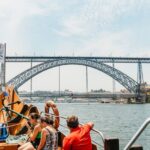
The tour includes the Luís I Bridge, opened in 1886 and designed by engineer Gustave Eiffel. It’s famous for its elegant metal structure and its two-level design—vehicles and pedestrians use the upper level.
A good tour doesn’t just point at a bridge; it explains what it changed. By connecting Porto with Vila Nova de Gaia, the bridge reshaped daily movement across the Douro and influenced the way the riverside developed.
You’ll also stop at Jardim do Morro, which works as a comfortable pause between sights. It’s a starting point for exploring the area and a classic place to watch sunset over Porto’s skyline. Even if you’re there in daylight, it’s a relaxing reset—less “sightseeing sprint,” more “take a breath and look.”
Maria Pia Bridge: beautiful industrial bones

Next comes the Maria Pia Bridge, inaugurated in 1877, also linked to Eiffel’s engineering legacy. It’s described as one of the first metal plate bridges, and it’s built to span the Douro at about 350 meters in length with around 60 meters height.
Even though the bridge no longer carries trains, it still has the kind of presence that makes you slow down. It’s the industrial-history version of a landmark. And from a viewpoint stop, it’s easy to connect how Porto’s river crossings shaped both people and trade.
Clérigos Tower and churches: when Baroque details come with a story
The tour continues with Clérigos Tower, one of Porto’s most recognizable silhouettes. A guide shares stories about its architecture and historical significance—the kind of context that makes the tower feel more like a personality than just a photo subject.
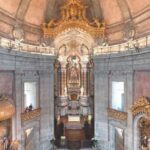
You’ll also get the Baroque façade and a look at the richly decorated interior with tiles (with local guidance on the religious order and the site’s significance). These details are the difference between seeing a church and understanding what people came to experience there.
If you like travel that mixes art + meaning, this section is where the tour earns its keep. Porto has plenty of buildings. The guide’s job is turning them into a sequence that tells you why you should care.
Porto Cathedral and Miradouro da Vitória: architecture plus the best street-level view
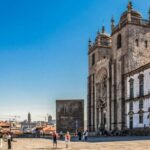
Another big stop is the Cathedral, where you can explore Gothic and Romanesque architecture. Depending on the day and time, your guide may include cloisters as part of the visit. What you’ll gain is a clearer read of how different eras shaped the same sacred site.
Then comes Miradouro da Vitória, a viewpoint that frames the Douro River and Porto in a way that feels both charming and strategic. It’s one of the spots where you see the bridges and the colorful riverside buildings together—hard to replicate when you’re just walking on your own.
This part is also one of the tour’s quiet strengths: the miradouros are built into the plan, so you’re not hunting for viewpoints while your legs are tired.
Price and value: when $47.18 buys more than transport
At $47.18 per person for about 1 hour, this isn’t priced like a “hop-on hop-off” bus ticket. You’re paying for a private guide/driver, private transportation, and included liability and personal injury insurance.
You’re also paying for time management. The itinerary stacks landmarks in a way that helps you avoid the usual Porto problem: spending your best energy walking uphill just to reach the next viewpoint.
What you’ll still need to plan for: tickets for other activities or monument entries are not included. The one clear exception noted is Serra do Pilar, which is listed as free for the scheduled stop. So if you’re hoping every interior visit is covered, be aware that you may need to pay separately depending on what’s open and what you choose to enter.
The practical reality: vehicle rules can shift how close you get
This tour is designed for classic-style driving and tight viewing stops, and vintage vehicles are fun for exactly that reason. But Porto’s rules can change, especially in dense downtown areas.
One review noted that as of Oct 1, 2024, classic vehicles weren’t allowed to drive in downtown Porto, meaning the plan could shift so you wouldn’t enter the very center by car. If that matters to you, the best move is simple: message the operator before you go and ask how the route is handled right now in relation to the city center limits.
Even if the vehicle can’t go everywhere, the tour still includes key viewpoints and major landmarks. You might just get them from the closest allowed stops rather than right at the doorstep.
Who this tour suits best
This is ideal if you:
- want to get your bearings fast
- prefer comfortable sightseeing over stair climbs
- like architecture and landmarks with a guide’s storytelling
- want a manageable route that leaves you energy for dinner afterward
It’s also a solid choice if you’re traveling with mixed interests—one person gets landmarks, another gets river views, and the whole group benefits from not wasting time navigating.
Should you book the OldTour vintage Ford T experience?
Yes—if you want a smart first look at Porto. This tour’s value comes from the combination of private pacing, planned viewpoint stops, and a sequence that connects major sites like São João Theatre, the Fernandina Wall area, and the bridges with cathedral-and-church highlights.
Skip it or at least confirm route details if you’re expecting to drive right into every part of central Porto every time. City restrictions can affect car access, and you’ll want the clearest picture before you commit.
If you book early in your trip, you’ll get more out of your remaining days—because the places you see on the ride turn into reference points when you later wander on your own.
FAQ
How long is the Porto private historic city tour?
It runs about 1 hour (approx.).
What is the meeting point and can the tour include pickup?
Pickup is offered anywhere in Porto’s historic center or at one of the mentioned points, and the vintage car is easy to spot. Guides are identified with Oldtour.
What language is the tour offered in?
The tour is offered in English.
Is this a private tour?
Yes. It’s a private tour/activity, so only your group participates.
How many people can ride per vehicle?
The tour allows a maximum of 7 people per car.
Does the price include admission tickets to monuments?
No. Tickets for other activities and monument entries/visits are not included. The Serra do Pilar stop is listed as free for the scheduled time.
What stops and areas are included?
The route includes sights such as São João Theatre, Praça da Batalha, Fernandina Wall (Porta da Ribeira), Mosteiro da Serra do Pilar, Luís I Bridge, Jardim do Morro, Maria Pia Bridge, Clérigos Tower, the Cathedral, and Miradouro da Vitória.
Are tickets handled as mobile tickets?
Yes, the tour offers a mobile ticket.
Are service animals allowed?
Yes, service animals are allowed.
What’s the cancellation window for a full refund?
You can cancel up to 24 hours in advance for a full refund.