REVIEW · PORTO
Porto: Historical Walking Tour with a Local Guide
Book on GetYourGuide →Operated by Hop & Roam Porto · Bookable on GetYourGuide
Porto moves faster on foot. This 3-hour walk threads through the World Heritage Historical Center, mixing medieval roots with modern Porto, with stops that connect the Old Jewish Quarter and Ribeira to the city’s big turning points. I especially like the local way of storytelling and the market time that feels real, not staged. One thing to consider: the tour is not suitable for people with mobility impairments, and you’ll be walking the whole time.
What makes it work is the pacing and the guide’s focus. You get outside views of major landmarks, plus short guided time at the cathedral area and a station visit, then you end with the riverside energy of Ribeira. If you’re lucky enough to get a guide like Lucas (people highlight his professional, pleasant style), the whole route clicks into place quickly.
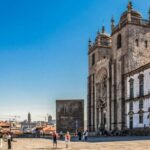
You’ll start by the Estátua de Vímara Peres next to Porto Cathedral. From there, you’ll weave through central Porto for a compact hit of history, including the role of Porto wine and the story tied to Ribeira’s flooded neighborhood.
In This Review
- Key highlights worth your attention
- Starting at Vímara Peres: where your Porto story begins
- Porto Cathedral area: a short guided stop that sets the tone
- São Bento Station: stepping into the city’s everyday center
- Mercado do Bolhão: the market stop that feels local, not touristy
- Avenida dos Aliados: a quick photo stop that helps you place Porto
- Clérigos Church and the nearby landmarks: seeing Porto’s big icons from the street
- Ribeira district: the flooded neighborhood story and riverside views
- How the guide connects the timeline: from monarchy to Republic
- Pacing and practicality for a 3-hour walking route
- Price and value: what $28 gets you in Porto
- Who this tour suits best (and who should skip it)
- Final verdict: should you book this Porto historical walking tour?
- FAQ
- How long is the Porto Historical Walking Tour?
- How much does it cost?
- Where does the tour start and end?
- What’s included in the price?
- What’s not included?
- What language options are available?
- Does the tour operate in rain?
- Is the tour suitable for people with mobility impairments?
Key highlights worth your attention
- A local guide lens on Porto’s past rather than a checklist of sights
- Mercado do Bolhão time to see how a traditional product market feels
- Ribeira at riverside level, with views that explain why this district matters
- Porto wine and political eras from monarchy through dictatorship to the Republic
- Quick stops that still feel personal, with a pace that stays walkable
Starting at Vímara Peres: where your Porto story begins
I like tours that help you get your bearings fast, and this one does. You meet at the Estátua de Vímara Peres by Porto Cathedral, which anchors the whole experience in central, historical Porto right away.
From the start, the guide frames what you’re about to see: the city’s shift from medieval days to contemporary life. That matters because you’re not just passing buildings. You’re learning how Porto’s identity layers over time, street by street.
You can also read our reviews of more tours and experiences in Porto.



Porto Cathedral area: a short guided stop that sets the tone
The tour includes a guided look around the cathedral area for about 15 minutes, focused on the setting and the meaning of what’s nearby. Even with a relatively short time window, you get enough context to understand why this part of town keeps showing up in Porto’s story.
A practical note: this is outside-facing time. If you want long, in-depth cathedral interior time, plan for that on a separate visit. Here, the goal is orientation plus narrative.
São Bento Station: stepping into the city’s everyday center
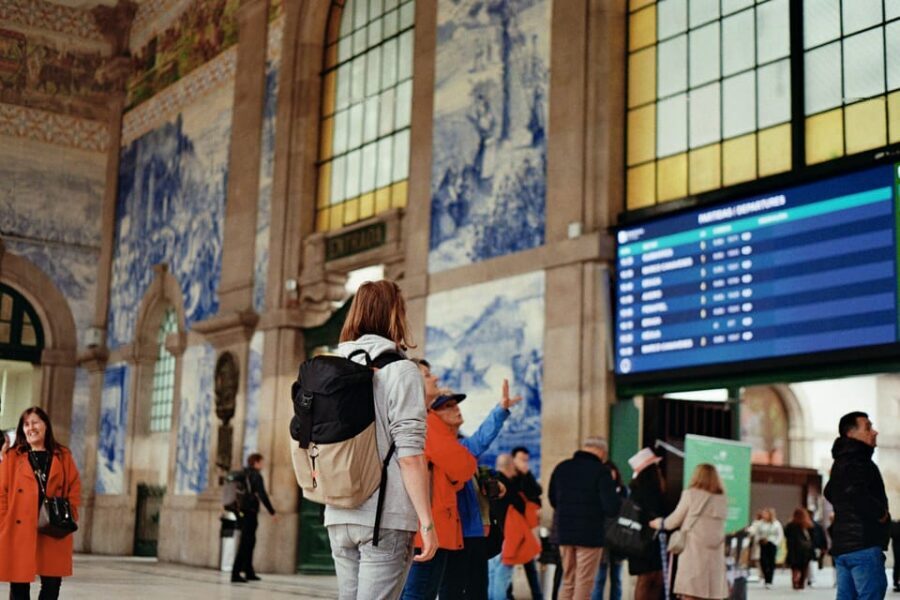
Next you head to São Bento Station for around 10 minutes. This stop is less about monuments you stand and stare at and more about absorbing Porto’s everyday energy in a historic core.
For many people, stations are a travel moment, but here it’s treated like a city moment. You’re not rushing past it. The guide keeps you focused on how places function in daily life while still linking back to the larger historical theme.
Mercado do Bolhão: the market stop that feels local, not touristy
One of my favorite parts of this walk is the Mercado do Bolhão visit (about 15 minutes). A market can turn into a quick photo and a sales pitch on some tours. This one uses the market time to connect Porto’s history to the way people live and shop now.
Why it’s valuable: it gives you a sensory break from stone-and-church viewing. You also get a stronger sense of what kinds of products matter in Porto day to day, and that makes later stories about trade and the city’s development easier to understand.
If you’re planning to eat after the tour, this is a solid warm-up. You’ll already know what a traditional product market feels like in the city center.
Avenida dos Aliados: a quick photo stop that helps you place Porto
You’ll make it to Avenida dos Aliados for a 10-minute photo stop. It’s brief, but it does a job. This kind of open, central avenue helps you map the rest of what you’ve just seen.
Think of it like a “pause and check your internal GPS” moment. After that, the tour shifts back into more intimate streets and viewpoints.


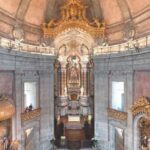


Clérigos Church and the nearby landmarks: seeing Porto’s big icons from the street
Several key sights happen as scenic drive segments, including Clérigos Church (outside-facing views during the drive). You also get scenic time connected to Livraria Lello & Irmão and Vitória.
One more scenic drive brings you toward Palácio da Bolsa. These street-level passes are a good fit for the tour’s structure because you’re still learning without losing half a day to long entry waits.
If you prefer deep interior visits, you’ll likely want separate tickets later. But for understanding how these landmarks sit within the historical center, the approach makes sense.
Ribeira district: the flooded neighborhood story and riverside views
The tour’s emotional payoff lands in Ribeira. You get about 15 minutes here, and the focus is the riverside feel plus what the district represents in Porto’s history.
You’ll also hear about the flooded neighborhood—a detail that makes Ribeira more than pretty views. It turns the area into a real-life case study: how geography, risk, and community history shape where people live and how the city grows.
This is also where the guide’s storytelling tends to click for people who usually tune out at long lectures. Because you’re standing where the story would matter, it feels less like trivia and more like explanation.
How the guide connects the timeline: from monarchy to Republic
The tour spans a wide historical arc, and that can sound intimidating. In practice, it works because the guide anchors big political eras to what you’re seeing around you.
You’ll cover Porto’s role as it moved through monarchy, dictatorship, and the Republic, with the guide tying that to urban life and identity. You also learn about the importance of Porto wine to the city, which gives you a simple thread that connects different eras.
That wine angle is especially useful if you’ve ever wondered why Porto seems obsessed with itself in the best way. In a short walking format, it gives you a practical frame: this city’s economy, culture, and reputation are linked, and the streets you walk help explain why.
Pacing and practicality for a 3-hour walking route
The tour is designed around a 3-hour walking experience, with short visits and scenic drive segments to keep it moving. The pace is described as good by people who take the tour, and it shows in the structure: you’re never stuck for too long at one stop.
Still, you should prepare like it’s real walking. Wear comfortable shoes and comfortable clothes, and keep your phone ready for quick photo moments at places like Avenida dos Aliados.
One more reality check: the operator notes that the tour runs in rain. So bring a rain layer or plan for damp weather. You’ll be more comfortable, and you won’t waste energy worrying about your gear.
Price and value: what $28 gets you in Porto
At $28 per person for a 3-hour guided tour, this is priced like a practical city walking experience. You’re not paying for transportation, and entry fees aren’t included either. What you are paying for is time with a local guide and a route that stitches together neighborhoods you might not naturally connect.
For value, this tour hits three things:
- A curated route across key areas of the World Heritage Historical Center
- Local guide interpretation linking the Old Jewish Quarter, Ribeira, and broader historical eras
- A market stop plus major central landmarks, without turning it into a long, tiring day
If you’re doing a first trip to Porto and want context fast, this kind of tour is a smart use of time. If you only want “open hours” photo tourism and no story, you might feel the pace is too guided. But if you like your sightseeing with reasons, this one fits.
Who this tour suits best (and who should skip it)
I think this works best for people who want a short, well-paced walk with real context. It’s especially good if you’re curious about how neighborhoods evolve, and you like history explained in a way that matches what you can see in front of you.
It’s not suitable for anyone with mobility impairments, since it’s a walking tour with safety rules and a full route on foot. Also, the tour operator can refuse service to anyone showing signs of intoxication, so keep it calm and focused.
If you’re visiting with limited time and want Old Porto plus riverside atmosphere, you’ll get a lot out of the 3-hour format.
Final verdict: should you book this Porto historical walking tour?
Yes, if you want a tight route with a local perspective and you like your landmarks connected to stories about wine and political change. The combination of a market stop, guided time near the cathedral area, station visit, and a Ribeira finish makes the tour feel purposeful instead of random.
Skip it if mobility is an issue, or if you strongly prefer self-guided exploring with long indoor time at monuments. For everyone else, it’s a good value way to understand Porto’s layers without burning a whole day.
FAQ
How long is the Porto Historical Walking Tour?
The tour lasts 3 hours.
How much does it cost?
The price is $28 per person.
Where does the tour start and end?
You meet your guide by the Estátua de Vímara Peres next to the Cathedral of Porto. The tour ends at Ribeira Porto Centro.
What’s included in the price?
It includes a walking tour with a local guide.
What’s not included?
Transportation, entry fees, and food and drinks are not included.
What language options are available?
The live guide is available in English, Portuguese, and Spanish.
Does the tour operate in rain?
Yes. The tour operates in the rain, so you should dress accordingly. Rescheduling may be offered depending on weather conditions and availability.
Is the tour suitable for people with mobility impairments?
No, it’s not suitable for people with mobility impairments.