REVIEW · PORTO
Porto: Secrets of the City Walking Tour with a Local Guide
Book on GetYourGuide →Operated by Detours Porto · Bookable on GetYourGuide
Porto has a way of sneaking up on you. This 4-hour walking tour is a smart mix of classic sights and the smaller streets that help you understand how the city actually works. You’ll hear why Porto is called the Invicta Cidade do Porto, the Undefeated City, and you’ll move through the medieval core the way locals do: by taking tight turns, climbing stairs, and pausing often to look back.
Two things I like a lot: you’re guided by a Porto born-and-raised local who can explain what you’re seeing without turning it into a lecture, and the route is built around viewpoint moments that make photos and memories feel earned. The day also includes a donation to a local development association, so your ticket quietly supports the community you’re walking through. The main drawback to keep in mind is the pace: plan on 4 to 5 km of walking with stairs, and it is not a good match if you have low fitness or motion sickness.
In This Review
- Key Things You’ll Love On This Porto Walking Tour
- Meet at Arnaldo Gama: Finding the Old City Fast
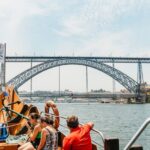
- Dom Luís Bridge: The Photo Stop That Sets the Tone
- Ribeira, Porto: Narrow Streets, River Views, and the Tripeiro Spirit
- Casa do Infante: A Short Walk That Adds Meaning
- Miradouro da Vitória: Stairs Pay Off With a Strong View
- The View Point Break at the End of the Climb
- What the Donation to a Local Development Association Adds
- Price and Value for a 4-Hour Porto Day
- Pace, Stairs, and Who Should Book This
- Practical Tips Before You Start Climbing Porto
- Should You Book Secrets of the City in Porto?
- FAQ
- Where does the tour start?
- How long is the Porto tour?
- How much does it cost?
- What language is the live guide?
- What should I bring?
- Is there a lot of walking and stairs?
- Who is the tour not suitable for?
- What is included in the price?
- What is not included?
- Are bikes or alcohol allowed?
Key Things You’ll Love On This Porto Walking Tour
- A local guide with real city instincts (the kind that helps you notice details you’d miss alone)
- Hidden alleys, stairways, and small viewpoints that change your view every few minutes
- Ribeira by the water for a smooth-salty break from the steep streets
- Big orientation stops like Dom Luís Bridge and Miradouro da Vitória to anchor what you see
- A donation included that supports a local development association
- A flexible, question-friendly vibe shown in how guides like Alfonso and Ricardo take time
Meet at Arnaldo Gama: Finding the Old City Fast
Your tour starts at the Estatua de Arnaldo Gama, in the garden near the Fernandina Walls. It’s a strong opening because it puts you right where Porto’s story starts to feel physical. You’re not easing in with a long introduction. You’re setting your bearings, then moving.
What I find useful here is that the start location helps you picture the city’s edge and defenses. Even if you’ve never studied Porto, you’ll quickly get a sense of how the medieval layout forces you into narrow passages and climbs. Your guide will be wearing a red Detours t-shirt, so you can spot them quickly and avoid that awkward start-stumbling moment.
A small but practical tip: arrive a few minutes early. Not because you’ll need extra time for check-in, but because you’ll want a calm minute to look around at the walls and nearby streets before the walking begins.
You can also read our reviews of more walking tours in Porto

Dom Luís Bridge: The Photo Stop That Sets the Tone
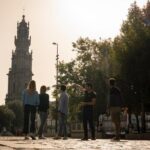
The first major stop is the Dom Luís Bridge. You get a photo stop and a visit here, roughly 30 minutes. This is one of those Porto moments where one good vantage point explains a lot.
The reason this bridge matters on a walking tour is simple: it gives you an easy-to-grasp sense of the city’s two-sides layout, with the river acting like the divider and the connector at the same time. If you’ve only ever seen Porto from postcards, this stop helps you upgrade those flat views into something you can navigate in your head.
In terms of pacing, this is also a good early break. You’ll have time to step back, look around, and reset before heading into the older, tighter streets where the walking feels more intense.
Ribeira, Porto: Narrow Streets, River Views, and the Tripeiro Spirit
Next comes Ribeira, Porto, with about one hour for a photo stop. This is where Porto starts to feel like Porto. You’ll see the colorful, tight, slightly chaotic historical center—built without the modern idea of planning and logistics you might be used to.
I like Ribeira for two reasons. First, you get that river connection, which gives the route a change of pace: smoother, more open sightlines near the water. Second, you’ll start picking up the Tripeiro spirit. That means you feel the city’s personality through its rhythm—where people live close to the details of daily life, and where streets bend because that’s how the city grew.
One consideration: Ribeira can feel more crowded in the general area because it’s a magnet for views and photos. The advantage of a guided tour is that you’re not stuck wandering randomly—you’re moving through the area with a plan, and your guide’s local instincts help you keep your focus.
Casa do Infante: A Short Walk That Adds Meaning
Then you head to Casa do Infante, with a walk segment of about 30 minutes. This part isn’t just about covering ground. It’s a transition into deeper old-street territory, where the tour starts acting like a story you can walk through.
You’ll get a break from the big scenery moments and shift into the slower feeling of walking through places that shape how Porto looks and sounds. Even though this stop is shorter, it helps connect your earlier river views to the city’s medieval center, so later viewpoints feel like part of the same picture—not random highlights.
If you like tours that respect attention span, this stop is useful. You’re not constantly sprinting to the next big thing. You’re building context.
Miradouro da Vitória: Stairs Pay Off With a Strong View
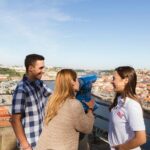
One of the longest viewpoint breaks comes at Miradouro da Vitória. Expect about one hour for a photo stop. If you’ve ever wondered whether it’s worth climbing in Porto, this is the answer.
This viewpoint is famous for a reason: it gives you height, depth, and a sense of Porto’s stacked urban layers. From here, streets don’t look like lines on a map. They look like routes. You start understanding how neighborhoods connect across slopes and how the city’s energy sits above and alongside the river.
This is also where the tour’s character really shows: narrow alleys, stairways, and sudden perspective changes. You’ll feel the medieval layout in your legs first, then in your eyes.
Practical note: bring water and take the break you need. The tour includes a moderate amount of walking and stair climbing, and the total distance is in the 4 to 5 km range. If you push too hard early, you’ll pay for it later, especially during the viewpoint stretches.
You can also read our reviews of more guided tours in Porto


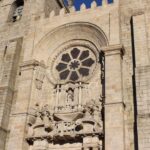
The View Point Break at the End of the Climb
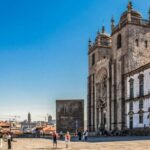
After Miradouro da Vitória, you’ll hit another viewpoint-related segment with a break time of about 30 minutes, then finish at Praça de Gomes Teixeira.
I like this structure because it avoids the feeling of a tour that ends too abruptly. You get a last pause to breathe, look around, and collect your thoughts. You’re also positioned well at the end so you can decide what to do next without feeling stranded.
And because viewpoints are spread across the route (not only at the end), the tour doesn’t become a single payoff moment. You get several mini-rewards, which keeps the day feeling varied rather than repetitive.
What the Donation to a Local Development Association Adds
The tour includes a donation to a local development association. That might sound like a line item, but on a walking tour it matters because you’re not just consuming the city—you’re spending money inside it.
Here’s how I think about value: part of what you’re paying for is the guide’s work—knowing where to take you and how to explain what you see. The donation element adds a second layer: your ticket supports local efforts tied to the community you’re walking through. Even if you don’t see the result in the moment, it changes the feel of the experience.
If you like travel that feels a little more grounded, that inclusion is a plus.
Price and Value for a 4-Hour Porto Day
At $41 per person for a 4-hour tour, this is priced for what you’re getting: a live local guide, multiple strategic photo and viewpoint moments, and a charitable donation included.
You’re also paying for time efficiency. Instead of trying to build a route yourself (and accidentally picking stair-heavy shortcuts that don’t match your interests), you’re following a path designed to cover the city’s key textures—riverfront feeling, medieval street behavior, and high viewpoints.
Two more value notes:
- It’s a walking tour with no hotel pickup, which helps keep the price more reasonable and gives you freedom to arrive at your own rhythm.
- You’re not just following a checklist of sights. The route includes hidden spots, stairways, and detours, which is where Porto really gets interesting.
Pace, Stairs, and Who Should Book This
This tour is a moderate walking experience with stair climbing. You should be fit to walk 4 to 5 km and handle stairs. It’s not suitable for children under 6, people with mobility impairments, wheelchair users, people with low level of fitness, or anyone with motion sickness.
So who is it for?
- You enjoy walking and want a route that feels like a guided orientation, not a museum-style march.
- You want the city’s personality—narrow alleys, viewpoints, and the Tripeiro vibe—rather than only broad panoramas.
- You like guides who answer questions and slow down. Based on guide feedback from past groups, guides such as Alfonso and Ricardo take time to explain and respond to what you ask.
Who might want to pass?
- If stairs exhaust you fast, this won’t be comfortable.
- If motion sickness hits when you’re looking down from heights or moving on uneven ground, you should rethink it.
Practical Tips Before You Start Climbing Porto
Bring water and a camera. I’d also suggest comfortable shoes with decent grip—Porto streets are not always flat, and the day includes stair segments. You’ll want to be able to step confidently while you’re also stopping for photos.
What to avoid is also clear: no bikes, and the tour does not allow alcohol or drugs. The walking and viewpoint stops are timed, so it helps to stay ready to move between them.
Finally, languages are French and English. If you’re more comfortable in one of those, that’s worth considering when you choose your starting time.
Should You Book Secrets of the City in Porto?
If you want Porto in a way that feels lived-in, I’d book this. It’s built around the things you remember after a city visit: steep streets that force perspective, river moments that cool your eyes down, and viewpoints that make you understand the city’s layers quickly.
Skip it only if stairs and uneven walking would be uncomfortable for you. Otherwise, this is a strong value for a guided, local-led route that balances big sights with smaller hidden spots—and it finishes in a place where you can keep exploring right away.
FAQ
Where does the tour start?
Meet your guide at the Estatua de Arnaldo Gama in the garden near the Fernandina walls.
How long is the Porto tour?
The tour lasts 4 hours.
How much does it cost?
It’s $41 per person.
What language is the live guide?
The live tour guide speaks French and English.
What should I bring?
Bring a camera and water.
Is there a lot of walking and stairs?
Yes. There is a moderate amount of walking and staircases involved, and you should be fit to walk 4 to 5 kms and climb stairs.
Who is the tour not suitable for?
It’s not suitable for children under 6, people with mobility impairments, wheelchair users, people with low fitness, and people with motion sickness.
What is included in the price?
You get a local guide, the walking tour, and a donation to a local development association.
What is not included?
Hotel pickup and drop-off are not included.
Are bikes or alcohol allowed?
No bikes, and no alcohol or drugs are allowed on the tour.