REVIEW · PORTO
LGBTour Porto: Walk through Porto, discover the LGBTQIA+ History
Book on Viator →Bookable on Viator
Porto gets personal on this walk. You’ll see the city through an LGBTQIA+ lens led by local guide Ricardo Barros, with stories tied to places you’d otherwise pass without noticing. I especially love the small-group feel and the guide’s lived, human storytelling. I also like how it connects history to what matters now through queer businesses, not just landmarks. One drawback to consider: this is not a big-monument sightseeing tour.
You’ll cover about 3 hours on foot at an easy walking pace, with a morning or afternoon start option. The tour ends at the Miradouro das Virtudes area, so you can finish with the view instead of rushing off.
In This Review
- Key highlights you’ll feel right away
- Entering Porto’s Pride Trail at Campo 24 de Agosto Garden
- Rua de Santa Catarina: When tourism changes more than the street
- Praça da Republica, Teófilo Braga Garden, and Pride as a living calendar
- Livraria aberta: Queer business, writers, and representation you can support
- A busy student stretch and the teaching-to-change connection
- Tribunal da Relação do Porto: Justice, dates, and public power
- Chafariz das Virtudes and the Miradouro finale over the Douro
- Ricardo Barros’s guiding style: calm, personal, and easy to ask questions
- Price, time, and value: what $38.45 buys you
- Who should book this LGBTQIA+ history walk in Porto?
- Should you book LGBTour Porto?
- FAQ
- How long is LGBTour Porto?
- How much does the tour cost?
- Is the tour offered in English, and can I pick a start time?
- Where do I meet the guide, and where does the tour end?
- What is the group size limit?
- Are service animals allowed, and is it near public transportation?
- What is the cancellation policy?
Key highlights you’ll feel right away
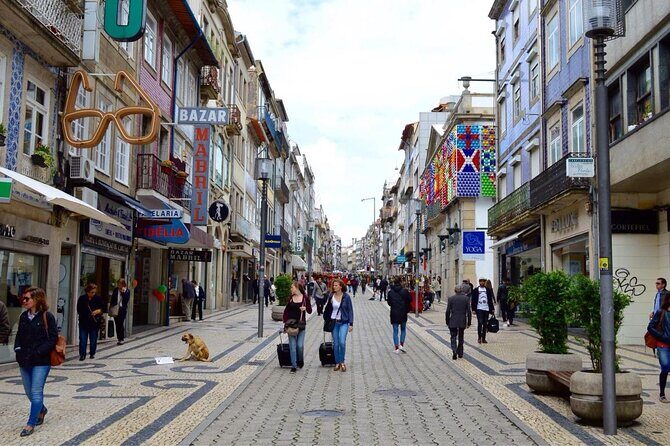
- Small group (max 15 people) keeps the tone relaxed and question-friendly
- Ricardo Barros’s personal anecdotes make LGBTQIA+ history in Porto feel real, not academic
- Queer bookshops as a theme: you’ll stop at Livraria aberta and talk representation and community
- A Pride-anchored route that starts at Campo 24 de Agosto Garden and moves through key streets
- Courtroom history + a justice statue at Tribunal da Relação do Porto adds an important civic angle
- Finish with Douro views and a reflective wrap-up near Chafariz das Virtudes
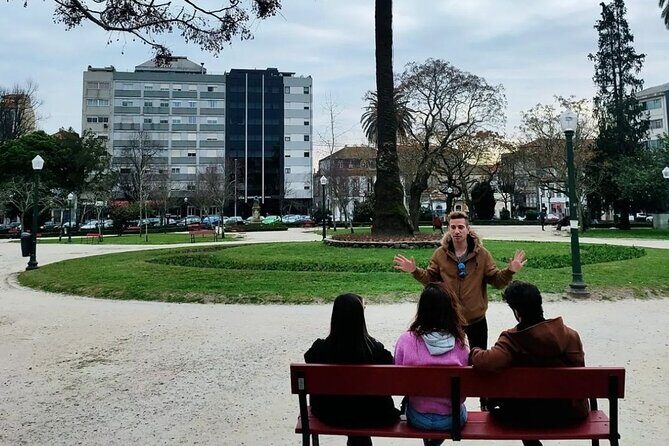
Entering Porto’s Pride Trail at Campo 24 de Agosto Garden
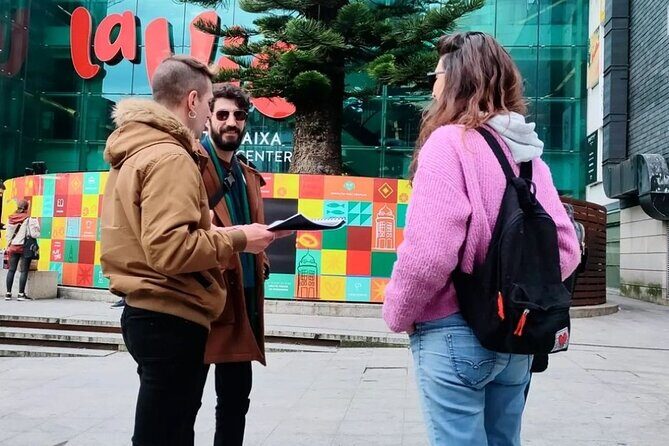
The tour begins near Av. de Fernão de Magalhães 43 and gets you oriented fast. First, you’ll pass Campo 24 de Agosto Garden, where the walk points to the first location connected with the city’s early LGBTQIA+ pride march.
What makes this opening work is the way the route frames Porto as a set of lived experiences, not a postcard. You’re gently trained to notice how public space can carry both celebration and risk. And once you hear the context, the garden stop feels like a starting line, not just a park.
This is also where you set your expectations. The walk is built for conversation, not speed, so you can ask questions about what you’re seeing. If you’re the type who likes to understand how a neighborhood changed over time, you’ll be in the right place from minute one.
You can also read our reviews of more walking tours in Porto


Rua de Santa Catarina: When tourism changes more than the street
After the garden start, the walk moves through Rua de Santa Catarina. Here, the focus is on what time and tourism did to an area that mattered to the LGBTQIA+ community.
This part is subtle but important. A street can look the same while the meaning shifts, especially when visitor traffic, nightlife patterns, and local housing pressures change. The tour asks you to “look again” at the same kinds of places tourists photograph, but with a different question in your mind: who benefited, and who got pushed out?
You’ll get plenty of guided interpretation here, but the real value is that it changes how you watch the city after the tour ends. You’ll start noticing layers—old social realities under new commercial ones—without needing a museum ticket.
Praça da Republica, Teófilo Braga Garden, and Pride as a living calendar
Next comes Praça da Republica, a major square and a good “hub” for understanding how public celebration works in Porto. The tour reflects on the square as a starting point for Pride right now, while also pointing you toward nearby Teófilo Braga Garden.
This section helps you connect history to present-day visibility. You’ll talk about pride not only as an event, but as a public claim on space: the choice to be seen, and the choice to keep being seen. And that frames the rest of the tour in a practical way—these stops aren’t separate stories; they’re part of one ongoing thread.
One more thing you’ll feel here: the guide’s tone stays warm. Even when the subject matter gets heavy, the pacing is calm and the conversation stays human.
Livraria aberta: Queer business, writers, and representation you can support

A big theme of this tour is queer business—how culture survives when communities build places to meet, read, and talk. In the middle of the route you’ll visit Livraria aberta, a bookshop connected with diversity and inclusion, and with the idea of the importance of queer businesses.
This is not just a quick photo stop with a nameplate. You’ll spend time inside and talk about LGBT+ writers and their impact on society and representation in culture. It’s the kind of stop that works for history lovers and book lovers at the same time.
What I like about this approach is that it gives you something to do after the tour. Instead of learning and walking away, you get a concrete example of what support can look like: buying a book, learning local voices, and backing the spaces that hold community knowledge.
And because Porto is a city where neighborhoods change fast, the “business” angle makes the story current. It’s one thing to talk about rights; it’s another to see where people gather and how ideas get carried forward.
A busy student stretch and the teaching-to-change connection
Between the bookshop stops and the deeper civic landmarks, you’ll pass through a busy area of Porto with plenty of students and tourist references. The guide uses this section to talk about teaching and social changes linked to diversity and inclusion.
This is one of those parts that can be easy to miss on a typical tour. The guide uses the street energy—students, daily life, and constant movement—to show how change happens through education and social norms, not only through laws or famous events.
It also adds variety. The tour doesn’t feel like six lectures in a row. You get short segments of reflection that match what you’re actually walking through outside.
If you like tours that connect people, ideas, and urban space in plain language, this stop makes a lot of sense.
You can also read our reviews of more historical tours in Porto





Tribunal da Relação do Porto: Justice, dates, and public power
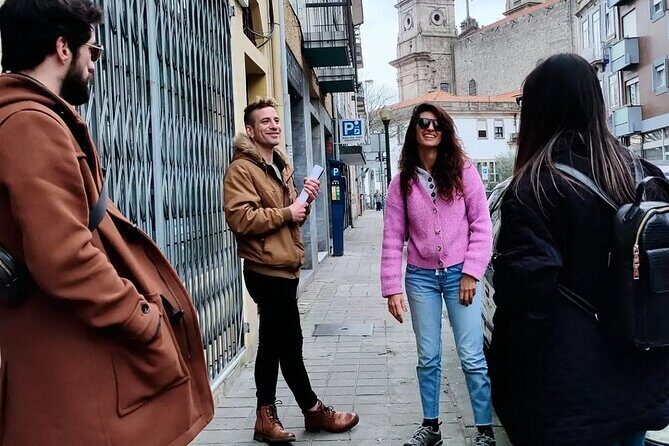
Almost at the end, you pass in front of the Tribunal da Relação do Porto. The stop is paired with the statue of justice, and the guide explains important dates in queer history in Porto and Portugal, tying personal stories to public systems.
This is where the tour’s tone shifts a bit toward civic history. LGBTQIA+ rights don’t live only in culture; they’re shaped by institutions—courts, public messaging, and the long process of acceptance.
The statue setting makes the lesson feel sharper. Even if you’re not a legal-history person, the guide keeps the focus on what changed and why it mattered for real lives. You’re essentially learning how a society argues with itself over time, and how queer communities push back, adapt, and survive.
It’s a thoughtful contrast to the Pride-centered starts and the bookshop stop. You finish the walk with both the “celebration” and the “structure” sides of the story in your head.
Chafariz das Virtudes and the Miradouro finale over the Douro
The tour ends near Chafariz das Virtudes at the Miradouro das Virtudes, a viewpoint known for its beauty and Douro views. This is your slow-down moment: time to relax, summarize what you learned, and connect the dots.
You’ll also hear more personal reflection from Ricardo about his youth in Porto and how he saw the queer movement grow. That ending choice matters because it turns the walk from a list of sites into a lived perspective you carry with you.
In practical terms, finishing at a viewpoint is smart. You don’t have to mentally sprint to a last train stop right after a heavy topic. You can take a breath, look over the river, and let the story settle.
If you plan your day around this tour, treat it like a “start your understanding of Porto” moment. Many people come in wanting facts; they leave with a sharper sense of place.
Ricardo Barros’s guiding style: calm, personal, and easy to ask questions
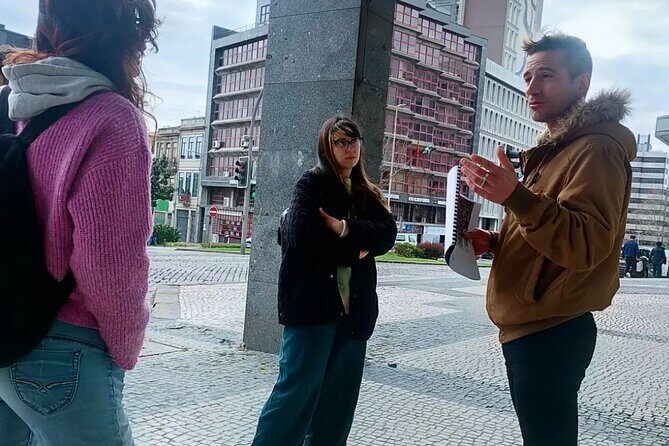
A standout strength is how the tour is led. Ricardo Barros uses personal anecdotes alongside the historical route, and the result feels relaxed without becoming vague. I like that he gives room for questions and keeps the pace comfortable.
The guide’s approach also shows up in how the tour balances emotion and information. You’ll get context for tough periods without turning the walk into a grim slog. The energy stays grounded, and the focus remains on both struggle and community life.
There’s also a practical human element: if you need a slower pace, the guide can adjust walking time. One person shared that Ricardo reduced walking because of disability and still ran the tour that day. That tells you the experience is managed with care, not robotic timing.
Also, because the group is capped at 15, the guide can actually respond to the people in front of him. This is a tour where you can talk, not just listen.
Price, time, and value: what $38.45 buys you
The price is $38.45 per person for about 3 hours, offered in English with a mobile ticket. At first glance, it’s not the cheapest walking tour option. But for what you get—small-group attention, specialized LGBTQIA+ context, and purposeful stops—it’s solid value.
Here’s why it feels worth it:
- You’re not paying for generic city narration. You’re paying for a focused local lens and site-by-site interpretation.
- The tour includes free admission stops, so you’re not forced into add-on ticket costs mid-walk.
- The ending viewpoint gives you a built-in reward after a meaningful route.
One more practical signal: the tour is often booked about 22 days in advance on average. If you’re traveling during busy seasons or have a tight schedule, it’s smart to reserve early.
Who should book this LGBTQIA+ history walk in Porto?
This tour is a strong fit if you want Porto with context. You’ll like it if you care about LGBTQIA+ history in Portugal, how communities form spaces, and how public visibility changes over time.
It’s also great for:
- solo people who want conversation and an easy pace
- couples or friends who want more than standard sightseeing
- anyone interested in queer businesses, book culture, and representation
If your main goal is to hit major monuments and landmarks nonstop, this may feel too “off the main circuit.” The whole point is seeing the city through a different map—less about postcards, more about meaning.
If you have mobility limits, it’s still worth asking because the tour pacing can be adjusted. Service animals are allowed, and it’s near public transportation, so it’s not a problem to get to the start.
Should you book LGBTour Porto?
I’d book it if you want a thoughtful, local-feeling walk that connects sites to real social change. The combination of Ricardo Barros’s storytelling, the queer bookshop focus, and the calm Pride-centered route gives this tour a clear purpose.
I’d skip it only if you’re hunting for a classic monuments checklist or you want a purely visual tour with minimal discussion. Otherwise, this is one of the best ways to understand Porto beyond the obvious sights—without losing time to big museum detours.
FAQ
How long is LGBTour Porto?
The tour lasts about 3 hours.
How much does the tour cost?
It costs $38.45 per person.
Is the tour offered in English, and can I pick a start time?
Yes. The tour is offered in English, and you can choose either a morning or afternoon start time.
Where do I meet the guide, and where does the tour end?
You start at Av. de Fernão de Magalhães 43, 4300-169 Porto, Portugal. The tour ends at Calçada das Virtudes 5, 4050-629 Porto, Portugal, near the Virtudes viewpoint.
What is the group size limit?
The maximum group size is 15 people.
Are service animals allowed, and is it near public transportation?
Yes, service animals are allowed, and the meeting area is near public transportation.
What is the cancellation policy?
Free cancellation is available. You can cancel up to 24 hours in advance for a full refund. If you cancel less than 24 hours before the start time, the amount paid is not refunded.