REVIEW · PORTO
Jewish Walking Tour of Porto
Book on Viator →Operated by Pxt, Lda · Bookable on Viator
Jewish history in Porto is easier to feel on foot. This tour threads together major Jewish sites in the city while you’re also seeing classic neighborhoods up close. I love the small group feel (maximum 15) and the way the guides, like Pedro and Daniel, tell the story with clear, question-friendly explanations. I also like that the walk hits viewpoints and historic street areas instead of only plaques. One thing to consider: it runs outdoors, and if weather turns nasty, you’ll want to be ready with layers and rain gear.
You’ll start at Terreiro da Sé and finish at Avenida dos Aliados, which is great when you want to keep moving afterward. It’s also a good value at $42.05, especially since the stops themselves don’t require paid entry. The only “watch-out” I’d flag is that the tour is timed—about 2 hours 18 minutes to 3 hours—so comfortable shoes and a steady pace really matter.
In This Review
- 6 things you’ll appreciate about this Jewish Walking Tour
- Why Porto’s Jewish history makes more sense as a walk
- Terreiro da Sé: Cathedral area and early community clues
- Praca da Ribeira: trade life and the maze of narrow streets
- Miradouro da Vitoria: one of Porto’s biggest Jewish quarters
- Jardim Municipal do Horto das Virtudes: cemetery ground at Olival
- Guides matter: Pedro, Daniel, Ricardo, Ana, and Vanessa
- Timing, group size, and what to do about weather
- Price and value: paying for context, not just locations
- Getting there: meeting at Sé and ending by Avenida dos Aliados
- Who should book this Jewish Walking Tour of Porto?
- Should you book it?
- FAQ
- What language is the tour offered in?
- How long does the Jewish walking tour take?
- How big is the group?
- Where do I meet the guide and where does it end?
- Are there any paid admissions at the stops?
- What happens if the weather is bad?
- Quick decision check
6 things you’ll appreciate about this Jewish Walking Tour
- Small-group pace with time for questions, not a rushed line-walk.
- Central start and finish (Terreiro da Sé → Avenida dos Aliados), easy to plug into the rest of your Porto day.
- Big-story history tied to exact neighborhoods: trade by the river, Jewish quarters on hills, and cemetery ground in the Olival area.
- Expert English guiding with storytellers including Pedro, Daniel, Ricardo, Ana, and Vanessa.
- Most stops have free admission, so you’re paying for the walk and interpretation more than ticketed entries.
- Outdoor experience that depends on decent weather, so bring rain protection.
Why Porto’s Jewish history makes more sense as a walk
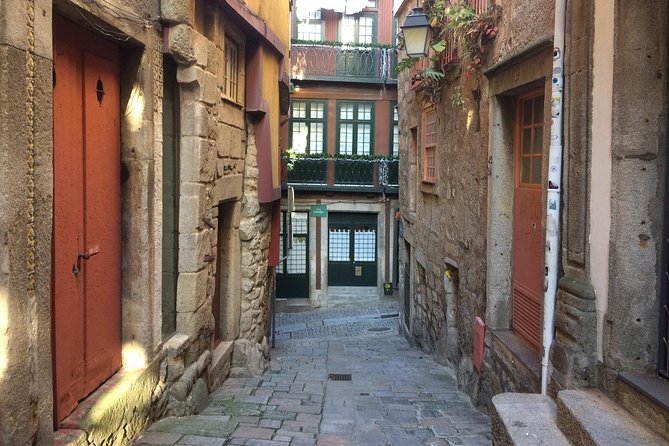
Porto’s Jewish story isn’t one single monument. It’s a pattern: communities forming in specific neighborhoods, life shaping street layouts and local commerce, and later upheavals pushing people around the city. Walking between sites helps you connect the dots fast—especially in Porto, where streets tighten and open in quick changes.
You’ll also get a sense of how much the city “keeps” even when the visible artifacts are limited. The guides focus on what you can still read in the streets and buildings around you, and they’re good at turning modern Porto into a map for older chapters of history.
If you like tours where you can ask questions without feeling cut off, this is the kind of walk that tends to work well. The best moments are usually when a guide explains why a viewpoint, a narrow lane, or a garden location matters for a community’s daily life.
You can also read our reviews of more tours and experiences in Porto.


Terreiro da Sé: Cathedral area and early community clues
Your walk begins around Terreiro da Sé (4000 Porto), in Porto’s historic core. This is the kind of area where you see how an old city forms: major religious architecture at the center and neighborhoods spreading outward from there. The stop here connects the routes of early Porto residents and points toward the Cathedral area and the first Jewish community presence.
Even if you don’t know Portuguese history yet, this stop helps you set a baseline. You’ll get the “where” first—how the city’s oldest layers relate to later Jewish settlement patterns. It’s also a useful mental warm-up, because the rest of the walk keeps moving through neighborhood identities.
Expect a short, focused stop (about 25 minutes), more explanation than sightseeing sprint. The good news: the stop doesn’t require paid admission, so you’re only paying for interpretation and walking time.
Praca da Ribeira: trade life and the maze of narrow streets
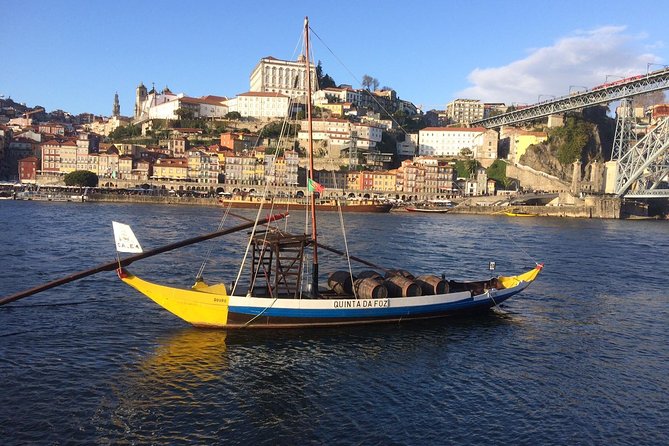
Next you head toward Praca da Ribeira, the riverside area that helped Porto grow through trade and business. This is where you can feel why Jewish communities mattered economically as well as culturally. Merchants, stores, and homes created a dense, overlapping street network—what the guide frames as a practical maze for daily movement.
In a walking format, Ribeira is more than views. You’ll notice the city’s rhythm: turns that force you to slow down, alleys that make the urban fabric feel layered, and the sense of how commerce shaped street choices. That’s the kind of context you usually can’t get from photos.
This stop is about 20 minutes, again with free admission. The value is in the “why this area” explanation, not in a ticketed attraction. If you like understanding the city’s economy and geography together, you’ll enjoy this one.
Miradouro da Vitoria: one of Porto’s biggest Jewish quarters
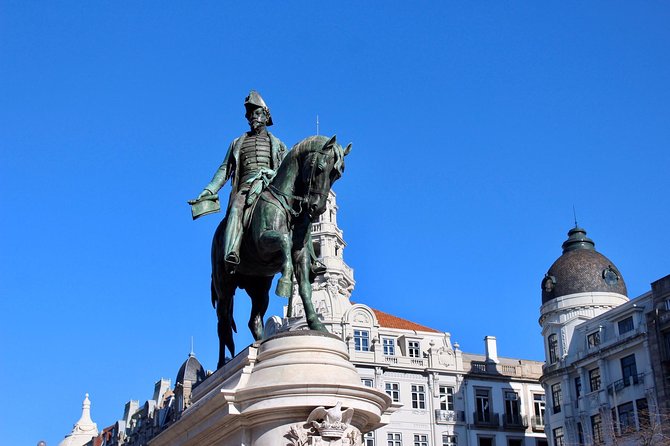
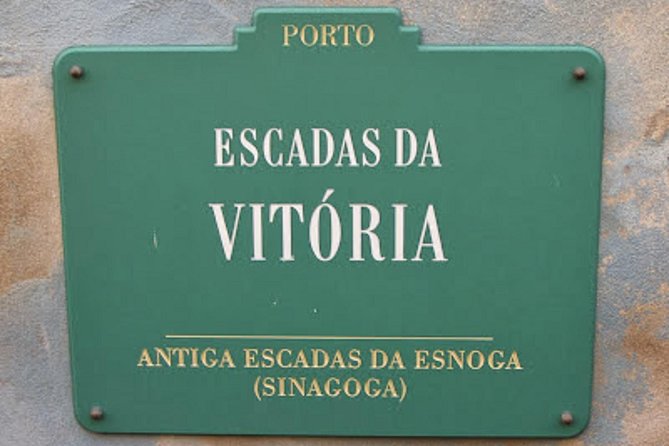
Then you rise to Miradouro da Vitória, in a neighborhood identified as one of Porto’s Jewish areas. The guide connects the community story to a key moment: Vitória was established in 1386 by King João I and became one of the city’s biggest Jewish communities.
You’ll appreciate this stop if you’re even a little curious about how power, policy, and royal decisions affected where people lived. From a miradouro, you’re also better able to picture how the city’s hills and vantage points relate to settlement patterns. It’s easier to understand “where” and “how close” communities were to major routes when you can look out over the surrounding streets.
Time-wise, it’s about 30 minutes. The stop is free to enter, so your cost stays tied to the guiding and the story work. This is usually one of the moments where the tour turns from city touring into real history thinking.
Jardim Municipal do Horto das Virtudes: cemetery ground at Olival
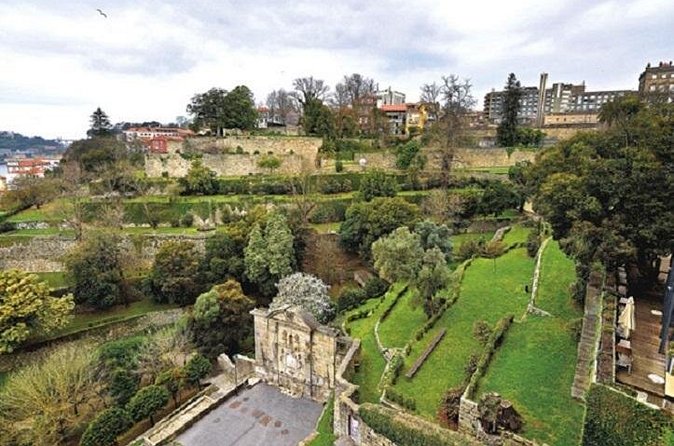
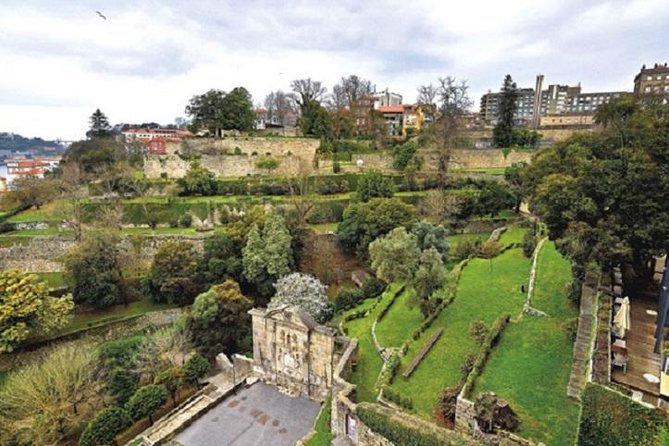
One of the most moving parts of the walk is the quiet shift to Jardim Municipal do Horto das Virtudes. Here, you follow the historical logic that the Olival area had a cemetery nearby, and that the Virtudes Garden location aligns with what documents suggest about the Jewish Cemetery in an earlier era.
This stop is short—around 10 minutes—but it carries weight. Gardens can feel peaceful in a modern moment, yet a guide’s explanation reframes them as historical places of memory. If you’re the type who appreciates “meaningful location” rather than only architecture, you’ll probably feel this one more than you expect.
It’s also a reminder that what you see today might not look like the past, and that’s normal. Good guiding helps you read between what’s visible and what the historical records indicate.




Guides matter: Pedro, Daniel, Ricardo, Ana, and Vanessa
The most consistently praised aspect is the guiding style. Guides including Pedro, Daniel, Ricardo, Ana, and Vanessa are described as passionate about Jewish history in Portugal and skilled at making tough topics understandable.
A few patterns show up in the strongest feedback:
- Clear storytelling that makes serious history feel readable.
- Fast answers when you ask questions, including how Jewish life connects to Portuguese culture and modern context.
- A sense of pacing, where the tour doesn’t feel like it’s dragging or racing.
- Extra care when situations go off-script, like helping guests who arrive late due to traffic.
You might also hear guides use visuals they’ve prepared themselves, which helps when you’re trying to place details in your head. If you’re worried about learning only dates and place names, choose this tour for the fact that the best guides bring the story to life through context and explanation.
Timing, group size, and what to do about weather
The tour lasts about 2 hours 18 minutes to 3 hours, depending on the pace of the group and the day. It’s set up as a small group with a maximum of 15 travelers, which usually means less standing around and more actual “walking + learning” time.
It’s also explicitly weather-dependent. The experience requires good weather, and if it’s canceled due to poor conditions, you’ll be offered a different date or a full refund. That matters because this is mostly outdoors.
Use this as your practical checklist:
- Wear comfortable shoes for uneven old-street surfaces.
- Bring a light rain layer even if the forecast looks decent.
- If you’re caught out in showers, don’t try to tough it out without protection—this walk depends on being able to keep moving.
Price and value: paying for context, not just locations
At $42.05 per person, you’re paying for a professional, English-speaking guide experience built around interpretation. You’re not just buying access to a museum.
The value improves because the stops are free to enter at each location on the route. That keeps your total costs reasonable, which is handy when Porto day plans already add up with transit, tastings, and other attractions.
Also, the tour includes a professional guide and is presented as a local-guided experience. That’s the difference between reading about Jewish history in a travel book and walking the city with someone who can explain why a place matters and how to connect it to the bigger Portuguese timeline.
Getting there: meeting at Sé and ending by Avenida dos Aliados
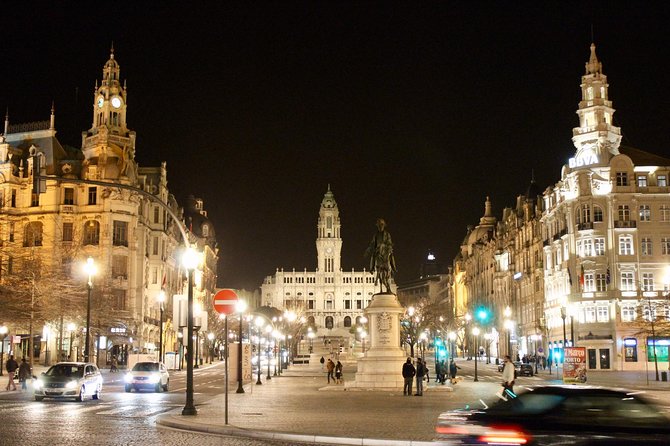
Logistics are one of the tour’s quiet strengths. You’ll meet at Terreiro da Sé, 4000 Porto and end at Avenida dos Aliados, 4000 Porto. Both are central, so it’s easy to continue your day after the walk.
It’s also marked as near public transportation, and service animals are allowed. Add mobile ticket to that, and you’re not stuck printing anything before you go.
If you like clean transitions between activities, this format helps. You can finish near a major avenue and either head to dinner, hop on transit, or continue exploring without a long “where do we go now” scramble.
Who should book this Jewish Walking Tour of Porto?
This tour is a strong fit if:
- You want Jewish history in Porto explained with real neighborhood context.
- You prefer small-group walking over large-bus sightseeing.
- You like asking questions and getting direct answers from the guide.
It can also work well for first-time Porto visitors, because the route covers major areas quickly: the old core near Sé, the riverside commercial zone, hilltop views near Vitória, and a garden setting tied to cemetery history. Returning visitors can also enjoy it, because the tour reframes places you might already recognize.
If you’re expecting lots of physical relics or a museum-style collection, adjust your expectations. The focus here is on how to read the city—what you can still infer from streets, viewpoints, and locations tied to community life.
Should you book it?
Yes, if you’re drawn to history that feels connected to daily life and you like learning on foot. The combination of central meeting points, free-entry stops, and a track record of guides who tell the story clearly (Pedro, Daniel, Ricardo, Ana, and Vanessa) makes this a practical, high-value way to understand Jewish Porto in a few hours.
One last thought: bring rain protection and choose shoes you can trust. When the weather cooperates, this walk turns Porto into a place you’ll remember for the stories behind the stones.
FAQ
What language is the tour offered in?
The tour is offered in English.
How long does the Jewish walking tour take?
It runs for about 2 hours 18 minutes to 3 hours (approx.).
How big is the group?
It’s a small group, with a maximum of 15 travelers per tour.
Where do I meet the guide and where does it end?
You meet at Terreiro da Sé, 4000 Porto, Portugal and the tour ends at Avenida dos Aliados, Av. dos Aliados, 4000 Porto.
Are there any paid admissions at the stops?
The stops listed for the walk show admission ticket free.
What happens if the weather is bad?
This experience requires good weather. If it’s canceled due to poor weather, you’ll be offered a different date or a full refund.
Quick decision check
If you want Jewish history in Porto explained through the streets—rather than through big, ticketed attractions—this is an easy yes. Go prepared for outdoor time, and you’ll get a short, meaningful route that helps you see Porto in a new way.