REVIEW · PORTO
Customizable Full Day Porto Tour: Choose Your Perfect Experience
Book on Viator →Operated by Endless Weekend Tours · Bookable on Viator
Porto on the move, without the stress. This private full-day tour is built for maximum variety in one day, from azulejo-filled landmarks to panoramic viewpoints and a real break for lunch by the water. I especially like the way it blends classic sights (São Bento tiles, Porto Cathedral) with iconic viewpoints like Clérigos Tower. I also love the Afurada-or-Matosinhos lunch choice, so you can steer the day toward fish-and-sea-air or a livelier seafood hub.
The main drawback: a lot of the headline attractions have optional or separate tickets (Clérigos Tower, Livraria Lello, São Francisco, and more), so your final cost depends on how many extras you want.
In This Review
- Key points to know before you go
- Porto in 10 Hours: how this private day works
- Pickup, timing, and the guides that make it feel easy
- City center start: Praça da Liberdade, Avenida dos Aliados, and City Hall
- Mercado do Bolhão and Praça da Batalha: food, tiles, and medieval echoes
- Medieval walls and Baroque calm at Igreja de Santa Clara
- Porto Cathedral and São Bento: where architecture becomes a story
- Café Majestic, the Palladium clock, and the Teatro Rivoli zone
- Clérigos Tower and Livraria Lello: the day’s biggest wow, with tickets
- Churches, hidden architecture, and why Porto feels cramped on purpose
- Museums and gardens: Soares dos Reis and Palácio de Cristal green breaks
- Trams, São Francisco, and the gold interior factor
- Palácio da Bolsa and the commercial Porto angle
- Bridges and viewpoints: D. Maria II, Ponte do Infante, Jardim do Morro, Serra do Pilar
- Lunch in Afurada or Matosinhos: choose your sea mood
- Coast and fortifications: Arrábida Bridge, São João Baptista fortress, Castelo do Queijo
- Optional add-ons: Port wine with Dona Antónia, Douro sunset, and fado nights
- Price and value: is $207 a fair deal?
- Who this tour fits best in your Porto plans
- Should you book this private full-day Porto tour?
- FAQ
- How long is the Porto full-day tour?
- Is pickup offered?
- Is this tour private?
- What’s included in the $207 price?
- Is lunch included?
- Are attraction entrance fees included?
- What optional Port wine tasting is available?
- What optional evening activities are offered?
Key points to know before you go
- Private-group comfort with luxury vehicle transport, Wi‑Fi, and bottled water
- A real lunch break in Afurada or Matosinhos (lunch not included)
- Iconic stop list that hits São Bento, Clérigos, Lello, Bolsa, and the coast
- Tower-and-steps reality check (Clérigos means a climb before the view)
- Optional add-ons for Port wine tasting, a Douro sunset cruise, and fado nights
- Cruise-ship friendly timing with pickup and drop-off paced to your schedule
Porto in 10 Hours: how this private day works
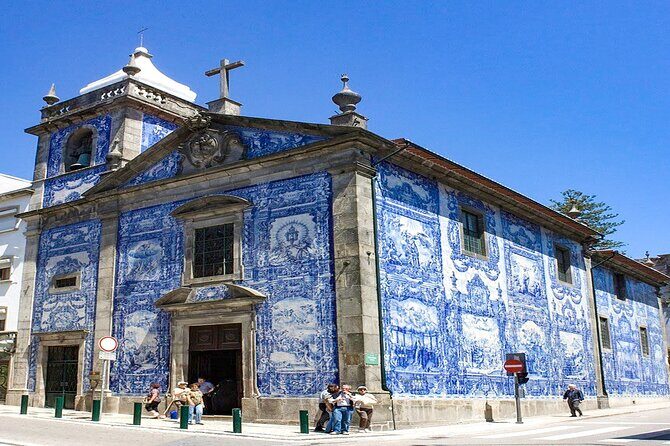
This is a 10-hour, private full-day tour designed around a simple idea: you should be able to see major Porto highlights without spending your trip time in transit lines. You ride in a luxury vehicle and get an official regional interpreter guide and a certified driver. In plain terms, you spend more of the day looking at Porto and less of it figuring out logistics.
It’s also customizable, which matters because Porto can be split into two different moods. One is the old-city walking-and-tiles day. The other is the river-and-bridge day. This tour lets you experience both, while still having breaks where you can reset.
And yes, it’s popular. With an average booking window of 101 days, planning ahead helps you land the slot you want.
You can also read our reviews of more tours and experiences in Porto



Pickup, timing, and the guides that make it feel easy
The best version of this tour is the one that meets you on time and keeps you moving smoothly. The reviews point to a key strength: fast pickup when you arrive by cruise, plus careful drop-off back to the terminal before ship time runs out.
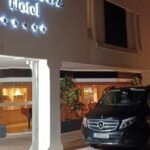
One review highlighted Delfina meeting a guest right outside the port, then driving in a clean, comfortable Mercedes van. Another review credited Carlos with handling pickup after cruise arrival and getting the group back to the port area with enough time. That’s the kind of practical pacing you care about if your day has hard deadlines.
For you, the value is simple: fewer stress moments. When your guide is managing timing, you can focus on the sights. Just plan for real walking time during the day (Porto is not a sit-everywhere city).
City center start: Praça da Liberdade, Avenida dos Aliados, and City Hall
You begin in the core city area around Praça da Liberdade and Avenida dos Aliados. The square is dominated by the statue of King D. Pedro IV, inaugurated in 1866, and it sits in a pocket of elegant 19th and 20th-century architecture. This is an easy place to get your bearings because the street grid and major landmarks cluster here.
Then you follow the avenue to the end where Porto City Hall rises as a symbol of the city’s administrative presence. It’s also a natural place to feel Porto’s daily rhythm—this isn’t a quiet museum square. It’s where events happen and locals pass through.
Practical note: this is a good warm-up segment if the morning is busy for you. You get key orientation before the more intense walking begins.
Mercado do Bolhão and Praça da Batalha: food, tiles, and medieval echoes
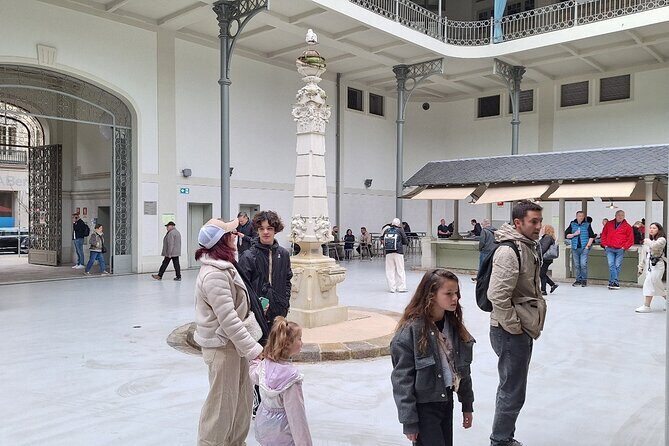
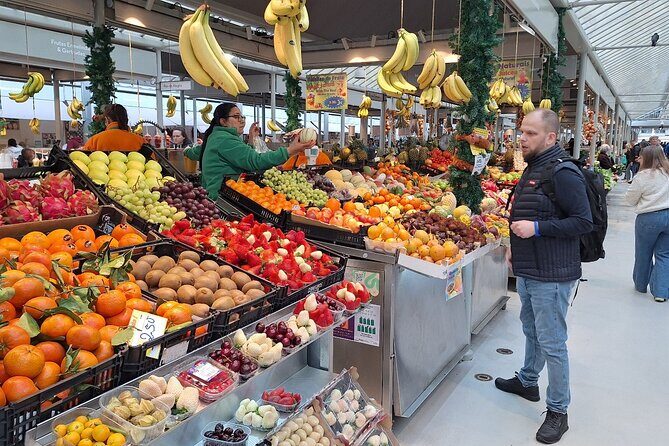
Mercado do Bolhão is one of the strongest early stops because it’s both visual and practical. The market dates to 1850 and is a public-interest property. The neoclassical building has two floors, organized into fish, meat, vegetables, and flowers. Even if you don’t buy much, you get a clear sense of how Porto eats and what locals treat as everyday staples.
After that you head to Praça da Batalha, a historic square tied to a battle legend connected to the 10th century. Around here, your guide puts the square’s name into context: the city’s past has a way of leaving fingerprints on the street map.
The area also connects to Teatro São João, inaugurated in 1798, later destroyed by a fire in the early 20th century. The point isn’t to memorize dates. It’s to understand why Porto feels layered: religious power, civic power, and entertainment all occupy the same urban DNA.
Medieval walls and Baroque calm at Igreja de Santa Clara
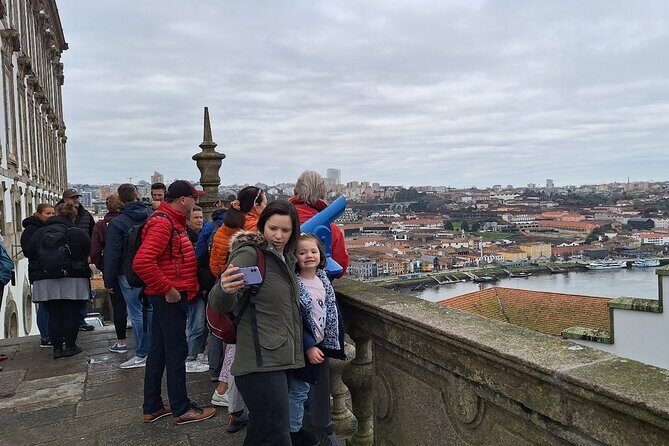
If you want proof that Porto used to be more defensive than you might expect, don’t skip the stretch of Muralhas de D. Fernando. Built between 1368 and 1437, these walls replaced older medieval defenses as the city expanded. They were funded by the wine transfer tax and reached roughly 30 feet high over about 3,000 paces. Today, two surviving segments remain, giving you a quick look at how the city once protected itself.
From there, you go into a different mood at Igreja de Santa Clara. This Baroque example was originally built in the 15th century and later remodeled in the 17th and 18th centuries. The interior is especially known for ornate gilded woodwork and beautiful azulejos. It’s a calm pause in the day—use it to slow your pace and reset your eyes.
If you’re sensitive to stairs or crowds, this segment is a good one because it often feels more still than the market-and-street areas.



Porto Cathedral and São Bento: where architecture becomes a story
Porto Cathedral dates to the 12th and 13th centuries and is Romanesque in origin, but renovated over time into an artistic patchwork of styles. What you’ll likely notice first is how different sections feel layered rather than replaced. The Gothic São João Evangelista Chapel and a 14th-century cloister show the medieval core. Later, 18th-century additions include the Santíssimo Sacramento Chapel and a silver altar in Mannerist style.
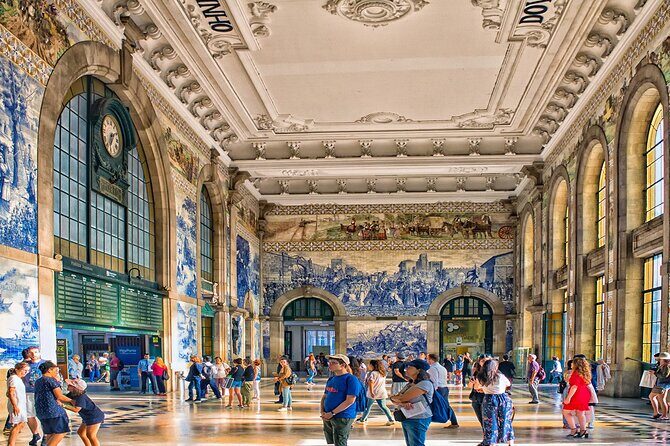
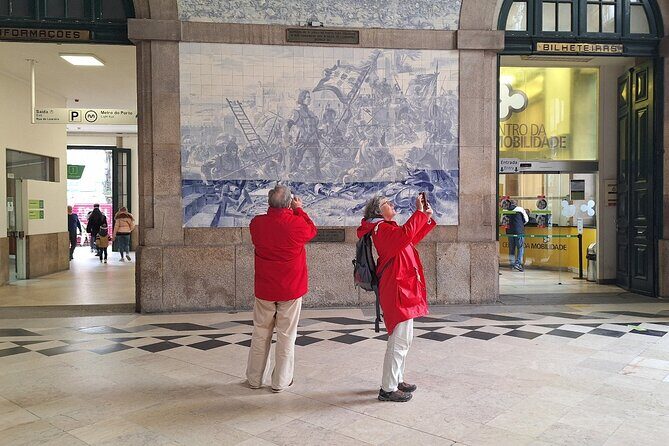
Next comes one of Porto’s easiest wow-moments: São Bento Railway Station. The vestibule is decorated with about 20,000 hand-painted azulejos made by Jorge Colaço. The station sits on the site of an old convent, and the building design (by Marques da Silva) turns daily transit into a museum-like experience.
This is also one of those stops where timing helps. A guide can guide you to the best angles without you standing in the wrong spot.
Café Majestic, the Palladium clock, and the Teatro Rivoli zone
You get a taste of Porto’s Belle Époque vibe at Café Majestic, opened in 1921 on Rua Santa Catarina. The café is Art Nouveau with marble, gilded mirrors, and intricate woodwork. You can stop for Portuguese coffee or pastries, but even without buying anything, the interior layout gives you a sense of what Porto used to feel like to writers and intellectuals.
Just a short walk away is Relógio das Galerias Palladium, an ornate clock with a carillon and four statues that perform every three hours. It’s a fun interlude because it’s kinetic. Look up, wait a bit, and you’ll catch the movement.
Then you pass through the wider cultural zone around Teatro Rivoli. It originally opened in 1932 after reform of the old National Theatre, and today it runs performances across two auditoriums plus a café-concert space. Even if you don’t attend a show, it helps explain why Porto’s entertainment culture matters.
Clérigos Tower and Livraria Lello: the day’s biggest wow, with tickets
Two of Porto’s most famous draws arrive close together: Torre dos Clérigos and Livraria Lello.
At Clérigos Tower, you climb 240 steps for panoramic views. The tower is part of the Clérigos Church, designed by Nicolau Nasoni and completed in 1763. It’s also classified as a National Monument since 1910. If you want the view, plan for it physically. Bring water, and pace yourself on the climb.
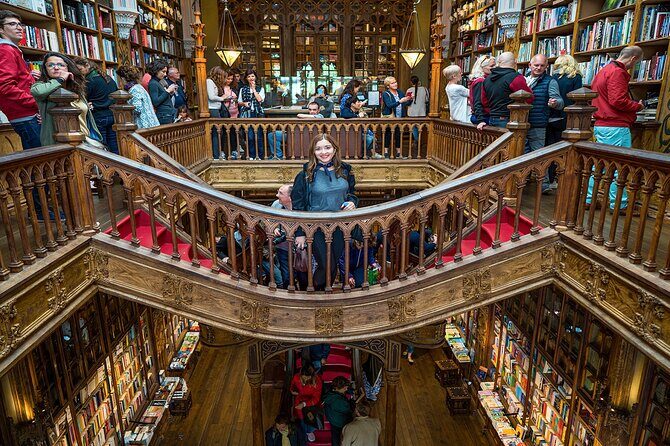
Livraria Lello is next. It’s known for iconic staircases, stained glass, and artistic exhibitions. The catch: it has an optional premium ticket option and general admission may not be included. If you care deeply about this stop, check your add-ons ahead of time.
My practical advice: if you’re tempted to skip one, choose based on your energy. The tower is physical; the bookstore is visual and calm once you’re inside.
Churches, hidden architecture, and why Porto feels cramped on purpose
Porto’s churches often share the same streets, but each one tells a different part of the story. You’ll visit Igreja do Carmo and Igreja das Carmelitas, both Baroque landmarks. Igreja do Carmo’s exterior is known for azulejos. Across the street, the facade of Carmelitans adds that extra layer of ornament.
Between those two is Casa Escondida, the so-called hidden house wedged into the tight urban space. It’s the kind of stop you only appreciate when you’re standing there—Porto has learned to build around limits, not erase them.
Then there’s Igreja do Carmo area plus nearby academic and civic buildings like the Reitoria da Universidade do Porto, completed in 1803 in a neoclassical style. If you like architecture, this is where Porto shows the educated-city side, not only the religious one.
Museums and gardens: Soares dos Reis and Palácio de Cristal green breaks
Not every Porto stop is a church or a climb. You also get Museu Soares dos Reis, housed since 1940 in Palácio dos Carrancas. This is the first public art museum in Portugal, and the building itself is part of the attraction. The museum’s collections range across ceramics, sculptures, engravings, jewelry, furniture, gold and silver work, paintings, textiles, and glass.
Then you shift to a wide-open breathing space: the Romantic Gardens of Palácio de Cristal. These span 8 hectares and were designed in the 19th century by German landscape architect Émille David. Highlights include Jardim Émille David near the main entrance, the Avenue of Limes, a forest section, and Douro river balconies with sweeping views. It’s the kind of place where you can walk slowly, even if the rest of the day runs fast.
If you’re doing this tour on a day with hot sun, this garden segment is a wise place to cool off and get your steps in without feeling rushed.
Trams, São Francisco, and the gold interior factor
If you have even a small interest in how cities moved, Museu do Carro Eléctrico is worth your time. It’s free entry and housed in the old Massarelos power station, a listed municipal building. The museum covers trams and auxiliary vehicles used on Porto streets, plus an 1872 example of horse-pulled American trolley buses. It also displays equipment from the city’s early transport system.
After that comes Igreja de São Francisco, famous for UNESCO-listed grandeur and a Baroque interior known for gold-gilded woodcarvings. This is one of the spots where the guide’s timing really helps. You get to the right areas and keep moving before crowds build.
You also hear about the Chapel of the Tree of Jesse and the catacombs and museum. The entrance ticket may not be included, and there’s an optional extra for a dedicated visit, so decide based on your budget.
Palácio da Bolsa and the commercial Porto angle
For a different side of Porto, head to Palácio da Bolsa. Built from 1842, it symbolizes the city’s commercial power and is home to the local Commercial Association. The architecture is neoclassical, and inside you’ll hear about two major rooms: the Hall of Nations and the Arab Room, inspired by Moorish palaces.
A guided tour inside the palace is available in multiple languages daily, but it’s not included by default. You can add an optional guided access. If you care about detail and symbolism, this optional add-on is one of the best places to spend extra.
Bridges and viewpoints: D. Maria II, Ponte do Infante, Jardim do Morro, Serra do Pilar
This is where the day shifts from street-level Porto to river-level Porto.
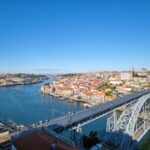
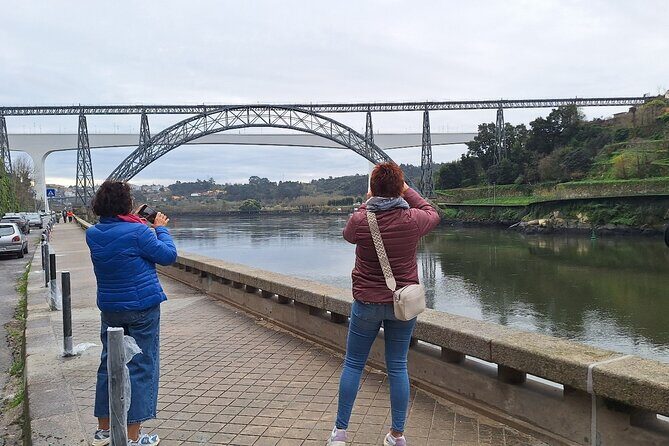
You’ll cross or view major bridge landmarks, including the suspension bridge called D. Maria II, plus Ponte do Infante, inaugurated March 30, 2003. Ponte do Infante was designed by engineer Adão da Fonseca and built to replace the upper deck function of D. Luís I. It’s a Maillart-type arch bridge with a 371-meter-long deck and 20 meters in width. The design includes an impressive 280-meter span and an ascent ratio of 11.2.
You then pause at Jardim do Morro, a hill garden with panoramic views. It sits near the monastery area, so it works well as a short reset.
Finally, you reach Mosteiro da Serra do Pilar, known for its distinctive circular-shaped church and cloister structure, with a rectangular main chapel. Construction began in 1537, and it later served as a military stronghold in 1809 during the Peninsular War, housing troops as Wellington planned actions during the Napoleonic occupation of Porto. The big payoff here is the view plus the sense that this place has changed roles over centuries.
Lunch in Afurada or Matosinhos: choose your sea mood
The best mid-day part is the lunch break (1h30) with two choices: Afurada or Matosinhos. Lunch is not included in the tour price, so you’re deciding where to spend your meal budget.
Afurada is a fishing village at the mouth of the Douro. It’s all about freshly grilled fish and seafood with traditional simplicity. The setting feels quieter and more local.
Matosinhos is widely regarded as Portugal’s seafood capital. It’s more lively, with more restaurant variety and a more modern feel.
My advice: pick Afurada if you want calm and a classic fishing-village vibe. Pick Matosinhos if you want more options and an easier time finding what you like quickly.
Coast and fortifications: Arrábida Bridge, São João Baptista fortress, Castelo do Queijo
After lunch, the route keeps moving along the water and toward defensive coast history.
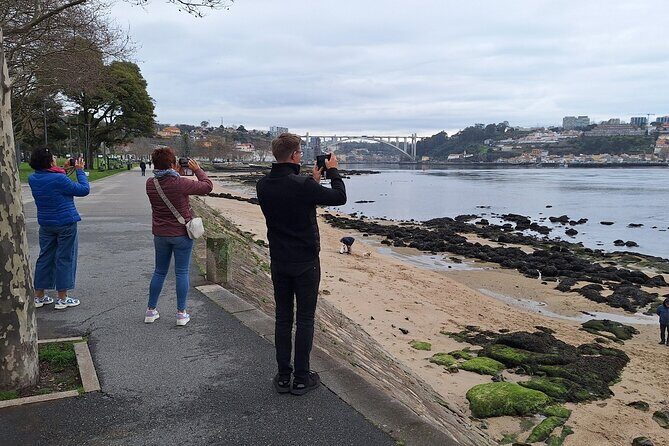
You pass Arrábida Bridge, inaugurated in 1963 and designed by Edgar Cardoso. It was once the longest reinforced concrete arch bridge in the world with a 270-meter span. The four massive pillars rise about 70 meters above the Douro River, and the bridge is known for the absence of bronze sculptures, part of its modernist look.
Then you visit Fortress São João Baptista, originally built in the late 16th century to safeguard the Douro River’s entrance and coastline. Over time, modern fortifications were added in the 17th century and an access gate was added in the 18th. The point is to see Porto’s coastal defense as more than a story.
Finally, you reach Castelo do Queijo, also called Fort São Francisco Xavier. Built in the 16th century to defend against pirate attacks and foreign invaders, the castle’s name comes from the local term castelo do queijo, linked to a cheese-like appearance. Today it’s public space with Atlantic and coastline views.
This stop can be a great photo moment, and it also gives you a bit of open-air time after churches and interiors.
Optional add-ons: Port wine with Dona Antónia, Douro sunset, and fado nights
If your day still has energy at the end, you can add extras.
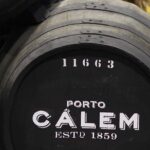
A popular wine option is the Exclusive Dona Antónia Port Wine tour, typically 1h30 with tasting of five Port wines. The experience centers on Dona Antónia Adelaide Ferreira and her role in shaping Port wine’s destiny. This add-on is priced per person and is not included by default.
Another option is a private Douro River sunset cruise for about 2 hours. It’s priced based on the private boat and includes views of the iconic six bridges and riverside neighborhoods. You also get a “golden hues” style sunset focus, which is the whole point.
For evenings, you can tack on fado:
- A fado night with traditional dinner and transport included starts around 20:00 and runs about 2h30.
- A fado show with Port wine runs daily at 18:00 and 19:30, for about 1 hour.
If you’re trying to keep the full day from stretching too long, choose one add-on only. Porto has a lot of “one more thing” potential, and you’ll enjoy it more if you don’t turn the trip into homework.
Price and value: is $207 a fair deal?
At $207 per person for a 10-hour private day, you’re paying for more than sightseeing. You’re paying for a guide plus transportation plus comfort: luxury vehicle with Wi‑Fi, bottled water, refreshments, and an atmosphere designed to make long days feel manageable. You also get personal accident and liability insurance, and you can get pickup.
Where costs can rise is the “not included” part. Entrance fees and guided visits aren’t included in general. Some of the big-ticket-perception stops also have optional add-ons: skip-the-line-style ticket upgrades for Clérigos, Livraria Lello premium access, guided Palácio da Bolsa entry, Church of São Francisco visit ticket add-ons, and more. Lunch is also not included.
So here’s the value test for you:
- If you want a guided day with minimal hassle and you’re okay paying separate attraction tickets, this price can be a smart way to save time.
- If you plan to skip many paid sights and only want the free ones, you might feel you could build the day yourself. But you’d be trading convenience for work.
Given how much ground the tour covers, most people buy it for the control: a plan, a driver, and a guide that keeps your day from getting chaotic.
Who this tour fits best in your Porto plans
This tour is ideal if you:
- Have one day (or a tight Porto window) and want major highlights with a plan.
- Like mixing styles: old squares, cathedrals, markets, and river engineering.
- Appreciate having a guide handle pacing and decision-making for you.
It’s also a good choice if you’re arriving on a cruise ship and need pickup/drop-off that respects ship schedules. The reviews around Delfina and Carlos make that point clearly.
If you hate stairs or you’re traveling with limited mobility, you’ll need to think carefully about the Clérigos Tower climb and the walking portions. The day includes free stops like São Bento Station, but the iconic viewpoint segments do require effort.
Should you book this private full-day Porto tour?
If you want a structured day that mixes Porto’s icons with real breaks, I think it’s a strong booking. The standout advantages are the private-group comfort, the smooth pickup/drop-off approach (especially when arriving by cruise), and the fact that lunch can be tailored to your preferred vibe with Afurada or Matosinhos.
Book it when you want convenience and variety more than you want total DIY freedom. Skip or limit paid add-ons if your budget is tight, but don’t ignore Clérigos and Lello if those are top on your list.
FAQ
How long is the Porto full-day tour?
It lasts about 10 hours.
Is pickup offered?
Yes, pickup is offered.
Is this tour private?
Yes. It’s a private tour/activity with only your group participating.
What’s included in the $207 price?
You get an official regional interpreter guide and a certified tourism driver, plus transport in luxury vehicles with Wi‑Fi, bottled water, refreshments, and personal accident and liability insurance.
Is lunch included?
No. Lunch is a 1h30 break in Afurada or Matosinhos, and it is not included in the tour price.
Are attraction entrance fees included?
Guided visits and attraction entrance fees are not included. Some stops are free, but many require separate tickets or optional add-ons.
What optional Port wine tasting is available?
An optional Exclusive Dona Antónia Port Wine tour includes a 1h30 visit and tasting of five Port wines, and it is not included in the standard price.
What optional evening activities are offered?
You can add fado options, including a fado show with Port wine and also a fado night with traditional dinner and transport. Both are optional and not included in the base tour price.