REVIEW · PORTO
Porto: Tile Painting Workshop with Tea and Port Wine
Book on GetYourGuide →Operated by Francisco Pessegueiro · Bookable on GetYourGuide
Porto has a habit of turning art into everyday life. This tile-painting workshop in the North of Portugal takes that idea and gives you two finished souvenirs you actually made. The session mixes a clear look at Portuguese tile history with hands-on painting at the atelier run by Francisco Pessegueiro, and some people specifically called out a guide named David for being friendly and on point.
I like that you don’t just copy designs. You learn the why behind the motifs, then you paint with stencils and get guidance while you work. You also get to come back the next day for your fired tiles, packed for the trip. One thing to think about: the class includes a bit of history and tea time, so if you’re mainly there to paint for 2 hours straight, you may want to mentally budget for a slower start.
In This Review
- Key Highlights to Know Before You Go
- Why Porto Tiles Matter More Than Souvenirs
- Finding the Atelier: Near Campanhã Station and Easy Public Transit
- The 2-Hour Workshop: What Happens From Start to Finish
- Step 1: Meet your guide and get tile context
- Step 2: Learn tile painting techniques used in traditional work
- Step 3: Paint 2 tiles with traditional motifs
- Tea, Biscuits, and the Port Wine Touch
- Painting Two Tiles: How You’ll Actually Make Them Look Right
- Stencils help you stay on motif
- An instructor and assistant are there for feedback
- You’ll leave your tiles for firing
- The Next-Day Pickup: Fired Souvenirs, Packed for Travel
- What’s Included (And What You Should Plan For)
- Price and Value: Is $53 Worth It?
- Language Options: English, Japanese, and French
- Parking, Small Groups, and Real-World Logistics
- What to bring
- Who Should Book This Tile Workshop (And Who Might Skip It)
- Should You Book This Porto Tile Painting Workshop?
- FAQ
- How long is the tile painting workshop?
- Do I get to take the tiles home?
- What time do I pick up my tiles?
- What’s included in the price?
- What languages are available for the instructor?
- Where is the meeting point?
Key Highlights to Know Before You Go
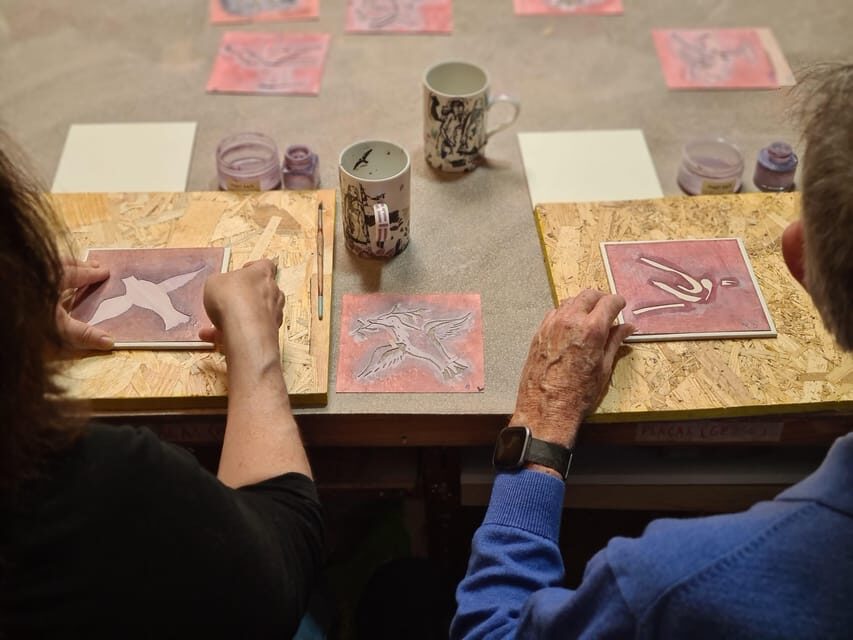
- Two tiles per person, painted in a Portuguese-inspired style, then fired for you
- History first, then technique, with help from an English/Japanese/French-speaking instructor
- Stencils and hands-on coaching, so you can create something attractive without being an artist
- Tea, biscuits, and port wine during the experience, which keeps the workshop relaxed
- Pick up around 11h/12.30 the next morning, with proper packaging so you can travel with confidence
Why Porto Tiles Matter More Than Souvenirs
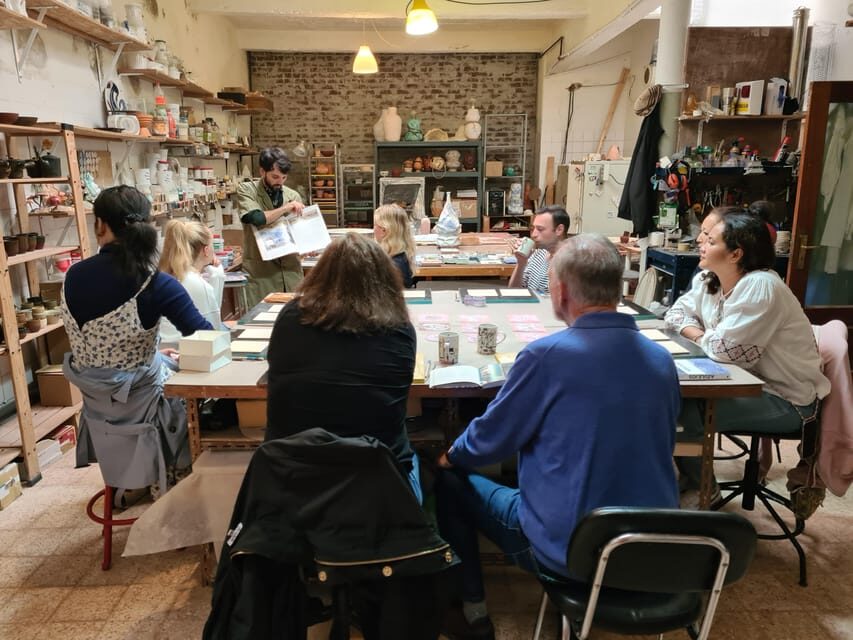
Porto’s tile tradition isn’t just decorative. It’s a language you can find on the outside of churches, inside older houses, and on monuments around town. In this workshop, that context isn’t tacked on like background noise. It’s part of the lesson, so when you paint a motif, you understand what it’s doing in Portuguese culture.
You also get a practical sense of how tiles spread across Portugal. Instead of treating azulejos like a museum artifact, you see them as something that traveled with people and ideas—showing up on public buildings and private spaces alike. That helps the whole activity click, because you’re making a small piece of that larger tradition.
You can also read our reviews of more wine tours in Porto



Finding the Atelier: Near Campanhã Station and Easy Public Transit
The meeting point is near the train station and near the new Bus station TIC (Terminal Intermodal de Campanhã). There’s a school and a taxi square right by the station, which makes it easier to orient yourself once you arrive.
One heads-up: the area isn’t particularly friendly for parking. So if you’re driving, plan on using public transport or a drop-off plan instead of expecting an easy close-by parking spot.
The 2-Hour Workshop: What Happens From Start to Finish
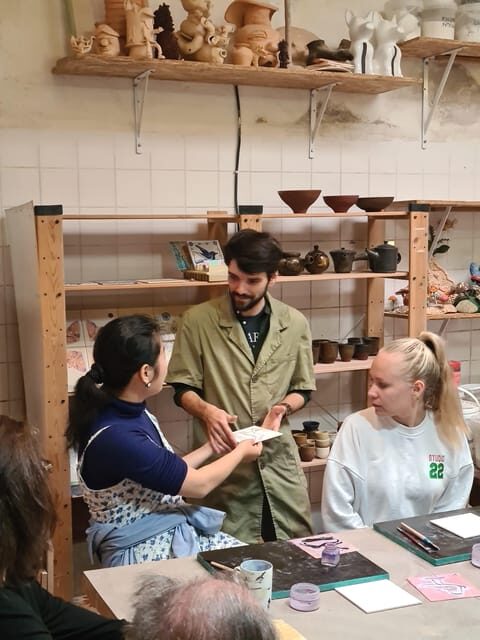
The total time on the activity is about 2 hours. In that window, you’ll do three main things: hear the story, learn the technique, and paint your tiles.
Step 1: Meet your guide and get tile context
You start by meeting your instructor and getting an introduction to the history of Portuguese tiles and why they became so important in Porto. The workshop covers how tiles show up across monuments and homes, not just in one neighborhood or one type of building.
If you like understanding what you’re looking at while you travel, this part lands well. It also helps you choose motifs with more confidence, since you’re not guessing what’s “traditional.”
Step 2: Learn tile painting techniques used in traditional work
Next comes the practical training. You get instruction on techniques tied to how traditional Portuguese tiles are produced and painted. Even if your artistic background is minimal, the workshop is structured so you can follow steps and avoid the common first-tile mistakes.
This is also where stencils come in. You’re not left to freehand everything. That lowers the stress level and helps your tile end up looking like a real Portuguese-inspired design rather than a sketch that needs forgiving.
You can also read our reviews of more tours and experiences in Porto





Step 3: Paint 2 tiles with traditional motifs
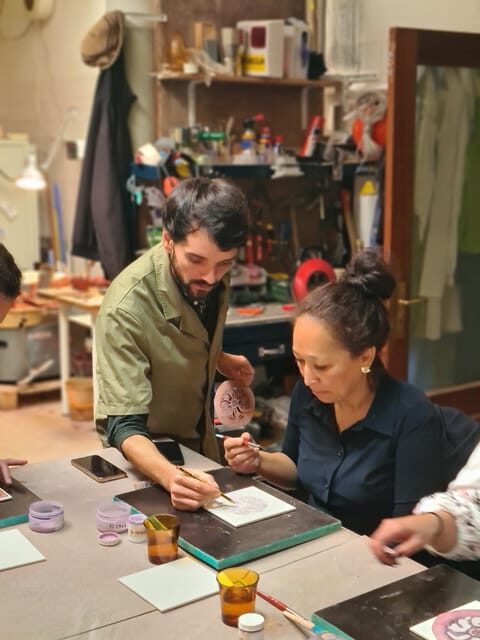
Then it’s your turn. You paint two tiles inspired by traditional motifs. The studio provides the needed materials, and the instructor (plus an assistant) is there for questions and feedback.
A key point: you’re guided, but you’re not handed a finished design. You make choices—colors, placement, how bold or careful you want your lines to be. It feels like creating a souvenir with intention, not just stamping out a craft.
Tea, Biscuits, and the Port Wine Touch
This workshop is not a silent factory where you crank out a product. It’s more of an atelier-style studio time.
You’ll have tea and biscuits included, and the experience is also described as having port wine as part of the offering. People seem to enjoy this break because it keeps the mood relaxed while you learn.
Some families even note that the pacing can feel a bit more history-and-setup than pure painting. If you’re traveling with kids or you’re in a hurry, you might prefer a workshop with less talk. Still, the structure helps first-timers feel oriented before they start painting.
Painting Two Tiles: How You’ll Actually Make Them Look Right
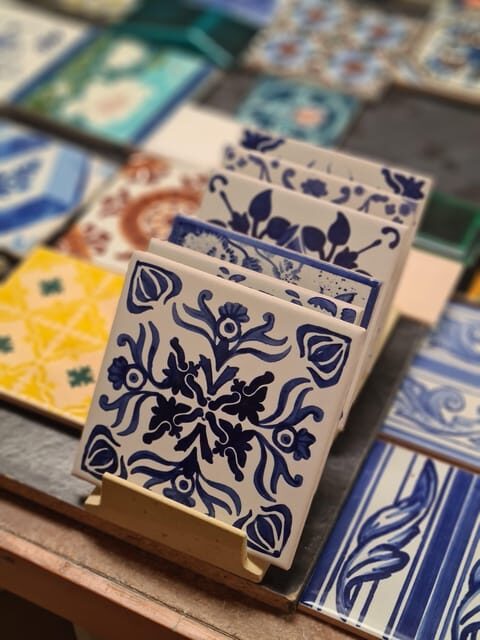
Here’s what makes the painting portion work for real people: you’re supported with tools and guidance, not left alone with a blank tile.
Stencils help you stay on motif
The studio provides stencils. That means you can focus on color choices and brush control instead of starting from zero. You can still make it your own—just within traditional shapes and patterns.
An instructor and assistant are there for feedback
You’re not just watching instructions and guessing. The instructor and an assistant are available while you work. If you’re unsure about a technique or how a motif should be built, you can ask.
You’ll leave your tiles for firing
When you finish painting, your tiles go to be fired. This is crucial. The workshop isn’t just about the painting session. The firing is what turns your work into a durable souvenir you can take home.
The Next-Day Pickup: Fired Souvenirs, Packed for Travel
One of the best parts is that you don’t have to gamble on how your tile will look after it dries.
Your tiles need to be fired, and they’ll be ready about 24 hours after the class. Pickup happens the next morning around 11h/12.30. The workshop also provides packaging for your finished tiles, which matters a lot if you’re moving hotels, taking trains, or flying.
Practical take: build your day so you can pick up the next morning. If your schedule is tight right after the workshop, that timing can be the difference between smooth travel and a last-minute hassle.
What’s Included (And What You Should Plan For)
Included:
- All materials you need for tile painting
- Tea and biscuits
- Firing of the painted tiles
- Packaging for the finished tiles
Not included:
- Transportation to and from the activity
- Food and drinks beyond what’s included (so plan for a meal elsewhere)
This setup is good value if you hate hunting for craft supplies on vacation. You show up in comfy clothes, paint, and come back once for pickup.
Price and Value: Is $53 Worth It?
At $53 per person for a 2-hour guided workshop with materials, tea/biscuits, firing, and packaging, you’re paying for more than the paint.
You’re paying for:
- instruction and feedback so your tile looks good
- the firing process, which you can’t DIY easily in your hotel room
- the next-day pickup plan
- the packaging needed to transport the finished souvenir
In plain terms, it’s paying for the finishing step and the quality control. That’s why this feels like a real souvenir instead of a short craft you’ll toss into a drawer.
If you’re expecting a cheap DIY-style activity, this is pricier than basic crafts. But if you want something you can bring home that looks like Porto, the price-to-outcome ratio feels fair.
Language Options: English, Japanese, and French
The workshop runs with instructors speaking English, Japanese, and French. If your language is French or Japanese, you’re asked to mention that when booking.
If you prefer English, you can plan on it being available. If you’re traveling as a non-English speaker, this is one of those nice details that can make you feel comfortable immediately instead of relying on gestures.
Parking, Small Groups, and Real-World Logistics
This is a small group experience, which usually means you get more personal attention while you paint.
The location is convenient for public transit near major stations and bus connections. If you’re staying in central Porto, you’ll likely reach Campanhã area by metro or bus. If you’re driving, again, expect parking to be less friendly than the attractions in older historic centers.
What to bring
- Comfortable shoes
- Comfortable clothes
You’re painting, so wear something you don’t mind getting slightly messy. The good news: the session is set up for you to focus on painting rather than managing your own supplies.
Who Should Book This Tile Workshop (And Who Might Skip It)
This workshop is a great match if:
- you want a hands-on souvenir with a clear Porto connection
- you enjoy short classes that explain what you’re looking at in the city
- you like guided art time, especially if you’re not sure you’ll “make something nice”
- you want something kids can enjoy too (one family mentioned it works for teens and an 8-year-old)
You might consider skipping or choosing a different style of activity if:
- you mainly want uninterrupted painting time and less explanation
- you’re extremely schedule-sensitive about the next morning pickup
- you strongly prefer an activity with no waiting period between making and taking home
Should You Book This Porto Tile Painting Workshop?
I think it’s an easy yes if you like the idea of taking home something made with your own hands, tied to Porto’s tile tradition. The combination of two painted tiles, included firing, and packaging makes it feel like a full experience rather than a half-hour craft stop.
Book it if you’re curious about tile history and want a practical way to remember Porto beyond photos. If you hate the idea of returning the next day, plan your schedule around the pickup window. And if you’re not in the mood for any classroom time, go in knowing there’s a history-and-set-up start before the brushes really come out.
If that timing works for you, this is one of those Porto experiences that turns art into a memory you can hold.
FAQ
How long is the tile painting workshop?
The experience lasts about 2 hours.
Do I get to take the tiles home?
Yes. Your tiles are fired after the class, and you pick them up about 24 hours later with proper packaging.
What time do I pick up my tiles?
Pickup is the next morning around 11h/12.30.
What’s included in the price?
It includes all tile painting materials, tea and biscuits, firing of the tiles, and packaging for your finished tiles.
What languages are available for the instructor?
The instructor offers English, Japanese, and French. If you choose French or Japanese, you need to specify that when booking.
Where is the meeting point?
The store is near the train station and near the new Bus station TIC (Terminal Intermodal de Campanhã), with a school and a taxi square right by the station.