REVIEW · PORTO
PORTO city Walking Tour
Book on Viator →Operated by DailyTours - Porto and Douro Valley excursions · Bookable on Viator
Porto is best understood one street at a time. This small-group walking tour weaves major sights into clear local stories, from the UNESCO-listed São Bento Railway Station to classic viewpoints. I love how the guide connects the tiles, churches, and towers to what life in northern Portugal actually feels like.
I also love the “use it right away” payoff: you get a surprise drink at the end and plenty of next-step ideas so your remaining Porto time runs smoother. The one drawback to plan for is Porto’s hills and tight corners—wear comfy shoes, and if you have something scheduled right after the tour, leave a little buffer.
In This Review
- Quick highlights
- A 3-hour Porto City Walking Tour that really sets your bearings
- What you actually get for $21.77
- São Bento Railway Station: azulejo magic with northern Porto context
- Rua das Flores: from jewelry street to street-artist stage
- Livraria Lello from the outside: the Rowling spark without the full hassle
- Igreja dos Carmelitas: two churches, one of the tightest layouts in Porto
- Clérigos Tower: an iconic bell tower with a timeline that makes it click
- Miradouro da Vitória: the Gaia view you’ll remember (with admission included)
- Porto Cathedral: XII-century stones plus a river-facing view
- The real rhythm of Porto walking: hills, hearing, and when to slow down
- How the guide style shapes the whole experience
- Who should book this Porto City Walking Tour
- Should you book the Porto city Walking Tour?
- FAQ
- How long is the Porto city Walking Tour?
- How much does the Porto walking tour cost?
- What’s included in the price?
- Which stops do not include admission tickets?
- What language is the tour offered in?
- What happens if the weather is bad or you cancel?
Quick highlights
- Max 15 people means you get time to ask questions and stay together on turns and hills
- São Bento Railway Station tiles are worth pausing for, and you’ll know what you’re looking at
- Rua das Flores comes back to life with a street-art vibe instead of just empty storefronts
- Livraria Lello explained from the outside so you understand the hype without waiting in line
- Clérigos Tower gets a timeline that makes the landmark feel like a story, not just a photo stop
- Miradouro da Vitória views over Gaia and cellars are a highlight with admission included
A 3-hour Porto City Walking Tour that really sets your bearings
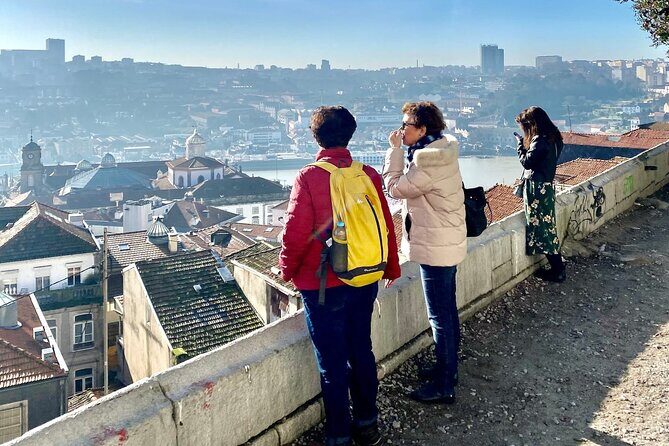
This Porto city walking tour is built for first-time orientation, without turning into a checklist sprint. You start in the historic center and move through the areas most people photograph, but you get the context that makes those photos mean something.
The pace works well because the group is kept to 15 (small enough for questions, not so big that you lose people at every crosswalk). You’ll also be walking through classic Porto streets—some narrow, some steep—so it’s a good fit if you have a moderate walking level and a willingness to climb.
One practical upside: you can usually pick a morning or afternoon start, which helps you match the tour to the rest of your itinerary. And because it includes a guide plus included fees and taxes, the experience feels straightforward. No messy “what’s included vs not” scramble while you’re standing on cobblestones.
You can also read our reviews of more walking tours in Porto



What you actually get for $21.77
For the price point, the value comes from three things: a guide, included attractions, and the end-of-tour drink. A 3-hour guided walk in central Porto is often where you save time—someone else handles the “why this spot matters” part, and you get to spend your mental energy on enjoying the city.
A big plus: a couple of stops have admission built in (more on that below), so you’re not constantly paying small extras. And the surprise drink at the end turns the tour into something you remember, not just something you check off.
São Bento Railway Station: azulejo magic with northern Porto context
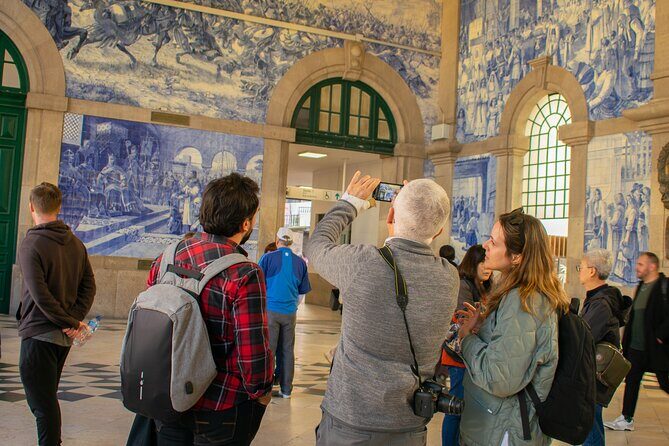
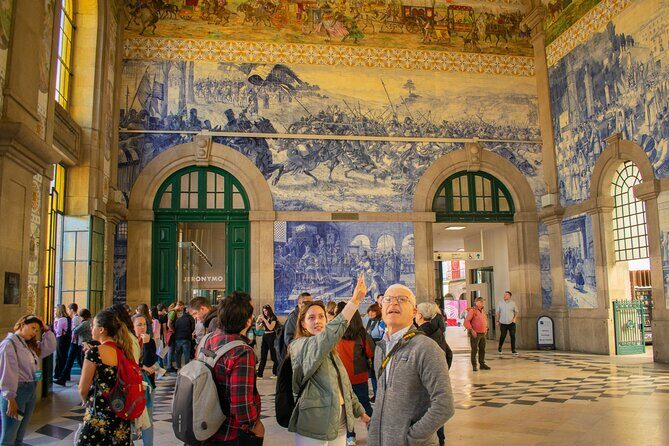
Your walk kicks off at São Bento Railway Station, right in Porto’s historic core. The main draw here is the tilework—Portugal’s famous azulejos—but the real win is understanding what you’re seeing.
The station sits in an area recognized as UNESCO World Heritage, so you’re not just admiring decoration. You’re stepping into a landmark that reflects local identity, especially that northern “place matters” attitude. Expect a calm, focused stop where you can look closely instead of rushing past the tiles.
What I like about this first stop: it gives you an instant visual anchor for the whole tour. After you see São Bento’s architecture and tile storytelling up close, the rest of Porto’s monuments make more sense.
Rua das Flores: from jewelry street to street-artist stage
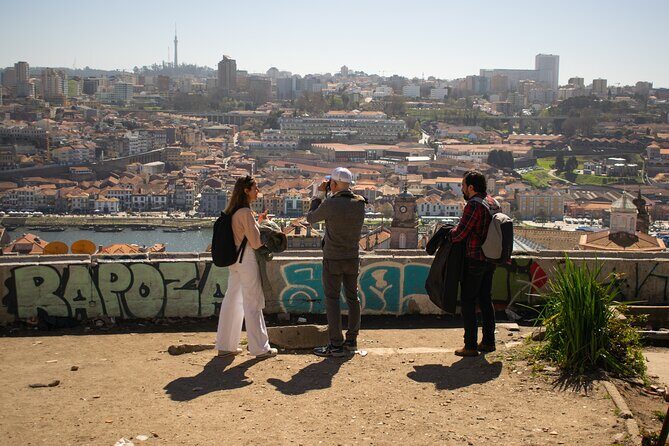
Next comes Rua das Flores, a street with a reputation tied to homemade jewelry shops. That part of the story faded when storefronts went quiet, but in recent years the street has gained a new life—and it’s not just with shops.
You’ll walk through a stretch that now feels more like a creative corridor. Street artists often perform here, so the street becomes a lively, human-scale backdrop for photos. And because this stop isn’t about grand architecture, it breaks the monotony of stone-and-steeple sightseeing.
Practical tip: this is a good point to slow down and take in street-level details—signage, shop windows, the texture of the sidewalk. Porto’s character shows up more in these “in-between” places than in the big-name monuments alone.
Livraria Lello from the outside: the Rowling spark without the full hassle
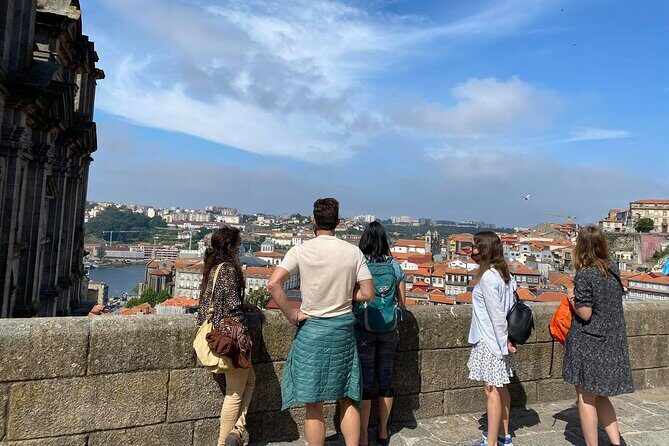
You’ll then see Livraria Lello from the outside. This is important: the stop is designed around history and significance rather than a full inside visit.
The bookstore building dates to 1881, and it’s also famous for being part of the lore about J.K. Rowling’s inspiration for the Harry Potter books. Even if you don’t go in, you’ll get the story behind why people treat this facade like a pilgrimage stop.
Two things to keep in mind:
- This is an outside viewing and explanation stop, not an included ticket.
- The line-inside scenario isn’t part of your tour plan here, so you’re less likely to waste time waiting when you’d rather be walking.
If you’re curious about the literary Porto vibe, this stop is a friendly way to get the background without turning the whole tour into an indoor detour.
You can also read our reviews of more city tours in Porto





Igreja dos Carmelitas: two churches, one of the tightest layouts in Porto
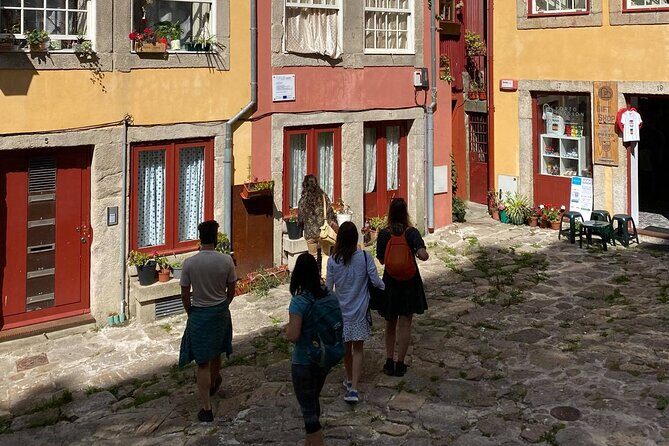
At Igreja dos Carmelitas, the architecture isn’t just pretty—it’s a puzzle. The Carmelitas churches can look like one big church at first glance, but the effect comes from the fact that there are two churches separated by one of the world’s narrowest houses.
This is one of those Porto moments where your brain needs a little guidance. When someone explains how the layout creates the illusion, the stop turns from photos to real understanding. You’ll also get a clearer sense of how Porto’s street fabric and buildings squeeze and adapt over time.
Drawback to consider: this stop can be tight space-wise. If you’re traveling with slower-moving companions or you’re watching your footing closely on uneven ground, take your time as you move through the area.
Clérigos Tower: an iconic bell tower with a timeline that makes it click
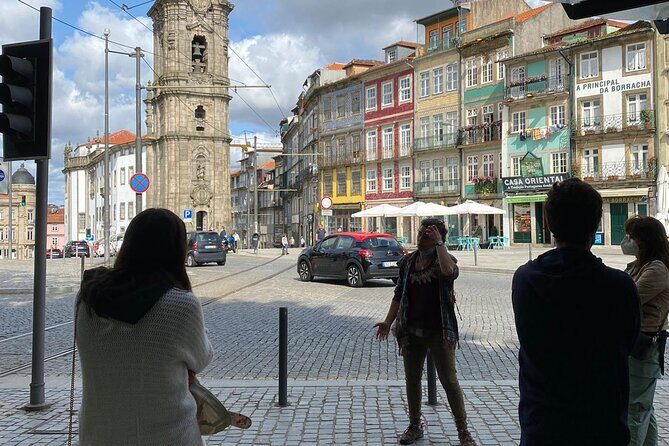
Then you hit the Torre dos Clerigos, arguably the most iconic Porto landmark of this stretch. The tower is part of the larger Clerigos Church complex, and the bell tower portion is what most people recognize in photos.
What makes this stop better than a simple “look up” moment is the timeline. The church proper was built between 1732 and 1750, while construction on the tower didn’t start until 1754 and finished in 1763. When you hear it like that, you get why the tower feels both bold and deliberate.
A helpful note for your expectations: this stop does not include admission for the church/tower, so don’t plan on going inside unless you choose to do that separately.
Photo tip: aim to frame the tower with nearby streets and rooftops. Porto’s hills and irregular angles are part of why the tower looks dramatic from certain angles. This is also where wearing shoes with good grip pays off, since you’ll often be standing on slopes.
Miradouro da Vitória: the Gaia view you’ll remember (with admission included)
This is your big payoff viewpoint stop: Miradouro da Vitória. Porto and Gaia sit across the river, and locals have a playful way of saying the best view is on the Gaia side. But if you know the Vitória viewpoint, you know it can be just as breathtaking from Porto looking toward Gaia.
The emphasis here is on the panorama and what lies below it. From this viewpoint, you can see Porto across the water and get a clear look at Gaia’s cellars, which ties directly into Porto’s famous port-wine landscape.
This stop includes admission, so you don’t need to budget or hunt for tickets right here. It’s one of the tour moments that feels worth stepping back for—take your time with photos, and don’t rush the explanation. If you understand what you’re looking at (the river relationship, the hillside neighborhoods, the cellar area), the view becomes more than scenery.
If the weather is clear, this is also a great place to spot how the city’s shape affects where you’ll want to go later.
Porto Cathedral: XII-century stones plus a river-facing view
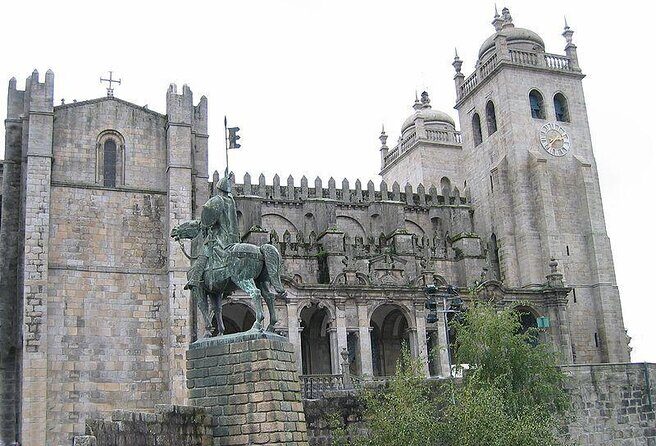
Your final monument stop is Catedral do Porto, a building dating to the XII century. You get time to learn a bit about its place in Porto’s story, plus a chance to enjoy views from the area around it.
This is also a practical end-of-tour transition. After walking through station tiles, book history, churches, and viewpoints, you finish with something grounded in long time—centuries of Porto life reflected in one structure.
As with other major sights, admission isn’t included here, so if you want a deeper inside visit, plan that as a separate choice. For the tour itself, the value is the guided orientation and the view context you carry with you.
The real rhythm of Porto walking: hills, hearing, and when to slow down
Porto is not flat. Even when the route sounds “central,” you still feel the rise and fall in your legs. Guides tend to keep a smooth flow, but you’re the one who feels the cobblestones and angles underfoot.
From practical experience with this kind of city walk, a few choices make life easier:
- Wear shoes you trust on slopes and irregular pavement.
- If it rains or the air turns cold, have a light layer you can pull on quickly.
- When you’re near a group stop, don’t drift to the front where you can lose the guide’s voice.
One thing to consider: the tour is scheduled for about three hours, but sometimes a tour can run a little long. If you booked back-to-back activities, leave a cushion so a small delay doesn’t throw off your whole day.
How the guide style shapes the whole experience
This tour’s standout feature is the storytelling. The guides most often mentioned include Pedro and Gregorio, and both get praised for mixing humor with solid context. That matters because Porto’s landmarks can feel disconnected if you just read a plaque and move on.
A good guide also reads your group. In a small group, the guide can slow down when someone lags, give extra explanation when a question pops up, and keep everyone engaged even if you’re traveling with kids. If you want to understand Porto’s “why,” not just its “what,” the guide approach is a big part of the value.
At the end, you’ll also get recommendations that help you plan the rest of your visit. That’s one of the smartest parts of booking a walking tour early: it turns “I’ll figure it out” into a clear next day plan.
Who should book this Porto City Walking Tour
Book this if you:
- Want a first-timer orientation through Porto’s most photo-worthy neighborhoods
- Enjoy history that stays human—stories tied to buildings, street layout, and local identity
- Prefer a small group where you can actually ask questions
- Want viewpoint time without turning your day into a car or tram shuffle
- Like the idea of finishing with a casual local drink and planning tips
Skip it if you:
- Want minimal walking and mostly indoor sights
- Need frequent long rest breaks; the route is designed for movement
- Are extremely sensitive to hearing issues in outdoor spaces, since commentary is strongest when you stay close
Should you book the Porto city Walking Tour?
Yes—if you want to understand Porto quickly and enjoy it without bouncing between random stops. The combination of UNESCO-context start, strong landmark explanation, and a real viewpoint payoff makes this a solid use of three hours early in your trip.
I’d book it soon after you arrive, then use the guide’s recommendations to guide the rest of your days. And I’d come prepared for hills with good shoes and a relaxed attitude about pacing. If you do that, you’ll leave with more than photos—you’ll have Porto’s story in your head, ready to connect while you wander.
FAQ
How long is the Porto city Walking Tour?
The tour is about 3 hours long.
How much does the Porto walking tour cost?
It costs $21.77 per person.
What’s included in the price?
You get a guided walking tour of Porto’s historic center, viewpoint stops and photos, all fees and taxes, and a surprise drink at the end. Admission is included for São Bento Railway Station and Miradouro da Vitória.
Which stops do not include admission tickets?
Livraria Lello (outside), Igreja dos Carmelitas, Torre dos Clerigos, and Catedral do Porto are listed as not including admission tickets.
What language is the tour offered in?
The tour is offered in English.
What happens if the weather is bad or you cancel?
The experience requires good weather. If it’s canceled due to poor weather, you’ll be offered a different date or a full refund. You can cancel for a full refund up to 24 hours before the experience starts.