REVIEW · PORTO
Porto private afternoon tour, discover the most iconic attractions
Book on Viator →Operated by Endless Weekend Tours · Bookable on Viator
Porto in one afternoon is a smart move. This private tour strings together the city’s biggest icons with just enough walking and lots of guide-driven context, so you’re not just taking photos—you’re getting the why behind them. I like how the day mixes famous landmarks with quieter, architectural details you’d normally miss.
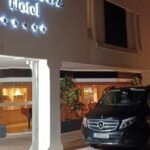
Two things I especially like: the hotel pickup and luxury van setup make the whole route feel easy, and the stops are chosen for variety, from Mercado do Bolhão’s produce energy to São Bento’s tile storytelling and the view from Torre dos Clérigos. You also get the practical benefit of short, efficient sight time, so you can still plan your own dinner after.
One drawback to plan around: because the day is packed with iconic stops, you’re not in a sit-and-stay mode. Some entrances are not included, and a few highlights (like Lello and the tower) may need separate tickets if you want to go inside or skip lines.
In This Review
- Key highlights you’ll feel on the ground
- How the 4-hour Porto route actually works
- Avenida dos Aliados and the D. Pedro IV launch point
- Mercado do Bolhão and Praça da Batalha: feel the city at street level
- Fernandine walls, the cathedral, and the Gothic layers you can spot
- São Bento Station tiles, Café Majestic, and the Rivoli/University stretch
- Carmo and Carmelites: Baroque churches plus the hidden house
- Torre dos Clérigos and Lello: iconic stops, with ticket reality
- São Francisco and Porto’s golden interior tradition
- Palácio da Bolsa and the Arab Room moment
- Douro bridge views: D. Maria Pia to D. Luís I and beyond
- Gaia viewpoints: Jardim do Morro and Serra do Pilar’s circular church
- Modern engineering detours: Arrábida Bridge and coastal fortresses
- Leixões, Serralves, Casa da Música, and the big civic statues
- Optional add-ons: Douro sunset, Dona Antónia port tasting, and fado night
- Private Douro River Cruise (sunset)
- Dona Antónia port wine cellars
- Fado night with dinner (transport included)
- Fado show (with port wine)
- Price and value: what $185.43 covers, and what to budget for
- Should you book this Porto tour?
- FAQ
- FAQ
- How long is the Porto private afternoon tour?
- Do you get hotel pickup?
- Is the tour private?
- What language is the tour offered in?
- Are tickets included for every attraction?
- Does this tour require good weather?
- Are there optional activities available after or alongside the tour?
Key highlights you’ll feel on the ground
- Luxurious, comfortable transport with Wi‑Fi and water so you’re not dragging yourself across town
- São Bento Station’s 20,000 painted tiles: a history lesson you can read while you wait for the next view
- Clérigos Tower and the Carmo/Carmelites church area: baroque drama in walking distance
- Lello Bookstore exterior plus smart ticket advice if you want the Gold option
- Douro bridges and viewpoints (including Gaia): Porto’s postcard angles without the hassle of self-routing
- Optional upgrades for Douro sunset cruise, port wine tastings, and fado night
How the 4-hour Porto route actually works
This is built as a private afternoon loop around Porto’s core, so you get a lot of ground without spending half the day figuring out streets, parking, or which hills are where. You’ll ride in a luxury vehicle with Wi‑Fi, bottled water, and refreshments, then step out for brief stops that fit the timing of the day.
You’ll move through neighborhoods and monuments in a logical sequence, starting near Avenida dos Aliados, then working your way toward major church and bookshop stops, and later crossing viewpoints and bridges into the wider Douro story (including Gaia). Expect photo time plus a bit of walking—perfect for first-timers who want the highlights, and also for people who like architecture and city history.
Because it’s private, the guide can pace you for your group, and service animals are allowed. The main thing I’d keep in mind: some of the best-known places have separate ticketing, and this tour doesn’t pretend you’ll do everything inside every monument in one afternoon.
You can also read our reviews of more tours and experiences in Porto.


Avenida dos Aliados and the D. Pedro IV launch point
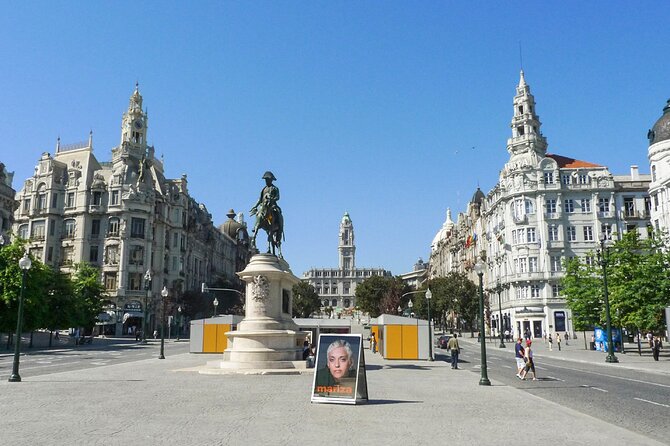
Your day starts at Avenida dos Aliados, with Praça de D. Pedro and the statue of D. Pedro IV, the Liberator. This is one of those places where Porto’s identity clicks: it’s central, grand, and built to impress. The avenue is framed by buildings from the early-to-mid 20th century, while the edges reference older structures like the Palácio das Cardosas (19th century).
Why it matters: this is a fast way to get bearings and understand the city’s layout. If you’re the type who likes to know where you are in relation to the river and the historic center, starting here helps you map the rest of the afternoon.
Tip: even if you’re not planning to go inside anything right away, give yourself a minute to look across the square and avenue. It’s one of the cleaner “orientation” moments of the day.
Mercado do Bolhão and Praça da Batalha: feel the city at street level
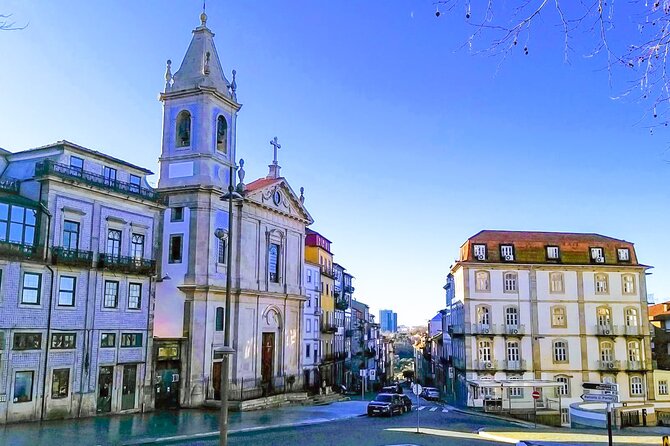
Stop one is Mercado do Bolhão, Porto’s emblematic market (two-story, neoclassical, dating back to 1850). What I like is that it doesn’t feel like a staged tourist bazaar. Around it, the market spills into specialized shops facing four surrounding streets, with fresh produce as the focus and sections for fish, meat, horticulture, and flowers.
Even if you don’t buy anything, it’s a great place to understand local rhythms. Markets here aren’t just shopping—they’re a social habit.
Then you head to Praça da Batalha, a square with a name rooted in an older defeat around the 10th century, linked to conflict with Almançor. This is where Porto’s layers show: 19th-century urbanization gives it the public-space feel, but the name carries older weight.
The square also anchors Teatro São João, inaugurated in 1798 and later impacted by a major 1908 fire. It’s one of those spots where the history makes more sense when you see the theater building in context.
Practical note: this stop sequence is ideal early in the afternoon because it’s mostly walking and looking—not climbing stairs yet.
Fernandine walls, the cathedral, and the Gothic layers you can spot
From there, you’ll pass by the Fernandine Wall area—built in the 14th century under D. Afonso IV, replacing an older defense system as Porto expanded. It was largely completed around 1370, then finished in stages later (with completion associated to D. Fernando in 1409). Military needs faded, and later demolition left only parts surviving today.
Walking past it is a quick way to understand how the city grew. Porto didn’t just spread randomly; it expanded with walls shaping neighborhoods.
Next up is Catedral do Porto, a medieval cathedral that started in the 12th/13th centuries and evolved through renovations across the centuries, keeping its medieval base even into the 20th-century final form. The highlights include the Gothic chapel of São João Evangelista, its cloister, and key expansions like the chancel enlargement.
If you like religious architecture, this is a solid stop. The cathedral’s value is in the mix—Romanesque/medieval foundations with later additions that make the building feel like a living record rather than one frozen moment.
São Bento Station tiles, Café Majestic, and the Rivoli/University stretch
Then you hit São Bento Railway Station, built in the early 20th century on the site of a former convent. The vestibule is covered with around 20,000 tiles painted by Jorge Colaço, illustrating the evolution of transport and Portuguese regional ways of life. Even if you’re not riding a train that day, it’s one of the best “pause and read” places in Porto.
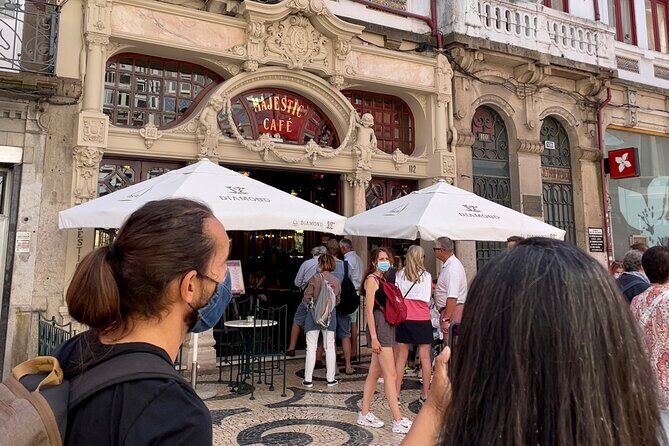
From there, the route flows to Café Majestic, opened in 1921 and known for Belle Époque elegance and opulent Art Nouveau style—marble, gilded mirrors, and ornate details. This is a coffee-and-pastry kind of stop if you want to rest your feet without breaking the timeline.
A few minutes away is the Palladium clock with carillon and four statues that move every three hours. It’s the kind of Porto detail you’d miss if you’re just speed-walking for the next landmark.
Depending on the pace of your group, you’ll also pass through the Rivoli Theater area (opened in 1913, later adapted and modernized) and the University of Porto rectory/natural history setup in a neoclassical building associated with financing via a literary tax on wine. If you enjoy spotting styles, this stretch is more “side-scene” than headline—but it keeps the day from feeling like only monuments and stairs.



Carmo and Carmelites: Baroque churches plus the hidden house
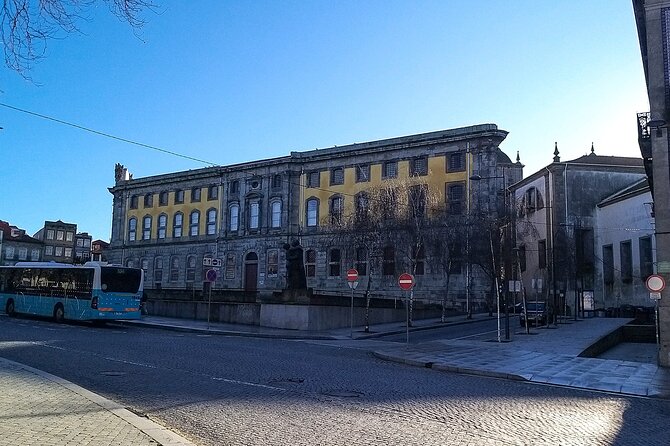
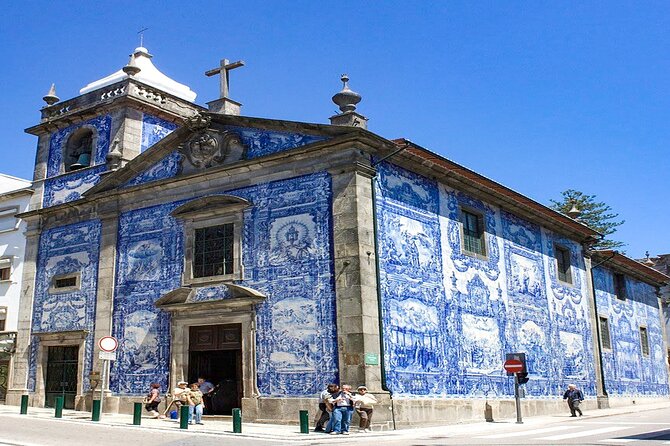
One of my favorite parts of Porto is when you turn a corner and suddenly the city gets dramatic. The area around Igreja do Carmo and Igreja dos Carmelitas is exactly that: two Baroque churches side-by-side, with the exterior of Church of Carmo known for intricate tile work, and the Carmelites church featuring an ornate façade.
What makes this stop special is the little mention that’s easy to overlook: the Hidden House, a compact building tucked between the churches. It’s a small architectural puzzle that helps you understand how construction worked in a dense, built-up historic center.
This is the kind of stop that rewards slow looking. Even if you only have a few minutes, the contrast between these churches and the hidden gap between them tells a story.
Torre dos Clérigos and Lello: iconic stops, with ticket reality
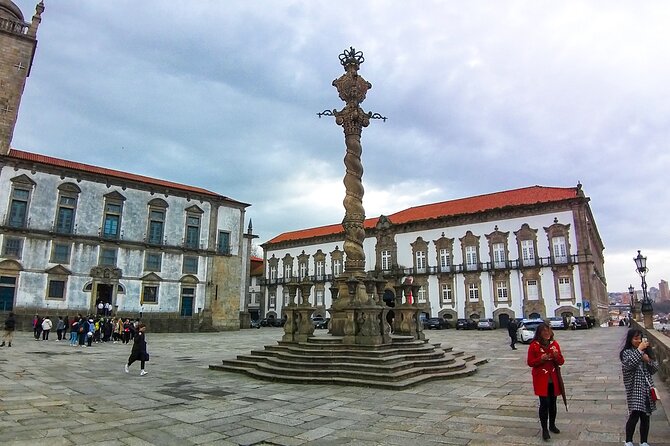
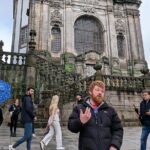
Porto’s skyline moment comes next at Torre dos Clérigos, a Baroque tower by Nicolau Nasoni from the 18th century. You earn your view with a 240-step climb, and from the top you can see Porto and the Douro River.
This tower also popped up in the 2021 Hollywood blockbuster Suicide Squad, which means you’ll likely see the recognition factor when you stand at street level.
A few blocks later is Livraria Lello, inside an Art Nouveau building opened in 1906 with neo-Gothic details. The famed staircase and the stained-glass skylight create that interior wow factor, but here’s the key planning detail: the Gold Ticket (Priority + Book) is listed as an extra fee. The tower also has a separate admission line-skip option.
If you want the full Lello experience, budget for tickets. If you mostly care about the façade and the vibe of the area, you can still enjoy the stop without paying for entrance. Either way, the timing works well because these are landmarks people can navigate to even after the tour ends.
São Francisco and Porto’s golden interior tradition
As the tour continues, you’ll reach São Francisco Church, described as the most important Gothic temple in the city, with construction starting in the 14th century. Its “gold church” reputation comes from the exuberant carved woodwork and the gilded interior from the 17th and 18th centuries.
Another reason this stop hits: it’s listed with notable details like the Tree of Jesse and the opportunity to see the catacombs. If you’re the kind of person who likes symbolism and fine craft, this is where the afternoon shifts from sightseeing to deeper atmosphere.
There’s also another late-17th-century church stop on the route: a mannerist-leaning religious building with Baroque influence and an altarpiece showing Saint Nicholas (patron saint of metalworkers). The key here is that the tour isn’t only chasing famous buildings—it’s mixing them with connected religious architecture so the center feels coherent.
Palácio da Bolsa and the Arab Room moment
Next comes Palácio da Bolsa, a neoclassical palace built in the 19th century and tied to Porto’s Commercial Association. It sits on the site of the former São Francisco Convent, which was destroyed in a siege-era fire. The Arab Room is the signature highlight, and this is one of the key “pay for the inside” moments on the tour list.
The tour data lists an extra admission fee for a guide at the Stock Exchange Palace. That’s worth considering because the Arab Room is visually impressive, but guided context helps it click faster—especially if you’re comparing it to other European decorative styles you’ve already seen.
If you’re into architecture, this stop gives you a more civic and commercial side of Porto, not only religious or residential.
Douro bridge views: D. Maria Pia to D. Luís I and beyond
Porto and Gaia are inseparable here, and the tour makes you feel that with bridge storytelling.
You’ll see Ponte D. Maria Pia, created to replace a suspension bridge and linked to Gustave Eiffel’s first masterpiece, inaugurated in 1877. The bridge remained in operation for 114 years. Even if you’re not crossing by train or foot, you get the sense of scale and engineering ambition.
Then the route includes D. Luís I Bridge, designed by Engineer Teófilo Seyrig and included on UNESCO’s historic center list. It’s a wrought-iron arch, known for its size and construction approach. The route also highlights the later replacement logic that led to the upper-deck metro line concept.
These bridges matter because they explain how Porto connected its river geography to real life. In a few photo stops, you’ll see why Porto’s identity isn’t only about stone buildings—it’s about movement across water.
Gaia viewpoints: Jardim do Morro and Serra do Pilar’s circular church
Once you’re in the Gaia side of the story, the tour leans into views and geometry.
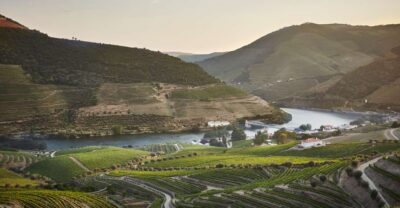
Jardim do Morro gives you a panoramic public park with pathways and greenery. It’s a calm pause, and it’s one of the simplest ways to get those wide Porto river photos without turning it into a hike.
Next is Mosteiro da Serra do Pilar, an Augustinian monastery on the Serra do Pilar elevation. The standout is the circular shapes of its church and cloister, highlighted as remarkable European classical architecture. The building began in 1538 but changed over centuries, so you get an evolving design rather than one single plan.
This monastery is also part of the UNESCO grouping that includes the historic center and the Luís I Bridge, which gives the stop more weight than a casual viewpoint.
Modern engineering detours: Arrábida Bridge and coastal fortresses
Not all Porto icons are medieval. The tour takes you through the Arrábida Bridge, designed by Edgar Cardoso and opened in 1963. It was once noted as the longest reinforced concrete bridge in the world, and it sits about 70 meters above the average water level. Bronze sculptures atop the pillars add a human artistic touch to the hard engineering.
Then it heads toward fortification highlights:
- Fortress São João Baptista, built in the late 16th century to protect the coast and the Douro entrance, with later additions in the 17th century and a gate from the 18th century.
- Castelo do Queijo (Fort São Francisco Xavier), built in the 17th century to protect from North African pirates, located on a rocky hill shaped like cheese.
These stops shift the mood from scenic to strategic. You start understanding why Porto’s coastline was treated like a gate, not a boundary.
Leixões, Serralves, Casa da Música, and the big civic statues
After the fort and fortress stretch, you may cover the modern edges of Porto’s identity.
You’ll reach the Leixões Cruise Terminal area, which has increased cruise operations, especially after the April 2011 pier opening that created two docking piers for larger ships. It’s a practical reminder that Porto is still growing, still bringing in visitors and commerce.
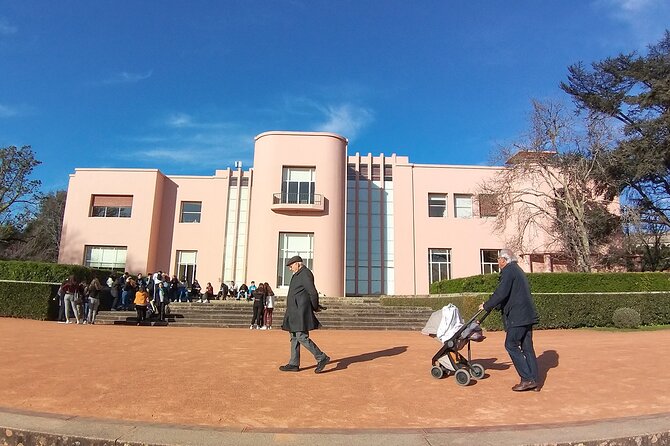
Then you’ll pass Parque de Serralves and the Serralves Foundation house from the 1930s, one of Europe’s best Art Deco examples. The park includes gardens designed by architect Jacques Greber and a mix of museum spaces and leisure facilities around Casa de Arte Deco and the contemporary art museum.
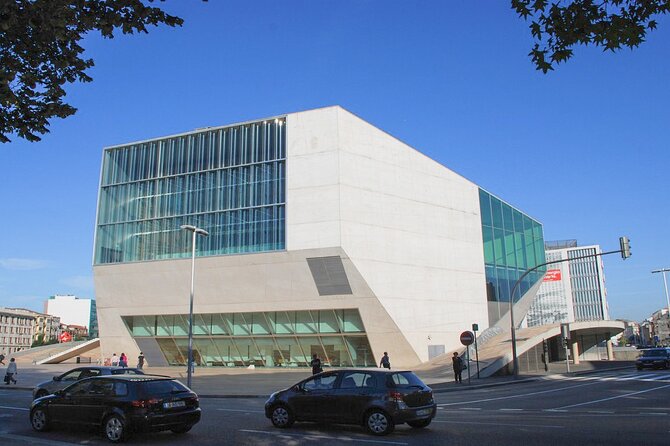
Also on the route is Casa da Música, Porto’s main concert hall in the Boavista area, opened in 2005 and designed by Rem Koolhaas. It’s a modern icon that contrasts nicely with the medieval and baroque stops earlier in the day.
Finally, you may end at Praça de Mouzinho de Albuquerque, dominated by the 45-meter Monument to the Heroes of the Peninsular War with an obelisk and sculptural groups showing Portuguese and English union (the lion) against French Napoleonic forces (the eagle). It’s a massive civic landmark that feels more like a statement than a square.
Optional add-ons: Douro sunset, Dona Antónia port tasting, and fado night
If you’re the type who wants one more anchor moment after the city tour, the add-ons listed are some of the most classic ways to extend Porto’s story.
Private Douro River Cruise (sunset)
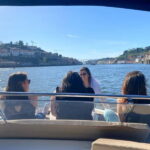
A sunset cruise option is listed as a private experience with a two-hour duration, with views over Porto and Vila Nova de Gaia, and attention to the city’s bridges and riverside neighborhoods. Pricing is listed in a private range (and another cruise add-on price appears per person), so check your final quote before you commit.
Dona Antónia port wine cellars
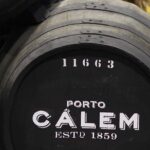
The Exclusive Dona Antónia add-on is listed at €32 per person, lasting about 1.5 hours with a tasting of five port wines. You’ll also walk through historic cellars and learn the story of Dona Antónia Adelaide Ferreira and how her vision shaped port wine and the Douro region.
Fado night with dinner (transport included)
The fado option includes a traditional dinner and fado night, listed at about €80 per person, with transport included, starting around 20:00 and lasting about 2.5 hours.
Fado show (with port wine)
There’s also a shorter 1-hour fado show option listed at €20–€26, offered daily at 18:00 and 19:30, and includes a port wine tasting.
If you’re deciding between them, I’d match it to your energy: cruise if you want scenery and calm, port tasting if you like food and drink stories, and fado if you want Porto culture at night.
Price and value: what $185.43 covers, and what to budget for
At $185.43 per person for about 4 hours, this is priced for a private experience with hotel pickup and luxury vehicle comfort. That price isn’t just “a driver.” It includes transport with Wi‑Fi, bottled water, refreshments, and insurance coverage for personal accident and civil liability.
The trade-off is that admissions aren’t included for several key stops. The most common extra ticket moments listed are:
- Lello Bookstore Gold Ticket: €16 per person (Priority + Book)
- Torre dos Clérigos skip-the-line option: €10 per person
- Stock Exchange Palace / Palácio da Bolsa guide fee: €14 per person
- São Francisco Church admission: €10 per person
- Dona Antónia port wine tasting: €32 per person
- Optional cruise, fado show, and fado dinner-night add-ons with separate pricing
If you want to maximize value, you don’t need to buy every add-on ticket. For many people, the big “worth it” extras are the inside access components: Lello, Clérigos, São Francisco, and Palácio da Bolsa. Skip those only if you’re mainly after exterior photos and street scenes.
Should you book this Porto tour?
Book it if:
- You want a guided, private highlights loop and you like architecture and city history.
- You’d rather pay for comfort and a plan than figure out routes across hills and the river.
- You’re visiting for the first time and want a map of Porto in one afternoon.
Skip it or adjust expectations if:
- You hate ticket planning and prefer to fully control each stop on your own.
- You’re hoping for deep time inside every monument. This tour moves fast by design, and several entrances cost extra.
- Weather is unstable. The experience is described as requiring good weather, with rescheduling or refund options if it’s canceled.
If you do book, my practical advice is to decide in advance what you want to enter: Lello, Clérigos, São Francisco, and Palácio da Bolsa are the main ones where the extra fees make the biggest difference in payoff. Then you can enjoy the rest as confident, guided sightseeing instead of rushed decision-making.
FAQ
FAQ
How long is the Porto private afternoon tour?
It’s listed as about 4 hours.
Do you get hotel pickup?
Yes, pickup is offered, and the start point is Avenida dos Aliados. You’ll confirm your pickup details when booking.
Is the tour private?
Yes. It’s described as private, with only your group participating.
What language is the tour offered in?
It’s offered in English.
Are tickets included for every attraction?
No. Some admissions are free, but several paid entrances are not included (such as Lello Gold Ticket, the Clérigos tower line-skip option, and other monument fees listed).
Does this tour require good weather?
Yes, good weather is required. If it’s canceled due to poor weather, you’re offered a different date or a full refund.
Are there optional activities available after or alongside the tour?
Yes. Optional add-ons are listed, including a Douro sunset cruise, a Dona Antónia port wine cellar tour, and fado night options (fado with dinner or a shorter fado show).