REVIEW · VILA NOVA DE GAIA
Port Wines & Chocolate Pairing
Book on GetYourGuide →Operated by Quevedo · Bookable on GetYourGuide
Port and chocolate, in just 40 minutes.
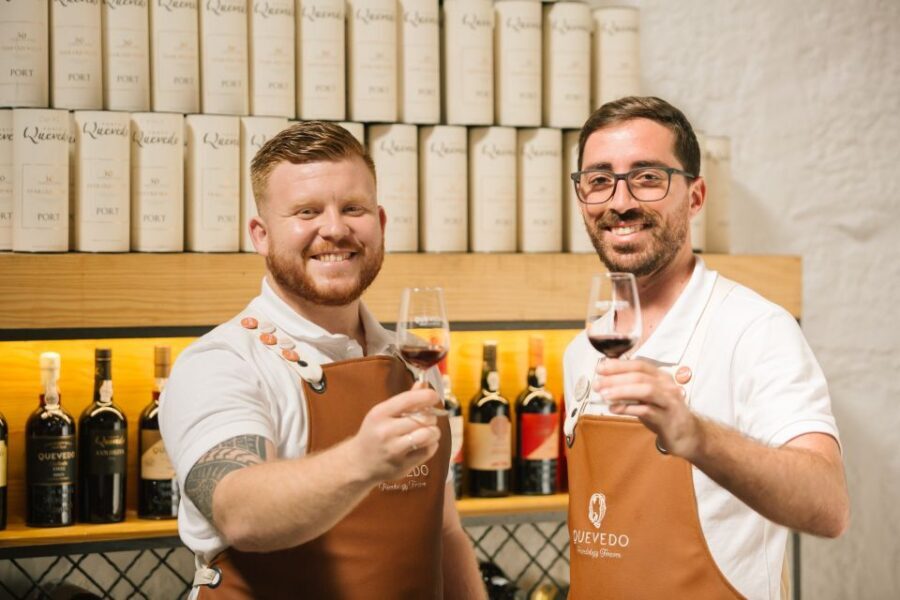
This is a friendly, small-group Port tasting built around pairing sweet bites with three iconic Quevedo styles, right in the heart of Vila Nova de Gaia. I like that the focus stays practical and sensory, not stuffy: you taste, you compare, and the staff explains what to look for.
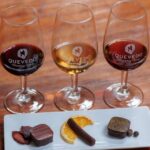
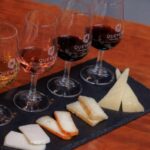
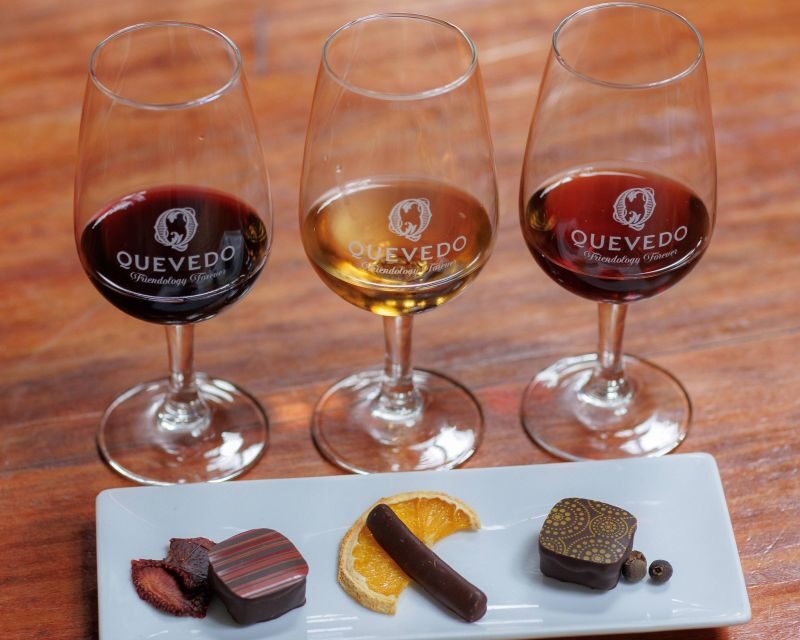
What I especially like is the exact pairing plan: Late Bottled Vintage with raspberry chocolate, 10 Year Old White Port with dark chocolate covered candied orange, and 20 Year Old Tawny Port with praline and pepper chocolate. One possible drawback to consider is that it is not a long stop—so if you want a bigger, multi-course food experience or extra pours, you’ll likely need to book something else.
In This Review
- Key points before you go
- Vila Nova de Gaia is the perfect setting for Port (and this tasting keeps it simple)
- Quevedo and the Douro Valley: why this house talks like a vineyard business
- The 40-minute flow: three Ports, three chocolates, one clear comparison
- Late Bottled Vintage (LBV) + raspberry chocolate
- 10 Year Old White Port + dark chocolate covered candied orange
- 20 Year Old Tawny Port + praline and pepper chocolate
- How pairing with Port teaches you what to taste (not just what to swallow)
- Chocolate matters here: bean-to-bar from Porto is part of the design
- Price and value: what $34 really buys you
- Who this Port and chocolate pairing suits best (and who should skip it)
- Getting there: where to meet and how to find the spot fast
- Should you book this Port and Chocolate Pairing?
- FAQ
- How long is the Port wines and chocolate pairing?
- What is included in the $34 per person price?
- Which Port wines and chocolates are paired together?
- Where is the meeting point?
- How big is the group?
- Is the activity wheelchair accessible?
- What languages are spoken during the experience?
- Who should not book this activity?
Key points before you go
- Three Quevedo Ports in one tasting: LBV, 10 Year Old White, and 20 Year Old Tawny
- Built-in chocolate pairings using Porto bean-to-bar sweets
- Small group size capped at 8, which keeps it relaxed and personal
- Family-run background: five generations of crafting Port, plus bottling under their own brand since 1993
- Meeting point is easy to spot in front of Santa Marinha Church, by the Bordalo II rabbit sculpture
- You’ll stay in a lodge setting in Vila Nova de Gaia while you taste
Vila Nova de Gaia is the perfect setting for Port (and this tasting keeps it simple)
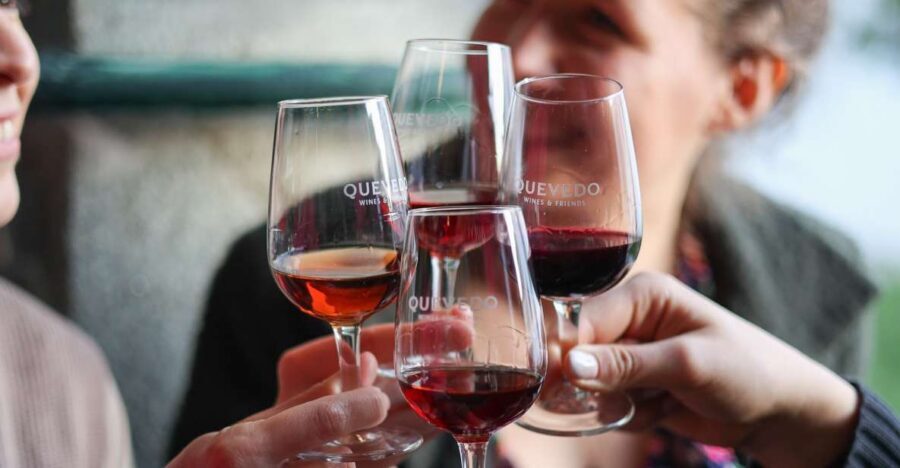
If Port is your thing, you’ll quickly learn that Vila Nova de Gaia is where a lot of the “Port world” feeling lives. The vibe is right for slow sips and a short guided lesson, and this experience leans into that without overcomplicating it.
The structure also helps you enjoy it. For $34 per person, you’re not paying for a “sit and listen” show. You’re paying for a tasting with three glasses and three matched chocolate pairings, plus staff guidance to make sense of the differences. That makes it a great choice when you want something authentic but time-smart.
You can also read our reviews of more wine tours in Vila Nova De Gaia


Quevedo and the Douro Valley: why this house talks like a vineyard business
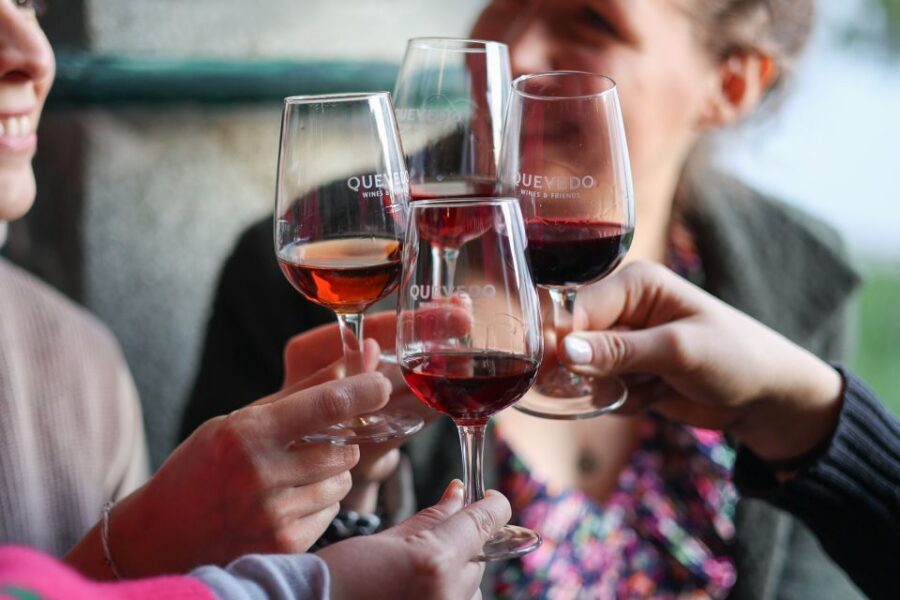
This is a small family-run operation tied to the Douro. What stood out in their story is how strongly they connect Port to the vineyard. They describe growing grapes with the idea that the vineyard is where real quality begins.
Here are the key points you’ll hear during the tasting:
- The business has crafted Port for five generations
- Because Portugal entered the EU in 1993, they were able to bottle wines under their own brand
- Their wines are raised, matured, and bottled in the Douro Valley
- They cultivate 100 hectares of vineyards and 25 hectares of organic olive groves across five Douro properties
Why this matters for you: Port can taste consistent when you know the house. Even if you’re new to Port, it’s useful to understand that you’re not just sampling random bottles—you’re tasting decisions made from grape origins and long-term cultivation. It also gives the pairing lesson more meaning, because the wine you’re tasting isn’t presented as a generic “sweet wine,” but as something with specific character.
And the group stays small. That tends to make conversations more natural, especially if you want clarification on why one Port style works better with a particular chocolate.
The 40-minute flow: three Ports, three chocolates, one clear comparison
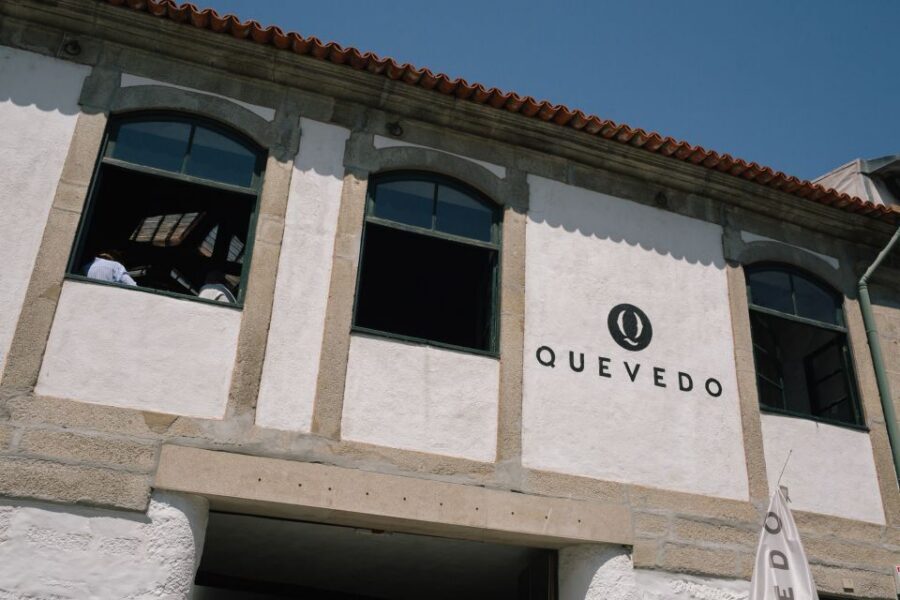
This is designed as a tight tasting. You’ll meet at the storefront area in front of Santa Marinha Church, and if you’re coming from the river side, you’ll pass the famous Bordalo II Rabbit sculpture on the way. When you arrive, you’ll check in with staff, who then direct you to your tasting spot.
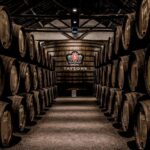
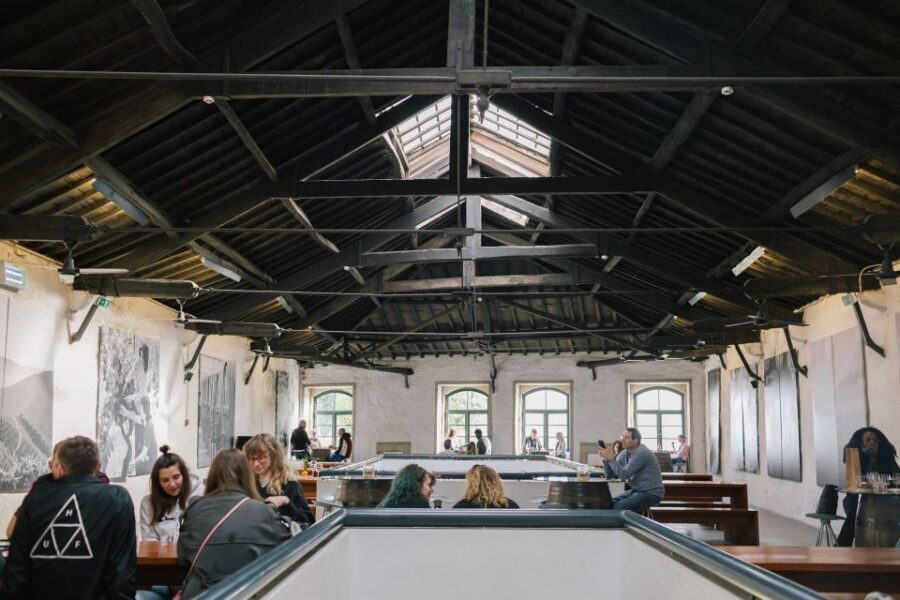
Then it’s off to the lodge in Vila Nova de Gaia, where you’ll settle in for about 40 minutes. With a small group (max 8), you get enough breathing room to smell and taste carefully instead of rushing.
Late Bottled Vintage (LBV) + raspberry chocolate
The first pairing is Late Bottled Vintage (LBV) with raspberry chocolate. LBV is often the Port style people choose when they want something that feels aged or developed without it being as long-range as the most mature bottles. In a pairing like this, raspberry makes sense because it brings fruit brightness that can mirror the wine’s berry tones while also giving your palate a sweet-tart contrast.
What to do as you taste: pay attention to whether the raspberry makes the wine seem more fruit-forward or more structured. Raspberry tends to highlight fresh fruit notes and can make the wine feel a bit more lively.
10 Year Old White Port + dark chocolate covered candied orange
Next comes 10 Year Old White Port paired with dark chocolate covered candied orange. White Port is different from the ruby styles most people start with, and the pairing gives you an easy way to notice it: candied orange adds aroma and a gentle bitterness, while dark chocolate adds depth without turning the sweetness into candy overload.
Practical tip: when you take a bite, let the orange aroma hit first, then sip. This sequence helps your palate register how the wine follows the citrus and how the chocolate’s cocoa changes the way the Port tastes.




20 Year Old Tawny Port + praline and pepper chocolate
Finally, you’ll try 20 Year Old Tawny Port with praline and pepper chocolate. Tawny is built on time and development, and it often reads as warm, caramel-like, and softly complex. That’s exactly what praline-style flavors tend to complement. The pepper chocolate is the curveball—and that’s the fun part, because a little heat or spice can shift how you perceive sweetness, making the wine feel more nuanced.
What to notice here: whether the pepper makes the Tawny feel smoother or more pronounced. Spice can bring out nutty and toasted notes in both wine and chocolate, and it can also reduce the “sticky” sensation that can happen with overly sweet pairings.
How pairing with Port teaches you what to taste (not just what to swallow)
If you’re new to Port, this tasting is a smart shortcut. The staff approach is designed to help you compare the three Port styles in a way that actually sticks—especially because each one is paired with a distinct flavor cue.
Think of each pairing as a “palate lens”:
- Raspberry helps you track fruit character and freshness
- Candied orange + dark cocoa helps you track aromatics and balance
- Praline + pepper helps you track aged warmth and spice complexity
And even if you’re not a wine nerd, you’ll get value from hearing why the staff talks about differences. In a small-group setting, you can ask basic questions without feeling like you need a wine vocabulary.
One review experience that matches this: a participant mentioned the tasting was very well explained and the differences were easy to pick up. That’s the whole point. Pairing isn’t just about matching flavors. It’s about training your brain to notice what changes from sip to sip.
Chocolate matters here: bean-to-bar from Porto is part of the design
Port tastings can get boring when the chocolate is an afterthought. Here, the sweets are described as bean-to-bar chocolates made in Porto, and that detail isn’t just marketing fluff—it affects how consistent and nuanced the chocolate tastes.
Bean-to-bar chocolate often lets you taste more clearly:
- cocoa character (not just sweetness)
- how the filling or flavoring behaves
- whether fruit notes taste natural or artificial
You’ll feel that as you move through the three pairings, because each chocolate type is built to match a different Port style’s personality. If you enjoy eating your way through tastings, you’ll likely appreciate how intentional the pairing choices are.
Also, the fact that chocolate is included in the same price you pay for the wine makes it harder for your budget to spiral. You get the full pairing set without having to decide on extras midway.
Price and value: what $34 really buys you
At $34 per person, this can be a good deal because the package is specific:
- 3 glasses of Quevedo Port (LBV, 10 Year Old White, 20 Year Old Tawny)
- 3 bean-to-bar chocolate pairings made in Porto
- Guided explanation from the staff during the tasting
- A tight 40-minute experience that fits into a normal Porto-to-Gaia day
What is not included matters too: additional wines and snacks cost extra. So if you’re the type who wants to keep ordering after the flight, you’ll want to plan for that. But if your goal is a clean intro (or a fun refresher) with pairing lessons, this package is exactly the structure you’re looking for.
In other words: you’re not paying for time in a venue. You’re paying for a guided, curated tasting that already includes the key “why” and “how.”
Who this Port and chocolate pairing suits best (and who should skip it)
This works best if you:
- want a small-group tasting without crowds
- like learning the differences between Port styles through food pairing
- enjoy sweet-and-wine experiences that feel thoughtful, not thrown together
- are short on time and want something that lasts about 40 minutes
It’s also a nice option for people who aren’t deep into wine yet. The staff help you identify differences by taste and pairing logic, which makes it approachable.
Who it’s not for:
- pregnant women
- children under 18
One extra note from real-world experience patterns: because group size is capped at 8, the vibe can feel more exclusive even when you’re not booking a separate private session. One booking described it as private and exclusive, which usually happens when the group stays small.
Getting there: where to meet and how to find the spot fast
Your meeting point is right in front of Santa Marinha Church. If you’re approaching from the river, walk past the Bordalo II Rabbit sculpture. Once you spot the church front, you’re in the right zone.
When you arrive, don’t try to wander. Speak to staff, and they’ll direct you to where the tasting happens. That quick step saves time and helps you settle in without searching.
Should you book this Port and Chocolate Pairing?
I’d book it if you want a smart, low-pressure way to experience Quevedo Port with real guidance and actual food pairing. The combination of three distinct Port styles and three specific chocolates is the value driver here. At $34, you’re getting a complete tasting set rather than paying for wine while hoping the food matches.
Skip it if you’re hunting for a long meal, lots of extra pours, or a big museum-style session. This is built to be short, focused, and palate-led.
If Port is on your “maybe” list, this is a good place to start. The pairing gives you a handle on what to taste, not just what to drink.
FAQ
How long is the Port wines and chocolate pairing?
The tasting lasts about 40 minutes.
What is included in the $34 per person price?
It includes a tasting with 3 glasses of Quevedo Port wines paired with bean-to-bar chocolates made in Porto.
Which Port wines and chocolates are paired together?
Late Bottled Vintage is paired with raspberry chocolate. 10 Year Old White Port is paired with dark chocolate covered candied orange. 20 Year Old Tawny Port is paired with praline and pepper chocolate.
Where is the meeting point?
The meeting point is right in front of Santa Marinha Church. If you’re coming from the river, walk past the Bordalo II Rabbit sculpture and you’ll find it.
How big is the group?
It’s a small group limited to 8 participants.
Is the activity wheelchair accessible?
Yes, it is wheelchair accessible.
What languages are spoken during the experience?
The host or greeter speaks Portuguese, English, and Spanish.
Who should not book this activity?
It is not suitable for pregnant women and children under 18 years old.