REVIEW · PORTO
Historic Guided Tour – Electric Bike (Half day)
Book on Viator →Operated by NORTHROAD - RENTALS & TOURS · Bookable on Viator
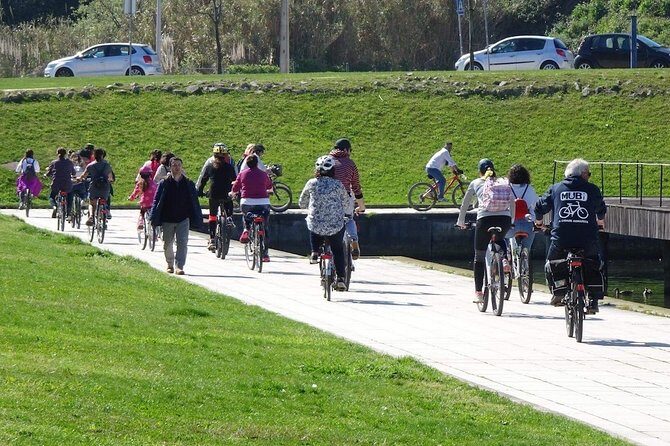
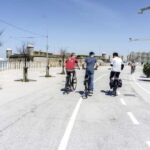
Porto changes fast when you stop walking uphill. This historic e-bike tour is built for moving through the city in a few efficient hours, mixing major landmarks with big-city views along the river. I especially liked how the electric bike makes the hills feel manageable and how the guide, Miguel, connects what you see (like Sao Bento’s tiles) to what Porto has been.
One thing to plan for: you do need some basic bike handling on paved streets, and a few of the biggest stops (like Clerigos, Lello, Casa da Musica, and Palacio da Bolsa) aren’t included if you want to go inside.
In This Review
- Key highlights you’ll care about
- Porto on a Half-Day Electric Bike: the Smart Way to See More
- The Group, the Bike, and the Timing that Matter
- How to Think About the Price and What You Actually Get
- Stop-by-Stop: What You’ll See (and What to Watch For)
- Porto Cathedral: a straightforward start in the historic heart
- Praca da Batalha: squares that connect big landmarks
- Cafe Majestic: beauty you can experience without a ticket
- Sao Bento Railway Station: the tile panels that make Porto instantly recognizable
- Torre dos Clérigos: an icon worth adding time for
- Livraria Lello: the stairs, the hype, and the real-world logistics
- Casa da Musica: modern Porto with a real architectural voice
- The largest urban park and the city’s green rhythm
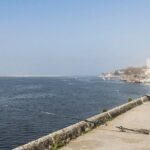
- The seafront promenade: terraces, bars, and gardens by the sea
- Ponte da Arrabida: a famous bridge with engineering bragging rights
- Palacio da Bolsa: stop at a grand exterior, choose what you want inside
- What I’d Do Differently If It’s Your First Day in Porto
- Tour Value for Different Types of Travelers
- Booking Tips and Practical Notes That Save Time
- Should You Book This Electric Bike Tour?
- FAQ
- How long is the Porto Historic Guided Tour with an electric bike?
- Where do we meet for the tour?
- What is the group size limit?
- What language is the tour offered in?
- Is the tour ticket mobile?
- Are admissions included for all stops?
- What’s the price for this tour?
- What is the cancellation policy?
- When will I get confirmation after booking?
Key highlights you’ll care about
- A tight half-day route that links old center sights to sea and river viewpoints
- Miguel’s storytelling that keeps the stops from feeling like a checklist
- Electric assist that helps you keep a steady pace without feeling wrecked
- Photo-first timing at each stop (great for orientation, less time for long visits)
- Not-included entry spots where you may want to add tickets if you’re keen
Porto on a Half-Day Electric Bike: the Smart Way to See More
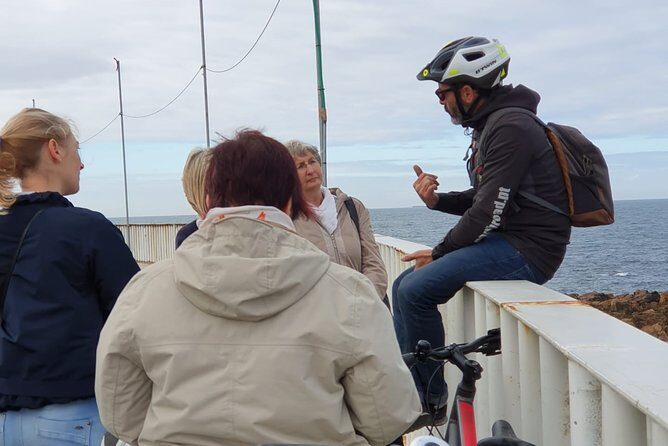
If your Porto plan is short, this is the kind of tour that helps you get your bearings fast. You’re not just riding in a straight line to one monument. You’re tracing the way the city is layered: old churches and squares in the center, famous architecture that begs for a close look, then a shift toward modern Porto with waterfront energy.
An electric bike changes the vibe. Instead of thinking about stairs, steep streets, and long backtracking, you can focus on angles, details, and street scenes. One of the best pieces of advice for this tour is simple: treat it as a city orientation plus highlights sampler. If you do that, the time at each stop feels exactly right.
The guide matters here. With Miguel, the tour doesn’t turn into a rapid-fire script. He explains enough to make the landmark make sense, then gives you room to look. In the small-group setting (maximum of 10 travelers), you also tend to get questions answered instead of being swept along.
You can also read our reviews of more cycling tours in Porto


The Group, the Bike, and the Timing that Matter
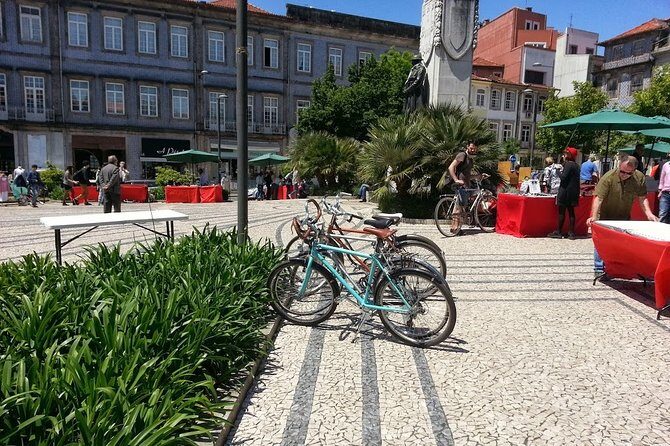
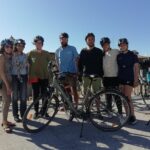
This tour is listed for about 4 hours, and it’s offered in English. It runs with a small group, and you’ll use a mobile ticket. There’s a meeting point at Rua de Camões 703 (near public transportation), and the tour ends back there.
The route is designed to cover a lot of ground without turning the ride into a fitness test. One review mentioned around 24 km across streets and beaches, and another mentioned 22 km in roughly 2.5 hours. That spread tells you something important: pace can vary with the group, but the idea is consistent—movement plus meaningful stops.
Here’s your practical consideration. The e-bike helps, but you’re still riding on paved streets and mixed traffic zones. If you’re not comfortable on a bike in the city, practice might be worth it before you arrive. The good news: you’re not doing a technical mountain ride. The challenge is urban balance and awareness.
How to Think About the Price and What You Actually Get
The price is $66.70 per group (up to 1) for about four hours. Since some key buildings have separate admission (not included), the best way to judge value is by what the tour does for you: it bundles planning, pacing, and a guided route that gets you from the historic core to iconic city landmarks efficiently.
Several stops list free admission, including Porto Cathedral, Praca da Batalha areas, Cafe Majestic as a viewing stop, Sao Bento Railway Station, and Ponte da Arrabida. Other major stops are not included for ticketed entry—Torre dos Clérigos, Livraria Lello, Casa da Musica, and Palacio da Bolsa. So you’re paying for the guide, the route, and the experience of seeing the sights in the right order, with the option to add admissions if you want.
If you’re the type who likes to prioritize first impressions, this can be great value. If you want long timed-entry visits at multiple museums, you may end up wanting a second trip on a different day.
Stop-by-Stop: What You’ll See (and What to Watch For)
Porto Cathedral: a straightforward start in the historic heart
You begin at Catedral do Porto, in the center of the old city. It’s one of the main, oldest monuments in Portugal. Even if you don’t go deep inside, this is a good launch point because you immediately understand the geography of the historic core.
What I like about starting here: it sets the tone. Porto’s story isn’t only ships and port warehouses. It’s also religious architecture and old neighborhoods that still shape how the city feels.
You can also read our reviews of more guided tours in Porto




Praca da Batalha: squares that connect big landmarks
Next is Praca da Batalha, a square tied to one of the city’s older entrances. In a short stop, you get a view toward key names: National Theater São João, Igreja de Santo Ildefonso, and Palácio da Batalha.
This stop is a good reminder that Porto is about proximity. Buildings aren’t isolated attractions here; they’re part of a compact urban scene. If you’re the kind of traveler who loves city layers, you’ll enjoy how the guide helps you spot relationships between streets and facades.
Cafe Majestic: beauty you can experience without a ticket
Then it’s Cafe Majestic, known for its belle-époque and art nouveau atmosphere. It’s often described as one of the most beautiful cafes in the world, and even if you only have a brief look, the design speaks immediately.
Here’s the practical play: treat this as a moment to slow down your eyes. Look up. Pay attention to ornamentation and how the space feels. You can decide later whether you want coffee as a follow-up.
Sao Bento Railway Station: the tile panels that make Porto instantly recognizable
After that, you reach São Bento Railway Station. The station building is tied to Portuguese architect José Marques da Silva. What you’re really here for, though, are the famous tile panels.
This is one of those stops where a short viewing window can still feel satisfying, because the artwork fills your vision. I recommend taking a little time to scan rather than snapping one photo and moving on. The tiles reward curiosity.
Torre dos Clérigos: an icon worth adding time for
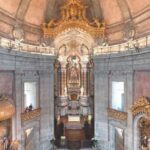
Next comes Torre dos Clérigos, the church and tower complex associated with the 18th century and designed by Nicolau Nasoni. This is a not-included admission stop if you want to enter.
Even if you keep it to the exterior, the tower is one of Porto’s most iconic symbols. If you think you might want to go up or see inside, consider whether you want to add tickets on the spot. The timing on this kind of half-day ride is tight, so decide early in your energy level.
Livraria Lello: the stairs, the hype, and the real-world logistics
Then you reach Livraria Lello. It’s recognized for historical and artistic value, and it’s often linked to inspiration for magical stairs in the Harry Potter films. This stop is not included for admission.
I’ll be straight with you: this is one of the places where demand can be high, and your time on the bike is limited. If entry matters to you, plan to treat it as a separate priority for another day—or be ready to decide quickly here.
What I do like about the visit as part of the tour: it gives you the context of where it sits in the city, so even if you only look from the outside, you’ll understand why people care.
Casa da Musica: modern Porto with a real architectural voice
After Lello, you pass by Casa da Musica, designed by Dutch architect Rem Koolhaas. It’s described as one of the main concert halls in the city, and it’s another not-included ticket stop.
This contrast is part of the value. Porto isn’t only old stone. It also has a clear modern identity, and this building is a strong marker of that shift.
The largest urban park and the city’s green rhythm
The route then moves into the area described as the country’s largest urban park, spanning 83 hectares with about 10 km of paths. It’s described as a landscape design with lakes and varied flora and fauna, integrated into the city.
This is a mental breather. Even if you aren’t going on a long walk, it breaks up the monument density. Think of it as where the tour adds air between the big sights.
The seafront promenade: terraces, bars, and gardens by the sea
Next is the seafront promenade, described as a refined area with terraces, bars, and gardens along the sea. This portion helps you feel Porto’s coastline without turning the day into a beach vacation.
I like that it’s placed later in the tour. By then, you’ve already seen the city center landmarks, so the sea feels like a reward instead of a distraction.
Ponte da Arrabida: a famous bridge with engineering bragging rights
Then you reach Ponte da Arrabida, the road bridge connecting Porto and Vila Nova de Gaia. It was built in 1963, and at the time of construction it had the largest reinforced concrete arch in the world.
This is a great photo stop, but also a satisfying moment for people who like practical facts. It’s not just a pretty view; it’s an engineering milestone.
Palacio da Bolsa: stop at a grand exterior, choose what you want inside
Finally, you arrive at Palacio da Bolsa, a neoclassical building that began construction on October 6, 1842. This is another not-included admission stop.
If you only want to see the outside, this works well as a final “big name” before you head back. If you want interior access, plan on adding tickets or fitting it into another day, because the bike tour time window is limited.
What I’d Do Differently If It’s Your First Day in Porto
If you’re arriving in Porto and you want a first-day win, this is a strong option. It helps you understand where things sit, how neighborhoods connect, and which landmarks you’ll want to see again when you have more time.
Two decisions make the biggest difference:
- Decide your entry priorities early. Clerigos, Lello, Casa da Musica, and Palacio da Bolsa aren’t included. If you know you want at least one of these inside, you can plan your follow-up day around your preferences.
- Bring realistic expectations. The stops are short. That’s what keeps the ride powerful. It’s not designed to be a half-day museum crawl.
Also, you’ll likely find that the e-bike changes the way you walk afterward. Instead of feeling like you already exhausted your legs, you may feel ready to explore on foot with better context.
Tour Value for Different Types of Travelers
This tour fits best if you want:
- A guided route with structure but not a long day
- City highlights without wrestling with steep walking segments
- A small-group feel with room for questions and photo stops
It might be less ideal if:
- You want lots of time inside ticketed attractions
- You don’t feel comfortable riding in urban streets
- You prefer very slow travel with long stops at each site
That said, many people can participate, and the electric assist helps reduce physical strain. The biggest non-negotiable is bike comfort.
Booking Tips and Practical Notes That Save Time
- Arrive a bit early at Rua de Camões 703 so you can get settled before the ride.
- Wear clothes you can move in comfortably and shoes that grip well.
- Bring a camera or phone with enough storage for tile details, tower views, and waterfront shots.
- Use the stops to decide what you want to revisit. The best souvenir from this tour is not only photos—it’s knowing what’s worth extra time later.
If you need flexibility, you can cancel for free up to 24 hours before the start time. That’s useful if your schedule is still changing.
Should You Book This Electric Bike Tour?
I’d recommend booking this if you want a smart first-pass at Porto and you’re open to short, meaningful stops rather than long indoor visits. The route is efficient, the guide experience (especially Miguel’s explanations) can turn landmarks into something you understand, and the electric bike makes the whole city feel more reachable in half a day.
You might skip it if you already know Porto well, want a deep dive into only one attraction, or you’re not comfortable riding on city streets. For most first-timers, though, this hits a sweet spot: big sights, real context, and manageable effort.
FAQ
How long is the Porto Historic Guided Tour with an electric bike?
The tour lasts about 4 hours (approx.).
Where do we meet for the tour?
The meeting point is Rua de Camões 703, 4000-142 Porto, Portugal.
What is the group size limit?
The tour has a maximum of 10 travelers.
What language is the tour offered in?
The tour is offered in English.
Is the tour ticket mobile?
Yes, you receive a mobile ticket.
Are admissions included for all stops?
No. Several stops are listed as free (like Porto Cathedral, Sao Bento Railway Station, and Ponte da Arrabida). Other stops are not included (including Torre dos Clérigos, Livraria Lello, Casa da Musica, and Palacio da Bolsa).
What’s the price for this tour?
The price is $66.70 per group (up to 1).
What is the cancellation policy?
You can cancel for free up to 24 hours before the experience starts for a full refund.
When will I get confirmation after booking?
Confirmation is received within 48 hours of booking, subject to availability.