REVIEW · COIMBRA
Roman Ruins of Conímbriga, Penela Castle and Buracas do Casmilo
Book on Viator →Operated by Aventuras Forte(s) - Turismo de Natureza · Bookable on Viator
Roman mosaics and mountain caves in one day. This private tour strings together the Roman world at Conímbriga, medieval forts on the Penela and Germanelo side, and the dramatic karst caves at Buracas do Casmilo. I love how the guide makes the ruins feel like lived-in places, and the quality mosaics at Conímbriga are genuinely memorable. I also like the built-in break for coffee/tea, local wine and regional products. One heads-up: lunch isn’t included, so you’ll want to plan your eating time around the stop schedule.
You’ll start at 9:30 am with pickup anywhere in the Coimbra region, typically from your hotel or another city address. Expect a full day of stops with admission fees handled (and tickets included where they’re charged), plus a guide in English. If weather turns ugly, the plan can adjust, and the team’s also flexible about getting you good local options—when I’m reading about the experience, the names Sergio and Fatima come up for their clear explanations and friendly pace.
In This Review
- Key highlights
- Why this Conímbriga–Penela–Casmilo day makes sense
- Start in Coimbra: pickup, timing, and how the day flows
- Conímbriga Ruins: mosaics, daily life, and a site with a clear route
- Museu Monográfico de Conímbriga: why the small pieces change everything
- Penela Castle: a fortress on the Mondego defensive line
- Buracas do Casmilo: karst caves and the drama of erosion
- Castelo de Germanelo: ruins with a sense of place
- Getting your taste of the region: coffee, wine, and regional products
- Transportation: private ride, mountain roads, and photos to prove it
- Price and value: what $154.88 buys you
- What to expect from the pace and walking
- Who should book this tour (and who might skip it)
- Should you book? My quick call
- FAQ
- What time does the tour start?
- Do you pick up from my hotel in Coimbra?
- How long is the tour?
- Are entrance tickets included?
- Is lunch included?
- Is this a private tour?
- What language is the tour offered in?
- Is the tour dependent on weather?
- Are service animals allowed?
Key highlights
- Conímbriga Ruins + the Monographic Museum for both the big set pieces and the smaller finds
- Guides who explain in plain English (Sergio and Fatima are specifically mentioned by past visitors)
- Penela and Germanelo castles that connect military strategy with real views
- Buracas do Casmilo to see a geological event shaped by erosion and cave roof collapse
- Coffee/tea, wine tasting, and regional products, plus photos of the tour included
Why this Conímbriga–Penela–Casmilo day makes sense
This is the kind of tour that saves you from the usual Portugal problem: too much driving, too little context. You get a tight route that hits three different time periods without the day feeling random. You start with one of Portugal’s most important Roman sites, then shift to medieval defense, then finish with a natural site that looks like the ground is still doing the work.
The best part is how the stops connect. Conímbriga isn’t just a pile of old stones; the mosaics and the carefully presented finds help you understand how organized Roman life could be. Then Penela and Germanelo add the human scale—people choosing high points for control and visibility. Finally, Buracas do Casmilo brings you back to the forces of erosion and collapse, which is a nice contrast after centuries of human building.
You can also read our reviews of more tours and experiences in Coimbra.


Start in Coimbra: pickup, timing, and how the day flows
Tours like this live or die by timing, and this one is structured for a 7-hour day. Pickup starts around 9:30 am, and the operator offers transfers in the Coimbra region. You can usually get picked up at your hotel in Coimbra or another address inside the city area.
Because it’s a private tour, you’re not waiting behind other groups. Your vehicle is just for your party, so the pacing is easier to manage—especially when the guide is spending real time explaining details at the Roman ruins or adjusting the plan due to weather.
You should also note the “readiness” side of the schedule:
- Some stops are around 30 minutes.
- A couple of bigger stops are longer (two hours for Conímbriga).
- There’s no lunch included, so the day is built around shorter breaks and tastings rather than a sit-down meal as a guaranteed part of the program.
The upside: you can see more without spending hours coordinating on your own. The tradeoff: you’ll want to be okay with a day that’s active and time-focused.
Conímbriga Ruins: mosaics, daily life, and a site with a clear route
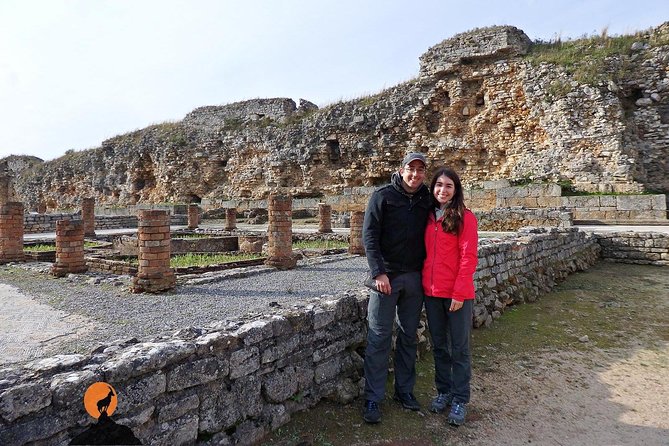
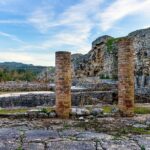
Conímbriga is the star stop, and it earns the attention. The ruins are tied to important Roman records in Portugal, but what I’d focus on first is the mosaic quality. These floors aren’t just decoration—they’re the kind of visual “branding” that hints at wealth, taste, and daily routine.
When you arrive, you’ll be there long enough—about two hours—to actually take it in. That matters. If you rush Conímbriga, you end up reading the outlines and missing the storytelling. With the time built in here, you can pause on the mosaics and then connect them to what the guide points out about the site.
One practical tip: wear comfortable shoes. Roman sites can be uneven and you’ll likely be walking a fair amount even with a guided plan. Also, plan on bringing your attention, not just your camera—because the value is in understanding what you’re seeing, not in collecting quick photos.
Museu Monográfico de Conímbriga: why the small pieces change everything
After the ruins, you move to the Museu Monográfico de Conímbriga. This stop is only about one hour, but it’s one of the smartest add-ons in the whole day.
Here’s why: museums like this help you put the site back together. At Conímbriga, you see walls, floors, and the layout. In the museum, you get to observe smaller Roman remains that came from the excavation sites. That shift—from the big visual impressions to the objects and fragments—helps you understand how archaeology works. It’s how you go from a dramatic ruin to evidence of real routine: parts of tools, everyday material culture, and other details that don’t make it into a quick stop photo.
If you like archaeology that explains cause-and-effect, this museum hour is where the logic clicks. You’ll also get a smoother “brain reset” before heading to Penela.
Penela Castle: a fortress on the Mondego defensive line
Next up is Castelo de Penela, a stop that’s shorter—about 30 minutes—but with a strong reason for existing. It’s described as one of the first castles in Portugal and an important strategic point on the Mondego defensive line.
Even in a half-hour, a good guide can do a lot here because castles are basically built for reading. You look for sight lines, the sense of control, and the way the structure supports defense. If you’re paying attention, Penela helps you understand why people chose elevation and what “strategy” meant before modern maps.
The drawback of a short castle stop is that you won’t get a long, slow stroll. It’s a quick hit designed to keep the day moving, not a replacement for a full castle visit with museum time.



Buracas do Casmilo: karst caves and the drama of erosion
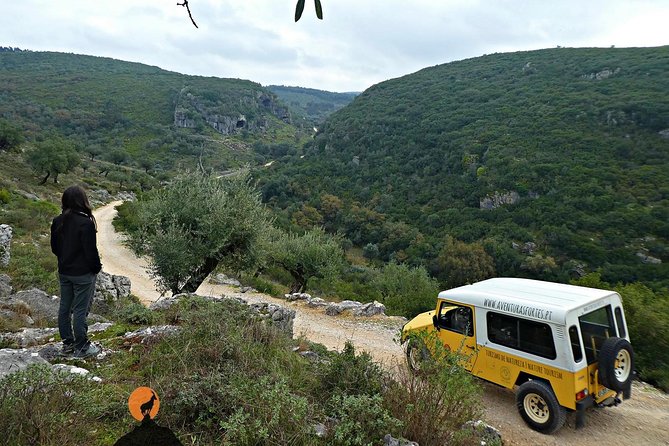
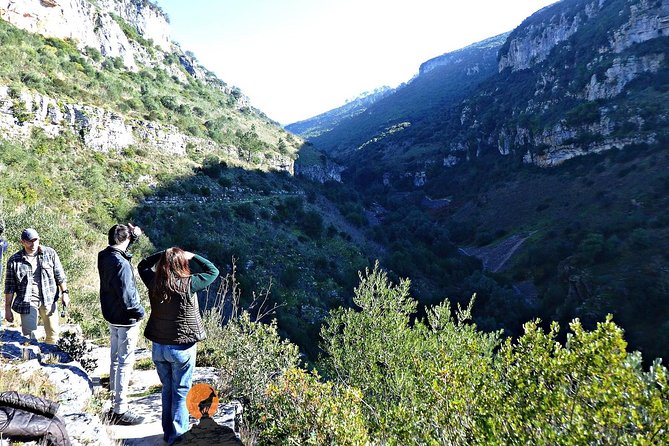
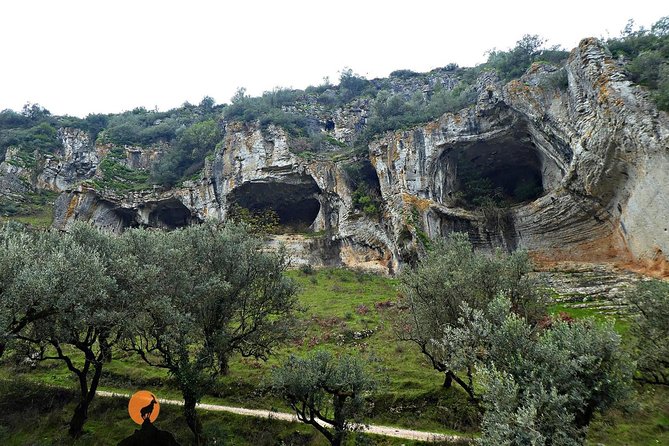
Now for the natural-world highlight: Buracas do Casmilo. This stop is around 30 minutes and the focus is very specific. It’s an impressive geological event tied to erosion and the fall of part of the roof of karst caves.
Translation: you’re not just looking at a scenic spot. You’re seeing the result of physical processes over time. Karst terrain can create caves and voids, and when a section collapses, it changes the space instantly—visually, the land looks “broken open.” That makes it a great contrast to the Roman and medieval stops.
The other big win is the setting. The views over the countryside are part of why the place feels memorable, and the short time keeps it from turning into a long hike you didn’t plan for. It’s a quick, powerful stop in between forts.
Castelo de Germanelo: ruins with a sense of place
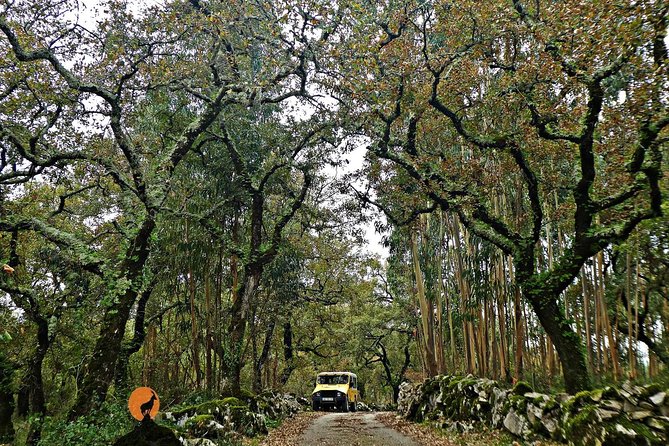
After Buracas, you head to Castelo de Germanelo, also about 30 minutes. What matters most here is less about inside-the-fort details (since you’re mostly seeing remains) and more about the surroundings.
This is the stop for the “pause and look around” moment. You get to connect the fort’s purpose with the actual area around it. A half-hour is enough to get your bearings and enjoy the view if the weather cooperates.
If it’s cold or rainy, you may find yourself moving a bit faster than planned. That’s where the guide’s flexibility can help—especially since the tour has a weather requirement.
Getting your taste of the region: coffee, wine, and regional products
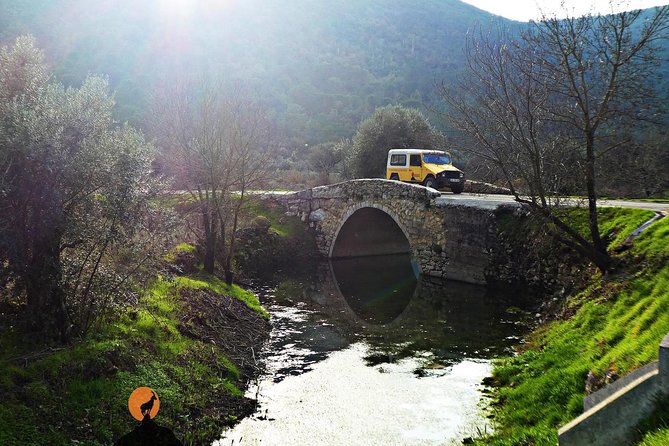
One of the quietly great parts of this tour is that it isn’t just monuments. It includes a break with coffee and/or tea, a wine tasting, and regional products. This is a real value add because it keeps you from hunting for food during a structured day.
Also, because lunch isn’t included, this tasting stop helps cover the “fuel problem” that can otherwise wreck your energy. You may still want to eat a real meal later, but having something in the middle of the route prevents that late-afternoon crash.
In at least one example from past experiences, the guides even help set up dining plans when outdoor eating isn’t practical. The key point for you: these are not tours where you’re abandoned at the roadside. You’ll get local guidance, and the tastings help you feel like you’re in Portugal—not just driving past it.
Transportation: private ride, mountain roads, and photos to prove it
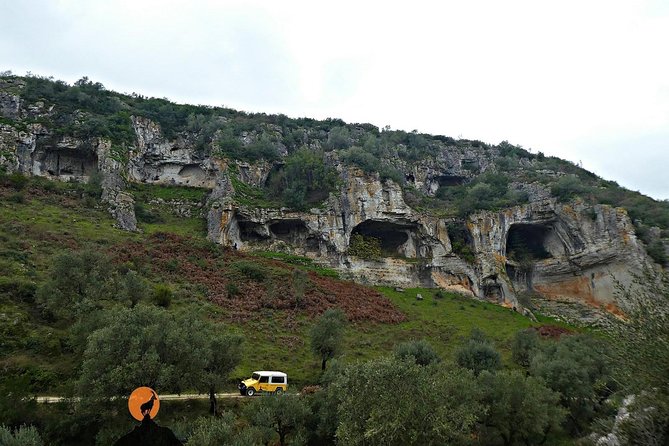
You’ll travel by private transportation, which is a big deal when you’re combining ruins, castles, and cave viewpoints in one day. The route includes country roads, and at least one past guest specifically noted the team’s confidence with the mountain driving in a 4×4 vehicle.
That’s not a small detail. Comfort and safety affect how much you enjoy the stops. If you’re nervous in sharp curves, you’ll arrive tired and cranky. With careful driving, you can focus on what you came for.
Two more practical inclusions:
- Photos of the tour are included. This helps when you want mosaic close-ups or a good group shot without chasing the perfect angle.
- Personal Accident and Liability Insurance is included, which is reassuring for a day with walking and uneven terrain.
Price and value: what $154.88 buys you
At $154.88 per person, the question isn’t just the price—it’s what’s included that you’d otherwise pay for.
Here’s the value math in plain terms:
- You get pickup in the Coimbra region and private transportation
- You get a guide in English with admission handling
- You get entry tickets included for the charged sites: Conímbriga Ruins, Museu Monográfico, and Castelo de Penela
- You get the tasting break: coffee/tea, wine tasting, and regional products
- You also get photos and insurance
What’s not included is just as important: lunch. Since you’re paying for structured access and guidance, skipping lunch isn’t surprising, but you do need a plan.
If you’re traveling as a couple or a small group, the private format is often the sweet spot. If you’re a solo traveler, you might still find this worth it because the pickup and guided explanations reduce the friction of stitching together sites on your own.
What to expect from the pace and walking
Overall, the day is designed as a “see and understand” route, not a hiking day. Most stops are short, with the Roman ruins being the longer segment.
Still, you should come ready for:
- walking around the ruins (easy to moderate, but still active)
- looking closely at mosaics and remains
- moving between sites without long gaps for sightseeing on your own
And because the tour needs good weather, you should also be prepared for potential timing adjustments. If the forecast is gray, it’s smart to keep your expectations flexible.
Who should book this tour (and who might skip it)
This tour is a great fit if you:
- want a guided day tying together Roman + medieval + geology
- appreciate context more than free-form wandering
- would rather pay for convenience than coordinate multiple transport legs
- like tastings and local food moments as part of sightseeing
You might skip it if:
- you want a full sit-down lunch as part of the plan
- you dislike day tours with a fixed schedule and short stops
- you’re hoping for long museum time beyond the monographic museum’s one-hour window
Should you book? My quick call
If you’re in Coimbra and you want one strong day that covers a lot without turning chaotic, this is an easy yes. The Conímbriga mosaics plus the museum’s smaller finds give you the best Roman payoff. Then Penela and Germanelo add the human story of defense and visibility, and Buracas do Casmilo gives you a physics-of-the-earth moment to change the pace.
Book it if you can walk comfortably for a day and you’re okay bringing your own lunch plan. If the weather looks shaky, watch forecasts and be ready for schedule adjustments. When everything lines up, you’ll leave with three different types of “wow”—art, engineering, and geology.
FAQ
What time does the tour start?
The tour starts at 9:30 am.
Do you pick up from my hotel in Coimbra?
Yes. Pickup is offered in the Coimbra region, and it can be done from your hotel in Coimbra or another place in the city.
How long is the tour?
It runs for about 7 hours.
Are entrance tickets included?
Yes. Entrance fees are included for all monuments on the tour. Tickets are included for Conímbriga Ruins and the Monographic Museum, and for Castelo de Penela. Buracas do Casmilo and Castelo de Germanelo are listed as free.
Is lunch included?
No. Lunch is not included.
Is this a private tour?
Yes. It’s private, so only your group participates.
What language is the tour offered in?
The tour is offered in English.
Is the tour dependent on weather?
Yes. It requires good weather. If it’s canceled due to poor weather, you’ll be offered a different date or a full refund.
Are service animals allowed?
Yes, service animals are allowed.