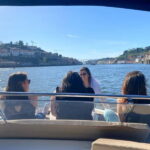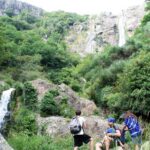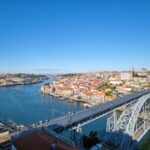
Porto goes from you-came-here to you-know-it fast. A full-day private tuk-tuk ride is a fun, practical way to see the city without doing the stop-and-slog shuffle from crowded bus tours. I like the way the day is paced so you actually get moments to look, not just photos-at-speed. I also like the food-and-wine mix: a regional tasting lunch with local wines makes the tour feel like more than sightseeing. One thing to consider: the tuk-tuk can feel tight, and cobblestones plus rain can make comfort a little tricky.
This is the kind of tour where your guide matters. In past groups, people raved about guides like Gabby, Gonçalo, Fabio, and Leonardo for staying flexible, keeping things friendly, and sharing real Porto details instead of just reciting facts. You’ll also get live commentary as you go, which helps you connect the dots between neighborhoods, churches, and viewpoints.
You’re covering a lot of ground in about 8 hours, including iconic spots and several architectural classics with short, focused stops. Expect some ticketed entrances along the way (like Livraria Lello and the Torre dos Clérigos), so bring patience for a day that mixes quick looks with a few paid-entry moments.
In This Review
- Key things that make this Porto tuk-tuk day worth it
- Why a private tuk-tuk day makes sense in Porto
- Price and value: what you’re paying for at $166.99
- The ride logistics you should plan for (tight seating and weather)
- Stop-by-stop: your 8-hour Porto route that mixes old, holy, and scenic
- Teatro Nacional São João: a theatre façade with a backstory
- Porto Cathedral area: Romanesque roots plus later makeovers
- São Bento Railway Station: Porto’s story told in 20,000 tiles
- Igreja do Carmo: Rococo church details and 18th-century tile work
- Antiga Cadeia da Relação: old prison, new photographic center
- Fonte dos Leões: a small stop with a surprising international link
- Livraria Lello: ornate Art Nouveau outside, theatre-level atmosphere inside
- Cordoaria Garden (Jardim de João Chagas): a breather between churches
- Igreja de São Francisco: Porto’s church of gold (and catacombs)
- Palácio de Cristal gardens: views with lawns and fountains
- Jardim do Infante Dom Henrique: navigation faith in a small square
- Torre dos Clérigos and the cathedral-to-city skyline vibe
- Dom Luís I Bridge: forged iron and two levels of Porto
- Mosteiro da Serra do Pilar: circular church plan and panoramic terrace
- Ponte Infante Dom Henrique: a modern bridge with a world-record span
- Palácio da Bolsa and Arabian Room atmosphere
- Mercado Ferreira Borges: iron architecture turned entertainment venue
- Alfândega Porto Congress Centre: neoclassical with iron structure logic
- Igreja dos Carmelitas: another rococo-style interior payoff
- Wine tasting and lunch: the part most people remember
- The guide factor: Gabby, Gonçalo, Fabio, and others
- Should you book this full-day Porto private tuk-tuk tour?
- FAQ
- How long is the full-day Porto private tuk-tuk tour?
- What time does the tour start, and where is the meeting point?
- Is this tour offered in English?
- What’s included in the price?
- Are monument entrance tickets included?
- Is it really a private tour?
- What happens if the weather is bad?
Key things that make this Porto tuk-tuk day worth it
- A full circuit of Porto plus the riverside: cathedral area, churches, gardens, and multiple bridge viewpoints
- Tile art you can actually see: especially the São Bento station narrative panels
- Big-photo stops without the bus crowd: gardens and lookouts built for pausing
- Wine tasting and a regional lunch: cheeses, sausages, and canned fish paired with small-producer wines
- Flexible pacing with a private guide: your guide can steer time toward what your group wants
Why a private tuk-tuk day makes sense in Porto
Porto is hilly, compact, and best understood in motion. A tuk-tuk is perfect for that: it gets you through narrow streets quickly, then slows down when the view is worth it. You end up with a “there it is” feeling for landmarks like the river bridges and the baroque church interiors, without needing to walk every mile.
The private part matters in real life. Instead of being stuck with a rigid bus route, your guide can respond to your group’s energy. I also like that the tour includes live commentary plus a local guide, which helps explain what you’re looking at while you’re still in the neighborhood—not after you’ve left it behind.
Just keep your expectations realistic. This is a fast-moving day with short stops—great for getting oriented, not great if you want hours in museums. If you’re the type who always wants to read every plaque and linger, plan a second, slower visit later.
You can also read our reviews of more private tours in Porto


Price and value: what you’re paying for at $166.99
At about $166.99 per person, you’re not just buying transportation. You’re paying for a driver/guide, live commentary, a local guide, a wine tasting, and a lunch built around regional products with wines from small local producers. That’s where the value tends to show up: you’re buying time and guidance, and you’re also buying a proper sit-down meal instead of “snack and sprint.”
If you were to do this day on your own, you’d still spend money on transport (taxis/ride shares), paid entries for major sights, and a lunch that doesn’t always feel like a highlight. The tuk-tuk format bundles the planning and routing for you, and it also helps you make better choices about what to do first.
That said, this is where you should be careful: ticketed entrances are not included for several big stops. You’ll likely pay separately for places like the Cathedral of Porto, parts of the Igreja do Carmo, Livraria Lello, and the Torre dos Clérigos. I’d budget for extra costs and treat those moments as the “paid anchors” of the day.
The ride logistics you should plan for (tight seating and weather)
Tuk-tuks are fun, but they’re not magic. One common note from earlier guests: the vehicles can feel small or tight for three adults, and cobblestones can make your back and legs stiff by the end of the day. If you’re traveling with larger frames, go in expecting a snug ride and bring a little flexibility.
Weather is another real factor. The tour requires good weather, so the operator may move you to a different date or offer a full refund if conditions are poor. Even when the day is running, rainy days can mean less comfortable seating. Pack a compact umbrella or rain jacket and think about layers, not just one rain poncho.
Also, ask yourself a quick practical question before you book: do you want a day focused on lots of stops, or do you want two or three places done slowly? This is the “many places” option, and it works best when you’re happy to pause, look, and roll on.
Stop-by-stop: your 8-hour Porto route that mixes old, holy, and scenic
This tour is built as a loop through Porto’s key districts, with short time slots that keep momentum. Here’s what you can expect at each stop and why each one earns its spot.
Teatro Nacional São João: a theatre façade with a backstory
You start at Teatro Nacional São João, a landmark with deep local context. The building dates to 1910, built on ruins left by a fire in 1908. If you look closely at the façade, you’ll notice emblems tied to human themes like pain, love, and hate, and the renovation style nods to Luís XVI.
Practical tip: since this is an early stop, it’s a good moment to ask your guide what you should watch for later. When someone is good at explanation, the rest of the day becomes easier to follow.
You can also read our reviews of more tours and experiences in Porto


Porto Cathedral area: Romanesque roots plus later makeovers
Next comes the Catedral do Porto, with construction dating to the 12th and 13th centuries in Romanesque style, then repeatedly enlarged and reshaped over time. What you see today reflects a kind of “idealized reconstitution” of the medieval cathedral, with major features like the Gothic São João Evangelista Chapel and the cloister from the 1300s.
Two key things to know:
- The Gothic chapel and cloister are highlights.
- The ticket for entry is not included, so plan on paying separately if you want to go inside.
São Bento Railway Station: Porto’s story told in 20,000 tiles
Then you hit São Bento Railway Station, and yes, it’s famous for a reason. The lobby is covered with around twenty thousand narrative tiles by painter Jorge Colaço. Even if you’ve never been to Porto before, the tiles help you “read” the city’s history at ground level.
This is a fast stop—about 10 minutes—but it’s the kind of place where 10 minutes can still feel meaningful because the artwork is right in front of you.
Igreja do Carmo: Rococo church details and 18th-century tile work
At Igreja do Carmo, the focus is the interior carvings and the rococo architecture from the late 1700s. It’s also known for its tiled lateral façade added in 1912, decorated with drawings designed by Silvestre Silvestri.
If you’re going to pay for one extra entrance besides the big-ticket spots, this one can be worth considering. Just know that admission is not included, so you’ll likely have a small extra cost for entry.
Antiga Cadeia da Relação: old prison, new photographic center
The day then turns to Antiga Cadeia da Relação, a granite building dating from 1582 and rebuilt in 1767 in a neo-classical style. The windows matter here: there are 103 in total, arranged in a geometric sequence across four façades.
This stop has a real human punch. People once held here include writer Camilo Castelo Branco and the famous Zé do Telhado. Today, after restoration work in 1999–2002, the building became the Portuguese Centre for Photography with an exhibition space.
Fonte dos Leões: a small stop with a surprising international link
At Fonte dos Leões, you’re looking at a 19th-century fountain built by a French water company, cast in France. It’s also a copy, in most part, of a fountain in Leicester, England. It’s the kind of detour that reminds you Porto has always traded ideas beyond its own borders.
Livraria Lello: ornate Art Nouveau outside, theatre-level atmosphere inside
Next is Livraria Lello—and even if you’re not a book nerd, this place grabs your attention. The building opened in 1906 and features an Art Nouveau façade with neo-Gothic details. Inside, painted plaster imitates wood, there’s a dramatic staircase, and the stained-glass skylight carries the monogram and motto Decus in Labore.
Entry is not included, so this is a pay-to-go moment. For many people, it’s one of the emotional highlights of the day because it feels designed for drama.
Cordoaria Garden (Jardim de João Chagas): a breather between churches
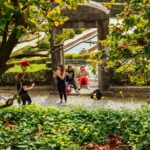
You then get a change of pace at Cordoaria Garden, also called Jardim de João Chagas. The area ties back to rope makers who worked there for about 200 years. You can also spot statues of Ramalho Ortigão and António Nobre, plus sculptures by Juan Muñoz from 2001, including a work titled O rapto de Ganímedes.
This stop is great for photos and a reset moment—especially if you’re traveling with anyone who gets tired of rapid-fire walking.
Igreja de São Francisco: Porto’s church of gold (and catacombs)
At Igreja de San Francisco, you’re in Porto’s most famous Gothic temple, with construction beginning in the 1300s. The big wow factor comes from the gilded Baroque interior from the 1600s and 1700s. Count Raczynski famously described it as the Church of Gold, because the gilded woodwork is so rich.
You’ll also hear about the Tree of Jesse and the catacombs. In other words, this isn’t just decoration; it’s an entire experience.
Admission is listed as free in this tour, so it’s one of the best “high impact, low friction” stops.
Palácio de Cristal gardens: views with lawns and fountains
Now you head to Jardins do Palácio de Cristal, one of Porto’s favorite green breaks. Think sun-dappled paths, lawns, fountains, sculptures, and big plants like giant magnolias and camellias. As you wander, the views open up toward Porto and the Rio Douro.
It’s free entry and about 30 minutes. This is also where a good guide earns their fee: they help you find the best photo angles without turning it into a walking marathon.
Jardim do Infante Dom Henrique: navigation faith in a small square
The tour pauses at Jardim do Infante Dom Henrique, a square that connects to Mercado Ferreira Borges and Palácio da Bolsa. The main focus is a monument to Infante D. Henrique, with construction started in 1894 and finished in 1900, marked around the 500th anniversary of his death.
It’s not huge, but it gives the day a Portuguese “why we built this” narrative that fits the city.
Torre dos Clérigos and the cathedral-to-city skyline vibe
Then it’s Torre dos Clérigos, the tall Baroque bell tower that becomes a Porto symbol from multiple vantage points. The Torre is listed as not included for admission, so this can be a quick exterior photo stop unless you pay separately.
Dom Luís I Bridge: forged iron and two levels of Porto
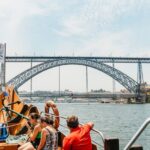
Next you roll to Dom Luís I Bridge. It’s famous for its overlapping iron decks, inaugurated in 1886 by engineer Teófilo Seyrig, a disciple of Eiffel. The bridge is about 395 meters long, and the upper deck is used by the Metro of Porto.
This is a key moment because it connects the city’s historic core to the riverside energy. Even if you stay in the tuk-tuk, the sightlines here are a big part of the payoff.
Mosteiro da Serra do Pilar: circular church plan and panoramic terrace
On the far side is Mosteiro da Serra do Pilar, a UNESCO World Cultural Heritage site. It started around 1538 and took until about 1670 to finish. The church is circular, the dome sits with a surrounding balcony, and the cloister is also circular with 36 Ionic columns, noted as the only example in Portugal.
The terrace is the practical reason you come. It gives you a wide view of Porto and Gaia stretching toward other bridges and the center, including Cathedral and D. Luís I bridge.
Ponte Infante Dom Henrique: a modern bridge with a world-record span
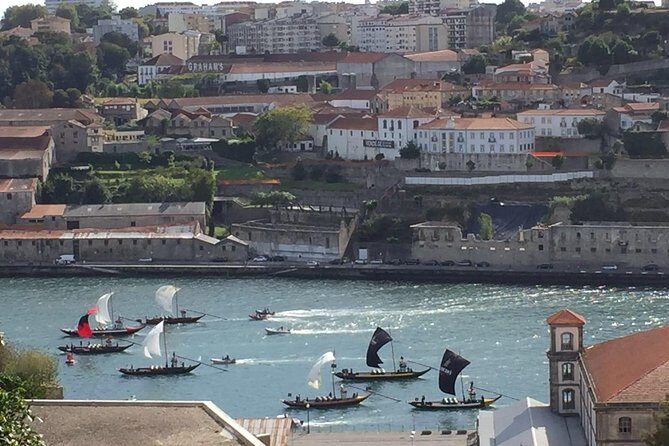
Then the route includes Ponte Infante Dom Henrique. This Maillart-type arch bridge opened in 2003, replacing an older metro lane. It’s about 371 meters long, with a 280 m arch span noted as a world record, and it connects Fontainhas to Oliveira do Douro in Vila Nova de Gaia.
This stop keeps things interesting for anyone who thinks Porto is only “old stuff.” The city has modern engineering too.
Palácio da Bolsa and Arabian Room atmosphere
Back toward downtown, you’ll see Palácio da Bolsa, a National Monument and headquarters for the Commercial Association of Porto. It was designed in 1842 in neoclassical style. The highlight is the Arabian Room, known for its decorative atmosphere, and the palace sits on the Urban Wine Route.
This one is listed as free entry in the tour, which makes it a strong value stop if you want an indoor change of pace.
Mercado Ferreira Borges: iron architecture turned entertainment venue
Next is Mercado Ferreira Borges, built in 1885 and designed to replace an older market. It’s noted as a key example of iron architecture in Porto, later renovated into an entertainment venue where Hard Club is now located.
Even if you don’t spend long inside, the exterior and structure tell you why Porto gained a reputation for industrial beauty.
Alfândega Porto Congress Centre: neoclassical with iron structure logic
Then you arrive at Alfândega Porto Congress Centre, an 19th-century neoclassical building with a façade to the Douro river and one facing the city. It uses iron mixed with other materials based on function—stone, brick, and wood—so the structure looks practical, not just decorative.
It’s free in the tour and can feel like a quiet “architecture lesson” stop before the final church.
Igreja dos Carmelitas: another rococo-style interior payoff
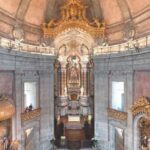
The day ends with Igreja dos Carmelitas, a national monument with a classical façade dating to the 1850s. The altarpiece is Porto rococo style, considered stylistically revolutionary, and the façade work has been attributed to Nicolau Nasoni.
This is a fitting last stop because it keeps the “church interior details” theme going without repeating what you saw earlier.
Wine tasting and lunch: the part most people remember
The tour includes a wine tasting and a lunch of regional products, including cheeses, sausages, and canned fish, paired with wines from small local producers. That combo matters. In Porto, it’s easy to spend the whole day hopping between sights and end up with food that feels like an afterthought.
A few guide-and-group experiences point to one clear pattern: the lunch tends to exceed expectations, including market-style lunch settings like Mercado Lendário. Even if your exact lunch spot differs, the menu style is consistent—regional, paired with local wine, and served in a way that breaks up the long sightseeing stretch.
If you’re doing this as your first full day in Porto, this is also smart timing. You get the city’s big architecture first, then reinforce the trip with the flavors that make it feel lived-in.
The guide factor: Gabby, Gonçalo, Fabio, and others
In the reviews, certain names come up again and again. People specifically praised guides such as Gabby, Gonçalo, Fabio, Anna (for those who requested her), Renaldo, Leonardo, and Leandro for being patient, friendly, and willing to adjust timing.
Here’s what to look for when choosing how you’ll spend your day:
- You want a guide who explains what you’re seeing while you’re still there.
- You want someone who is calm when there’s traffic or weather.
- You want someone who can tweak the schedule so your group doesn’t feel rushed.
If you care a lot about getting the exact private experience you booked, it’s worth asking the provider how they handle last-minute changes. One past experience reported that a tour labeled private ended up being adjusted due to operational issues like driver or vehicle problems. That’s not in the “official promise” language, but it’s the kind of real-world risk you can reduce by asking clear questions.
Should you book this full-day Porto private tuk-tuk tour?
Book it if you want:
- A fast way to see Porto’s main icons plus serious architecture in one day
- A guide-led day where you spend time looking, not navigating
- Food and wine tasting included, so your day has a proper break
Skip it or choose another option if:
- You need long, slow time inside ticketed attractions like Livraria Lello or the Torre dos Clérigos
- Your group gets uncomfortable in tight seating or on cobblestones
- You’re traveling with very strict requirements about the day staying exactly one group (because rare last-minute changes have been reported)
Overall, this tour is a strong “first Porto day” choice. It gives you bearings quickly, shows you how Porto hangs together from theatre façades to tile-covered stations to river bridges, and then finishes with gardens and a lunch that feels local.
FAQ
How long is the full-day Porto private tuk-tuk tour?
It runs for about 8 hours.
What time does the tour start, and where is the meeting point?
The start time is 9:30 am. You meet at R. de Augusto Rosa 180, 4000-528 Porto, Portugal.
Is this tour offered in English?
Yes, it’s offered in English.
What’s included in the price?
The tour includes the driver/guide, live commentary on board, a local guide, wine tasting, and lunch with regional products plus wines from small local producers.
Are monument entrance tickets included?
Not always. Some stops list admission tickets as not included, including Livraria Lello, Igreja do Carmo, and Torre dos Clérigos. Other stops are listed as free.
Is it really a private tour?
The tour is described as private, meaning only your group participates. Still, if privacy is critical for you, it’s smart to ask the provider to confirm how they handle any last-minute changes.
What happens if the weather is bad?
The tour requires good weather. If it’s canceled due to poor weather, you’ll be offered a different date or a full refund.