REVIEW · PORTO
Authentic Braga & Guimarães: Small Historical Group Tour
Book on Viator →Operated by Oporto Road Trips · Bookable on Viator
Portugal’s medieval roots start here. This small-group day trip uses a comfortable, air-conditioned vehicle and focuses on the big, early-states-of-Portugal moments in Guimarães and Braga. I like the max-8 size (you don’t get lost in a crowd), plus guides such as Cheila and Nuno who keep the story clear in English. One thing to consider: it’s a full 8-hour day with walking on hills, and if you have mixed-language guests, the pacing can feel a bit slower.
You’ll roll from Porto with hotel pickup, bottled water, and entrance tickets included. The payoff is a clean “see it, understand it, move on” plan: a medieval castle start, Gothic church stops, then pilgrimage sites in Braga, including Bom Jesus do Monte (UNESCO).
In This Review
- Key highlights you’ll feel on the day
- How this 8-hour small-group tour earns its $70.60 price
- Guimarães Castle hill: starting where Portugal begins to make sense
- Igreja de São Miguel do Castelo: Romanesque lines and a baptism legend
- The 15th-century palace museum: marriage politics, then careful restoration
- Rua de Santa Maria and the squares: where daily life met Portuguese legend
- Igreja de Nossa Senhora da Oliveira: Gothic architecture with deep roots
- Braga Cathedral at the end of the 11th century: why it feels foundational
- Bom Jesus do Monte: Via Crucis, the Five Senses, and UNESCO views
- Sameiro (Nossa Senhora do Sameiro): a second Marian pilgrimage with a mountain viewpoint
- What you’ll actually notice: pacing, language, and onboard comfort
- Food planning: lunch isn’t included, but the route gives you options
- Who this tour fits best (and who should think twice)
- Should you book Authentic Braga & Guimarães: Small Historical Group Tour?
- FAQ
- What is the duration of the Braga and Guimarães tour?
- Does the tour include hotel pickup and drop-off?
- How many people are in the group?
- What language is the tour offered in?
- Are monument entrance tickets included?
- Is lunch included in the price?
- What time does the tour start?
- Is bottled water provided?
- What is the cancellation policy?
- Is green wine included, and is there an age requirement?
Key highlights you’ll feel on the day
- Max 8 people with hotel pickup: easier pace and easier questions
- Castle-to-church routing in Guimarães: you see how the city grew
- Included monument entrances: you spend time looking, not buying tickets
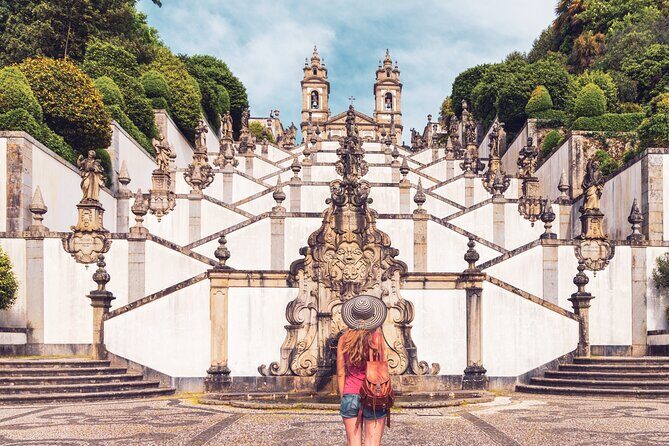
- Bom Jesus do Monte UNESCO in one go: Via Crucis, Five Senses, and viewpoints
- Two Marian sanctuaries in Braga: Cathedral first, then Bom Jesus and Sameiro
How this 8-hour small-group tour earns its $70.60 price
For $70.60, the value comes from three things you can’t fake with a DIY day: included entrances, pickup/drop-off, and the fact that the driving time is folded into the 8-hour plan. You’re not just “bus hopping between stops”—the schedule is built around key monuments, with short guided walks and breaks for you to look around at your speed.
The small group (up to 8) matters more than it sounds. With a big tour, the guide has to talk fast and repeat often. Here, you can actually follow the thread—early Portugal, then northern religious power, then the pilgrimage story that still draws people today.
The practical bonus: the vehicle is premium and air-conditioned, and bottled water is included. Reviews also praise the guides for keeping things organized and comfortable, and for not rushing you through stops.
You can also read our reviews of more historical tours in Porto


Guimarães Castle hill: starting where Portugal begins to make sense
You begin in the upper part of Guimarães near Guimarães Castle. The guide helps you start at the top for a reason: from this height, the medieval logic of the city becomes visible. You get told about Portugal’s early history as you pass the oldest medieval castle in the country and start your descent toward the city center.
This start is not just scenic. It’s the foundation for everything else you’ll see later: the churches, the squares, the palace museum, and the national-monument sites. When you understand why people built where they built, the details stop feeling like random sightseeing checkboxes.
One small reality check: Guimarães is hilly. The walking is described as moderate, but it’s still a day of moving on uneven streets and stone steps. Wear solid shoes.
Igreja de São Miguel do Castelo: Romanesque lines and a baptism legend
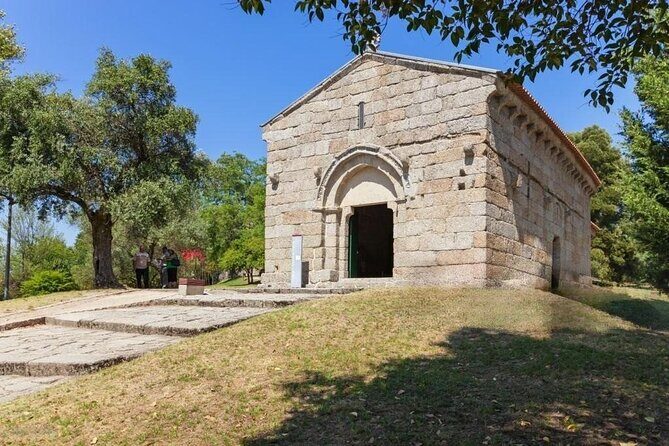
Your first real stop is Igreja de São Miguel do Castelo. The building dates back to the 13th century and is classified as a national monument. It’s Romanesque in style, but it was rebuilt in the early 20th century to match its original appearance—so you get a “history plus restoration story” in one place.
There’s also a legend tied to the church: the first king of Portugal, D. Afonso Henriques, was baptized here. Even if you treat legends as legends, they help you understand why certain sites became meaningful enough to protect and rebuild.
Admission is free for this stop, which is a nice budget win on a day when everything else is covered too. If you like church architecture, take a moment to look past the big exterior and notice the design choices that match Romanesque style.
The 15th-century palace museum: marriage politics, then careful restoration
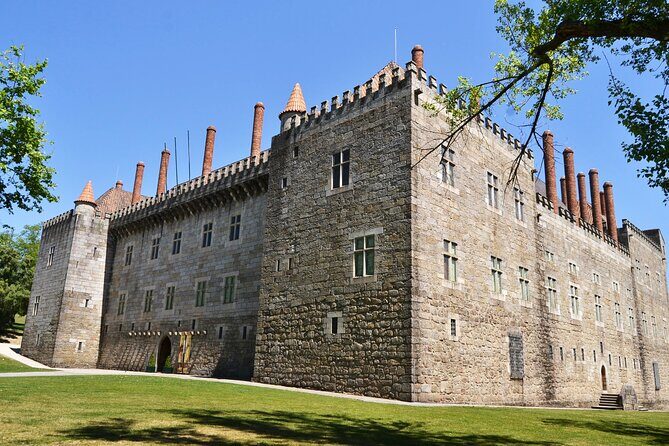
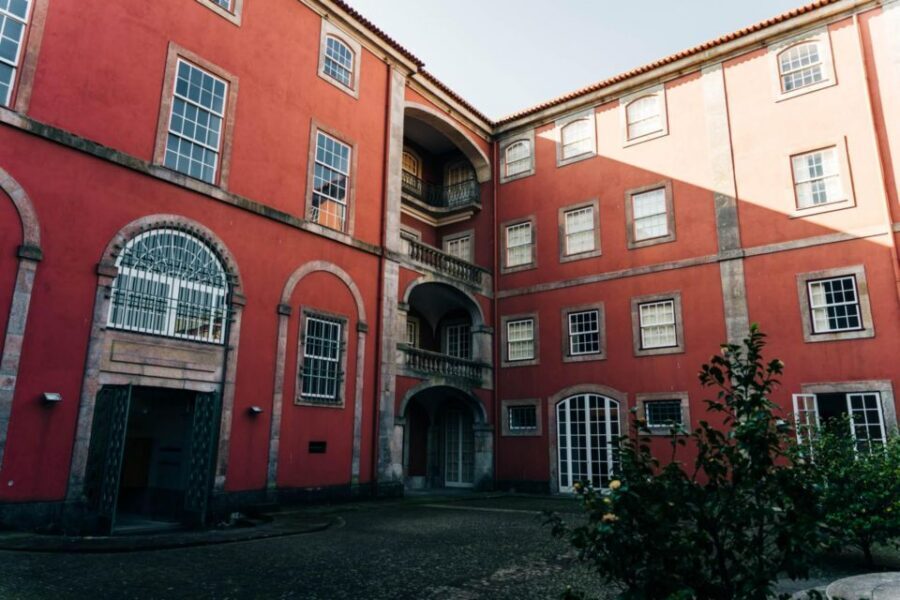
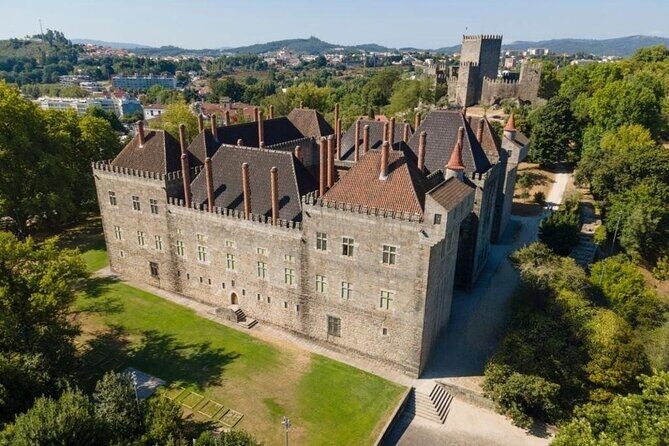
Next comes a palace tied to royalty: construction began at the start of the 15th century, ordered by D. Afonso (son of King D. João I) around the time of his marriage to D. Constança de Noronha. Over the years, the building served different purposes, which caused wear and tear.
In the early 1900s, restoration started. Today it’s classified as a national monument and functions as a museum. Inside, you can see works connected to court life—tapestry, furniture, Chinese porcelain, and paintings.
Why this stop is worth the time: it connects the dots between medieval military power and later court culture. You’re not just looking at stone and scripture—you’re seeing what elite life looked like in the centuries that followed.
Practical tip: if you tend to skim museum rooms, set a mini-goal like finding one object type that interests you (porcelain, for example) and focus there.
Rua de Santa Maria and the squares: where daily life met Portuguese legend
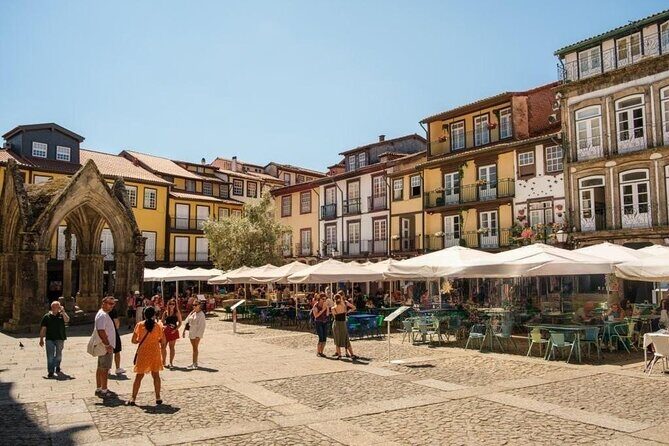
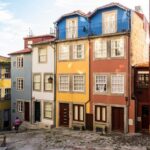
As you descend, you pass Rua de Santa Maria, one of Guimarães’ earliest streets. It linked the convent of D. Mumadona Dias with the residential area and the castle. That’s the kind of detail that makes a city feel real: you’re walking a route that guided movement, not just admiring views.
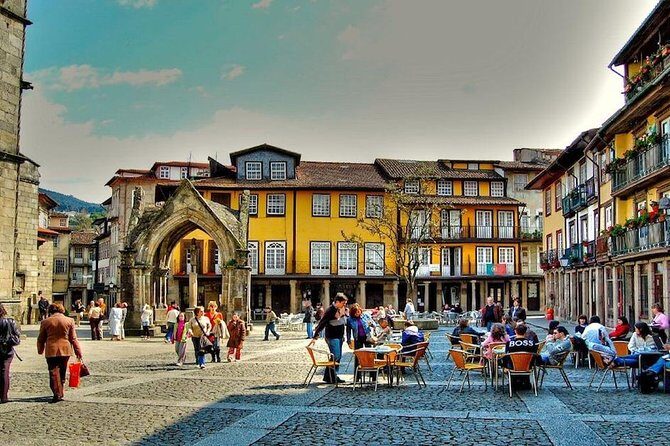
Then it’s square time—Guimarães does squares well. At Praca de S. Tiago, you’ll see where locals meet for meals and drinks, surrounded by typical city architecture. The name connects to a pilgrimage legend involving the apostle James and an image of the Virgin Mary left there. A church existed in the 12th century but was demolished in the 19th.
Next is Largo da Oliveira, one of the most emblematic squares in the city. Its name comes from an ancient olive tree symbolizing peace and tradition. This is also where important events played out, including medieval courts and moments in the formation of Portugal as a nation.
Near the same area you’ll find the Padrão do Salado, a monument celebrating D. Afonso IV’s victory over the Moors at the Battle of Salado in 1340. So, in just a small square cluster, you get religion, civic life, and national warfare memory.



Igreja de Nossa Senhora da Oliveira: Gothic architecture with deep roots
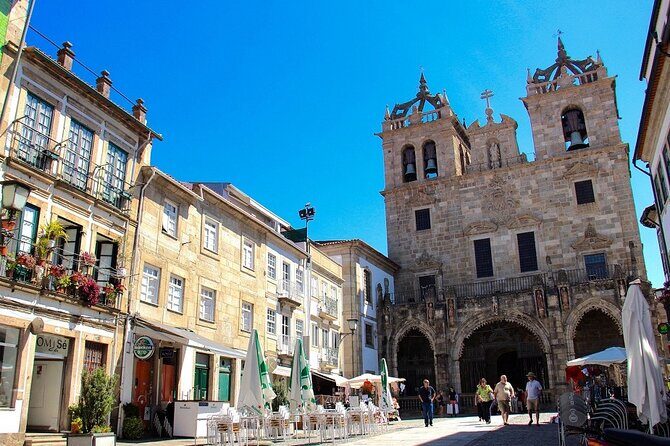
From Largo da Oliveira, you can see the church of Nossa Senhora da Oliveira – Colegiada de Guimarães. The origins connect to a monastery founded in the first half of the 10th century by Countess Mumadona Dias. The current church was built in 1387 under King D. João I, following Gothic architecture models.
This stop matters because it’s the bridge between centuries. You’re not just seeing one era frozen in time—you’re seeing how an earlier religious center kept evolving into a larger, more formal church complex.
The tour keeps this stop efficient (around 15 minutes), so use that time to look up and around. Gothic churches reward quick scanning: arches, lines, and how the building frames light.
Braga Cathedral at the end of the 11th century: why it feels foundational
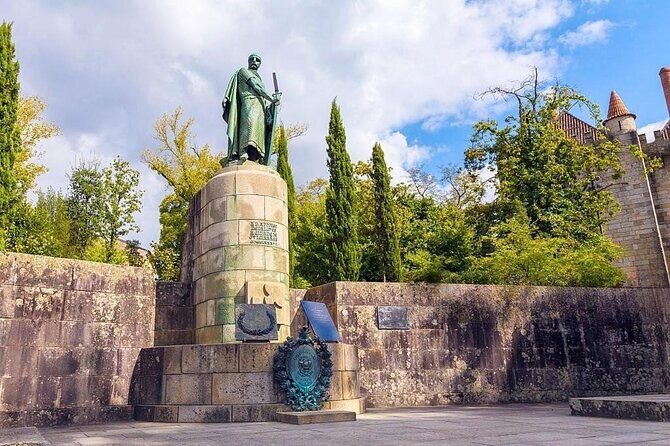
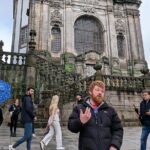
Once the tour reaches Braga, you start with Braga Cathedral. It’s one of Portugal’s most emblematic Catholic monuments, and its construction dates to the end of the 11th century. The cathedral was sacred and dedicated to the Virgin Mary by Bishop D. Pedro.
One strong reason the cathedral is included early: it’s considered the first Portuguese cathedral, built decades before the founding of the nation itself. That timing is huge. It helps you understand that Portugal’s identity didn’t begin only with kings and battles—it was built alongside religious institutions.
Admission is included, and the stop is scheduled for about 30 minutes. If you’re a photo person, plan shots that show the overall building shape, not just close-up details.
Bom Jesus do Monte: Via Crucis, the Five Senses, and UNESCO views
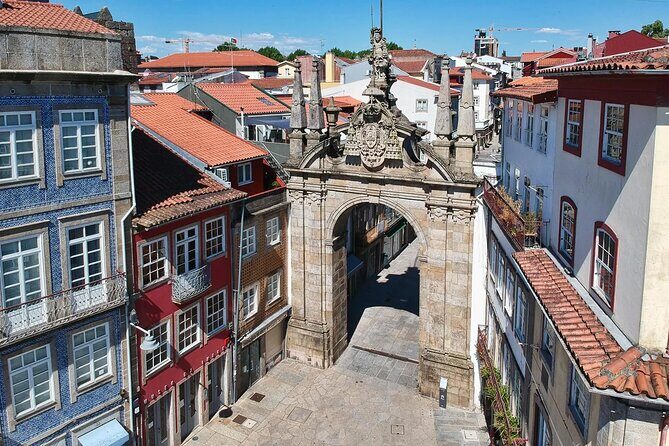
Bom Jesus do Monte is the tour’s big “wow” stop in Braga, and for good reason. It’s a Christian pilgrimage sanctuary with over 600 years of history and it’s part of the European Sacri Monti tradition created after the Council of Trent in the 16th century.
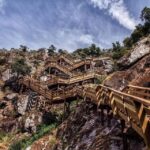
The highlight for many people is the Via Crucis that winds up the mountainside. It’s made of chapels, fountains, and sculptures representing the Passion of Christ, ending at the neoclassical church built between 1784 and 1811.
Two key features you’ll hear about here:
- The Staircase of the Five Senses, a baroque work using fountains and statues to symbolize the senses
- The panoramic viewpoints over Braga, plus the fact that Bom Jesus do Monte is a UNESCO World Heritage Site (2019)
The tour gives you about an hour here, with Bom Jesus and nearby elements designed for you to wander without feeling like you missed everything. If you’re prone to knee pain, take your time on stairs and plan short pauses.
Sameiro (Nossa Senhora do Sameiro): a second Marian pilgrimage with a mountain viewpoint
After Bom Jesus, you head to Sanctuary of Our Lady of Sameiro (Santuário do Sameiro). This one is smaller in intensity than a major tourist magnet, but it’s still a major pilgrimage stop. It was founded on June 14, 1863 by Father Martinho António Pereira da Silva.
Sameiro is described as the second largest Marian pilgrimage center in Portugal after Fátima. It’s also known for its location up on the mountain at 566 meters altitude, which means you get a strong view over Braga and the surrounding area.
The tour usually allows about 30 minutes here. That’s enough time to take in the sanctuary and the view, then still keep the day moving.
If you like quieter spiritual atmospheres, this stop gives you a different mood from the more theatrical Via Crucis experience at Bom Jesus.
What you’ll actually notice: pacing, language, and onboard comfort
This tour succeeds most in the details: timing, guidance style, and comfort. Multiple guides mentioned in feedback include Cheila, Nuno, Brahim, and Francisco, and the common thread is clear communication in English and a focus on keeping you safe and comfortable.
I like the “not rushed” approach. The stops are long enough to look and short enough to avoid fatigue. Free time exists—at least in the sense that squares and viewpoints aren’t just stared at from a distance. You can sit, regroup, and take in the setting before moving on.
One caution I’ll note because it matters to how you’ll experience the day: if your group includes people speaking different languages, the guide may repeat or adjust commentary. That can extend the time you spend at each stop or slow down the overall flow.
Onboard, Francisco’s group feedback also mentions audio-visual support. If you like learning context while traveling, that kind of add-on can make the drive feel shorter.
Food planning: lunch isn’t included, but the route gives you options
Lunch isn’t included. That’s the one cost you’ll need to budget separately.
The good news is that the route passes places built for eating out, including Praca de S. Tiago where you’ll find restaurants, bars, and terraces. Largo da Oliveira also has the kind of square setting where you can pause, grab something simple, and keep going without having to hunt across town.
A practical approach: decide whether you want a sit-down Portuguese meal or something quick. Because this is an 8-hour tour, trying to do a long multi-course lunch can squeeze your time at later stops like Sameiro or Bom Jesus.
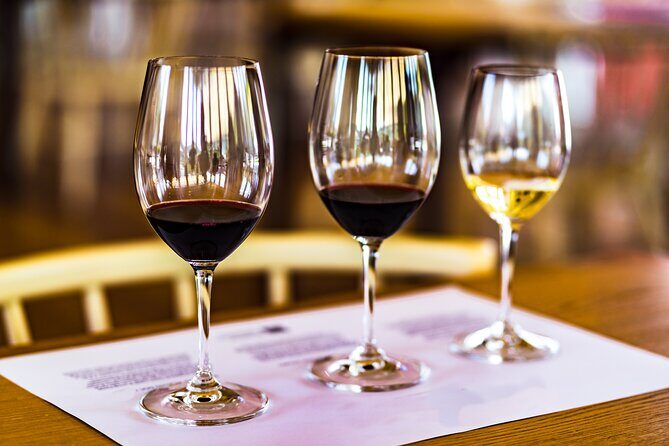
Also, there’s mention of green wine—just remember the legal drinking age is 18+. If you’re under that, you can still enjoy the pace without worrying about it.
Who this tour fits best (and who should think twice)
This tour is a strong fit if you want:
- A guided, structured day between Porto and two of northern Portugal’s most important historic cities
- A mix of architecture, city layout, and pilgrimage sites (not just one type of sightseeing)
- English-speaking guidance with a small group feel and included monument entrances
It may be less ideal if:
- You hate walking on hills or uneven old-city streets
- You prefer fully independent travel where the schedule is yours alone
For couples, solo travelers, and small groups, it’s especially good because you’ll get attention from the guide without feeling stuck in a mass tour rhythm.
Should you book Authentic Braga & Guimarães: Small Historical Group Tour?
Yes—if your goal is a smart, low-stress day that connects Guimarães’ medieval roots to Braga’s cathedral and pilgrimage traditions. The included entrances, pickup, and max-8 size create real value for the money, and the guides named in feedback (like Cheila, Nuno, Brahim, and Francisco) are repeatedly credited for making the day feel organized and comfortable.
Book it if you want a guided route that still gives you moments to breathe in squares and viewpoints. Skip it only if you know you’ll struggle with walking on old stone and hills, or if you absolutely need a longer lunch and don’t want a structured day.
If you go, come with comfortable shoes and a simple mindset: look first, learn as you go, and don’t try to do everything at once. The best parts of Braga and Guimarães reveal themselves when you slow down at the right stops.
FAQ
What is the duration of the Braga and Guimarães tour?
The tour runs for about 8 hours.
Does the tour include hotel pickup and drop-off?
Yes, hotel pickup and drop-off are included.
How many people are in the group?
The tour is limited to a maximum of 8 travelers.
What language is the tour offered in?
The tour is offered in English.
Are monument entrance tickets included?
Yes. Entrances to monuments are included.
Is lunch included in the price?
No. Lunch is not included.
What time does the tour start?
The start time is 8:30 am.
Is bottled water provided?
Yes, bottled water is included.
What is the cancellation policy?
Free cancellation is available up to 24 hours in advance for a full refund.
Is green wine included, and is there an age requirement?
Green wine may be part of the experience, and the legal drinking age is 18 years old and above.