REVIEW · PORTO
Porto: Tile Painting Workshop with Porto Wine (Sé do Porto)
Book on Viator →Bookable on Viator
Painting azulejos beats another souvenir stop. In a private downtown Porto workshop, you learn classic azulejo patterns step by step with wine, coffee, and snacks. Two things I really like: you get hands-on instructor help and you leave with a genuine hand-painted ceramic tile.
One thing to plan for: the tile is finished with a baking step, so you’ll need time to collect it later. If your Porto days are packed or you’re flying out soon, check pickup timing when you book.
In This Review
- Key highlights at a glance
- Why this Porto tile workshop is a smart break from sightseeing
- A note on the tone: relaxed, not rigid
- Meeting in the Sé area near Catedral do Porto
- Your instructor matters more than you’d think
- The azulejo intro: short history that connects to what you’re doing
- Choosing your design: Porto street patterns or your own idea
- What you actually do with the tile
- Port wine, snacks, and the pace of a 2-hour class
- What the small group experience feels like
- The real scheduling catch: baking and when you pick up
- What you take home: a souvenir with real meaning
- Who this is best for (and who should think twice)
- Price and value: is $42.33 worth it?
- Should you book this Porto tile workshop?
- FAQ
- How long is the tile painting workshop?
- How much does it cost?
- What time of day can I choose?
- Is the workshop offered in English?
- Where do I meet for the class?
- What’s included in the price?
- Do I need to come back to collect the tile after painting?
- How big is the group?
- Is free cancellation available?
Key highlights at a glance
- Small private setting with direct instructor attention (max 15)
- Pick a traditional Porto pattern copied from local streets or design your own
- Materials included, plus tea or coffee, bottled water, and Port wine
- A short azulejo history intro to connect your art to Porto and Lisbon
- You take home your baked tile as a real souvenir, not a postcard
Why this Porto tile workshop is a smart break from sightseeing
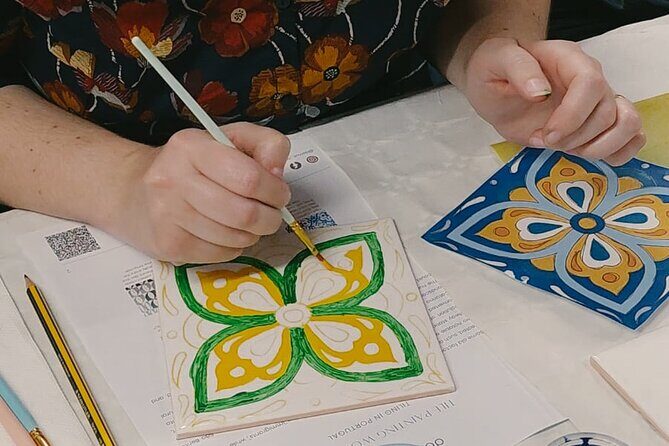
Porto has no shortage of things to do, but tile painting is different. You’re not just looking at art—you’re making one, using the same visual language that shows up on church walls and street corners across Portugal.
I like that the class is built for real beginners. You start with a focused intro to Portuguese azulejos, then you move quickly into tracing and painting with guidance. That turns the workshop into a creative pause that still feels culturally grounded, especially if you’re spending most of your trip hopping between viewpoints and churches.
And yes, you’ll also get the human side of travel comfort: tea or coffee, bottled water, and snacks while you paint. It makes the session feel more like a friendly workshop than a rushed activity.
You can also read our reviews of more wine tours in Porto



A note on the tone: relaxed, not rigid
This isn’t positioned as a fine-art studio where you must already know color mixing or brush control. The goal is a finished tile you’re proud to carry home, even if you’re the type who usually buys art supplies and then forgets to use them.
Meeting in the Sé area near Catedral do Porto
The workshop starts at Domus Arte | Concept Store – Sede/Headquarter, Rua da Bainharia 135, 4050-084 Porto. Since the activity is associated with Catedral do Porto in the Sé area, the neighborhood is a handy landmark for meeting.
This also matters for one simple reason: convenience. You’re not crossing half the city to reach a workshop tucked away somewhere hard to find. You’ll likely be able to combine this with your morning or afternoon exploring without wrecking your schedule.
Practical tip: arrive a bit early. Even when the class runs smoothly, you’ll want time to settle in, grab your drink, and start tracing without feeling rushed.
Your instructor matters more than you’d think
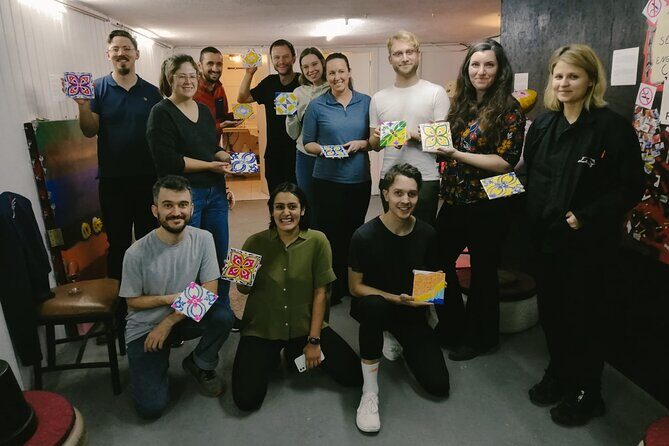
One of the most consistently praised parts of this experience is the instructors themselves. People have mentioned instructors like Beatrice (Bea), Fernanda, Francisco, Pablo, Rita, Daniella, and Natalia—all described as patient, friendly, and actively involved with every participant.
That’s a big deal in a craft class. When the instructor pays attention to individuals, you get unstuck faster. You also feel more confident using paint and brushes without worrying you’ll ruin the whole tile.
Even if your artistic skills are zero, the setup helps. The process uses a guided approach where the design gets transferred to the tile, then you paint with the instructor’s technique tips (including color mixing, if you want a specific shade).
The azulejo intro: short history that connects to what you’re doing
Before paint hits the tile, you get a brief introduction to the tradition of Portuguese tiles. The focus is on the origins of azulejos and how they helped shape the architectural and cultural identity of Porto and Lisbon over the centuries.
Why that matters for you: it keeps the workshop from becoming purely decorative. You’re painting within a tradition, so the patterns you choose make sense. You’re not just filling blank space; you’re creating something that echoes how Portuguese ceramic art communicates place and identity.
You’ll also learn what makes the designs feel authentically Portuguese—things like common pattern choices and the visual logic behind them. It’s enough to add meaning without turning the class into a lecture.
You can also read our reviews of more tours and experiences in Porto




Choosing your design: Porto street patterns or your own idea

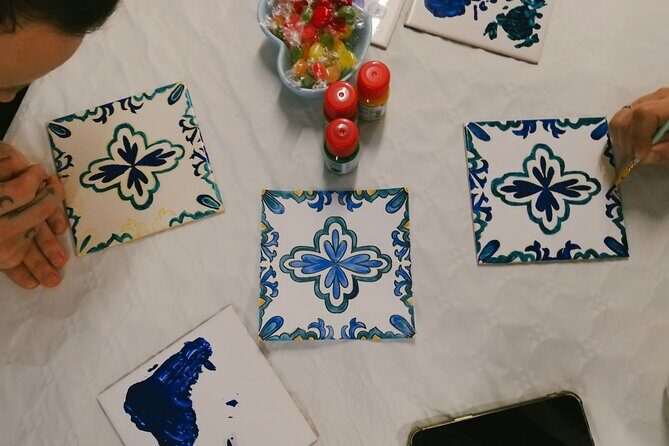
Here’s the fun part. You’ll receive a white ceramic tile and you can choose from an exclusive selection of traditional tile patterns. The patterns are described as carefully selected and documented directly from the streets of Porto.
You usually have two paths:
- Replicate a traditional pattern you like
- Create an original design
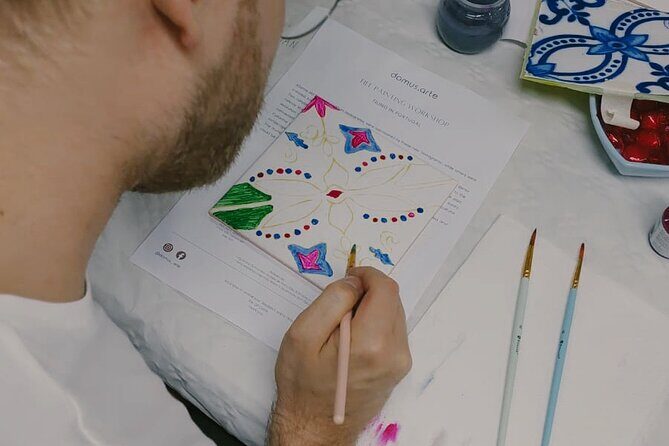
For most people, the easiest win is choosing a pattern first, then letting the instructor guide you through transferring it. The class uses tracing tools (like carbon paper, which people have specifically mentioned) to help you get the design onto the tile without needing to draw freehand.
If you like structure, this will feel comfortable. If you like making choices, your original option keeps it from feeling like a cookie-cutter craft.
What you actually do with the tile
The basic flow is:
- Start with a traced or transferred outline
- Paint using guided brush strokes and color choices
- Finish the design according to the class instructions
- Leave the tile to be completed with baking so the paint cures
This is one of those activities where the steps make sense as you go. You’re never standing there wondering what comes next.
Port wine, snacks, and the pace of a 2-hour class
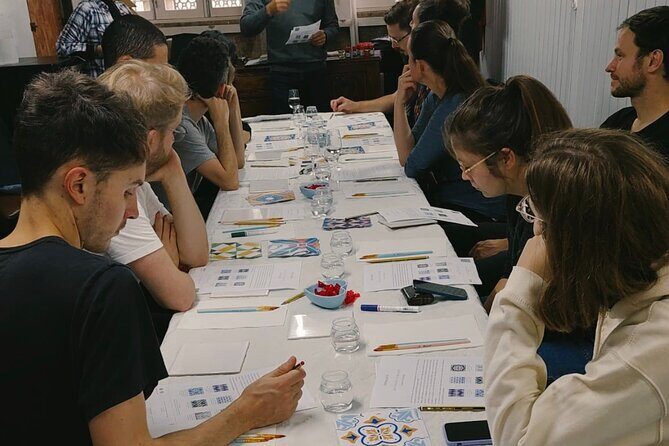
The experience includes tea or coffee, bottled water, Port wine, plus sweet and savory snacks. That might sound like a nice perk, but it’s also part of why the class works.
Painting can be surprisingly relaxing when you’re not hungry and you’re not rushing through the steps. The drinks and snacks help keep energy steady, especially if you come straight from walking around the center of Porto.
The workshop runs about 2 hours, with morning or afternoon class times so you can match it to your sightseeing rhythm. Since the duration is short, it’s easier to plan around it than longer multi-session crafts.
What the small group experience feels like
The group size cap is 15 travelers, and the workshop is described as private with full instructor attention. In practice, that means you’re not lost in a crowd. You can ask questions and get specific feedback instead of generic advice for everyone.
For team events and groups of friends, that’s a real selling point. People have also described the atmosphere as fun and easygoing—more laughter than pressure.
The real scheduling catch: baking and when you pick up
This is the part to take seriously, because it affects how you plan your last day.
Your tile needs baking so the paint sets. People have mentioned different pickup timelines:
- Some tiles were ready to collect within about an hour after the workshop
- Others said they needed to return later that day (roughly 1.5 hours was mentioned)
- Some scheduled pickup for the next day
Because timing can vary, I strongly recommend you treat this like: plan for a return visit window, even if it might turn out fast. If your schedule is tight, ask about pickup timing when you book, especially if you’re checking out of your hotel or leaving Porto soon.
Simple rule: don’t sign up if you’re trying to squeeze tile pickup into a zero-time window.
What you take home: a souvenir with real meaning
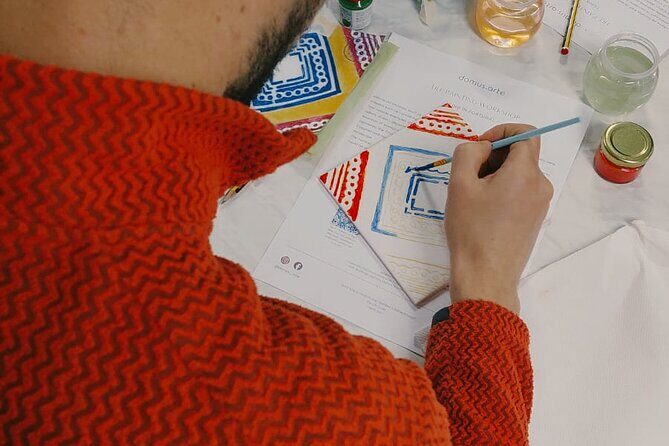
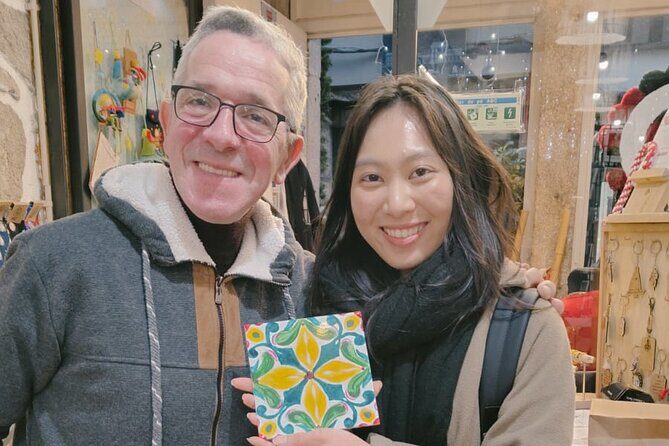
The payoff is a hand-painted ceramic tile you keep after the tile is baked. That’s a different kind of memory than a magnet or keychain.
Why it’s valuable:
- It’s personal. You chose the pattern or created your own.
- It’s tactile. You can feel brushwork and colors every time you see it.
- It’s tied to Portuguese culture, not just a generic craft.
Also, it makes a great gift. People often like giving family and friends something that looks locally made and takes real effort to produce.
If you’re the type who likes souvenirs that don’t clutter drawers, this is a good option.
Who this is best for (and who should think twice)
This workshop fits lots of travel styles:
- Solo travelers who want a structured activity that still feels social
- Couples looking for a creative date with a cultural link
- Families, including people who want an activity for mixed ages (it’s described as suitable for all ages)
- Groups: friends, bachelor or bachelorette parties, and team-building events
You might want to think twice if:
- You don’t have flexibility for pickup after baking
- You’re only in Porto for a super short stop and cannot spare time for collection
- You’re hoping for an in-depth technical course on ceramic artistry. This is more hands-on and guided than a full academic class.
But for most people who want a meaningful, not-too-intense, culturally connected activity, it lands in the sweet spot.
Price and value: is $42.33 worth it?
At $42.33 per person for roughly 2 hours, value comes down to what’s included and how much attention you get.
You’re paying for:
- A dedicated small workshop setting
- Materials (including your ceramic tile and painting supplies)
- Instructor guidance throughout
- Drinks (tea/coffee), Port wine, bottled water
- Snacks
- A finished souvenir that takes baking to complete
Compared to lots of “see and do” activities, you’re getting more for your money because you leave with something you made yourself—and the process includes extras that make the time comfortable.
One more angle: since you pick a pattern from Porto, you’re not just buying a craft. You’re participating in a tradition with an outcome you can keep.
Should you book this Porto tile workshop?
I’d book it if you want a break from nonstop walking that still feels connected to Porto’s identity. The combination of small group size, hands-on instructor attention, and a finished hand-painted tile makes it a strong “do once, remember forever” activity.
Book it especially if:
- You want something creative but approachable
- You like the idea of using Porto azulejo style patterns
- You want a schedule-friendly 2-hour activity with morning or afternoon options
Skip it only if your plan leaves no room for the baked-tile pickup. If you can handle that one scheduling detail, this is a fun, low-stress way to go home with a real piece of Porto.
FAQ
How long is the tile painting workshop?
It runs about 2 hours.
How much does it cost?
The price is $42.33 per person.
What time of day can I choose?
You can choose either a morning or afternoon class time.
Is the workshop offered in English?
Yes, it’s offered in English.
Where do I meet for the class?
You start at Domus Arte | Concept Store – Sede/Headquarter, Rua da Bainharia 135, 4050-084 Porto, Portugal. The activity ends back at the meeting point.
What’s included in the price?
All materials are included, along with tea or coffee, bottled water, Port wine, and a selection of sweet and savory snacks. You also take home your hand-painted souvenir tile.
Do I need to come back to collect the tile after painting?
Yes. The tile is baked after the workshop, and you’ll need to return to pick it up later. Some people reported quick pickup, while others planned a later return.
How big is the group?
There is a maximum of 15 travelers.
Is free cancellation available?
Yes. You can cancel for a full refund up to 24 hours before the experience starts. If you cancel less than 24 hours before the start time, the amount paid isn’t refunded.