Two cities, one Portugal origin story. This private Minho day pairs hilltop sanctuaries, major medieval landmarks, and UNESCO-listed streets, all with a guide to translate what you’re seeing. I love that admission tickets are included for the key monuments, so you’re not hunting for cash and entry times mid-day. I also like the round-trip pickup from Porto or Gaia, which keeps the morning simple.
The one thing to plan around is time: it runs about 9 hours and traffic can nudge the schedule, so don’t stack anything immediately after the tour ends.
In This Review
- Key highlights you’ll feel on the day
- Entering Minho from Porto: What This Day Is Built For
- Hotel Pickup and the 9:00 Start: The Easiest Way to Do a Full Day
- Sanctuary of Our Lady of Sameiro: Hilltop Views and Marian Devotion
- Bom Jesus Funicular: A Short Ride with Big Sights
- Sé de Braga: Portugal’s First Cathedral and the 1089 Dedication
- Braga Break and Lunch: Turning a Sightseeing Day into a Real Meal
- Guimarães Arrival: Where the Portugal Story Gets Personal
- Guimarães Castle: Vikings, Fortification, and the Square Keep
- Igreja de São Miguel do Castelo: A Small Church with Founding-Period Burials
- Centro Histórico de Guimarães: UNESCO Streets You Can Sense Immediately
- Guides Make It Worth the Money: What the Best Reviews Emphasize
- Price and Value at $235.32 Per Person
- Porto Bonus: A Free Walking Tour the Next Day
- Who This Private Braga and Guimarães Tour Suits Best
- Quick Practical Tips Before You Go
- Should You Book This Minho Private Tour?
- FAQ
- How long is the private Minho tour from Porto?
- Where does the tour start in Porto or Gaia?
- What time does the tour begin?
- Is the tour private, or are there other groups?
- Are entrance tickets included for the monuments?
- Is lunch included?
- What destinations are included in the tour?
- What language is the guide?
- Can I cancel for a full refund?
Key highlights you’ll feel on the day
- Private guide pace that can flex to your group and questions
- UNESCO focus on Braga and Guimarães identity landmarks
- Hilltop views at the Shrine of Our Lady of Sameiro and the Bom Jesus area
- Big-ticket medieval stops like Sé de Braga and Guimarães Castle
- Included admissions so the main monuments cost you nothing extra
Entering Minho from Porto: What This Day Is Built For
This tour is basically a guided fast-track into what makes northern Portugal tick. You start in Porto, then you’re pulled straight into the Minho story—religion, power, and the early days of the nation—without worrying about transfers or parking.
The real value is that it’s structured. You’re not just driving and hoping you hit the highlights. The guide builds context as you go, with history and cultural notes on the Portuguese past, so the sites make sense instead of feeling like random stone.
Hotel Pickup and the 9:00 Start: The Easiest Way to Do a Full Day
You’ll be collected from any hotel in Porto or Gaia city center, or from a listed meeting point by São Bento train station (Rua Mouzinho da Silveira, 350). That kind of pickup matters in a full-day itinerary—less time commuting, more time actually looking.
The tour starts at 9:00 am and runs about 9 hours. In other words, it’s long enough to cover both cities properly, but still short enough for a same-day return to Porto plans. One practical note: traffic can affect the ending time, so keep your late afternoon free.
Sanctuary of Our Lady of Sameiro: Hilltop Views and Marian Devotion
Your first real stop is the Sanctuary of Our Lady of Sameiro, up at the top of the hill of Sameiro (566 metres). This place is one of Portugal’s best-known sites for Marian worship, and it pulls in devotion year-round—especially during the pilgrimages tied to early June and mid-August.
What you’ll feel here is scale and perspective. From that height over Braga, the sanctuary isn’t just a building you pass by; it’s a landmark you use to understand the city’s layout. Even if you’re not into religious travel, it’s an easy stop that gives you a strong visual anchor for the rest of the day.
This stop is scheduled for about 20 minutes. That’s enough time to see the main points and get a few photos without turning it into a half-hour scramble.
Bom Jesus Funicular: A Short Ride with Big Sights
Next up is the Bom Jesus Funicular. The hilltop setting and the altitude framing (also listed at 566 metres) are part of why this area draws crowds: you’re meant to rise above the city and look back.
The stop is about 30 minutes, which is a good length for photos and orientation without rushing. If you like viewpoints, this is one of the stops where you’ll actually pause and look around, not just walk through.
One small caution: funicular and church visits can create bottlenecks if many visitors arrive at the same time. The private guide helps you move efficiently, but still expect normal sightseeing crowds.
Sé de Braga: Portugal’s First Cathedral and the 1089 Dedication
Braga’s Sé de Braga is the kind of stop that rewards attention. It’s described as the first Portuguese cathedral, started at the end of the 11th century and dedicated in 1089 by Bishop Pedro in a solemn session honoring the Virgin Mary.
This is also where the “why this matters” part of the tour really earns its keep. You’re not just seeing a big church; you’re stepping into early national identity. The tour context also points out that D. Henrique and D. Teresa, parents of Portugal’s first king, are buried in the Chapel of Kings—so the building is tied to origins, not just architecture.
You’ll have about 30 minutes here. That’s a comfortable window for the main church focus and a quick look at the places the guide highlights, without turning it into a museum marathon.
Braga Break and Lunch: Turning a Sightseeing Day into a Real Meal
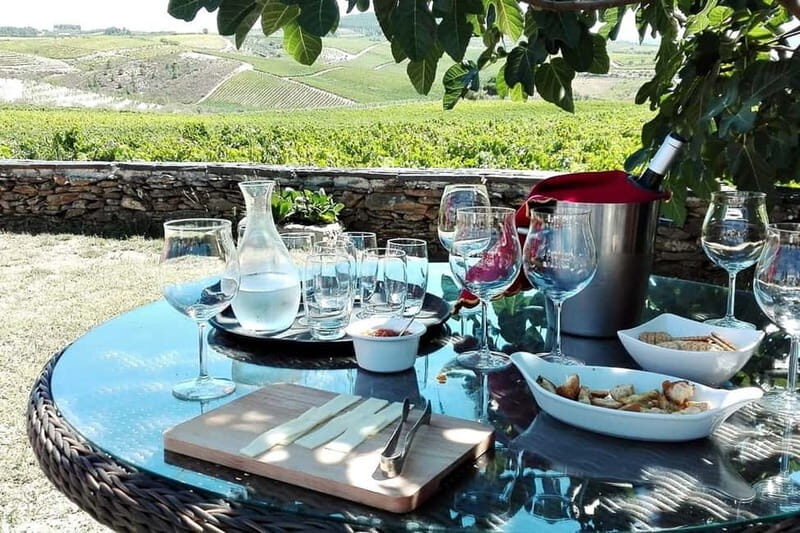
After the monuments, you get a Braga break. If you choose the lunch included option, your guide takes you to a local restaurant for a traditional Portuguese meal with drinks included.
A highlight here is trying vinho verde, a white wine with its own characteristics. Even if you don’t drink wine, the guide-led restaurant stop tends to be smoother than trying to solve lunch on your own during a busy day.
Lunch time is about 1 hour, and the tour notes a vegetarian option (and gluten-free) if you request it during booking. If you skip the included lunch, you’ll have free time to eat on your own or explore the old city center.
Practical tip: if you want time to wander, don’t eat too fast. The tour will move you to Guimarães after lunch, and Braga deserves at least a small ramble between bites and next steps.
Guimarães Arrival: Where the Portugal Story Gets Personal
Then you drive to Guimarães, often described as the birthplace of Portugal because Afonso Henriques, who became Portugal’s first king, was born here.
You’ll have about 2 hours after lunch for the Guimarães portion. That’s a sweet spot: long enough to see major historic structures and walk some of the historical core, but not so long that you lose focus or energy before the castle stops.
The guide’s job here is important. Places like Guimarães can feel like “pretty old buildings” if you don’t know what to look for. With the tour framing, you’ll connect the city layout to its founding narrative.
Guimarães Castle: Vikings, Fortification, and the Square Keep
The biggest medieval moment is Guimarães Castle. The story begins with a mix of legend and defensive logic. Around 968, Mumadona, Countess of Galicia, ordered a castle built there so people could seek refuge from attacks—especially from Viking raids from the north and Muslim raids from the south.
Later, when Count Henry took over authority in the region known as Portucalense from his father-in-law, Alfonso VI of León, the castle received more solid and larger construction. The castle you see today is described as being dominated by a square keep between four towers, guarding the four corners of the walls.
The tour also notes that while not strictly documented, it’s very likely that a residence portion inside the northern wall was linked to Count Henry and connected to the birthplace tradition of Afonso Henriques.
You’ll get about 30 minutes here. In that time, focus on the structure: the defensive layout is what makes it feel powerful even before you “read” the legends. And if you like history told with momentum, this is one of the stops where the guide energy really matters.
Igreja de São Miguel do Castelo: A Small Church with Founding-Period Burials
Right nearby is Igreja de São Miguel do Castelo, a small church built in the 13th century. The story tradition says it was built earlier in the 12th century by Count Dom Henrique (Henry of Burgundy), and that he baptized his son there—Afonso Henriques, Portugal’s first king.
Inside, the tour points out that under the floor lie buried great warriors of the nation’s founding period. That detail changes the tone from “nice Romanesque church” to “place with a very specific connection to the origin era.”
This stop is short—about 10 minutes—so it’s more of a focused visit than a linger-and-stroll stop. Use that time to see the simplicity in decoration and to look down where the tour guides attention to what’s beneath.
Centro Histórico de Guimarães: UNESCO Streets You Can Sense Immediately
The day wraps with Centro Histórico de Guimarães, the historical center inside the old city walls and tied to Portugal’s formation and identity. It’s classified a World Heritage site because of the originality and authenticity used in restoration.
What makes this area easy to enjoy is the visual texture. You’ll see details like iron verandas, granite balconies, porticos, and arches connecting narrow streets. The paving stones have the worn feel of long use, and towers and cloisters give you that “time layer” effect without needing special effects.
This stop is about 30 minutes. It’s enough time to walk a loop, grab photos, and get that medieval-feeling orientation. If you want more time, you can ask your guide what’s best to revisit—just remember the day has a set structure.
Guides Make It Worth the Money: What the Best Reviews Emphasize
The private guide experience is the backbone of this tour, and the praise is consistent. Guides like Bernardo, Nuno, Fred, Daniel, George, Ricardo, Pedro, Valdemar, Gonçalo, and Tiago Santos are repeatedly described as fun, flexible, and skilled at bringing local context to life.
What I think matters most for you: it’s not just facts dumped at you. It’s the way a good guide adjusts the flow, answers questions, and adds practical local suggestions. Several of the guides are praised for tailoring the day to interests, and that’s exactly what makes a private tour feel like value instead of a luxury surcharge.
Price and Value at $235.32 Per Person
At $235.32 per person, this isn’t the cheapest day trip. But it also isn’t trying to be. You’re paying for a private guide, round-trip transfers from your Porto or Gaia pickup, air-conditioned vehicle transport, and admission tickets to the key monuments.
That included-admissions piece is easy to overlook when comparing costs. In a day that covers multiple major sites—sanctuary, cathedral, castle, church, and UNESCO historic core—those entry fees can add up fast if you’re buying them individually.
The tour also includes lunch if you choose that option (Portuguese meal with drink), and lunch itself is a value lever because it saves decision time. Add in the fact that a private guide can help you spend those 9 hours efficiently and you start to see where the money goes.
In plain terms: if you want a history-and-architecture day without logistics stress, this price can feel fair. If you’re trying to do it as cheaply as possible, you might compare against self-guided options. But you’d lose the context and the saved time.
Porto Bonus: A Free Walking Tour the Next Day
One extra perk worth planning around: there’s a free Porto City Walking Tour available the day after your experience, for people who book this activity. It runs daily in English and Spanish at 9:30 am and 4:30 pm, departing from Living Tours Agency at Rua Mouzinho da Silveira 352, 4050-418 Porto.
If your Porto days are already packed, this is a useful way to tack on more seeing at no extra cost. It’s also a nice bridge: after Minho’s origins and medieval landmarks, Porto’s neighborhoods can feel like a different chapter of Portuguese life.
Who This Private Braga and Guimarães Tour Suits Best
This tour is ideal for you if:
- You want Braga and Guimarães in one day with a guide doing the connecting work
- You like architecture and the stories behind it—cathedrals, castles, and UNESCO streets
- You prefer pickup and smooth transfers over navigating between stops yourself
- You care about pacing that stays manageable within a roughly 9-hour day
You might skip it if you want a very laid-back day with lots of free wandering, or if you only care about one city. The structure is strong, and the stops are scheduled—so you’ll feel the itinerary.
Quick Practical Tips Before You Go
A few small things help you get more from the day:
- Wear shoes you can walk in for castle and historic streets sections.
- If you have dietary needs, request vegetarian or gluten-free lunch in advance so it’s handled before the day starts.
- Keep your late afternoon open because traffic can shift the finish time.
- Bring a light layer if you’re sensitive to wind—hilltop sites can feel cooler even in fair weather.
Also, since it’s English-language and private, you can lean on your guide for quick choices: where to linger, which angles to photograph, and what to prioritize if you’re short on energy.
Should You Book This Minho Private Tour?
I’d book it if you want a high-value day trip that links Braga’s cathedral and sanctuaries with Guimarães’s castle and UNESCO historic streets—and you want the “why” explained along the way. The included admissions remove friction, the pickup removes stress, and the private guide format keeps it flexible when real life (like crowds or your questions) changes the pace.
If you’re the kind of traveler who hates guessing and loves getting your bearings fast, this is a strong match.
FAQ
How long is the private Minho tour from Porto?
The tour lasts about 9 hours.
Where does the tour start in Porto or Gaia?
Pickup is available from any hotel in Porto or Gaia city center. You can also meet at Rua Mouzinho da Silveira, 350, Porto (next to Porto – São Bento train station).
What time does the tour begin?
The start time is 9:00 am.
Is the tour private, or are there other groups?
It’s a private tour/activity, so only your group participates.
Are entrance tickets included for the monuments?
Yes. Admission tickets to the monuments are included (for the listed stops such as Sé de Braga and Guimarães Castle).
Is lunch included?
Lunch is included if you choose the lunch option. It includes a Portuguese lunch with a drink, with vegetarian and gluten-free preferences available if requested before the day of the booking.
What destinations are included in the tour?
You’ll visit Braga and Guimarães, including key historic sites such as the Sanctuary of Our Lady of Sameiro, Sé de Braga, and Guimarães Castle, plus the historical center of Guimarães.
What language is the guide?
The tour is offered in English.
Can I cancel for a full refund?
Yes, free cancellation is available. You can cancel up to 24 hours in advance for a full refund.