Porto reveals itself fast. This small-group walk through Porto’s center mixes big sights with side streets, so you get the city’s real mood without feeling herded. A local guide keeps the story going street by street, stopping at architecture and then zooming out to everyday life.
I love two things most: the insider trivia that turns monuments into context, and the practical restaurant recommendations that help you plan dinner right away. You’ll hear playful details like cidade invicta, what’s special about the biggest days of the year, and where locals go for local food (plus where tourist traps sit).
One consideration: this is a 2.5 to 3 hour walking tour, mainly around the downtown area, with plenty of moving between streets and viewpoints. If you have low fitness or mobility limits, it may feel like too much.
In This Review
- Key things I’d mark on your Porto map
- Meeting at Praça de Carlos Alberto and getting oriented quickly
- Warm-up stops: bakery time, Fonte dos Leões, and street-level Porto
- Livraria Lello & Irmão: why this bookshop stop is about more than books
- Clérigos Tower and the Sé skyline: Porto’s vertical clues
- Rua das Flores and Antiga Cadeia da Relação: history in plain clothes
- The Rua das Aldas viewpoint stop: short pause, good payoff
- São Bento Station tiles: the finish that feels like a grand reveal
- What you’re really paying for: local guidance, not just landmarks
- Price and time: is $29 actually good value?
- What the walking pace feels like (and what to pack)
- Where you’ll be dropped off and how to continue your day
- Should you book this Porto walking tour?
- FAQ
- Where is the meeting point?
- How long is the Porto highlights walk?
- What languages are the guides?
- How big is the group?
- Is admission to stops included?
- Is this tour suitable for everyone?
Key things I’d mark on your Porto map
- A cap of 10 people keeps questions flowing and the pace comfortable
- São Bento Station gets real face-time, not a rushed photo stop
- Torre dos Clérigos and Sé Cathedral area show you why Porto’s skyline looks the way it does
- Livraria Lello & Irmão is treated as a stop with context, not just a queue
- Off-the-beaten-path alleys plus smaller squares help you see Porto beyond the postcards
- Food and photo tips land you with a usable list for the rest of your trip
Meeting at Praça de Carlos Alberto and getting oriented quickly
The tour starts in the Praça de Carlos Alberto area, at one of two meet points (Praça de Carlos Alberto 70 or 68), by the old red kiosk. This is a smart location because it puts you close to the action but not trapped inside the busiest bottlenecks.
What I like about the setup is how quickly the guide gets you thinking like a local. Instead of treating Porto as a checklist, the walk frames the city as a set of neighborhoods with their own rhythms—quiet pockets, livelier squares, and streets that feel almost too narrow for a big city.
Expect a group that stays small (maximum 10), which matters in Porto. Streets can get tight, and crowd noise can swallow details fast. With a smaller group, you’re more likely to actually hear the stories and notice the architectural cues.
You can also read our reviews of more walking tours in Porto


Warm-up stops: bakery time, Fonte dos Leões, and street-level Porto
Early on, you’ll hit a short guided introduction to the area, then you’ll be taken to a local bakery for a 15-minute stop. Even if you don’t buy anything, this kind of pause helps you clock how people live here day to day—what they grab on the way somewhere, what “on-the-go” culture looks like, and how a regular morning can involve very serious pastry business.
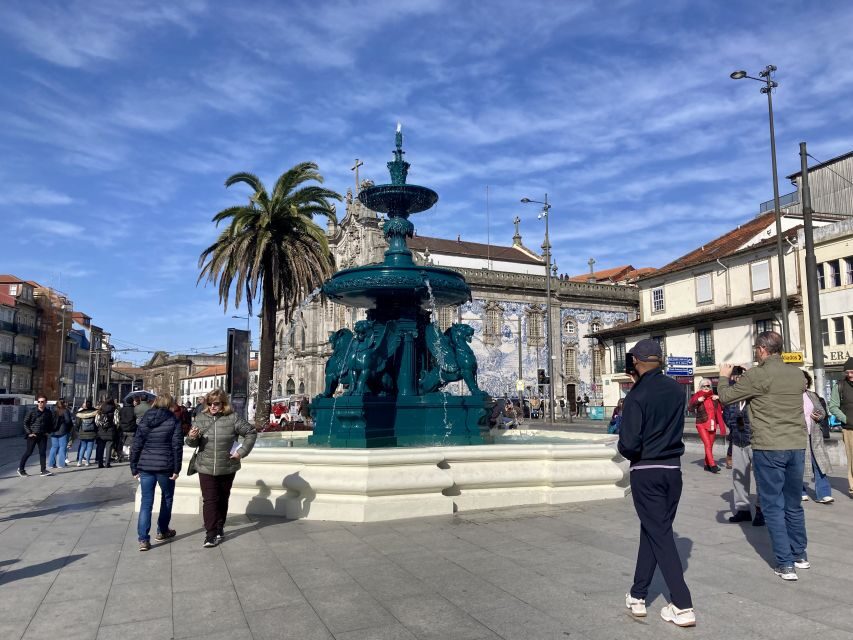
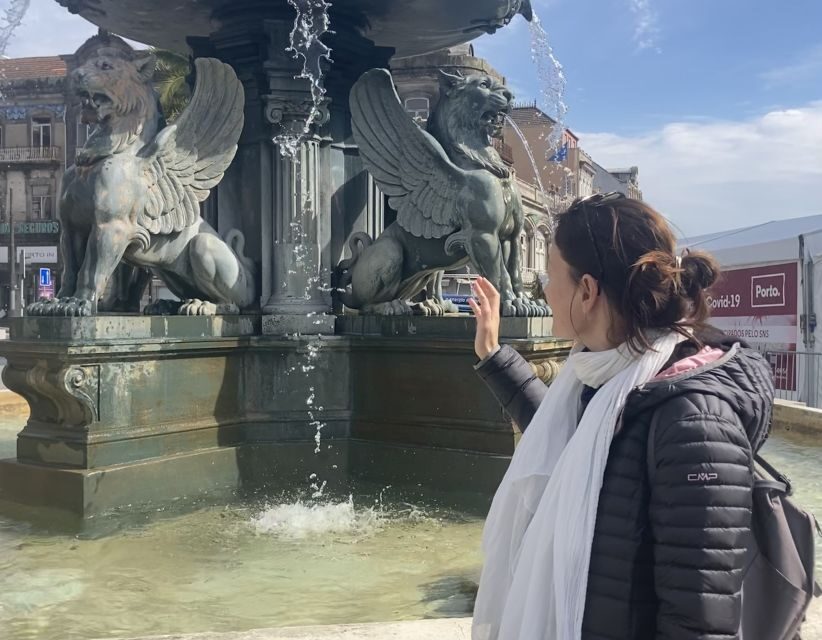
Right after, the tour goes to Fonte dos Leões. This fountain isn’t just a landmark; it’s a good moment to learn how Porto marks public spaces with art and symbols. In a city with heavy religious and maritime influence, these little “everyday” points are part of the visual language.
Then the route flows through the surrounding streets toward Igreja do Carmen (you’ll pass by). The guide uses these passes to stitch the story together: which corners feel more lived-in, where the architecture shifts, and why certain areas feel busier even when you’re still in the same general downtown radius.
Livraria Lello & Irmão: why this bookshop stop is about more than books
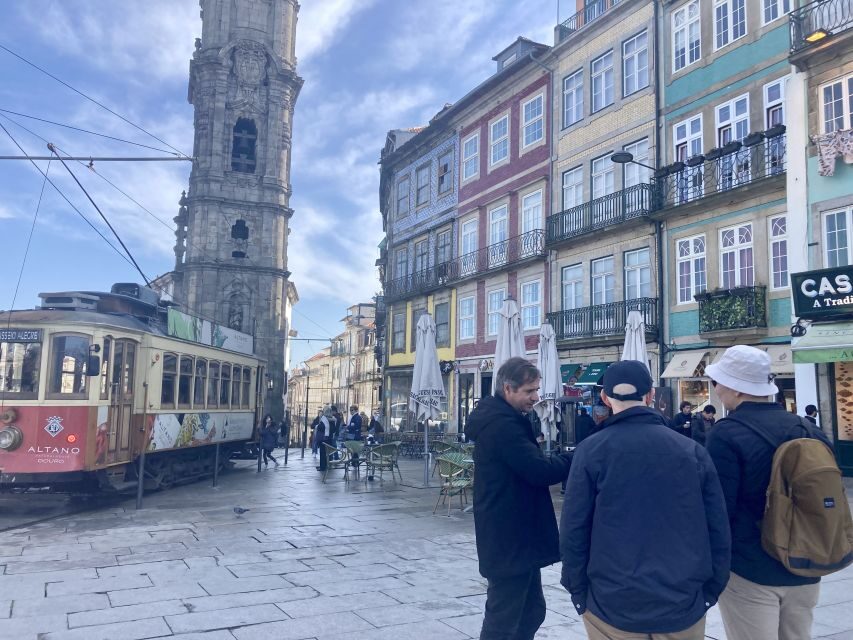
One of the most talked-about stops is Livraria Lello & Irmão. You’ll get a guided visit for about 10 minutes, with additional passing time built around it.
Here’s the key: the guide doesn’t treat it as only a famous interior. The value is the context—why Porto became a city where art, design, and public spectacle overlap. That’s especially useful if you’ve seen the exterior in photos already. Porto can look like “just another historic city” from far away; up close, you start noticing details that explain how the city earned its reputation.
Keep in mind: admission to facilities isn’t included if a stop requires a ticket. If you plan to go inside with full access, budget for possible extra entry costs.
Clérigos Tower and the Sé skyline: Porto’s vertical clues
After the bookshop area, the walk brings you near Torre dos Clérigos (about a 15-minute guided stop/passing time) and through the Cathedral Sé area. This is where Porto’s skyline starts to make sense.
The Torre dos Clérigos area is dramatic in a way that photos don’t fully capture. Standing near it, you get the sense of how the city’s older structures still “call the shots” visually. The guide’s job here is to connect what you see—church architecture, tower forms, stonework—to what those buildings meant historically and culturally.
Then you’ll move toward Sé, Porto (a guided stop of about 15 minutes) and later toward Porto Cathedral (another 10 minutes guided, with passing/walking segments connecting it all). Together, these stops give you a clean arc: religious architecture at street level, then the wider framing as you look toward viewpoints.
If you like architecture and city planning, this section rewards you. If you want only the quickest photos, you might feel like you’re getting more explanation than you expected—but that’s also where the guide’s local perspective makes the experience worth paying for.
Rua das Flores and Antiga Cadeia da Relação: history in plain clothes
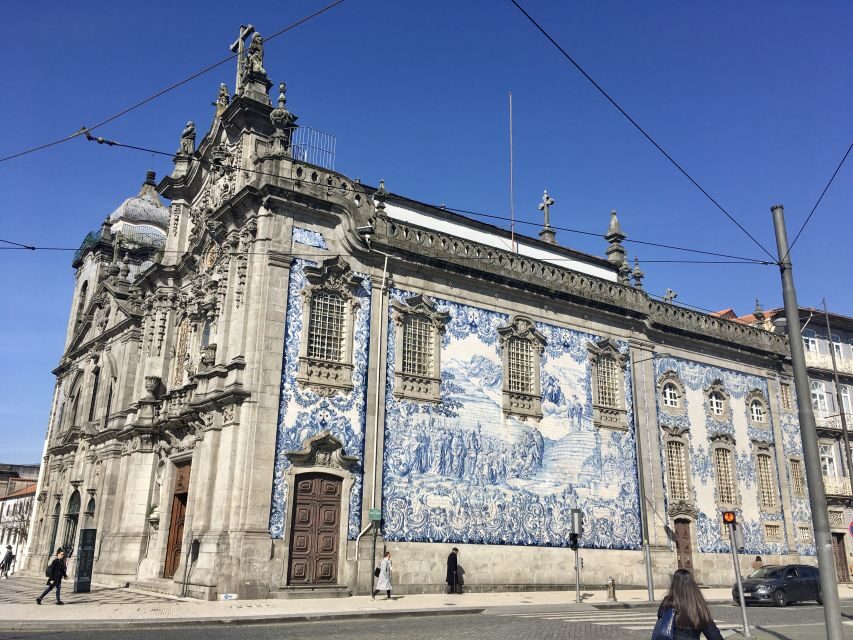
Between the major “headline” sites, the tour includes two stops that tend to feel more human: Antiga Cadeia da Relação do Porto (passed by, about 5 minutes) and Rua das Flores (about 5 minutes guided).
Antiga Cadeia da Relação do Porto matters because it adds a layer of everyday power and punishment—Porto’s older civic systems, not just its beautiful surfaces. Even as a brief pass, it’s a reminder that a city’s most photogenic corners often sit on top of tougher history.
Rua das Flores is the kind of street where Porto shows you how life stacks up: shops, signage, pedestrian flow, and the small patterns locals repeat all the time. This is also a good stretch for the guide to point out where you can expect more local commerce versus where the streets turn into pure spectacle.






The Rua das Aldas viewpoint stop: short pause, good payoff
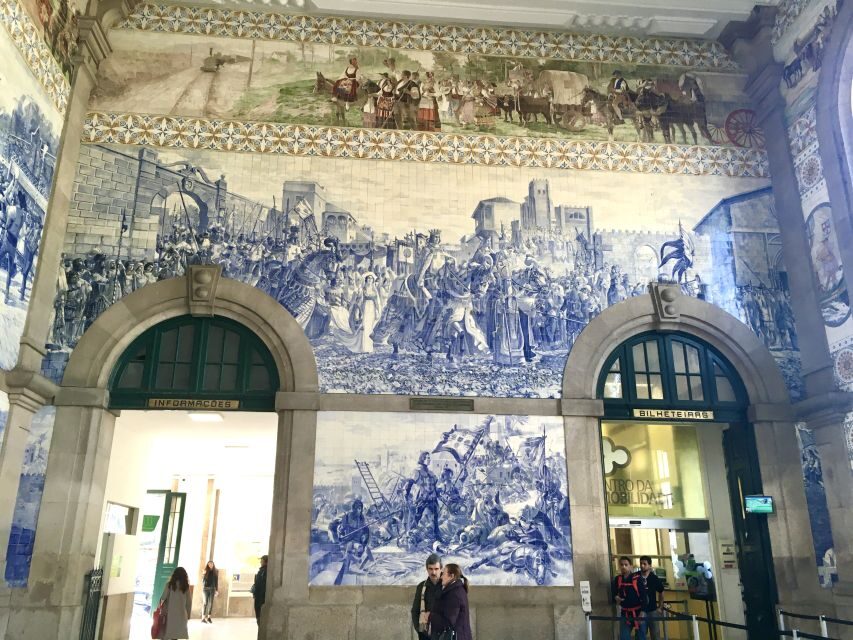
You’ll reach Rua das Aldas Viewpoint as a photo stop (about 5 minutes). It’s not long, but it’s timed well. The guide wants you to step back from the churches and bookshop area and get a mental model of how Porto sits—how neighborhoods relate, where movement likely funnels, and why certain areas feel higher, denser, or more exposed.
Five minutes is tight, so come ready:
- bring your phone/camera charged
- stand where you can see the broad view without blocking others
This quick viewpoint break is one of those “worth it even if you’re tired” moments.
São Bento Station tiles: the finish that feels like a grand reveal
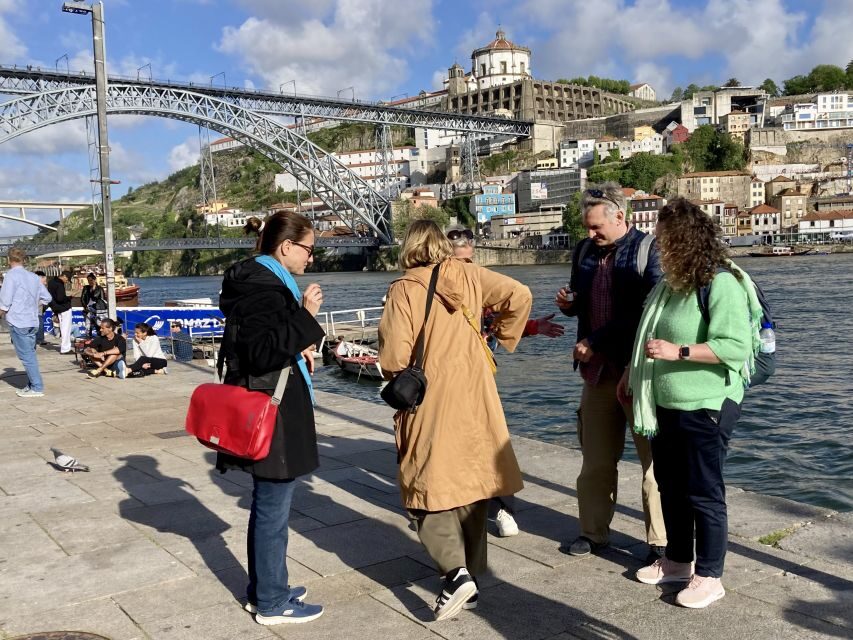
The tour ends with São Bento Station (about 10 minutes guided). This is a perfect way to cap the walk because it’s both stunning and functional—something you can experience even if you’re just passing through.
The guide focuses on what makes the station special from an architectural and cultural point of view. The tiled interior isn’t only pretty; it’s a way Porto tells stories through art. You’ll see how the city uses public space as a cultural billboard, turning what could be a boring transit stop into a mini museum without the fuss.
If you’re continuing on afterward, this also helps you choose what to do next. São Bento gives you easy access to getting around, and the tour’s “what to do after” tips usually connect well to where you’re staying in the city center.
What you’re really paying for: local guidance, not just landmarks
The price here isn’t only for walking past monuments. It’s for turning those monuments into a usable map in your head.
A big part of the value is the guide’s focus on day-to-day life and local trivia. You’ll hear fun, specific details tied to Porto’s identity—cidade invicta (the unvanquished city), the most important day of the year, and how local weddings fit into the city’s public culture. The guide also shares practical context about Porto’s iconic bridges and gives photo guidance so you’re not just snapping random angles.
You’ll also get a detailed list of restaurant recommendations after the tour, which is a real time-saver. Porto has plenty of places to eat, but knowing which streets and neighborhoods lead you to better local food takes trial and error out of the plan.
Some guides (like Hugo or Verena, depending on the departure) also tailor the talk to what you care about. In practice, that means if you’re more into architecture, the explanation leans that direction. If you’re more into food and daily life, the guide pushes those topics forward.
And yes, the tour runs in rain or sunshine. If it’s pouring, the guide keeps it entertaining and keeps you moving.
Price and time: is $29 actually good value?
At about $29 per person, the biggest “value test” is whether 2.5 to 3 hours feels like a small investment or like a long detour.
For me, it comes down to three things you get in this timeframe:
- multiple major anchors (São Bento, Clerigos Tower area, Sé/Cathedral zone)
- several smaller street stops that connect those anchors into one coherent route
- the guide’s practical payoff (restaurant list and what to do next)
If you were to self-guide, you’d still see many of these places—but you’d likely miss the small cues that explain why certain corners feel the way they do, and you’d lose time sorting out where to eat that night. The guide is essentially doing the “thinking for you,” then handing you a set of leads you can act on right away.
Also, small group matters at this price. Ten people max means you spend less time waiting at gates and more time actually hearing the story.
What the walking pace feels like (and what to pack)
This walk is walking-friendly, mainly around downtown and up from the central area. But you should still plan for steady movement across streets and between viewpoint areas.
Bring:
- comfortable shoes
- umbrella (Porto weather is unpredictable)
- hat and sunscreen for sunny days
If you’re the type who likes to stop and stare for a minute when something catches your eye, the small group pace helps. The guide can also adjust the energy based on your interests.
Just be honest about your limits. This experience isn’t listed as suitable for people over 80, people with low fitness, or people with mobility impairments.
Where you’ll be dropped off and how to continue your day
The tour finishes with drop-offs in central locations: R. de 31 de Janeiro 8, Rua do Loureiro 58, and Praça da Liberdade 2. This is useful because those areas keep you close to transit options and the next round of sightseeing.
A good way to use this timing: after the walk, pick one of the guide’s restaurant leads and then choose a nearby area to wander. You’ll already understand the city flow, so you won’t feel like you’re crossing Porto blind.
If you want to add a second day of guided experiences, Viva Douro Tours also offers other options like Porto Food Tour, Wine Tasting Walking Tour, Douro Valley Tour, and Green Wine Tour (separate experiences).
Should you book this Porto walking tour?
Book it if you want:
- a small-group introduction to Porto that blends famous sights with lesser-known street corners
- a guide who connects architecture to culture and local daily life
- practical help for where to eat and what to do after the walk
Skip or rethink it if:
- you know you’ll struggle with a steady 2.5 to 3 hour walk
- you need mobility-friendly routing and this kind of walking tour doesn’t fit your needs
- you’re only after quick photos and don’t want the guide’s context
If you’re new to Porto and want to get your bearings fast, this walk is a strong place to start. It’s the kind of experience that makes the rest of your self-guided wandering feel smarter, not just longer.
FAQ
Where is the meeting point?
Meet at the square by the old red kiosk in the Praça de Carlos Alberto area (either Praça de Carlos Alberto 70 or Praça de Carlos Alberto 68).
How long is the Porto highlights walk?
The tour runs about 2.5 hours, with a range of roughly 2.5 to 3 hours.
What languages are the guides?
The tour is offered with live guides in English and German.
How big is the group?
It’s a small group limited to a maximum of 10 participants.
Is admission to stops included?
Admission to facilities is not included if tickets or entry fees apply to specific stops.
Is this tour suitable for everyone?
It’s not listed as suitable for people over 80, people with low level of fitness, or people with mobility impairments.