REVIEW · PORTO
Porto Experience: History, Culture and Tasting Tour
Book on GetYourGuide →Operated by InsighTours · Bookable on GetYourGuide
Porto starts uphill, in stone shade. This tour is a tight, well-paced way to see Porto’s story in layers, mixing Sé do Porto with the charity-and-art world of MMIPO. I like the guided time inside the medieval cathedral complex, and I also like the tailored food stop, with typical delicacies and drinks included. One watch-out: the schedule is structured, so if you prefer lots of loose wandering over museums and explanations, you may want extra time on your own after the tour.
You get a clear route through the old center: church hill, artisan streets, the famous tile scenes at São Bento, then a museum that tells you why Porto built so much of its identity around faith and help. If you choose the longer add-on, the walk shifts toward big-city Porto with Avenida dos Aliados and the church-and-view combo around Clérigos and Miradouro da Vitória.
At $53 per person for a 3-hour experience, the value comes from the included guided entry at major stops plus the tasting, not just the walking. I also like that there’s an express security check to reduce waiting time, and that guides are offered in multiple languages, including English and Portuguese.
In This Review
- Key things to know before you go
- Starting at Terreiro da Sé: the fastest way to get your bearings
- Sé do Porto Cathedral: medieval strength in 40 minutes
- Paço Episcopal (Bishop’s Palace): where Porto’s story gets human
- Rua das Flores and Rua de Sant’ Ana: artisan streets with real purpose
- São Bento Station: azulejos that read like a history book
- MMIPO Museu da Misericórdia do Porto: art tied to charity
- The food stop: typical delicacies, timed right (about 30 minutes)
- When you add the 4-hour extension: Aliados, Clérigos, and the viewpoint finish
- Avenida dos Aliados and Porto City Hall
- Clérigos Church and the old jail area
- Miradouro da Vitória: rooftops and river
- Portuguese Center of Photography: a pause for modern Porto
- Drop-off points: two convenient exits from the old center
- Price and value: what $53 buys you (and why it’s fair)
- Who this tour fits best
- Should you book Porto Experience: History, Culture and Tasting Tour?
- FAQ
- How long is the Porto Experience tour?
- What does the tour cost?
- Where does the tour start?
- How will I recognize the guide?
- What’s included in the price?
- Is there a food tasting?
- Do you visit São Bento Station and MMIPO Museu da Misericórdia do Porto?
- What optional sights are added with the longer tour?
- Are skip-the-line options and cancellations offered?
Key things to know before you go
- Sé do Porto + Paço Episcopal first: medieval Porto comes before the pretty streets
- São Bento Station azulejos: picture-perfect tile storytelling with a short guide stop
- MMIPO (Mercy Institution) museum time: art and charity linked to Porto’s identity
- A guided tasting: typical delicacies plus drinks, timed so you do not lose the flow
- Optional longer city-center extension: Aliados Avenue, Clérigos area, and a viewpoint finish
- Many languages, real guide energy: guidance offered in Portuguese, English, Spanish, Russian, Ukrainian, and Italian
Starting at Terreiro da Sé: the fastest way to get your bearings
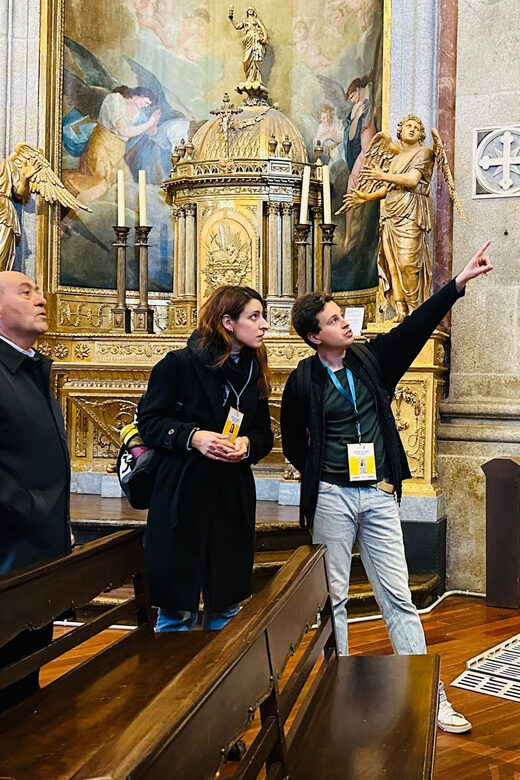
The tour begins at Terreiro da Sé, right where Porto’s historic center feels like it’s stacked on a hill. This is one of those good planning moves: you start with the place that explains why Porto looks the way it does. The cathedral area is not just pretty stone. It’s a statement about power, faith, and the city’s early role as a growing coastal crossroads.
The meeting point is easy to spot. The guide waits next to a pillar in front of Sé do Porto, identified with the company tag and a white umbrella. That matters on a first day in Porto, because this part of town has angles and alleys that can make even confident walkers second-guess themselves.
You can also read our reviews of more food & drink experiences in Porto



Sé do Porto Cathedral: medieval strength in 40 minutes
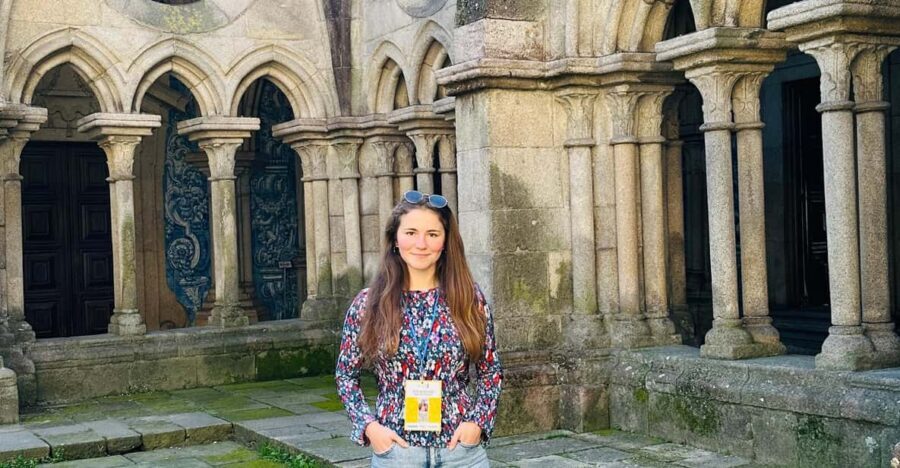
Your first real stop is the Porto Cathedral, Sé do Porto, with a guided visit (about 40 minutes). You’re not just looking at the outside and moving on. You get guided context that helps you understand what you’re seeing and why it matters.
In practical terms, this is a good length. Long enough to make the building feel legible. Short enough that it doesn’t flatten into a lecture. You’ll also appreciate the structure of the group early on, because it sets you up for quick, focused sightseeing later.
A nice bonus here is the express security approach. When a site requires extra checks, anything that reduces time spent standing around helps your afternoon move faster.
Paço Episcopal (Bishop’s Palace): where Porto’s story gets human
Right after the cathedral, you visit Paço Episcopal (about 20 minutes) for a guided look at the palace/episcopal complex. This part changes the tone. It’s still religious and historical, but now you’re closer to the people who lived and ruled from inside these walls.
If you like architecture and institutions—church, authority, and how power shows up in buildings—this is one of the most satisfying parts of the walk. The palace visit also balances the day: after cathedral stones, you get a sense of the everyday structure behind the big public face.
Rua das Flores and Rua de Sant’ Ana: artisan streets with real purpose
Next come the smaller streets: Rua das Flores (about 15 minutes) and Rua de Sant’ Ana (about 20 minutes). This is where Porto starts to feel like a living neighborhood instead of a list of monuments.
Rua das Flores is especially worth it because you’re walking through a classic stretch of shops and local life. The key here is to use the guidance to slow down your eyes. Look for the details the guide points out, then you can decide what you want to revisit later without the pressure of the tour clock.
Then Rua de Sant’ Ana keeps the momentum, still within walking distance of the city’s big photo moments. Expect this as a gentle transition: you go from medieval architecture to Porto’s everyday texture.
São Bento Station: azulejos that read like a history book
You’ll hit São Bento Station next, with a short guided visit (about 15 minutes). If you’ve seen photos of Porto, you’ve probably seen its azulejos—blue-and-white tile panels that look like paintings, but are really built to carry stories.
What I like about this stop on a tour is the timing. You don’t get stuck there for hours. Instead, you get the key to reading what you’re seeing—how the scenes connect to national and civic history—then you can enjoy the tiles as art.
It’s also a smart break in the day. You get a guided “aha,” you look, you take photos, and you still have enough energy to finish the cultural leg at MMIPO.
You can also read our reviews of more historical tours in Porto





MMIPO Museu da Misericórdia do Porto: art tied to charity
After the station tiles, the tour moves to MMIPO Museu da Misericórdia do Porto with a guided visit (about 40 minutes). People sometimes call it a little kind of “Portuguese Louvre,” and the reason is simple: it’s a concentrated museum experience, with a strong curatorial voice about what you’re meant to notice.
What makes this stop meaningful is the museum’s angle. It’s connected to the Mercy Institution, so the story isn’t only about aesthetics. You learn how charity, society, and art shaped Porto. That gives you a different lens for the city. Instead of only seeing buildings and monuments, you see the social engine that helped form Porto’s identity.
One practical tip: museum time can feel long if you’re hot, tired, or already museumed out. In that case, use your questions. Ask about what you should focus on first. Guides tend to adjust their pacing when they see you losing the thread.
The food stop: typical delicacies, timed right (about 30 minutes)
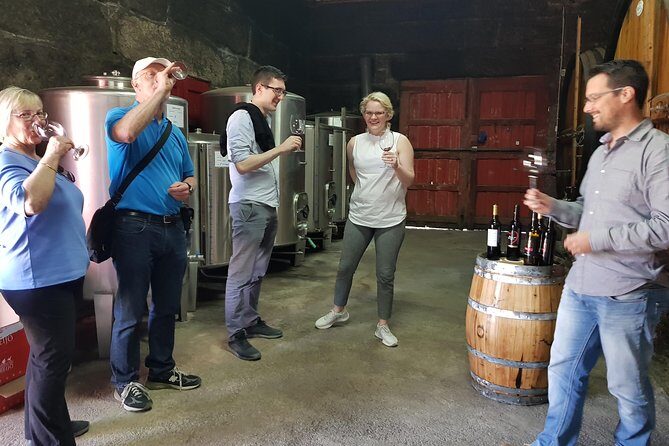
The highlight for many people is the tasting. You get a food stop in a quieter pocket of the route, lasting about 30 minutes, with typical delicacies and drinks included.
This is built into the tour for a reason. If you hunt food on your own, you often end up spending time deciding. Here, the guide helps you taste local traditions without the guesswork. You’re also less likely to end up with something that looks Portuguese but is really just tourist-friendly pastry in disguise.
Because the tasting is guided and included, it’s a good value moment: you’re not paying extra on top of already paid tickets and entry. If you have a preference (less sweet, more savory), it’s worth telling your guide early so the tasting lands the way you like.
When you add the 4-hour extension: Aliados, Clérigos, and the viewpoint finish
The optional longer tour is for you if you want more classic Porto icons after the first cultural sweep. This add-on adds big-city scale and a couple of landmarks that are best enjoyed with interpretation, not just quick sightseeing.
Avenida dos Aliados and Porto City Hall
You stroll along Avenida dos Aliados, where Porto feels more like a capital city. You’ll also see Porto City Hall, a classic stop that helps you connect medieval power with more modern civic identity.
Clérigos Church and the old jail area
Next comes Clérigos Church, known for its distinctive decorations and its role as a major landmark in Porto. There’s also time that links the day to the ancient city court and jail area, which adds a sharper edge to the city’s story. It’s history you can feel, not just photograph.
Miradouro da Vitória: rooftops and river
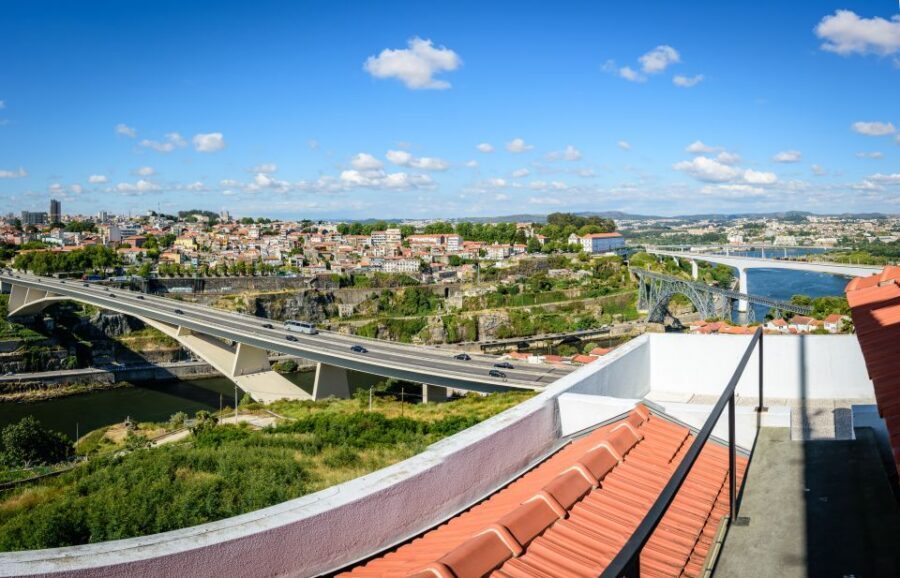
The extension ends with a photo stop at Miradouro da Vitória, where Porto’s rooftops and the river open out from above. This viewpoint is a perfect punctuation mark. You’ve spent the day reading architecture and institutions; now you get the skyline payoff.
If your feet are tired, don’t fight it. Use this last stop to rest your legs while still getting a satisfying final memory.
Portuguese Center of Photography: a pause for modern Porto
On the main route (even without the extension), you’ll also stop at the Portuguese Center of Photography area for sightseeing (a short walk). Even if you do not go inside, it’s a good contrast point.
Porto isn’t only tiled churches and old palaces. A photography stop helps you shift from “what was built” to “how people see.” It also gives you a break from the constant “look up” angle of churches and rooftops.
Drop-off points: two convenient exits from the old center
At the end, you’ll be dropped off at two different places: Dworzec São Bento and Praça do Infante D. Henrique. That’s useful because it means you can match your next plan to where you want to walk next, rather than getting stuck backtracking across the city.
Price and value: what $53 buys you (and why it’s fair)
For $53 per person over about 3 hours, this is not a cheap walk in the park. You’re paying for guided visits and entry-type time at major sights, including Sé do Porto, the Episcopal Palace, and MMIPO, plus the tasting with drinks.
That makes the price feel more reasonable if you:
- want a guided framework for Portuguese history (church hill to civic Porto)
- care about specific sites like São Bento and MMIPO rather than only “photo stops”
- like having food handled for you
It’s less of a bargain if you’re the type who hates structured pacing, because the tour keeps a schedule and includes multiple guided stops. In that case, you might be better off doing a self-guided route and spending more time deciding where to eat.
Who this tour fits best
I think this is a great match for:
- first-timers who want a smart route through the medieval core
- people who enjoy architecture, institutions, and how history shows up in buildings
- anyone who wants local food without hunting
It’s also a good option if you travel with mixed interests. The day balances church-and-palace context with a museum stop and a real food payoff.
And yes, the guide quality can be a big deal. In particular, guides like Rui and Arthur are described as warm, attentive, and enthusiastic. Damiano is noted for being prepared and informed, and Olexandra is mentioned for doing excellent work in a longer format. Styles can vary by guide, though, so if you like very light commentary and lots of free street time, go in expecting a guided experience.
Should you book Porto Experience: History, Culture and Tasting Tour?
Book it if you want a guided Porto day that gives you both context and taste. You’ll leave with a clearer sense of why Porto’s buildings and institutions matter, not just how they look.
Pass or consider an alternative if you prefer wandering with minimal structure, or if you know museums can drain you quickly. The tour’s strengths are built around guided stops, so you’ll want to be in the mood for that kind of pacing.
If you’re on a tight schedule, this is also a smart use of time: you hit major landmarks in a compact loop, and you can add the longer version if you want the city’s civic and viewpoint moments too.
FAQ
How long is the Porto Experience tour?
The duration is 3 hours. You can also choose an optional 4-hour extension for more city landmarks.
What does the tour cost?
The price is $53 per person.
Where does the tour start?
The meeting point is at Terreiro da Sé, next to the pillar in front of Se do Porto (Porto Cathedral).
How will I recognize the guide?
The guide will be identifiable by the company tag and holding a white umbrella next to the pillar in front of Sé do Porto.
What’s included in the price?
It includes tickets and guided visits for Porto Cathedral, the Episcopal Palace, and MMIPO, plus typical delicacies and drinks, along with professional guides.
Is there a food tasting?
Yes. There is a tasting of local delicacies included, and drinks are included too.
Do you visit São Bento Station and MMIPO Museu da Misericórdia do Porto?
Yes. You stop at São Bento Station and visit MMIPO Museu da Misericórdia do Porto with a guided visit.
What optional sights are added with the longer tour?
The 4-hour extension includes additional Porto highlights such as Avenida dos Aliados and Porto City Hall, plus Clérigos Church and the Miradouro da Vitória viewpoint, along with the old jail area.
Are skip-the-line options and cancellations offered?
There’s an express security check to help you avoid waiting. Free cancellation is available up to 24 hours in advance for a full refund.