REVIEW · PORTO
Porto: Azulejos Tiles Walking Tour
Book on GetYourGuide →Operated by Nuno Miguel Ferreira Silva · Bookable on GetYourGuide
Porto’s tile art makes more sense up close. This guided walk turns the city into a kind of open-air textbook, starting at Igreja do Carmo and moving through the historic center where azulejos cover everything from modest façades to bold, billboard-like panels.
I love two things most: the way the guide connects tile designs to how they were used on real buildings, and the chance to see how different techniques create different looks in daylight. I also like that the route is practical, hitting churches, depots/stores, and the train station area so you can keep spotting tile details after the tour. One possible drawback: you’ll be walking and looking for small visual cues for about 2.5–3 hours, and some explanations can run long—so don’t stack this right before a very tight plan.
In This Review
- Key Tile Moments You’ll Actually Notice
- Entering The Tile Trail: From Igreja do Carmo Into Porto’s UNESCO Center
- Iglesia do Carmén Stop: A Quick 10 Minutes That Sets Your Eye
- Bank of Materials: Where Tile Art Meets Production and Placement
- The 15-Minute Mystery Stop: Your Guide’s “Look Closer” Moment
- Technique Talk While You Walk: How Tiles Act Like Citywide Signage
- Churches, Depots, Stores, and the Train Station: Why This Route Feels Complete
- Finishing by São Bento and Avenida dos Aliados: Turn Tile Lessons Into a Better Walk
- Price and Time: Does $53 Make Sense for What You Get?
- Who This Azulejos Tour Fits Best
- Should You Book This Porto Azulejos Tiles Walking Tour?
- FAQ
- Where do I meet the guide?
- How long is the Porto azulejos walking tour?
- What is the tour route like?
- What languages is the live guide available in?
- Where does the tour end?
- Is the tour wheelchair accessible, and is it suitable for mobility impairments?
Key Tile Moments You’ll Actually Notice
- Start at Igreja do Carmo and build momentum fast with your first close-up tile lesson
- Spot tiles as communication, from simple coverings to full patterned “statement” façades
- See the tile ecosystem, including church sites plus depot/store-style stops, not just pretty walls
- Learn techniques and applications so you can recognize styles on your own later
- Guides with strong Q&A energy like Nuno Miguel Ferreira Silva and Susana tend to answer questions clearly
- End near São Bento and Avenida dos Aliados, a handy landing spot for more wandering
Entering The Tile Trail: From Igreja do Carmo Into Porto’s UNESCO Center
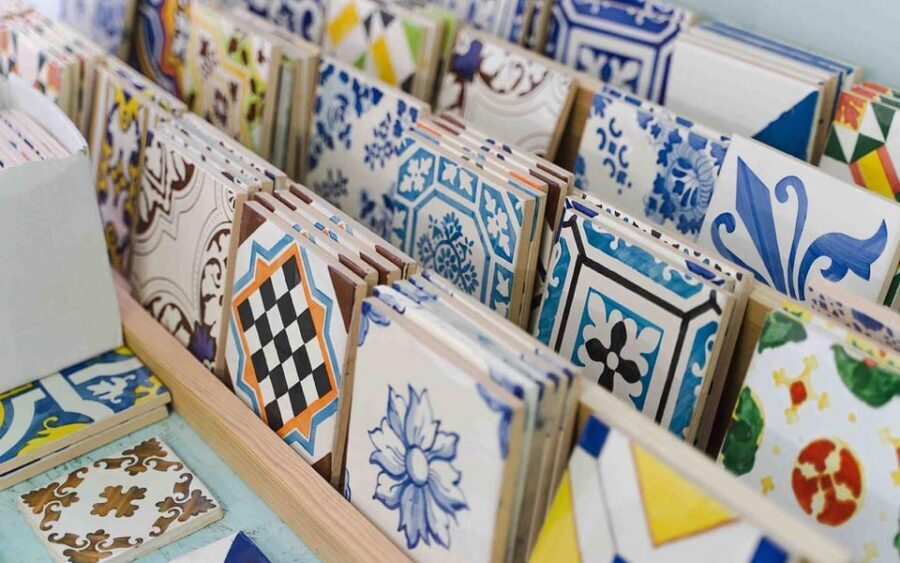
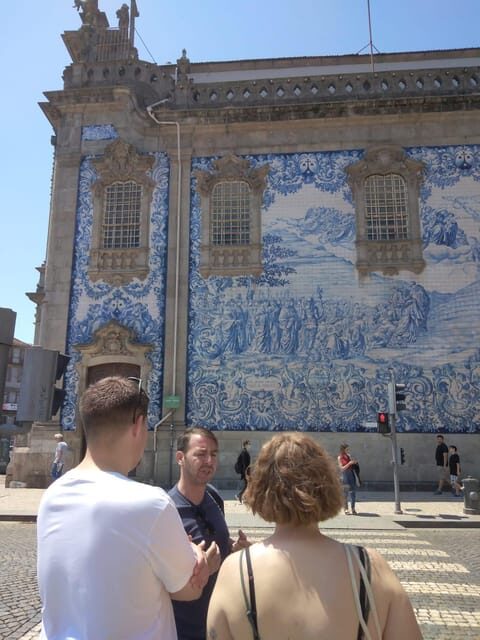
Your day starts at Igreja do Carmo, and that matters more than you might think. The tour begins where tile work is already part of the building’s identity, so you’re not waiting long to see what you’re really here for. Expect a guided walk through Porto’s UNESCO historic center, where the streets feel designed for noticing details.
The best part of starting at a church is perspective. You quickly learn that azulejos aren’t just decoration. They’re also a visual language that changes with the building’s purpose—religious spaces, commercial areas, and travel hubs all use tiles differently.
If you want to get value quickly, you can. Do this early in your Porto stay. Once you’ve seen how the guide teaches the “how and why,” you’ll shop smarter and spot replicas or certain styles while you’re casually browsing later.
You can also read our reviews of more walking tours in Porto



Iglesia do Carmén Stop: A Quick 10 Minutes That Sets Your Eye
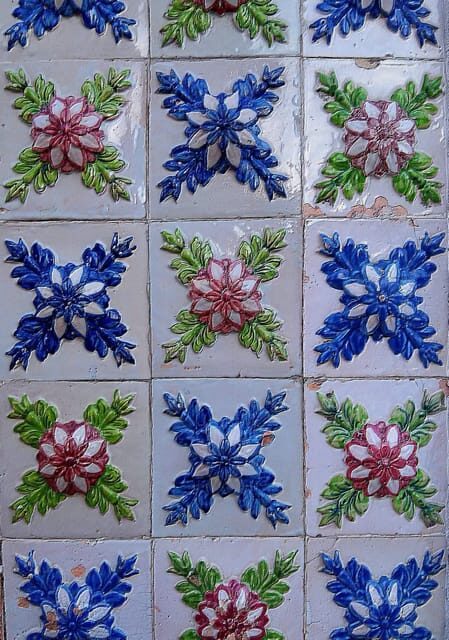
One of the early stops is Igreja do Carmén (about 10 minutes). It’s not a long pause, so it works like a warm-up. The guide points out tile patterns and how the decoration is integrated into the façade, not just pasted on top.
Here’s what you should watch for in that short window:
- How the tiles frame architectural features
- Whether the design looks like a unified panel or a patchwork of different elements
- How colors and lines shift depending on the placement
Because time is short, you’ll want to take photos quickly and then listen. The guide’s job is to train your attention so you’re not just collecting images—you’re learning to read what you see.
Bank of Materials: Where Tile Art Meets Production and Placement
Next you’ll spend about 20 minutes at the Bank of Materials. This is where the tour starts connecting artistic beauty with real-world tile making and use. You’re not only admiring surfaces. You’re seeing the tile story as a system: produced, stored, distributed, and installed in a way that fits different buildings.
This stop is valuable if you like crafts, not just sightseeing. The tour emphasizes how tiles were made and how different factories produced them. Even without getting technical jargon-heavy, you’ll come away with a better sense of why some designs look consistent and others feel more experimental.
A practical way to enjoy this stop: pick one area with a clear pattern and compare it mentally to what you saw on the churches. Ask yourself what changed. Did the design become more “public-facing”? Did the placement look built for distance, like a billboard?
The 15-Minute Mystery Stop: Your Guide’s “Look Closer” Moment
The schedule includes another stop of about 15 minutes, but the key idea is what matters most: it’s another chance to train your eye on a different type of tile treatment.
This is the kind of stop where your guide typically shifts the focus from general appreciation to specific observation—like why a pattern might cover a larger section here, but appears in a more controlled way somewhere else. It’s also a time when you can ask direct questions about what you’re seeing, because you’ll likely have the guide’s attention for a set duration.
Even if you only catch a few details, that’s enough. The whole point of a short, guided format is repetition: multiple façades, multiple styles, and your brain starts connecting dots fast.
Technique Talk While You Walk: How Tiles Act Like Citywide Signage
As you move through Porto, the tour keeps returning to techniques and applications. That phrase matters, because tiles can look similar at first glance yet be used with different goals.
You’ll notice tiles fall into broad visual roles:
- Full patterned coverings that become part of the building’s identity
- Smaller sections that highlight architectural areas
- More billboard-like displays where the design reads from a distance
The guide also explains tile art history in plain language and connects it to the city’s identity. You’ll come away with a stronger sense of how Porto uses azulejos as a local signature—one that shows up in churches, depots, stores, and the travel infrastructure you pass without thinking.
One of the more useful outcomes from this kind of tour is pattern recognition. After you’ve been taught what to look for, you’ll start spotting clues in the wild—like design choices that can help you guess time periods or whether something feels like a replica rather than an original style.
Just remember: the tour is image-heavy, but it’s also discussion-heavy. If you’re the type who hates long explanations, it helps to come prepared with a couple of questions so you feel in control of your time.






Churches, Depots, Stores, and the Train Station: Why This Route Feels Complete
Some tile tours only hit the most famous façades. This one takes a broader view by including churches, depots, stores, and the train station area. That mix is practical for you because it shows tile art where it actually lives in daily Porto.
- Churches teach you how azulejos can be integrated into spiritual architecture and structured storytelling.
- Depots/stores reveal tiles as products—something made, stocked, sold, and selected for specific building needs.
- The train station stop brings the whole thing into a travel context, where tiles become part of arrival and first impressions.
If you like authentic city texture, this route is a better fit than a “greatest hits only” plan. And if your goal is shopping, this is also smart. The guide’s framing helps you understand what you’re buying and what style it relates to.
Finishing by São Bento and Avenida dos Aliados: Turn Tile Lessons Into a Better Walk
The tour ends next to São Bento train station, in the area around Avenida dos Aliados. This is an ideal landing point. You’re in a central zone where it’s easy to keep moving—either toward more sightseeing or back into the city rhythm without losing time.
Use this ending to your advantage:
- Look for tile patterns on your way out, while the guide’s explanations are still fresh.
- Take a last round of photos with new eyes. You’ll notice different details than you did at the start.
- If you’re riding trains later, this stop helps you connect architecture to your travel day.
Because you finish in a major thoroughfare area, you won’t feel like you’ve been dropped into a random corner. You get a clean transition.
Price and Time: Does $53 Make Sense for What You Get?
At $53 per person, you’re paying for a guided walk of roughly 2.5 hours (the tour is also described as a 3-hour guided experience). For that length, the value comes from two things:
- You’re not just seeing tiled buildings. You’re learning a framework for how to interpret them.
- The route includes multiple types of stops—churches, depot/store-style locations, and the train station—so it’s not a one-note photo shoot.
Compared with doing azulejo sightseeing on your own, the big advantage is that your guide helps you connect design choices to placement and purpose. That turns random “pretty tiles” into something you can actually recognize and talk about.
The main trade-off is attention. You’ll be walking and focusing on details. If you prefer slow museum pacing or you’re exhausted from a flight, you might feel the time pass fast. Bring comfortable shoes and water so you can stay sharp.
Who This Azulejos Tour Fits Best
This tour is a great fit if you:
- Love architecture and want to understand how decoration is used on real buildings
- Enjoy crafts and want a guided way to learn techniques and applications
- Want a route that supports both sightseeing and smarter souvenir shopping
- Plan to keep exploring Porto after the tour and want your eye trained for what to notice
It’s probably not the best choice if you:
- Hate walking for stretches or dislike long explanations
- Have very limited mobility needs, since it’s marked as not suitable for people with mobility impairments (even though it’s listed as wheelchair accessible—so read that carefully before you book)
- Are traveling with kids under 8, since it’s marked not suitable for them
Should You Book This Porto Azulejos Tiles Walking Tour?
Yes—if you want your time in Porto to feel more meaningful than just photo-taking. This walk is priced like a focused guided experience, not a casual stroll. And it teaches you how to read azulejos: what the patterns do, where they show up, and why the city treats tiles as a core part of its identity.
My advice: book it early in your trip so you can spot tile styles while the rest of Porto is still new. Bring a camera, but also be ready to listen. If your group prefers silence and minimal talking, this may feel a bit talk-forward. If you like learning how the city works under the surface, it’s a strong choice.
FAQ
Where do I meet the guide?
You meet the guide at Igreja do Carmo, at the tiled facade.
How long is the Porto azulejos walking tour?
It’s listed as 2.5 hours (and also described as a 3-hour guided walking tour).
What is the tour route like?
You’ll visit tile-covered spots across Porto’s historic center, including churches, depots, stores, and the train station area.
What languages is the live guide available in?
The live tour guide is offered in English and Portuguese.
Where does the tour end?
The tour ends next to São Bento train station, near Avenida dos Aliados.
Is the tour wheelchair accessible, and is it suitable for mobility impairments?
The tour is listed as wheelchair accessible, but it’s also marked not suitable for people with mobility impairments, so it’s worth checking that fit before booking.