REVIEW · BRAGA
Guimarães Old Town Private Walking Tour
Book on Viator →Operated by Portugal With A Local · Bookable on Viator
Guimarães has a way of pulling you in. This private walking tour is a focused way to understand medieval life in Portugal, with stops that connect the castle, the founding story, and the quieter corners of town. I especially like how the guide turns dates and architecture into real-world scenes, not just facts on a page. You’ll also get a true private pace for your group.
Two things really sold me on this experience: the visit to Guimarães Castle area (with the right expectations set about the extra ticket), and the small, included break for coffee and pastries that keeps the walk comfortable. One consideration: the town center is compact, so if you’re chasing big, standout sights every minute, you may find the route feels short—and that castle entry costs extra.
In This Review
- Key points before you go
- Getting oriented fast: Avenida Dom João IV to the medieval core
- Why private beats group tours in Guimarães Old Town
- Guimarães Castle: what you’ll see and the 7.50 euro ticket reality
- Birthplace of Portugal stories: the medieval town streets
- Largo do Toural: the square that shaped Guimarães (12th–14th centuries)
- Cruzeiro de Nossa Senhora da Guia: an 18th-century Baroque chapel stop
- The old Jewish quarter: what you’ll learn about Sephardic Jews in the 14th century
- Coffee and pastries: the small included break that keeps things enjoyable
- End point at Museu de Alberto Sampaio: a good way to keep exploring
- Price and value: is $57.60 per person fair for this route?
- Who this tour suits best
- Should you book the Guimarães Old Town private walk?
- FAQ
- How long is the Guimarães Old Town private walking tour?
- Where does the tour start and where does it end?
- What is the price per person?
- Is Guimarães Castle admission included?
- What’s included in the tour besides the walking?
- Is this tour private?
- How do I get my ticket?
- What if the weather is poor?
- Does the tour require anything physical?
Key points before you go
- Private group pace: Only your party joins, so you can move at a human speed.
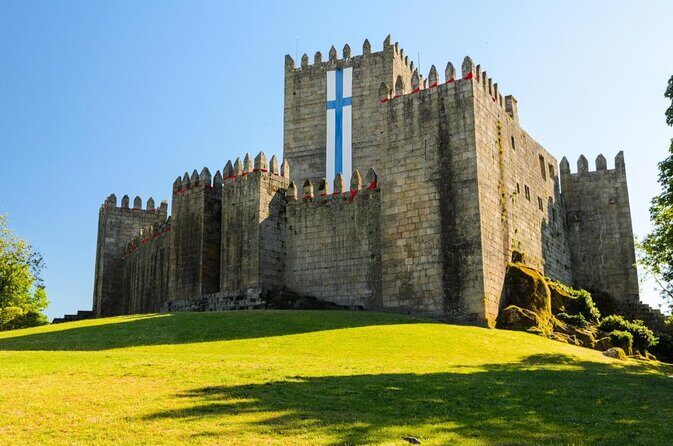
- Guimarães Castle stop included, ticket separate: You’ll see the place, but admission runs extra.
- Coffee and local pastry included: A real break, not a token photo stop.
- Old Jewish quarter coverage: You’ll hear how Sephardic Jews lived and navigated pressure in the 14th century.
- Ends outside Museum Alberto Sampaio: Easy to extend your day on foot.
- 2–3 hours total: Enough time for highlights without burning a full day.
Getting oriented fast: Avenida Dom João IV to the medieval core
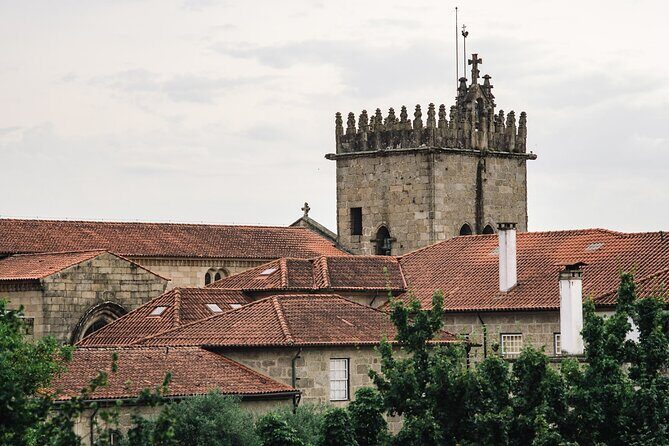
The first win here is simple: it’s easy to find the meeting spot in Guimarães. You start at Avenida Dom João IV, and that matters, because in old towns the “meet here somewhere near the church” version can turn into wandering. This one is straightforward, and you’re also near public transportation, so you don’t need a car just to get going.
Once you’re lined up, the tour quickly gives you a sense of shape. Guimarães feels small, but it isn’t random. Streets and landmarks connect to specific periods, from early medieval power to later religious and cultural tensions. That’s the real value of a guided walk here: you get order.
If you have moderate physical fitness, you’re set. It’s a walking tour with a couple of stops that take short stretches of time, so you can keep your energy for what you care about most.
You can also read our reviews of more walking tours in Braga

Why private beats group tours in Guimarães Old Town
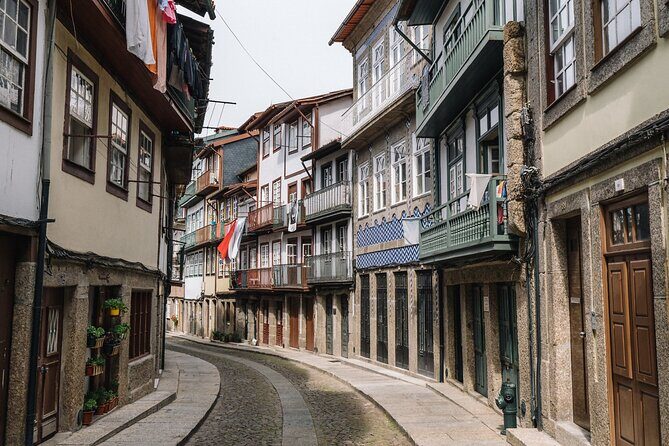
For a medieval town like this, the difference between a group tour and a private one is how it feels when you slow down. On a private tour, I like that you can pause for questions, point at details, and keep moving only when your group is ready.
This matters at Guimarães because the story is layered. The guide isn’t just listing sights. They’re explaining how people worked, lived, worshiped, and handled conflict as Portugal’s identity formed and then evolved. You don’t need to “keep up” with the crowd, so the explanations land better.
You’ll also cover a mix of places—castle views, town streets, a major square, and a Baroque chapel—without turning it into an exhausting sprint. The total time is about 2 to 3 hours, which is honestly a sweet spot for a compact historic center.
Guimarães Castle: what you’ll see and the 7.50 euro ticket reality
Your first major stop is Guimarães Castle, one of Portugal’s older fortifications from the early medieval period. You’ll spend about 20 minutes here, with admission not included. That extra entry fee is listed as 7.50 euros per person, so plan for it if you want to go inside.
Here’s how to think about this stop so you don’t feel surprised: the tour gives you the castle experience in a “guided highlight” format. You’ll learn why the architecture matters—especially how the 10th to 11th centuries helped shape the region’s identity as a kingdom. But ticketing is separate, so your final cost depends on whether you choose to purchase castle admission.
If you do pay for castle entry, you’re likely to get more satisfaction from those 20 minutes, because you’ll be able to connect the guide’s explanation to what’s inside the site. If you don’t, you can still get a lot from the stop, but it will be more exterior-focused.
Practical tip: wear shoes you trust. Even when a stop is short, castle areas tend to have uneven ground and views that encourage extra walking.
Birthplace of Portugal stories: the medieval town streets
After the castle, you move into the core of Guimarães—about 45 minutes at the main old-town area. This is where the tour leans into the town’s identity as the birthplace of Portugal. The guide focuses on what daily life likely looked like: how people lived, worked, and shaped a community over time.
This part is especially valuable if you’re the type who hates reading history after the fact. A walk like this turns the town into a timeline you can feel. The streets and small historic buildings become evidence of the eras you hear about, including religious heritage and older structures connected to earlier periods.
A drawback to keep in mind: because the focus is interpretation, not museum-style depth, this isn’t the place to expect exhaustive documentation. Instead, expect a strong “big picture” understanding that helps you wander the town afterward with better context.
Largo do Toural: the square that shaped Guimarães (12th–14th centuries)
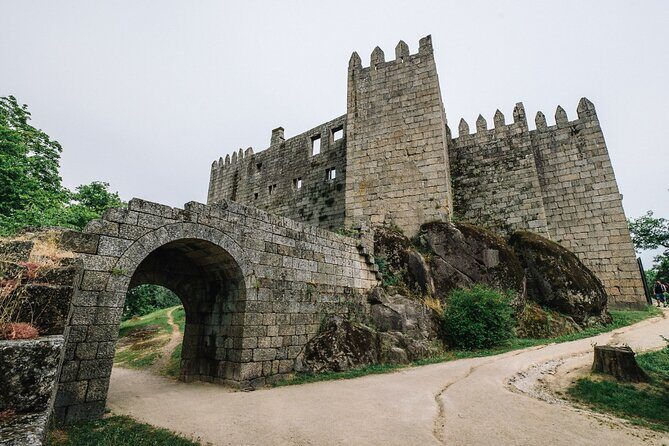
Next is Largo do Toural, a major square tied to Guimarães’s urban development from about the 12th to 14th centuries. The stop is about 15 minutes, which is just long enough to understand why the square matters without rushing you through it.
Squares are often the heart of old towns, and this one is a good example of why. Even if you’re not spending hours in a single spot, a guide can point out how public space affects daily life—where people would gather, how movement and power concentrate around shared spaces, and why such locations become anchors for community identity.
If you like architecture and city planning, you’ll probably get a lot out of this stop. If you prefer quieter corners, use this square moment to grab a breather before the next religious landmark.
You can also read our reviews of more private tours in Braga






Cruzeiro de Nossa Senhora da Guia: an 18th-century Baroque chapel stop
Then comes Cruzeiro de Nossa Senhora da Guia, an 18th-century Baroque chapel connected to imagery of the Passion of Christ. You’ll have about 20 minutes here.
This is a good change of pace because it shifts the story from civic life to spiritual life—and it does it in a way that’s easy to absorb on foot. Baroque religious art can feel intense at first glance, and without a guide it’s easy to miss what you’re supposed to notice. Here, the guide’s commentary helps you connect the symbolism to the role religion played in the culture of the time.
Drawback: the chapel stop is still time-limited. If you’re the type who could happily spend 45 minutes inside one place, you might feel slightly rushed. But within a 2–3 hour tour, this stop is a strong “one step deeper” moment.
The old Jewish quarter: what you’ll learn about Sephardic Jews in the 14th century
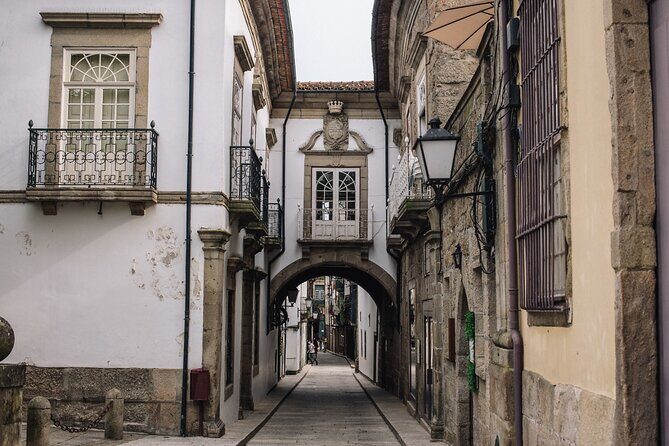
One of the most memorable parts of the tour is the coverage of the old Jewish quarter, handled during the walking sections of the route (about 15 minutes). The guide explains how Sephardic Jews lived and coped alongside Christians during the 14th century, and how that changed with the development and improvement of the Portuguese Inquisition.
Even if the exact details aren’t something you’d pick up on your own while passing streets, this kind of guided context changes how you look at a place. You stop seeing the old streets as scenery and start seeing them as social space—where identity, law, and pressure shaped everyday decisions.
This isn’t the sort of stop that’s about checking a single plaque. It’s about understanding a chapter that directly affects the way communities interacted. If that topic matters to you, you’ll likely consider it a key reason to book this tour instead of just self-guiding with maps.
Coffee and pastries: the small included break that keeps things enjoyable
A highlight that keeps this tour from feeling like nonstop sightseeing is the included stop: coffee and/or tea with local pastry. It’s described as a small stop along the way, so it works as a reset for your feet and your attention.
I like that this isn’t a random “buy something if you want” situation. It’s included, which means you can plan the walk without guessing where you’ll find a good pause. And pastries matter in places like Portugal: even if you only have one bite, it gives you a taste of local routine, not just local landmarks.
Timing tip: when you’re traveling, it’s easy to treat snacks as optional. On a 2–3 hour route, that snack is useful. It keeps energy steady so you can actually enjoy the story stops afterward.
End point at Museu de Alberto Sampaio: a good way to keep exploring
The tour ends outside the Museum Alberto Sampaio. That’s a smart finish, because it gives you an obvious next step if you want it. Even if you don’t go inside the museum, it’s a clean landing spot in the town.
Ending outside the museum also makes the transition easier. If your group is hungry, you can turn the remaining time into a meal, or keep walking to nearby streets with a better sense of what you just learned.
Price and value: is $57.60 per person fair for this route?
At $57.60 per person, this tour sits in a mid-range zone for a private, guide-led walking experience. What makes it feel like good value is the combination: you’re getting a private group pace, a sequence of meaningful stops, and included coffee and pastry—plus guidance that connects each place to how medieval people lived.
What keeps it from being a total bargain is the castle admission. The castle ticket is 7.50 euros per person extra, so your real total depends on whether you buy admission. If you’re traveling with someone who’s on the fence about paying for castle entry, you’ll want to decide early so the last-minute decision doesn’t distract from the experience.
Also, the tour is short: 2 to 3 hours. That can be a positive (easy day planning) or a drawback (limited coverage). If you want a long deep history day, this won’t be that. But if you want a smart guided walk that helps you understand Guimarães without exhausting yourself, it’s a solid fit.
Who this tour suits best
This works well if you:
- want a private guide rather than a busy group
- like guided context that explains daily life, not just architecture
- enjoy short, high-impact stops and prefer finishing with energy
- care about cultural history, including the old Jewish quarter story
It might feel less ideal if you:
- expect a very long list of sites in one go
- dislike paying extra for a top highlight (castle admission)
- prefer heavy museum time over walking and explanations
Should you book the Guimarães Old Town private walk?
I’d book it if your main goal is to understand Guimarães quickly and well, with a guide who brings the town into focus. The strongest reasons are the private pacing and the guided storytelling that makes the medieval setting feel readable. I also like that the tour includes coffee and pastries, because it turns the day from a checklist into a more comfortable experience.
I’d hesitate if you’re the type who needs big, high-volume sights to feel satisfied. Guimarães is compact, and the route is designed to cover key highlights in a short window. In that case, plan to do a little self-wandering afterward, using the guide’s context so your time in town keeps paying off.
If weather is unstable, the tour requires good conditions, so keep an eye on forecasts and be flexible if needed.
FAQ
How long is the Guimarães Old Town private walking tour?
It runs about 2 to 3 hours.
Where does the tour start and where does it end?
It starts at Avenida Dom João IV in Guimarães and ends outside the Museu de Alberto Sampaio.
What is the price per person?
The price is $57.60 per person.
Is Guimarães Castle admission included?
No. Castle admission is not included, and the extra cost listed is 7.50 euros per person.
What’s included in the tour besides the walking?
Coffee and/or tea, plus a small stop with local pastry.
Is this tour private?
Yes. It’s a private tour/activity, with only your group participating.
How do I get my ticket?
You receive a mobile ticket.
What if the weather is poor?
The experience requires good weather. If it’s canceled due to poor weather, you’ll be offered a different date or a full refund.
Does the tour require anything physical?
It’s described for travelers with a moderate physical fitness level.