REVIEW · BRAGA
Braga: Flexible Walking Tour in Historic Center
Book on GetYourGuide →Operated by Travelbox, Lda. · Bookable on GetYourGuide
Braga turns history into a street-by-street stroll.
What makes this experience appealing is the freedom: you use the Walkbox app to follow a 3 km route at your own speed, with stories that guide you from one landmark to the next around the historic center. I especially like that the content is ready in several languages, so you can keep moving instead of stopping to hunt for facts.
I also really like the structure. The route strings together major sights (like Sé Cathedral) with everyday city scenes (square-to-avenue pacing), so the walk feels like a natural day in Braga rather than a checklist. Everything is supported by offline audio that plays automatically as you go, which helps you keep your phone in your pocket until you need it.
One possible drawback: since there’s no live guide, if you want very deep background on every single stop, you may wish the stories offered more context than what the app gives you.
Key highlights worth your attention
- Offline audio that plays automatically, so you can focus on the streets, not your screen
- 3 km / 3–4 hours route that works well at a relaxed walking pace
- Start and end at Campo das Hortas Square with a clear historic loop
- 50+ points of interest, from big monuments to smaller streets and squares
- Multilingual audio in English, Portuguese, French, and Spanish
In This Review
- A self-paced way to see Braga’s historic center without racing
- Walkbox app setup: offline audio, auto-play, and multiple languages
- Campo das Hortas Square and Porta Nova: your easy entry into old Braga
- Rua da Violinha and the Dom Diogo de Sousa archaeology museum
- Largo de São Paulo, Largo de Santiago, and the shift toward the cathedral
- Paço Square, Carlos Amarante Square, and São Marcos Hospital area
- Raio Palace to Avenida da Liberdade: moving from monuments to momentum
- Donjon Tower, Crivos House, and Santa Bárbara Garden for slower moments
- Biscaínhos Museum finish: a calm end near your start point
- Price and value: why $8 for this format can make sense
- Who this Braga walk suits best (and who should skip it)
- Should you book this Braga flexible walking tour?
- FAQ
- How long does the Braga Flexible Walking Tour take?
- Where does the tour start and end?
- Do I get a live tour guide with this experience?
- What languages are included in the Walkbox content?
- Does it work offline?
- Can I do the tour in parts over multiple days?
- Are tickets to paid attractions included?
- What should I bring, and how many smartphones do I need?
- Is this tour suitable for people with mobility impairments?
A self-paced way to see Braga’s historic center without racing
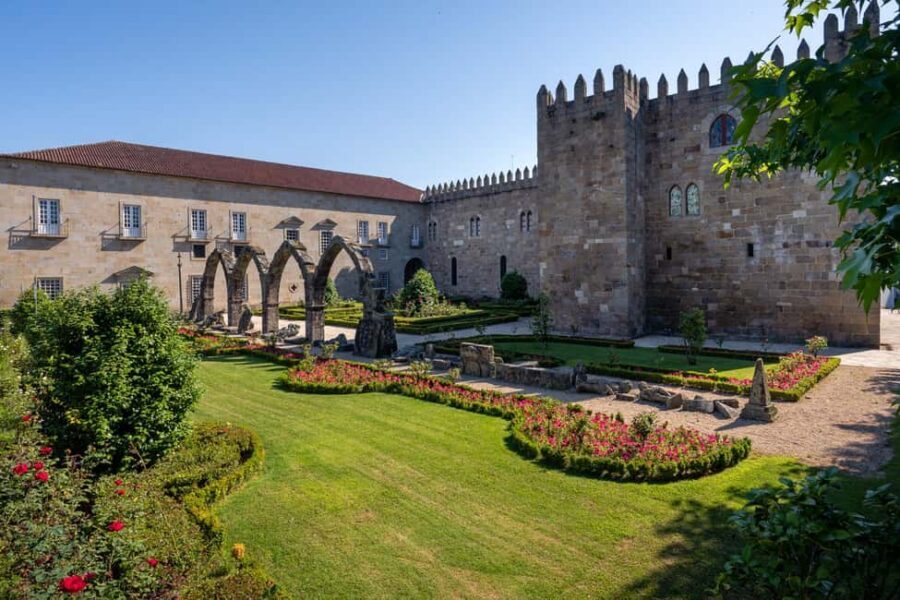
Braga is one of those cities where the center is walkable, but the sights are spread out just enough that timing matters. This flexible walking tour is built for that. You start in a central square, pass through the old-town entry arch, and then work your way across a smart route that includes cathedral sights, palace gardens, churches, and squares—without forcing you into a fixed group schedule.
The other big reason this works is the context of Braga itself. The city has been recognized as Best European Destination in 2021, and this walk gives you a practical way to experience why people care: you’re moving through the archbishop-focused core of the city, where religious and civic landmarks sit close together and street corners feel intentional.
You’ll also like that it’s designed to be repeatable. You can do the tour in full or in parts, as long as you complete it within 5 days of booking. That matters if your travel rhythm changes—late arrival, rainy weather, or a day-trip detour.
Walkbox app setup: offline audio, auto-play, and multiple languages
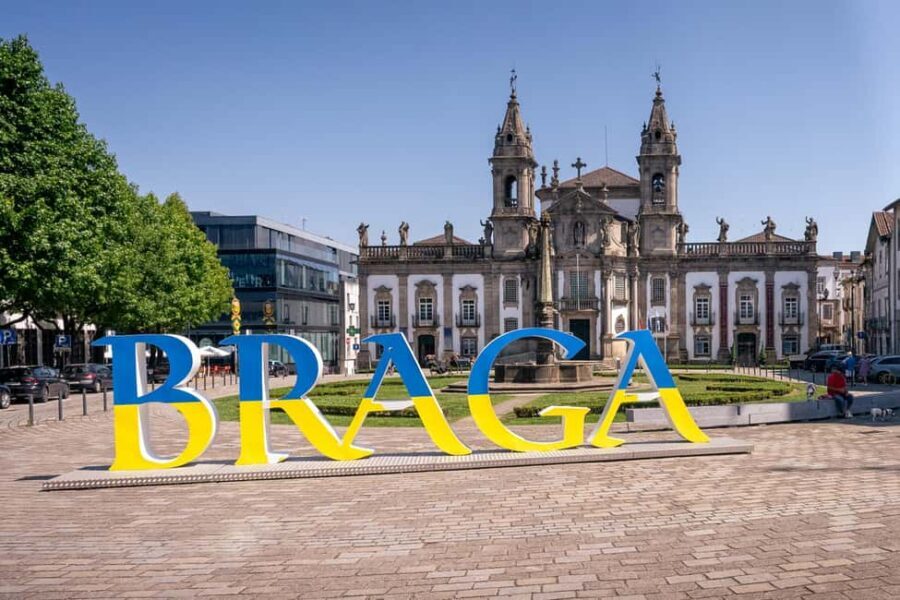
This tour’s “guide” is the Walkbox app, and the app approach is the whole point. Your phone becomes your companion, with English, Portuguese, French, and Spanish audio available along the route.
Here’s what you can count on based on the tour info:
- The app works offline, so you’re not depending on spotty signal in older streets.
- The audio guides are designed to play automatically as you explore.
- The audio is described as natural-sounding, which matters because you’re walking for several hours.
- You’ll see guidance for over 50 points of interest, not just a few headline stops.
This is also where you get the flexibility. There’s no live group to wait for, and no guide forcing you to keep up. If a doorway detail catches your eye, you can pause. If you want extra time around a square, you can do that too.
Tip for using it well: keep your phone charged and don’t start when the battery is already in the red zone. You’re walking a route that takes about 3 to 4 hours depending on stops, and the audio is part of the experience.
You can also read our reviews of more walking tours in Braga
Campo das Hortas Square and Porta Nova: your easy entry into old Braga
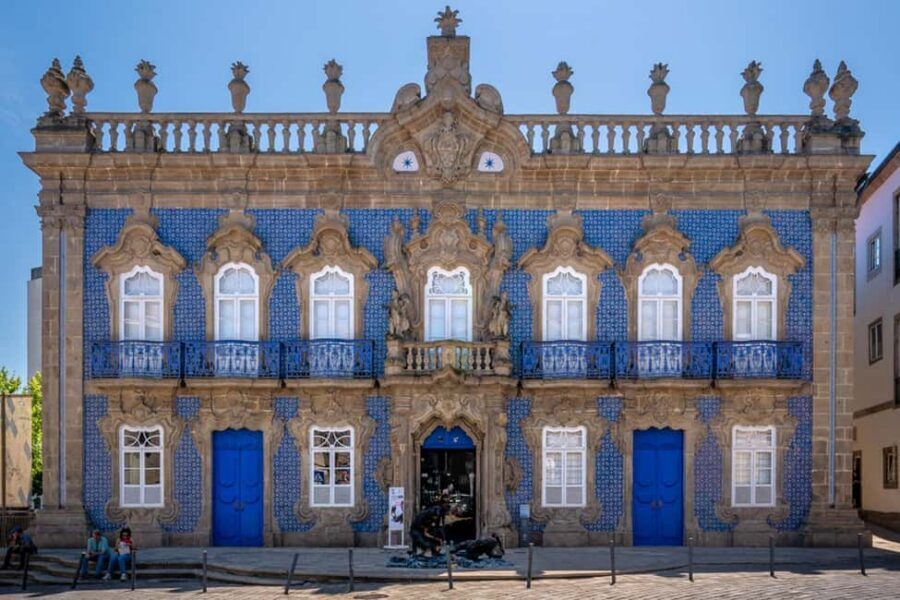
Your walk begins (and ends) at Campo das Hortas Square. Starting and finishing at the same place is quietly helpful. You don’t need to figure out transportation at the end—just return to a familiar point.
From there, you enter Braga’s historic area through the grand triumphal arch of Porta Nova. This is a great first moment because it instantly signals you’re not just wandering anywhere—you’re stepping into the old-town core.
If you like smooth beginnings, this one delivers. You get a clean transition from the square to the older street network, so you can get your bearings fast and start the route without stress. It also helps that the first stretch includes a narrow, famous-feeling lane, which makes the old town feel real instead of staged.
Rua da Violinha and the Dom Diogo de Sousa archaeology museum
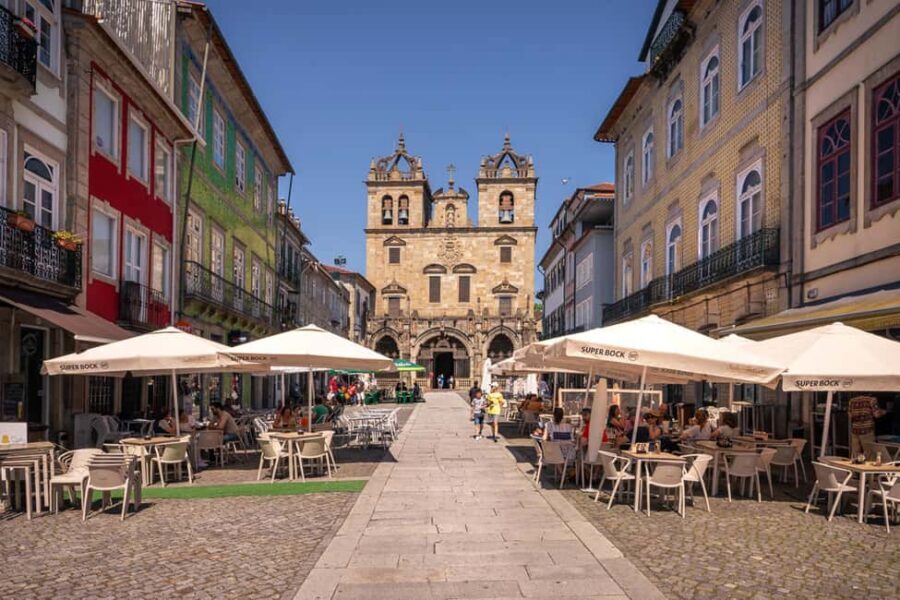
After Porta Nova, the route turns onto Rua da Violinha, described as the city’s narrowest street. Narrow lanes like this are more than a fun trivia stop. They slow you down. They make you look up. And they give you that sense of entering the lived-in fabric of Braga.
From there, you reach the Dom Diogo de Sousa Archaeology Museum area. Even if you don’t plan to go inside (tickets to paid attractions aren’t included), the stop still works because it sets a historical anchor early on. You’re already seeing churches, squares, and civic structures, so getting a sense of the deeper layers of the area helps the rest of the walk feel connected.
Consideration: if you were hoping every stop would be an indoor visit, you should know tickets to paid attractions aren’t included. You’ll still get plenty to look at externally and via audio, but you’ll need to decide later if you want to pay for entry.
Largo de São Paulo, Largo de Santiago, and the shift toward the cathedral
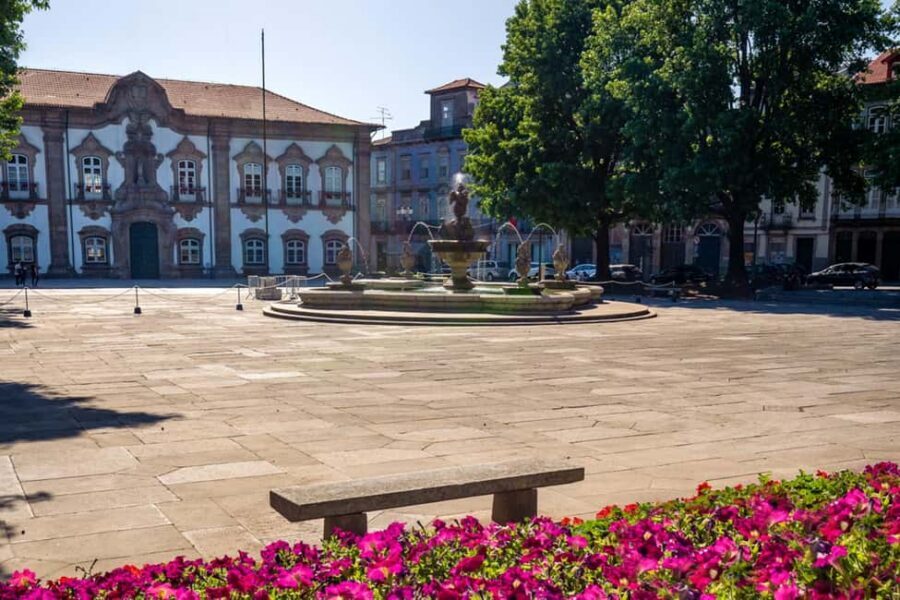
Next you’ll pass through Largo de São Paulo and Largo de Santiago, where the route points out remarkable monuments. These small squares matter because they’re where the city’s identity shows up at human speed. You’re not just looking at one monument; you’re getting a sense of how places relate to each other.
The walk then heads north toward one of the true anchor sights: Sé Cathedral. The description focuses on the cathedral’s monumental beauty, and that’s exactly the vibe you should expect here—scale, stone presence, and the feeling that the center of Braga has always revolved around religious architecture.
Practical note: if you want the cathedral experience to be more than a visual stop from outside, you may need to check schedules and decide on any paid-entry options. The tour info mentions that ticketed attractions aren’t included, so plan accordingly if you want to go inside.
Paço Square, Carlos Amarante Square, and São Marcos Hospital area
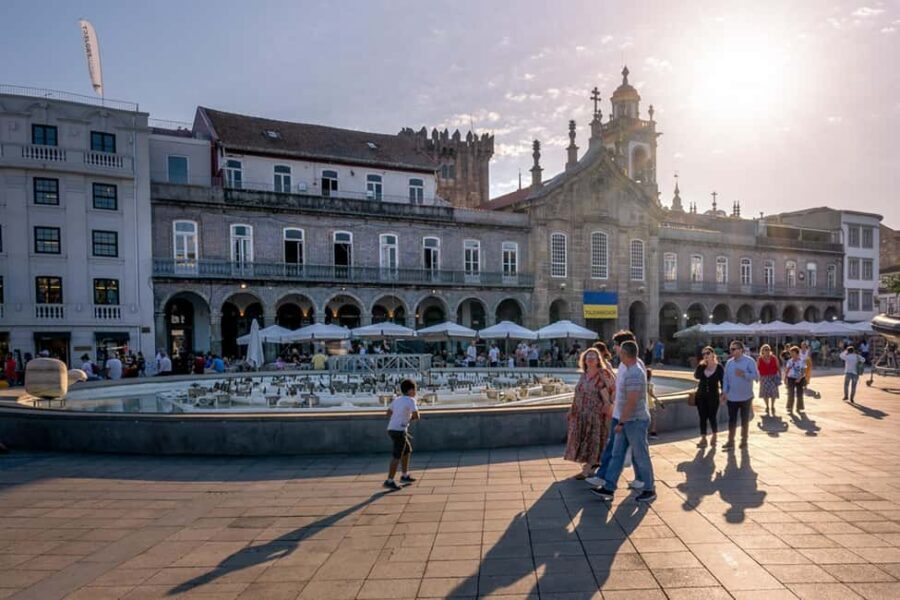
After the cathedral zone, the route continues to Paço Square and then onward to Carlos Amarante Square, home to the impressive São Marcos Hospital.
Even without extra detail in the tour description, this part of the walk tends to stick with people because it shows Braga’s history beyond churches. Hospitals, palaces, and civic spaces tell you a different story about how a city functions—who it served, how it organized life, and what buildings were considered important enough to preserve.
There’s also something calming about this pacing. Instead of moving from one “big ticket” photo spot to the next, you’re walking through areas that feel integrated into the day-to-day city. If you want Braga to feel like a place people actually live, this stretch helps.

Raio Palace to Avenida da Liberdade: moving from monuments to momentum
Now you’ll hit Raio Palace, then stroll along Avenida da Liberdade toward Praça da República.
This is an important transition in the route. So far, you’ve been in tighter historic spaces with major architectural statements. Here, the wider avenue and the approach to a major plaza give you breathing room. You can walk a little more naturally, let the audio guide you, and enjoy how the city changes as your route shifts.
At Praça da República, you get a lively city-square atmosphere (the tour describes the square’s vibrant energy, but you’ll experience it as everyday motion—people, movement, and open space). This is one of those places where you can pause and just watch, even if you don’t linger too long.
Donjon Tower, Crivos House, and Santa Bárbara Garden for slower moments
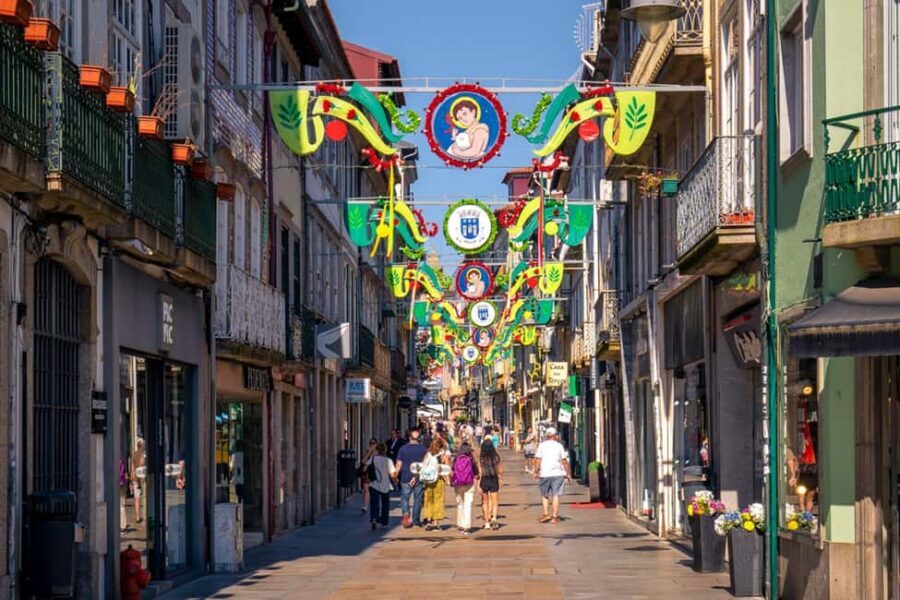
After Praça da República, the walk continues to stops like the Donjon Tower and Crivos House. Even when you only have time for quick looks, these are the kinds of structure-and-detail sights that make a self-guided route feel rewarding. The audio helps you connect what you’re seeing to the bigger story the walk is telling.
Then the route turns more serene with Santa Bárbara Garden. The tour describes it as serene, and gardens are a smart counterweight during a multi-hour walk. They give you a place to slow down, reset your legs, and keep the day from turning into pure sightseeing sprinting.
Practical tip: if you’re the type who likes to take photos, this is a good place to pause longer. You’re not just chasing one angle. You’re getting an atmosphere break.
Biscaínhos Museum finish: a calm end near your start point
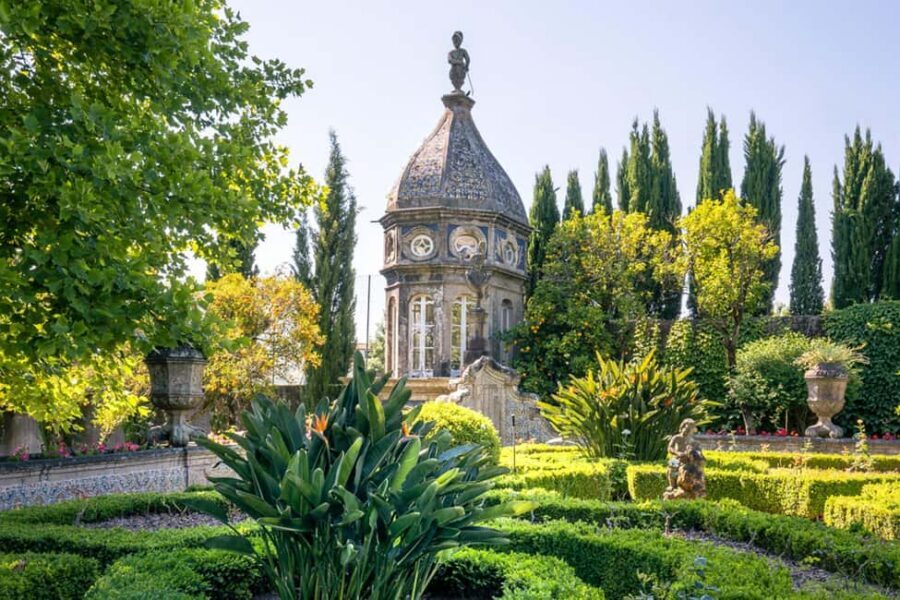
The tour ends at the Biscaínhos Museum, described as a tranquil place with gardens, conveniently near the starting area.
Finishing near where you began is a real quality-of-life feature. After 3 to 4 hours, you don’t want to scramble across town to catch a bus or figure out a new pickup point. Here, you can close the day with an easier return and decide what to do next based on your energy level.
Also, gardens at the end are a nice way to end. Instead of rushing out to your next plan, you get a gentle landing.
Price and value: why $8 for this format can make sense
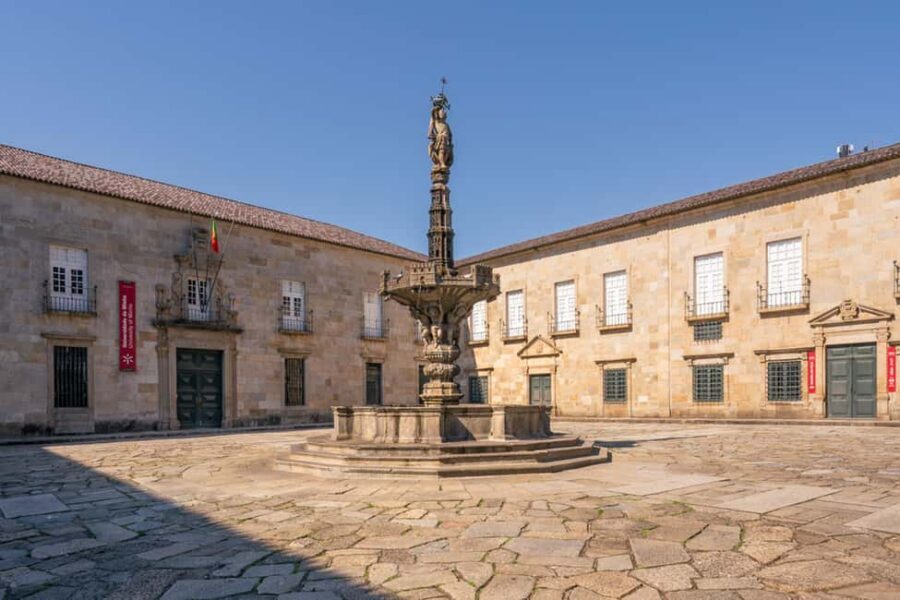
The price is $8 per person, and the value comes from how the experience is packaged.
For that price, you get:
- A 3 km route designed to take about 3–4 hours
- Access to an app-based guide with offline audio
- Content in four languages
- Instructions from a curator and remote support if you need it
- Coverage for 50+ points of interest
- Info on prices and opening hours for attractions on the route (where applicable)
The main value isn’t just “you get to walk.” It’s that the app helps you keep momentum while still getting context. If you’ve ever walked through an old town and felt like you kept asking, So what is this?—this format answers that question without adding the pressure of a live guide.
The trade-off is the depth level. One of the common concerns with app-only experiences is that you might want more background and interesting facts than what the audio delivers. If that’s your style, plan to supplement with a guidebook or a quick web read on the big monuments you care most about.
Who this Braga walk suits best (and who should skip it)
This tour is a strong fit if you want:
- Freedom: go in parts or finish within 5 days
- A route that stays mostly manageable—about 3 km with time flexibility
- A guide format that keeps your attention on the street using auto-play audio
- Multilingual access, handy in mixed-language groups
It may be less ideal if:
- You have mobility impairments, since it’s described as not suitable for that
- You want a live, real-time human guide who can answer questions instantly
- You prefer long, detailed storytelling at every stop
If you fall into the “I like walking, I like context, and I don’t want to wait” category, you’ll likely enjoy the way the route flows.
Should you book this Braga flexible walking tour?
I’d book it if you want to explore Braga’s historic center with structure but not confinement. The Walkbox model is especially appealing for people who like to control timing, stretch the walk when a square or church catches their eye, and avoid the “everyone together, stay together” vibe.
Skip it if you know you’ll be disappointed by app-based storytelling alone and you strongly prefer a live guide for deeper explanations. Also, if mobility is a concern, take that seriously because the route isn’t meant for it.
Bottom line: for $8, a self-paced loop through Porta Nova, Sé Cathedral, palace and garden areas, and major squares is a very workable way to see Braga—at your pace, with offline help when you need it.
FAQ
How long does the Braga Flexible Walking Tour take?
The tour is listed as about 3 hours, and the full route typically takes about 3 to 4 hours depending on how often you stop.
Where does the tour start and end?
It starts and ends at Campo das Hortas Square, entering the historic area through the Porta Nova arch.
Do I get a live tour guide with this experience?
No. Guidance is provided through the Walkbox app, not a live guide.
What languages are included in the Walkbox content?
The tour content is available in English, Portuguese, French, and Spanish.
Does it work offline?
Yes. Walkbox works offline, which helps you keep going even if you don’t have strong phone signal.
Can I do the tour in parts over multiple days?
Yes. You can do the tour in full or in parts within 5 days of your booking date.
Are tickets to paid attractions included?
No. Tickets to paid attractions are not included.
What should I bring, and how many smartphones do I need?
Bring comfortable shoes, comfortable clothes, and a charged smartphone. Also book based on the number of participant smartphones that will be used.
Is this tour suitable for people with mobility impairments?
It is not suitable for people with mobility impairments.