REVIEW · BRAGA
Barcelos, Braga & Guimarães Tour
Book on Viator →Operated by ImagineTours Portugal · Bookable on Viator
Portugal in one packed, walkable day.
What makes this tour work is the mix of story + places. You connect the famous rooster legends in Barcelos to the oldest cathedral atmosphere in Braga, then to the “birth of a nation” feeling around Guimarães. The guide’s commentary ties landmarks together so you’re not just moving from photo spot to photo spot. I especially like the focus on legends tied to specific churches and monuments, including the cross story and the rooster details, which turn normal sightseeing into something you can actually remember.
Two things I really like: you get a true private tour feel with a maximum of 6 people, and the timing is designed for walking without turning the day into an all-day hike. I also like that the included entrances cover the big hitters in Braga and Guimarães, so your day stays simpler and you don’t have surprise ticket stops.
One thing to consider: the pace is full. You’re looking at about 6 to 7 hours of structured sightseeing, with several short transfers and lots of walking on historic streets and in church areas. If you prefer lots of downtime or slow strolling, this may feel like a busy day rather than a relaxed one.
In This Review
- Key highlights worth knowing before you go
- How this day tour turns three cities into one story
- Pickup, private size, and the rhythm of a 9:00 start
- Barcelos: rooster legends, blue-and-gold church details, and market energy
- Barcelos pacing tip
- Braga: the oldest cathedral vibe, city gates, and Bom Jesus quiet time
- Braga pacing tip
- Guimarães: the birthplace feel, castle views, and Bragança power
- Guimarães pacing tip
- What you actually pay for: entrance fees that matter, and what costs extra
- Guides, language, and what a good day feels like
- Who should book this Barcelos, Braga & Guimarães tour
- Should you book this tour?
- FAQ
- How long is the Barcelos, Braga & Guimarães tour?
- What’s included in the price?
- Is pickup included?
- Do I need money for lunch?
- What is the cancellation policy?
- Is the tour suitable if I have limited mobility?
Key highlights worth knowing before you go
- Barcelos rooster legends in actual locations, including the church details and the museum with the original cross tied to the story
- Braga’s Se de Braga and the chapels connected to the first King of Portugal’s family
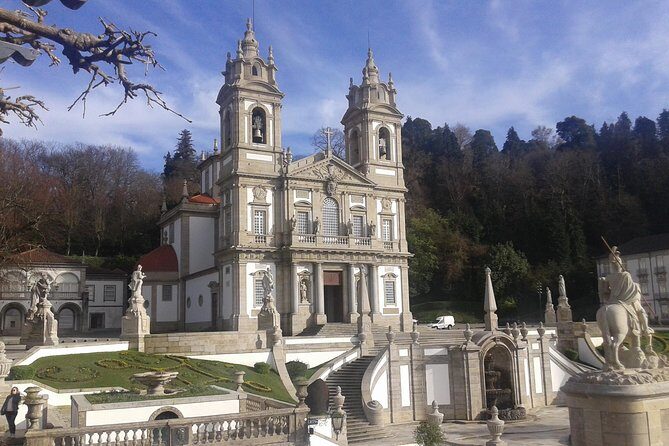
- Bom Jesus do Monte for its monumental staircase, gardens, and the chance to enjoy quiet at the sanctuary
- Guimarães Castle and the baptism setting, tied to D. Afonso Henriques and the early Portuguese story
- Private group size (max 6) plus guided commentary throughout, so you get context without waiting on crowds
How this day tour turns three cities into one story
This is the kind of northern Portugal tour that helps you connect dots. Instead of treating Barcelos, Braga, and Guimarães as separate stops, the day is built around themes: legends, early monarchy, and the sacred and civic heart of each town.
You’ll feel it immediately in Barcelos. The sights are small enough to absorb, but each one links back to a larger idea. That rooster origin story isn’t floating in the abstract. It shows up in churches, viewpoints, and a museum stop where the legend gets physical—right down to the cross connected to the tale.
Then Braga gives you the shift from legend to institution. You’ll spend time at the main cathedral setting (including chapel context tied to the first king’s parents), plus a sanctuary visit at Bom Jesus do Monte where the experience becomes scenic and reflective. It’s a good balance: stone-and-spiritual Portugal, with enough walking to keep the day interesting.
Finally, Guimarães brings the politics and people side. The castle and the nearby baptismal tradition reinforce why this town is treated as the start point for Portugal’s story. It’s not just “check the castle off.” You’re guided through why it matters.
You can also read our reviews of more tours and experiences in Braga.
Pickup, private size, and the rhythm of a 9:00 start
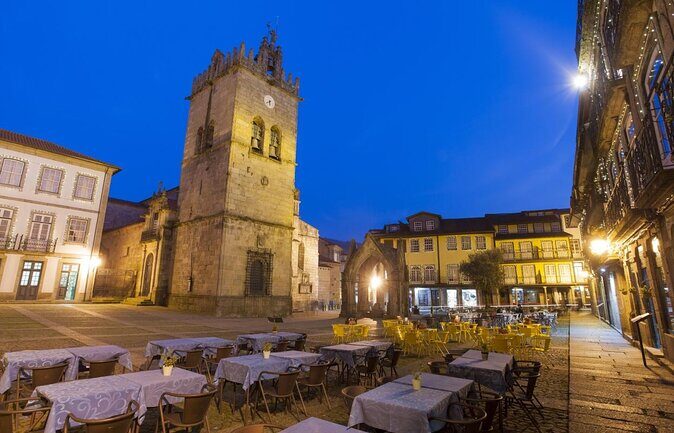
The tour begins at 9:00 am and returns you back to your meeting point. Pickup is offered, and the tour is built for a smoother start than a DIY day—especially if you’re staying in Porto and don’t want to coordinate multiple transit legs.
Group size is up to 6, which is a big deal on a day like this. Smaller groups mean the guide can keep an eye on pacing, and you’re more likely to get real explanation rather than a rushed narration meant for a bus load. It also makes the walking stops feel less like cattle flow and more like a guided city day.
Expect a steady rhythm. The tour includes multiple short stops, each timed in minutes, plus a larger break for lunch in Guimarães (lunch itself isn’t included). The “short stop” style is helpful for places with narrow streets and church entry rules—it keeps you from losing time to long waits.
You’ll also get a mobile ticket, which reduces friction. And bottled water is included, which matters when you’re out for half a day in warm weather.
Barcelos: rooster legends, blue-and-gold church details, and market energy
Barcelos is where the tour’s identity becomes obvious. If Portugal had a single souvenir story you could point to, the rooster is it—and this town is where the legend is tied to place.
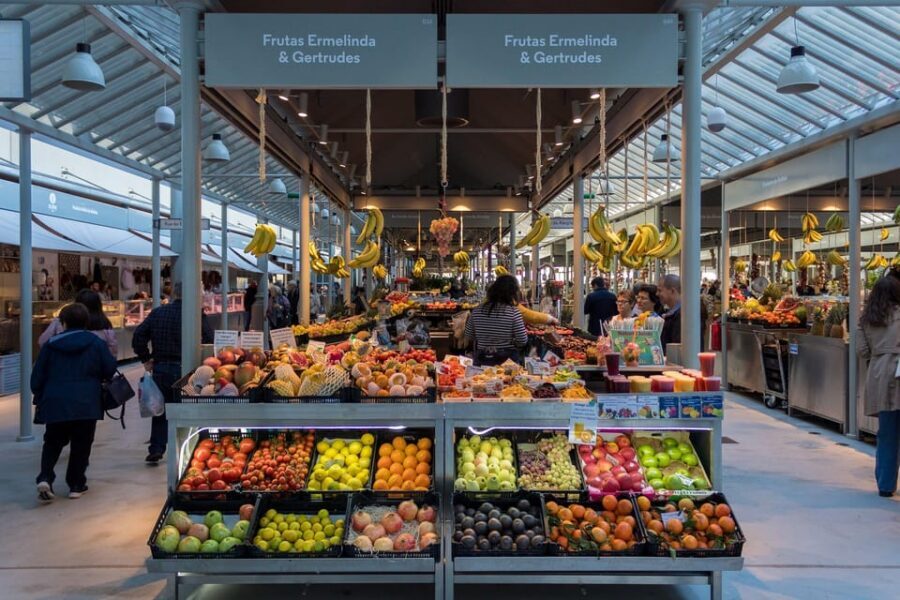
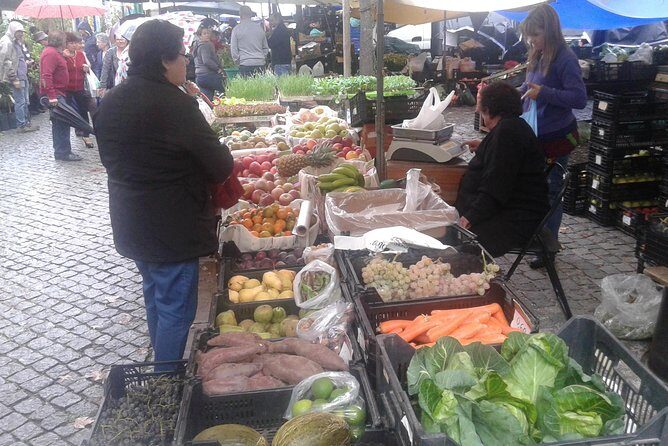
Start in Campo da Feira. On Thursdays, you have a chance to see the biggest market of Portugal, right in the center. Even if your day isn’t Thursday, arriving in a market-centered town helps you understand why Barcelos feels like a working community, not just a postcard stop.
Next comes Igreja do Senhor Bom Jesus da Cruz de Barcelos, a baroque church known for blue tiles and golden carvings. It’s the kind of church where you’re looking up and then looking back down, because the details reward attention. This stop also ties to a legend about a dark wooden cross, which gives you a narrative thread beyond decoration.
Then you reach Torre do Cimo da Vila, an old defense tower. The timing is short, but the payoff is view-focused: you look out over baroque gardens and the market square area. The tower also has local artcraft exhibitions inside, so you’re not just climbing for a view—you get a quick window into what local creators are making now.
You’ll then visit the Igreja Matriz da Paroquia de Santa Maria Maior, described as the main church and the oldest church in the city. This is one of those stops that doesn’t need a long time to matter, because the context—oldest in town—makes it feel like the town’s backbone.
The museum stop is where the rooster story becomes concrete. At Museu Arqueologico de Barcelos, you’ll discover the legend behind the rooster and see the original cross connected to the story. There are also other artifacts found around the city, which helps if you like small culture nuggets rather than only legends.
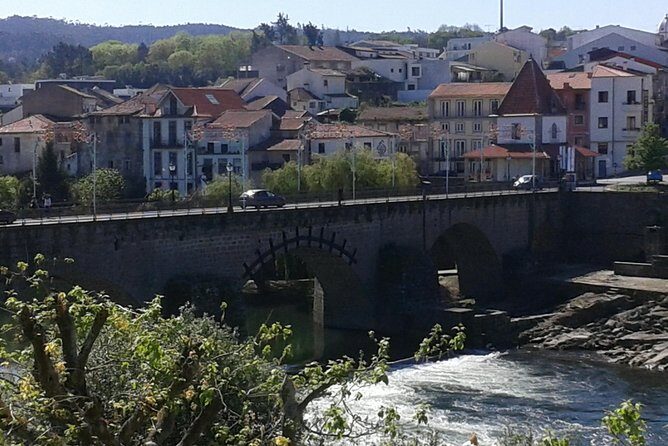
You finish the Barcelos side with Ponte Medieval de Barcelos, a medieval bridge viewpoint. The view back toward the duke of Bragança castle area makes the medieval layers feel connected, not scattered.
Barcelos pacing tip
Since several stops are in and around church interiors and viewpoints, I’d plan for a “camera + attention” mindset. You’ll get more out of the day if you slow down for a minute at the blue tiles, carvings, and the museum object.
Braga: the oldest cathedral vibe, city gates, and Bom Jesus quiet time
Braga has a different feel from Barcelos. You get more formal city structure—squares, gates, and a cathedral presence—plus a sanctuary visit that changes the mood.
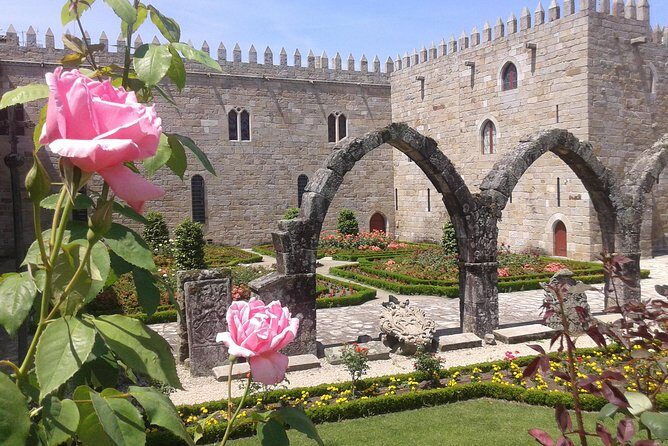
The day starts Braga with Arco da Porta Nova, an old city gate entry. It’s brief, but helpful: you’re reminded you’re walking inside a walled, layered city, not just a modern streetscape. From there, you head into Jardim de Santa Barbara, where you can wander around seasonal flowers.
You’ll pass by Torre de Menagem, the remaining structure of an 11th-century castle part of the old city wall. It’s a quick look, but it puts the scale of time into focus. Braga isn’t just old; it’s old in layers that survive in fragments you can still see.
Praca da Republica is the central square, a social hub where locals gather. Short stop here can still be valuable because it shows you the everyday Braga rhythm. Instead of only looking at monuments, you get a moment of real town life.
Then comes Iglesia de Santa Cruz. The front hides two roosters, tied to a legend about nearly weds finding the roosters for a long and happy marriage. If you like playful superstition woven into architecture, this is a fun one. And it also loops the rooster theme back into Braga, so the day feels unified.
The big religious anchor is Se de Braga, the main cathedral church. Parts are even older than Portugal itself. That’s the kind of fact that matters, because it changes how you view the building. You’re not looking at a single era—you’re looking at time stacked.
Inside a chapel, you’ll find the tumuls of the parents of the first King of Portugal. That turns the cathedral from “pretty” into “personal to the origin story,” especially because the tour’s overall focus is Portugal’s beginnings.
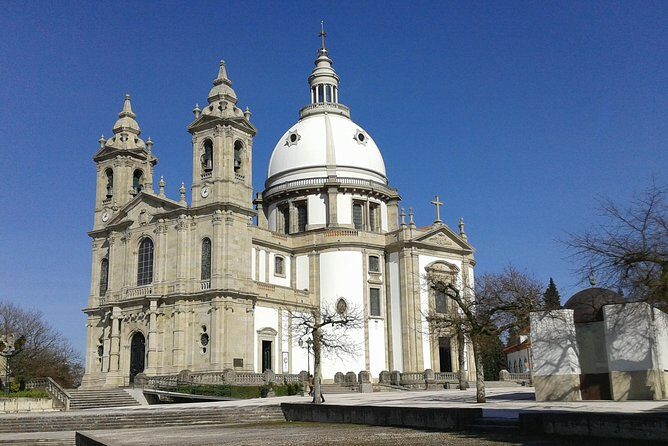
Finally, Bom Jesus do Monte. This sanctuary is famous for its extensive staircase and gardens. You get a longer stop here, around 30 minutes, with a scenic city view. There’s also a quieter angle built into the experience: you’ll be able to enjoy silence at the peaceful sanctuary area. It’s described as a neoclassical style sanctuary and noted as the largest Marian devotional shrine in Portugal, second only to Fátima. That context helps you understand why people make a pilgrimage here, not just a photo stop.
Braga pacing tip
Bom Jesus can feel visually intense because there’s so much to look at. I’d keep your pace light—take the view moments, but don’t rush the quieter sanctuary time. That quiet part is one of the best parts of the whole day.
Guimarães: the birthplace feel, castle views, and Bragança power
Guimarães is where the tour leans hardest into Portugal’s origin story. The center gets you into town life first: Centro Historico de Guimaraes and key squares.
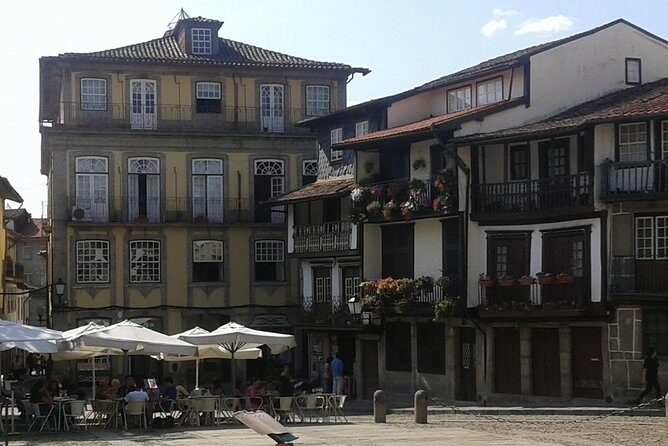
You’ll visit Largo da Oliveira, named after a miracle involving a 500-years-old olivetree in the square. It’s a strong little piece of meaning. Squares in Portugal are often named for something specific, and this one anchors a miracle to a real living landmark.
The square is surrounded by 17th-century porch houses and the Nossa Senhora da Oliveira Church. In the middle you’ll see Padrão do Salado, which refers to the successful Battle of Salado in the 14th century. This is a classic “Portugal story in stone” moment: a town square that doubles as a historical page.
Next, there’s the charming Largo de San Tiago area with the old City Hall building and residential buildings from the 17th and 18th centuries. Lunch time here is built in with about an hour available, but lunch isn’t included. If you want a break that matches the vibe, choose something near the square so you don’t waste time walking after the midday pause.
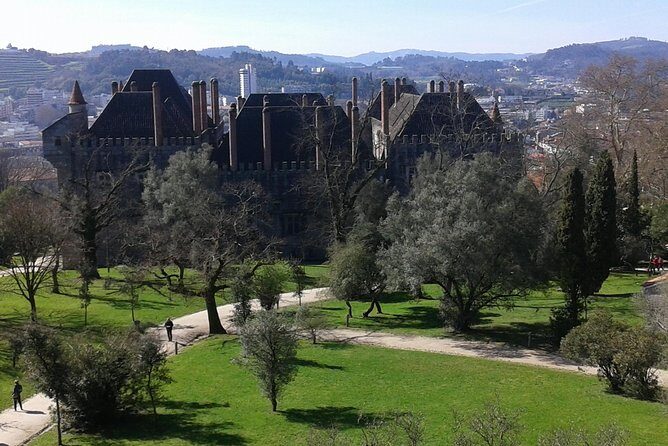
Then you move into Palace of the Dukes of Bragança (Paco dos Duques de Braganca). Built in the 15th century by D. Afonso, noted as the bastard son of King João I, it’s connected to power and legitimacy. You’ll also visit the museum on the first floor, described as holding a collection of national and international antiques. Even if you don’t love museums, palace interiors tend to give you the “why this family mattered” perspective.
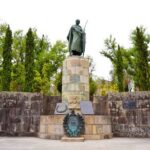
You’ll also stop at Igreja de Sao Miguel do Castelo, tied to a baptism tradition. The legend says the first king of Portugal, D. Afonso Henriques, was baptized here, and the presumed baptismal font used in the ceremony is kept in the church.
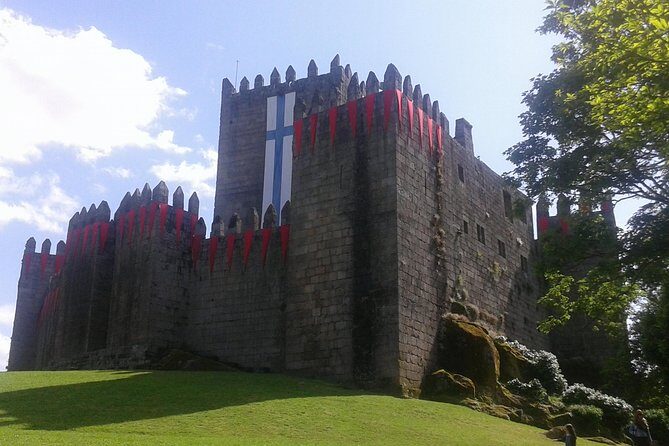
The final anchor is Guimarães Castle. You’ll see the castle where the first king of Portugal was born, plus the chapel where he was baptised. This is the climax of the emotional arc of the day. After all the talk about origins and legends, you’re left with a place that feels like the origin itself.
Guimarães pacing tip
Castles make people speed up because they want the view fast. Slow down instead. The chapel and the birthplace framing are where the story “clicks.”
What you actually pay for: entrance fees that matter, and what costs extra
The price is $115.68 per person for a private day covering three towns, guided commentary, pickup, and several major entrances.
Included items you should care about:
- Bottled water
- Entrance to Sé Cathedrale in Braga
- Entrance to the Palace of the Duke of Bragança
- Entrance to the Castle of the first King of Portugal
Not included:
- Food and drinks (lunch isn’t included)
- Other entrance fees unless specified
That entrance coverage is a practical value point. Without it, you’d likely end up paying for major stops on top of the tour cost, which can turn a day-trip budget messy. Here, the big-ticket cultural sites are handled.
Because lunch isn’t included, plan for at least one paid meal. Build in time to get something simple in Guimarães during the lunch window, then get back to the meeting point on time so you don’t throw off the rest of the day’s flow.
Guides, language, and what a good day feels like
The tour may be operated by a multi-lingual guide. One guide pairing mentioned in feedback is José with his companion Evangeline, and the day is described as smooth and well explained. When the guide can connect legend details to physical objects—like the rooster story elements and the cross tied to it—that’s when the tour feels worth it, not just scenic.
Since the tour is private and capped at 6, you’ll generally get a better chance to ask small questions on the move. If you’re the kind of person who likes to know why a building faces the way it does, or why a square is named for a miracle, this tour format fits you well.
Who should book this Barcelos, Braga & Guimarães tour
This fits best if you want:
- A guided day that ties legends to places you can stand in
- Big, important landmarks without building a multi-step self-guided route
- A private group day trip with limited crowd pressure
It’s also a strong pick if you’re interested in early Portuguese identity—cathedrals, the first kings, and the power networks around families like the Bragança line.
I’d think twice if:
- You have limited mobility. The tour is not recommended for travelers with reduced mobility, and it calls for moderate physical fitness.
- You hate “busy days.” This is packed with many short stops, not a slow, open-ended stroll.
Should you book this tour?
Yes, if your idea of value is guided context plus major entrances, all in one day. The $115.68 price feels more reasonable because the tour covers key sites in Braga and Guimarães and keeps the pacing manageable with a private group cap of 6.
If you want a more relaxed day with lots of free time, you may prefer picking one or two towns and lingering. But if you’re trying to see Portugal’s northern heart—roosters, cathedrals, pilgrim steps, and the birthplace story of a nation—this tour is built for that exact mission.
FAQ
How long is the Barcelos, Braga & Guimarães tour?
It runs about 6 to 7 hours, starting at 9:00 am. The tour ends back at the meeting point.
What’s included in the price?
The tour includes bottled water and entrance fees for Sé Cathedrale in Braga, the Palace of the Duke of Bragança, and Guimarães Castle.
Is pickup included?
Pickup is offered. The tour is designed to start in Porto and return you to the meeting point afterward.
Do I need money for lunch?
Yes. Food and drinks aren’t included, and lunch time in Guimarães is given as time to eat, not as an included meal.
What is the cancellation policy?
You can cancel for free up to 24 hours in advance of the experience start time for a full refund.
Is the tour suitable if I have limited mobility?
The tour is not recommended for travelers with reduced mobility, and it’s described as requiring moderate physical fitness.