REVIEW · PORTO
Port : Douro Cruise, 6 Bridges & 4 Port Wines (Max 7)
Book on Viator →Bookable on Viator
Port tastings get better with a river view.
This 2-hour Douro cruise around Porto and Vila Nova de Gaia mixes classic landmarks with time on the water, all wrapped into a 6-bridge sightseeing loop and a 4 port wines tasting. You meet at Marina da Afurada and get a mobile ticket, with narration offered in English.
What I really like is how the experience stays personal, thanks to the tiny group size (max 7). I also like the host approach led by Nadia and Paulo: short, human stories tied to what you’re seeing, plus port tastings that are paired with bites instead of long, talk-heavy lectures.
One consideration: parts of the program include stairs, like the 225-step climb up Torre dos Clérigos, and the day depends on good weather. It’s also explicitly not recommended for reduced mobility.
In This Review
- Key things you’ll notice on this Douro cruise
- Starting at Marina da Afurada: where Porto feels traditional
- The six-bridge river route, with the big names you should spot
- Dom Luís I Bridge: the classic two-deck connection
- D. Maria Pia Bridge: Eiffel’s iron-arch masterpiece
- How to treat the rest of the “six bridges” moments
- Torre dos Clérigos: the 225-step payoff (and who should skip it)
- Walking in the postcard zone: Ribeira as a living scene
- Serra do Pilar Monastery: UNESCO architecture with battlefield history
- Ending at the Douro mouth: nature reserve to the Atlantic edge
- Port wine tasting with 4 wines: what to expect and how to enjoy it
- Comfort and pace: the small-group advantage you’ll feel
- Price value: why $72.41 can make sense (if you budget for wine and time)
- Who this tour is best for (and who should think twice)
- Should you book Alma Douro’s Douro Cruise with 6 Bridges & 4 Port Wines?
- FAQ
- Where is the meeting point for this Douro cruise?
- How long is the experience?
- How many people are on the tour?
- What language is the tour offered in?
- Is a mobile ticket included?
- What port wine tasting is included?
- What major viewpoints or monuments are included?
- Does the tour depend on weather?
- Is this tour suitable for reduced mobility?
- What is the cancellation policy?
Key things you’ll notice on this Douro cruise
- Tiny group (max 7) keeps the pace relaxed and questions welcome
- 4 port wines served alongside food pairings for better flavor matching
- Bridge spotting from the water makes Porto and Gaia feel instantly different
- Clérigos Tower includes a serious stair climb for big-city panoramic payoff
- Serra do Pilar Monastery (UNESCO) adds architecture + real historical stakes
- Finish near the Atlantic at the mouth of the Douro for a breezy, scenic ending
Starting at Marina da Afurada: where Porto feels traditional
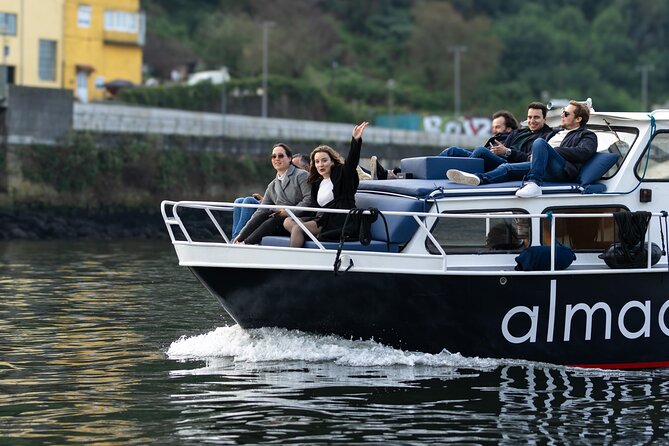
Your meeting point is Marina da Afurada in Vila Nova de Gaia, at R. da Praia 430, 4400-554. This matters because Afurada is a working-feeling corner of the riverfront, not just a photo spot. You’re set up for a boat-based day right away, without a long transfer grind.
From there, you’re introduced to the area around the traditional Villa Afurada, then the route pushes you toward the Porto highlights you’d normally have to hop between on foot. It’s a smart shortcut if you only have a short stay and want big “wow” moments without zig-zagging across town.
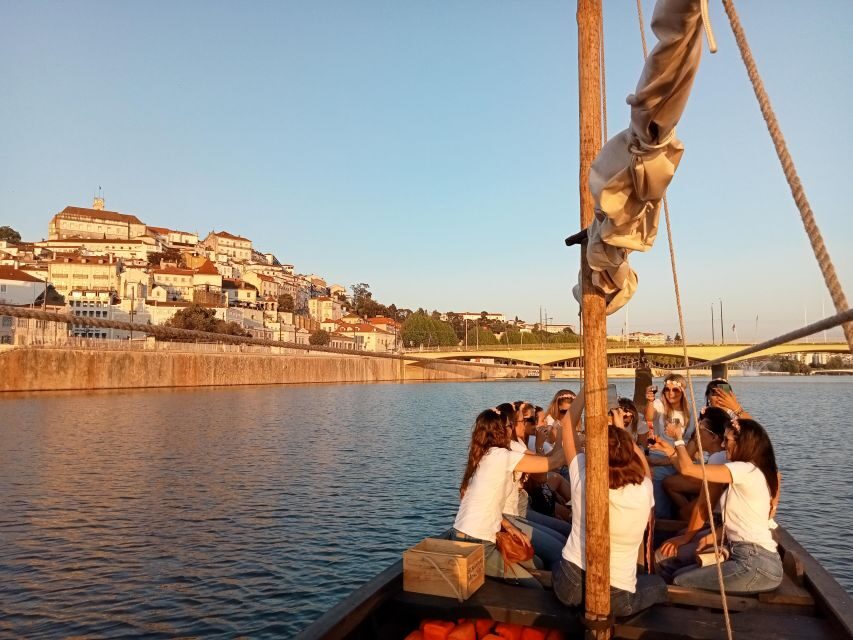
Also, expect a comfortable, small-boat vibe. The max group size is 7, and the tone from the hosts is warm and attentive, which is exactly what you want for wine and views happening in the open air.
The six-bridge river route, with the big names you should spot
The tour’s theme is a 6 bridges loop on the Douro—meaning you get repeat chances to frame Porto and Gaia from the same moving viewpoint. It’s one of the easiest ways to understand how the river shaped the city: where ships pass, where commerce happened, and why so many bridges became symbols.
Two bridge stops are specifically highlighted:
Dom Luís I Bridge: the classic two-deck connection
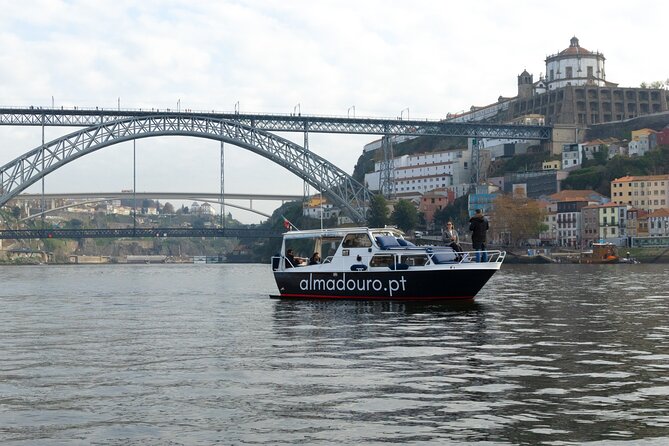
You’ll come across Dom Luís I Bridge, a metal bridge built between 1881 and 1886. It has two decks and links Porto and Vila Nova de Gaia across the Douro River. It also comes with a note that admission is free, which is a small but real win when you’re budgeting a tight trip.
From the water, the bridge reads like a structure you can feel—height, angle, and river flow all in one view. And since it’s one of the most recognizable images of Porto, it’s a good first “baseline” landmark for the rest of the bridges.
D. Maria Pia Bridge: Eiffel’s iron-arch masterpiece
Later you’ll also encounter D. Maria Pia Bridge, a railway crossing over the Douro that opened on November 4, 1877. It’s considered one of engineer Gustave Eiffel’s greatest works. At the time, it was the bridge with the largest iron arch in the world, and it’s been protected as a National Monument since 1982.
There’s also a timeline here that helps you connect the old rail era to modern Porto. The bridge closed on June 24, 1991, replaced by the Ponte de São João. Seeing it on the river is a great reminder that bridges aren’t just pretty views—they’re infrastructure that changes how people and goods move.
How to treat the rest of the “six bridges” moments
Even when the tour doesn’t stop for deep explanations at every bridge, the format helps. You’ll be on the water long enough to compare perspectives: same skyline, different angles. That’s what makes the “six bridges” concept click—this isn’t one quick pass-by. It’s a guided viewing rhythm.
Torre dos Clérigos: the 225-step payoff (and who should skip it)
A key land component is a visit to Torre dos Clérigos, part of the Clérigos complex in Porto. The tower was designed by Italian architect Nicolau Nasoni, completed in 1763. It began as a bell tower, but over time it became a landmark for ships and even served strategic military roles.
The big detail you need to know: the climb includes 225 steps to reach the top. From there, you get panoramic views over Porto and Gaia. For many people, that view is the “I get it now” moment—why the river-and-hills combination makes Porto look like it’s built for dramatic angles.
Practical tip for the climb: if stairs are hard for you, plan ahead. The overall tour is marked not recommended for reduced mobility, and the tower itself is a strong reason why.
Also, because this is a short 2-hour experience, you shouldn’t expect extra slack time at each stop. Go in ready for a brisk pace: quick movement, quick photos, then back to the boat.
Walking in the postcard zone: Ribeira as a living scene

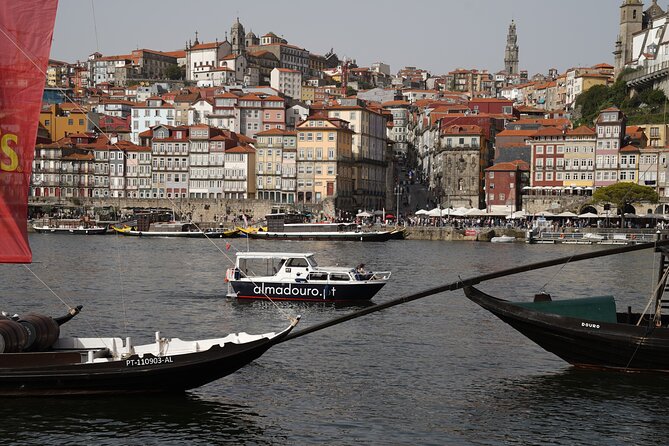
You’ll also stop for Ribeira, Porto’s most famous riverfront scene. This part is less about formal sightseeing and more about atmosphere: colors, life, and that historic river energy that makes Porto feel like Porto.
The value here isn’t checking a box. It’s getting the contrast between land and river views. When you’ve got the riverfront behind you and bridges around you, the skyline becomes easier to read: which buildings belong to which neighborhood, how the river bends, and why vantage points matter.
It’s also the kind of stop where you’ll feel why locals keep returning. Even if you’ve seen lots of pictures already, the real street noise and river movement make it more than an Instagram backdrop.
Serra do Pilar Monastery: UNESCO architecture with battlefield history
Next up is the Serra do Pilar Monastery, a 17th-century church that’s been classified as UNESCO World Heritage since 1996. This building isn’t just pretty. It’s described as austere and built on a circular plan, capped by a hemispherical vault. There’s also a balcony and lantern that give it a distinctive silhouette.
Inside, the tour notes highlight gilded and white carved work. But the most fascinating technical detail is the cloister: a circular cloister vault with a central rib supported by 36 Ionic columns. That kind of design detail matters because it tells you this wasn’t built as a generic church. It’s a rare architectural solution in Portugal, with circular plans tied to models originating in civil architecture.
Then comes the history layer that adds real weight. The monastery’s position made it important during the invasions by Napoleonic troops in 1809, and again in 1832–33 during the liberal struggles, when it served as a military base. It was elevated to the category of fortress and later converted into military barracks.
So when you’re standing there, you’re not only looking at a design. You’re seeing a structure that once had a job in wartime—strategic and practical, not just symbolic.
Ending at the Douro mouth: nature reserve to the Atlantic edge
The final stretch shifts to the natural world. You’ll hear about the Douro Estuary Local Nature Reserve, which covers 66.35 hectares on the south bank near the fishing village of Afurada. This includes Cabedelo and São Paio Bay, plus a salt marsh area.
The main draw for nature lovers is the birds. The area sits on the migratory corridor known as the East Atlantic Route, so birdlife can be easier to spot than you might expect elsewhere. You’re also near the coast, so the air feels different—more “river meets ocean” than “city river.”
The experience ends at the mouth of the Douro, right next to the Atlantic Ocean. That closing location is perfect for travelers who want a satisfying finish that doesn’t feel like you’re being herded into one last photo stop.
Port wine tasting with 4 wines: what to expect and how to enjoy it
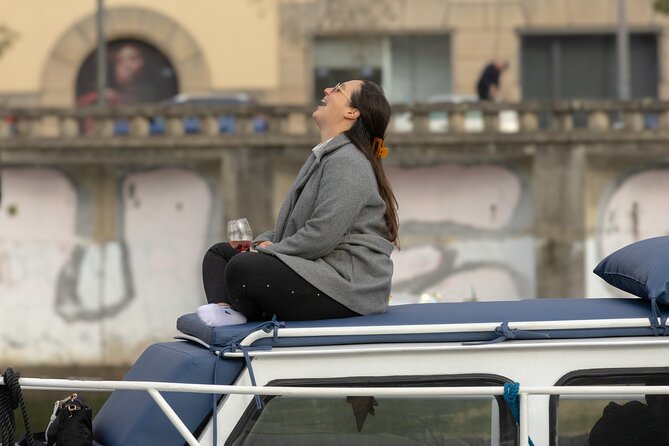
The tour name tells you what you came for: 4 port wines. The big win is that the tasting isn’t presented like a lecture marathon. The hosts pair the ports with bites so you can actually taste differences in a more grounded way.
This format helps because port tasting can get muddled if you only sip. Pairing makes it easier to notice sweetness levels, intensity, and how flavors change with food. It also keeps the experience moving, which is important when you only have about 2 hours from start to finish.
You’ll also typically see the “snacks with the wine” approach: boards and small plates show up as part of the flow. One reason this works well on a river boat is timing—you don’t have to stop the day to find food. You get it while the views roll by.
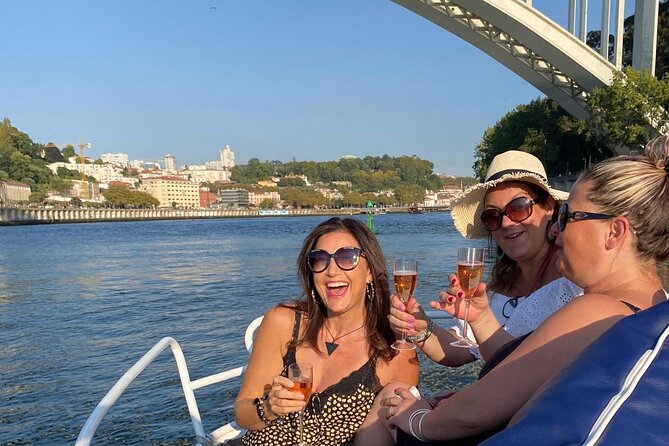
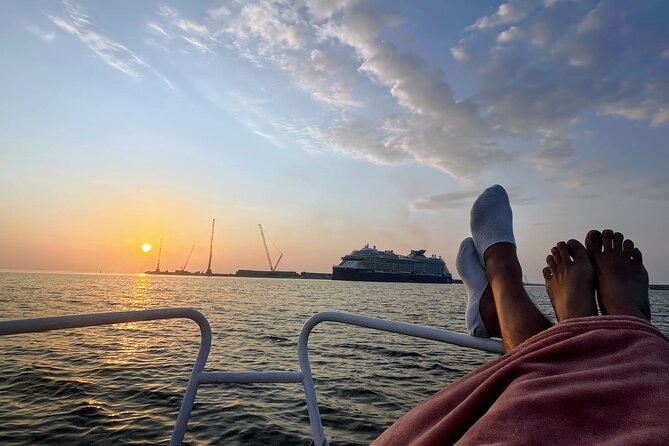
Also watch for comfort extras that make the tasting more enjoyable if it’s cooler. Blankets are offered when the air turns chilly, and drinks are served during the cruise. If you’re booking a sunset-style departure, the atmosphere tends to be extra memorable because you’re tasting near the mouth of the river where the light changes fast.
Comfort and pace: the small-group advantage you’ll feel
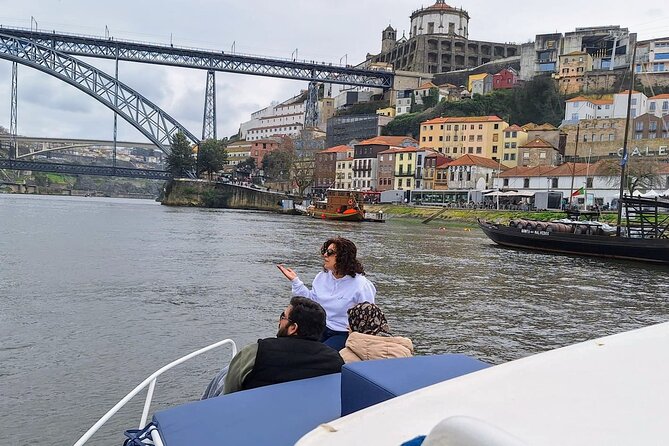
A max group of 7 isn’t just a number. It changes how the tour feels. With fewer people aboard, you get more direct attention, quicker responses to questions, and less time waiting for someone to catch up.
It also means the boat experience stays relaxed. Many guests like the outside seating, and when the weather turns, you’re covered—literally—with warm blankets. That’s a practical detail because Porto can cool down fast, especially near the water.
The host style is another part of the comfort equation. Nadia and Paulo are described as warm and welcoming, with narration that stays friendly and story-based. That matters because the tour covers a mix of architecture, infrastructure, nature, and wine. If someone only reads facts, it won’t land. Here, the goal is connecting what you see to why it matters.
Price value: why $72.41 can make sense (if you budget for wine and time)
At $72.41 per person, this isn’t the cheapest option in Porto. But it is priced like an experience, not like a basic sightseeing ride. You’re getting a short 2-hour program, a tiny group, and included 4 port wines plus food pairings and onboard service.
A useful comparison is the difference between boat tours on big vessels and this small-boat setup. Big-boat trips can be cheaper, but they often feel less personal. If you want better attention, more flexible pacing, and a “local host” feel, the added cost usually pays off.
Also, you’re not only buying views. You’re buying interpretation: why those bridges exist, why that monastery is shaped the way it is, and how the river has always been tied to trade, defense, and identity.
Who this tour is best for (and who should think twice)
This is a strong match if you:
- Want Porto from the water without spending a full day hopping between neighborhoods
- Care about port wine and prefer tastings that include food pairings
- Like small-group tours where the host can explain details in English
- Enjoy major Porto landmarks like bridges and viewpoints, plus one UNESCO site
You might think twice if you:
- Need step-free access. The Clérigos tower includes 225 steps, and the experience is not recommended for reduced mobility
- Get uncomfortable with weather uncertainty, since the activity requires good weather
Should you book Alma Douro’s Douro Cruise with 6 Bridges & 4 Port Wines?
I’d book this if you want a single, efficient way to see Porto and Gaia from a river perspective, taste port properly (with food), and get story-based explanations from a small crew. The tiny group size is a big deal here, because it turns wine and sightseeing into an easy, human-paced afternoon.
I’d hold off or choose another option if stairs are a hard limit for you, or if your schedule is too tight for a weather-dependent plan. Otherwise, this is exactly the kind of Porto experience that feels like you understood the city—not just visited it.
FAQ
Where is the meeting point for this Douro cruise?
You meet at Marina da Afurada, R. da Praia 430, 4400-554 Vila Nova de Gaia, Portugal. The tour ends back at the same meeting point.
How long is the experience?
The duration is about 2 hours.
How many people are on the tour?
This experience has a maximum of 7 travelers, so it stays small.
What language is the tour offered in?
The experience is offered in English.
Is a mobile ticket included?
Yes, the tour uses a mobile ticket.
What port wine tasting is included?
The experience includes 6 Bridges & 4 Port Wines, meaning you’ll have a tasting of 4 port wines as part of the experience.
What major viewpoints or monuments are included?
You’ll visit or include stops such as Torre dos Clérigos (including a climb of 225 steps), Serra do Pilar Monastery (UNESCO World Heritage), and sightseeing around Porto’s riverside area like Ribeira.
Does the tour depend on weather?
Yes. The experience requires good weather. If it’s canceled due to poor weather, you’ll be offered a different date or a full refund.
Is this tour suitable for reduced mobility?
It’s not recommended for reduced mobility.
What is the cancellation policy?
You can cancel for a full refund if you do it up to 24 hours in advance. If you cancel less than 24 hours before the start time, the amount paid is not refunded.