REVIEW · COIMBRA
Between Rocks and Silences : Scientific and Emotional Exploration PNSAC
Book on Viator →Operated by SUVisTTa.pt - Hernâni Magalhães · Bookable on Viator
Stop thinking of rocks as background.
This 6-hour outing in Coimbra’s Parque Natural das Serras de Aire y Candeeiros (PNSAC) turns stone, water, and time into a story you can walk through. I especially like the certified GeoGuide approach, where you get the science and the emotions tied to it. You’ll move at a steady pace between key sites, with free entry at each stop and an English-led format.
I love how you get hands-on time with the “big hits”: sauropod dinosaur footprints at Vale de Meios, plus the Praia Jurássica de São Bento, where you can literally walk on an ancient seabed. The sites are accessible and well preserved, so you’re not hunting for meaning—you’re seeing it.
One drawback to plan for: lunch isn’t included, and the day includes a few light walks on limestone terrain. If you need a long sit-down meal, bring your patience and your snack strategy.
In This Review
- Key highlights worth marking on your map
- A Day of Rock Stories in Coimbra’s PNSAC
- 9:00am Start and Private SUV Comfort (With Real-World Pickup Tips)
- Stop 1: Retiro Da Avo Lídia for a Grounding in Place
- Stop 2: Batista Amado Park and the Water Roof Feeling
- Stop 3: Pegadas de Dinossauros de Vale de Meios, Reading Giants in Stone
- Stop 4: Lapa dos Pocilgões Cave for Archaeology and Karst Weathering
- Stop 5: Praia Jurássica de São Bento and the Lost Coastline Effect
- Why Hernâni Magalhães Changes the Whole Day
- Price and Value: What $186.64 Buys You (and What It Doesn’t)
- Who Should Book This Tour—and Who Might Skip It
- Should You Book Between Rocks and Silences?
- FAQ
- How long is the tour?
- What time does it start, and is pickup included?
- What areas might have a pickup surcharge?
- What language is the tour offered in?
- Are entry tickets included for the sites?
- What’s included in the price?
- Is this a private tour?
Key highlights worth marking on your map
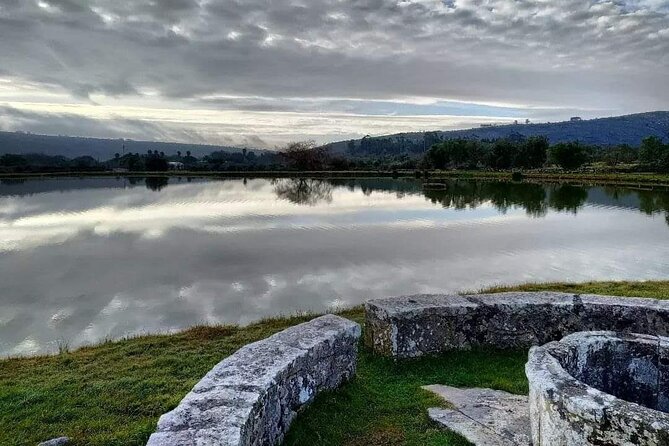
- PNSAC science you can see: karst caves, dinosaur tracks, and the Jurassic coastline in one focused loop
- Practical pacing: short stops for photos and explanations, plus a couple of lighter walks
- Dinosaur traces that still make sense: you’ll learn how to read size, rhythm, and direction
- Limestone + water = the whole plot: erosion shapes caves and surfaces over millions of years
- Guide-led storytelling: GeoGuide Hernâni Magalhães is described as attentive, patient, and passionate about the park
- Free site admissions: each scheduled stop lists admission ticket free
A Day of Rock Stories in Coimbra’s PNSAC
This tour is built around one simple idea: the Earth keeps a record, and you can read it—if someone shows you what to look for. In this part of Portugal, that record is written in limestone, carved by water, and then stamped with fossils and footprints from deep time.
What makes it feel different from a standard “scenic drive” is the way the stops connect. You start with local heritage and geology, then you move into karst terrain where water creates shapes you can almost watch happening in slow motion. After that, the tour pivots into prehistory and paleontology, before landing at the Jurassic Beach, a spot that makes the mountain’s past feel startlingly close.
If you’re the type who likes your travel with both facts and atmosphere, this works. It’s not just “cool stuff.” It’s cool stuff with the why.
You can also read our reviews of more tours and experiences in Coimbra.



9:00am Start and Private SUV Comfort (With Real-World Pickup Tips)
The tour runs for about 6 hours, starting at 9:00 am. You’ll get free pickup if you’re staying in the Porto de Mós municipality and nearby villages. Pickups are made in front of your accommodation or at a nearby agreed meeting point.
If you’re coming from farther out—Nazaré, Fátima, Batalha, Leiria, Alcobaça, Ourém, or even Lisbon—there can be a pickup surcharge. Plan for that if you’re not close to Porto de Mós. The tour does include exclusive transport in an air-conditioned SUV for your group, and that matters here: the park sites are spread out, and you’ll want comfortable seats for the road sections.
The format is also a plus for many people: it’s listed as private, meaning only your group participates. That’s the best setup if you want questions answered as you go.
Stop 1: Retiro Da Avo Lídia for a Grounding in Place
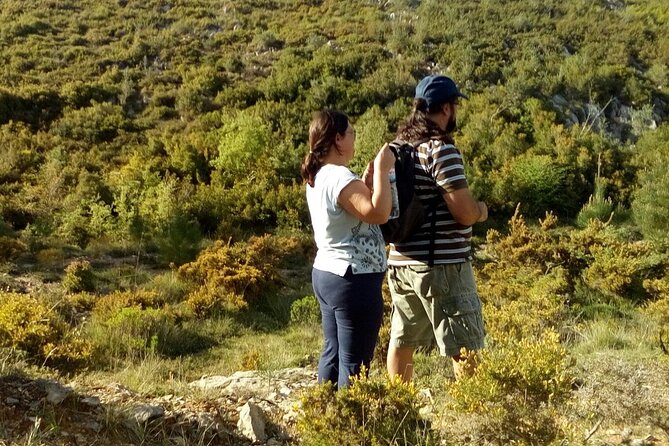
You kick off at Retiro Da Avo Lídia – Turismo Rural, where you get a quick introduction to the local geological and cultural heritage. This first stop is short—about 10 minutes—so think of it as a warm-up, not a museum visit.
Why it’s worth it: when you start in the right frame of mind, everything after makes more sense. The rest of the day is about how water and limestone shaped the region and how humans later used that same terrain. A little context early helps you notice details later instead of just taking photos and moving on.
Also, this is one of the few spots where you’re not yet “in the rocks.” You’re preparing yourself to enter them.
Stop 2: Batista Amado Park and the Water Roof Feeling
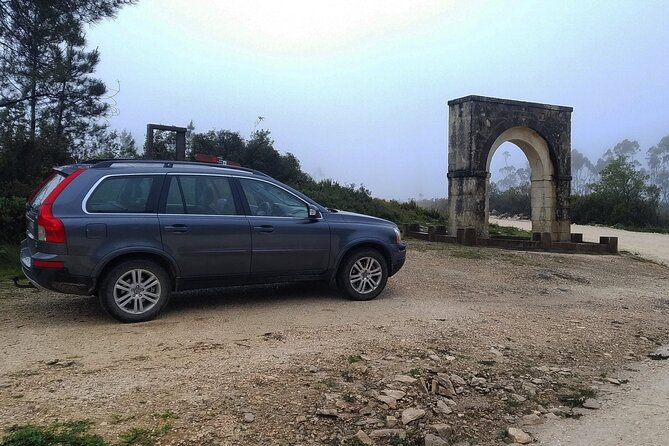
Next up is Mendiga and the start point at Batista Amado Park. The tour language here is almost poetic, but the payoff is scientific: you’re entering an area where stone and water have been working together for millions of years.
You’ll hear the idea of the Water Roof—a karst concept tied to limestone and how rain and underground flows create shapes over time. The tour description points to the limestone as something that breathes, with rain drawing ephemeral shapes. You don’t need special equipment to enjoy this; you just need your attention turned on.
This stop is about balance between man and nature—and that phrase matters in a practical way. The region has human activity nearby, including quarries, and a good guide helps you understand how park management responds to those impacts. One of the recurring themes from the experience is that the guide explains not only the rocks, but also how people relate to them today.
Time here is about 20 minutes, which is just enough for you to get oriented without feeling rushed.
Stop 3: Pegadas de Dinossauros de Vale de Meios, Reading Giants in Stone
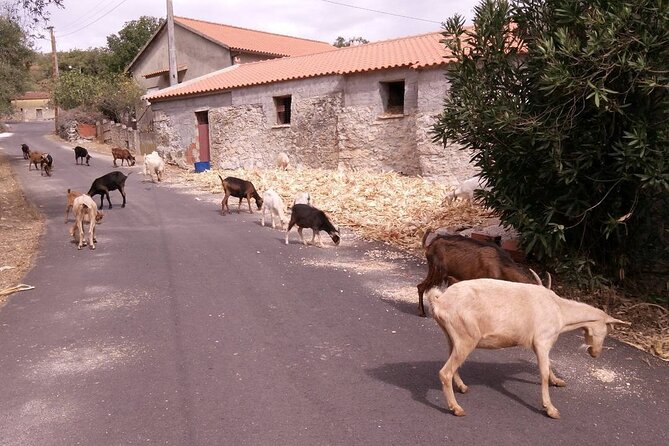
Then you reach Pegadas de Dinossauros de Vale de Meios—a paleontological site discovered in 1994 in an ancient limestone pebble.
Here’s the really useful part: you’re not just seeing footprints. You’re learning what the tracks can tell you. The site reveals around 20 tracks with hundreds of footprints attributed to sauropos (giant herbivorous dinosaurs) that lived about 175 million years ago. The marks were preserved at the bottom of an ancient lagoon, which helps explain why the shapes lasted.
The tour focus is on how to observe: size, rhythm, and direction of the steps. That’s the difference between looking at fossils as decoration and reading them as a trail. With a guide, you start to notice pattern.
Why this stop hits: it’s described as accessible and well preserved, and that’s huge. Many fossil sites either require specialized interpretation or are so degraded that you can’t make much out of them. Here, you’re given a way to understand what you’re seeing, and the surrounding terrain—limestones and open fields—reinforces the sense of time travel.
Plan for about 50 minutes here, which feels long enough to actually learn.



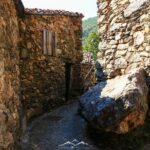
Stop 4: Lapa dos Pocilgões Cave for Archaeology and Karst Weathering
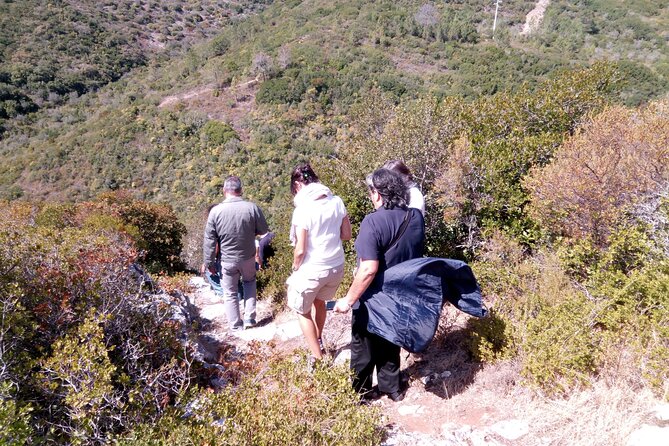
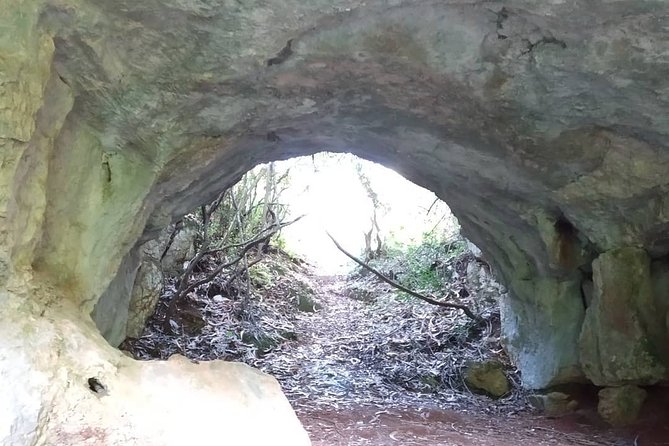
Lapa dos Pocilgões brings you underground near Cabeço das Pombas. The tour describes a light walk between stone fields and hidden trails, then you move into the cave world where water carved the limestone over thousands of years.
This stop is special because it blends three threads:
- Geology: underground karst morphology created by erosion
- Archaeology: the cave has evidence of human habitation since Prehistory
- Symbolic connection: the site has meaning in how communities relate to the mountains
The description is clear that this is a moment when you enter the interior of the mountain—think “your perspective changes instantly.” Above ground, you’re working with tracks and surfaces. In the cave, you’re dealing with structure, moisture effects, and natural chambers.
You’ll get about 50 minutes total here. The cave and the walk on limestone can be a little uneven in places, so bring footwear you trust and expect cooler air once you go inside.
Stop 5: Praia Jurássica de São Bento and the Lost Coastline Effect
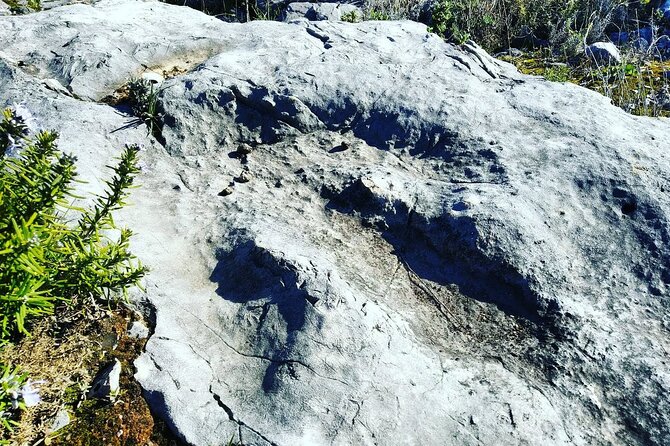
The finale is the Praia Jurássica de São Bento—the Jurassic Beach. Today it looks like a plain of dry limestone, but about 170 million years ago it was the bottom of a coastal lagoon. Marine animals left traces there, and those traces stayed recorded in rock.
This stop is where the day’s theme clicks for many people. The mountain becomes a former coastline. The Earth stops being a static backdrop and starts looking like a constantly shifting system. The tour frames it as science plus imagination plus contemplation—and that mix is exactly why this place lands.
Practically, you’ll be able to walk on the ancient seabed, which is one of those experiences that makes the time scale feel real. It’s not just a panel explanation. Your shoes are on the past.
You’ll spend about 50 minutes here, which gives you time for photos, looking for traces, and letting the story settle.
Why Hernâni Magalhães Changes the Whole Day
This tour runs with a certified GeoGuide, and Hernâni Magalhães is specifically named as the guide. From the way the experience is described, his strongest skill is connecting topics without turning the day into a lecture.
People highlight that he:
- knows the park’s geology, biodiversity, and history
- adjusts the explanations to what the group wants most
- shows plants and mentions park management, including how quarries factor into the present reality
There’s also a hospitality side that turns the day warmer. The experience descriptions include moments like homemade cake and herbal tea, plus additional food and local touches (like herbal tea breaks and regional wine mentioned in the day). Even if you’re focused on science, that kind of human scale helps you stay alert and enjoy the pacing.
One more practical note: reviews mention comfort extras like blankets for added warmth during parts of the day. That’s not guaranteed in every scenario, but it’s a sign the operator thinks about real comfort, not just checklists.
Price and Value: What $186.64 Buys You (and What It Doesn’t)
At $186.64 per person, you’re paying for more than transportation. Your money covers exclusive private transport in an air-conditioned SUV with tolls, mandatory insurance, bottled water, and a certified GeoGuide.
You’re also getting the schedule’s big cost-saver: each stop lists admission ticket free. That can matter if you’re comparing to tours where site fees are piled on at the end.
Where you need to be honest with yourself: lunch isn’t included. You may get snacks or tea pauses as part of the guide’s style, but the tour data explicitly says lunch is not part of what’s included. So budget for your own meal or plan to eat before or after, depending on timing and your appetite.
If you’re traveling as a couple or family and you want a guide to handle navigation plus interpretation, the value improves. It’s the kind of day where having someone explain what you’re seeing can save you from the most common traveler mistake: wandering a fossil site and missing the point.
Who Should Book This Tour—and Who Might Skip It
This is a great fit if you:
- love geology, fossils, and natural history
- want a guided day that includes short walks and clear interpretation
- enjoy learning about how a place works now, not just how it looked millions of years ago
- want to travel with comfort via a private SUV and an English-led GeoGuide
You might hesitate if you:
- need a fully planned, included lunch
- prefer long, slow museum-style time over field stops and walking
- want a purely relaxing nature day with minimal science content
For families, the tour also seems to handle kids well, with mention of patience and care for children, plus snacks and drinks as part of the day’s flow.
Should You Book Between Rocks and Silences?
If your idea of a good day is part science, part storytelling, and part “wow, that track is real,” then yes, book it. The strongest reasons are the combination of well-preserved dinosaur footprints, the Jurassic Beach experience of walking an ancient seabed, and the guided connection between water, limestone, and human time.
Also, the logistics are friendly: a 9:00 am start, private SUV transport, and free admissions at every scheduled stop. The only real caution is the food piece—lunch isn’t included—so plan accordingly.
FAQ
How long is the tour?
The tour lasts about 6 hours.
What time does it start, and is pickup included?
It starts at 9:00 am. Free pickup is available within the Porto de Mós municipality and surrounding villages.
What areas might have a pickup surcharge?
A surcharge can apply for pickups outside Porto de Mós and nearby villages, including areas such as Nazaré, Fátima, Batalha, Leiria, Alcobaça, Ourém, and Lisbon.
What language is the tour offered in?
The tour is offered in English.
Are entry tickets included for the sites?
Yes. The scheduled stops list admission ticket free.
What’s included in the price?
Included items are bottled water, exclusive private transport in an air-conditioned SUV (with tolls), mandatory insurance, and a certified GeoGuide.
Is this a private tour?
Yes. It’s a private tour/activity where only your group participates.