REVIEW · PORTO
Small-group Porto’s Roots Walking Tour
Book on Viator →Operated by AtWill, Lda. · Bookable on Viator
Porto has layers, and this walk shows them. You’ll cover five key stops in about 3 hours with a small group (max 10), plus a guide who helps you connect the dots from medieval growth to modern landmarks. I like that it ends right at São Bento, so you can keep exploring after the walk.
What really makes it click is the guide. Carlota, a local who studied history, brings the city to life with clear explanations and plenty of time for questions, not a rushed script.
One thing to note: Torre dos Clerigos doesn’t include admission. If you want to go up, plan for that extra cost, and remember the tour depends on good weather.
In This Review
- Key highlights you shouldn’t miss
- How this Porto roots walk helps you get your bearings
- Meeting at R. de Dom Hugo: the start matters more than you think
- Stop 1: Catedral do Porto and the medieval story behind the streets
- Stop 2: Cais da Ribeira and why Porto built itself around commerce
- Stop 3: Miradouro da Vitoria and the layers of community and conflict
- Stop 4: Torre dos Clérigos and the choice to pay for the climb
- Stop 5: São Bento Railway Station and reading the tile murals
- Small group size: why max 10 can be a big deal in Porto
- What you’ll learn (and how it connects)
- Price and value: is $23.83 a smart buy?
- Who this tour is best for
- Weather and practical comfort: the unglamorous stuff that matters
- Should you book this Porto Roots Walking Tour?
- FAQ
- Is this tour in English?
- How long is the Porto Roots Walking Tour?
- What is the group size?
- Where do I meet and where does it end?
- Do I need to pay admission fees during the tour?
- What happens if the weather is bad?
Key highlights you shouldn’t miss
- Local guide focus: Carlota’s Porto background and history studies sharpen the stories at every stop
- Time to ask questions: small group size keeps the pace human
- Medieval Porto to modern icons: you connect the city’s commercial roots to what you see today
- Jewish community and 19th-century civil war context from the viewpoints
- São Bento tiles explained so you actually read what’s in front of you
- Clerigos tower option: admission is not included, so you decide ahead of time
How this Porto roots walk helps you get your bearings
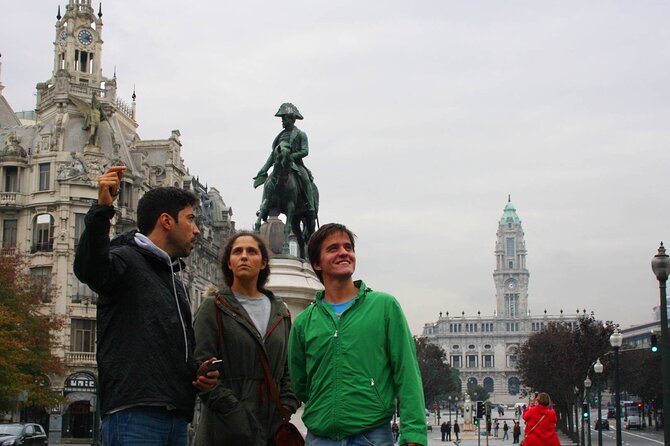
This is the kind of tour that helps you stop wandering and start understanding. In about 3 hours, you move through Porto’s “before you know it” highlights—church fronts, river streets, viewpoints, a famous tower, and the station that turns tiles into storytelling.
The pacing is designed for real street-level learning. You’re not sprinting between spots. You’re listening long enough to form a mental map, and the small group size makes it easier to ask follow-ups instead of waiting your turn.
Price-wise, it lands around $23.83 per person for an English-guided walk. That’s good value if you want interpretation—Porto can look pretty, but this helps you see why things are where they are and how they fit together.
You can also read our reviews of more tours and experiences in Porto.



Meeting at R. de Dom Hugo: the start matters more than you think
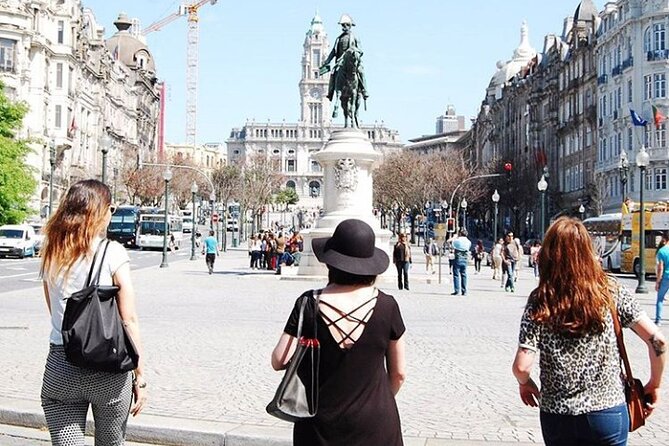
You meet on R. de Dom Hugo 3 at 10:00 am, and the tour finishes at São Bento Train Station. That matters because it shapes your momentum: you start in a central area, then your walk naturally funnels you toward a place you’ll likely want to visit anyway.
You’ll get a mobile ticket, and confirmation is handled at booking time. Since the tour is offered in English and capped at 10 travelers, it’s built for smaller, more conversational group dynamics rather than a factory-style “see and go” experience.
Bring comfortable shoes. The tour asks for moderate physical fitness, and you’ll be on city streets and viewpoints where footing matters more than speed.
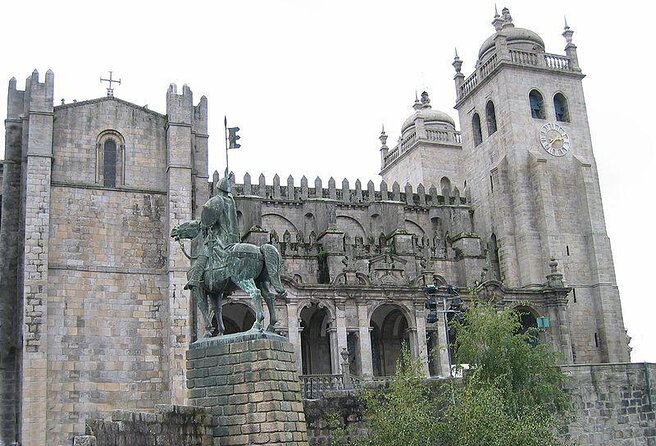
Stop 1: Catedral do Porto and the medieval story behind the streets
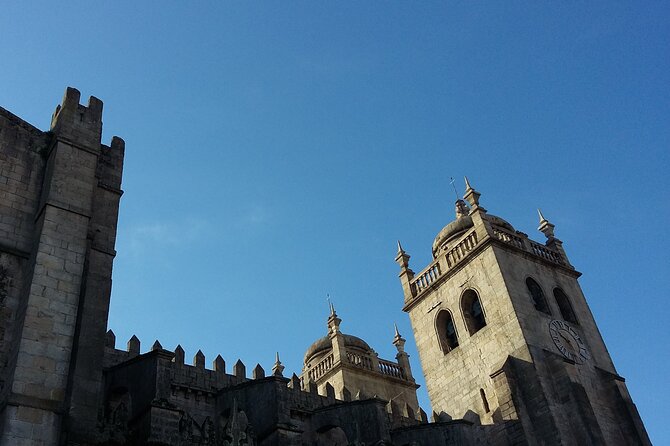
The first stop is Catedral do Porto, and it’s a strong choice for the beginning of a roots walk. Early on, your guide sets up how Porto developed in medieval times—where it expanded, how the social world worked, and what that meant for the city’s growth.
I like this approach because it prevents the usual first-day problem: you see beautiful places but you don’t know what you’re looking at. Starting with the city’s medieval context gives you a framework you can reuse for every later stop.
Also, this stop is free for admission, which makes it easy to commit early without feeling like you’re paying your way through every checkpoint.
Stop 2: Cais da Ribeira and why Porto built itself around commerce
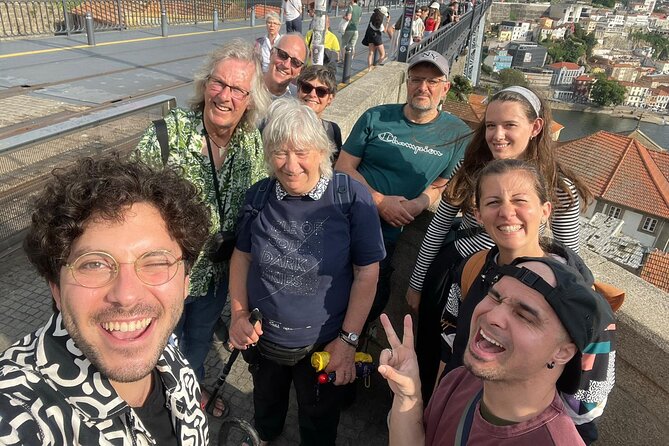
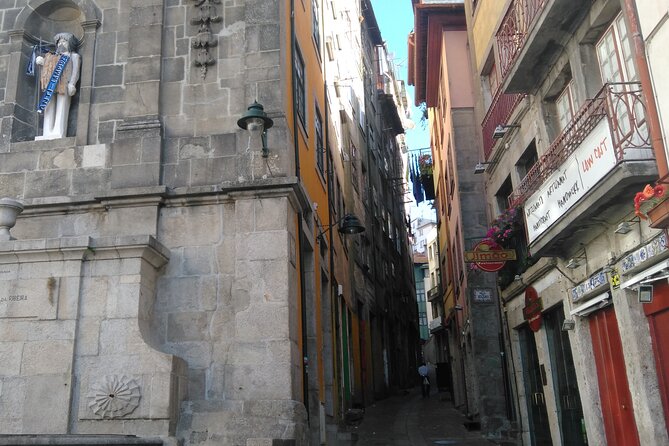
Next you head to Cais da Ribeira, where the vibe shifts from “city origins” to “city life.” You’ll see old medieval streets and talk about why Porto became an important commercial city and wine center, plus the role its bridges play in shaping movement and trade.
This stop works because it’s visual. You don’t just hear the story—you watch how the neighborhood layout supports the idea of a working port city. If you’ve ever wondered why waterfront towns feel different from inland ones, this is where that question starts answering itself.
Admission here is free, so you can focus on the walk and the explanation rather than worrying about entry timing.
Stop 3: Miradouro da Vitoria and the layers of community and conflict
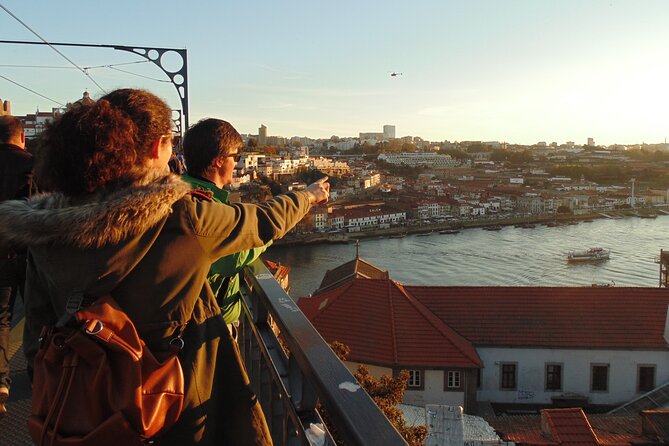
At Miradouro da Vitoria, you get a break from the street-level grind and a viewpoint where history can feel bigger than one building. This is where you learn about Porto’s Jewish community through the centuries, and then you connect that to Portugal’s civil war during the 19th century.
Even if you’re not a history buff, viewpoints do something practical: they help your brain organize the city’s geography. Then, hearing how communities and events shaped Porto gives you a reason to notice what you can see.
This stop is free as well, so you’re paying only for the interpretation you’re getting, not ticket access.





Stop 4: Torre dos Clérigos and the choice to pay for the climb
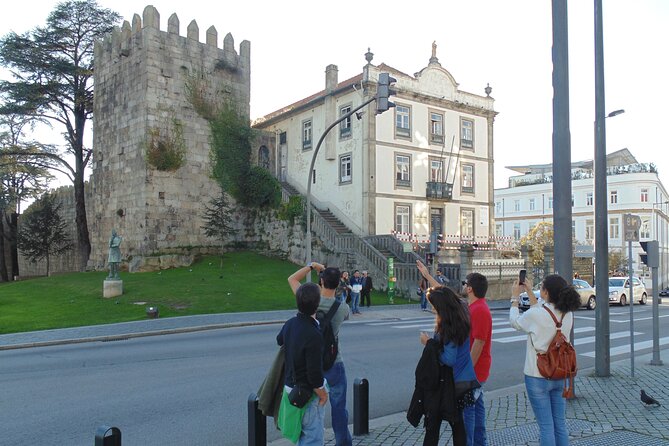
The tour then moves to Torre dos Clerigos, the city’s iconic tower. Here, you’ll hear the history of the building—why it became such a recognizable symbol for Porto.
This stop is where you’ll need to make a decision. Admission is not included, so if the tower is on your must-do list, plan for the extra ticket. If you’re not keen on climbing, you can still enjoy the explanation and the visual impact without forcing it.
I like having this choice baked into the experience. It keeps the tour flexible for different travel styles: some people want the view from the top; others just want the story and the photo from outside.
Stop 5: São Bento Railway Station and reading the tile murals
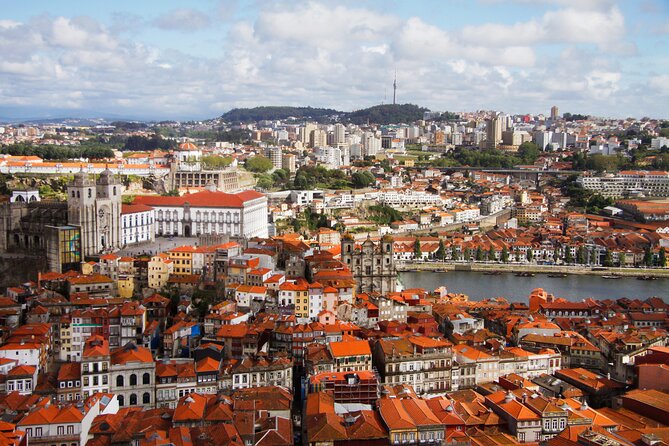
You finish at São Bento Railway Station, ending at the main hall covered in tiles. This stop is special because it turns a “transit building” into a cultural experience. Your guide explains what the tiles represent and shares other building curiosities that help you look beyond the obvious.
This is one of the best payoff moments in the whole walk. You’ll see people rushing through stations every day, but when you know what the scenes mean, the place becomes a living history board you can actually follow.
Admission for this stop is free, so it’s a solid close to the tour. And because you end here, you can continue your self-guided wandering without needing to reposition.
Small group size: why max 10 can be a big deal in Porto
A lot of tours claim small group. Here, it’s real: maximum 10 travelers. That changes the experience in two ways.
First, your guide can adapt. You’re more likely to get answers that fit what you actually care about—medieval city life, neighborhood context, or the meaning behind specific landmarks. Second, the pace stays steady enough for questions, not just information delivery.
The reviews around this tour consistently point to that kind of interaction, especially with Carlota. She’s described as friendly, clear, and able to take extra time when people have questions. If you like learning by conversation, this setup is worth it.
What you’ll learn (and how it connects)
This isn’t a “facts-only” stroll. It’s built around connections: how Porto grew, how it worked, and how different communities and historical events left traces you can still see.
Here’s how the stops tie together:
- Catedral do Porto gives you the start of the city story.
- Cais da Ribeira shows you the commercial and wine-driven city you can still picture in the streets.
- Miradouro da Vitoria adds the human layer—community history and conflict—through a viewpoint.
- Torre dos Clerigos gives you a symbol and the building’s significance.
- São Bento makes the station a visual history lesson you can continue exploring after the tour ends.
If you’re the kind of traveler who wants to feel like you understand a place, this structure helps you build that “I get it now” feeling fast.
Price and value: is $23.83 a smart buy?
At $23.83 per person, you’re not paying for museum entrances every step of the way. Most stops are free admission, which keeps your total cost predictable.
The one built-in exception is Torre dos Clerigos, where admission is not included. If tower entry is important to you, your final spend will rise a bit. If it’s not, you can treat the tower as a story-and-views stop and keep costs low.
For me, the best way to judge value here is simple: you’re buying time with a guide who can connect architecture and neighborhood clues to bigger historical themes, and you get a small-group setup that supports questions. If you’d rather read a guidebook on your own, this may feel like less of a bargain. If you prefer interpretation in real time, it’s solid.
Who this tour is best for
This walking tour fits best if you:
- want a first or second day orientation to Porto
- like history explained in plain language
- enjoy viewpoints and streets as part of the learning
- appreciate small groups and back-and-forth Q&A
It’s also a good choice if you’re planning a train-day or station visit anyway, because the tour naturally ends at São Bento.
Weather and practical comfort: the unglamorous stuff that matters
This experience requires good weather. If weather turns, you’ll be offered another date or a full refund, so it’s worth having flexible plans.
Dress for walking and for the kind of outdoor stops that don’t care if it’s windy or chilly. Since you’ll cover multiple locations in a short window, comfy footwear is a must.
Should you book this Porto Roots Walking Tour?
Yes—if you want a guided “understand Porto fast” experience with a local, history-focused guide and time to ask questions. The small group format is the real advantage, and the ending at São Bento is a practical bonus because it sets you up for an easy next round of exploring.
I’d skip it or rethink it only if you strongly dislike walking, hate history context, or already plan to prioritize only paid-entry sights (since Clérigos tower admission isn’t included and may be an extra decision point for you).
FAQ
Is this tour in English?
Yes. The tour is offered in English.
How long is the Porto Roots Walking Tour?
It runs for about 3 hours.
What is the group size?
The tour has a maximum of 10 travelers.
Where do I meet and where does it end?
You meet at R. de Dom Hugo 3, 4000 Porto, Portugal. It ends at Estação de São Bento (Praça de Almeida Garrett, 4000-069 Porto, Portugal).
Do I need to pay admission fees during the tour?
Most stops have free admission, but Torre dos Clérigos has admission not included.
What happens if the weather is bad?
The experience requires good weather. If it’s canceled due to poor weather, you’ll be offered a different date or a full refund.