REVIEW · PORTO
3-Hour Guided Walking Tour of Porto
Book on Viator →Operated by Pxt, Lda · Bookable on Viator
Three hours can change how you see Porto. I love how this Porto walking tour helps you get bearings fast, and I love the stories that tie architecture and music to real places. One thing to consider: it’s continuous walking, so pack comfy shoes and keep your pace steady.
You start at a spot that’s hard to miss: Terreiro da Sé in front of the Porto Cathedral. The tour runs in English and uses a mobile ticket, which makes day-of entry simple. Choose between two tour times, so you can fit it around your other plans.
I also like that the group stays small, up to 25 people. Most guides are lively and helpful in how they explain what you’re seeing (in past groups, names like Pedro and Ricardo/Riccardo came up), but if you need a specific language, plan around the fact this one is offered in English.
In This Review
- Key highlights at a glance
- Start at Terreiro da Sé: Porto Cathedral Square to Real City Stories
- São Bento Station Murals and Rua das Flores: Tiles, Shops, and Medieval Traces
- Ribeira Along the Douro: Learn Neighborhood Names by Walking Through Them
- Dom Luís I Bridge: Guided Insights While You Take in River Views
- Walking Tour Practicalities: Pace, Group Size, and What to Bring
- Price and Value: Is $33.61 Worth It for 3 Hours?
- Should You Book This Porto Walking Tour?
- FAQ
- How long is the 3-hour guided walking tour of Porto?
- What language is the tour offered in?
- Where do I meet the guide, and where does the tour end?
- Is food or drinks included?
- What is included in the ticket price?
- What happens if the weather is poor?
Key highlights at a glance
- Porto Cathedral meeting point: easy starting location at Terreiro da Sé
- São Bento station murals stop: quick hit on one of Porto’s most recognizable interiors
- Rua das Flores tile streets: medieval wall remains, colorful azulejo-style tiles, and craft shops
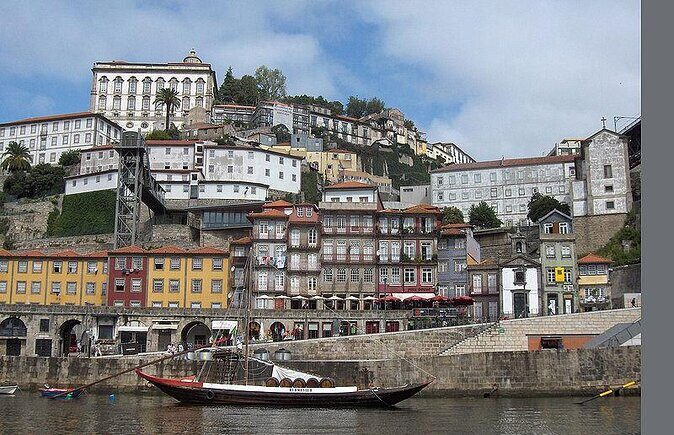
- Ribeira waterfront walk: stroll along the Douro with context for nearby hills and neighborhoods
- Dom Luís I Bridge perspective: guided commentary while you take in river views
- Short and efficient: about 3 hours, structured so you cover a lot without feeling rushed
Start at Terreiro da Sé: Porto Cathedral Square to Real City Stories
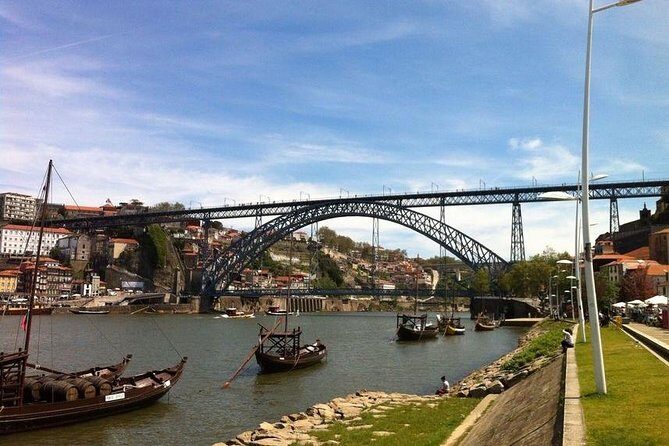
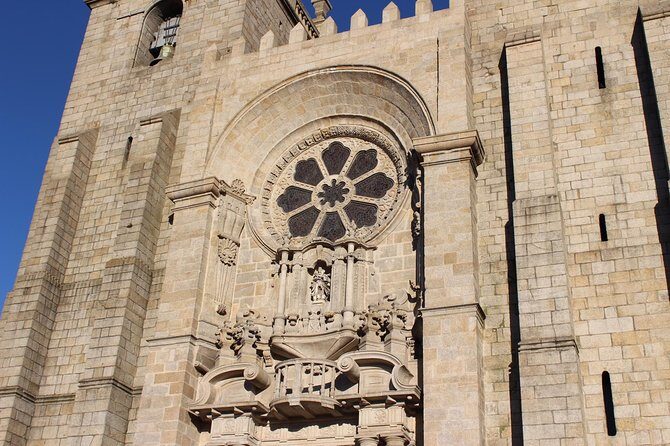
Your tour kicks off at Terreiro da Sé, right in front of Porto Cathedral. That matters more than it sounds. Porto’s old center can feel like a maze at first. Starting here gives you a clean “anchor” point, and the guide can use the cathedral area as a jumping-off place to explain how the city grew and why certain streets and viewpoints became important.
What I’d pay attention to at the start is the guide’s approach: they don’t just list dates. They point out what to look for in the stones, the street layout, and the way the city presents itself in layers. In past groups, guides like Pedro were singled out for being informative and helpful, with explanations that connect history to what you can actually see in front of you. That’s what turns a walk into an orientation tool.
From here, you’ll move on at a pace that feels built for a first afternoon. You’re not stuck waiting around at long museum-like stops. This is more “see it, understand it, keep walking.”
A practical note: since the tour is about 3 hours and you’re outdoors for most of it, you’ll want to dress for weather. The experience requires good weather, so if skies look shaky, keep that in mind for your schedule.
You can also read our reviews of more walking tours in Porto



São Bento Station Murals and Rua das Flores: Tiles, Shops, and Medieval Traces
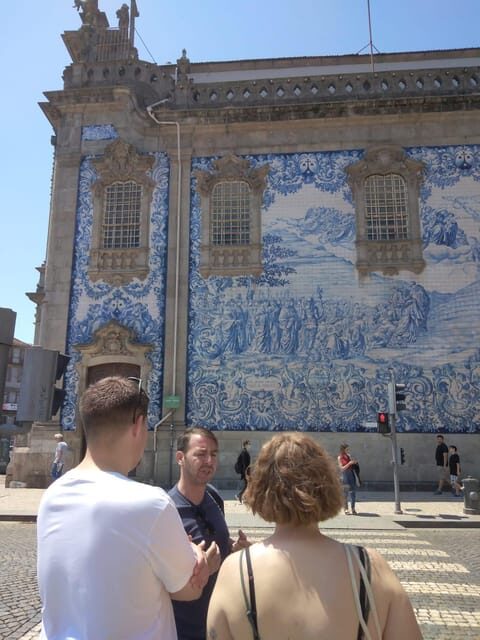
The São Bento Railway Station stop is short but memorable. You’ll head in for a focused look at the station murals—exactly the kind of place where a guide’s context helps. Even if you’ve never read about Porto’s rail history, you’ll likely understand why this station draws people the way it does: it’s not just a transport hub. It’s a visual statement inside a real working building.
Then you continue into the Rua das Flores area, which is where Porto gets very personal. You’ll spend about 50 minutes here, and the vibe shifts from landmark-to-landmark into “slow down and notice.” This street is known for a mix of architectural details and colorful tilework. You’ll also see the remains of medieval city walls in the area—so you’re not just admiring beautiful surfaces. You’re tracing the older footprint of the city underneath newer buildings.
Two things I like about this portion for your first visit:
- You get a mix of design and daily life. There are lovely houses and colorful tiles, but there are also artistic shops and spaces where you can browse local crafts.
- It keeps your attention active. The guide gives you something to look for at multiple moments, so you don’t end up in “walk-and-blank-stare” mode.
One detail to plan for: you’ll be moving through small streets with shops. If you’re prone to getting distracted, this is the stop to do it. If you want photos, don’t rush. But also remember you’re on a timed walking tour, so keep your picture-taking quick and strategic.
Ribeira Along the Douro: Learn Neighborhood Names by Walking Through Them
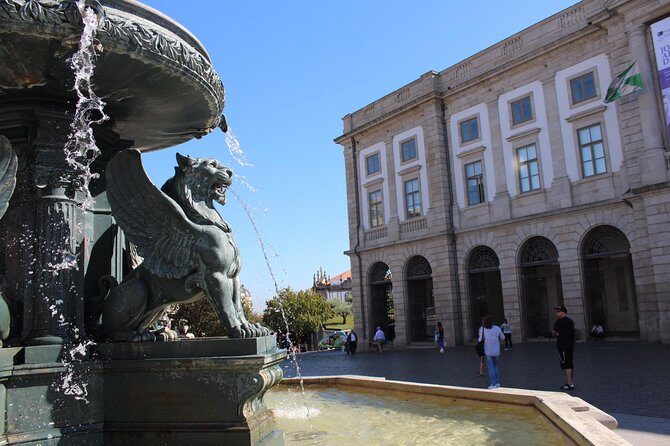
Next comes the Douro riverfront at Cais da Ribeira. This is one of Porto’s signature scenes, and it’s also a great learning moment because the river naturally shapes the city’s views and routes.
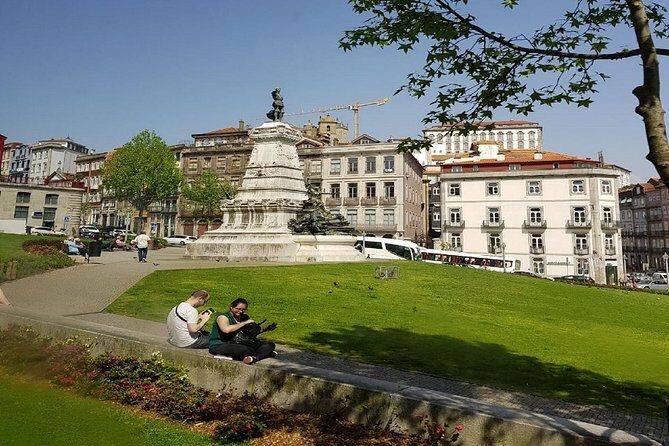
You’ll walk along the waterfront for about 50 minutes, and the guide uses the walk to point out interesting nearby areas such as Pena Ventosa and Vitória Hill. That’s a smart way to learn Porto: you’re not just memorizing names from a map. You’re connecting those names to what you can see from street level as you move.
What’s valuable here is the “between-the-views” time. Porto’s Ribeira can be postcard-perfect in the obvious spots, but the guide’s job is to help you understand what’s around the corner—how neighborhoods relate to each other, and why certain viewpoints matter.
You’ll also get a better feel for the city’s rhythm. This is where you notice how people actually move through Porto. If you plan to do more exploring later—like returning for a sunset walk or finding a viewpoint—you’ll be able to navigate with more confidence because you’ll have walked the logic first.
One consideration: waterfront areas can get crowded. Your best move is to stay close to the guide when crossing busier stretches. If you want photos, step aside briefly when it makes sense, then rejoin for the next explanation.
Dom Luís I Bridge: Guided Insights While You Take in River Views
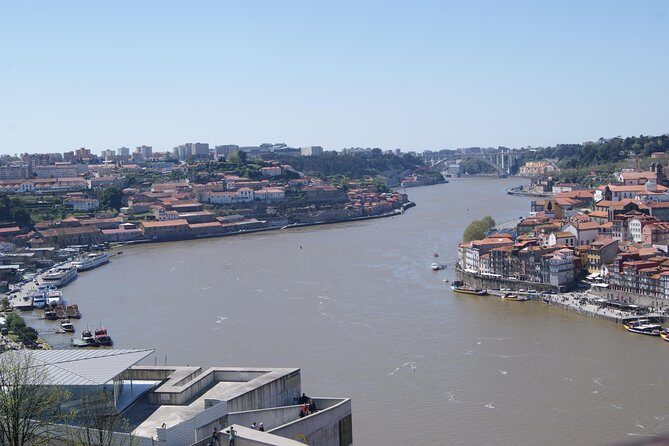
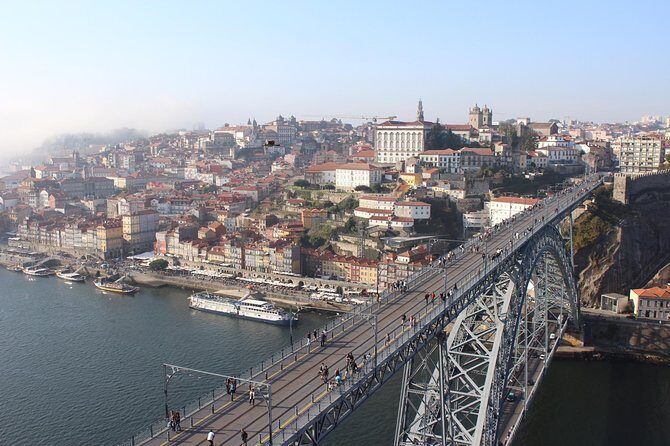
The tour ends with a stop around Dom Luís I Bridge, with about 40 minutes allotted here. This is a payoff moment. After you’ve walked through the old center and along the river, the bridge becomes a visual summary of how Porto sits around the Douro.
What I like about having a guide at this point is that you’re not just seeing a landmark. You’re getting the “why it’s important” version—how the bridge changes the way you read the city, and what to notice from this vantage.
The tour structure also helps: by the time you reach the bridge, your legs are warmed up and your brain has started to connect places. So the bridge doesn’t feel random. It feels like the logical next step.
After this, you finish near Avenida dos Aliados. That ending location is handy because it’s a central place to continue on your own. You can head toward other sights, grab a meal, or use it as a return point if your next plan is flexible.
If you have a tight schedule that evening, give yourself some breathing room. In one past experience, the session was reported to have finished a bit early. That doesn’t mean it will happen to you, but it’s a good reason to avoid booking something with zero buffer time.
Walking Tour Practicalities: Pace, Group Size, and What to Bring
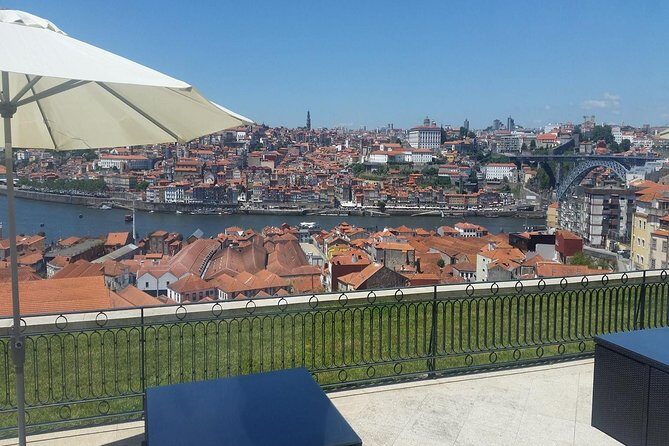
This is a moderate-physical-fitness walking tour. That wording matters. It’s not described as a strenuous hike, but it is a 3-hour walking route through central Porto. Plan on being upright, walking between stops, and occasionally pausing for explanations.
The group size is capped at 25 people. That’s a sweet spot. You usually get the benefits of a guided experience without feeling like you’re part of a stampede. You’ll likely have enough breathing room to ask questions too, especially if your guide is the helpful, friendly type that’s been praised in past groups.
What to wear:
- Comfortable, supportive shoes (you’re walking most of the time)
- A light layer (Porto weather can shift fast)
- A charged phone, since you’ll have a mobile ticket
Finding the group is usually easier because the meeting point is specifically in front of Porto Cathedral. Still, pay attention to the exact location and arrive a little early. In past experiences, at least one person noted it was difficult to meet up, so don’t cut it close.
Also, plan for no hotel drop-off and no food or drinks included. That’s not a problem if you treat this as an intro tour. Just don’t plan to “eat during the tour.” If you want lunch, schedule it before or after.
You can also read our reviews of more guided tours in Porto





Price and Value: Is $33.61 Worth It for 3 Hours?
At about $33.61 per person for roughly 3 hours, you’re paying for one thing: a local guide who can turn a city walk into a story you can actually use.
Here’s why the value works (and when it might not):
- You get structure. Porto’s center is full of things to see, but it can be hard to sequence. This tour does that for you in one organized loop.
- You get context at multiple scales. One stop gives you interior art (São Bento). Another gives you street-level details (Rua das Flores tiles and medieval traces). Then you get the city’s big-picture geography (Ribeira and the bridge).
- You aren’t paying separate entrance fees at the stops listed. Each stop is shown as free admission, which keeps your budget predictable.
When it might not be the best deal: if you already know Porto well and you don’t want guidance, you could do the same route on your own. But if you’re aiming to learn quickly, this is a cost-effective way to do it in one morning or afternoon.
One more smart point: the tour is frequently booked about 41 days in advance on average. That’s a hint to book early if you want a specific time slot.
Should You Book This Porto Walking Tour?
I think you should book it if you’re arriving in Porto and want a guided way to get oriented without spending a whole day on logistics. The combination of Porto Cathedral, São Bento, Rua das Flores, Ribeira, and Dom Luís I Bridge gives you a realistic first-pass understanding of how Porto is put together.
I’d skip or reconsider if you have very limited mobility or if you’re looking for long indoor time and sit-down attractions. Also, if you’re hoping for a language other than English, double-check before you go.
If you like walking tours that explain what you’re seeing as you go, this one is a strong start. It’s short enough to fit into your plans, but packed enough to make your later exploring feel easier.
FAQ
How long is the 3-hour guided walking tour of Porto?
The tour runs for about 3 hours.
What language is the tour offered in?
The tour is offered in English.
Where do I meet the guide, and where does the tour end?
You meet at Terreiro da Sé, 4000 Porto, Portugal. The tour ends at Avenida dos Aliados (Av. dos Aliados), 4000 Porto, Portugal.
Is food or drinks included?
No. Food and drinks are not included.
What is included in the ticket price?
The ticket includes a local guide. Admission tickets for the listed stops are shown as free.
What happens if the weather is poor?
The experience requires good weather. If it’s canceled due to poor weather, you’ll be offered a different date or a full refund.