REVIEW · PORTO
Private tour to Ponte de Lima, Vinho Verde region
Book on Viator →Operated by Endless Weekend Tours · Bookable on Viator
Ponte de Lima is a surprise for the eyes. This private 8 to 10 hour excursion strings together Roman and medieval landmarks along the Lima River and then pivots into Vinho Verde wine country with a guided stop built around the region’s demarcated wines. It’s a focused day with enough structure that you won’t feel rushed, even if you’re the kind of person who reads every plaque.
I especially liked the Ponte Romana e Medieval stop—because it’s not just a bridge, it’s really two different eras stitched together in one view. And I liked the Centro de Interpretação e Promoção do Vinho Verde visit, where you get a proper explanation plus time to taste a regional wine (admission is not included).
One thing to weigh: this is not just “free walking.” Lunch and some wine/heritage entrances cost extra, and you’ll also want good weather, since the day runs outside between stops.
In This Review
- Key points to know before you go
- Why Ponte de Lima works so well as a Porto day trip
- Getting there in a luxury vehicle (and why it matters)
- Ponte Romana e Medieval: the bridge that teaches you how the town grew
- Capela do Anjo da Guarda and Santo António da Torre Velha: small stops with strong atmosphere
- Vinho Verde at the Centro de Interpretação: learning the region before you taste
- Taverna Vaca das Cordas: tradition you can learn even if you miss the chaos
- Dona Teresa statue and the Igreja Matriz: civic pride and Late Gothic inside view
- Misericórdia Church: the portico over the cemetery idea
- Paço do Marquês, towers, and the wall story in stone
- Largo de Camões and the Fonte Nobre: a fountain with a story behind it
- Optional wine and heritage adds: when to say yes (and when to skip)
- Calheiros wine cellar tasting (optional)
- Monastery and medieval tower options (optional)
- Price and value: what $211.84 buys you in a private setting
- The pacing and guide touch: Carlos’s style
- Should you book this private tour of Ponte de Lima and Vinho Verde?
- FAQ
- FAQ
- How long is the Ponte de Lima and Vinho Verde private tour?
- Do I get pickup in Porto or Gaia?
- Is the tour private, or will I join other groups?
- What language is the tour offered in?
- What costs extra besides the tour price?
- Is the tour affected by weather?
Key points to know before you go
- Two-bridge story at Ponte Romana e Medieval: Roman arches plus a larger medieval section, all tied to the town’s name and river.
- Capela do Anjo da Guarda reopened in 2022: A restored monument you can actually see in its current form.
- Vinho Verde education with a tasting: Film, permanent exhibition, and a vineyard terrace at the interpretation center.
- Church-hopping with meaning: Late Gothic Igreja Matriz plus Misericórdia’s 17th/18th-century design details.
- Optional wine add-ons that fit different tastes: Especially Calheiros, with 3 structured pours (not just one glass).
- A long day made easier by comfort: Luxury vehicle transport, Wi-Fi, bottled water, and a private group format.
Why Ponte de Lima works so well as a Porto day trip
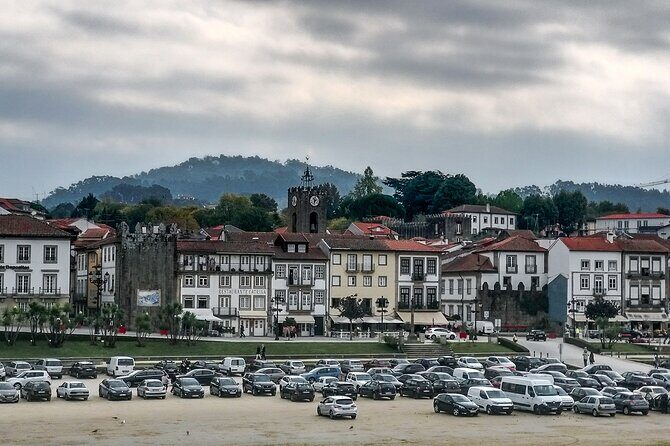
If you’re based in Porto (or you’re even just spending time in Gaia), Ponte de Lima is one of those day trips that feels like you switched timelines. Porto gives you coastal energy and big-city texture. Ponte de Lima slows things down—stone, river, church towers, and long views that make the hours feel earned.
What I like about this outing is the way it’s planned around walking “clusters” rather than forcing you to crisscross town. You start with the river and old bridge zone, then you drift into the historic center’s churches and civic landmarks. After that, the day naturally turns toward wine country understanding, not just a last-minute cellar stop.
And because it’s private, you’re not stuck with a hurry-up pace. The format is designed for your group only, in English, with pickup from central Porto and Gaia hotels and B&Bs. Translation: fewer logistics headaches for you.
You can also read our reviews of more private tours in Porto


Getting there in a luxury vehicle (and why it matters)
The tour includes transport in luxury vehicles with Wi-Fi, bottled water, and refreshments. That sounds like standard marketing until you remember you’re spending most of a day away from home base. When you’re doing an 8 to 10 hour itinerary with multiple exterior stops, comfort becomes a practical travel tool, not a “nice-to-have.”
Pickup starts at 8:00 am from hotels and B&Bs in central Porto and Gaia. So plan to be ready early. If you’ve ever arrived at a day trip feeling half awake, you know why a smooth morning transfer matters.
Also, the tour includes personal accident and civil liability insurance. It’s one of those items you’d rather never think about—until you’re grateful it’s there.
Ponte Romana e Medieval: the bridge that teaches you how the town grew
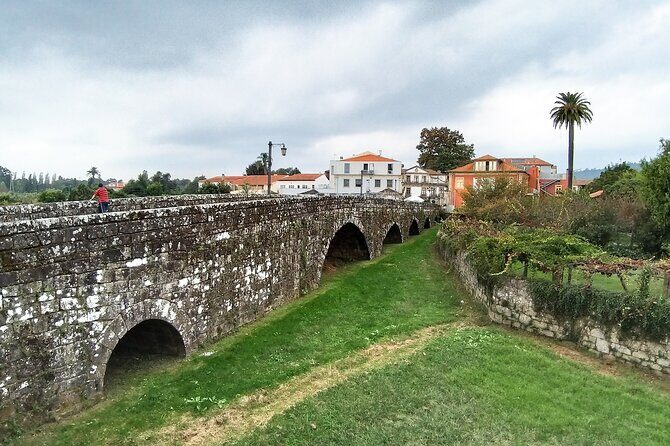
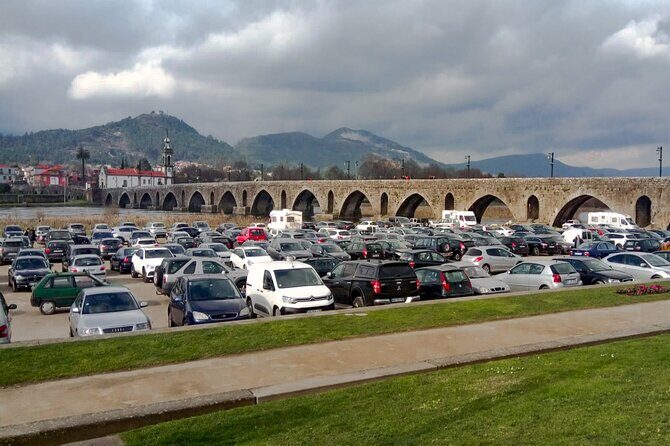
Stop 1 is the big one: Ponte Romana e Medieval. It’s the ex-libris of the town because the Lima River and the bridge together shaped the place’s identity. You’re not just looking at something old; you’re reading the town’s timeline in stone.
Here’s what makes it special:
- It’s actually two bridges working as one composition.
- The medieval section starts on the left bank and runs toward the Church of Santo António da Torre Velha, passing it in two arches.
- The Roman section continues with five arches, with the “great arch” sitting in the dry riverbed area.
It was declared a National Monument in 1910, so the scale and preservation are taken seriously. Admission is free for this stop, which makes it a great opener: you can linger without feeling like you’re burning paid time.
Practical tip: this is a photo-heavy stop. If you want less crowd noise and cleaner angles, keep an eye on your guide’s timing cues. On a private tour, that’s easier than on buses.
Capela do Anjo da Guarda and Santo António da Torre Velha: small stops with strong atmosphere
Right after the bridge, you move to the Capela do Anjo da Guarda, also called Padrão de São Miguel. Classified as a National Monument in 1978, it may date from the 17th century. The location matters too: it’s built by the Lima River and next to the old bridge, specifically by the Roman section.
This is the kind of stop where the details are the point. In 2021 it was restored, and the opened intervention came in March 2022. So you’re seeing it at the moment it’s fully back in service, which makes a difference when monuments have been closed for years.
Admission is free, and the stop is short—around 20 minutes—so it won’t hijack your schedule. It does, though, add texture to the river-and-stone theme you started with.
Then comes Igreja de Santo Antonio da Torre Velha. This church is tied to an older hermitage documented since the 18th century, linked to Nossa Senhora da Esperança. The current appearance is shaped by a 19th-century reform and the confraternity of Santo António, which is also when tile panels appeared.
One reason this stop feels worthwhile: the church and the tower of the early medieval fence cohabited until the mid-19th century. When the fence was demolished, the church was renamed Santo António da Torre Velha. That kind of “name after loss” story sticks with you.
Vinho Verde at the Centro de Interpretação: learning the region before you taste
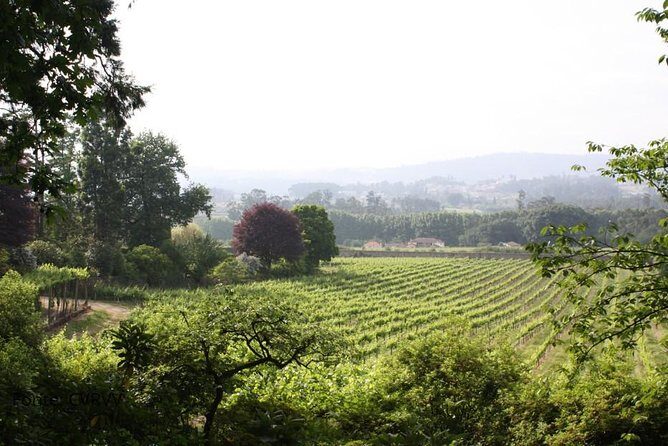
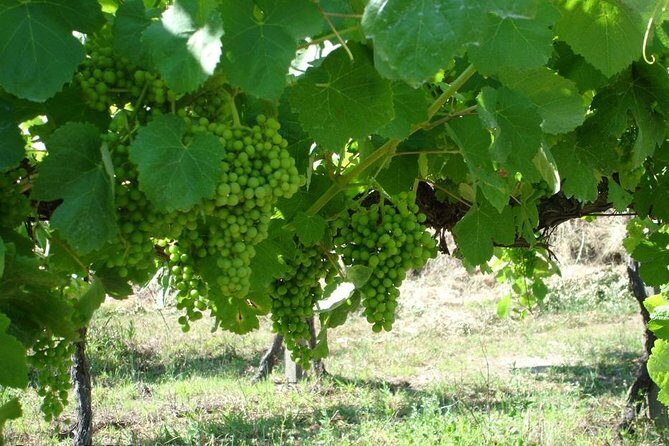
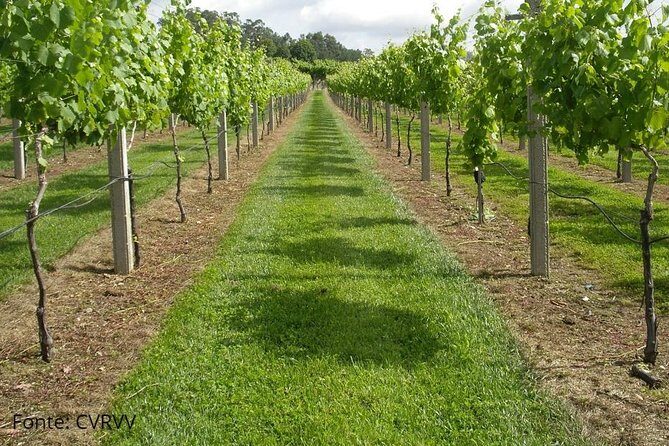
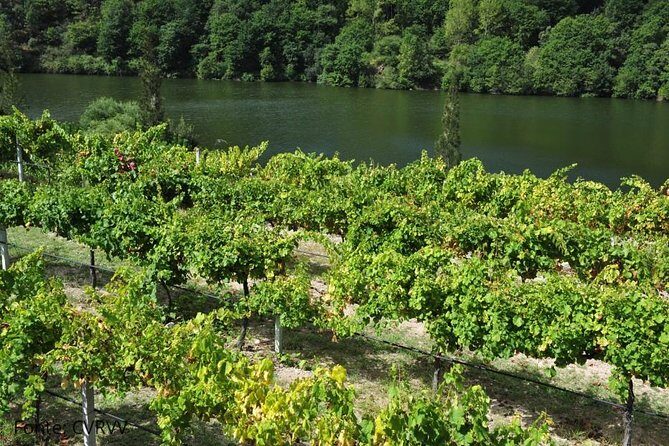
Now you shift gears to wine, and the tour does it in a smart order. Stop 4 is Centro de Interpretação e Promocao do Vinho Verde. The visit includes access to the permanent exhibition, a terrace with a small plantation of vineyards, a promotional film about the Demarcated Region of Vinhos Verdes, and a tasting of regional wine.
The key detail for planning: admission here is not included in the tour price. So you’ll want a few euros ready when the bill arrives.
Why I think this stop works: Vinho Verde can be confusing if you only think of it as “light white.” The program is designed to give you context on the demarcated region first—then you taste. You don’t just buy a bottle at the end of the day; you understand what you’re tasting and how it relates to place.
Time-wise, it’s about 30 minutes. That’s enough to reset your senses without dragging the day.



Taverna Vaca das Cordas: tradition you can learn even if you miss the chaos
Stop 5 takes you into a very local tradition: Taverna Vaca das Cordas. This one is historically tied to the 15th century and is known for drawing crowds from Portugal and even Spain—people show up to the historic center and the sands of the Lima River area.
The tradition always takes place on the eve of the religious holiday of Corpus Christi in the late afternoon. That means timing is calendar-dependent. On your tour day, you might experience a bit of the energy, or you might mostly get the story and the setting.
What you’ll hear about is the “race” that starts on Rua do Arrabalde toward Largo da Matriz. The route includes going around the church three times, then continuing through the historic center streets to the beach. Thousands of people try to “dribble” the animal, or simply watch.
Even if your day doesn’t match the peak moment, this stop gives you something useful: it shows how religious calendar, public space, and local identity intertwine.
Admission is free and the stop lasts about 30 minutes.
Dona Teresa statue and the Igreja Matriz: civic pride and Late Gothic inside view
After the river and tradition stop, you’ll hit the historic center landmarks.
Estátua de Dona Teresa (Stop 6) is a homage to Queen D. Teresa, who granted Ponte de Lima the charter of Vila in 1125. It’s a quick stop (about 30 minutes), but it anchors the town’s civic story. You’re being reminded that this is not just architecture—it’s governance, charters, and identity.
Then Stop 7: Igreja Matriz de Ponte de Lima. This is a Late Gothic church that succeeded an older one which grew from a single nave to three. Inside, the highlight is the Chapel of Nossa Senhora da Conceição, linked to the Solar de Bertiandos.
Built by D. João I in 1425, completed in 1446, it also went through transformations across centuries. Those changes show visibly through overlapping styles—Romanesque, Gothic, and Neoclassical. That mix matters because it’s a living building, not a frozen museum piece.
Admission is free here too, and it’s about 20 minutes.
Misericórdia Church: the portico over the cemetery idea
Stop 8 is Igreja da Misericórdia de Ponte de Lima. The institution traces back to 1530, and the current church is a 17th/18th-century mix in mannerist and baroque styles. The building is classified as a Property of Public Interest.
It’s organized around a single nave and a chancel with a coffered vault from 1638. The standout feature for many people is the main portico, which is open laterally over what used to be the old cemetery. The cemetery is now a churchyard closed by a railing, and the effect is like a porch veranda that shapes the way you experience the church entrance.
This stop is about 20 minutes and free to enter on the tour schedule. If you like architecture more than museum-style history, this is one of your easier-to-appreciate stops.
Paço do Marquês, towers, and the wall story in stone
Next you get political power made visible. Stop 9 is Paço do Marquês de Ponte de Lima, a splendid 15th-century stone building that houses the Military History Interpretation Center. Admission is not included, so you’ll decide on the day whether to pay for the interior. The allotted time is about 30 minutes, so you won’t feel like you’re losing the whole afternoon if you choose not to enter.
Then Stop 10: Torres de Sao Paulo e da Cadeia Velha plus the section of old wall connecting them. These towers are classified as Buildings of Public Interest. They’re among the most notable remnants of Ponte de Lima’s old walls, which once included doors and additional towers like the Expectation Tower and Postigo Tower.
This set was built in the 14th century during King D. Pedro I’s reign. Torre de Cadeia Velha, also known as Porta Nova, reflects major improvements on an older tower already in place as part of the 14th-century walled village. The prison district was installed there, and it was completed in 1511.
Admission is free; time is around 20 minutes.
Stop 11 is a smaller but meaningful civic artifact: Pelourinho de Ponte de Lima. The original pillory is attributed to the 16th century and was built on the beach almost in front of São Paulo tower. Later, weapons from the United Kingdom of Portugal, Brazil and the Algarve were added in the early 19th century. It was compulsorily demolished after liberal struggles, then rebuilt during the Estado Novo in front of City Hall using identified fragments from the primitive monument.
The total time is about 10 minutes—short, but it explains why civic symbols move around when politics changes.
Largo de Camões and the Fonte Nobre: a fountain with a story behind it
Stop 12 is Largo de Camoes and specifically the Fonte Nobre. The fountain was completed in 1603 after a false tax was levied in 1580 on consumer goods like precious salt. The revenue funded what you see today.
The fountain’s location also changed: it was originally built at the current Largo Dr. António Magalhães, a main gateway to the town wall, then transferred to Largo de Camões in 1929. Renaissance design and execution are attributed to Limiano João Lopes.
Time is about 20 minutes, and admission is free. This is a nice “rest for your feet” stop that still teaches you something.
Optional wine and heritage adds: when to say yes (and when to skip)
This tour includes optional extensions, and they can be worth it if your priorities match.
Calheiros wine cellar tasting (optional)
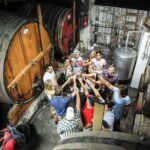
Stop 13 is Calheiros Manor at 25€ per person. You visit the cellar of Quinta do Paço de Calheiros and taste 3 different wines:
- Paço de Calheiros
- 100% Loureiro fermented and aged in stainless steel
- Conde de Calheiros, 100% Loureiro aged in oak barrels
- plus a red sparkling wine produced at this Quinta
The tour notes this is a unique experience even if you’re used to tasting different styles. That makes sense: you’re comparing aging approaches (steel vs oak) and still getting something playful with the red sparkling option.
Because admission here costs extra, I’d only add it if you’re ready to spend time tasting rather than rushing back to Porto.
Monastery and medieval tower options (optional)
Stop 14 is Mosteiro de Santa Maria de Refoios do Lima (optional). Founded in the 12th century by D. Afonso Ansemondes for canons of the State of Santo Agostinho, it changed roles over centuries and now houses facilities of the Escola Superior Agrária de Ponte de Lima. It’s classified as a Property of Public Interest since 1939.
Stop 15 is Quinta da Torre de Refoios (optional), built in the 14th century. It’s one of the first known medieval defensive towers in Portugal, classified since 1996, and it’s described as well preserved and located inside a housing tourism estate.
These optional stops can be great if you want more stone-and-stair time. If you’re already leaning “church and bridge is enough,” you can skip to keep the day lighter.
Price and value: what $211.84 buys you in a private setting
At $211.84 per person, this tour sits in the “private day trip” tier. What makes it feel more justified is the built-in logistics and comfort: luxury vehicles, pickup from central Porto and Gaia, and guide-led movement across a full day of sites.
Also, the tour includes a number of stops with free admission on the route, like the main bridge, the chapel, the churches, the towers, and civic landmarks. Paid entries only show up at select points—like the interpretation center and the Paço/center options—and the wine add-on is clearly optional.
Lunch is not included (noted as typical lunch with entry, main dish, drink, dessert, and coffee at €30.00 per person). That’s pretty normal for Portugal, but it’s still something to plan for so you don’t get surprised later.
So how do you judge value? If you want a smooth, guided day with minimal navigation, pickup, and a structured taste of Vinho Verde—this price can make sense. If you mainly want one or two photo stops and you’re comfortable driving and timing on your own, you may decide to DIY. But this tour is designed for convenience and a coherent story across town and region.
The pacing and guide touch: Carlos’s style
There’s a specific thing I’d look for in a tour like this: the ability to adapt pace. In the feedback for this experience, Carlos is singled out for taking extra time to travel at your pace and for explaining what you saw in detail. That matters on a day like this because you’ll want the “why” behind the bridge design, the church naming, and how the town’s timeline shows up in stonework and civic symbols.
The same feedback also highlights that the guide adds history of the area and gives restaurant recommendations close to where you stay. Even if you don’t follow every suggestion, it’s useful to get local options without guesswork at the end of a long day.
Should you book this private tour of Ponte de Lima and Vinho Verde?
Book it if you want:
- a private, structured day from Porto with pickup and English guiding
- a mix of river landmarks, churches, and historic civic details
- a planned introduction to Vinho Verde that includes a tasting at the interpretation center
- the option to add wine depth via Calheiros
Skip it or trim extras if:
- you’re price-sensitive about entrances and wine tastings (some stops are not included)
- you get cranky about long days; this runs 8 to 10 hours
One more practical note: the experience depends on good weather. Since the core is walking between monuments, you’ll enjoy it more on a day with decent conditions.
FAQ
FAQ
How long is the Ponte de Lima and Vinho Verde private tour?
The tour runs about 8 to 10 hours.
Do I get pickup in Porto or Gaia?
Yes. Pickup is offered from all hotels and B&Bs in central Porto and Gaia, starting at 8:00 am.
Is the tour private, or will I join other groups?
It’s private. Only your group participates.
What language is the tour offered in?
The tour is offered in English.
What costs extra besides the tour price?
Lunch is not included (listed as €30.00 per person). Also, some admissions are not included, like the wine interpretation center, and optional paid stops such as Calheiros (€25 per person). Optional monastery/tower visits are also not included.
Is the tour affected by weather?
Yes, it requires good weather. If it’s canceled due to poor weather, you’ll be offered a different date or a full refund.