REVIEW · PORTO
Porto private morning Tour, discover the most iconic attractions
Book on Viator →Operated by Endless Weekend Tours · Bookable on Viator
Your morning in Porto can feel perfectly planned. This private tour strings together the city’s biggest icons—UNESCO Porto sights, São Bento’s tile hall, Clérigos Tower, Livraria Lello, and the Douro crossings—without you having to figure out routes or timing. A driver fills in the why behind the sights, and onboard Wi‑Fi keeps you connected while you hop from stop to stop.
I especially like the private, driver-led format. You’re not stuck in a shuffle, and the pace stays focused on key viewpoints and photo moments. Another win: you get practical local guidance along the way, including solid eating tips from guide Carlos, who some guests praised as courteous, professional, and very good at explaining what you’re seeing.
One consideration: it’s packed. The tour is about 4 hours and many entrances are not included, so some of the best interiors (like Lello or certain churches) may cost extra unless you add tickets.
In This Review
- Key Things I’d Book This For
- A 4-Hour Head Start in Porto (Without the Puzzle Pieces)
- From D. Pedro Square to Mercado do Bolhão: Porto’s Everyday Heart
- Praça da Batalha, Old City Walls, and the Gothic-Renaissance Layering
- Catedral do Porto: Fast Stop, Big Payoff
- São Bento Station Tiles: The One Stop You’ll Remember
- Café Majestic and Rua Santa Catarina: Porto’s Belle Époque Mood
- The Clérigos Tower and Livraria Lello Circuit
- Church of Gold, São Francisco, and the Arab Room at Palácio da Bolsa
- Douro Bridges: Dom Luís I, D. Maria Pia, and the São João Bridge View Points
- Jardim do Morro and Serra do Pilar: Gaia’s Calm Contrast
- Forts, Sea Views, and Modern Art Signals Near Leixões and Serralves
- Casa da Música and Praça de Mouzinho de Albuquerque: Porto’s Modern Signals
- Optional Add-Ons That Turn This Into a Full Porto Day
- Is This Good Value for $185.02 Per Person?
- Should You Book This Porto Private Morning Tour?
- FAQ
- How long is the Porto private morning tour?
- Is hotel pickup included?
- What language is the tour offered in?
- Is this a private tour?
- Is Wi-Fi included during the tour?
- What’s included in the price?
- What tickets are not included?
- Are there optional add-ons?
- Is the tour affected by weather?
- What’s the cancellation rule?
- Should You Book This Porto Private Morning Tour?
Key Things I’d Book This For
- A true “Porto best-of” route across major neighborhoods, plus the viewpoints that most people miss
- Guide Carlos’s storytelling and on-the-ground restaurant advice, repeatedly called out in reviews
- UNESCO Porto coverage with a driver who explains what you’re actually looking at
- Photo-friendly transitions between landmarks, not just a list of buildings
- Onboard comfort: luxury vehicles, bottled water, refreshments, and Wi‑Fi during the ride
A 4-Hour Head Start in Porto (Without the Puzzle Pieces)
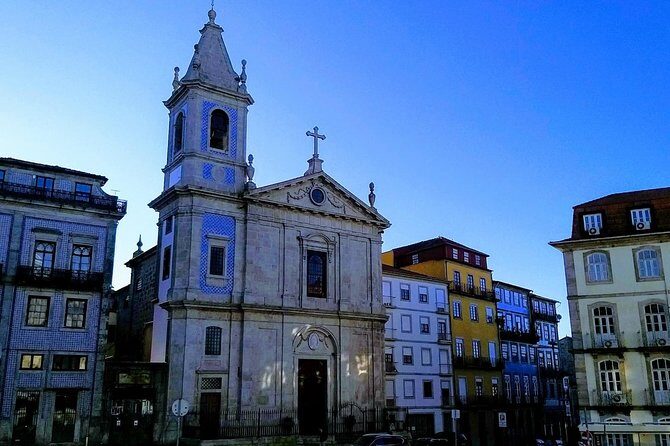
This is the kind of tour that helps you get your bearings fast. You start in Porto’s center and spend the morning threading your way through the city’s most recognizable landmarks—some famous for architecture, others for history, and some simply for the view you get when the street opens up.
The private vehicle matters here. You’re not spending the whole morning walking back and forth, and you can hop between areas quickly—useful in Porto, where hills, tight streets, and traffic can make self-guided days slow. You’ll also have onboard Wi‑Fi and bottled water, which sounds small until you’re halfway through a long sightseeing day.
The tour also isn’t only about grand monuments. It mixes public life (markets and squares), cultural stops (theaters and the bookshop), and religious landmarks that help explain how Porto’s identity was shaped. Just keep in mind: this is a highlights circuit. If you want long, slow time inside every site, you’ll likely need extra independent time.
You can also read our reviews of more private tours in Porto


From D. Pedro Square to Mercado do Bolhão: Porto’s Everyday Heart
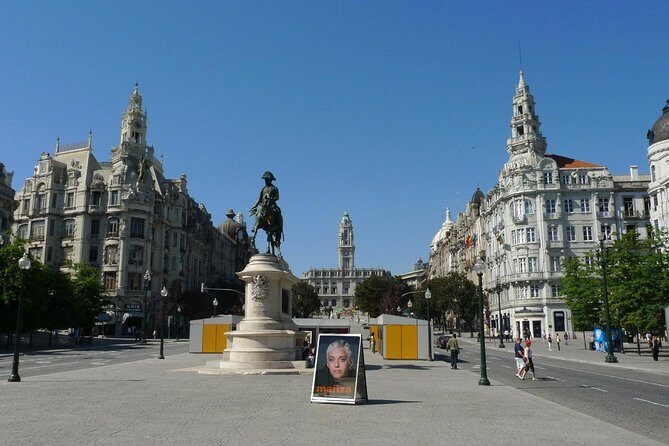
You begin around Avenida dos Aliados / D. Pedro IV territory, where Porto shows its civic pride. The statue of D. Pedro IV, often seen as a symbol of liberation, anchors D. Pedro Square in a way that feels instantly Porto. It’s also a natural “starting line” for understanding why the city developed where it did.
Then you hit Mercado do Bolhão, Porto’s emblematic market. The building dates to 1850 and has a two-floor structure with neoclassical gravitas. Even if you’re not shopping, the market is a great way to understand the city’s rhythm: outside, it spills into multiple streets, while inside you’re mostly looking at fresh sections (fish, butcher stalls, vegetables, and flowers).
The value of this stop is simple: it breaks up the monument-heavy part of the morning. If you’re the type who wants to see where people actually buy food and live daily life, this is one of the most satisfying parts of the route. Ticket is listed as free for this stop, which lowers the friction.
Praça da Batalha, Old City Walls, and the Gothic-Renaissance Layering
From the market, you move toward Praça da Batalha, a historic square tied to a defeat in the 10th century. The name can sound like a more recent battle at first, but the key idea is that the square’s identity comes from that older conflict and the destruction that followed. Urbanized around 1861, it became a major public space—so you’re standing in a place that’s been a meeting point for centuries.
Nearby, you also pass along remnants of the older city defenses. The tour includes a stretch of medieval wall construction that began in the 1300s under D. Afonso IV and is linked to completion in the early 1400s—so you see how Porto expanded and adapted over time. This kind of stop is short, but it’s useful for putting the city into a timeline.
Then comes a Gothic-origin building with a Renaissance portal added later, including gilded carving inside. The main reason this works on a tour circuit is that it teaches you to “read” Porto’s buildings: one structure can show multiple eras without being a museum exhibit.
Catedral do Porto: Fast Stop, Big Payoff
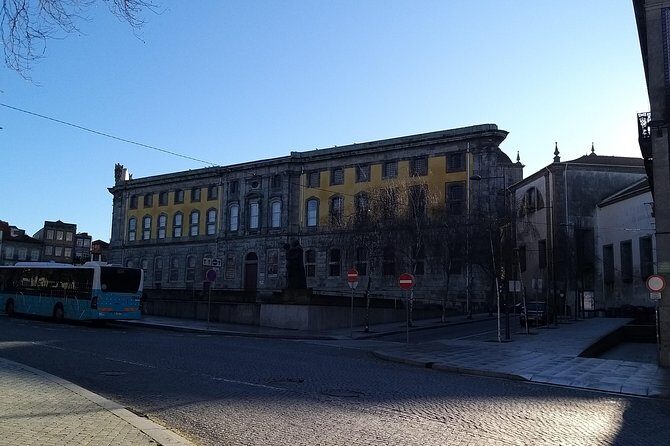
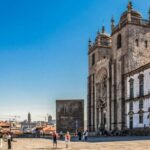
The itinerary includes Porto Cathedral (Sé do Porto), a 12th/13th-century foundation expanded across centuries. The final configuration in the 20th century still keeps the medieval cathedral’s core structure, which is exactly the kind of continuity that makes Porto feel different from cities that were rebuilt more completely.
If you’re short on time, this stop still pays off because you’ll get quick orientation to the standout sections:
- the Gothic Chapel of St. John the Evangelist and its cloister
- the expansion of the chancel
- the Chapel of the Blessed Sacrament and its silver altar
The entrance is listed as not included, so plan on paying separately if you want to go inside. If your goal is the best photo angles from the outside only, you might be fine skipping paid interiors—just don’t expect that to replace the visual impact of the cathedral complex.
São Bento Station Tiles: The One Stop You’ll Remember
São Bento Railway Station is the kind of stop that makes people stop mid-walk. Built in the early 1900s on the site of an earlier convent, it features a glass and iron design by architect Marques da Silva.
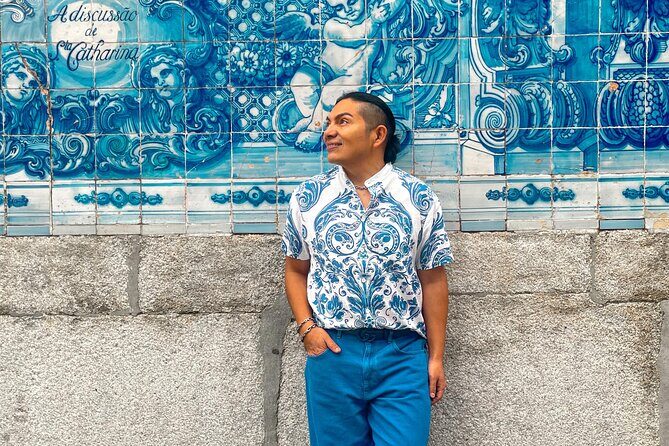
But the real show is the tiles. The vestibule is decorated with around 20,000 painted azulejos by Jorge Colaço, showing the evolution of transport and Portuguese life in the region. You don’t need to be a train fan to feel it. This is visual storytelling you can take in at your own pace in 10 minutes—especially good if your morning is otherwise mostly walking between monuments.
Ticket is listed as free here, which is another reason it’s smart to include. If you only have a half-day in Porto, this is the kind of free interior that gives you the “wow” factor without asking for extra money.
You can also read our reviews of more tours and experiences in Porto

Café Majestic and Rua Santa Catarina: Porto’s Belle Époque Mood
Then you’re in the orbit of Café Majestic, opened in 1921 and known for its Art Nouveau style. It’s on Rua Santa Catarina, a lively street, and the café interior—marble, gilded mirrors, intricate woodwork—turns a quick stop into a time-travel moment.
Even if you don’t linger long, this stop works because it gives Porto a more human pace. A market shows daily life. A cathedral shows faith and power. Café Majestic shows the cultural “in-between,” where writers and intellectuals once met and where you can still take a breather with coffee and traditional pastries.
Right nearby is the Relógio das Galerias Palladium, an ornate clock with carillon and statues that perform every three hours. The figures include Saint John (São João), Prince Henry the Navigator (Infante D. Henrique), writer Almeida Garrett, and novelist Camilo Castelo Branco. This is a great example of how Porto turns history into something you can watch.
The café stop and clock viewing can be a nice reset if your legs are tired—just keep an eye on timing because the performance schedule is fixed.
The Clérigos Tower and Livraria Lello Circuit
This is where the tour becomes a “classic Porto” checklist—only done efficiently.
First: Torre dos Clérigos. It’s Baroque (Nicolau Nasoni), built in the first half of the 1700s. Climb the 240 steps for city-and-river panoramas. The climb isn’t listed as included (ticket not included), but the payoff is why so many people make time for it even when they have limited hours.
Then: Livraria Lello. The bookstore building dates to 1906 and has a notable Art Nouveau façade with Neo-Gothic details. Inside you’ll see painted plaster imitating wood, and a dramatic staircase connecting floors. The stained-glass skylight is huge, with the monogram and motto of the library.
Tickets for Lello are listed as not included. This matters because the tour can only take you so far in 4 hours. If you want to go inside both Clérigos and Lello, budget extra time (and money). If you just want the outer experience, that’s a different type of visit—but you’ll miss the indoor wow.
One quick practical note: this circuit is popular, so if you hate line chaos, treat these as “priority stops” on your day.
Church of Gold, São Francisco, and the Arab Room at Palácio da Bolsa
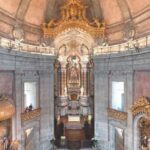
The tour brings you to Igreja de São Francisco—often called the Church of Gold—known for its golden interior from the 1600s and 1700s and its carved woodwork. There’s even a mention that Count Raczinsky described it as something beyond everything he’d seen in Portugal and around the world. If you like art that feels almost architectural, not just decorative, you’ll get it fast.
You’re also pointed toward details like the Tree of Jesse and the catacombs. Again: church ticket is not included, so decide whether you want to pay for interiors on your schedule.
Next comes a second religious landmark with mannerist influence and a St. Nicholas altarpiece (patron saint of metalworkers). The idea here isn’t only to see a church. It’s to see how Porto’s artisans and guild culture made their mark.
Then: Palácio da Bolsa. This is a neoclassical building built in 1842 (on the former San Francisco convent site, destroyed in a fire during the Siege of Porto). It’s the property and place of the Commercial Association of Porto, and it’s famous for the Arab Room.
A guided tour of Palácio da Bolsa is listed as not included (extra cost). If you’re the type who wants the meaning behind the rooms—not just the photos—this is one of the best places to spend extra money inside the tour’s framework.
Douro Bridges: Dom Luís I, D. Maria Pia, and the São João Bridge View Points
If you want “Porto from above water level,” this tour delivers. The route includes key crossings over the Douro River, and each bridge has a different story.
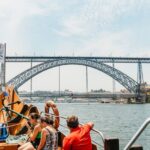
You’ll pass Dom Luís I Bridge—inaugurated in 1886 (upper deck) and 1888 (lower and full operation). The important details: it’s the largest wrought iron arch in the world, and it’s covered by the UNESCO Historic Center of Porto listing. If you’ve seen photos of Porto’s skyline, you’ve seen this bridge’s shape even when you didn’t know the name.
You’ll also see Ponte D. Maria Pia, Gustave Eiffel’s first masterpiece, inaugurated in Porto in 1877 and later replaced by São João Bridge after 114 years. The design uses a biarticulated arch supporting a single-track rail deck through truss pillars. The reason it’s worth mentioning on a tour like this is that it connects you to European engineering heritage, not just architecture.
Then there’s São João Bridge, inaugurated in 2003. It carries a Metro line, has a 371-meter deck length and 20-meter width, and is an arch of the Maillart type. It’s described as a world record for this bridge typology, and experts consider it among the slenderest.
Between these bridges, you get multiple ways to see Porto and Vila Nova de Gaia together—so you don’t have one angle stuck in your head all day. The downside is time: you’re seeing many “icon angles,” but not sitting and lingering at all of them.
Jardim do Morro and Serra do Pilar: Gaia’s Calm Contrast
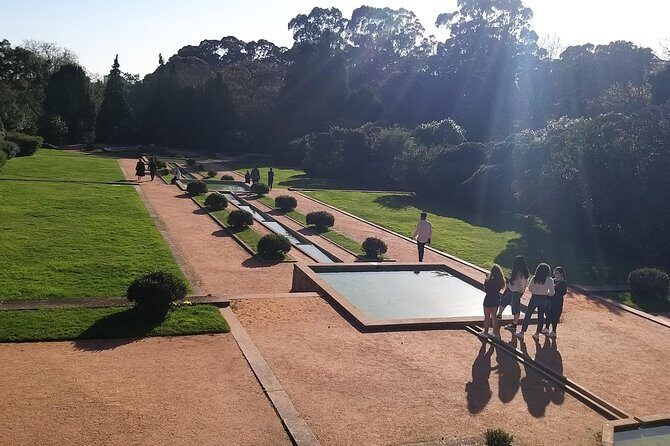
Crossing your view from Porto’s center to Gaia’s side helps the morning feel less repetitive. The tour includes Jardim do Morro, a public hill garden with panoramic views. It’s developed in the 20th century and complements a monastery setting, with wide pathways and lots of greenery.
Then comes Mosteiro da Serra do Pilar in Vila Nova de Gaia. The Augustinian monastery began in 1538 and took centuries through stages of construction. The standout features are the circular shapes of the church and cloister, and it’s classified as a National Monument since 1910. It’s part of the 1996 UNESCO grouping with Porto’s historic center and the Luís I bridge.
Tickets are listed as not included here, so if you want only the viewpoint, you might be fine. If you want the full monastery experience inside, this is one place where paying can feel worth it.
Forts, Sea Views, and Modern Art Signals Near Leixões and Serralves
The tour doesn’t stop at classic center sights. It pushes outward to show Porto’s coastal and modern edges.
You’ll see Fortress São João Baptista, built at the end of the 1500s to protect the coast and the Douro entrance, with later additions in the 1600s and an access gate from the 1700s. Then Castelo do Queijo (Fort São Francisco Xavier), built in the 1600s to protect against piracy from North Africa—hence the cheese-shaped hill nickname.
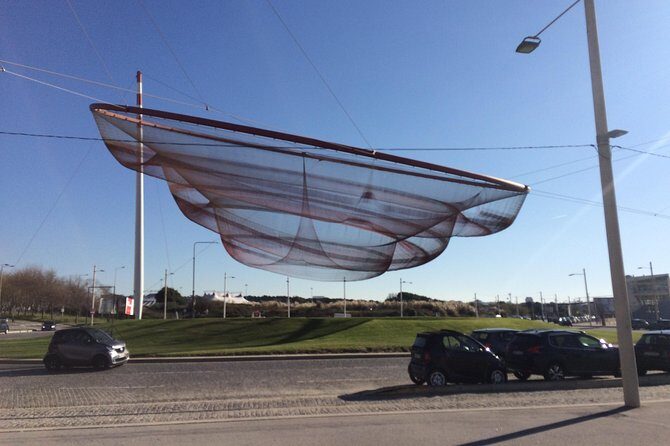
For a different kind of “Porto monument,” the tour also includes public art like She Changes, also known as Anemone, by Janet Echelman. It’s made from a fishing net sculpture that moves with the wind, which gives it a living, sea-linked effect.
Leixões Port is another included viewpoint. After a new cruise pier opened in 2011, Leixões began receiving larger cruise ships, with a reported jump in passengers in 2012. It’s interesting to see how Porto’s tourism story isn’t only about the old center—it also connects to ships arriving and disembarking at the coast.
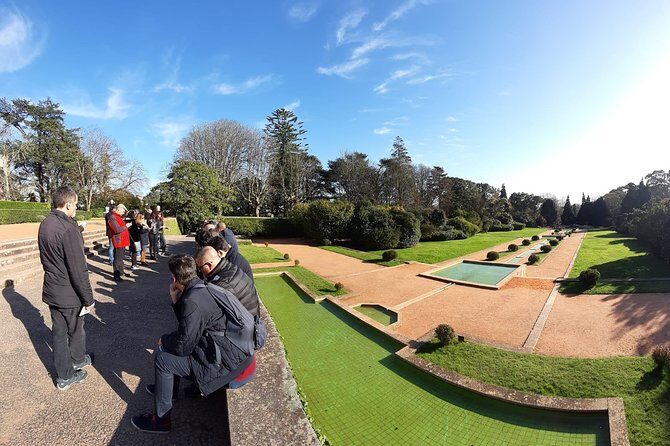
Then you hit Serralves: the Art Deco House (built in the 1930s) in Serralves Park, designed by architect Jacques Greber. The park includes gardens, a traditional farm, and even a forest—so the pace shifts again. This portion is a reminder that Porto’s identity isn’t only old stone and baroque interiors.
Casa da Música and Praça de Mouzinho de Albuquerque: Porto’s Modern Signals
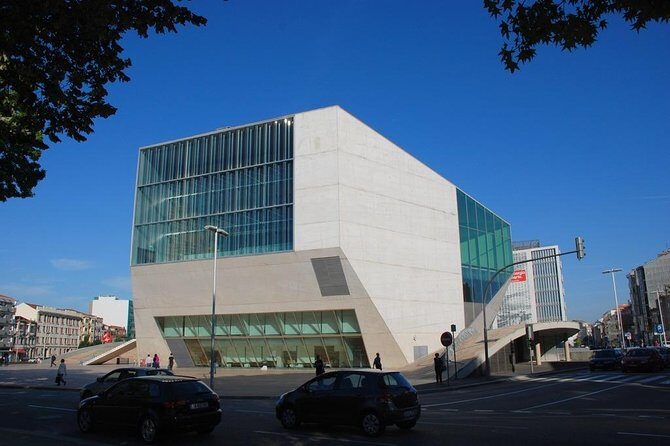
To round out the morning, the tour takes in Casa da Música, Porto’s main concert hall, designed by Dutch architect Rem Koolhaas and inaugurated in 2005. If you’re into modern architecture or you’ve seen Porto’s contemporary skyline, this is a visual punctuation mark after all the older monuments.
Finally, you end around Praça de Mouzinho de Albuquerque, featuring the 45m Monument to the Heroes of the Peninsular War. It’s an obelisk-style monument with sculptural groups representing Portuguese and English victory against French Napoleonic armies. It’s a strong, dramatic piece of public art and history.
Optional Add-Ons That Turn This Into a Full Porto Day
The base tour is the “Porto greatest hits” morning. If you want to stretch your time, there are optional activities listed separately.
A private Douro River Cruise at sunset can be added. It’s about 2 hours with views of Porto and Vila Nova de Gaia and mentions the iconic bridges. Pricing is listed as €360 to €460 depending on the booking.
For wine lovers, there’s an optional Dona Antónia port wine cellar tour with a 1h30 walk-through and a tasting of 5 Port wines. Pricing is €32 to €41, and it’s built around Dona Antónia Adelaide Ferreira’s story.
If you want the classic evening, there are optional fado experiences:
- a fado night with traditional dinner (transport included)
- or a 1-hour fado concert with a port wine tasting, scheduled daily at 18:00 and 19:30
Prices are listed separately, depending on which option you choose.
These add-ons work best if you’re using the morning tour to set your bearings, then spending the evening leaning into Porto’s cultural side.
Is This Good Value for $185.02 Per Person?
For 4 hours, a private vehicle setup, pickup options from downtown Porto and Gaia hotels/B&Bs, onboard Wi‑Fi, and bottled water/refreshed comfort, $185.02 can be a solid value—especially if you’re comparing it to the time cost of self-guiding across scattered viewpoints.
The fine print is that a lot of the most famous interiors are not included. Lello, Clérigos Tower, guided Palácio da Bolsa, Church of Gold, and church/tower skip-the-line or priority options are extra. So your real cost depends on how many paid entries you want to include.
Where the tour shines is decision-saving. You’re not just paying for transport—you’re paying for the driver’s explanations and for someone keeping the morning moving. Reviews specifically praised Carlos for being courteous and very strong on history explanations, plus practical advice for where to eat and how to choose Port wine. That kind of help can easily be worth more than a single paid ticket if you’re trying to plan well with limited time.
Should You Book This Porto Private Morning Tour?
Book it if you:
- want a fast, guided overview of Porto’s UNESCO icons with minimal planning
- value a private driver who can explain what you’re seeing (Carlos gets repeatedly praised for this)
- like mixing “big monuments” with public life like Mercado do Bolhão and tile art at São Bento
Skip or consider another format if you:
- want long, slow visits inside every major interior (this tour moves)
- don’t want to add extra tickets for Lello, Clérigos, Palácio da Bolsa, or churches
If your goal is to understand Porto quickly and still leave room to come back later on your own, this tour is a strong way to start.
FAQ
How long is the Porto private morning tour?
It’s approximately 4 hours.
Is hotel pickup included?
Pickup is offered, including pickup to downtown Porto and Gaia hotels and B&Bs, plus the tour meets at Praça da Liberdade 19, 4000-322 Porto.
What language is the tour offered in?
English.
Is this a private tour?
Yes. Only your group participates.
Is Wi-Fi included during the tour?
Yes. The luxury vehicles offer Wi‑Fi.
What’s included in the price?
Transport in luxury vehicles, bottled water and refreshments, personal accident and liability insurance, and extra options can be added on request.
What tickets are not included?
Several key entries are listed as not included, including Lello Library (priority option), Clérigos Tower ticket (skip-the-line option), Palácio da Bolsa guided tour, Church of São Francisco (Church of Gold), and other listed special access options.
Are there optional add-ons?
Yes. The tour lists optional Port wine cellar tour (Dona Antónia), a private sunset Douro cruise, and fado night options (with dinner or a show with port wine).
Is the tour affected by weather?
Yes. It requires good weather. If canceled due to poor weather, you’ll be offered a different date or a full refund.
What’s the cancellation rule?
Free cancellation is offered up to 24 hours in advance for a full refund.
Should You Book This Porto Private Morning Tour?
If you’re trying to squeeze real context into a short stay, I’d book it. You’ll cover the top Porto landmarks in a structured route, get driver storytelling instead of guessing, and come away with enough clarity to choose what to revisit later. Just treat it as a highlights sprint, and decide ahead of time which paid interiors you truly want.