REVIEW · PORTO
Porto City Tour with Wine Tasting
Book on Viator →Operated by Cityrama · Bookable on Viator
Porto in four hours, plus a tasting. This tour strings together the city’s best-known architecture with a real Port-wine stop in Vila Nova de Gaia, so you get both postcards and the story behind them. I especially like the small-group feel (up to 20) that keeps questions from getting lost. I also like that the wine part isn’t random: you hear how Port connects to the Douro Valley and Portugal’s trade history. One thing to consider: there’s a moderate amount of walking, and the early stretch is mostly sight-focused rather than restful.
You’ll meet your guide in central Porto and move by air-conditioned vehicle, then get a guided stroll at key points. Expect smart casual dress and a no-frills schedule: the Cathedral has its own entry, and there’s no bathroom on board the bus.
In This Review
- Key highlights at a glance
- Porto’s biggest hits, scheduled for real life
- Sao Bento Railway Station: 20,000 tiles and a fast history fix
- The Art Nouveau detour: Elite Café on Santa Catarina
- Clérigos Tower: baroque drama and a skyline landmark
- Porto Cathedral: Romanesque architecture with a paid entry
- Livraria Lello stop: the building’s 1906 origin matters
- Crossing the Douro: Luis I Bridge and that river feeling
- Vila Nova de Gaia wine cellar: Port history you can taste
- Small-group size is great, but watch the language and meeting spot
- 1) Walking pace
- 2) Group language expectations
- 3) Being on time for the meeting point
- Who this tour suits best
- Should you book the Porto City Tour with Wine Tasting?
- FAQ
- How long is the Porto City Tour with Wine Tasting?
- What is included in the price?
- Is the Porto Cathedral admission included?
- Where does the tour start and end?
- Is there a bathroom on the bus?
- Can I cancel for a full refund?
Key highlights at a glance
- Sao Bento’s azulejos: 20,000 painted tiles telling Portugal’s history inside a working train station
- Clérigos Tower views: learn why the bell tower is Porto’s baroque icon and who designed it
- Porto Cathedral time: Romanesque architecture with a dedicated 45-minute stop
- Livraria Lello context: see the bookstore’s 1906 building story tied to Francisco Xavier Esteves
- Luis I Bridge and the Douro: the metal bridge connects Porto to Vila Nova de Gaia
- Port cellar tour and tasting: guided history plus samples in a famous wine setting
Porto’s biggest hits, scheduled for real life
This is the kind of tour that makes sense when you’re short on time but still want Porto to feel like more than scenery. In about 4 hours, you hit several major landmarks that usually take longer to piece together on your own, and you end with the thing Porto is famous for: Port wine.
The format is practical. You get a guide to connect dots between buildings, art, and trade—why Sao Bento looks the way it does, what makes Clérigos so dramatic, and why fortified wine became a business. Then you cross the Douro with your guide’s context so the views from the river feel earned, not accidental.
The best match is when you want:
- a guided overview first day (or first half-day), and
- a tasting stop without getting lost in logistics.
You can also read our reviews of more food & drink experiences in Porto



Sao Bento Railway Station: 20,000 tiles and a fast history fix
Your tour starts at Sao Bento Railway Station, and it’s a smart way to begin because it’s indoors, central, and packed with meaning. Step in and you’ll see the famous wall of about 20,000 painted tiles (azulejos). They don’t just decorate. They narrate Portugal’s history in scenes and symbols, and the station is tied to a real historical shift—Sao Bento sits on the site of the former convent S. Bento de Avé Maria.
You’ll also hear the station’s origin story: the cornerstone was unveiled in 1900 by King Carlos I, and architect Marques da Silva shaped the design with French-influenced lines for its time. That’s the kind of detail that turns a quick photo stop into something you’ll actually remember.
What to watch for: you’re spending about 30 minutes here, and the value is in paying attention to the panels as you move. If you only take pictures, you’ll miss the point. Also, since it’s a station, it can be busy—keep an eye on where your guide is standing so you don’t drift.
The Art Nouveau detour: Elite Café on Santa Catarina
After the station, your route includes a stop related to Elite Café, which opened in Porto on 17 December 1921 on Santa Catarina street—then a pedestrian shopping area for the city’s more well-off crowd. The reason it fits this tour is the same reason it’s worth a look in any city: it shows that Porto’s story isn’t only medieval stone and church towers. It also has modern-ish design moments.
This part of the stop is likely shorter and more photo-and-walk than museum-style. If you like architecture details, it’s a nice reset before the bigger church landmarks.
Consideration: because the itinerary is time-tight, don’t expect a long explanation or extended interior time at every stop. You’re here to connect highlights, not to do everything deeply.
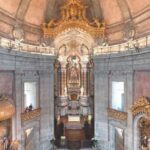
Clérigos Tower: baroque drama and a skyline landmark
Next up is Clérigos—specifically the bell tower that has become Porto’s signature. You’ll learn why it’s the ex-libris of the city, built with baroque style that feels theatrical even from the street.
The guide points out the tower’s design principles and connects it to the wider baroque look: it uses typical baroque motifs to create movement and visual flair rather than plain vertical mass. The design is tied to architect Nicola(n)au Nasoni (spelled as Nicalau Nasoni in your tour description), so you’re not just seeing a tower—you’re getting a name and a style.
Why you’ll enjoy this stop: Porto’s hills and river views can make landmarks pop. When you see Clérigos after Sao Bento and a quick city-street interlude, it feels like the tour levels up from art-in-a-hall to art-in-the-skyline.
Possible drawback: you’ll mainly be observing and learning. If what you want is climbing to the top for a long viewpoint break, this tour description doesn’t promise that kind of time. Still, Porto’s tower profile is worth it for the learning and the skyline impact.
Porto Cathedral: Romanesque architecture with a paid entry
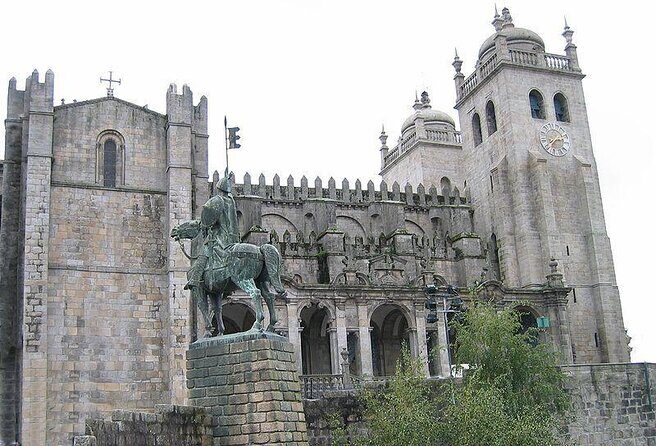
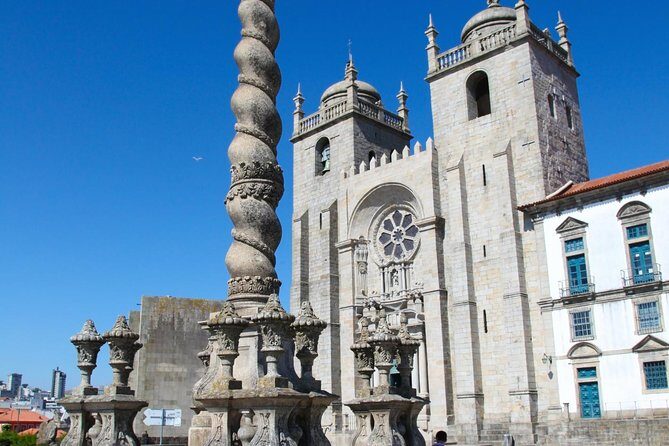
Your guide then brings you to the Porto Cathedral (Catedral do Porto) in the historic center. You’ll have about 45 minutes, which is a healthy chunk for an exterior-to-interior visit, plus a bit of breathing room for photos and quiet looking.
The key detail here is architectural: the cathedral is known for its Romanesque character. It’s also one of Porto’s oldest and most important monuments, which is useful context because a guide can explain why this building still matters amid newer waves of style around it.
Budget note: cathedral admission is not included, so plan for a separate ticket cost. The advantage of having dedicated time is you’re not rushed through. The downside is that if you’re trying to keep your wallet tight, this is one of the few places where you’ll pay extra.
You can also read our reviews of more city tours in Porto




Livraria Lello stop: the building’s 1906 origin matters
After the cathedral, you’ll head to the famous Livraria Lello area. Even if you only take a look from the outside, the building story helps. Your tour shares that the current building was inaugurated on 13 January 1906, shaped by engineer Francisco Xavier Esteves.
This stop works best if you enjoy architecture-as-a-clue. In a city tour, it’s easy to treat Lello as a “famous bookstore” and move on. But the guide framing it as a specific 1906 engineering vision makes it feel more grounded.
Practical reality: time may be brief here. There’s often just a quick window to see the façade and get your bearings before the tour moves on. If you want to spend time inside, treat the stop as a chance to set up your later return rather than expecting a deep visit.
Crossing the Douro: Luis I Bridge and that river feeling
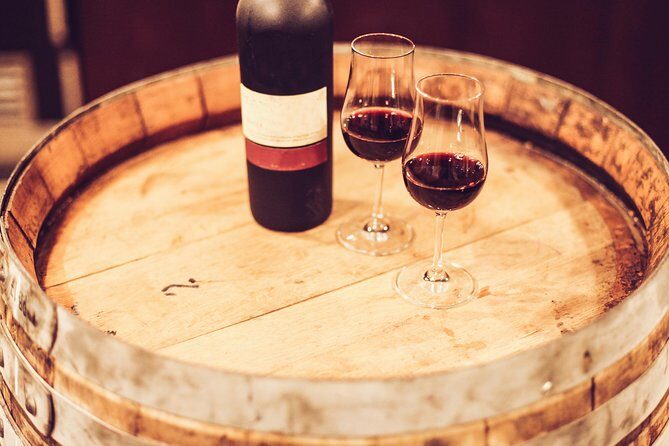
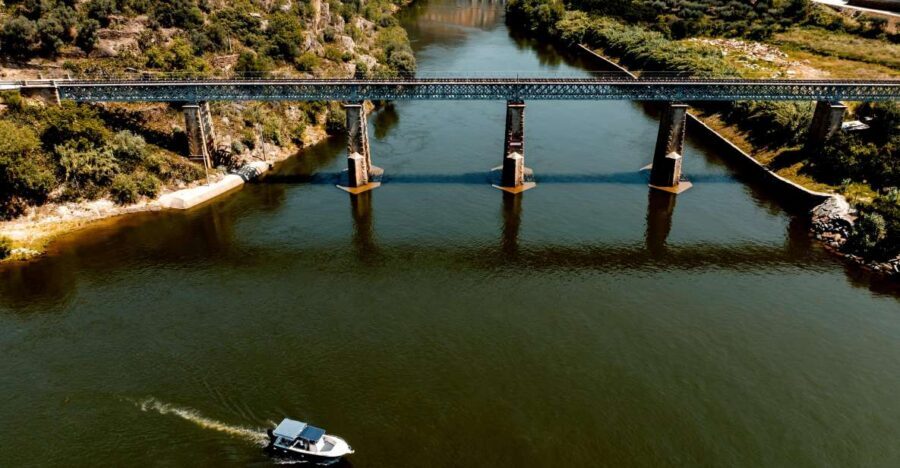
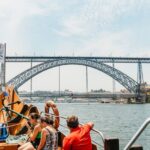
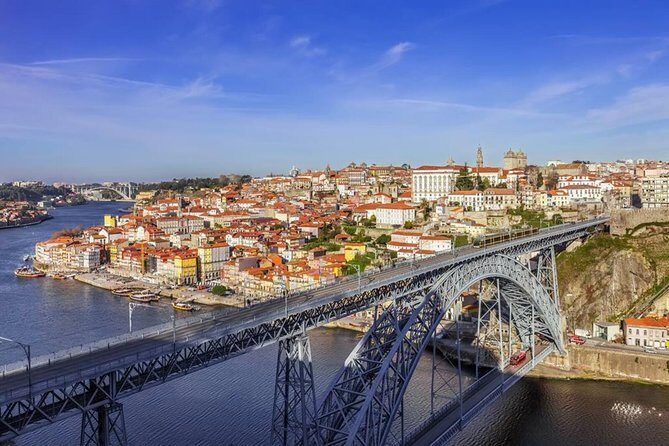
Then comes the big visual moment: the Luis I Bridge. It’s a metal-structure bridge connecting Porto and Vila Nova de Gaia, built between 1881 and 1888. The tour frames it as more than a crossing—it’s the line that lets you appreciate how the city sits above and alongside the Douro River.
When you look out from the bridge zone, you get that signature Porto feeling: layered neighborhoods, water, and the sense that the river is the city’s engine. And after the earlier architectural stops, this one acts like a palate cleanser.
Tip: keep your camera ready around the bridge area. The views are the reward for the earlier walking and church-tower focus.
Vila Nova de Gaia wine cellar: Port history you can taste
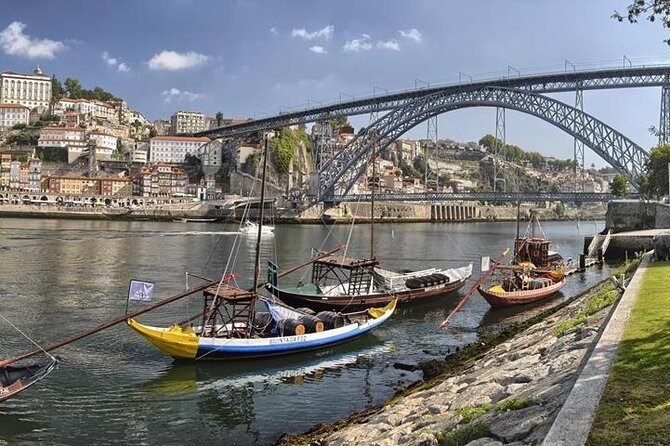
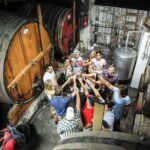
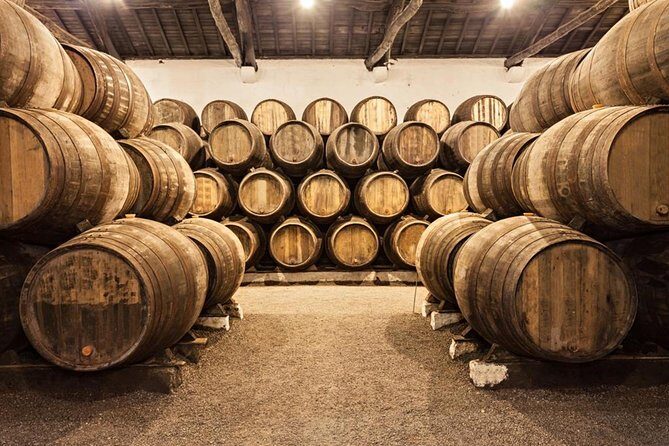
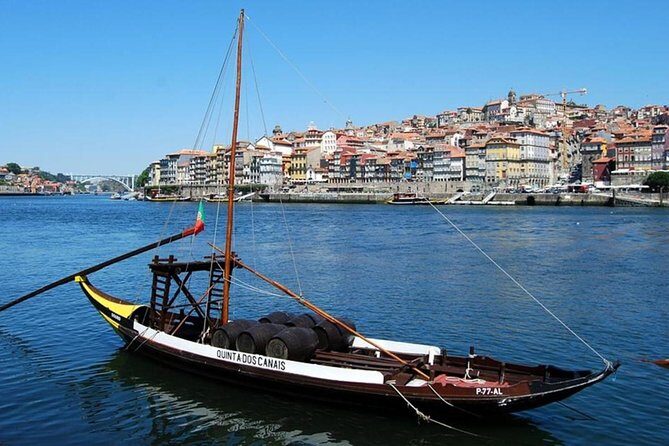
The final major stop is the Port wine experience in a famous Port wine cellar in Vila Nova de Gaia. You’ll spend around 1 hour here, and tasting is part of the package.
What makes this stop worth your time is the guide’s framing. You’ll hear the history and commercial significance of Port, including how the fortified wine grows in the Douro Valley. That matters because Porto isn’t just a drink—it’s a business model shaped by geography, shipping, and aging. When you know that context, the tasting feels like part of a story rather than a random sample platter.
The tasting itself includes alcoholic beverages as part of the guided tour, so you don’t have to wonder if you’re paying extra for the wine component.
One more practical note from real-world experience: some departures have included well-known houses such as Graham’s Port Lodge/Factory in Gaia. You might see a similar top-name stop, but the reliable part is the structure: cellar tour plus Port tasting with an explanation.
Consideration for your taste buds: Port styles can range from sweeter to drier (and younger to more mature), and a guided tasting can move faster than you want if you’re the type who likes to linger. If you’re a wine fan, pay attention early—guides usually explain what you’re sampling and what to notice.
Small-group size is great, but watch the language and meeting spot
This tour caps at 20 travelers, which tends to improve the flow. You get enough people for a lively group but not so many that you spend the whole time waiting. In practice, that also means your guide can keep track of where everyone is during photo stops and short transitions.
Still, there are two things worth planning for:
1) Walking pace
The tour involves moderate walking, and the first stretches are sight-heavy. If you’re arriving with sore feet or you hate being on your feet, plan for it. Wear comfortable shoes you trust. No surprise: the bus does not provide a bathroom, so use facilities before you start.
2) Group language expectations
Your tour is offered in English, and your guide may be multi-lingual. If you’re very language-sensitive, arrive expecting that you might hear some switching depending on who’s in the group. That’s not a dealbreaker, but it can affect how much you catch during short explanations.
3) Being on time for the meeting point
The meeting location is R. de Mouzinho da Silveira 352, 4050-418 Porto, Portugal. The tour ends in the central area near Rua de Alexandre Herculano, 4000 Porto.
If you’re coming from a cruise ship or another scheduled activity, build in buffer time. Some guests have had trouble with meeting-point timing when they were delayed or when pickup logistics didn’t match cruise drop-offs. Bottom line: aim to arrive early, not just on time.
Who this tour suits best
This Porto and Port half-day works best if you want an overview with a tasting payoff.
You’ll likely love it if:
- it’s your first time in Porto and you want the major icons in one go,
- you enjoy guided explanations about architecture and city development,
- you want Port tasting in Gaia without spending your own time coordinating transit.
You might want a different plan if:
- you hate short stops where you get only a few minutes at each location,
- you want a slow, deep dive into just one neighborhood,
- you need lots of downtime and are sensitive to walking.
Also, it’s a smart option for a “day starter” itinerary. If you finish in central Porto, you can still plan a long meal afterward without feeling like the day is over.
Should you book the Porto City Tour with Wine Tasting?
I’d book this when you want maximum Porto-per-hour value: landmark architecture in the historic center, a river crossing that ties the city to the Douro, and a guided Port tasting where the story is explained.
If you’re price-conscious, it’s also a good deal for what’s included: a professional guide, air-conditioned transport, and a guided cellar tour plus Port tasting in the final hour. The main extra cost you might have to handle is Porto Cathedral admission, since it’s not included.
Just go in with the right mindset: it’s a highlights tour, not a slow museum day. Show up early, wear good shoes, and plan to pay attention during the explanations—because the tour becomes much more than photos once you know what you’re looking at.
FAQ
How long is the Porto City Tour with Wine Tasting?
It’s about 4 hours.
What is included in the price?
The tour includes a professional guide, air-conditioned vehicle, and a guided wine cellar tour and Port wine tasting with alcoholic beverages.
Is the Porto Cathedral admission included?
No. Porto Cathedral (Catedral do Porto) admission is not included, though the tour schedules about 45 minutes there.
Where does the tour start and end?
The meeting start point is R. de Mouzinho da Silveira 352, 4050-418 Porto. The tour ends near Rua de Alexandre Herculano, 4000 Porto.
Is there a bathroom on the bus?
No. There is no bathroom on board the bus.
Can I cancel for a full refund?
Yes. You can cancel up to 24 hours in advance for a full refund. If you cancel less than 24 hours before the start time, you won’t get the refund.