REVIEW · NORTHERN PORTUGAL
Rappelling and Climbing Adventure in Lamas de Mouro
Book on Viator →Operated by Montes de Laboreiro · Bookable on Viator
Scared of heights? This fixes that fast. In Lamas de Mouro, you’ll move from tree climbing to flying through the canopy on a slide, then keep going with harder bits like a wall climb and a rappel. It is a high-adrenaline loop that also feels like a break from town life, because you’re focused on your body, your footing, and the forest around you.
What I liked most: the way the course turns fear into focus, and the big moments that keep coming. The canopy slide gives you that instant, whoa-I’m-doing-this energy, and the rappel into dark caverns is the kind of challenge that makes you slow down and trust the system. One thing to consider up front: this is for people with moderate physical fitness, and you’ll be doing real vertical work (including a 9 meter wall) even if the guides are great at coaching nervous beginners.
In This Review
- Key Highlights You’ll Feel Right Away
- Where the Adventure Starts in Lamas de Mouro
- The Tree-Climbing Phase: Turning Nerves Into Skills
- The Canopy Slide: Your Reward for Sticking With It
- The 9 Meter Wall Climb: Strength and Control
- Rappelling Into Dark Caverns: Trusting the System
- Guides, Safety, and the Calm You Want When You’re Learning
- What’s Included (and the Stuff You Need to Plan For)
- Timing, Group Size, and What an English Course Feels Like
- Price in Northern Portugal: Getting More Than One Thrill
- Who This Adventure Is Best For
- Should You Book the Rappelling and Climbing Adventure in Lamas de Mouro?
- FAQ
- How long is the rappelling and climbing adventure in Lamas de Mouro?
- What does the price include?
- Is snacks or bottled water included?
- What fitness level do I need?
- Where do I meet for the activity?
- Is it offered in English, and how big are the groups?
Key Highlights You’ll Feel Right Away
- Tree climbing with fear-of-heights support, so you’re not left to panic
- Canopy slide through the trees, a real breath-and-grin moment
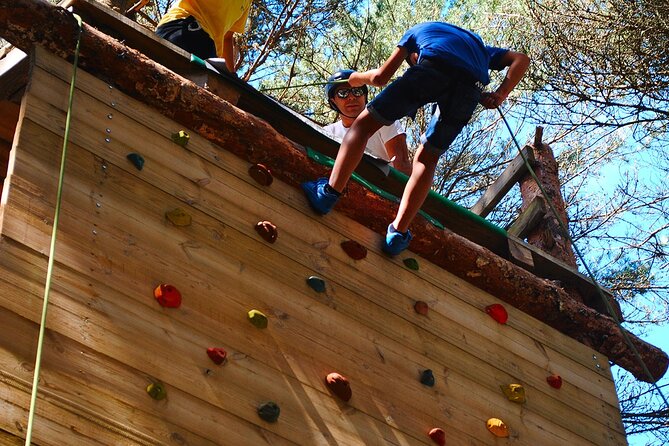
- A 9 meter wall climb, strength and confidence in one section
- Rappelling down into dark caverns, where focus matters most
- Attentive guiding for beginners, including calm support during nerves
- Photo reportage included, so you don’t just remember it in your head
Where the Adventure Starts in Lamas de Mouro
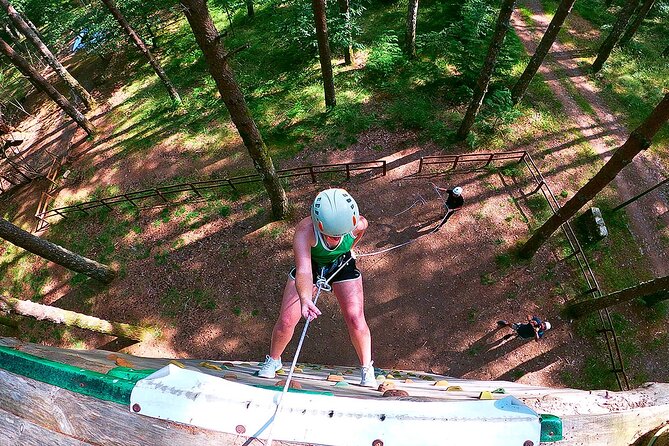
You’ll meet at Porta de Lamas de Mouro (Unnamed Rd, 4960-170 Lamas de Mouro, Portugal), and the activity ends back at the same place. That simple start-to-finish setup is nice because you don’t spend half your time on logistics.
Expect about 2 hours total for the whole circuit. It’s not just one stunt; it’s a sequence of different skills—climb, slide, climb again, then rappel—so you get variety instead of repeating the same movement. The operator runs small groups too, with a maximum of 10 travelers, which usually means you get clearer attention and faster coaching when you’re learning something new.
The experience is offered in English, and you’ll use a mobile ticket. You’ll also get confirmation at booking time, so you’re not left waiting for details.
You can also read our reviews of more tours and experiences in Northern Portugal.

The Tree-Climbing Phase: Turning Nerves Into Skills
The core idea here is simple: you climb in the trees, not on a big rock wall, which changes how your brain handles height. Tree climbing is the first step in the confidence ladder. You start by getting comfortable with the gear and the feel of being supported, then you build up to moving your body more decisively.
This section is designed for overcoming the fear of heights. That doesn’t mean heights feel totally gone—it means you practice in a controlled way, with instructors watching your setup and timing. If you’re the type who gets tense just thinking about looking down, you’ll probably appreciate this order: tree climbing first, then the slide.
From a value standpoint, this phase matters. If you can handle the tree part, the rest of the circuit feels less like a random thrill ride and more like a skill challenge you can actually complete. One of the most repeated themes from people who tried it: the guides are patient, explain things clearly, and stay close while beginners get their footing—sometimes with extra help when someone’s nerves spike. Names you might meet include Filipe, Francisco, Helder, Duarte, João, and Felipe.
The Canopy Slide: Your Reward for Sticking With It
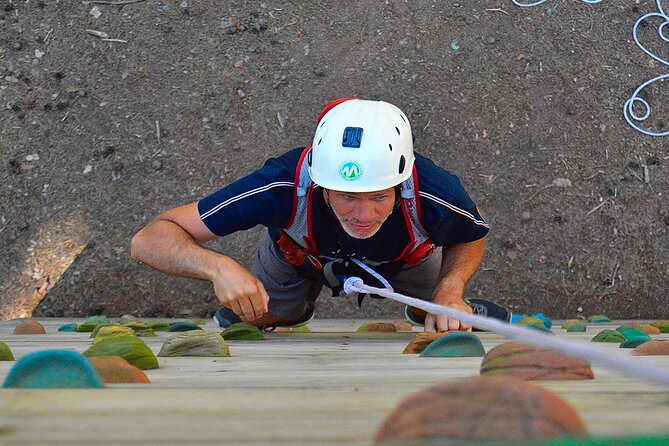
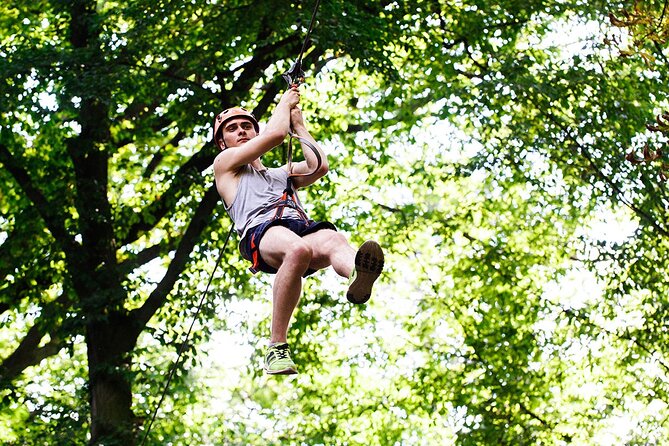
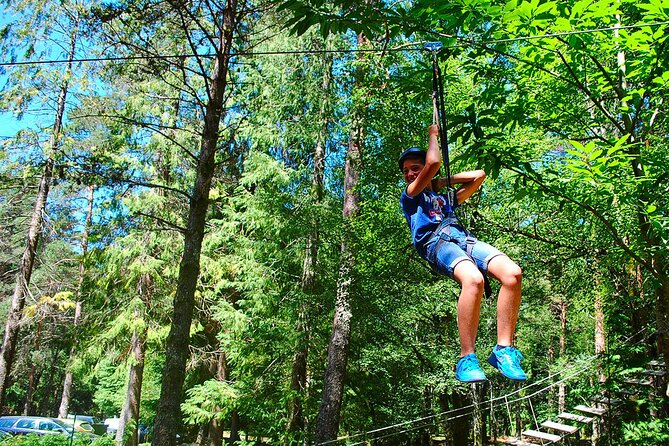
After you’ve climbed, you get to switch from “careful and controlled” to “whoa, this is fun.” The slide through the canopy is a highlight because it turns the forest into a play space. You’re still safe and secured, but you’re moving faster than climbing allows, so the whole feeling changes.
This is also the part that often makes people laugh—because the mind expects fear, but the motion delivers speed and relief at the same time. It’s a clean way to blow off stress after the careful climbing work. If you’re traveling from a city mindset, this section is where the day can start feeling lighter.
One practical note: the slide is thrilling, but it still depends on doing your part correctly. Listen for instructions, keep your body in the position they tell you, and don’t rush your exit. When people describe the experience as safe and well run, it’s often because the team keeps the technique simple and repeats it until you’ve got it.
The 9 Meter Wall Climb: Strength and Control
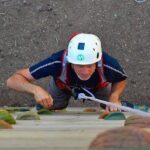
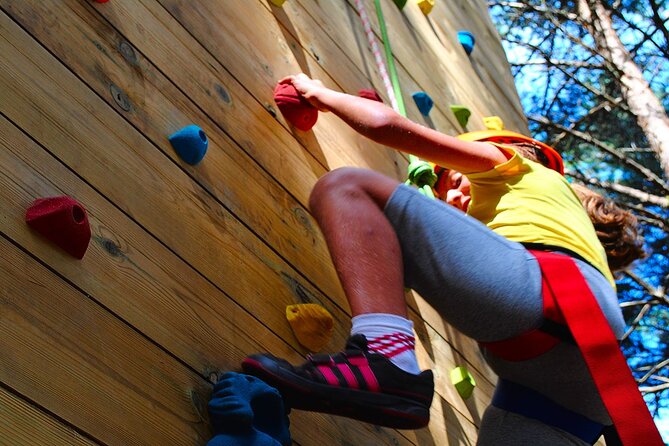
Then comes the 9 meter wall. This is where the circuit stops being mostly about nerves and starts being about muscle and technique. The point is not just to reach the top—it’s to test your strength while staying in control the whole time.
If you’ve never climbed anything before, you may notice that your brain wants to jump ahead. That is the wrong instinct on a wall. You’ll move one section at a time, with careful body positioning and constant attention to what your harness setup is doing. A good team helps you break it into steps so you don’t feel overwhelmed.
What makes this section worth it? It adds real variety. A tree-climb course can be “vertical but gentle.” A wall climb brings a sharper challenge that makes finishing the circuit feel earned. It is also the section where a supportive guide makes the biggest difference, especially for beginners who feel shaky when the height feels more exposed than the treetops.
Rappelling Into Dark Caverns: Trusting the System
The final big thrill is rappelling down into dark caverns. This is the part that makes people’s minds go quiet. You are facing the unknown and the vertical line, and the “dark” detail matters because it changes your sense of orientation.
This section can feel intense even if you’re experienced with adventure sports, just because caves reduce visual cues. The trick is to stay with the technique: keep your posture steady, follow the guide’s commands, and don’t try to overthink what you can’t see. The experience is built around safety gear—harness, connectors, and a lifeline—so your job is to follow the system, not invent your own version of rappelling.
One very practical benefit of this part: it teaches trust. Even if you start out thinking, Is this a good idea? the course is structured so you progress through it while you’re coached and monitored.
If you’re the type who panics when adrenaline spikes, you’ll want to know this: people have specifically credited the guides for managing panic during the activity. That tells me the instructors are experienced at keeping the situation calm and focused, not forcing someone to push through fear without support.



Guides, Safety, and the Calm You Want When You’re Learning
This adventure isn’t just equipment and stunts. The human factor is huge here. The guides are repeatedly described as attentive to beginners and very helpful during the hardest moments.
In real terms, that usually means:
- You get clear explanations before you start each section
- You’re not left guessing with your gear setup
- The instructors stay close enough to correct your form
- When someone’s confidence drops, the team responds instead of moving on
Names that come up often: Filipe and Francisco in particular, plus Helder, and others like Duarte, João, and Felipe. You may also meet Jéssica, Horácio, and Cissé (especially if you’re lucky with the team and they’re working during your time slot).
And yes, the instructors help with more than technique. If you show early signs of nerves, you should expect reassurance and step-by-step coaching. That’s a big part of why people recommend this course so strongly.
What’s Included (and the Stuff You Need to Plan For)
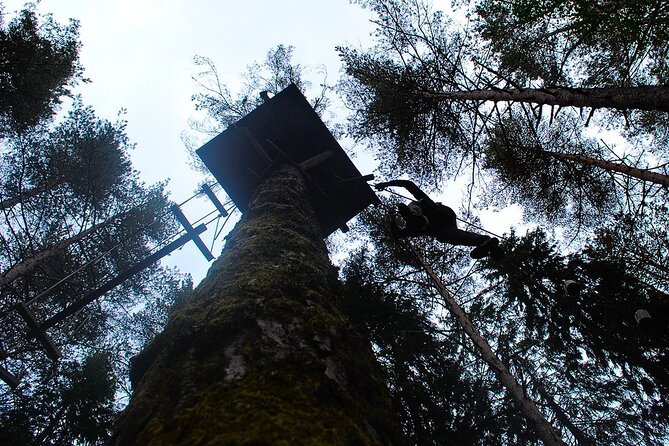
The tour includes the gear you need to do the stunts safely: harness, strings, carabiners, and a lifeline connector. That covers the core system for tree climbing and rappelling.
You’ll also get photo reportage. Based on what people say after doing it, that photo coverage isn’t just a distant camera. Guides tend to take plenty of pictures while you’re on the course, so you can share proof later without relying on shaky phone shots.
Not included:
- Snacks
- Bottled water
- Private transportation
That means you should plan for hydration and a small snack either before or after. In a 2-hour adventure, dehydration can still sneak up, especially if you’re concentrating hard and moving constantly. If you arrive hungry, the action can feel harder than it needs to.
What to wear is not spelled out in the data you gave me, so I won’t invent specifics. But if you’re thinking about clothing, prioritize comfort and secure footwear. You’ll be climbing and moving over uneven surfaces.
Timing, Group Size, and What an English Course Feels Like
The course runs for about 2 hours, and it caps at 10 travelers. For you, that tends to mean you spend less time waiting around. It’s also friendlier if you’re trying something new and want instructions delivered at a pace you can keep up with.
Because the tour is offered in English, you can follow directions without relying on translation apps. That matters when safety depends on listening closely. If you’re traveling with someone who understands English better than you do, you’ll likely still feel comfortable with the guidance style.
Also, it helps to know the day’s activity depends on conditions. The experience requires good weather. If weather is poor, you’ll be offered a different date or a full refund. In other words: you’re not likely to show up and get randomly canceled without options, but you should still check forecasts if you’re tight on time.
Price in Northern Portugal: Getting More Than One Thrill
The price is $30.79 per person, and for that you get a lot of value packed into two hours. Gear is included, and you’re not paying extra for safety equipment like you might at some adventure parks. The photo reportage is also included, which adds real value if you don’t want to spend the day figuring out how to document your own adventure.
Is it cheap? On paper, yes. But the better question is whether it feels worth it. The circuit delivers multiple distinct challenges: tree climbing, a slide through the canopy, a wall climb, and a cavern rappel. That variety means you’re not just buying one moment—you’re buying a full progression.
And the small group size means you’re less likely to feel like a number. That pairing of variety + coaching + included gear is what makes the price feel fair.
Who This Adventure Is Best For
This activity is best for people who want hands-on adventure and don’t mind learning skills in motion. It calls for moderate physical fitness, so it’s not for someone looking for a very easy walk-through.
You’ll likely enjoy it if:
- You want to face a fear of heights in a supported way
- You like mixed challenges, not just one stunt
- You’re excited by nature-based adrenaline
- You’d appreciate guidance that stays calm if you get tense
Families sometimes do this too. One report mentions 7-year-old children joining and enjoying it, though the data doesn’t spell out exact age rules or minimum heights. If you’re traveling with kids, ask before booking and rely on the operator’s guidance.
If you’re injured, have severe mobility limits, or can’t handle vertical exposure, this may not be the best fit. The wall and the rappel are real physical and mental challenges.
Should You Book the Rappelling and Climbing Adventure in Lamas de Mouro?
I’d book it if you want a short, intense adventure that teaches you to trust your body and your gear. The combination of tree climbing, the canopy slide, the 9 meter wall, and the cavern rappel makes it feel complete, not random. And the repeated theme about guides being attentive—plus their ability to help when nerves spike—makes it a safer choice than many people expect from an adrenaline activity.
Skip it if you want a low-effort experience. Even though guides will coach you, you still have to climb, hold steady, and rappel. Also, plan for basic needs: snacks and bottled water aren’t included, so bring your own or plan what you’ll eat before and after.
If your schedule is flexible, this is easier to manage because the experience depends on good weather and you can usually get a different date if conditions aren’t right. For many people, that flexibility plus a small group and included photo coverage makes this one of the more sensible adventure buys in the area.
FAQ
How long is the rappelling and climbing adventure in Lamas de Mouro?
It lasts about 2 hours.
What does the price include?
You get a harness, strings, carabiners, a lifeline connector, and photo reportage.
Is snacks or bottled water included?
No. Snacks and bottled water are not included.
What fitness level do I need?
You should have moderate physical fitness.
Where do I meet for the activity?
Meet at Porta de Lamas de Mouro on Unnamed Rd, 4960-170 Lamas de Mouro, Portugal. The tour ends back at the meeting point.
Is it offered in English, and how big are the groups?
Yes, it’s offered in English. The group size has a maximum of 10 travelers.