REVIEW · PORTO
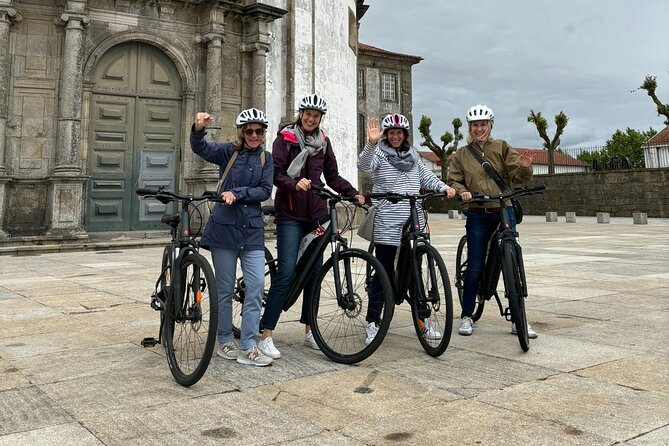
Private Electric Bike Tour in Oporto
Book on Viator →Operated by Green Tours · Bookable on Viator
Porto, pedaled the easy way. This private electric bike tour strings together the places you actually want to see—São Bento Station, Porto Cathedral, panoramic miradouros, and the Douro waterfront—without the stress of navigating tight streets. It’s private, so your guide can set the pace and handle the turns for up to 3 people, and the e-bikes make the hills and bridges feel manageable.
What I like most is how the route mixes big-name landmarks with views that make the city click: the Serra do Pilar viewpoint over Porto and Gaia, then a finish that’s built for lingering near the water. The one drawback to keep in mind is that the timing is tight—most stops are around 5–15 minutes—so you’ll want lunch plans of your own and don’t expect long, slow museum time.
In This Review
- Key highlights you’ll feel right away
- Why this 3-hour Porto and Gaia e-bike loop works
- Getting your bearings at São Bento Station
- Porto Cathedral and the feel of the old center
- Crossing the Eiffel-era bridge and riding the river edge
- Serra do Pilar: the panoramic viewpoint you’ll remember
- Cais de Gaia: terraces, food, and river energy
- Douro Marina and the modern riverfront contrast
- Praca da Batalha: Pedro V and the theatre-and-square combo
- Mercado do Bolhão: the city’s market heartbeat
- Aliados Avenue and the straight-line city center vibe
- Carmelitas and Carmo: churches with story behind them
- Miradouro da Vitória: old Jewish quarter views
- Clérigos Tower: the postcard moment
- Passeio das Virtudes: the easy sunset plan
- Palácio de Cristal Gardens and the Douro-from-below feeling
- Palácio da Bolsa and Prince Henry’s legacy in the squares
- Price and value: what $143.29 gets you (up to 3)
- What this tour feels like in real life
- Who should book this private e-bike tour
- Should you book Green Tours private electric bike tour in Porto?
- FAQ
- Is this tour private?
- How long is the Porto e-bike tour?
- What’s included, and what’s not?
- Where does the tour start and end?
- What language is the tour offered in?
- Do I need good weather?
- Is lunch built into the schedule?
Key highlights you’ll feel right away
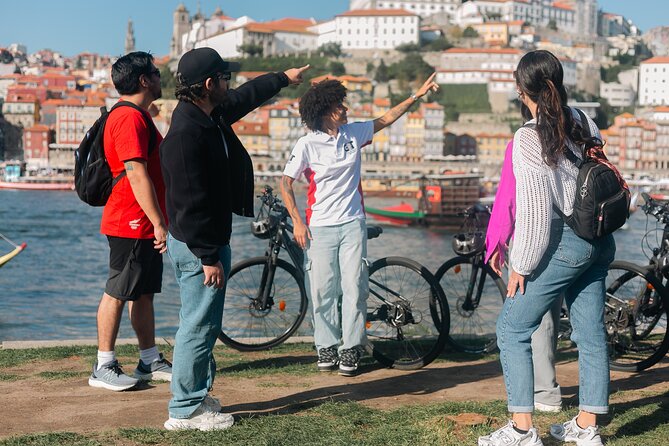
- Private e-bike comfort for up to 3 people, with your guide steering the route
- São Bento Station inside look at one of the world’s most famous tiled interiors
- Miradouro Serra do Pilar for that classic Porto-and-Gaia panorama
- Douro Marina area break near modern riverfront spaces on the Gaia side
- Clérigos Tower and Miradouro da Vitória for postcard views in the old center
- Passeio das Virtudes + Palácio de Cristal Gardens to end with river views and a relaxed vibe
Why this 3-hour Porto and Gaia e-bike loop works
This tour is designed for people who want the big hits without wasting hours in transit. In about 3 hours, you cover a lot of ground on an electric bike, with a guide calling out what to look for and where the story is hiding in plain sight.
The “private” part matters more than you might think. You’re not getting swept along with strangers who move at a different pace. Your guide can slow down when you want photos and keep things moving when you’re just trying to get your bearings fast in a new city.
It also helps that the tour is in English, so you’ll actually understand what you’re seeing rather than guessing. And it’s set up for moderate physical fitness, which usually means you can handle the ride without it turning into a workout you regret later.
You can also read our reviews of more tours and experiences in Porto.


Getting your bearings at São Bento Station
You start at R. da Póvoa 261, then head toward São Bento Railway Station. This is one of Porto’s most iconic places, and the real magic is inside—don’t treat it like a quick exterior photo stop.
The tiled interior is free to visit, and it’s the kind of detail that makes you understand why Porto feels different from other Portuguese cities. As you stand there, you’ll see how the station becomes a mini museum, crowded with scenes that feel like they belong to local life.
A short stop here is smart. It puts you in the center of the story early, so everything else you see later has context. Also, starting with a free stop means you don’t burn time or money before the fun part really begins.
Porto Cathedral and the feel of the old center
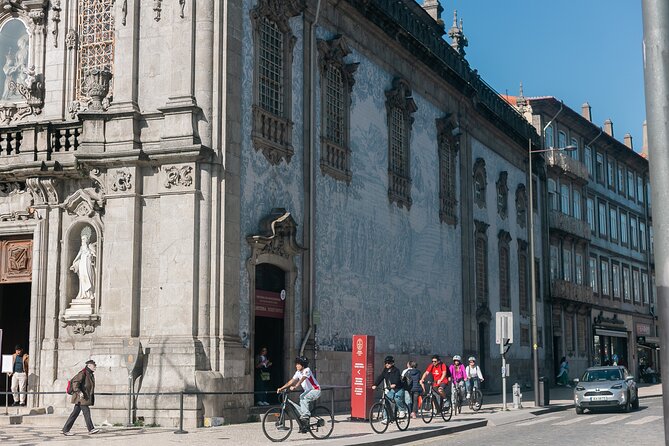
Next up is Porto Cathedral (Catedral do Porto), tied to the 12th century Gothic period. This is Porto’s main Catholic church building, and even with a short stop you get a sense of scale.
The timing is brief—about 10 minutes—so treat it like an orientation visit. Look up, notice the architectural style, and then use your guide to point out what’s most worth your attention.
If you’re the type who likes to understand what you’re looking at, this stop is a good investment. You’ll start to see patterns in the city that repeat in churches, viewpoints, and squares later in the ride.
Crossing the Eiffel-era bridge and riding the river edge
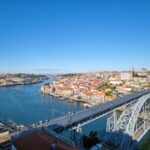
At some point you’ll pass over one of Porto’s best-known bridges, designed by Gustave Eiffel. That detail alone is worth the drive-by, because it connects Porto to a bigger European engineering story.
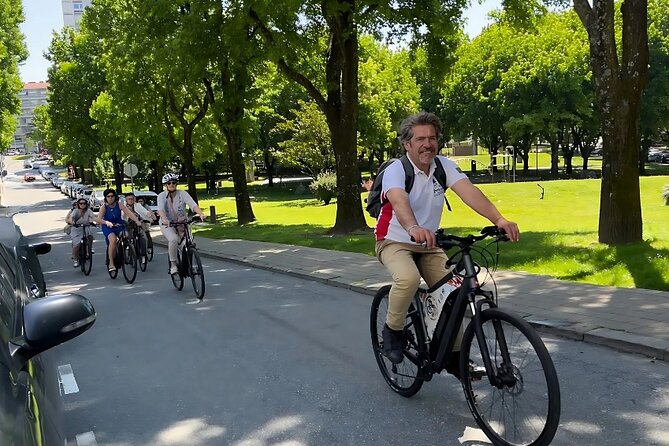
This is where electric bikes earn their keep. The ride feels fluid, and you can stay with the view instead of fighting traffic or parking.
Even if you’re not a “bridge person,” the water setting changes everything. Porto and Gaia are built around the Douro, and once you’ve seen the crossing from the bike route, the rest of the viewpoints make more sense.
Serra do Pilar: the panoramic viewpoint you’ll remember
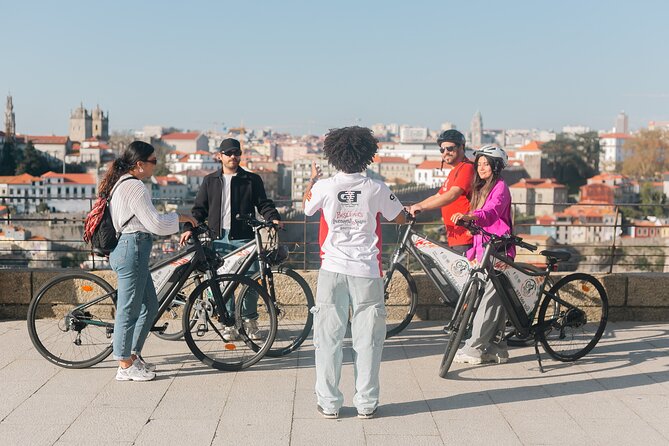
Miradouro Serra do Pilar is one of those spots that gives you a quick, honest reality check on Porto’s layout. From here, you can see the city and the other side across the river toward Gaia.
This stop is short—about 10 minutes—but it’s the kind of short that still feels complete. You get the panorama, you orient yourself, and you understand why locals like to linger on the higher ground.
I like that this doesn’t feel like a lecture viewpoint. Your guide’s job here is to help you spot what matters: where you are relative to the historic center and how the neighborhoods stack up.



Cais de Gaia: terraces, food, and river energy
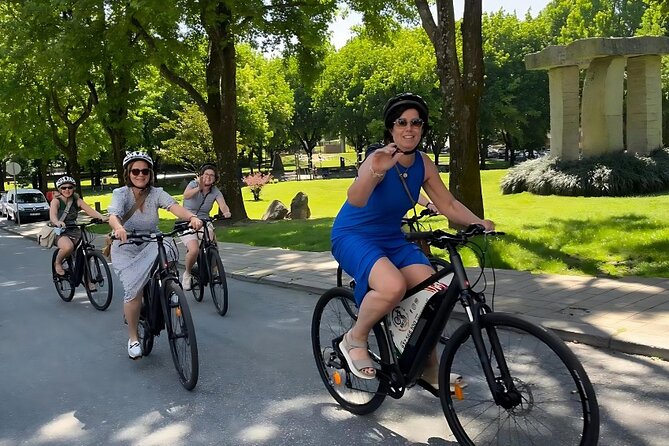
After the viewpoint, you move into Cais de Gaia, a lively tourist area on the left bank of the Douro. It’s all about terraces, restaurants, bars, and that riverside walk feeling.
Again, it’s not a long stay, but it gives you time to feel the vibe and decide where you might want to come back later. This is a smart choice if you plan to spend more time in Porto after the tour, because it highlights where the atmosphere actually lives.
If you’re traveling with people who care about food and drinks, this stop helps you identify potential dinner areas without forcing you into a set meal during the tour.
Douro Marina and the modern riverfront contrast
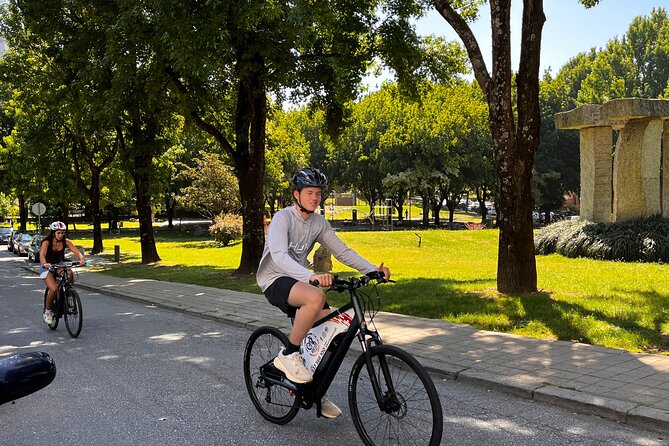
You’ll stop near Douro Marina, located in Afurada on the Gaia side. It’s a modern facility with space for small boats and services tied to sport, leisure, tourism, and nature.
There’s often an option to grab lunch around this area, but it’s up to you. The tour itself doesn’t include lunch or snacks, so this stop is more about breaking up the ride and letting you choose your own food plan.
What’s valuable here is the contrast. Porto’s historic core can dominate your attention. Douro Marina shifts the scene toward the river’s current life, right before the Douro heads toward the Atlantic.
Praca da Batalha: Pedro V and the theatre-and-square combo
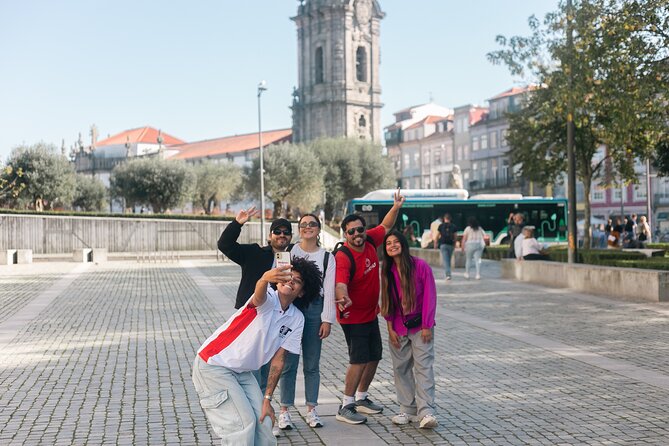
Next comes Praça da Batalha, dominated by a monument to King Pedro V. The square is also home to São João National Theatre and Cine-Teatro Batalha, giving it a cultural center feel.
This stop is only about 10 minutes, so don’t expect deep museum-level exploration. Instead, use the time to catch the atmosphere of the square and the way Porto uses public spaces for community life.
I like that this is a quick transition stop. It breaks the route into pieces so the tour never feels like one long blur of stone and viewpoints.
Mercado do Bolhão: the city’s market heartbeat
Bolhão Market (Mercado do Bolhão) is one of Porto’s “pay attention” stops. The building is municipal heritage, and it preserves the memory of the fresh market that shaped the city for over a hundred years.
Because this stop is around 10 minutes, you won’t do a full food tour. But you can still get a real feel for market life: where people buy, how the space is used, and why this spot stays important even with today’s tourism.
If you love watching daily life instead of only checking boxes, this is a highlight. It’s a place that reminds you Porto isn’t just postcard angles—it’s also real routines.
Aliados Avenue and the straight-line city center vibe
Your ride also takes you along Aliados Avenue, the main city avenue and a central hub in Porto. This segment is useful for regrouping and understanding the city’s grid and main corridors.
It’s also a good mental reset after the market energy. On an electric bike, you can keep moving smoothly while still taking in the street rhythm.
Carmelitas and Carmo: churches with story behind them
Two quick stops focus on churches tied to Porto’s religious layers: Igreja dos Carmelitas and Igreja do Carmo.
Igreja dos Carmelitas began in the 17th century, and even in a short window you can appreciate how churches mark the city’s spiritual timeline. Then Igreja do Carmo adds a twist: it connects to land given to the Order in 1752, and because two churches couldn’t be built together, the so-called Hidden House was built between them.
This is the kind of detail your guide is good at translating. If you’ve ever wandered into a church and felt like you missed the point, this is the opposite. You’ll know what to look for and why it matters.
Miradouro da Vitória: old Jewish quarter views
Miradouro da Vitória is located in the heart of Porto’s old Jewish quarter. The history here includes King João I demarcating an area where Jews had to live, with walls and access gates, creating a city-within-a-city feeling.
The stop is brief, about 10 minutes, but it’s one of the most thought-provoking moments on the tour. You’re standing in a spot that connects directly to how the city was shaped by real events, not just architecture.
Even if you don’t memorize dates, you’ll remember the location and the viewpoint. It’s a rare mix: civic memory plus a practical photo angle.
Clérigos Tower: the postcard moment
Torre dos Clérigos is a major Porto icon, often treated as the city’s postcard. The ensemble is remarkable as an architectural statement, and this short stop gives you the quick hit without pulling you into a long climb.
What I like here is balance. You’re seeing grand landmarks, but you’re also moving. The electric bike keeps the tour from feeling like a checklist of standing still.
Use these minutes to capture the view you’ll later recognize when you explore on your own. A tour like this helps you “name” what you see so the city stops being a blur.
Passeio das Virtudes: the easy sunset plan
You finish with Passeio das Virtudes, a garden built for relaxing over the Douro. The boulevard view stretches toward the bar at the mouth of the Douro, and it’s an excellent spot to sit on the grass or grab a beer on the terrace.
This is where you shift from sightseeing mode to enjoying mode. The stop is about 10 minutes, but even that is enough to feel the payoff if the sky cooperates.
If your timing is good, sunset here can make the whole tour feel worth it. Even without perfect light, the river setting is calming after all that old-city stone.
Palácio de Cristal Gardens and the Douro-from-below feeling
Next comes Jardins do Palácio de Cristal, a green space with panoramic views toward the Douro River and the sea. This stop gives you a different type of viewpoint—less “old-city height” and more open garden perspective.
It’s about 15 minutes, so you’ll have enough time to walk a bit, pick a spot, and breathe. This is also a helpful waypoint for photos, because the angles can look very different from what you saw at Serra do Pilar.
If you like variety in scenery—views, streets, churches, and then a garden—this portion does it.
Palácio da Bolsa and Prince Henry’s legacy in the squares
The ride also includes passes by Palácio da Bolsa (Palácio da Associação Comercial do Porto), a neoclassical building. Construction began on 6 October 1842, connected to the closure of Casa da Bolsa do Comércio and the idea of discussing business in the open air.
Then you’ll see a square in Porto’s historic center that pays homage to Prince Henry the Navigator. Tradition says he was born nearby in 1394 at Casa do Infante.
These parts are short, but they anchor the tour in why Porto matters. You’re not only seeing beauty—you’re seeing the civic and commercial roots that shaped the city’s power and ambition.
Price and value: what $143.29 gets you (up to 3)
The price is $143.29 per group for up to 3 people, for about 3 hours. That’s the key value lever here: you’re paying for a private experience and using the electric bike the whole time.
If you come as a group of three, the effective cost per person drops a lot. Even if you’re just two, you still get good value compared with booking separate tickets for multiple people and trying to coordinate public transport.
Also note what’s included: GST and use of the bicycle. What’s not included is lunch and snacks, so budget for a meal on your own before or after. The tour ends back at the meeting point, so you don’t have to worry about a complicated drop-off.
One more practical value point: an English-speaking guide can save you time and confusion. When someone shows you exactly where to look at São Bento or explains the Hidden House story, the tour becomes more than just movement.
What this tour feels like in real life
Think of this as a high-information, low-friction way to see Porto and Gaia. You’ll be riding between stops, then stepping off briefly to take in the sights—often with free admission—so you stay flexible.
Your guide’s job is to connect the dots quickly. That’s why a private tour works here: the route is busy enough that you’d miss key details if you were just cycling solo without guidance.
It’s also a good first-day activity. You get orientation, viewpoints, and landmark names you can later find on your own.
Who should book this private e-bike tour
This tour is a great fit if you:
- Want to cover Porto and Gaia in a short time without constant map work
- Prefer guided context over solo wandering
- Like city views as much as landmark photos
- Are comfortable with a moderate ride and want help managing routes
It’s less ideal if you want long museum time or sit-down meal stops. The tour is built around brief, focused visits, and lunch is for you to choose.
The other factor is weather. The experience requires good weather, and if it’s canceled for poor conditions, you’ll be offered another date or a full refund.
Should you book Green Tours private electric bike tour in Porto?
Yes, if you want a smart, scenic first look at Porto and Gaia without turning your day into logistics. The private structure for up to 3 people, the electric bikes, and the way the stops mix major landmarks with viewpoints make it feel like a best-of route.
I’d skip it only if you hate short stops and want slow pacing. If your dream day is one long stretch of a single neighborhood, plan a slower solo day instead.
But for most people—especially first-timers with limited time—this is a practical way to see Porto from street level, church level, and river level.
FAQ
Is this tour private?
Yes. It’s a private tour/activity, and only your group participates (up to 3 people).
How long is the Porto e-bike tour?
The duration is about 3 hours, and the stated hours are approximate.
What’s included, and what’s not?
Included are GST and use of the bicycle. Lunch and snacks are not included.
Where does the tour start and end?
It starts at R. da Póvoa 261, 4000-099 Porto, Portugal. The activity ends back at the meeting point.
What language is the tour offered in?
The tour is offered in English.
Do I need good weather?
Yes. The experience requires good weather. If it’s canceled due to poor weather, you’ll be offered a different date or a full refund.
Is lunch built into the schedule?
Lunch is not included. The tour may stop near areas where you can eat, but it’s up to you to choose your lunch.