Street art turns Porto into an open book. This tour is built for the fact that the best street pieces are often the hardest to find. You’ll follow an insider route through real neighborhoods, then learn how to see what you’re looking at, not just where it is, with street art that connects to Porto’s current creative scene.
I really like the small-group setup. It stays personal enough that your guide can point out details, answer questions, and push you to look twice. I also like the way the guide talks about artists and technique with names like Luigi and Joao showing up again and again for high-energy, story-driven guiding.
One thing to consider: a single past comment notes the guide uses an iPad for extra info, so if you expect nonstop scenery at every second, you might want to set that expectation. And since it’s a walking tour, you’ll need a moderate fitness level.
In This Review
- Key highlights to know before you go
- Why Porto Street Art Works Better With a Guide
- Starting at Praça de Carlos Alberto: Where the Walk Sets Its Tone
- Miguel Bombarda Art Block: The Best Place to Train Your Eye
- The Walk Toward Luís I Bridge: Seeing Porto’s Edges, Not Just Icons
- Small-Group Energy and What You’ll Actually Learn
- How the $25.22 Price Makes Sense for a 3-Hour Walking Tour
- Practicalities: What to Wear and How to Pace Yourself
- Should You Book This Porto Street Art Tour?
- FAQ
- Where is the tour meeting point?
- Where does the tour end?
- What time does the tour start?
- How long is the tour?
- What is the price per person?
- Is hotel pickup included?
- Is this tour weather dependent?
- How big is the group?
- Is a mobile ticket provided?
- What’s included versus not included?
- FAQ
- How much of the experience is walking?
- Do I need admission tickets for the stops?
- Is the tour suitable if I have only moderate fitness?
Key highlights to know before you go
- Small group feel: kept to a tight number (listed max 10, with highlights mentioning up to 15)
- Contemporary Porto focus: you’ll see the city through its current street-art scene, not just murals from a distance
- Miguel Bombarda Art Block time: a dedicated stop in Porto’s art-and-galleries area
- Artist spotting practice: you’ll learn how to recognize works and stories so you notice more on your own after
- End near a classic view: the walk finishes by Luís I Bridge
- Value for $25.22: a professional guide plus a souvenir for a short, efficient 3-hour outing
Why Porto Street Art Works Better With a Guide
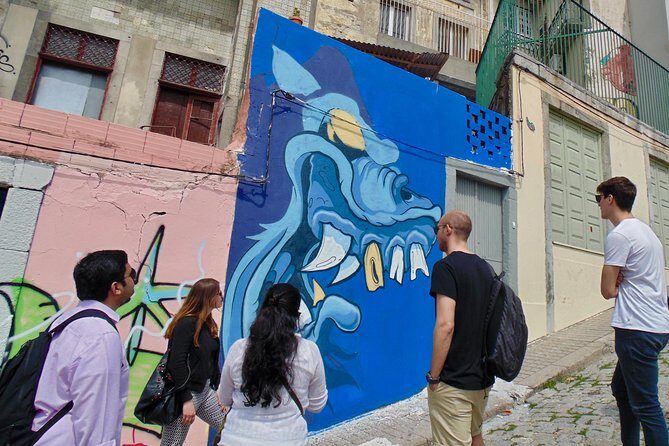
Porto’s street art doesn’t sit still. Pieces get painted over, locations change, and some of the best works are tiny, tucked into corners, or easy to miss when you’re moving fast between big sights. This tour is designed for that reality.
The best part is not just that you’ll “see street art.” You’ll learn how to read it. Your guide shows you how to notice scale, style, and the kinds of messages artists are putting out. That changes your whole walk through the city. Instead of only taking photos of obvious murals, you start spotting tags, stencils, smaller characters, and the subtle stuff that makes the whole neighborhood feel alive.
And it’s not only art talk. The guide also helps you place what you’re seeing into Porto’s current creative culture. That’s where this becomes more than a photo walk. You’ll get a side of Porto that many first-timers skip because it doesn’t look like a “must-see” on a standard sightseeing route.
You can also read our reviews of more tours and experiences in Porto.



Starting at Praça de Carlos Alberto: Where the Walk Sets Its Tone
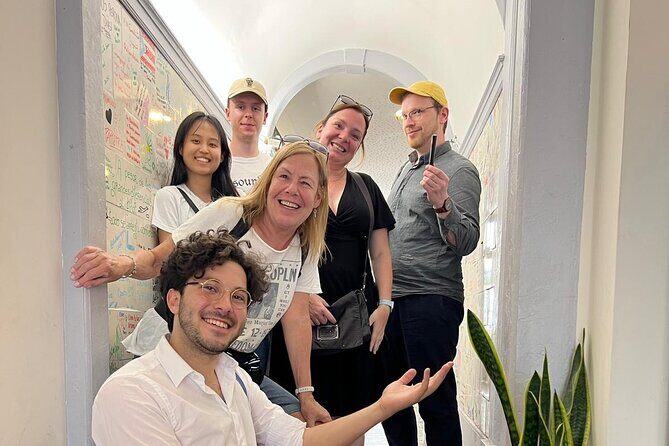
You meet at Praça de Carlos Alberto (4050-157 Porto), a convenient starting square near lots of interesting stops. That matters more than you’d think. A good meeting point helps you avoid stress at the start, especially if you’re using public transport and arriving a little earlier (or a little later).
From there, the guide sets the tone for what you’re going to do for the next few hours: slow down, look carefully, and ask questions. Stop 1 is brief, and that’s on purpose. It’s the warm-up where you learn the “rules” of looking at street art in Porto, so later stops make more sense.
Practical tip: wear shoes you trust. Even though this isn’t described as a huge hike, street-art walking can involve lots of pavement changes and turning down small streets. I’d rather you arrive comfortable than deal with sore feet halfway through.
Miguel Bombarda Art Block: The Best Place to Train Your Eye
The main dedicated neighborhood stop is Miguel Bombarda Art Block, where you get about 30 minutes to explore. This is one of the areas where street art blends into the broader art-world feel—galleries, creative shops, and that “people actually come here for art” energy.
What you’ll do in this chunk of time is different from wandering on your own. Your guide helps you connect what you’re seeing outside to the kinds of artists and styles you’re hearing about. You’ll likely notice how street art here can feel more current and experimental compared with the big, postcard-friendly pieces people aim for.
Also, Miguel Bombarda is good for your budget sense. The info for this stop says admission is free, so you’re not paying again once the tour is underway. You get time to look, then you get guided context for what the look means.
If you’re the type who likes to shop or browse after a stop, this is the right area to do it. Even if you don’t buy anything, it’s a neighborhood where you can keep exploring the vibe after your tour ends nearby.
The Walk Toward Luís I Bridge: Seeing Porto’s Edges, Not Just Icons
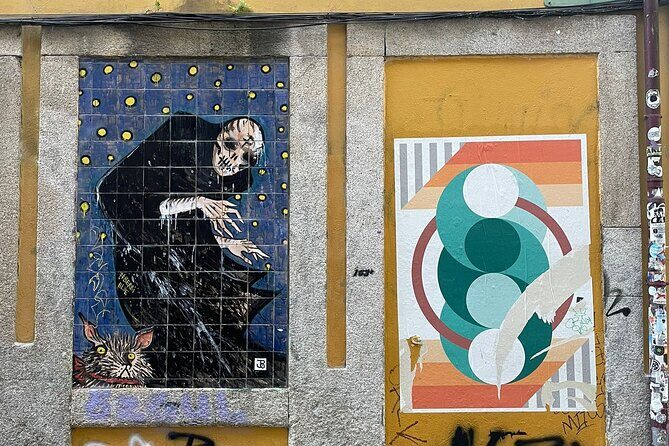
The tour ends near Luís I Bridge (Luís I Bridge, 4000 Porto), and it notes that the ending point can vary. That’s normal for walking tours; guides adjust the route based on what’s around you and how the group is moving.
Why this ending works: Luís I Bridge is the kind of Porto landmark that most people recognize. Finishing near it gives you a satisfying “anchor view” after a route that focuses on smaller street details and less-famous streets. It’s like you start with the art-reading skill, then you close with a classic Porto perspective.
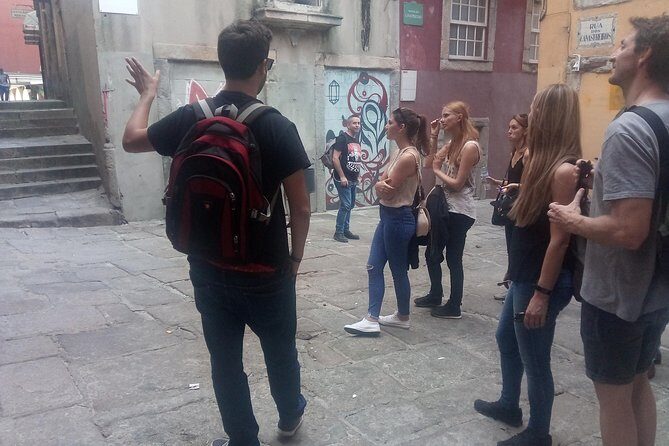
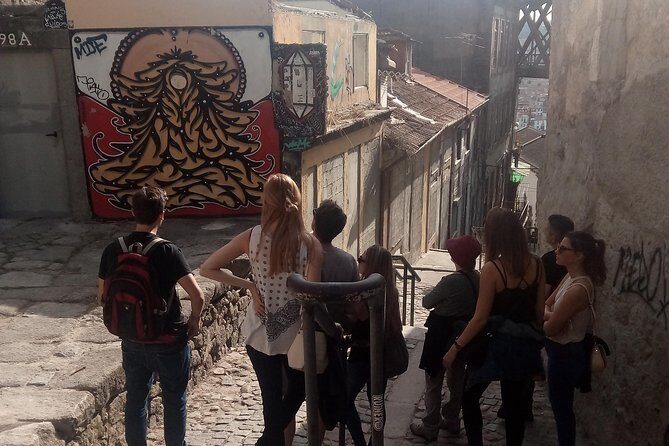
Along the way, you’ll walk through the kind of streets where street art actually lives: mixed-use areas, alleyways, and walls that aren’t meant for tourists to stare at for long. This is where you’ll use what the guide teaches you. You start predicting where pieces might appear. You start seeing patterns in what artists use and how they frame messages in public space.
This is also where you’ll get the most personal value from a guide. A good guide doesn’t only point at art. They help you understand what you’re looking at so you can keep spotting it after the tour ends, even on your own return walk.
Small-Group Energy and What You’ll Actually Learn
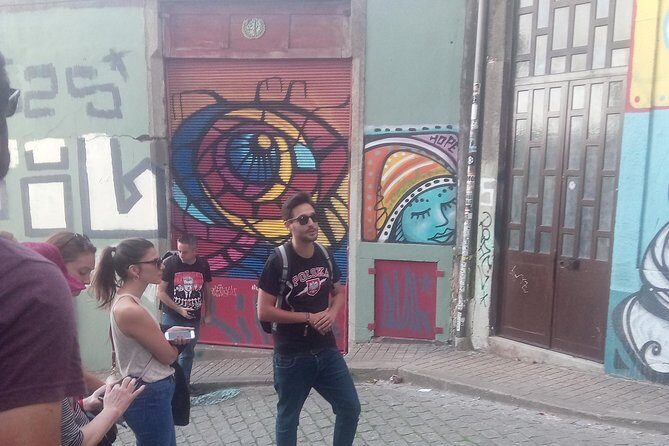
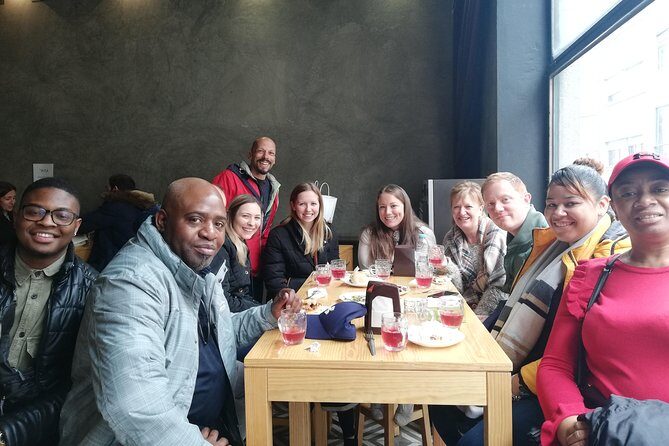
This tour keeps the group tight, with info listing a maximum of 10 travelers, while highlights also mention a cap of 15. Either way, the result is the same: you’re not swallowed by a crowd. A small group makes it easier for the guide to keep track of what you’re seeing and what questions you have.
Another reason this works: the guiding style is described as enthusiastic and interactive. People mention being challenged to consider what counts as street art, and that kind of back-and-forth turns the walk into a real conversation. You’re not just following along; you’re learning a way to look.
The strongest praise centers on the guide stories—how the guide connects artists to the works you find on the street, and how that explanation helps you spot other pieces after the tour. That’s exactly the type of skill you want from a guided experience. You’re buying time, local insight, and interpretation, so your future self can explore smarter.
And yes, you’ll get a cool souvenir included. It’s small, but it’s a nice extra for a tour that’s otherwise experience-based.





How the $25.22 Price Makes Sense for a 3-Hour Walking Tour
At $25.22 per person, this isn’t a premium “event” price. It’s closer to what you’d pay for a solid guided city walk, except the topic is street art—where local knowledge really matters.
So where is the value? Three places:
1) Professional guide time for about 3 hours (with some info suggesting it can run closer to 3.5).
2) The ability to find works you’d miss on your own, especially smaller pieces that blend into the street texture.
3) A small-group experience, which usually costs more than large tours but often delivers better attention.
If you’re the kind of visitor who loves to take photos, this tour helps your photos too. You’ll know what you’re photographing and why the work looks the way it does. If you’re more into walking and culture than photography, you’ll still come away with a sharper understanding of the city’s creative pulse.
One more value note: it runs multiple departures across the day, and it uses a mobile ticket. That makes it easier to fit into your schedule without getting tangled in complicated plans.
Practicalities: What to Wear and How to Pace Yourself
This is listed as operating in all weather conditions, so dress like a local: layers, rain protection if needed, and shoes that can handle uneven pavement. Even on a day that’s dry, Porto streets can be slippery or uneven in spots.
The tour is also said to be good for people with moderate physical fitness. That usually means: expect continuous walking, some turns, and some time standing still to look at pieces up close.
Also, you don’t get hotel pickup. You meet at Praça de Carlos Alberto. That’s straightforward, but it does mean you should arrive a little early and plan on using public transit or walking a bit from where you’re staying.
If you’re worried about screen time because of that iPad note from one past participant, here’s how I’d handle it: think of it as support material. The goal stays the same—your guide is still walking you to real pieces on real streets. The phone or tablet is just there to explain what you’re seeing.
Should You Book This Porto Street Art Tour?
Book it if you want a more modern, street-level Porto. This tour is a great fit for first-time visitors who already plan to do the big sights, but want a second layer: the city as it looks right now, in public space.
You should also book if you like guided thinking. The best street art tours don’t just point and snap; they teach you how to notice. This one focuses on spotting both larger works and the smaller pieces people often walk right past, and it encourages you to see street art with a different lens.
Skip or adjust your expectations if you strongly prefer constant open-air views with minimal talking or minimal time spent on extra explanation tools. And if you’re sensitive to walking time, make sure your schedule leaves room for a few hours of steady movement.
If you want a simple way to add meaning to Porto, this is a strong choice. It’s not the most expensive thing you’ll do, and it helps you experience the city in a way that sticks after the tour ends.
FAQ
Where is the tour meeting point?
You meet at Praça de Carlos Alberto, 4050-157 Porto, Portugal.
Where does the tour end?
The tour ends near Luís I Bridge, 4000 Porto. The ending point may vary.
What time does the tour start?
The start time listed is 2:30 pm.
How long is the tour?
It runs about 3 hours (approx.).
What is the price per person?
The price is $25.22 per person.
Is hotel pickup included?
No. Hotel pickup and drop-off are not included.
Is this tour weather dependent?
No. It operates in all weather conditions, so dress appropriately.
How big is the group?
The experience lists a maximum of 10 travelers.
Is a mobile ticket provided?
Yes, the tour uses a mobile ticket.
What’s included versus not included?
Included: a professional guide and a cool souvenir. Not included: hotel pickup and drop-off, and admission is not included for the first stop (with the Miguel Bombarda stop listed as free).
FAQ
How much of the experience is walking?
This is a walking tour through local streets, with a meeting stop and a dedicated art-district stop.
Do I need admission tickets for the stops?
The first stop lists admission ticket not included, while the Miguel Bombarda Art Block stop lists admission ticket free. Admission overall is not included.
Is the tour suitable if I have only moderate fitness?
Yes. It’s listed for people with a moderate physical fitness level.