Porto is one of those cities that rewards walking. This tour gives you a fast, street-level way to understand how Porto ticks, from the grand avenue of Avenida dos Aliados to the drama of São Bento Railway Station.
Two things I especially like: you get a tight overview in just 2 hours 30 minutes, and the guide’s storytelling comes with real, on-the-ground advice (food stops, what to see next, and practical navigation tips). One thing to consider: most of the best-known sights are viewed from the outside, so if you’re hoping for lots of paid interior time, you’ll want to plan extra visits after.
In This Article
- Porto City Center Key Points You’ll Feel On Day One
- A 2.5-Hour Porto Intro That Starts on Aliados
- Price and Value: Why This Feels Like a Bargain
- Porto’s Main Avenue Stops: City Hall to Rua das Flores
- Stop 1: Porto City Hall (on top of Aliados)
- Stop 2: Avenida dos Aliados (descending the avenue)
- Stop 10: Rua das Flores (charismatic street, once jewelry-focused)
- Stop 4: Igreja do Carmo (and the narrowest house area)
- Livraria Lello Without the Line: Smart, Time-Saving Touring
- Stop 3: Livraria Lello (seen, not entered)
- Porto’s Stories in Places You Might Walk Past
- Stop 5: Universidade do Porto (urban legends and rituals)
- Stop 6: Jardim de João Chagas (aka Jardim da Cordoaria)
- Stop 7: Centro Português de Fotografia (former prison)
- Torre dos Clérigos and the Best View Stop: Vitória
- Stop 8: Torre dos Clérigos (Nasoni’s creation)
- Stop 9: Miradouro da Vitória (old Jewish quarters viewpoint)
- São Bento Railway Station: The Stop That Changes Your Walk
- Stop 11: São Bento Railway Station
- Cathedral Hill and Dom Luís I Bridge Glance
- Stop 12: Catedral do Porto (we don’t go inside)
- Stop 13: Dom Luís I Bridge (mentioned from afar)
- How the Guides Make This Tour Worth Your Time
- Practical Tips I’d Use Before You Go
- Should You Book This Porto City Center Walk?
- FAQ
- Is the tour offered in English?
- How long is the Porto City Center tour?
- Where do I meet the guide, and where does the tour end?
- Do you enter Livraria Lello during the tour?
- Are there admission tickets included for the stops?
- Is there a group size limit?
- What refund options do I have if plans change?
Porto City Center Key Points You’ll Feel On Day One
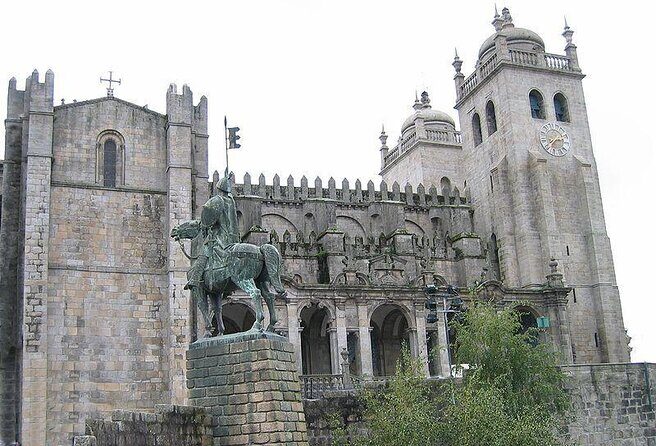
- Aliados start, cathedral finish: you get oriented fast in the upper city and end near Porto Cathedral.
- Great sights with low friction: you see major landmarks without getting stuck in ticket lines.
- Skip-the-queue strategy: the tour avoids entering places like Livraria Lello, saving your time for better pacing.
- Viewpoints included: Miradouro da Vitória gives you a high-value photo moment and a sense of the city’s layers.
- Former spaces with new uses: Centro Português de Fotografia is in a former prison—use the tour to understand the setting before you decide to go inside on your own.
- Guides that act like story-tellers: names like Tiago, Diogo, and Jaime Veloso show up in standout reviews, praised for humor, clarity, and useful recommendations.
A 2.5-Hour Porto Intro That Starts on Aliados
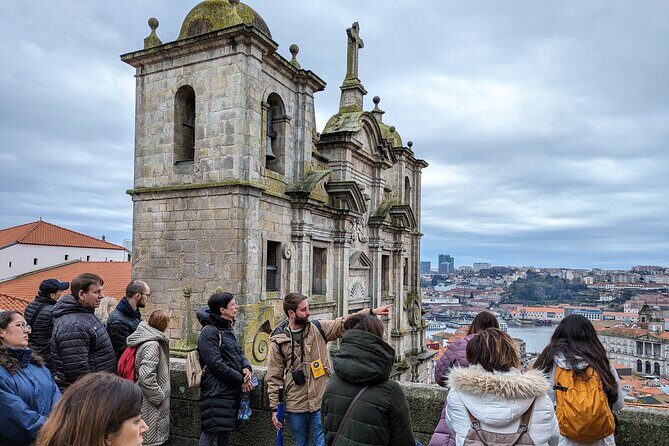
The tour begins at Monumento a Almeida Garrett, right on Av. dos Aliados. That location matters, because Aliados is the spine of Porto’s city-center life. You start near the energy of the upper city, then you gradually work your way into narrower streets, old neighborhoods, and the places visitors usually only see from postcards.
Expect a steady walking rhythm with short stops—typically around 10 minutes at many points, plus a few longer photo-orientation moments. With a group capped at 25 people, you’re not stuck in a giant herd, and that helps the guide keep things moving without rushing every explanation.
And yes, the pace is “walk-smart,” not “speed-run.” The route includes steeper bits, so comfortable shoes and water make a real difference—especially if you visit in warm weather.
You can also read our reviews of more city tours in Porto



Price and Value: Why This Feels Like a Bargain
The listed price is $3.62 per person, but the big value signal is that it’s pay what you want at the end of the tour. That pricing model can sound mysterious until you understand what you’re buying: a guide-led orientation that helps you make better choices for the rest of your trip.
Here’s the practical math I like: Porto can eat time fast. You spend 30 minutes figuring out where things are, then another 20 waiting in lines, then you lose half a day trying to “patch together” a plan. This tour reduces that chaos. In a couple of hours, you see the main geography and the historical story threads, so your later decisions feel more confident.
Also, the tour skips several costly or time-consuming interior moments. You won’t waste your best energy waiting behind crowd control ropes at the places that tend to swallow the day.
Porto’s Main Avenue Stops: City Hall to Rua das Flores
Stop 1: Porto City Hall (on top of Aliados)
You start at Porto City Hall, near the top of Aliados. This first stop sets context. The guide can explain why this area became a civic center and how Porto’s layout shapes what you’ll notice later—street width, elevation, and how neighborhoods connect.
Stop 2: Avenida dos Aliados (descending the avenue)
Then you move down Avenida dos Aliados, Porto’s biggest and most recognizable avenue. This is where you get your “map in your legs.” You’re building an internal sense of direction, and the avenue becomes the reference point for everything that comes after.

Stop 10: Rua das Flores (charismatic street, once jewelry-focused)
Later, you reach Rua das Flores, one of the city’s most characterful streets. It used to be known for jewelry shops, which the guide can use as a doorway into how Porto’s economy and trades evolved. Even if you’re not shopping, this is one of those streets where you’ll want to slow down for photos and just absorb the texture.
Stop 4: Igreja do Carmo (and the narrowest house area)
Right near the church complex is a famous narrow-building feel—close enough to make you stare. You’re getting a quick lesson in Porto’s mix of faith, architecture, and the odd quirks that happen when buildings get squeezed into steep streets.
Livraria Lello Without the Line: Smart, Time-Saving Touring
Stop 3: Livraria Lello (seen, not entered)
Livraria Lello is one of the most beautiful bookshops in the world—and also one of the easiest places to burn half your morning waiting. For that reason, the tour does not enter. You get the orientation value: you learn why it draws long queues, and you see it as a landmark rather than a time sink.
If you want to visit inside, you’ll be better prepared. You’ll already know what you’re walking toward and how to fit it into your schedule without panicking. This is the kind of decision that helps the tour stay enjoyable instead of stressful.
Porto’s Stories in Places You Might Walk Past
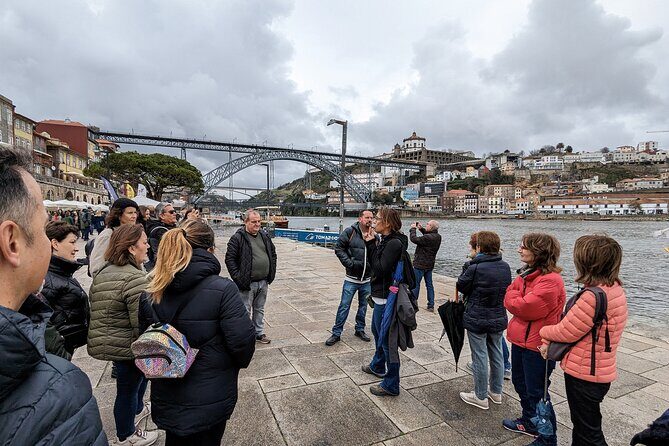
Stop 5: Universidade do Porto (urban legends and rituals)
At Universidade do Porto, you’re not just seeing a campus facade. You’re getting context about Porto’s university life: topics like urban legends, centenary cafes, and strange rituals come up in the guide’s explanations.
This is a good example of the tour’s real purpose: the sights are the backdrop, but the guide’s storytelling is what turns them into understanding. You’ll leave with a sense that Porto is both old and actively lived-in, not frozen in time.
Stop 6: Jardim de João Chagas (aka Jardim da Cordoaria)
Then comes a quieter moment: Jardim de João Chagas, also called Jardim da Cordoaria. The label “haunting garden” fits the vibe. It’s a pause from streets and crowds, and it gives your brain a break while still staying tied to the city’s identity.
If you’re the type who gets sightseeing fatigue, this stop is a nice reset. You can take a few minutes to just look around and feel the shift from busy urban energy.
Stop 7: Centro Português de Fotografia (former prison)
At Centro Português de Fotografia, the key detail is that it sits in a former Porto prison and now houses a major chunk of Portugal’s photographic heritage. The tour does not go inside, but the exterior stop is still useful: it frames the building’s past so that if you choose to return later, your visit has meaning beyond “here’s a museum.”
This is one of those stops where I think the tour earns its keep. You’re not spending ticket time, but you’re getting enough context to make future visits feel smarter.
Torre dos Clérigos and the Best View Stop: Vitória
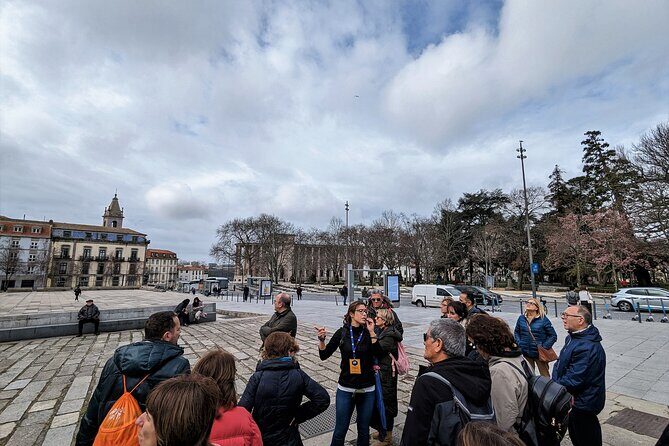
Stop 8: Torre dos Clérigos (Nasoni’s creation)
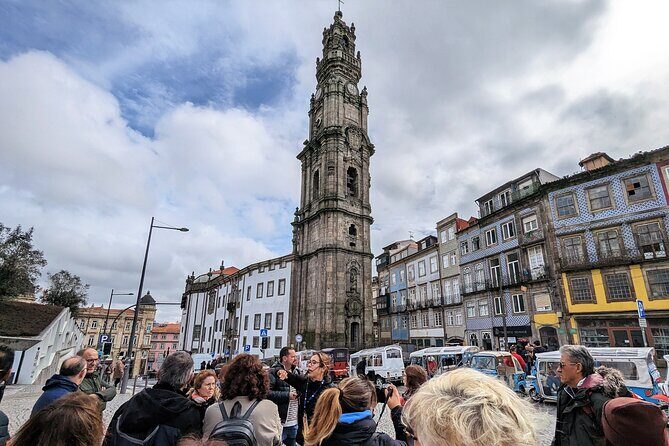
The Torre dos Clérigos is credited as a creation by Nasoni. You won’t enter it here, but you will understand why it’s such a dominant silhouette and one of Porto’s most photographed monuments.
Think of this as the tour teaching you how to read the skyline. Once you’ve seen it during the walk, you’ll spot it later when you’re wandering on your own.
Stop 9: Miradouro da Vitória (old Jewish quarters viewpoint)
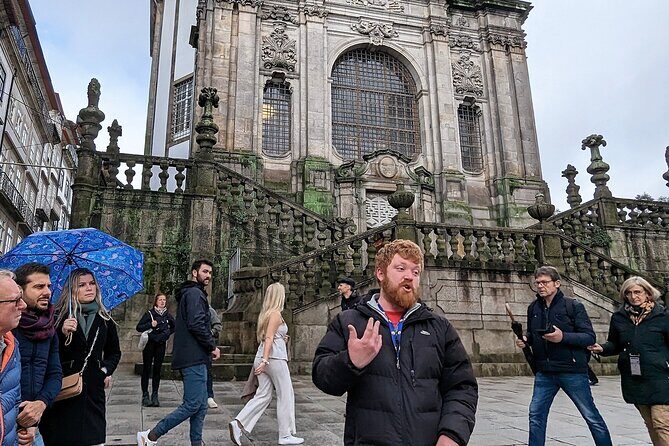
Next is Miradouro da Vitória, located in the old Jewish quarters. This is your viewpoint payoff: one of the best ways to “get” Porto is to look down on it and see how hills, streets, and bridges relate.
This stop also gives you breathing room. The best photos happen when you’re not rushing, and the viewpoint lets you pause without feeling like you’re losing time.
São Bento Railway Station: The Stop That Changes Your Walk
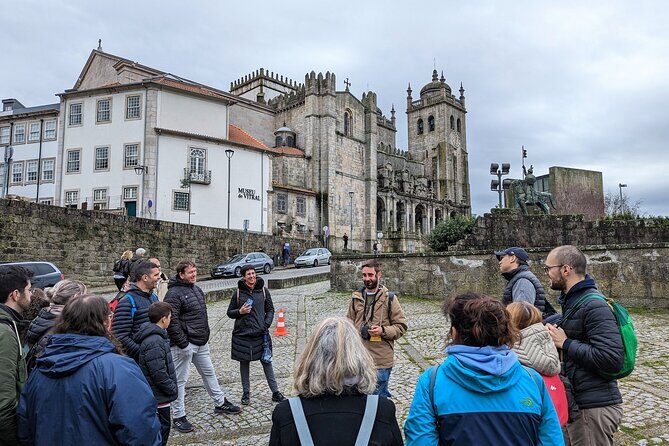
Stop 11: São Bento Railway Station
São Bento Railway Station is described as one of the most beautiful train stations in the world, and that reputation fits the way the tour uses it. You’re not just ticking off a photo spot—you’re watching a major transportation hub become an artwork you can’t ignore.
Even if you don’t ride the train, this is a strong orientation point. It tells you how Porto treats design, craft, and public space. It’s also a natural “anchor” stop, which is helpful if you plan to retrace your route later.
Cathedral Hill and Dom Luís I Bridge Glance
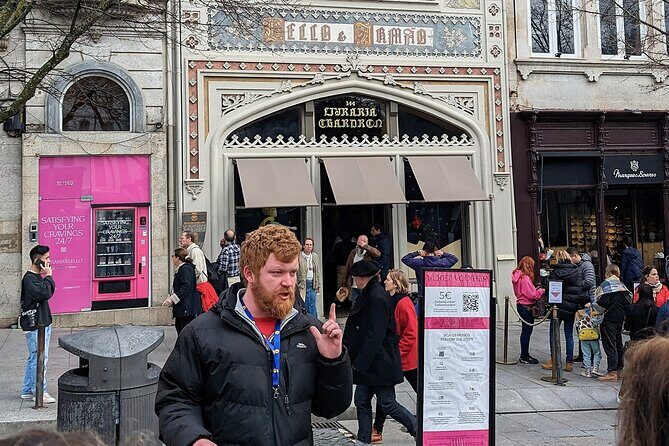
Stop 12: Catedral do Porto (we don’t go inside)
The tour ends its main story at Catedral do Porto, positioned above Morro da Pena Ventosa. The guide frames this as the place where Porto begun to exist—then shares stories and anecdotes tied to the area.
You won’t go inside the cathedral during the tour. That’s a trade-off: you save time and keep the walk flowing, but you’ll need your own ticket visit if you want interior access.
Stop 13: Dom Luís I Bridge (mentioned from afar)
Near the end, you’ll get a chance to see Dom Luís I Bridge from the outside, when the opportunity comes. The value here isn’t checking a box inside a monument. It’s learning what bridge you’re looking at—and how to spot it again later.
How the Guides Make This Tour Worth Your Time
If you read the tone of the strongest reviews, a clear pattern shows up: the guides bring the city to life with storytelling, humor, and follow-up advice. You’ll see names like Tiago, Diogo, Jaime Veloso, Adriano, Sara, and Agata credited for combining clear explanations with practical tips.
Here’s why that matters for you: Porto is a city where the “why” often beats the “what.” A good guide helps you connect small details—street shapes, building placement, and landmark relationships—into a usable mental model. Then your self-guided time becomes easier and more enjoyable.
Even better, some guides provide helpful post-tour material like restaurant and activity ideas, plus maps that support your next day. That kind of handoff reduces decision fatigue.
Practical Tips I’d Use Before You Go
- Bring water. One recurring piece of advice is that the walk includes steep paths.
- Wear comfortable shoes. This is a city-center walk, not a stroller cruise.
- Keep a little flexibility. If you want to return to places like Livraria Lello or the photo center, plan extra time after the tour.
- If you’re hoping to explore the river area, remember this kind of upper-city walk may not take you down to everything. You may need other transport or extra walking to cover lower neighborhoods.
Should You Book This Porto City Center Walk?
Book it if you want a smart first day: orientation, major landmarks, and viewpoints, all tied together by story. This is especially good when you care about history but don’t want to spend your time inside lines and ticket rooms.
Skip it or add more planning if your priority is interior visits at every stop. The tour focuses on exterior viewing and street context—so you’ll still want to schedule separate entry tickets for the places that pull you in.
For most visitors, though, this is the kind of tour that sets you up. You finish the walk near Porto Cathedral, with better bearings and a short list of where to go next.
FAQ
Is the tour offered in English?
Yes. The tour is offered in English.
How long is the Porto City Center tour?
It runs about 2 hours 30 minutes.
Where do I meet the guide, and where does the tour end?
You start at Monumento a Almeida Garrett, Av. dos Aliados 291, 4000-035 Porto and end in the Porto Cathedral area (Terreiro da Sé).
Do you enter Livraria Lello during the tour?
No. Livraria Lello is not entered on the tour due to long waiting times.
Are there admission tickets included for the stops?
Some stops are free, but not all. Livraria Lello is not included, and several other sights are also noted as not included for admission.
Is there a group size limit?
Yes. The tour has a maximum of 25 travelers.
What refund options do I have if plans change?
You can cancel up to 24 hours in advance for a full refund. If it’s canceled due to poor weather, you’ll be offered a different date or a full refund.