REVIEW · PORTO
Private Tour to Lamego and Viseu, the Dão wine region
Book on Viator →Operated by Endless Weekend Tours · Bookable on Viator
Lamego and Viseu feel personal. I especially like the 686-step climb at Nossa Senhora dos Remédios, because you earn the view after the effort. I also like how the day swaps Romanesque, Gothic, and Baroque styles without feeling like a museum lecture. One watch-out: the day runs 8 to 10 hours, so you’ll want comfortable shoes, and you may need to budget extra for the wine and museum add-ons.
This is also one of those trips where the comfort is built in. You’re picked up from Porto (hotel pickup is offered), ride in a luxury vehicle with Wi‑Fi, bottled water, and refreshments, and you’re covered by personal accident and civil liability insurance. In one booking I saw, Carlos was quick to answer questions and handled the Porto pickup smoothly.
The itinerary is well-paced but still packed. You’ll hit major stops in Lamego and Viseu, plus optional Dão experiences, so decide ahead of time whether you want more time in wine cellars or more time simply wandering the historic streets.
In This Review
- Key highlights worth planning for
- Douro bridge stops: small detours, big context
- Castelo de Lamego: medieval stone on a hill
- Lamego Cathedral: Romanesque roots plus a Nasoni ceiling
- Nossa Senhora dos Remédios: 686 steps and Baroque drama
- Se Catedral de Viseu: towers, age, and hidden layers
- Palácio dos Condes de Anadia and optional Dão wine tastings
- Price and logistics: is this good value at $304.85?
- Who this private Lamego and Viseu day fits best
- Should you book this tour?
- FAQ
- How long is the private tour?
- What does the tour cost?
- Does the tour include pickup from Porto?
- Are entrance fees included?
- Is the Dão wine tasting part of the standard tour?
- Is this tour private?
- What if the weather is bad?
Key highlights worth planning for
- 686 steps up to Nossa Senhora dos Remédios (and a big payoff at the top)
- Gothic drama in Se Catedral de Viseu, with towers that make it visible from afar
- Castelo de Lamego: a medieval mountain fortress at 543 meters
- Nicolau Nasoni ceiling work in Lamego Cathedral (painted in the 1700s)
- Palácio dos Condes de Anadia, a grand 18th-century estate with gardens
- Optional Dão wine stops (Casa do Santar, Solar do Vinho do Dao, and more)
Douro bridge stops: small detours, big context
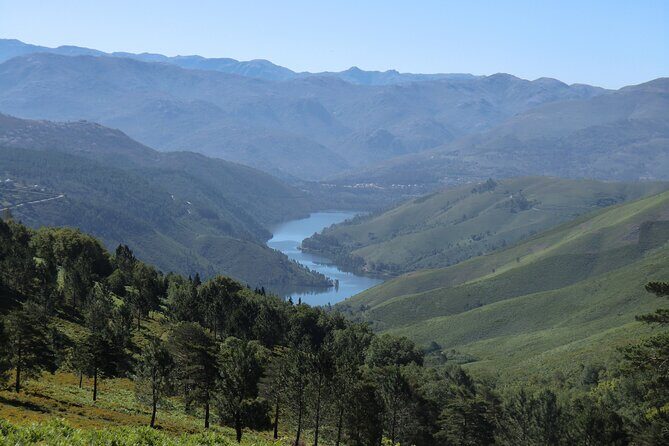
Before you even reach Lamego, the tour gives you a couple of “how this region works” moments along the Douro. These aren’t random roadside stops. They explain how the river shaped transport and how later changes left traces you can still walk through.
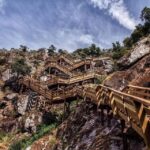
One stop is a bridge built by King D. Luís I in the late 1800s to cross the Douro by road. It was deactivated mid‑20th century because the wooden deck had degraded. Later, rehabilitation works were done in an urban setting so the bridge could be used again in a way closer to its original character. That final twist matters: it became part of the network of footpaths along the Douro, so you’re seeing a piece of infrastructure that turned into a pedestrian experience.
Another stop is the bridge also called the Régua road bridge. Built in 1934 by the Companhia Nacional de Caminhos de Ferro to connect Peso da Régua and Lamego, it wasn’t finished for rail use and was adapted for road. The difference here is construction: it’s masonry, not iron like many bridges from the same era.
For you, this means your day starts with more than views. You get a sense of why these towns feel linked to the river and why the region’s architecture and routes evolved over time.
You can also read our reviews of more tours and experiences in Porto.



Castelo de Lamego: medieval stone on a hill
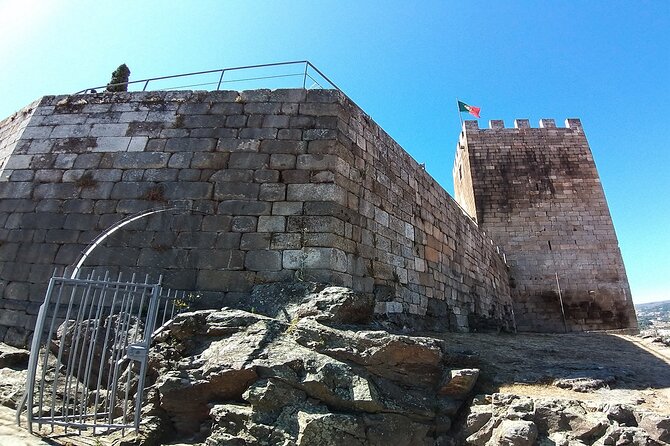
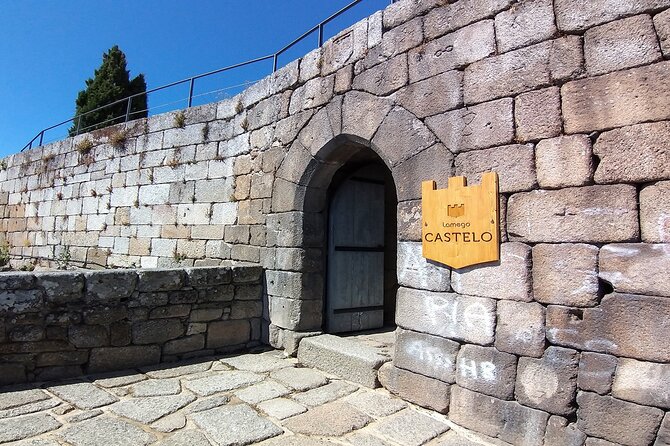
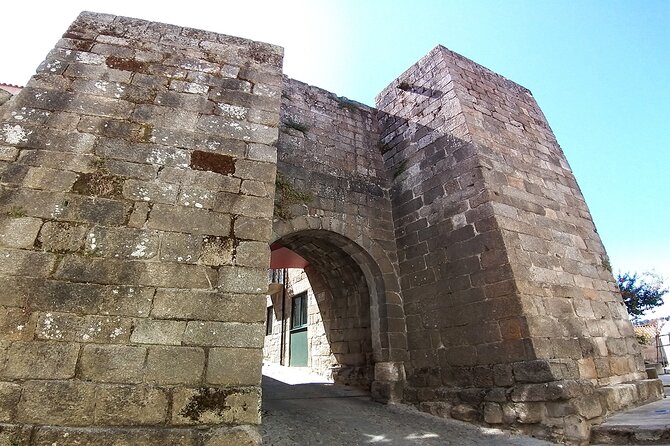
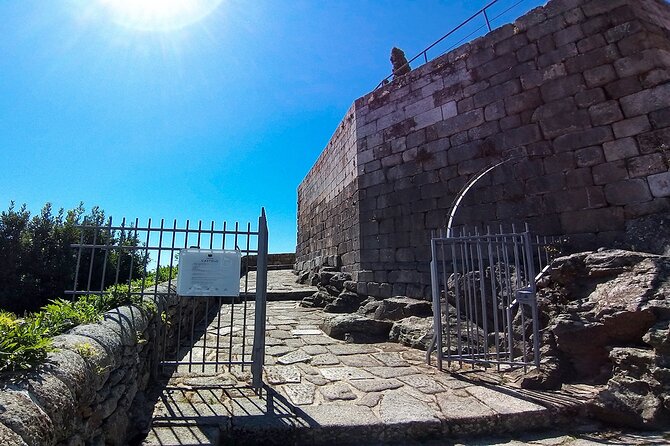
Castelo de Lamego is a National Monument dating back to the 12th century, with later restoration in the 19th century after its military role declined. The site itself has been used through layers of occupation—Lusitanian fort first, then Visigoths between the 5th and 7th centuries, and later Muslim rule until the Christian Reconquest.
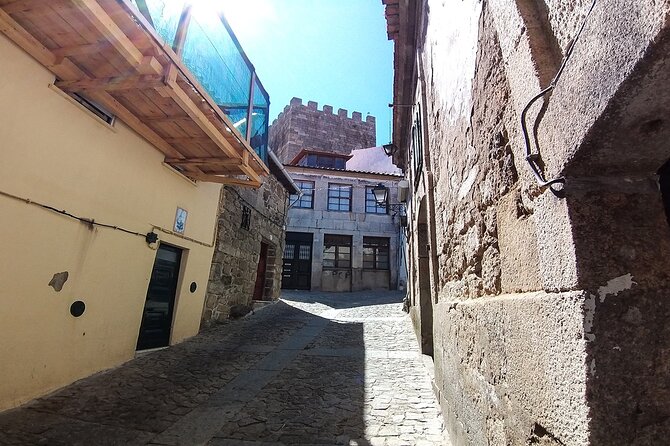
What I like about this stop is the layout. It’s a medieval mountain castle with walls around the perimeter and an irregular plan that follows the terrain. The altitude is listed at 543 meters, which helps explain why the area has those commanding viewpoints.
Practically, expect a short stop—about 30 minutes—and an easy “get your bearings” kind of visit. You’re not going to linger for hours here unless you’re especially into fortifications (and if you are, good news: the site is set up for that kind of slower look). Admission is free for this stop.
Possible drawback: it’s a compact time window. If you want deeper time inside or around the castle structures, you’ll feel the clock a bit. Still, as a first major landmark, it works.
Lamego Cathedral: Romanesque roots plus a Nasoni ceiling
Lamego Cathedral dates from the 12th century and was likely built by D. Afonso Henriques. What makes it interesting isn’t just the age. It’s the stop-and-start rebuilds: reconstructions in the 14th, 16th, 17th, and 18th centuries changed the original Romanesque profile.
You can see this evolution most clearly in the façade. Nothing remains from the time of D. Afonso Henriques, but the main façade built in the early 1500s by architect João Lopes is a highlight. It mixes flamboyant Gothic forms with early Renaissance elements, so it doesn’t feel like one style sealed in time. It feels like a building that kept getting reinvented.
Inside, the cathedral has painted ceilings from the first half of the 18th century by the Italian painter-architect Nicolau Nasoni. The ceiling design frames biblical episodes with an architectural theme, which is a very “Portugal doing Baroque-era spectacle” kind of detail, even when the rest of the city is calm.
There’s also a 16th-century cloister and two major chapels from the same period, plus the stop runs around 30 minutes with free admission.
How to make this stop satisfying: don’t rush straight from the doors to the exit. Look up first, then move your way through the main interior features. The time is short, but the payoff is big.
Nossa Senhora dos Remédios: 686 steps and Baroque drama
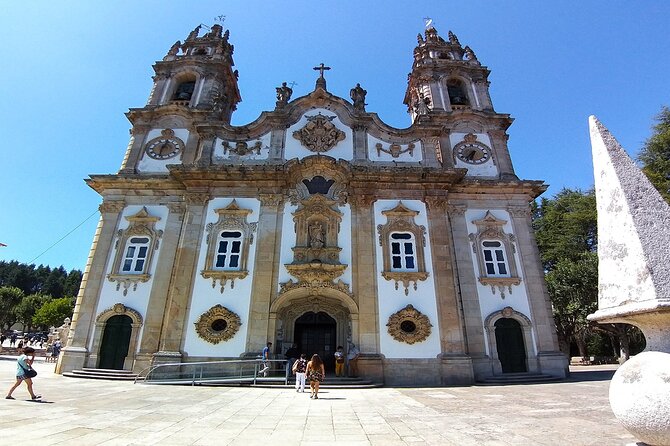
This is the stop that turns the day into something you’ll remember. Nossa Senhora dos Remédios is described as Lamego’s ex libris, with a special focus on the staircase: 686 steps leading up to the church at the top of the mountain.
The sanctuary is known for its baroque setting and full decoration. The staircase flights include fountains, chapels, obelisks, and other monuments. Even if you’re not a “religious architecture” person, the physical design does something useful. It controls your pace. You climb, you pause, you notice details, and by the time you reach the church you’re in the right mood for the view.
This church is an 18th-century replacement for an earlier chapel from the 14th century. The design is linked to Bom Jesus in Braga, and the sanctuary also credits Nicolau Nasoni with contributions—especially around the granite fountain beside the sanctuary.
Important practical note for you: 686 steps is a real commitment. The good part is that one review noted the climb is accessible to many people, but “accessible” doesn’t mean “easy.” If you have knee issues, plan for slow pauses and consider whether you’d rather do part of the staircase instead of all of it.
Admission for this stop is listed as free, and the stop time is about 30 minutes—enough for a climb and a meaningful look, if you keep your pace realistic.
Se Catedral de Viseu: towers, age, and hidden layers
Se Catedral de Viseu is the kind of cathedral you recognize even before you reach it. Those large towers give it the look of a fortified church perched on a promontory. That position matters because it makes the cathedral a reference point for the city, even from a distance.
It’s also one of Viseu’s oldest buildings. The cathedral is built on the site of a primitive temple from the Suevo‑Visigothic era, with archaeological excavations revealing parts of that older structure.
Then the cathedral starts to take its 12th-century form under D. Afonso Henriques, with a major renovation in the 13th century during D. Dinis’s reign. The works lasted many years, so the building includes elements from different periods—almost like a timeline in stone.
This stop runs about 30 minutes and is free. The short duration means you’ll focus on the exterior impact and the main interior impressions rather than deep study. That’s not a problem here. The cathedral’s strength is in how it frames the city and how it reads as old power in a compact footprint.
If you’re the type who likes to “read” buildings, this will feel satisfying. If you only have time for one cathedral in the day, this is a strong choice for your final stop in Viseu.




Palácio dos Condes de Anadia and optional Dão wine tastings
By the time you reach the Palácio dos Condes de Anadia, the day shifts from sacred architecture to noble estates. This is an 18th-century palace that belonged to one of the richest families in Portugal.
The exterior is Baroque in style, with intricate carvings and decorations. Inside, it continues the theme: ornate ceilings, frescoes, and furniture from the 18th and 19th centuries. There’s also a chapel dedicated to Saint Francis of Assisi.
Here’s the key value point for you: the tour includes a guided visit to the palace, listed at about 1 hour. But the palace ticket is not included in the base tour price—an extra €10 ticket is noted, and there’s also an optional guided add-on for €15 per person. That makes your “how much do I want to pay today?” decision pretty clear.
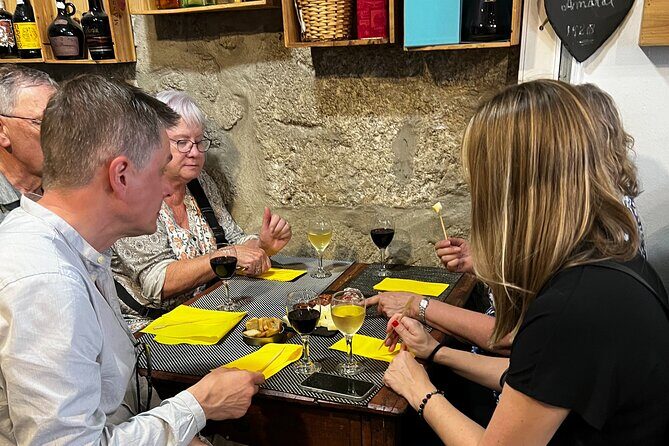
After the palace, you have optional Dão wine experiences. The itinerary includes an optional guided tour to Casa do Santar (a 16th-century wine estate) with tasting. Casa do Santar is known for high-quality wines, especially Dão reds from the local Touriga Nacional grape variety. This option is listed at 25 € per person.
You also have a wine-route starting point at Solar do Vinho do Dao (Rota dos Vinhos do Dao). It functions as a visitor reception center for the Dão Wine Route and also has a small cellar. You can get leaflets, information, and a glass for tasting (plus possibly free or symbolic-price highlighted references, depending on what’s offered that day). The listing frames Solar as a smart place to begin, especially if you’re new to Dão.
One more practical point: you’re not forced into long tastings all day. Since some items are optional and others are excluded, you can shape the day to match your group’s energy—more walking and monuments, or more time understanding the wines.
Price and logistics: is this good value at $304.85?
At $304.85 per person, you’re paying for three things: private transport, a packed architecture program, and the ability to add Dão wine moments without you having to plan each one yourself.
Let’s break down what’s included versus what costs extra:
Included in the tour:
- Luxury vehicle transport with Wi‑Fi, bottled water, and refreshments
- Personal accident and civil liability insurance
- Options like pickup offered, group discounts, and a mobile ticket
Not included (so you should mentally budget for them):
- Extra entrance and guided options like Grão Vasco Museum (€4) if you choose it
- Palace of the Counts of Anadia ticket pricing
- Optional wine experiences (Quintas and tastings) and optional typical lunch (starter–main–dessert, coffee, and red or white wine) listed at 25 €
What makes this pricing feel fair for you:
- Most major stops in Lamego and Viseu are listed as free admission (castle, cathedral, sanctuary, Viseu cathedral), so your money goes mostly to transport, timing, and the guided palace portion.
- The vehicle comfort matters on a long day. Even if you love walking, sitting comfortably between towns keeps the day enjoyable.
Where value can slip:
- If your group adds multiple wine tastings plus the palace ticket and museum, the day can climb quickly. If you want the architecture-only version, you can keep costs lower by choosing fewer add-ons.
Who this private Lamego and Viseu day fits best
This is a great match if you want architecture without the stress of driving between smaller towns.
It also works well for:
- Groups who want private pacing while still seeing the key highlights
- People who like a clear structure (major stops first, optional wine moments later)
- Travelers who appreciate a mix: castle views, cathedral art, then an 18th-century palace
If you’re sensitive to steps, plan carefully. The sanctuary’s staircase is 686 steps, so your comfort level matters more than anything else.
Should you book this tour?
If you like day trips that mix real places—not just viewpoints—you should book. The combination is strong: castle foundations, cathedrals with layered styles, a dramatic climb at Nossa Senhora dos Remédios, then the Palácio dos Condes de Anadia for a change of pace. Add in optional Dão wine stops in the Dão region, and you’ve got something that feels varied without feeling random.
I’d book if your group can handle a full day and you’re okay choosing your add-ons instead of getting everything bundled. I’d rethink if you want a shorter day or you’d rather skip stairs and pay less for extras.
FAQ
How long is the private tour?
The duration is listed at approximately 8 to 10 hours.
What does the tour cost?
The price is listed at $304.85 per person.
Does the tour include pickup from Porto?
Pickup is offered, and the tour start time is listed as 8:00 am in Porto.
Are entrance fees included?
Some stops are listed as free admission (like Lamego Castle, Lamego Cathedral, Nossa Senhora dos Remédios, and Se Catedral de Viseu). Other items such as the Palace of the Counts of Anadia have an extra ticket cost, and optional add-ons also cost extra.
Is the Dão wine tasting part of the standard tour?
Wine experiences like Casa do Santar and additional tastings are optional. Solar do Vinho do Dao is included as a stop, but extra guided wine tastings and specific cellar visits are not included.
Is this tour private?
Yes. It’s described as a private tour/activity, meaning only your group participates.
What if the weather is bad?
The experience requires good weather. If it’s canceled due to poor weather, you’ll be offered a different date or a full refund.